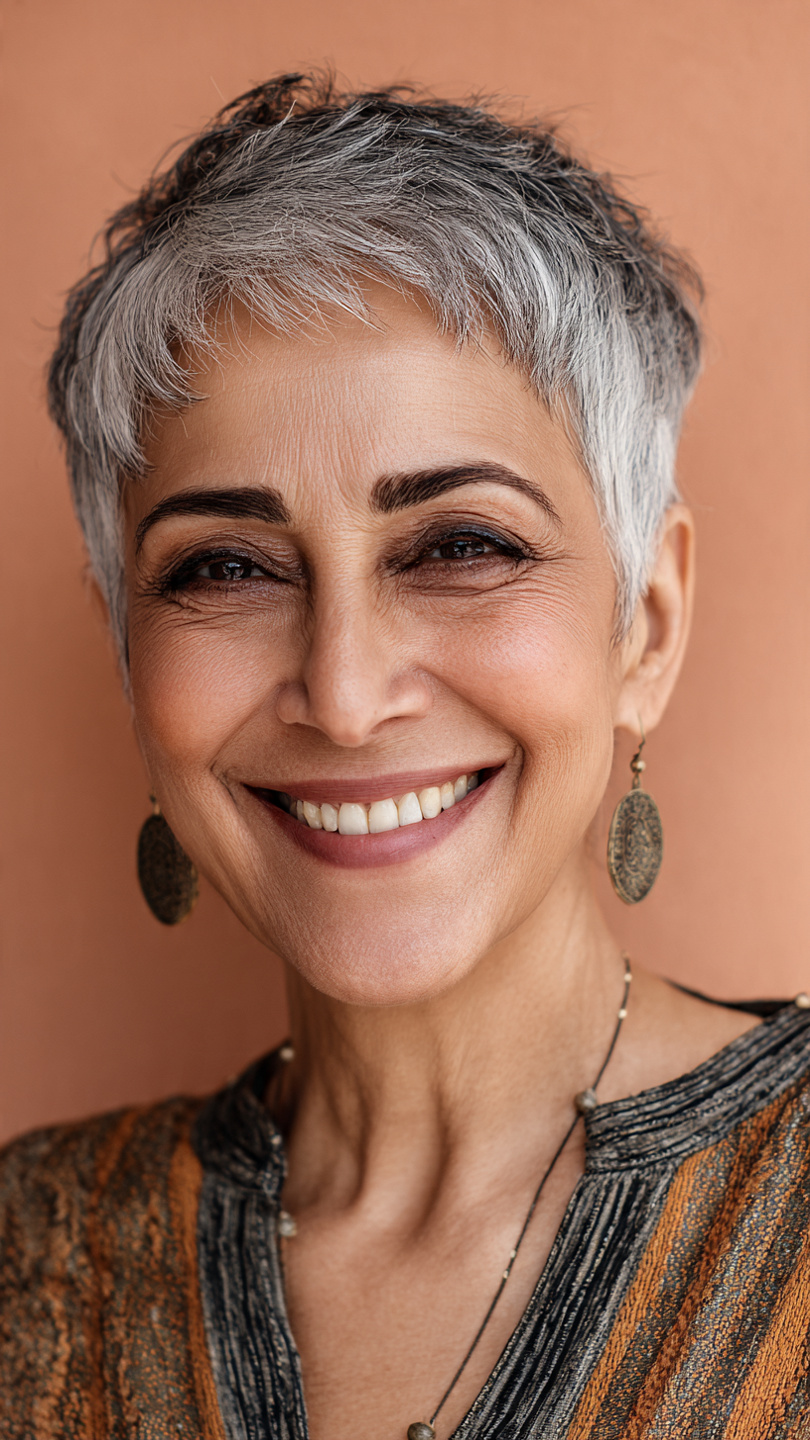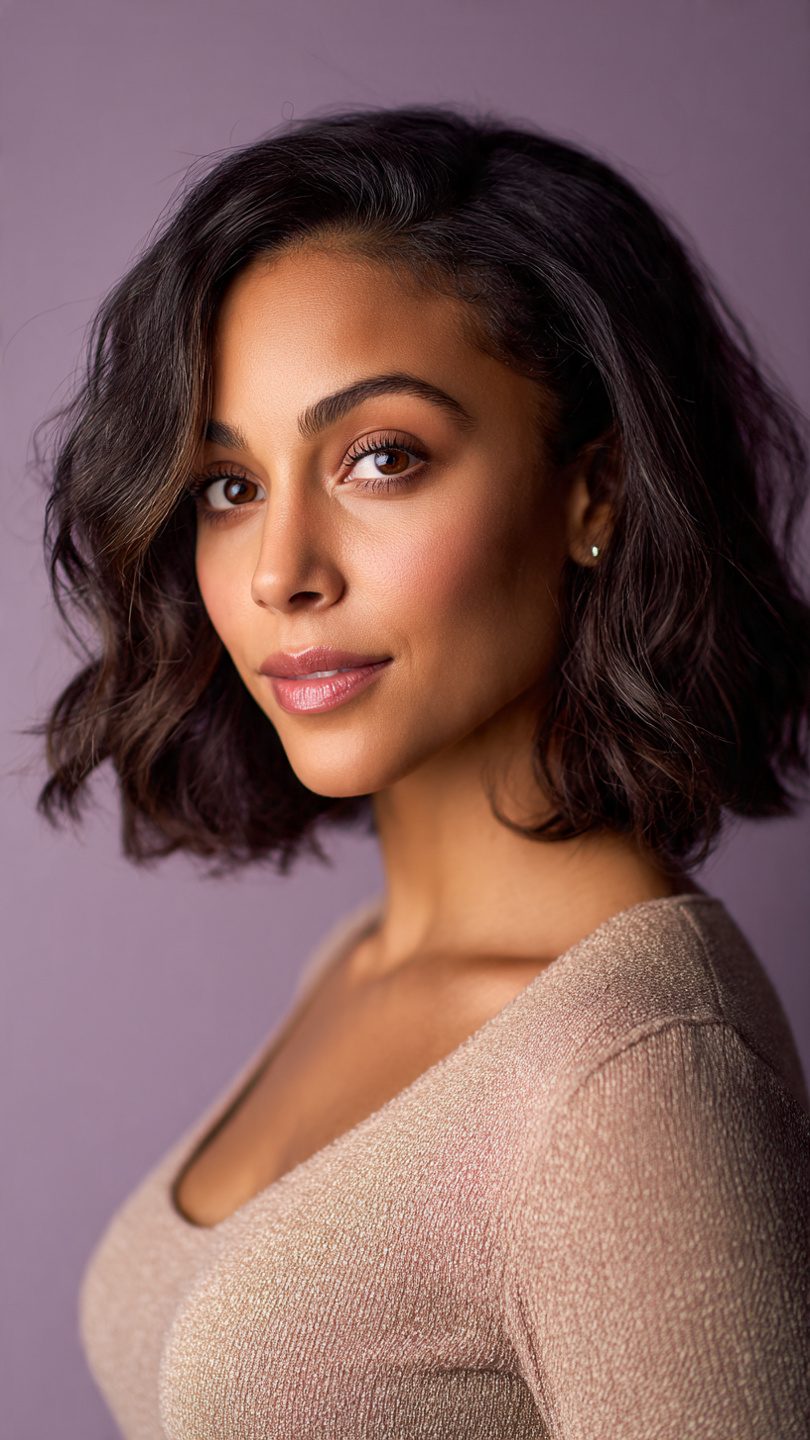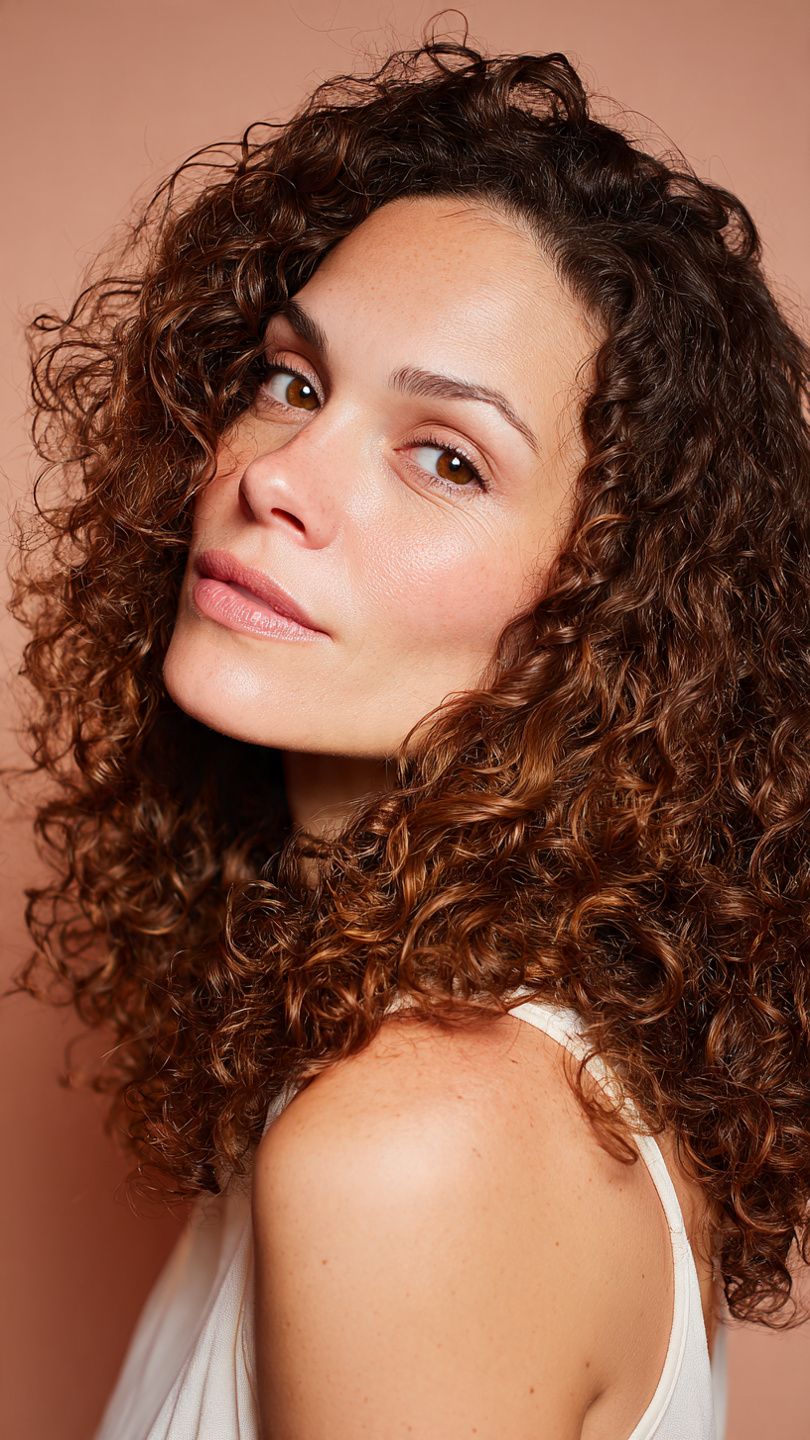
Author: Jessica Guevara

  • Stunning Medium-Length Hairstyles with Layers to Transform Your Look

    Stunning Medium-Length Hairstyles with Layers to Transform Your Look

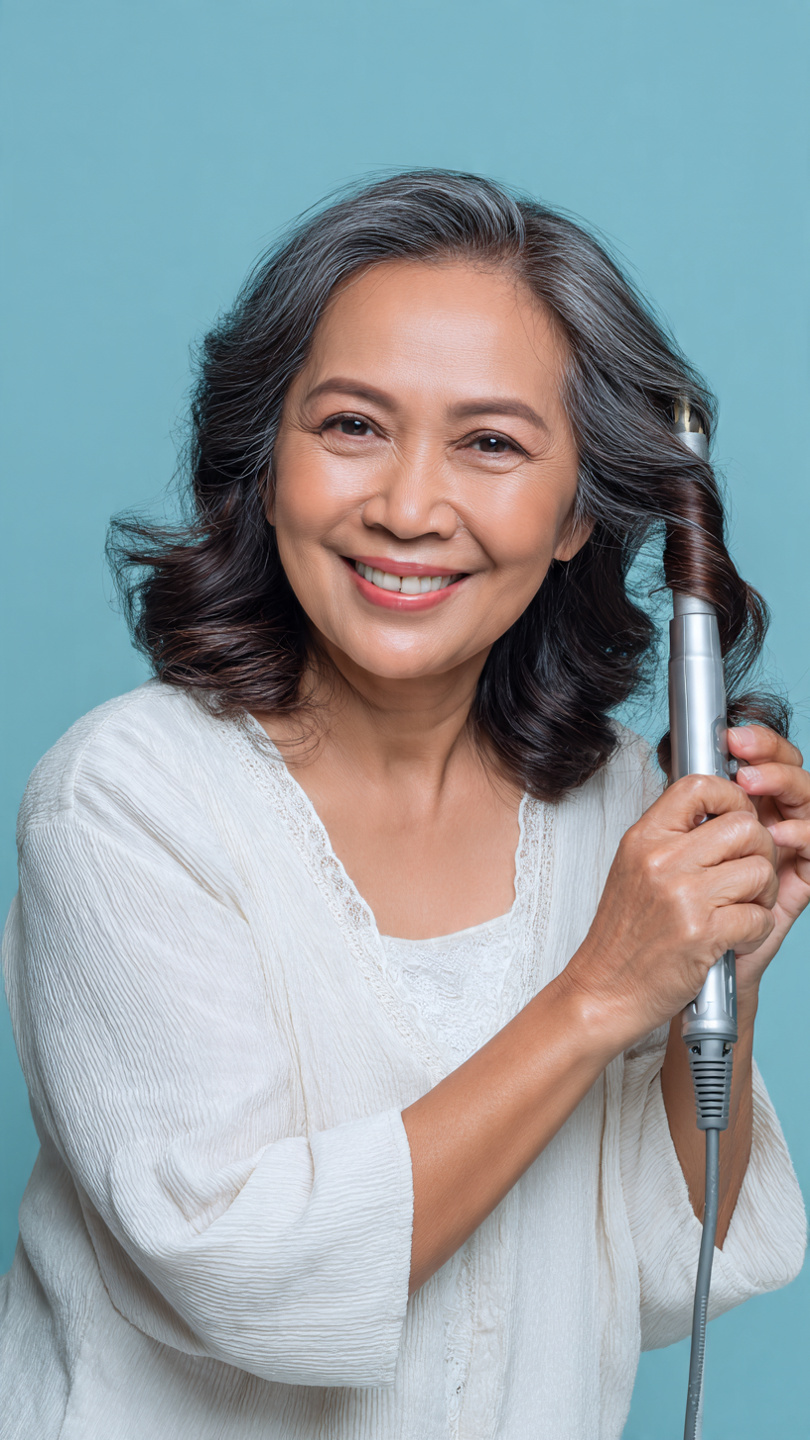
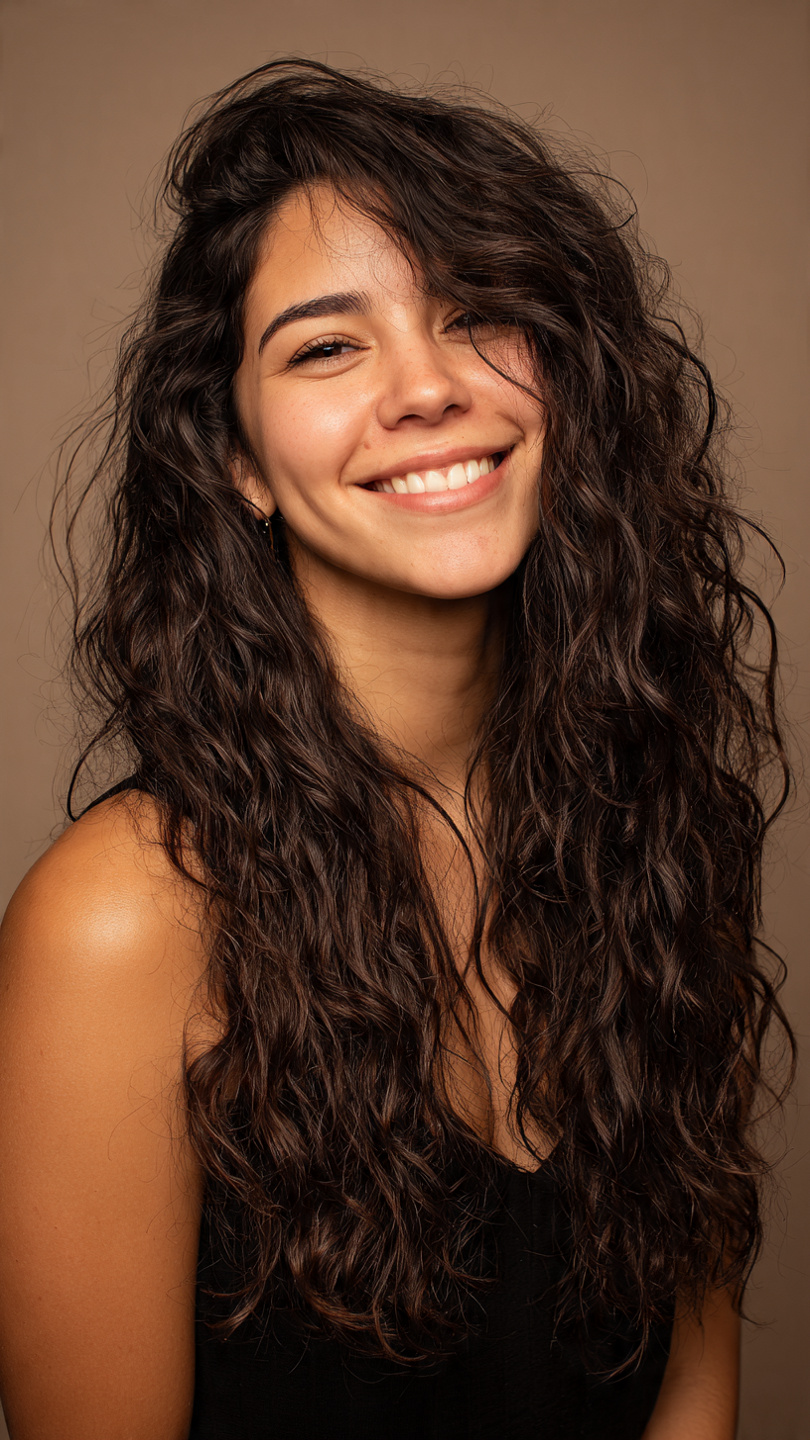
    If you’ve been stuck in a haircut rut—caught between growing out a short bob and avoiding the weight of very long hair—medium-length hairstyles with layers are your perfect solution. Falling anywhere from the collarbone to just above the bust, this versatile length offers the best of both worlds: enough length to tie up, but short enough to feel fresh and voluminous.

    Layers are the secret weapon. They remove bulk, add movement, frame the face, and create the illusion of thicker, bouncier hair. Whether you have fine, straight strands or thick, curly manes, there is a layered cut waiting for you.

    Below are 12 well-structured ideas to inspire your next salon visit:


    1. The Classic Mid-Length Layered Cut

    Best for: All hair types, especially straight to wavy.

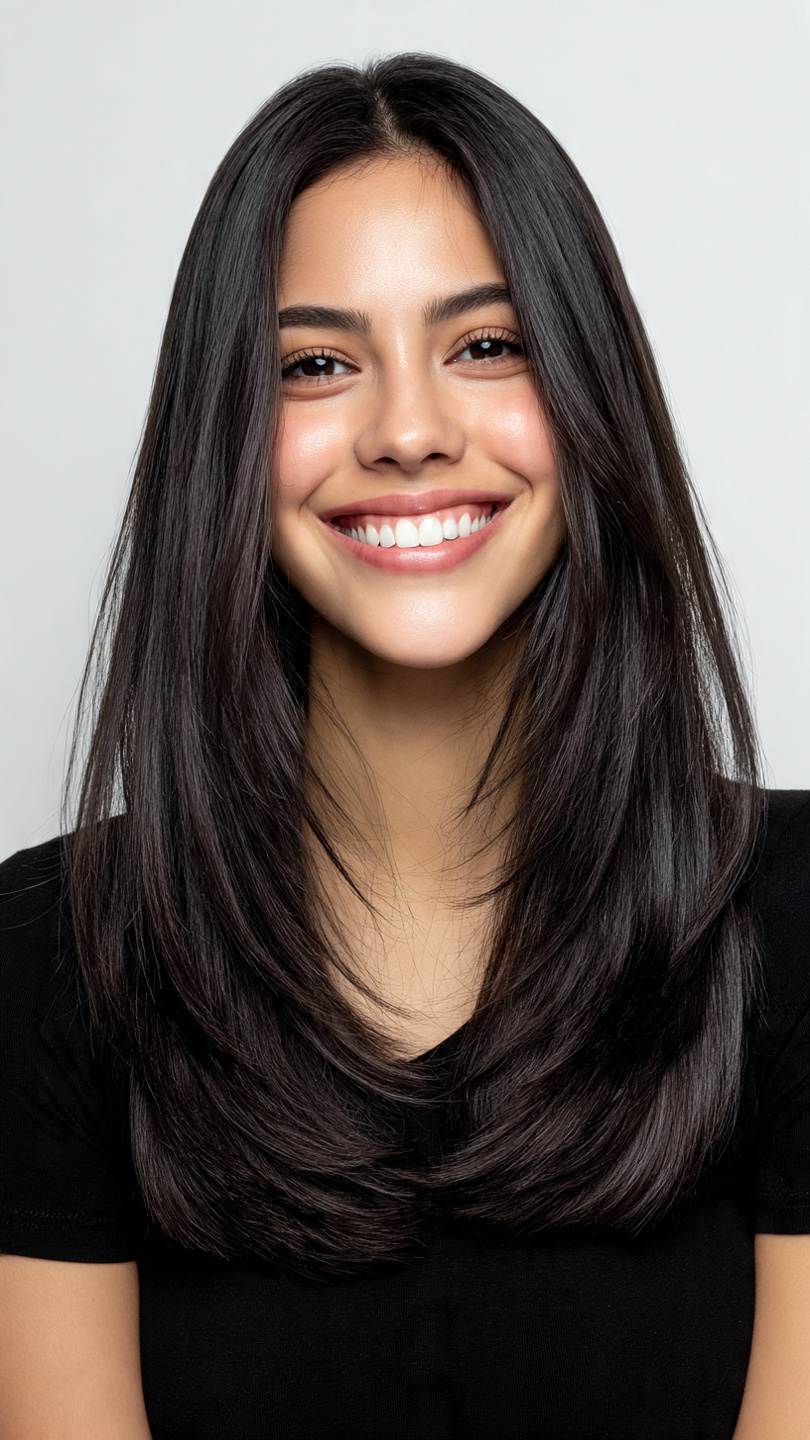
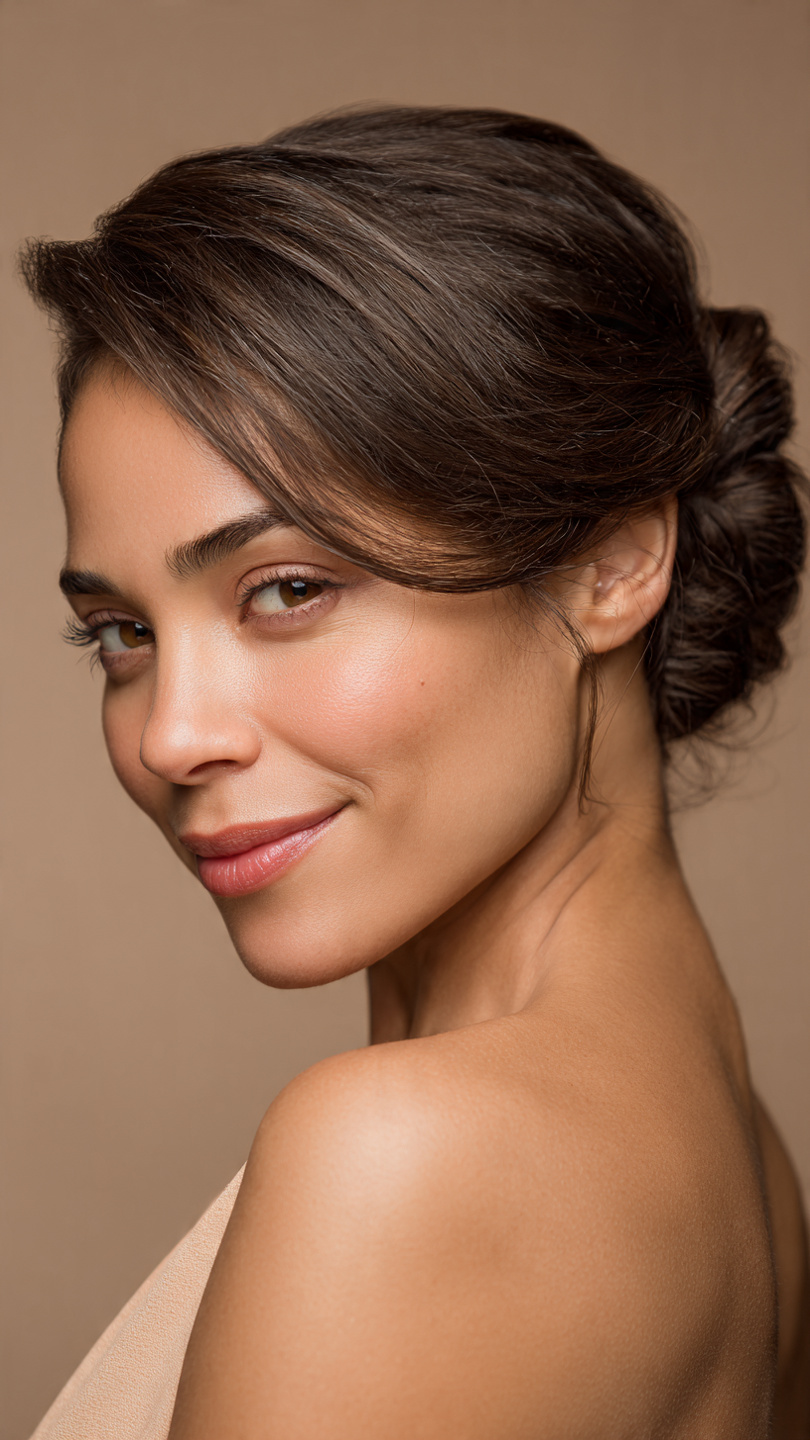
    This is the foundation of all layered looks. Hair is cut to sit between the shoulders and armpit, with long layers starting around the chin. The result is a soft, rounded shape that prevents the dreaded “triangle head” effect. It’s low-maintenance, air-dries beautifully, and looks just as good in a ponytail as it does down.

    2. The “Butterfly” Cut

    Best for: Fine to medium hair wanting dramatic volume.

    Inspired by the trendy “wolf cut” but softer, the butterfly cut uses short, face-framing layers on top and longer layers underneath. When styled, the top layers “lift” away from the head like butterfly wings, creating incredible bounce. Ask your stylist for a “disconnected layer” at the crown to achieve this ethereal, ’70s-inspired look.

    3. Curtain Bangs with Shoulder-Length Layers

    Best for: Round or heart-shaped faces.

    Curtain bangs (which part in the middle and sweep to the sides) naturally blend into face-framing layers. When paired with medium-length hair, this combination widens the eyes and slims the jawline. The key is keeping the bangs long enough to tuck behind your ears, giving you the flexibility to switch from boho to polished in seconds.

    4. The Textured Shag (Modern Version)

    Best for: Wavy, thick, or unruly hair.

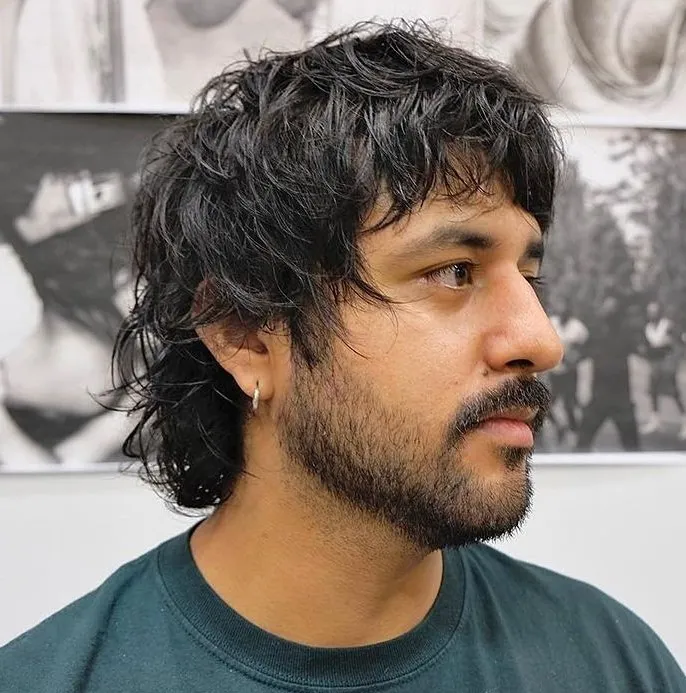
    Forget the heavy shags of the ’70s. The modern medium-length shag features choppy, piece-y layers throughout the ends, often paired with a micro-fringe or wispy bangs. The layers are cut at steeper angles to remove massive weight from thick hair, creating a cool, rock-and-roll vibe that looks intentionally messy.

    5. Collarbone-Kissing Layers with Soft Ends

    Best for: Fine or thinning hair.

    If your hair is on the finer side, aggressive layering can make it look sparse. Instead, opt for “invisible” or “soft” layers that only texturize the last inch of the hair. Cut exactly at the collarbone, this style gives the illusion of thickness because the ends are slightly blunted but not heavy. A little dry shampoo at the roots amplifies the effect.

    6. V-Cut Layers for Long Medium Hair

    Best for: Straight hair that lacks movement.

    When your medium-length hair is almost long (think armpit length), a V-cut changes the game. Instead of straight-across layers, the stylist cuts the back into a subtle “V” shape. This creates long, dramatic layers that flick outward when curled or swing side-to-side when you walk. It adds a sexy, mermaid-like movement without losing length in the front.

    7. Blunt Ends with Hidden Under-Layers

    Best for: Thick, heavy hair.

    Paradoxically, you can have a blunt hemline and layers. This style keeps the bottom perimeter thick and solid while removing weight from the inside of the hair (using slide-cutting or under-cutting techniques). You get the chic, heavy look of a blunt bob but without the bulk. This is a favorite for professional settings where you want polish but not poof.

    8. The Round-Layered “Italian” Cut

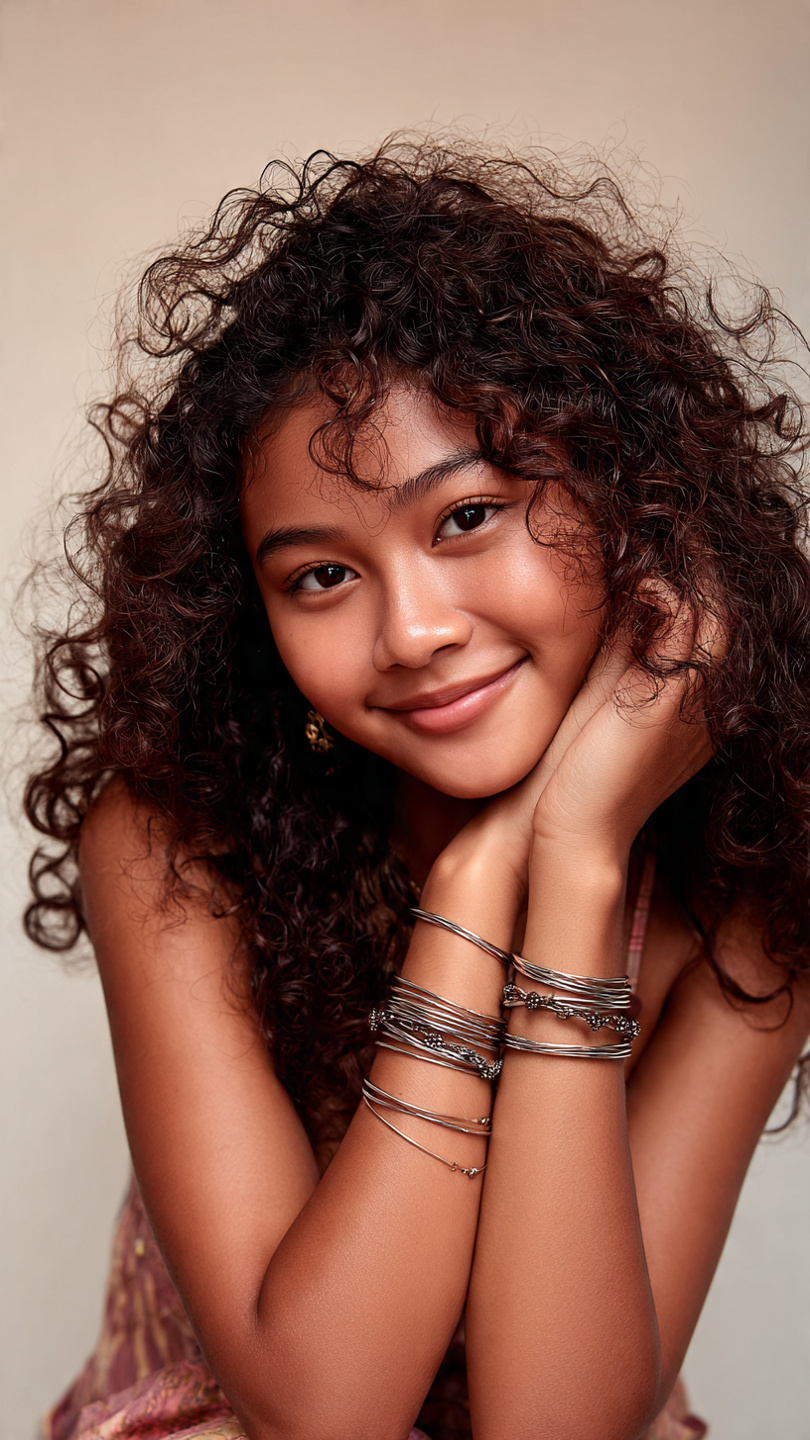
    Best for: Curly and coily hair textures.

    Inspired by classic Italian films, this cut focuses on shape rather than individual strands. The hair is cut dry, curl-by-curl, into a rounded globe shape. The layers are graduated heavily at the crown to encourage curls to spring up, not weigh down. The result is a perfectly circular, frizz-free silhouette that bounces with every step.

    9. Asymmetrical Layers with a Deep Side Part

    Best for: Oval and long face shapes.

    By shifting your part dramatically to one side, you instantly create asymmetry. The layers follow suit: shorter and more textured on the heavier side, longer and sleeker on the lighter side. This optical illusion adds width to long, narrow faces and gives fine hair a volume boost at the roots where the part flips up.

    10. Wispy Face-Framing Highlights + Layers

    Best for: Adding brightness and softness.

    While not a cut by itself, the placement of highlights can act as pseudo-layers. Ask for “baby lights” or thin ribbons of color woven through the face-framing layers and ends. The contrast between light and dark accentuates every cut, making the layers look more defined and three-dimensional. It’s the ultimate “expensive” look.

    11. The Layered Midi with Bottleneck Bangs

    Best for: Forehead balancing (large or small foreheads).

    Bottleneck bangs are narrow at the center top (like a bottleneck) and widen over the brows. When blended into medium-length layers, this creates a seamless curtain of hair. The layering starts high—right at the occipital bone—to push volume backward, preventing the bangs from falling flat. It’s a retro, editorial look that feels fresh.

    12. Air-Layer (Korean Feather Cut)

    Best for: Straight, sleek hair.

    Originating from Korean hair trends, the air-layer cut uses point-cutting to create “feathery” ends that move like air. Unlike Western layers which are distinct steps, these are millimetrically fine. The hair remains one length visually but moves incredibly softly. Pair this with a center part and light serum for that glossy, weightless K-pop idol finish.

    Before You Book: How to Communicate Layers to Your Stylist

    Walking into a salon saying “just add layers” is a recipe for disappointment. Layers vary dramatically in placement, angle, and intensity. Use this simple script to get exactly what you want.

    Step 1: Identify your layer type using the chart above. Screenshot the idea that matches your hair texture and face shape.

    Step 2: Use these three key phrases:

    • “Long layers starting at my chin” – safest for fine hair.
    • “Short, choppy layers throughout” – for volume and texture.
    • “Internal under-cutting only” – to remove bulk without changing the outer shape.

    Step 3: Ask the “show me” question. Request that your stylist shows you the first cut section before proceeding. This prevents miscommunication about how short the shortest layer will be.

    Step 4: Discuss your styling commitment. Layers that look stunning blown out can look messy air-dried. If you never use heat tools, ask for “round layers” or “invisible layers” specifically designed for wash-and-wear routines.


    Maintenance & Styling: Keeping Your Layers Fresh

    Layered haircuts require more frequent trims than blunt cuts. Without regular upkeep, the shortest layers can outgrow their shape, leaving you with an uneven, straggly appearance.

    Trim schedule by layer type:

    Layer StyleRecommended Trim Frequency
    Soft, long layersEvery 10–12 weeks
    Choppy shag or butterfly cutEvery 6–8 weeks
    Blunt ends with hidden layersEvery 8–10 weeks
    Curly round-layered cutEvery 12 weeks (dry cut only)

    Quick styling hacks for each texture:

    • Fine/straight hair: Use a volumizing mousse at the roots before blow-drying upside down. Layers reveal flatness faster, so lift is essential.
    • Thick/wavy hair: Apply a lightweight curl cream to damp hair, then scrunch and air-dry. Layers prevent the dreaded “pyramid” shape.
    • Curly/coily hair: Never brush dry curls. Detangle in the shower with conditioner, then use a diffuser or hooded dryer to set the round shape.
    • Sleek/Asian hair texture: A drop of silicone-based serum on the ends only. Avoid roots entirely, or layers will look greasy rather than feathered.

    The one product every layered haircut needs: A texturizing spray or powder. Unlike heavy oils or creams, texturizers grip the ends of each layer, making them visible and piece-y rather than melting into one blob.


    Who Should Avoid Medium Layers? (Honest Advice)

    Layers are not universal. While they solve many problems, they can create new ones for certain hair types and lifestyles.

    Avoid medium layers if:

    1. Your hair is severely damaged or chemically processed. Layers remove length, and damaged ends become the new shortest layer. You’ll need a “dusting” only until healthy hair grows in.
    2. You exclusively wear your hair in tight ponytails or buns. Short layers will poke out, requiring bobby pins or gel. A blunt one-length cut behaves better for slicked-back styles.
    3. You have very thin, fragile hair. Aggressive layering can make thin hair look even sparser. Stick to “invisible layers” or a blunt collarbone cut with face-framing pieces only.
    4. You are growing out a pixie or undercut. Let the hair reach shoulder length first. Layers applied too early will leave you stuck in an awkward mullet phase.
    5. You have naturally strong cowlicks at the crown. Layers can lift and exaggerate cowlicks, creating unintended volume in the wrong places. A stylist may recommend a different weight distribution.

    When in doubt, ask for a “dry consultation.” Your stylist will pin up sections to show you exactly where the layers will fall before any cutting begins.


    Layering for Face Shapes: A Quick Guide

    The same layered cut can elongate a round face or shorten an oval face. Use this cheat sheet to match layers to your bone structure.

    Face ShapeBest Layer StrategyWhat to Avoid
    RoundLong layers starting below the chin, center part, face-framing pieces that graze the jawlineShort layers at cheekbone level (widens face)
    OvalAlmost anything works. Especially flattering: curtain bangs and chin-length face-framing layersExtremely short top layers (can look boxy)
    SquareSoft, wispy layers around the jaw to soften angles. Side-swept bangs helpBlunt, heavy layers that end exactly at the jaw
    HeartLayers that add volume at the chin and below. A deep side part helps balance a wider foreheadShort layers that stop at the temples (emphasizes width)
    Long/OblongRounded layers with volume at the sides. Bottleneck or straight-across bangs shorten length visuallyLong, straight layers that drag the face down
    DiamondLayers that widen the forehead and chin area while narrowing the cheekbones. Wispy bangs helpSevere center parts with flat, straight layers

    A universal rule: The shortest layer should never fall at your widest point unless you want to emphasize that area. Adjust the starting point of your layers up or down by one inch to change the entire optical effect.


    Conclusion

    Medium-length hairstyles with layers are not a trend—they are a timeless solution to the most common hair frustrations: flatness, heaviness, lack of movement, and the dreaded in-between grow-out phase. Whether you choose the soft, rounded shape of the classic layered cut, the dramatic bounce of the butterfly cut, or the weightless precision of the Korean air-layer, there is a version designed specifically for your texture, face shape, and lifestyle.

    The key is intentionality. Layers are a tool, not a default. By understanding where the shortest layer falls, how often you are willing to style your hair, and what you want to emphasize or minimize about your face, you transform a simple haircut into a personalized signature look.

    Remember: bring a photo, learn the three key phrases for your stylist, and commit to the maintenance schedule that matches your chosen layer style. With these twelve ideas and practical guides in hand, you are ready to walk into any salon with confidence—and walk out with the best hair of your life.

    Now go book that appointment. Your bounciest, most layered era awaits.

  • Layered Shoulder-Length Haircuts: 10 Fresh Ideas for Movement & Style

    Layered Shoulder-Length Haircuts: 10 Fresh Ideas for Movement & Style


    The shoulder-length haircut is the “goldilocks” of hairstyles—not too long, not too short, but just right. When you add layers to this versatile length, something magical happens. Layers remove bulk, add dynamic movement, frame the face beautifully, and create volume where it’s needed most. Whether you have fine, straight hair craving body or thick, wavy hair needing shape, a layered shoulder-length cut offers endless styling possibilities.

    Below are 10 well-structured ideas to inspire your next trip to the salon:


    1. The Classic Long Layered Cut


    This is the foundation of all layered shoulder-length styles. Long layers are cut throughout the hair, with the shortest layer falling just below the chin. This technique removes weight while keeping the overall shape intact. Best for: Fine to medium hair that needs volume without losing length. Styling tip: Blow-dry with a round brush for a bouncy, polished finish.

    2. The “Butterfly” Cut


    Inspired by the viral trend, this cut uses two distinct layers: a short, face-framing top layer (the “wings”) and a longer bottom layer. When styled, the shorter pieces curl away from the face, creating a winged, ethereal effect. Best for: Adding instant volume and a romantic feel. Styling tip: Use a small curling wand to curl pieces away from your face.

    3. Invisible Layers (Micro-Layers)


    These are ultra-subtle, barely-there layers cut into the interior of the hair. From the outside, the hair looks like a blunt one-length cut, but the hidden layers prevent the ends from flipping out awkwardly and add gentle internal movement. Best for: Fine, straight hair that needs a little lift without looking choppy. Styling tip: Air-dry with a light mousse for effortless, natural texture.

    4. Choppy, Textured Layers


    Think rock-and-roll. This style uses point-cutting techniques to create jagged, disconnected ends. The layers are more visible and dramatic, giving a piece-y, undone finish. Best for: Thick hair that needs weight removed, or anyone wanting an edgy, low-maintenance look. Styling tip: Work a texturizing paste or sea salt spray through dry hair to emphasize the separation.

    5. Face-Framing Curtain Layers


    The layers are concentrated heavily around the front, starting at the cheekbones or jawline and cascading down to blend with the shoulder-length back. This creates a soft, “curtain” effect that opens up the face. Best for: Round or heart-shaped faces, as it visually lengthens and slims. Styling tip: Blow-dry the front pieces away from your face using a large round brush.

    6. The Shag (Modern Version)


    A modern shoulder-length shag features shorter layers throughout the crown, wispy bangs (optional), and a slightly disconnected look. Unlike the 70s version, today’s shag keeps the ends less feathered and more blunt for a chic, cool-girl vibe. Best for: Wavy or curly hair; also great for adding volume to flat hair. Styling tip: Scrunch in curl cream and let it air-dry for that effortless, lived-in look.

    7. Graduated Layers (Angled)


    This cut is shorter in the back and slightly longer in the front, with layers that “graduate” in length. The stacking of layers in the back creates significant lift and volume at the crown, while the front remains soft. Best for: Fine hair that falls flat, and those who want a more structured, polished silhouette. Styling tip: Use a vented brush and blow-dry the back section upward to maximize volume.

    8. Wispy Layers with Bottleneck Bangs


    Combine shoulder-length layers with “bottleneck” bangs—bangs that are shorter in the center and blend into longer curtain pieces at the sides. The layers in the body of the hair are cut wispy (soft and airy) to match the lightness of the bangs. Best for: High foreheads or anyone wanting to soften strong features. Styling tip: A quick pass with a flat iron to bend the bangs outward creates the perfect bottleneck shape.

    9. The Beveled Layered Bob (Lob)


    A longer bob that hits just above or at the shoulders, with internal layers that are slightly heavier at the bottom. The ends are “beveled” (tucked under) while the internal layers add roundness. This is the polished, professional’s choice. Best for: Straight to slightly wavy hair; perfect for corporate or elegant settings. Styling tip: Use a paddle brush and a round brush to tuck the ends under smoothly.

    10. Air-Layer Cut (Weightless Layers)


    Popularized by Korean hair styling, this technique removes weight from the inside of the hair shaft rather than the ends. The hair is held vertically and sliced into, creating pockets of air. The result is a silky, weightless finish with no visible layer lines. Best for: All hair types, especially thick or heavy hair that feels dense. Styling tip: A simple air-dry with a lightweight oil will showcase the cut’s feathery movement.

    What to Ask Your Stylist (Without Getting Lost in Jargon)

    Before you sit in the salon chair, know these three key terms. They will help you communicate exactly what you want.

    • “Point-cutting” – Ask for this if you want soft, textured ends rather than a blunt line. It creates that airy, modern feel.
    • “Internal layers” – Say this when you want volume and weight removal inside the hair without changing the outer shape. Perfect for thick hair.
    • “Elevation” – The higher your stylist lifts your hair while cutting, the shorter and bouncier the layers. For subtle, shoulder-length layers, ask for low to medium elevation.

    One golden rule: Always bring a reference photo. The prompts above can generate exactly that.


    How to Choose the Right Layered Cut for Your Face Shape

    Not every layered shoulder-length cut suits every face. Use this quick guide:

    Face ShapeBest Layered Cut from the 10 Ideas
    OvalAny style works. Try the Classic Long Layers (Idea 1) or the Butterfly Cut (Idea 2).
    RoundFace-Framing Curtain Layers (Idea 5) or Graduated Layers (Idea 7) to lengthen the face.
    SquareWispy Layers with Bottleneck Bangs (Idea 8) or the Modern Shag (Idea 6) to soften a strong jaw.
    HeartThe Beveled Lob (Idea 9) or Invisible Layers (Idea 3) – both add width near the chin to balance a narrower jaw.
    Long/OblongChoppy Textured Layers (Idea 4) or the Butterfly Cut (Idea 2) to add width and break up length.

    Styling & Maintenance: Keep Your Layers Looking Fresh

    Layered cuts are low-maintenance but not no-maintenance. Follow these rules.

    Daily Styling (5 minutes or less)

    • For volume: Flip your head upside down and blow-dry the roots with a round brush. Focus on the crown where layers start.
    • For texture: Spray dry texture spray or sea salt spray into damp hair, then scrunch. Air-dry for that “undone” layered look.
    • For smoothness: Use a flat iron only on the ends of each layer. Ironing the whole strand flattens the dimension layers create.

    The 8-Week Rule

    Layers grow out faster than one-length cuts. After 8–10 weeks, your shortest layer will drop by about an inch, and the shape will start to feel heavy. Book a “dusting” (micro-trim) every 2 months – not a full cut.

    Product Picks for Layered Shoulder-Length Hair

    Hair TypeAvoidUse Instead
    FineHeavy oils, creamy leave-insVolumizing mousse, lightweight sea salt spray
    ThickSilicone-heavy serums (they weigh layers down)Lightweight curl cream, texturizing powder
    Curly/WavyBrushing dry (it destroys the layer definition)Wide-tooth comb in the shower, diffuser attachment

    Common Mistakes to Avoid with Layered Shoulder-Length Hair

    Even a great cut can look wrong if you make these errors.

    1. Asking for “layers” without specifying length – The shortest layer matters. If you don’t give a reference point (e.g., “shortest layer at my chin”), you might end up with very short top layers that don’t blend.
    2. Cutting wet hair too uniformly – Wavy and curly hair shrinks when dry. Always get layered cuts on dry hair or ask for a “dry cut” after the initial wet cut.
    3. Using too much product near the roots – Layers are designed to create natural lift. Heavy root products (butters, thick creams) collapse that lift within an hour.
    4. Skipping the consultation photo – “Shoulder-length layers” means different things to different stylists. Never assume. Show a photo.
    5. Letting the back grow too long – Shoulder-length layers look unbalanced if the back reaches your bra strap while the front stays at your collarbone. Trim the back more often.

    Adapting These Cuts for Different Hair Textures

    The same layered cut behaves very differently on straight, wavy, curly, and coily hair. Here is how to adjust each idea for your texture.

    Hair TextureModification to Make
    Straight (fine or medium)Add invisible or micro-layers (Idea 3). Avoid choppy layers – they look stringy on stick-straight hair.
    Wavy (type 2A–2C)The Shag (Idea 6) and Butterfly Cut (Idea 2) are your best friends. Waves catch beautifully on disconnected layers.
    Curly (type 3A–3C)Ask for long layers only. Short layers on curly hair create a triangular “pyramid” shape. Stick with Classic Long Layers (Idea 1) or Air-Layer (Idea 10).
    Coily (type 4A–4C)Graduated Layers (Idea 7) work beautifully because the stacked back adds height. Also try the Beveled Lob (Idea 9) for a structured shape.

    Conclusion: Why This Cut Deserves a Spot on Your Inspiration Board

    The layered shoulder-length haircut is not a trend – it is a timeless, adaptable solution for almost every hair type, face shape, and lifestyle. Unlike a pixie, it does not demand weekly trims. Unlike waist-length hair, it does not tangle or weigh you down. And unlike a blunt bob, it actually moves when you turn your head.

    The 10 ideas in this article give you a roadmap. The prompts give you visuals. And the sections above give you the confidence to walk into any salon and leave with a cut that feels custom-made for you.

    Whether you choose the romantic Butterfly Cut, the edgy Choppy Layers, or the polished Beveled Lob, one thing is certain: shoulder-length with layers is the haircut that keeps giving. It looks just as good air-dried on a Tuesday morning as it does blown out for a Friday night.

    So save your favorite prompt. Book that appointment. And get ready to flip your hair with intention – because now, every layer has a purpose.

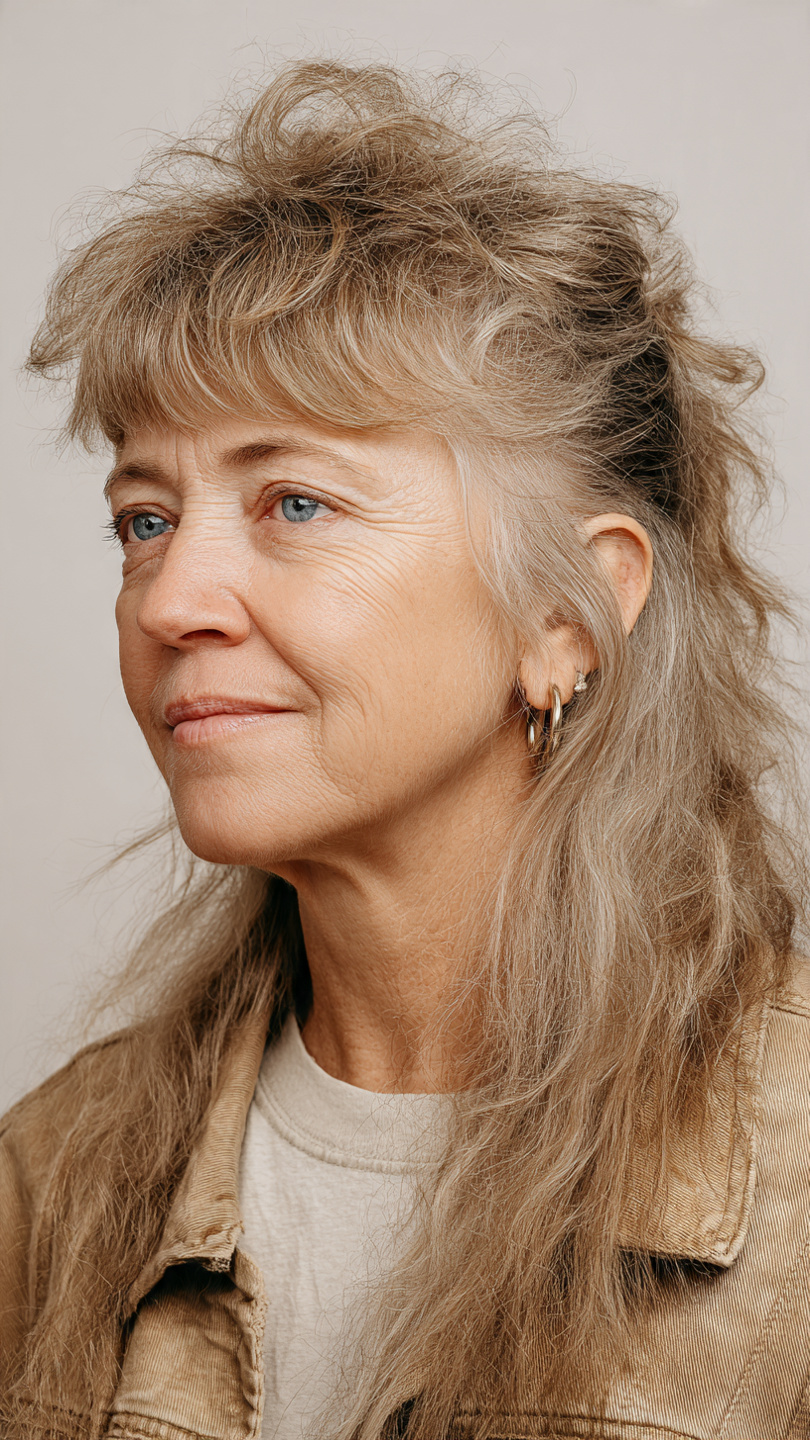
  • The Modern Short Shag: Fresh Reasons Older Women Are Loving This Effortless Cut

    The Modern Short Shag: Fresh Reasons Older Women Are Loving This Effortless Cut

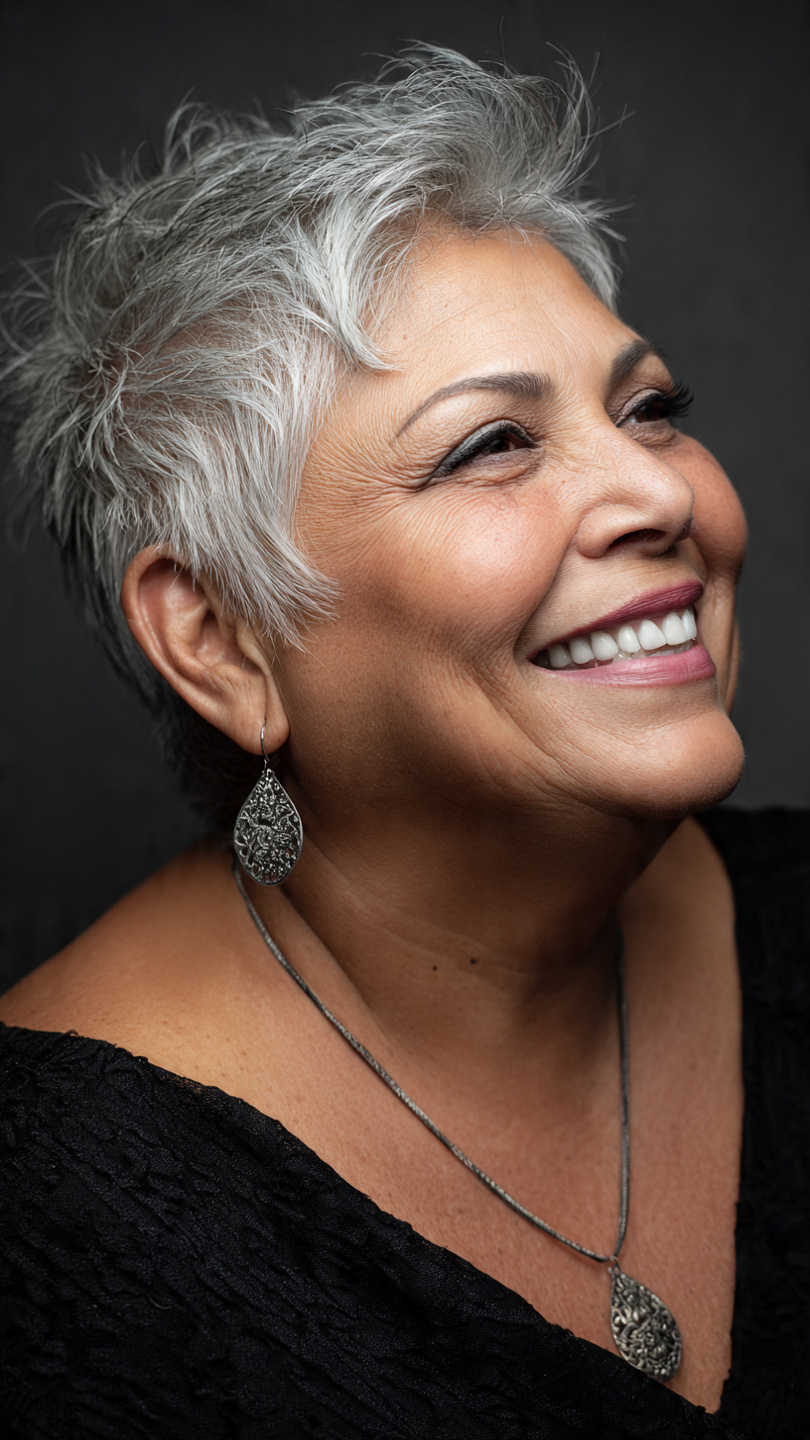
    For decades, older women were told to stick to safe, sensible “helmet” cuts or simple one-length bobs. But style has no expiration date. Enter the short shag: a choppy, textured, and surprisingly liberating haircut that breaks every boring rule. Unlike severe, rigid styles that can highlight thinning hair or a changing hairline, the short shag uses layers, movement, and volume to create a look that is youthful, edgy, and remarkably easy to maintain. Whether your hair is fine, curly, silver, or stubbornly straight, this rock-and-roll cut adapts to you—not the other way around.

    Here are seven compelling reasons to book that appointment today:

    1. Instant Volume and Lift at the Crown


    As we age, hair naturally loses density. A short shag strategically removes weight from the bottom, pushing volume up to the crown. By using short, stacked layers on top, the cut creates natural lift that lasts all day without heavy products. This vertical height balances softening facial features and gives the illusion of thicker, fuller hair instantly.

    2. Softens the Face with Wispy Fringes


    Harsh, blunt cuts can accentuate fine lines and jowls. The shag’s signature wispy bangs—whether curtain-style, side-swept, or choppy—softens the forehead and draws attention upward to your eyes. The textured edges around the ears and nape create a blurred, gentle frame that makes the whole face look more relaxed and approachable.

    3. Embraces and Enhances Natural Silver and Gray


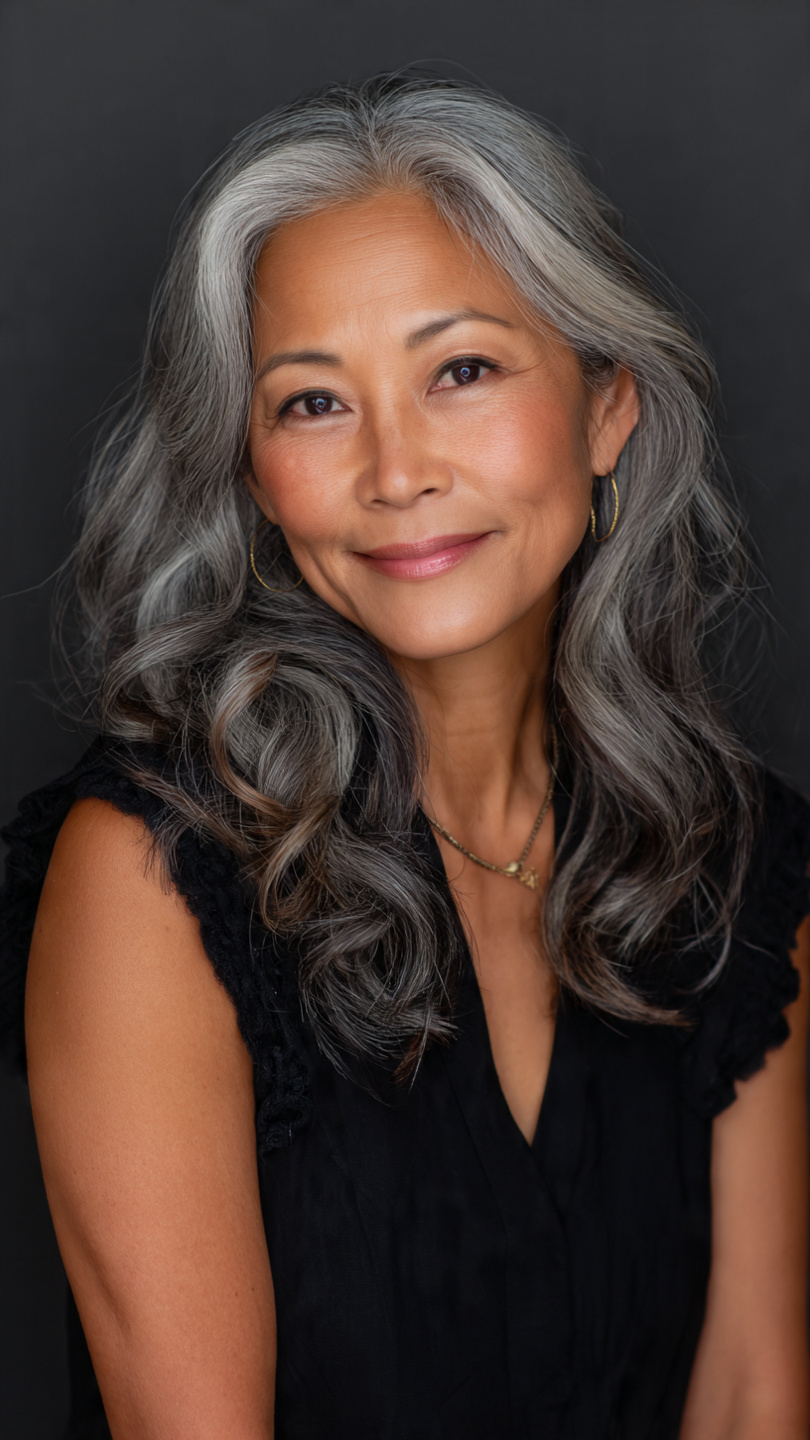
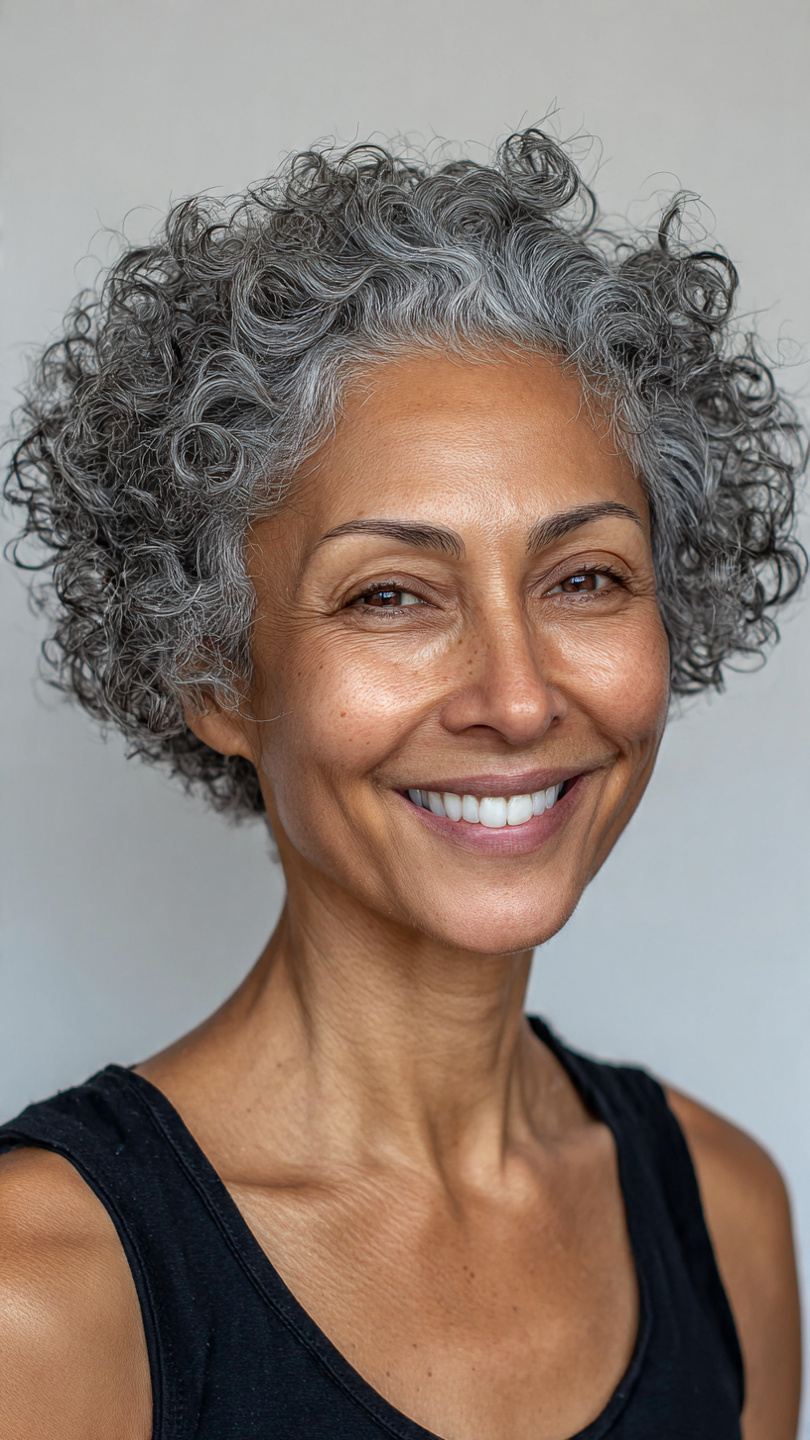
    The short shag is a dream for naturally gray or transitioning hair. Gray hair often has a coarser, wiry texture that resists smooth styles but loves layers. The choppy ends blend gray regrowth lines seamlessly, so you can grow out color gracefully or rock a full silver mane. The cut’s messy, lived-in vibe turns natural texture into an intentional, chic statement.

    4. Low Maintenance for a Busy or Active Lifestyle


    Forget blowouts and hot rollers. A short shag is designed to air-dry beautifully. Because the layers are deliberately uneven and textured, a little bedhead looks like “style,” not neglect. Simply spray in some sea salt texturizer, scrunch with your fingers, and go. It’s the perfect wash-and-wear cut for women who want to look polished without the daily time commitment.

    5. Hides Thinning or Receding Hairlines


    A receding hairline or sparse temples can feel frustrating, but the short shag offers clever camouflage. Longer, piece-y layers around the hairline can be swept forward or to the side to conceal bare spots. Additionally, the overall choppiness creates optical density—the uneven ends reflect light differently, making every strand appear thicker than it actually is.

    6. Works with Curly and Wavy Textures


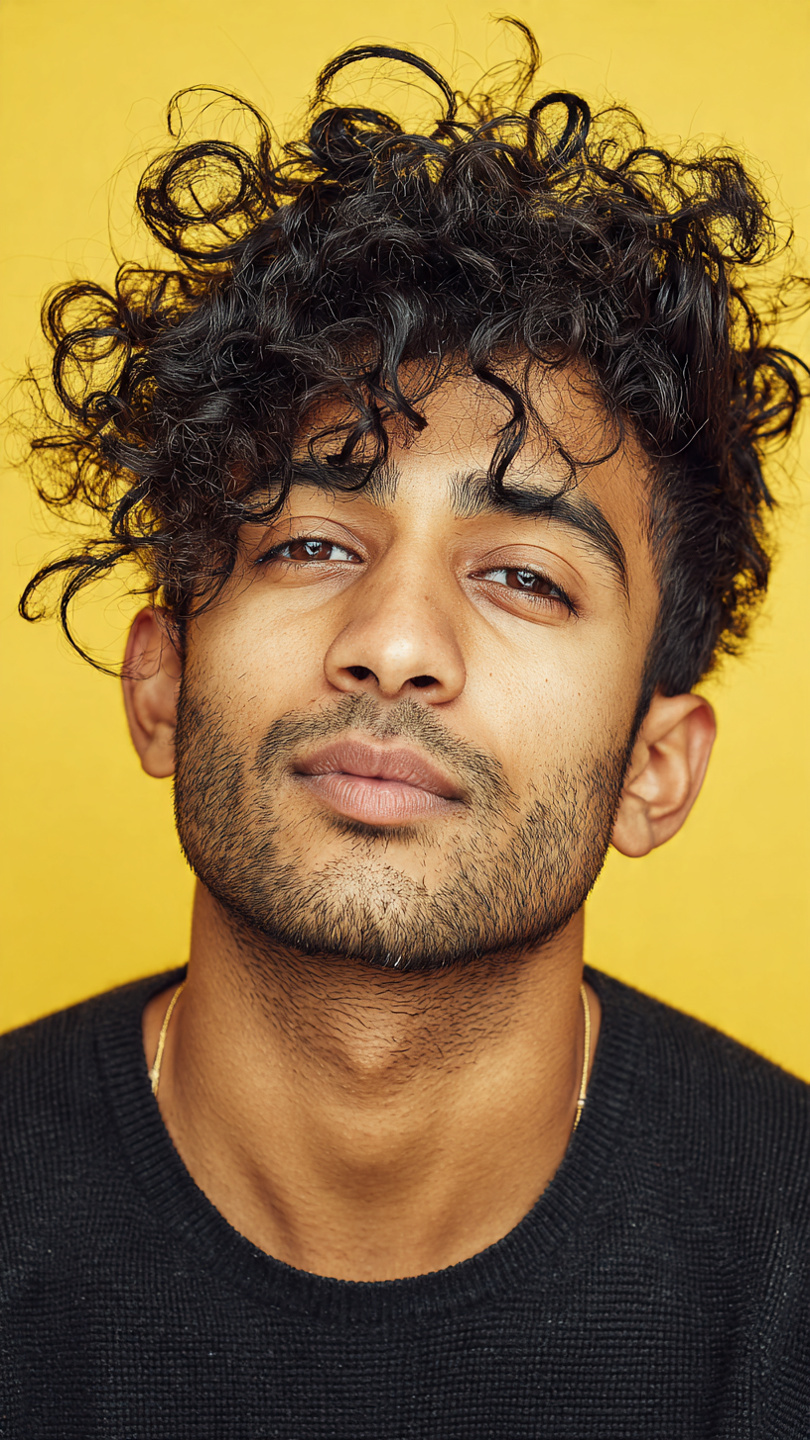
    Curly hair can become heavy and triangular as it grows. A short shag liberates curls by cutting internal layers that allow each ringlet to bounce individually. This removes the “pyramid” shape, giving you a rounded, airy silhouette. For older women with natural waves, the shag encourages your curl pattern to form soft, romantic shapes without frizz or excessive product.

    7. Gives a Confident, Modern Edge


    Perhaps the most important reason: the short shag says you don’t take yourself too seriously. It has a playful, slightly rebellious attitude that defies the notion that older women must blend into the background. Paired with bold glasses, silver hoops, or a swipe of lipstick, this cut becomes a signature of confidence. It tells the world, “I’m still here, and I’m still having fun with my look.”

    How to Know If a Short Shag Is Right for You

    Before you book that salon appointment, consider these three quick checks:

    • Face shape: The short shag is incredibly forgiving. Oval, round, square, and heart-shaped faces all suit this cut—just adjust the bang length and side volume. For very long faces, keep more width at the sides; for very round faces, add height at the crown.
    • Hair type: Fine hair thrives on the shag’s volume-boosting layers. Thick hair benefits from the weight removal. Curly hair loves the bounce. Even thinning hair works well with strategic piece-y layering.
    • Commitment level: If you prefer slick, perfectly smooth styles, the shag may frustrate you. This cut celebrates imperfection. Ask yourself honestly: do I have the patience to let my hair be a little messy?

    What to Tell Your Hairstylist

    Walk into the salon with confidence. Use these exact phrases:

    • “I want a short shag with lots of internal layers, not a stacked bob.”
    • “Keep the perimeter soft and uneven—nothing blunt.”
    • “Leave length for wispy bangs that I can sweep to the side.”
    • “Take weight out of the ends so the crown lifts naturally.”
    • “Show me how to style it with just my fingers and a texturizing spray.”

    Pro tip: Bring one reference photo (use any of the prompts above) and one “don’t” photo—usually a smooth, helmet-like cut. Visuals prevent miscommunication.


    Styling Tips for Every Morning

    The short shag is low-maintenance, but not no-maintenance. Here’s your 5-minute routine:

    StepProductAction
    1Leave-in conditionerApply to damp hair, focusing on ends
    2Texturizing spray or sea salt sprayMist evenly, scrunch with fingers
    3(Optional) Volumizing mousseWork into roots only for extra lift
    4DryAir-dry or use a diffuser on low heat
    5Finishing touchRub a drop of argan oil between palms and lightly skim over ends

    Avoid: Heavy gels, waxes, or serums. They weigh down the layers and kill the shag’s signature movement.


    Maintenance Schedule

    FrequencyAction
    Every 4–6 weeksTrim to keep the shape. The shag grows out better than most cuts, but layers blur without regular trims.
    Every 8–12 weeksProfessional reshaping if you have curly or very thick hair.
    DailyLess than 5 minutes of styling (see above).
    MonthlyDeep conditioning treatment, especially for gray or color-treated hair.

    Common Concerns—And Why They Shouldn’t Stop You

    “I’m too old for layers.”
    False. Age has nothing to do with layers. In fact, older hair benefits more from movement and texture than any other age group.

    “My hair is too thin.”
    The shag is actually recommended for fine hair. Short layers create the illusion of density. Just avoid over-texturizing (ask your stylist to use scissors, not a razor, on fine hair).

    “I don’t want to look like I’m trying too hard.”
    The shag’s secret weapon is effortlessness. It doesn’t scream “look at me”—it quietly says “I know what works.” That’s confidence, not trying.

    “What if I hate it?”
    Hair grows. But more importantly, a good shag can always be softened into a classic bob in one trim. Start with longer, softer layers, then go shorter if you love it.


    Conclusion

    The short shag haircut is more than a trend—it’s a practical, beautiful solution for older women who refuse to sacrifice style for ease. It delivers volume where you need it, softness around your face, and a daily routine that takes less time than brewing coffee. Unlike rigid cuts that fight against natural texture and aging hair patterns, the shag works with what you have, celebrating silver strands, waves, fine hair, and everything in between.

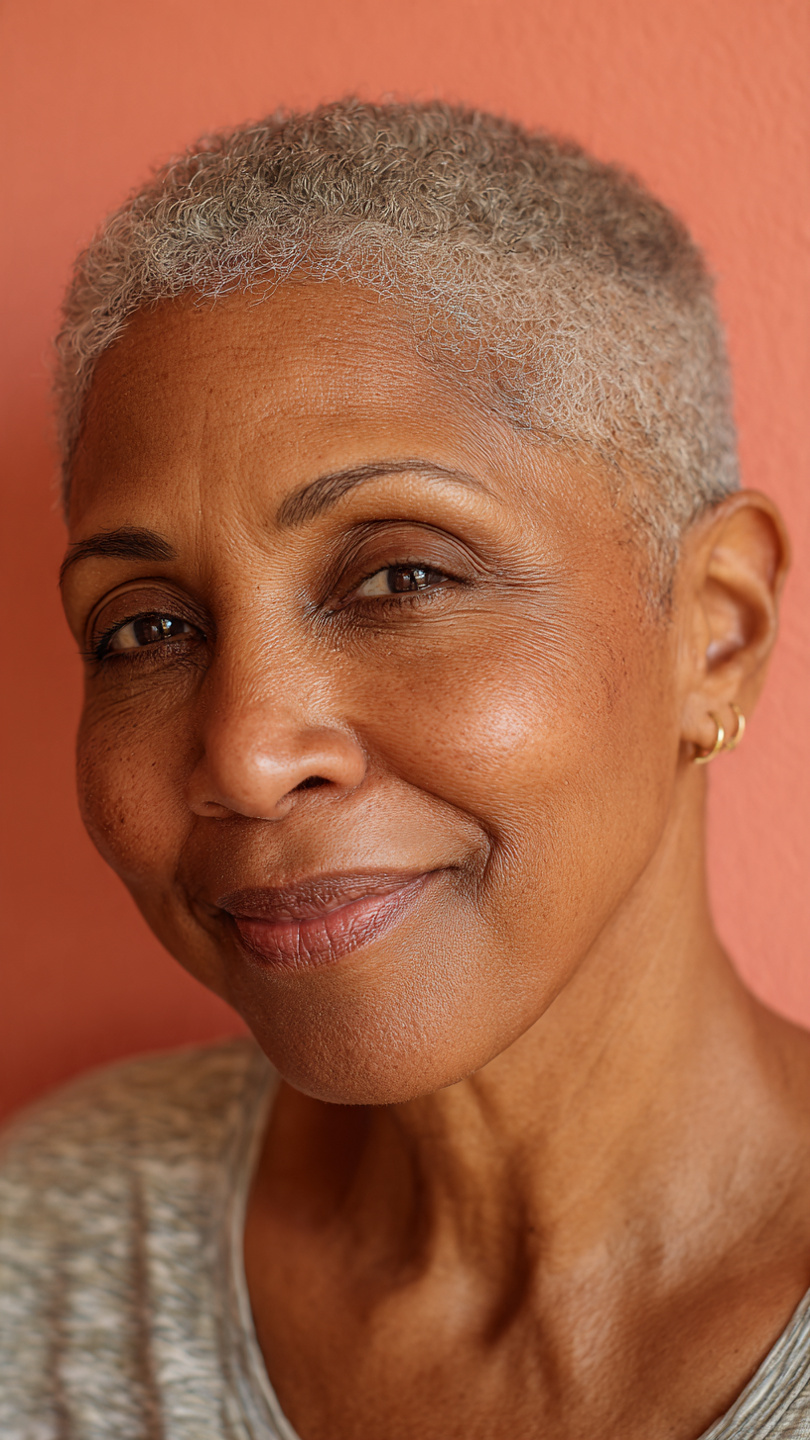
    From the Black woman embracing her natural silver crown to the White woman softening her features with wispy bangs, from the Latina rocking gray texture to the East Asian woman camouflaging a thinning hairline—this cut is genuinely universal. It asks for little and gives back confidence, edge, and hours of your week.

    So call your stylist. Bring a photo. Say the words “short shag.” Then wake up tomorrow, spray, scrunch, and walk out the door looking like you already have your life together—even if the laundry is still waiting.

    You’re not too old for this cut. You’re exactly the right age.


  • The Best Haircuts for Round Faces Over 50 (That Actually Slim)

    The Best Haircuts for Round Faces Over 50 (That Actually Slim)

    Let’s clear something up right away.

    When you have a round face over 50, most of the advice out there treats you like you want to hide your cheeks or fake an entirely different bone structure. That is not what we are doing here.

    A round face is soft, balanced, and age-defying by nature—round faces tend to look younger, longer. The goal is not to fight your shape. The goal is to choose a haircut that adds just enough structure, height, and asymmetry to create that subtle “slimming” effect without looking like you tried too hard.

    At 50+, your hair has likely changed texture. It might be finer. It might be drier. It might have less volume at the crown than it used to. That changes which haircuts actually work for you versus which ones look great on a 25-year-old with a round face.

    We have tested these 12 cuts on real women over 50 with fine to medium density. These are the ones that deliver the three things you actually need: lift at the crownlength below the chin, and softness around the jawline.

    Let’s get into it.


    1. The Long Layered Lob (The Gold Standard)

    The lob—long bob—hits that magic zone between the chin and collarbone. For a round face, this is the most forgiving length because it elongates without dragging your features down.

    Why it slims: The length sits below the chin, which visually stretches the face. Layers remove weight from the sides (where round faces get width) and keep movement around the jaw.

    For over 50: Ask your stylist for long layers that start at the cheekbone. This lifts the eye up and prevents the dreaded “triangle head” that happens when all the weight sits at the ends.


    2. Face-Framing Layers with a Center Part

    This is the single most underrated cut for round faces. A center part with layers that gently curve around the face creates a vertical line down the middle, which immediately slims.

    Why it slims: The center part breaks the horizontal width of a round face. The face-framing pieces hit at the cheekbones and jaw, casting shadows that carve out dimension.

    For over 50: Keep the layers soft—not choppy. Fine hair over 50 can look sparse if layers are too aggressive. Think “whisper layers” rather than dramatic steps.


    3. The Curtain Bangs + Shoulder-Length Cut

    Curtain bangs are the anti-aging bang nobody is talking about enough. Unlike blunt bangs that shorten a round face, curtain bangs part in the middle and sweep to the sides, creating a diagonal line.

    Why it slims: The diagonal sweep pulls the eye outward and downward, breaking the circle. When paired with shoulder-length hair, you get elongation without losing softness.

    For over 50: Curtain bangs hide forehead lines beautifully while still showing your eyebrows. Keep them wispy—thick curtain bangs can add width to the temples, which works against you.

    Read next: Curtain Bangs for Women Over 40: The Anti-Aging Cut Nobody’s Talking About
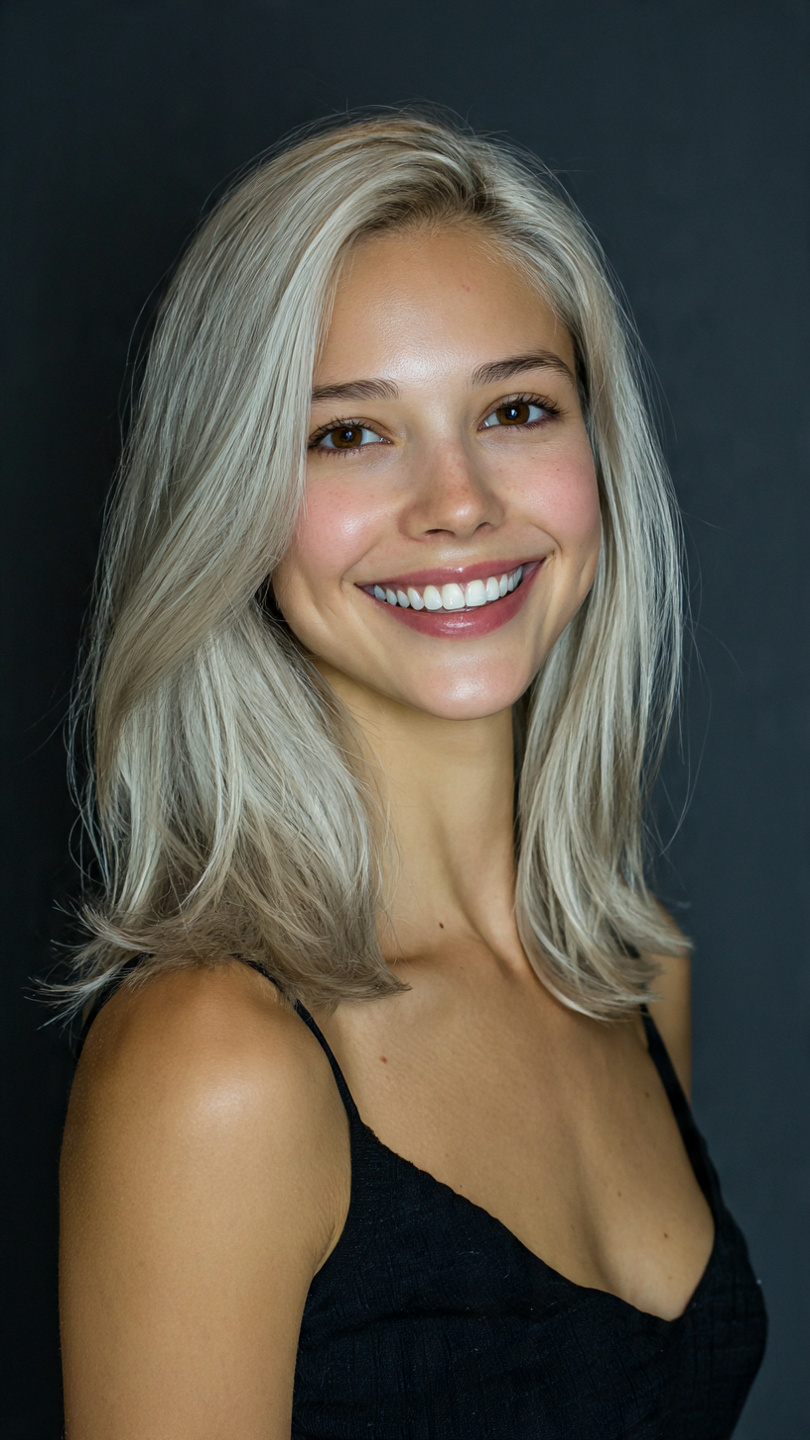

    4. The Asymmetrical Bob

    An asymmetrical bob—shorter in the back, longer in the front, with one side slightly longer than the other—creates deliberate unevenness. For a round face, asymmetry is your best friend.

    Why it slims: A perfectly symmetrical cut mirrors the symmetry of a round face, making it look rounder. Asymmetry breaks that mirror effect. The eye follows the diagonal line, not the circle.

    For over 50: Keep the asymmetry subtle. A one-inch difference between sides is plenty. Too dramatic reads as trendy (in a bad way) rather than polished.


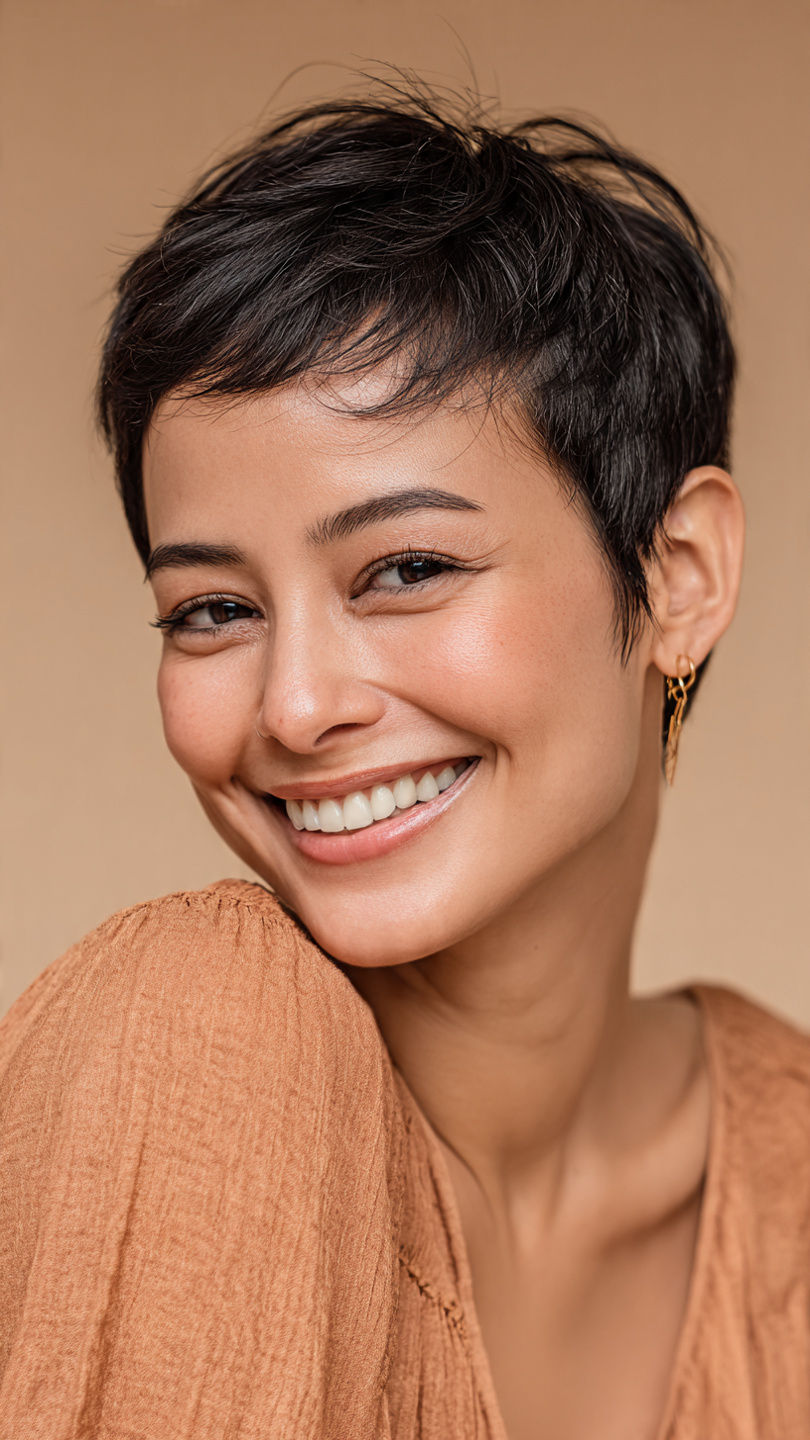
    5. The Textured Pixie with Height at the Crown

    Yes, a pixie can work on a round face—but not a flat one. The key is height. A pixie that sits flat against the head makes a round face look wider. A pixie with volume at the crown elongates everything.

    Why it slims: Height creates a vertical line. When the top of your head has lift, your face looks longer and leaner. Keep the sides close to the head to avoid adding width at the ears.

    For over 50: This is the cut for women with fine, thinning hair. The texture hides sparse areas, and the height creates the illusion of density. Ask for a spiky pixie or undercut pixie if you want edge.

    Read next: Short Hair, Big Personality: 20 Pixie Cuts That Aren’t All the Same


    6. The Blunt Bob with a Deep Side Part

    Blunt bobs scare some women with round faces because they worry about “adding width.” But a blunt cut (no layers) with a deep side part actually works beautifully.

    Why it slims: The deep side part creates a dramatic diagonal line across the forehead. The blunt ends create a strong horizontal line at the jaw, which acts as a visual “stop” that defines the face. The combination of diagonal and horizontal breaks the circle.

    For over 50: Only do this if your hair is medium to thick. Fine hair goes flat with a blunt cut. If you have fine hair, skip this and go back to the layered lob.


    7. The French Bob (Chin-Length with Micro Bangs)

    The French bob is shorter—chin-length or just above—with micro bangs that sit above the eyebrows. It is bold. It is not for everyone. But for the right round face, it is incredibly slimming and chic.

    Why it slims: The micro bangs expose the upper half of your face, drawing the eye up. The chin-length ends hit at the narrowest part of your face (the chin), not the widest (the cheeks). This changes the perceived shape entirely.

    For over 50: This works best on women with strong jawlines and good bone structure. If your jaw has softened with age, this cut can highlight that rather than hide it. Proceed with confidence or caution.


    8. The Shag Cut (Soft, Not 70s Rockstar)

    A modern shag is softer than the original. It has layers throughout, texture around the face, and usually some bangs. For round faces, the shag adds something most cuts don’t: width at the crown while keeping the sides slim.

    Why it slims: The shag puts volume at the top of your head (good) and keeps the sides relatively close (good). The messy, piece-y texture breaks up the smooth circle of a round face.

    For over 50: Ask for a soft shag or modern shag. You do not want the aggressive, choppy 1970s version. You want movement without looking like you just rolled out of a tour bus.


    9. The Bixie (Pixie + Bob Hybrid)

    The bixie is exactly what it sounds like: a pixie cut in the back, a bob in the front. It is shorter than a bob but longer than a pixie. For round faces, this is a sweet spot because it gives you the lift of a pixie with the face-framing length of a bob.

    Why it slims: The length in front hits at the jaw or below, elongating. The short back keeps the silhouette from getting too wide. The combination is naturally asymmetrical, which we already know works for round faces.

    For over 50: This is ideal for women transitioning from long hair to short hair. You get the ease of a pixie without the shock. It also works beautifully on gray hair because the texture hides regrowth.


    10. The Side-Parted Wavy Lob

    If you wear your hair wavy or curly, the rules change slightly. Curl adds width naturally. That means you need to be more intentional about length and part.

    Why it slims: A deep side part breaks the symmetry. Waves that start below the chin (not at the ears) keep the width lower on your face, which elongates. Loose, soft waves are better than tight curls for round faces.

    For over 50: Keep the length at collarbone or longer. Any shorter and curly hair will spring up to chin level, which adds width exactly where you do not want it.


    11. The Cloud Cut (Soft, Rounded Volume)

    The cloud cut is the 2026 trend that actually works for round faces over 50. It is soft, rounded, and voluminous—but the volume is at the crown, not the sides.

    Why it slims: Think of a cloud: fluffy on top, tapered at the bottom. That is the silhouette you want. The rounded top adds height. The tapered bottom keeps the face looking lean.

    For over 50: This cut is magic for fine hair because the soft layering creates volume without teasing or products. Ask your stylist for “rounded layers with weight removed from the perimeter.”


    12. The Long Pixie with Wispy Side Bangs

    Not ready for a full pixie? The long pixie keeps length at the top and front while the back and sides are short. Wispy side bangs finish the look.

    Why it slims: The length at the front (hitting near the eye or cheekbone) creates a diagonal line across your face. The short sides keep width minimal. The wispy texture prevents harsh lines that can make a round face look severe.

    For over 50: This is the “training wheels” pixie. If you have worn a bob for years and want to go shorter, try this first. It gives you the lift and ease of a pixie without the full commitment.

    What to Tell Your Stylist (Exact Words)

    You cannot assume a stylist knows what “slimming” means to you. Be specific. Here is exactly what to say when you sit in the chair.

    Print this or save it on your phone:

    *”I have a round face and I am over 50. My hair has gotten [finer / thinner / drier] than it used to be. I want a cut that adds height at the crown, keeps length at or below my chin, and removes bulk from the sides. I do not want anything that adds width at my cheeks or ears. Please show me where the layers will fall before you cut.”*

    Then, bring two photos:

    1. One photo of the haircut you want
    2. One photo of the same haircut on a woman with a round face (so they see the shape matters)

    One more thing: If your stylist says “that won’t work with your texture” — believe them. A great cut on thick hair looks flat on fine hair. A great cut on straight hair looks completely different on wavy hair. The goal is not the exact photo. The goal is the same effect on your actual hair.


    The 3 Things That Ruin a Good Haircut on a Round Face (Over 50)

    Avoid these. They are the fastest way to make your face look wider and your hair look thinner.

    1. Blunt Bangs That Hit at the Eyebrows

    Straight-across bangs shorten your forehead, which makes a round face look rounder. They also draw attention to forehead lines and crow’s feet. There is almost no scenario where blunt bangs are the right choice for a round face over 50.

    The fix: Curtain bangs, wispy side bangs, or no bangs at all.

    2. One-Length Hair That Hits at the Chin

    A blunt, one-length cut that ends exactly at your chin is the most widening cut possible for a round face. It creates a horizontal line at the widest part of your face. This is the opposite of what you want.

    The fix: Add layers, add a side part, or take the length below the collarbone.

    3. Flat Crown with Volume at the Sides

    If your hair is flat on top but puffy at the ears and jaw, your face will look like a circle sitting on a triangle. This happens when layers are placed wrong or when you have natural volume at the perimeter but no lift at the root.

    The fix: Ask for “volume at the crown” and “weight removed from the sides.” Use a volumizing powder or dry shampoo at the roots. Do not let your stylist “round out” the shape — you want height, not a dome.


    How to Style These Cuts at Home (In 5 Minutes or Less)

    Your new haircut will do 80% of the work. But the right 20% of styling makes the difference between “good haircut” and “people ask where you got it done.”

    For Fine or Thinning Hair

    StepWhat to DoTime
    1Spray volumizing mist at the roots while hair is damp30 sec
    2Flip head upside down and blow-dry on low heat2 min
    3Use a small round brush at the crown only (not the sides)1 min
    4Texturizing powder or dry shampoo at the roots for lift30 sec
    5Light hairspray, lift with fingers, go30 sec

    Total: 5 minutes

    For Medium or Thick Hair

    StepWhat to DoTime
    1Apply heat protectant and a lightweight mousse30 sec
    2Blow-dry with a paddle brush, focusing on lifting the crown2 min
    3Flat iron or wand just the face-framing pieces (not the whole head)1.5 min
    4Flip head and shake out with fingers30 sec
    5Flexible hairspray, go30 sec

    Total: 5 minutes

    For Curly or Wavy Hair

    StepWhat to DoTime
    1Apply leave-in conditioner and curl cream to wet hair1 min
    2Scrunch upward (do not rake fingers through)1 min
    3Diffuse upside down on low heat for 2 minutes2 min
    4Air dry for 5 minutes while you do something else
    5Flip head, shake roots, go30 sec

    Total: 4.5 minutes active time

    Read next: The 5-Minute Morning Makeup Routine: Dewy, Natural, Done


    The Best Products for Volume Without Weight

    You do not need expensive products. You need the right products. Here is what actually works for women over 50 with round faces and changing hair texture.

    Product TypeWhat to BuyWhy It Works
    Volumizing mousseLightweight, alcohol-freeAdds lift at the crown without drying out aging hair
    Dry shampooTinted for dark or light hairCreates grit at the roots for instant height
    Texturizing powderLoose powder, not sprayThe single best product for fine, flat hair
    Light hairsprayFlexible hold, not hardKeeps crown volume without crunch
    Root lift spraySpray directly at scalpHeat-activated volume that lasts all day

    What to avoid: Heavy oils, butters, creams, or “smoothing” serums. These add weight. Weight is the enemy of volume. If your hair is dry, use a leave-in conditioner only on the ends, never the roots.


    When to Go Shorter vs. When to Keep Length

    Not every round face needs the same length. Here is how to decide.

    Go Shorter (Pixie or Bixie) If:

    • Your hair has become noticeably thin or sparse
    • You want a 2-minute styling routine
    • You have good bone structure (cheekbones or jawline)
    • You are tired of finding hair everywhere
    • You live in a humid climate where longer hair frizzes

    Keep Length (Lob or Longer) If:

    • Your hair is still medium to thick
    • You like having options (ponytail, bun, half-up)
    • Your neck and jaw have softened with age (length disguises this)
    • You feel more feminine with longer hair
    • You are not ready for the psychological shift of short hair

    The honest truth: There is no wrong answer. But women who go short and hate it usually went too short too fast. Try a bixie first. Then a pixie. Then a cropped pixie. Give yourself off-ramps.


    What No One Tells You About Haircuts After 50

    Let me say the quiet part out loud.

    Your hair is not the same hair you had at 35. It is finer. It is drier. It grows slower. It breaks easier. It does not hold a curl the way it used to. Pretending otherwise will only lead to frustration.

    Here is what actually changed:

    Age 35Age 55+
    Hair held volume all dayVolume falls within hours
    Blowout lasted 3-4 daysBlowout lasts 1-2 days
    Could skip conditionerEnds are dry by afternoon
    Curls stayed curledCurls fall straight by lunch
    Hair grew fastHair grows slower, thinner

    This is not a tragedy. This is just information. You work with the hair you have now, not the hair you wish you had. The 12 cuts above were chosen because they work with these changes, not against them.

    One more thing: Gray hair has a different texture. It is often coarser, drier, and more resistant to styling. If you are growing out gray, add extra moisture (mask once a week) and expect that your cut may need to be adjusted. Gray hair does not behave like pigmented hair. That is normal.


    Frequently Asked Questions (Round Faces Over 50)

    Can I wear my hair very long with a round face?

    Yes, but with conditions. Very long hair (below the bust) pulls the face down visually. For a round face, you want some structure around the jaw. Very long hair with no layers will make your face look wider by comparison. Add long layers and face-framing pieces. Do not wear it all one length.

    Do I have to have bangs?

    No. Bangs are optional. If you have a high forehead, curtain bangs help. If you have a small forehead, skip bangs entirely. A center part or deep side part with no bangs works beautifully on round faces.

    Will a pixie make my face look fatter?

    flat pixie will. A textured pixie with height at the crown will not. The difference is volume. Show your stylist a photo of a pixie with lift, not a pixie that is slicked down.

    How often do I need to cut these styles?

    HaircutFrequency
    PixieEvery 4-6 weeks
    BixieEvery 6-8 weeks
    BobEvery 8-10 weeks
    LobEvery 10-12 weeks
    Long layersEvery 12-16 weeks

    Shorter cuts need more maintenance. Factor that into your decision.

    What if I have a double chin?

    Length is your friend. A lob that hits below the chin draws the eye past the jawline. Avoid chin-length cuts. Avoid blunt bangs. Add height at the crown to create a vertical line. And remember: every woman over 50 has something about her face she wishes were different. The haircut is not magic. It is just one tool.


    Conclusion

    Here is what you actually need to remember.

    A round face is not a problem to fix. It is a shape to work with. The goal is not to look like you have a different face. The goal is to look like you — just with better hair.

    The 12 cuts we walked through all do the same three things:

    1. They add height at the crown
    2. They keep length at or below the chin
    3. They remove bulk from the sides

    That is it. That is the formula. Everything else is preference.

    If you have fine or thinning hair, lean toward the pixie, the bixie, or the cloud cut. These create volume where you need it most.

    If you have medium to thick hair, the lob, the asymmetrical bob, or the blunt bob with a deep side part will give you structure without heaviness.

    If you are not sure, start with face-framing layers and curtain bangs. It is the lowest-risk change on this list and the one that makes the biggest difference for the smallest commitment.

    One last thing: Do not let fear keep you in a haircut that is not working. You are over 50. You have earned the right to look exactly how you want to look. If you have worn the same bob for 15 years and you are bored, try the bixie. If you have never had short hair, try the long pixie. Hair grows back. Not instantly — but it grows.

    Book the appointment. Bring the photo. Say the words we gave you.

    And when someone asks where you got your hair done, send them to this article.


    Read next: The Best Haircuts for Women with Fine Thin Hair After 50
    Read next: Short Hairstyles for Women Over 70: Ageless Chic
    Read next: What Haircut Suits Your Face Shape? A Plain English Guide


  • Short Hair Ideas for Plus Size Women: Flattering & Fierce

    Short Hair Ideas for Plus Size Women: Flattering & Fierce

    There’s a persistent myth that plus size women need long hair to “hide” or “balance” their bodies. Let’s shatter that right now: some of the most stunning, confident, and head-turning looks sit proudly above the shoulders. Short hair doesn’t just work for curvy women—it often works better. It draws the eye up to your face, highlights your collarbone, showcases your jewelry, and can actually make you look more proportionate and radiant.

    The key is choosing a cut that complements your face shape, hair texture, and personal style—not your dress size. Whether you have fine hair that needs volume, thick hair that needs weight removal, or natural curls that crave freedom, there’s a short ‘do for you.

    Here are 16 short hair ideas designed to celebrate your fullness, not camouflage it:


    1. The Textured Pixie with Height

    A classic pixie is timeless, but add significant height at the crown and it becomes a game-changer for round or full faces. The vertical lift elongates your silhouette, creating a beautiful balancing effect. Ask your stylist for choppy layers on top and close-cropped sides.

    2. The Asymmetrical Bob

    An A-line bob that is shorter in the back and longer (chin-length) in the front creates sharp angles that cut across the roundness of the face. This geometric shape adds structure and edge, making it a sophisticated choice for professional settings.

    3. Curly Tapered Cut

    If you have natural curls or coils, a tapered cut (short on the sides and back, voluminous on top) is pure magic. It removes the “triangle” effect that long curls can create, lifting your face and showing off your neck. Use a curl cream to define each ringlet.

    4. The Deep Side-Swept Undercut

    Keep length on top to sweep dramatically across your forehead, but shave or closely clip one side. This look is bold, modern, and draws the eye diagonally across your face—a very flattering line for plus size features. It also reduces bulk in thick hair.

    5. Chin-Length Blunt Bob with Bangs

    Don’t fear the blunt cut. A precise, straight-across bob that ends right at your chin can define your jawline beautifully. Add full, blunt bangs to shift focus to your eyes. Keep the length exact—not shorter, not longer—for maximum jaw-framing effect.

    6. The Voluminous French Bob

    A French bob is shorter (above the chin, near the earlobes) with soft, undone texture. For plus size women, pair it with wispy curtain bangs that part in the middle. This look is romantic, face-framing, and works wonders for oval or heart-shaped faces.

    7. Shaggy Pixie with Wispy Sideburns

    A little length at the “sideburn” area (soft, wispy pieces in front of the ears) is surprisingly slimming. It breaks up the width of your cheeks. Add shaggy, piece-y texture throughout the top for a rock-and-roll vibe that’s low-maintenance.

    8. The Stacked Lob (Long Bob)

    A stacked lob is shorter in the back (stacked for volume) and graduated to hit just above the collarbone in front. This is perfect for plus size women transitioning from long hair. The back “stack” gives you lift at the crown, while the front length keeps you from feeling too bare.

    9. Finger Wave Pixie

    For formal events or a vintage flair, try a finger wave pixie. The structured “S” curves of the waves create lines and movement that add artistic shape to a fuller face. Use strong-hold gel and a hooded dryer to set the waves.

    10. The Buzz Cut (Yes, Really!)

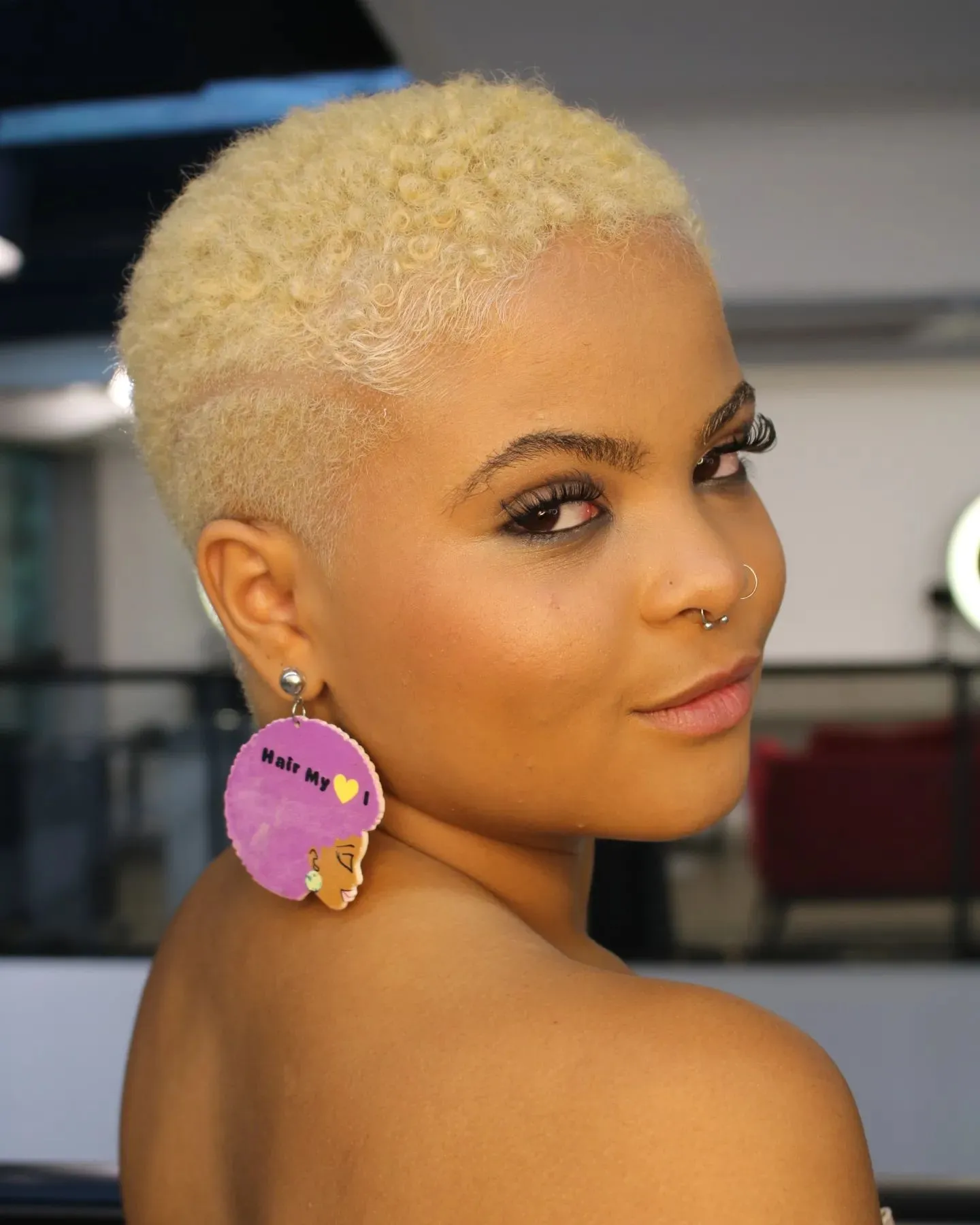
    A super-short buzz cut (number 2 or 3 guard all over) is the ultimate power move. When you remove hair entirely, your features—your eyes, lips, cheekbones—become the star. Plus size women with strong bone structure or beautiful skin absolutely glow with a buzz cut. Pair with bold earrings.

    11. The Disconnected Undercut Bob

    This is two looks in one. Keep a smooth, chin-length bob on top, but shave the underlayer completely (the hair at your nape). When your hair is down, it looks like a normal bob. When you tuck it behind an ear or put it up, you reveal a sexy, edgy surprise that also keeps you cool.

    12. Soft Curly Pixie

    For women with loose curls or waves, a soft, rounded pixie is incredibly feminine. The key is keeping the sides full (not shaved) and the top softly rounded like a cloud. This mimics the curve of your face in a harmonious way, rather than clashing with it.

    13. The Side-Parted Bowl Cut (Modernized)

    Forget the scary childhood version. A modern bowl cut is a uniform, rounded shape that sits just above the ears. To make it work for plus size faces, add a deep side part and keep the ends soft and texturized. Worn with glam makeup, it’s avant-garde and stunning.

    14. The Quiff

    A quiff is like a pompadour’s cooler cousin—volume is pushed up and slightly forward at the front hairline. This upward direction literally lifts your face. Keep the back and sides tight. It works best on straight to wavy hair and adds at least an inch of vertical height.

    15. Curly Bangs with a Rounded Afro

    If you have tight coils, consider a short, rounded afro that sits just above your ears, paired with curly bangs that graze your eyebrows. This creates a perfect frame around your eyes and cheekbones. The symmetry is powerful and celebratory of your natural texture.

    16. The Piece-y, Messy Crop

    Finally, a low-stress option: a short, all-over messy crop (about 2-3 inches long everywhere). The trick is to use a texturizing powder or sea salt spray to create separation between strands. The “imperfect”, piece-y lines are more forgiving and dynamic than a smooth, round shape.

    What to Consider Before Choosing Your Short Haircut

    Before you book that salon appointment or hand an AI-generated image to your stylist, take a moment to think about these five factors. Short hair is liberating, but the right short hair for you depends on more than just a pretty picture.

    1. Face Shape (Not Body Size)

    Short hair interacts with your face shape directly. Here’s a quick guide:

    • Round face: Look for height at the crown (pixie with volume, quiff) or sharp angles (asymmetrical bob).
    • Oval face: You can wear almost anything—blunt bobs, French bobs, even buzz cuts.
    • Heart-shaped face: Side-swept bangs and chin-length bobs work beautifully.
    • Square face: Soft, textured cuts with wispy edges soften a strong jawline.

    2. Hair Texture & Density

    • Fine/thin hair: Stacked bobs and textured pixies create volume. Avoid heavy blunt cuts.
    • Thick/dense hair: Undercuts and tapered cuts remove weight and prevent the “pyramid” shape.
    • Curly/coily hair: Tapered cuts and rounded afros honor your natural pattern without fighting it.

    3. Maintenance Level

    • Low maintenance: Buzz cut, messy crop, curly tapered cut (wash and go).
    • Medium maintenance: Pixie cuts, French bobs (need regular trims every 4–6 weeks).
    • High maintenance: Finger waves, asymmetrical bobs with blunt lines (need styling products and salon visits).

    4. Your Lifestyle

    • Active / gym-goer: Go very short (buzz, pixie) or a curly crop that survives sweat.
    • Professional setting: Asymmetrical bob, stacked lob, or soft curly pixie reads polished.
    • Creative / edgy style: Undercuts, disconnected bobs, or shaved designs let you express personality.

    5. The Seasons

    • Summer: Shorter cuts (buzz, tapered undercut) keep you cool.
    • Winter: Slightly longer pixies or French bobs allow for cozy hats without total flattening.

    How to Communicate With Your Stylist (Using AI Images the Right Way)

    You’ve generated the perfect AI prompt image. Now what? Here’s exactly how to use it without confusing your hairstylist.

    Do This:

    ✅ Save or screenshot ONE image from your AI generation.
    ✅ Show the image and say: “I love the overall shape and volume at the crown. But my hair is [thicker/finer/curlier] than this model’s.”
    ✅ Point to specific zones: “I want the back this short, but the front this long.”
    ✅ Bring photos of your own hair (freshly washed, no product) to show texture.

    Don’t Do This:

    ❌ Don’t say “Make me look exactly like the AI picture” — AI hair often defies gravity and physics.
    ❌ Don’t bring 10 different images. Pick one.
    ❌ Don’t ignore your hair’s natural texture. AI can generate straight hair on a curly model; reality cannot.

    A Script to Use at the Salon:

    “I have a reference photo from an AI image. I know my hair won’t look identical because my texture is different, but I want the same [length / volume / shape]. Can you show me where that cut would hit on my face?”


    Styling Tips for Short Hair on Plus Size Women

    Short hair isn’t a “cut and forget” situation. These five styling tricks make the difference between “I just rolled out of bed” and “I woke up like this.”

    1. Use Volume at the Crown Strategically

    • Apply a small amount of volumizing mousse to damp roots.
    • Blow-dry upward using a round brush or your fingers.
    • Why it works: Vertical height balances horizontal width.

    2. Define Your Edges (Especially for Curly/Coily Hair)

    • Use a soft edge brush or toothbrush with edge control gel.
    • Sweep edges away from your face, not straight down.
    • Why it works: Clean edges lift your eye upward and open your face.

    3. Add Statement Earrings

    • Short hair exposes your ears and neck. Wear large hoops, colorful acrylics, or chunky studs.
    • Why it works: Earrings create a new horizontal line that draws attention away from areas you might feel self-conscious about.

    4. Dry Shampoo Is Your Best Friend

    • Spray at the roots on non-wash days. Massage in with fingertips.
    • Why it works: Short hair shows oil faster than long hair. Dry shampoo adds texture and grip.

    5. Don’t Fear Product

    • Fine hair: Lightweight mousse or texture spray.
    • Thick hair: Cream or gel to control bulk.
    • Curly hair: Leave-in conditioner + curl cream + light hold gel (the “praying hands” method).

    Common Fears About Going Short (And Why They’re Wrong)

    Let’s address the three biggest worries plus size women have before cutting their hair short.

    Fear #1: “It will make my face look wider.”

    The truth: The wrong long hair makes your face look wider. Long hair that hangs straight down creates two vertical lines that frame and emphasize the widest part of your face. A good short cut with height or asymmetry breaks that up.

    Fear #2: “I don’t have the right neck or jawline.”

    The truth: There is no “right” neck or jawline. Short hair highlights what you do have—your eyes, your cheekbones, your smile. It doesn’t expose flaws; it reveals features.

    Fear #3: “People will stare at my body more.”

    The truth: People stare at confidence. Short hair signals self-assurance. When you walk into a room owning a bold pixie or a buzzed cut, people see you, not your size.

    Fear #4: “I can’t hide behind my hair anymore.”

    The truth: Exactly. And that’s the gift. Hiding never made anyone feel beautiful. Showing up as yourself does.


    Maintenance Schedule by Haircut Type

    HaircutSalon Visit FrequencyDaily TimeKey Products
    Buzz cutEvery 2–3 weeks1 minuteNone needed
    Pixie (textured)Every 4–5 weeks5 minutesMousse, texture spray
    Pixie (smooth)Every 3–4 weeks10 minutesPomade, fine-tooth comb
    Bob (chin-length)Every 6–8 weeks10–15 minutesHeat protectant, round brush
    Stacked lobEvery 6–8 weeks10 minutesVolumizing spray
    Curly taperedEvery 6–8 weeks5–10 minutesCurl cream, edge control
    UndercutEvery 3–4 weeks (undercut refresh)5 minutesDry shampoo

    Before & After: What to Expect Emotionally

    Going from long to short hair is not just a haircut. It’s an emotional experience. Here’s what’s normal.

    Week 1: Shock

    You might think, “What have I done?” This is normal. Give yourself 7 days before judging.

    Week 2–3: Euphoria

    You’ll notice how fast showers are. How light your head feels. How earrings finally make sense. Strangers might compliment you.

    Week 4–5: The Awkward Grow-Out Phase (if you don’t maintain it)

    Short hair grows fast. If you skip a trim, the back gets shaggy. Book your next appointment before you leave the salon.

    Week 6 and beyond: Ownership

    This is your hair now. You’ll stop thinking about it. You’ll just be the woman with the great short cut.


    Conclusion

    Short hair is not a punishment. It’s not a “brave” choice you have to apologize for. And it is certainly not reserved for thin women with delicate bone structure.

    The 16 ideas in this article—from the textured pixie to the buzz cut to the soft curly tapered cut—share one thing in common: they put you first. Not your insecurities. Not society’s outdated rules about what plus size women “should” do with their hair. Just you, your face, your style, and your life.

    If you take one thing away from this article, let it be this: Your body does not need to be balanced, hidden, or corrected by your hair. Your hair exists to express you. And if a short cut makes you feel powerful, beautiful, or simply lighter—then it is the right cut, regardless of your dress size.

    So save the AI prompts. Book the consultation. Bring the image to your stylist. And then, for the first few days, run your hands through your new short hair and smile. You didn’t lose length. You gained presence.

    Your face has been waiting for this.

  • Curtain Bangs After 50: The Soft, Youthful Update You’ve Been Looking For

    Curtain Bangs After 50: The Soft, Youthful Update You’ve Been Looking For


    If you’ve been wearing the same side-swept or no-bangs look for years, curtain bangs might just be the refresh you didn’t know you needed. Unlike heavy, blunt bangs that can feel high-maintenance or harsh, curtain bangs are soft, face-framing, and incredibly versatile. They gently part in the middle (like, well, a curtain), drawing attention to your eyes and cheekbones while softening fine lines around the forehead and brows. For women over 50, the right curtain bangs can add volume, movement, and a modern-yet-timeless feel—without requiring a full chop.

    Below are 10 well-structured ideas to help you find your perfect version:


    1. The Classic Long Curtain Bang

    Best for: Medium to long hair, oval or heart-shaped faces
    These bangs start at the crown and gradually taper to chin length. Sweep them to each side to create a soft “S” shape. The length keeps them low-maintenance and easy to tuck behind your ears when desired.

    2. The Wispy Gray Blend

    Best for: Naturally gray or silver hair
    Thinner, wispy curtain bangs allow your gray roots to blend seamlessly. Ask your stylist for point-cutting to remove bulk. This style softs facial contrast and looks stunning with silver tones.

    3. The Volumizing Lift (for Thinning Hair)

    Best for: Fine or thinning hair
    Curtain bangs cut with a slight “bend” at the root can visually add density. A light root lift product and a round brush blow-dry will create a gentle wave that lifts the mid-face area.

    4. The Curly or Wavy Curtain Bang

    Best for: Natural curls or permed hair
    On curly hair, curtain bangs should be cut dry and longer than straight styles—curls will spring up. They frame the face without adding width at the cheeks, balancing rounder or square face shapes.

    5. The Shag-Layered Combo

    Best for: Shoulder-length or shorter cuts
    Pair curtain bangs with a layered shag. The bangs connect into the shortest layers, creating texture and movement. This is ideal for women who want an edgy, low-styling-effort look.

    6. The Side-Parted Curtain (a.k.a. the Hybrid)

    Best for: Those nervous about a full middle part
    Ask for curtain bangs but style them with a slightly deeper side part. You’ll still get the face-framing effect without feeling like you’ve changed your part completely. Great for transitioning gradually.

    7. The Brow-Skimming Length

    Best for: Deep-set or hooded eyes
    Keep curtain bangs just below the brow bone—not in the eyes. This opens up the eye area and softens forehead wrinkles. Pair with a lightweight texturizing spray to avoid a heavy look.

    8. The Glamorous Blowout Bang

    Best for: Special occasions or weekly styling
    Cut curtain bangs with extra length (nose-to-chin). Use a large round brush and blow-dry them away from your face. The result is a polished, voluminous style that mimics a salon blowout.

    9. The Minimalist’s No-Style Style

    Best for: Wash-and-go routines
    Choose micro-curtain bangs: very short at the center (just above brows) and gently longer at the temples. They fall into place with just fingers and air-drying—no heat needed. Ideal for low-maintenance women.

    10. The Face-Framing Fade (for Short Pixies or Bobs)

    Best for: Short hair, strong jawlines
    In a pixie or short bob, curtain bangs become elongated pieces at the temples that blend into the sides. This elongates the neck and highlights cheekbones. Ask your stylist for “soft curtain texture” rather than a blunt fringe.

    What to Ask Your Stylist Before Getting Curtain Bangs Over 50

    A good consultation prevents regret. Bring these exact questions to your appointment:

    1. “Can you cut them dry first?”
      Curtain bangs behave differently on dry hair, especially if you have any wave or curl. A dry cut shows you exactly where they’ll fall.
    2. “How much forehead will you leave visible?”
      More visible forehead = softer, more open look. Less visible = more dramatic. Ask for a middle ground if unsure.
    3. “Will these work with my cowlick or widow’s peak?”
      Curtain bangs are forgiving, but a skilled stylist will adjust the parting or length to work with—not against—your natural growth patterns.
    4. “Show me where they’ll hit when my hair is air-dried vs. blown out.”
      Curtain bangs shrink when air-dried and lengthen when blown straight. Know both lengths before they cut.
    5. “Can you point-cut instead of blunt-cut?”
      Point-cutting removes weight and adds softness. Blunt cuts on curtain bangs can look harsh on mature faces.

    Daily Styling: 2 Minutes or Less

    Curtain bangs should simplify your routine, not complicate it. Here are three no-fuss methods:

    Method 1 – The Round Brush Blowout (1–2 minutes)
    Dampen just the bangs. Use a small round brush (1.5 inches). Brush forward, then roll away from your face. Blow warm, then cool to set.

    Method 2 – The Velcro Roller Hack (no heat)
    Dampen bangs. Roll one large velcro roller away from your face. Do makeup or dress. Unroll after 5–10 minutes. Finger-comb apart.

    Method 3 – The Pinch-and-Dry (30 seconds)
    For straight or slightly wavy hair: wet bangs, pinch them between two fingers, and blow-dry downward while shaking gently. No brush needed.

    Pro tip: Never pull curtain bangs straight down when wet. Always sweep them to the sides as they dry—that’s what creates the “curtain” effect.


    Maintenance Schedule: What to Expect

    TaskFrequencyNotes
    TrimEvery 4–6 weeksCurtain bangs grow out gracefully, but lose their shape after week 6
    Full washAs usualYou don’t need to wash bangs separately unless you have very oily skin
    Dry shampooEvery other dayLight spritz on the roots of bangs only—keeps them from separating
    Deep conditionWeeklyAvoid the bang roots; condition only the ends
    Full recutEvery 3–4 monthsThe rest of your hair may need a refresh, but bangs need more frequent trims

    Growing them out?
    Curtain bangs are the easiest bangs to grow out. After 8 weeks without a trim, they become face-framing layers. After 12 weeks, they tuck behind your ears completely. No awkward phase.


    Who Should Skip Curtain Bangs (Honestly)

    Curtain bangs are versatile, but not universal. Consider skipping them if:

    • You have very strong cowlicks at both front corners – The bangs may split unnaturally.
    • You wear your hair in a tight ponytail 5+ days a week – The bangs will need restyling every time you take it down.
    • You have extremely oily skin – Bangs absorb oil and may look greasy by midday unless you’re committed to dry shampoo.
    • You prefer zero hair on your forehead – That’s fine! Try a deep side-swept long bang instead.

    If any of these sound like you, consider long face-framing layers (no forehead coverage) or a soft curtain bang that starts past your eyebrows (minimal forehead contact).


    The Best Hair Textures & Face Shapes for Curtain Bangs Over 50

    Face shapes that shine with curtain bangs:

    Face ShapeWhy It WorksWhat to Avoid
    OvalAlmost any length worksNothing—you’re lucky
    RoundVertical lines from the center part elongate the faceVery short bangs that stop at the widest part of cheeks
    HeartSoftens a pointed chinHeavy, thick bangs that widen the forehead further
    SquareCurved bangs soften a strong jawBlunt, straight-across bangs
    Long/oblongHorizontal movement breaks up lengthUltra-long bangs that pull the face down further

    Hair textures that take curtain bangs beautifully:

    • Fine hair – Yes, with texturizing spray. Avoid heavy products.
    • Medium hair – Ideal. Holds shape without effort.
    • Thick hair – Yes, but ask for internal layering to remove bulk.
    • Curly hair – Yes, but cut dry and 1–2 inches longer than desired.
    • Wavy hair – Perfect. The wave adds natural volume.
    • Straight hair – Yes, but may need a tiny bit of texture powder for grip.

    Texture that needs extra consideration:
    Very coily/kinky hair – Curtain bangs are beautiful, but they require a curly specialist and regular hydration. Ask for “soft curly curtain fringe.”


    Products That Make Curtain Bangs Behave

    You don’t need a shelf of products. Start with these three:

    1. Tiny round brush (1–1.5 inches) – Anything larger won’t create the curve. Olivia Garden or Denman make excellent small brushes.
    2. Dry shampoo (powder or spray) – Apply to bang roots only. Klorane or Batiste work well. Powder formulas last longer.
    3. Lightweight texture spray or sea salt spray (diluted) – Spray on hands, then finger-comb through bangs. Avoid spraying directly on the roots.

    What to skip:
    Heavy oils, serums, or pomades. Curtain bangs should look airy, not piecey or greasy.


    Conclusion

    Curtain bangs are not a “young woman’s” hairstyle. In fact, they offer something that blunt bangs and severe side-swept styles cannot: softness, movement, and an effortless lift that draws the eye upward. For women over 50, that upward lift is everything. It brightens the eyes, softens forehead lines, and creates a gentle frame that no other cut quite achieves.

    The ten ideas above give you a roadmap—whether you want wispy gray blends, volumizing lifts for thinning hair, or a wash-and-go minimalist fringe. The key is starting longer than you think you need, finding a stylist who listens, and embracing a few minutes of simple styling each morning.

    And if you decide curtain bangs aren’t for you? They grow out into beautiful face-framing layers in just a few weeks. No drama, no regret.

    So go ahead. Book that trim. Bring a photo. And enjoy the most forgiving, flattering, and fun bang style you’ve ever had—at any age.

  • Glass Hair Is Beauty’s New Status Symbol — Here’s Exactly How to Get It at Home

    Glass Hair Is Beauty’s New Status Symbol — Here’s Exactly How to Get It at Home

    First it was glass skin — if you haven’t mastered that yet, achieve that coveted glass skin glow with our complete guide — then came glass nails. Now? Glass hair is officially beauty’s most-wanted look — and it’s not hard to see why.

    We’re talking mirror-like shine, impossibly smooth strands, and hair that looks so healthy it practically glows. You’ve seen it on your feeds. You’ve seen it on the red carpet. And now stylists across the US are reporting that it’s one of the most requested looks in the salon chair for summer 2026.

    The good news? You don’t need a salon appointment to get it. You just need to understand what actually creates that glassy effect — and have the right products in your bathroom cabinet.


    What Actually Makes Hair Look Glassy?

    Here’s the thing most articles won’t tell you: glass hair isn’t really about a specific style. It’s about cuticle health.

    Each strand of your hair is covered in tiny overlapping scales, like roof tiles. When those scales lie flat and smooth, light bounces off evenly — and your hair looks shiny and glassy. When they’re raised or damaged (from heat, color, dryness, or hard water), light scatters in every direction — and your hair looks dull and rough.

    So the path to glass hair isn’t just product-layering. It’s about anything that smooths and seals the cuticle: hydration, bond repair, the right heat tools, and the right finishing products.

    If your hair is also feeling thinner than it used to be, what causes thinning hair after 40 — and the fixes that reverse it covers the root causes — and many of those same fixes support the glass hair look by strengthening the hair shaft.

    Every product recommendation below works because of this mechanism — not just because a brand says so.


    How to Get Glass Hair: 3 Routes

    Route 1: The 5-Minute Fix
    If you want glass hair today, a gloss treatment or shine serum applied to dry hair is your fastest path. Takes five minutes, no special tools required.

    Route 2: The Blowout Method
    Blow-dry with downward airflow and tension to flatten the cuticle, then finish with a flat iron on medium heat. The key is direction — always pointing heat downward, tip to root. Finish with a lightweight oil through the ends only.

    Route 3: The Treatment Route
    Once a week, swap your conditioner for a bond-building gloss treatment. Over 2–3 weeks, you’ll notice a cumulative improvement in shine that no styling product alone can match.

    Glass hair pairs beautifully with a dewy, minimal makeup look. If you’re after that complete fresh-faced aesthetic, dewy, natural-looking makeup in five minutes flat shows you how to achieve it in record time.


    The Best Glass Hair Products Available on Amazon Right Now

    Best Gloss Treatment: Kérastase Chroma Absolu High Shine Gloss

    This is the one beauty editors keep coming back to. It works in just one to two minutes in the shower, uses lactic and amino acids to seal the cuticle, and works on all hair types including color-treated. If you only buy one product from this list, make it this one.

    👉 Buy Kérastase Chroma Absolu Gloss on Amazon


    Best for Frizz Control + Shine: Color Wow Pop + Lock Serum

    A pea-sized drop applied to dry hair delivers both frizz control and a glossy, lacquered finish without weight or greasiness. Particularly good for medium to thick hair.

    👉 Buy Color Wow Pop + Lock Serum on Amazon


    Best Budget Gloss: IGK Expensive Clear Gloss Top Coat

    The name says it all. It’s literally marketed as a “glass hair” treatment and it’s a bestseller in Amazon’s hair gloss category. Clear formula, so it works on any hair color.

    👉 Buy IGK Expensive Clear Gloss on Amazon


    Best for Color-Treated Hair: dpHUE Gloss+

    Available in five shades (including a clear version), this in-shower gloss uses ceramides and upcycled lemon zest to hydrate and add shine while gently refreshing your color.

    👉 Buy dpHUE Gloss+ on Amazon


    Best Heat Protectant for Glass Hair: Kérastase Gloss Absolu Glaze Milk

    Apply to damp hair before blow-drying. It protects up to 450°F, detangles, and controls frizz and flyaways — all while setting you up for that high-shine blowout finish.

    👉 Search for Kérastase Gloss Absolu Glaze Milk on Amazon 


    Best Affordable Option: John Frieda Luminous Glaze

    Under $10. Specifically formulated to boost shine, but the clear version works on any shade. A solid starter product if you want to try the glass hair routine without committing to a premium price point.

    👉 Buy John Frieda Luminous Glaze on Amazon


    Best for Curly and Natural Hair: Olaplex No. 7 Bonding Oil

    Glass hair is not just for straight hair. The real key to glassy shine on curly and natural hair is hydration — and this concentrated bonding oil smooths the cuticle while adding high-shine finish without weighing curls down.

    👉 Buy Olaplex No. 7 Bonding Oil on Amazon


    Does Glass Hair Work on All Hair Types?

    Yes — with one adjustment in approach.

    For straight and wavy hair, the path is cuticle-smoothing: gloss treatments, heat with downward airflow, finishing oils.

    For curly and natural hair, the path is hydration-first. Well-moisturized curls naturally reflect more light. Focus on a deeply hydrating gloss treatment, smoothed edges, and glossy ends. You’re not trying to make curly hair straight — you’re bringing out the natural reflectivity that lives in healthy, hydrated curls.

    This same principle of working with your natural texture applies to haircuts too. Glass hair is particularly striking on a sharp, structured blunt bob — the shine amplifies those clean, precise lines and makes the whole look feel more expensive.


    Frequently Asked Questions

    Is glass hair the same as glazed hair?
    Almost. A hair glaze is a specific treatment that coats the strand for shine and tone — it’s one method for achieving glass hair. Glass hair is the aesthetic goal. Think of glazing as one of several routes to get there.

    How long does glass hair last?
    With the right products and no heat damage, you can maintain the look between washes easily. A weekly gloss treatment keeps the cumulative effect building over time.

    Do I need a flat iron?
    No. The blowout method with downward airflow gets you most of the way there. A flat iron amplifies the shine further, but the gloss treatments and finishing products do the heavy lifting.


    Ready to try glass hair? The easiest place to start is a 5-minute in-shower gloss treatment once a week — your hair will tell you the difference after the first use.

    Looking for that complete head-to-toe glass aesthetic? Start with luminous, mirror-finish skin from head to toe — because glowing skin and glossy hair were made for each other.

  • Genius Curly Haircuts for Thin Hair That Add Instant Volume and Bounce

    Genius Curly Haircuts for Thin Hair That Add Instant Volume and Bounce

    If you have thin hair and natural curls, you’ve likely faced a frustrating paradox: curls need density to hold their shape, but thin hair often falls flat or looks sparse. The good news? The right haircut can transform limp, see-through curls into a full, bouncy, and voluminous style.

    Thin curly hair requires strategic layering, weight removal, and shape control. Cut it too blunt, and it lacks movement. Cut it too layered, and it looks even thinner. In this guide, I’ll walk you through 10 expertly designed haircuts that create the illusion of thickness, boost root volume, and make every curl count.


    10 Curly Haircuts for Thin Hair:

    1. The Curly Shag

    Why it works: The shag is a thin-haired curly’s best friend. With short layers on top and longer pieces underneath, it builds a “triangle of volume” at the crown.
    Key detail: Ask for wispy, not chunky, bangs to avoid weighing down fine curls.
    Best for: 2B to 3B curls.

    2. The Rounded Bob (No Longer Than Chin-Length)

    Why it works: A blunt bob on straight hair looks dense, but on curly thin hair, it can become bottom-heavy. The solution? A rounded bob that stacks slightly at the back and keeps the perimeter soft.
    Key detail: Length should end at your chin when curls are dry. Any longer, and gravity pulls the curls flat.
    Best for: Type 3A–3C with fine strands.

    3. The “Undercut” for Volume Illusion

    Why it works: This sounds counterintuitive, but removing a small hidden triangle of hair from the nape allows the top curls to stack and appear much fuller.
    Key detail: Keep the undercut hidden (no shaved designs) so it only serves as internal weight removal.
    Best for: Dense-but-fine curly hair (lots of strands, each thin).

    4. The Micro-Layered Pixie

    Why it works: When hair is very thin, going short removes the weight that pulls curls straight. A pixie with micro-layers (cuts as small as ¼ inch) creates a fuzzy, cloud-like halo of curls.
    Key detail: Leave length slightly longer on top to form ringlets, and keep the sides tapered but not shaved.
    Best for: Type 3B–4A with low density.

    5. The A-Line Curly Bob

    Why it works: Shorter in the back, longer in the front, the A-line cut instantly boosts volume at the crown while preserving length in front for versatility.
    Key detail: The back should be stacked internally (using point-cutting, not razors) so curls don’t collapse.
    Best for: Type 2C–3B who want length in the front.

    6. The DevaCut “Layering Without Losing Mass”

    Why it works: Inspired by the DevaCurl method, this dry cut follows your curl pattern. For thin hair, stylists use “carve-and-slice” techniques to remove weight vertically, which preserves density while adding lift.
    Key detail: Insist on dry cutting only. Wet cutting thin curls leads to shockingly short, flat results.
    Best for: All curl types, especially fragile, low-density hair.

    7. The Curly Mullet (Modern, Soft Version)

    Why it works: Don’t fear the mullet. A soft curly mullet keeps short, stacked volume at the crown and sides, with wispy length in the back. The contrast creates fullness where it matters most.
    Key detail: Avoid harsh lines; ask for “invisible graduation” between the short and long sections.
    Best for: Adventurous types 3A–3C with medium to fine strands.

    8. The One-Length (But Only If…)

    Why it works: One-length curls work for thin hair only if your hair is already dense enough to form a solid curtain. For most thin-haired curlies, this is risky.
    Key detail: If you try it, keep the hemline soft (not blunt) and add long, subtle internal layers no shorter than 2 inches from the ends.
    Best for: Type 2A–2C wavy-thin hair with high density per square inch.

    9. The Asymmetrical Curly Cut

    Why it works: By making one side slightly shorter (by 1–2 inches), you create visual asymmetry that tricks the eye into seeing more movement and body. The shorter side lifts the roots on that entire half of your head.
    Key detail: The difference should be minimal—too dramatic, and thin curls will look patchy.
    Best for: 2B–3B who want a modern, edgy shape.

    10. The Crown-Focused “Layered Bowl” (No, Not the 90s Bowl Cut)

    Why it works: This is a disguised version of a bowl cut, but for thin curls, it’s genius. The hair is cut to the same short length all around the crown (like a halo), while the lower perimeter is texturized away. The result? A full, circular cloud of curls.
    Key detail: The top must be cut to your shortest curl’s shrinkage length (test by pulling a curl straight, then letting it spring back).
    Best for: Very tight curls (3C–4C) with thin, fragile strands.

    Essential Pre-Cut Checklist for Thin Curly Hair

    Before you sit in the stylist’s chair, complete these four steps to ensure your new cut delivers maximum volume.

    1. The Dry Pull Test

    Gently stretch one curl from root to tip. If it stretches more than 40% of its length before springing back, your hair has high elasticity and needs more layering to avoid looking stringy. If it barely stretches, keep layers wider and softer.

    2. The Density Assessment

    Part your dry hair down the middle in bright light. Can you clearly see your scalp along the part line? Yes → You have low density. Avoid over-layering. No → You have medium to high density and can handle shag or mullet cuts.

    3. The Product Compatibility Check

    Heavy butters, creams, and oils collapse thin curls within hours. Before booking a cut, switch to a lightweight leave-in conditioner and a foam or mousse styler for one week. This reveals your true curl pattern without product weight, helping your stylist cut accurately.

    4. The Reference Image Rule

    Do not bring photos of thick, dense curly hair. Find three images of thin-haired curlies with a similar curl type to yours. Label each with what you love (volume at crown? soft perimeter? bang length?) and what you want to avoid.


    What to Tell Your Stylist (Exact Script)

    Use this word-for-word when communicating with your hairstylist:

    “I have thin curly hair that falls flat easily. I want to keep my length at [chin / shoulder / collarbone] when dry. Please cut my hair dry, curl by curl. Do not use thinning shears or a razor. Use point-cutting or slide-cutting only. I want internal layers that remove weight vertically, not horizontally. Keep the perimeter soft but not wispy. And please show me the length after every second cut.”

    Red flags to watch for: If your stylist insists on washing and cutting wet, refuses to show you the back mid-cut, or reaches for thinning shears, stand up and leave.


    The 3-Product System for Styling Thin Curls Post-Cut

    Even the perfect haircut fails without the right products. Stick to this minimalist system:

    StepProduct TypeWhat to Look ForWhat to Avoid
    1Lightweight leave-inWater-first ingredient, spray or lotion consistencyCreams, butters, oils
    2Volumizing foam or mousseLabel says “root lift” or “fullness”Gels with heavy polymers
    3Flexible hold hairsprayLight mist, touchable finishHard-hold aerosol

    Application order: On soaking wet hair, spray leave-in → scrunch in mousse → microplop with a microfiber towel → diffuse upside down → finish with one mist of hairspray at the roots.


    How Often to Re-Cut Thin Curly Hair

    Thin curls lose shape faster than thick curls because each strand has less internal support. Follow this schedule:

    • Every 6–8 weeks: Micro-trim (just ¼ inch off the perimeter and refreshing the lightest layers). This maintains volume without losing length.
    • Every 12–16 weeks: Full restructure cut. Return to your original cut shape (shag, bob, etc.) because thin curls relax and drop over time.
    • Every 24 weeks (6 months): Complete reset. Cut back to baseline length if you notice see-through ends or flat crown despite proper styling.

    Sign you’re overdue: When your dry curls hang straight for the first two inches before forming a curl, the weight has won. Book immediately.


    Two Common Mistakes That Ruin Thin Curly Cuts

    Avoid these at all costs:

    Mistake #1: Asking for “More Layers” to Add Volume

    More layers on thin hair remove density at the ends, making your hair look wispy and transparent. Instead, ask for “internal layering” or “weight removal from the inside only.” This keeps the outer perimeter intact while lifting the roots.

    Mistake #2: Growing Out Your Cut “Just to See”

    Thin curly hair does not get better with length past a certain point. For most curl types, the maximum volume length is between chin and collarbone. Anything longer creates a “triangle head” or flat curtain effect. Commit to your length.


    Conclusion

    Thin curly hair is not a limitation—it is a specific texture that demands a specific strategy. The ten haircuts in this guide share one common philosophy: remove weight strategically, never density. Whether you choose the playful curly shag, the precise rounded bob, or the bold asymmetrical cut, the goal is always the same—lift at the roots, fullness through the mid-lengths, and a soft, opaque perimeter.

    Remember that no haircut works alone. Pair your new shape with lightweight products, a diffuser, and a six-week trim schedule. And most importantly, stop comparing your thin curls to thick-haired influencers. Your hair has its own rhythm: less weight, more bounce. When you cut for your density, not for an ideal, you stop fighting your curls and start showing them off.

    Now go book that appointment. Bring your reference photos. Say the script. And watch your thin curls do something you may have never seen before—stand up, hold their shape, and finally look as full as they feel.

  •  Breathtaking Curly Updos That Celebrate Texture & Volume

     Breathtaking Curly Updos That Celebrate Texture & Volume

    For too long, curly hair was treated as a problem to be solved rather than a gift to be celebrated. When it comes to updos, many curlies fall back on the same tight, slicked-back bun out of fear that their texture might look “messy” or unruly. But the truth is exactly the opposite: curls provide the natural volume, grip, and intricate detail that straight hair can only achieve with pins, backcombing, and extensions.

    Whether you have loose waves, tight coils, or something in between, a curly updo is your opportunity to turn your texture into architecture. From romantic date-night styles to powerful red-carpet statements, these 11 ideas will work with your curl pattern—not against it. No frizz-shaming, no flat-ironing, and no fighting your natural texture. Let’s dive in.


    1. The Pineapple Puff (High & Loose)

    Best for: Type 3A–4C, second or third-day curls

    The pineapple puff is the ultimate lazy-girl updo that somehow looks intentional. Gather all your hair to the very top of your head—right around your hairline—and secure it with a silk or satin scrunchie. The key is not pulling the ends all the way through on the last loop, leaving a fat, rounded puff that spills out like a blooming flower.

    Pro tip: Leave a few face-framing curls out and define them with a drop of oil. For extra height, use two scrunchies stacked together.

    2. The Curly French Twist (Fake-Out Version)

    Best for: Medium to long hair, Type 2B–3C

    A true French twist is tricky on curls because they refuse to lie flat. Instead, create the illusion: Sweep all your hair to one side, twist it upward vertically along the back of your head, and tuck the ends under. Secure with two long spiral pins (U-shaped pins work better than bobby pins for curly texture). The natural spring of your curls will hold the shape without needing a single bobby pin grid.

    Why it works: Curls lock into each other like Velcro, so the twist stays put without hairspray cement.

    3. The Low, Knotted Chignon

    Best for: Shoulder-length to long curls, formal events

    This style looks complex but takes under three minutes. Pull your curls into a low ponytail at the nape of your neck. Divide the ponytail into two sections, tie them into a loose knot (like the first step of tying a shoelace), then tuck the ends over and under the knot. Pin any stray pieces flat against your head.

    Variation: For a more organic look, don’t hide the ends—let a few curly tendrils poke out like ivy around the knot.

    4. The Curly Space Buns (Double Buns)

    Best for: Festivals, gym sessions, or any “fun” event

    Part your hair down the middle. On each side, gather hair up toward your crown and twist it into a small bun. Because curls have volume, even a tiny bun will read as substantial. Leave the lower half of your hair (from ears down) loose or pin it up—both work.

    Why it’s genius: Space buns hide uneven shrinkage. If one side of your head always curls tighter than the other, nobody will ever notice.

    5. The Sleek Front, Voluminous Back Combo

    Best for: Weddings, galas, or any updo that needs to last 8+ hours

    Apply a strong-hold gel or mousse to your front edges and smooth them down with a boar-bristle brush into a side or middle part. Pin that smoothed section flat against your scalp. Then, completely ignore the back of your head—gather the remaining curls into a wild, oversized bun or pouf. The contrast between sleek discipline and curly freedom is incredibly editorial.

    Pro tip: Use a satin scarf to tie your edges down for 10 minutes before pinning. That gives you glass-like sleekness without heat.

    6. The Curly Crown Braid (Pull-Through Braid)

    Best for: Type 2B–3C, when you want a braided look without actual braiding

    Instead of a traditional three-strand braid (which often frays on curls), make a “fake” braid: Section your hair into three big clumps. Instead of crossing strands over each other, simply pull each clump up and through the middle. This creates a braided shape that showcases each curl clump individually. Once complete, wrap the whole thing around your head like a crown and pin.

    Visual effect: It looks like a intricate Celtic braid but takes 60% less time.

    7. The Pin-Curl Updo (Using Your Own Curls as Pins)

    Best for: Type 3B–4C, shorter curly hair (chin to shoulder length)

    This is an advanced move but a showstopper. Instead of using bobby pins, take individual curl clumps, coil them into a flat spiral against your scalp, and pin them with their own ends tucked underneath. Layer these pin curls all over your head, overlapping slightly. The result looks like a mosaic of rosettes.

    Who this is for: People with naturally defined curl clumps that hold a spiral shape without product. If your curls fall out easily, skip this one.

    8. The Half-Up Curly Waterfall

    Best for: Long curls, romantic or bohemian vibes

    Take the top half of your hair (from the temples up) and secure it loosely at the back of your crown with a claw clip or pins. But here’s the twist: before pinning, gently pull a few individual curls out of the gathered section so they cascade down over the secured part. The pinned section acts like a dam, and the fallen curls become the waterfall.

    Styling note: This works best on wash-day curls with good slip. Day-old curls tend to grip too much and won’t fall naturally.

    9. The Curly Gibson Tuck (Vintage-Inspired)

    Best for: Type 2A–3A, medium length, vintage or officewear

    Roll your curls inward from the bottom up, as if you were putting them into a very low ponytail but stopped halfway. Once the roll is tight against your nape, fold the whole thing upward and pin it flat against your head. The visible roll should look like a smooth, tucked pillow of curls. Edwardian vibes, zero heat.

    Caution: This requires some length—at least armpit level when stretched. Shorter curlies will end up with a mini tuck, which is also adorable.

    10. The Messy Bun (But Intentional)

    Best for: Every curl type, every day

    The universal favorite, but done right: Do not brush your curls. Do not smooth them. Simply gather everything into a high ponytail, twist loosely, and coil into a bun. Now—and this is critical—pull out at least 10–15 individual curls from the bun’s perimeter so it looks exploded. Then take two bobby pins and pin nothing—just weave them into the bun as decoration.

    The rule: If your messy bun looks like you tried, it’s wrong. If it looks like you gave up halfway through, it’s perfect.

    11. The Tucked-In Bob (For Shorter Curls)

    Best for: Type 3B–4C, chin-length or shorter, growing out a curly cut

    If your curls don’t reach a ponytail yet, use the “tuck and pin” method. Apply a little gel or curl cream, then use small duckbill clips to tuck the ends of your curls under themselves all around your head. The goal is to create a rounded, faux-bob shape that sits just above your shoulders. It’s not a traditional updo, but it lifts the hair off your neck and gives a completely new silhouette.

    Why you’ll love it: This is the only “updo” for short curls that doesn’t require a single elastic or scrunchie. Just clips and creativity.

    Before You Start: Essential Prep for Curly Updos

    Curly updos fail for one reason 90% of the time: dry hair. Unlike straight hair, which can be pulled back at any texture, curls need specific preparation to hold shape without frizzing or collapsing.

    The Night Before (Highly Recommended)

    • Sleep on a satin or silk pillowcase (or wear a satin bonnet). This preserves your curl clumps and reduces friction that leads to frizz.
    • If your curls are flattened, refresh with a water-and-conditioner spray bottle. Do not brush dry curls—ever.

    On the Day (15 Minutes Before Styling)

    • Apply a lightweight mousse or curl cream to damp hair. Avoid heavy oils or butters—they make curls too slippery to pin.
    • For sleek edges (as in idea #5), use a gel with medium hold. For volume-focused styles, use nothing at all or a salt spray.
    • Detangle only with your fingers or a wide-tooth comb while hair is wet. Dry detangling destroys curl patterns.

    The Tool Kit You Actually Need

    • Satin scrunchies (no elastic bands—they snap curls)
    • U-shaped hair pins (better than bobby pins for thick or curly hair)
    • Duckbill clips (for sectioning and the tucked-in bob)
    • A small spray bottle with water
    • A soft bristle brush (only for edges, never for the whole head)

    What to Avoid

    • Hairspray with alcohol (dries curls out within an hour)
    • Fine-tooth combs (cause frizz and breakage)
    • Pulling hair too tight (curly hair is fragile; tension leads to traction alopecia)

    How to Adapt Any Updo for Your Curl Type

    Not all curls behave the same way. Here is a quick cheat sheet to modify any of the 11 ideas for your specific texture.

    Curl TypeCharacteristicsAdaptation Strategy
    Type 2A–2B (loose waves)Falls flat easily, low volumeUse mousse for grip. Add a texturizing spray before pinning. Curls may slip—use more pins than you think.
    Type 2C–3A (defined S-curls)Medium volume, good holdMost versatile type. Almost all 11 ideas work as written. Focus on keeping ends hydrated.
    Type 3B–3C (tight corkscrews)High volume, high shrinkageEmbrace shrinkage as volume. For buns, use two scrunchies. For braids, use the pull-through method only.
    Type 4A–4B (coils and zigzags)Very high shrinkage, densePineapple and pin-curl styles work best. Avoid styles that require length (Gibson tuck is difficult). Use water generously.
    Type 4C (tight zigzag without defined curl)Most shrinkage, most fragileFocus on protective styles. The pineapple puff and tucked-in bob are ideal. Always use satin accessories.

    Shrinkage note: If your curls shrink by 50% or more, stretch them gently with your fingers before pinning. Never use heat for this—just water and tension.


    Products That Work (And Ones That Don’t)

    Approved for Curly Updos

    • Eco Styler Gel (for edges and sleek fronts)
    • The Doux Mousse Def (for volume and hold without crunch)
    • Pattern Beauty Curl Gel (medium hold, no flakes)
    • Ouidad Advanced Climate Control (anti-humidity for outdoor events)
    • SheaMoisture Coconut & Hibiscus Curl Mousse (lightweight, good for fine curls)

    Avoid for Updos

    • Heavy butters (Shea butter, cocoa butter) – too slippery, pins fall out
    • Coconut oil alone – no hold, just shine
    • Drugstore aerosol hairspray – contains drying alcohol
    • Cream-based leave-ins applied same-day – weigh curls down before pinning

    The One Product You Don’t Need
    Hairspray. Seriously. Curly hair grips itself. If your updo won’t stay, you need more pins or better preparation, not more spray.


    How to Make Your Curly Updo Last All Day (Or Night)

    Curly updos have a reputation for falling apart by hour three. That reputation is earned—but avoidable.

    The 4-Hour Rule
    Within four hours of styling, your curls will naturally relax and expand. Plan for this by building “give” into your updo. If you pin everything too tight at hour zero, you’ll have escapees by hour four.

    The Pin Placement Secret
    Don’t push pins straight into the bun. Instead, weave them in parallel to your scalp, catching a few hairs from the bun and a few from your head. This creates a hinge rather than a spear.

    The Emergency Refresh Kit (Keep in Your Bag)

    • 3–4 extra bobby pins (U-shaped pins for thick curls)
    • A mini satin scrunchie (for mid-event pineapple conversion)
    • A drop of jojoba or argan oil on your fingertip (to smooth flyaways, not re-wet)

    When to Give Up and Redo
    If your updo starts looking more like a bird’s nest than a style after five hours, don’t fight it. Pull the pins out, finger-comb, and redo a simpler style (the pineapple puff or messy bun) in 90 seconds. No one will know.


    Conclusion

    Curly updos are not about forcing your hair into a shape it doesn’t want to take. They are about revealing the shape that was already there—the natural architecture of your curls, the volume that straight-haired people spend hours trying to fake, the texture that tells the world you aren’t afraid of a little spring in your step.

    The 11 ideas in this article are not commandments. They are starting points. The pineapple puff might become your daily uniform. The pin-curl updo might stay pinned to your Pinterest board for years before you try it. That is fine. What matters is that you stop apologizing for your texture and start using it as the tool it was always meant to be.

    Next time you have an event—a wedding, a work party, or just a Tuesday—resist the urge to straighten. Do not reach for the flat iron. Do not slick everything back into a tight, lifeless knot. Instead, flip your head over, gather those curls, and pin them with confidence. Let the frizz be frizz. Let the volume be loud. Let your hair do what it was born to do.

    And if someone tells you curly updos look “unprofessional” or “messy”? That is their problem. Not yours.

  • Short Hairstyles for Women Over 70: Ageless & Chic
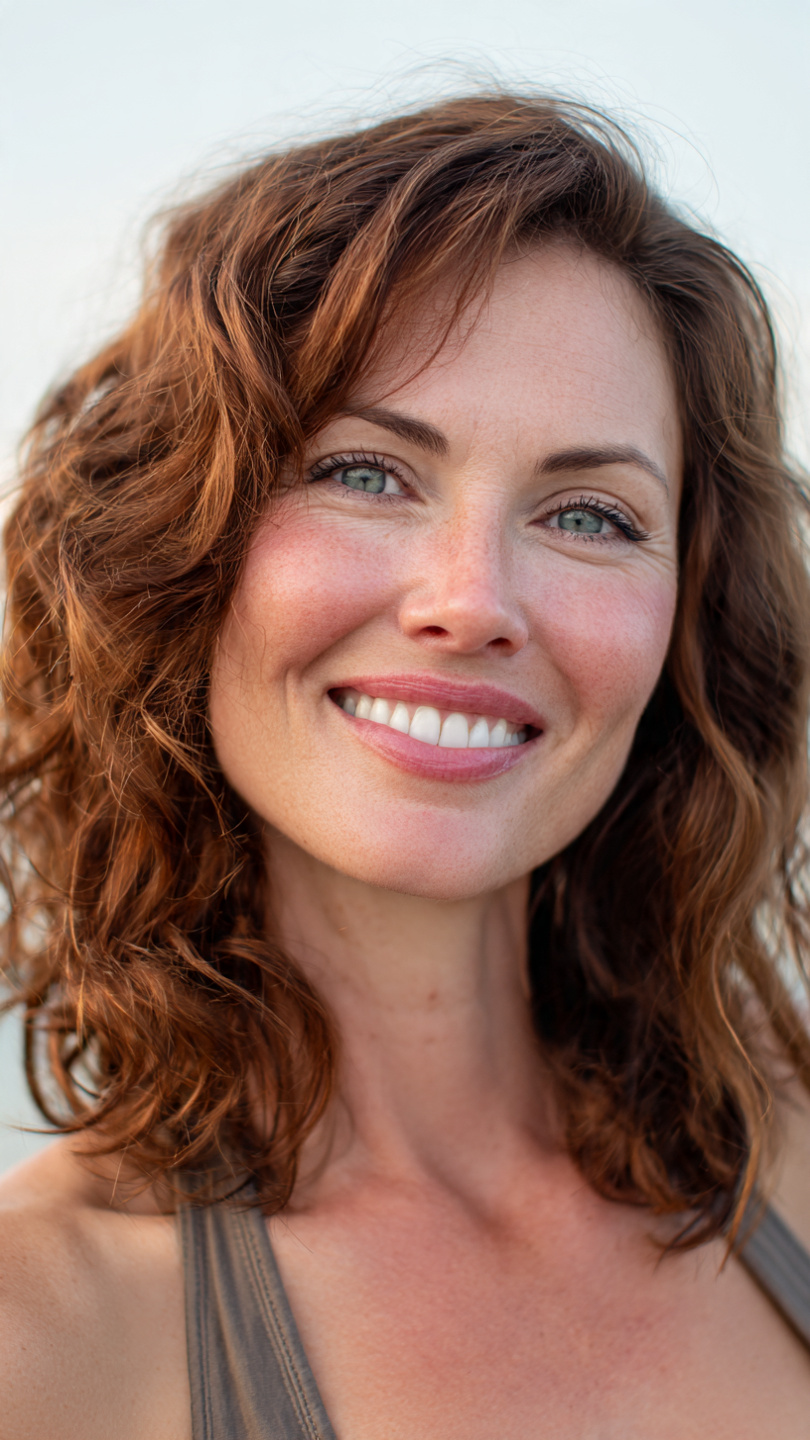
    Turning 70 is a milestone that deserves a hairstyle as vibrant and confident as you are. Gone are the days when “short hair for older women” meant a plain, one-length helmet cut. Today, the options are stylish, low-maintenance, and designed to celebrate your natural texture, face shape, and personality.

    Whether you want volume to offset thinning hair, softness to frame your features, or a bold, modern edge, the right short cut can energize your entire look.

    Below are 12 flattering, easy-to-style ideas that prioritize comfort without sacrificing elegance:


    1. The Classic Silver Pixie

    • What it is: A very short, cropped cut with slightly longer layers on top.
    • Why it works: It highlights silver or white hair beautifully, reduces bulk, and requires only a fingertip of styling cream. The height on top elongates the face.
    • Best for: Fine or thinning hair; oval and heart-shaped faces.

    2. The Soft Curly Crop

    • What it is: Natural curls or permed hair cut close to the head but with rounded, soft edges.
    • Why it works: Embraces natural texture without fighting it. It’s playful, adds instant volume, and hides sparse areas.
    • Best for: Women with naturally curly or wavy hair; round or square faces (softens angles).
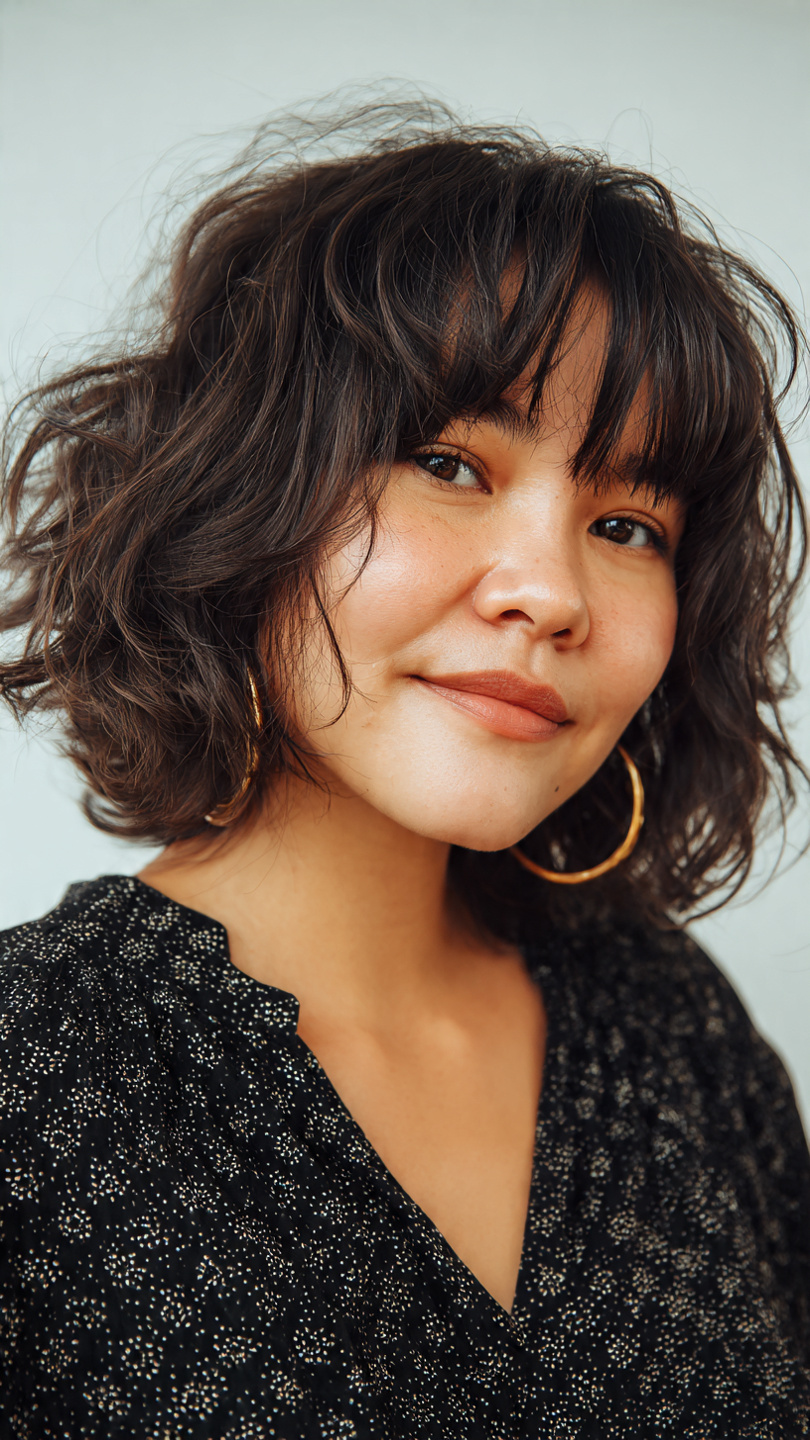
    3. The Textured Bob with Wispy Bangs

    • What it is: A chin-length bob with internal layers and feather-light, uneven bangs.
    • Why it works: The wispy bangs draw attention to your eyes and minimize forehead lines. The texture prevents the “helmet head” look.
    • Best for: Straight or slightly wavy hair; long or rectangular faces.

    4. The Tapered Nape Cut

    • What it is: Hair is closely tapered (shorter) at the nape of the neck, leaving more length on top and at the crown.
    • Why it works: This gives a clean, lifted silhouette and keeps hair off the neck in warmer weather. It’s incredibly neat and professional-looking.
    • Best for: Thick hair (to remove weight); any face shape when paired with side-swept bangs.

    5. The Feathered Pixie

    • What it is: A classic pixie with soft, feathery layers cut into the top and sides, often swept to one side.
    • Why it works: The layers create movement and a gentle, airy feel. It’s very forgiving for uneven growth or cowlicks.
    • Best for: Fine to medium hair; women who want a feminine, not severe, short cut.

    6. The Side-Swept Shingle

    • What it is: A very short, close-to-the-head cut (like a shingle roof) with one dramatic, longer side swept across the forehead.
    • Why it works: The diagonal line created by the side sweep is extremely slimming and adds drama without effort.
    • Best for: Women who wear glasses (the sweep balances frames); round or full faces.
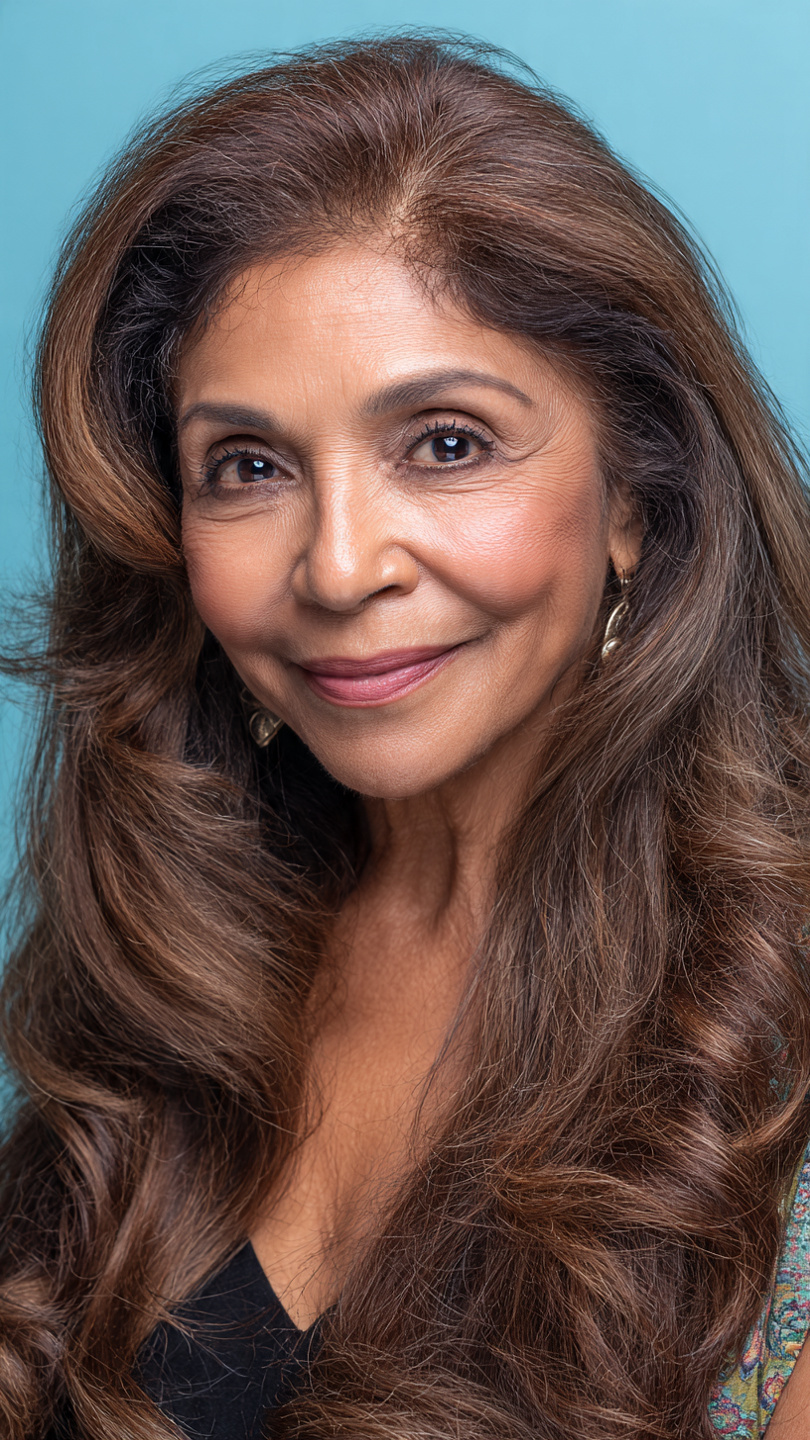
    7. The Cropped Layered Bob (Stacked)

    • What it is: A bob that is shorter in the back (stacked layers) and gradually longer toward the front.
    • Why it works: The stacked back gives natural lift at the crown, combating flatness. The longer front pieces frame the jawline attractively.
    • Best for: Straight or lightly waved hair; women who want volume without backcombing.
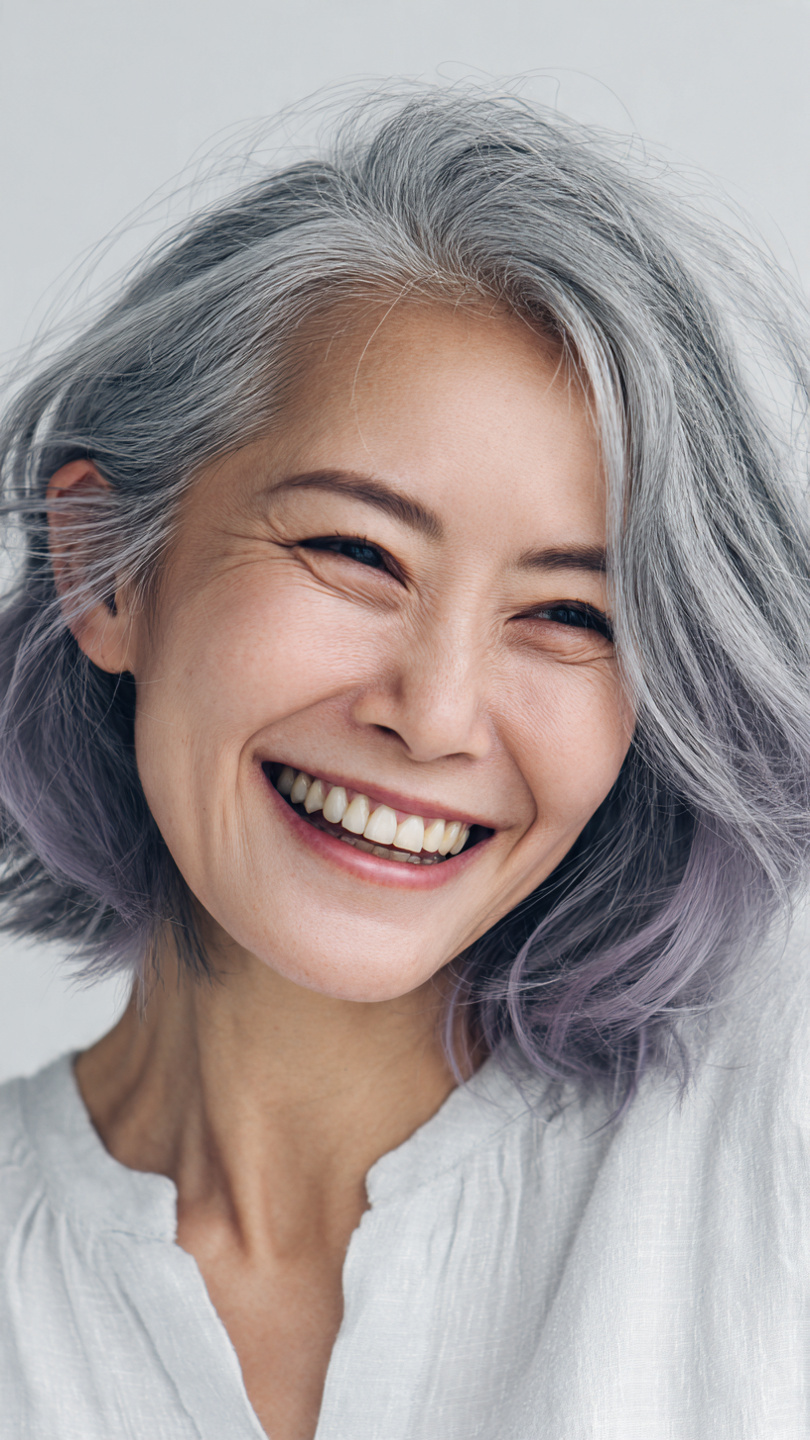
    8. The Wash-and-Wear Curly Pixie

    • What it is: A very short cut (1–2 inches) all over, designed specifically for natural curl or a tight perm.
    • Why it works: Air-dries perfectly. No blow-dryer, no round brush—just scrunch with leave-in conditioner. Arthritis-friendly.
    • Best for: Active lifestyles; women with limited hand mobility or dexterity issues.
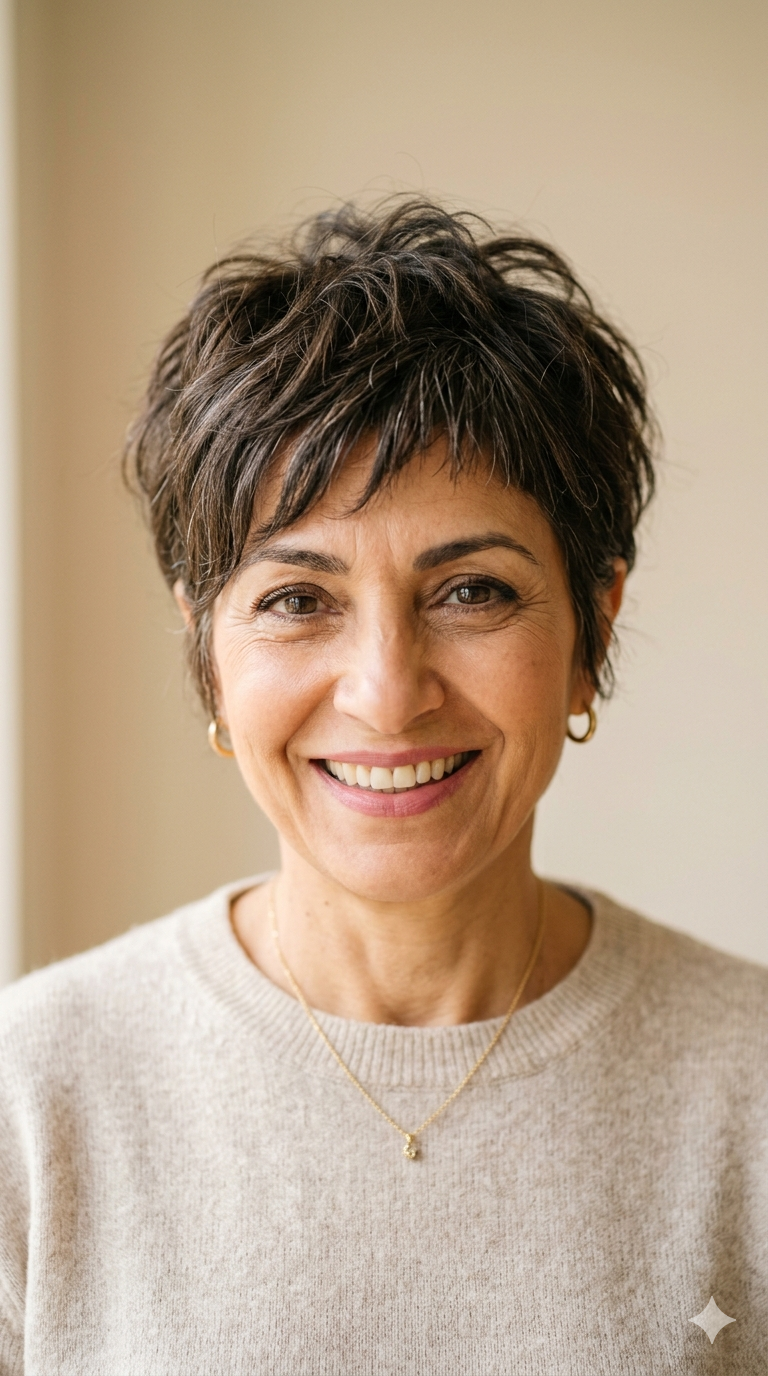
    9. The Asymmetrical Pixie

    • What it is: One side is cut slightly longer or shaped differently than the other.
    • Why it works: Adds modern interest and can visually correct facial asymmetry. It’s a subtle way to look fashion-forward.
    • Best for: Oval or diamond-shaped faces; those wanting a trendy update without drastic length.

    10. The Ultra-Short Buzz or Induction Cut

    • What it is: Hair cut to a uniform ¼ to ½ inch all over using clippers.
    • Why it works: Utterly liberating. Zero daily maintenance, highlights beautiful scalp shape, and can be very empowering. Easy to wear wigs or scarves over.
    • Best for: Women experiencing significant thinning or medical hair loss; confident minimalists.
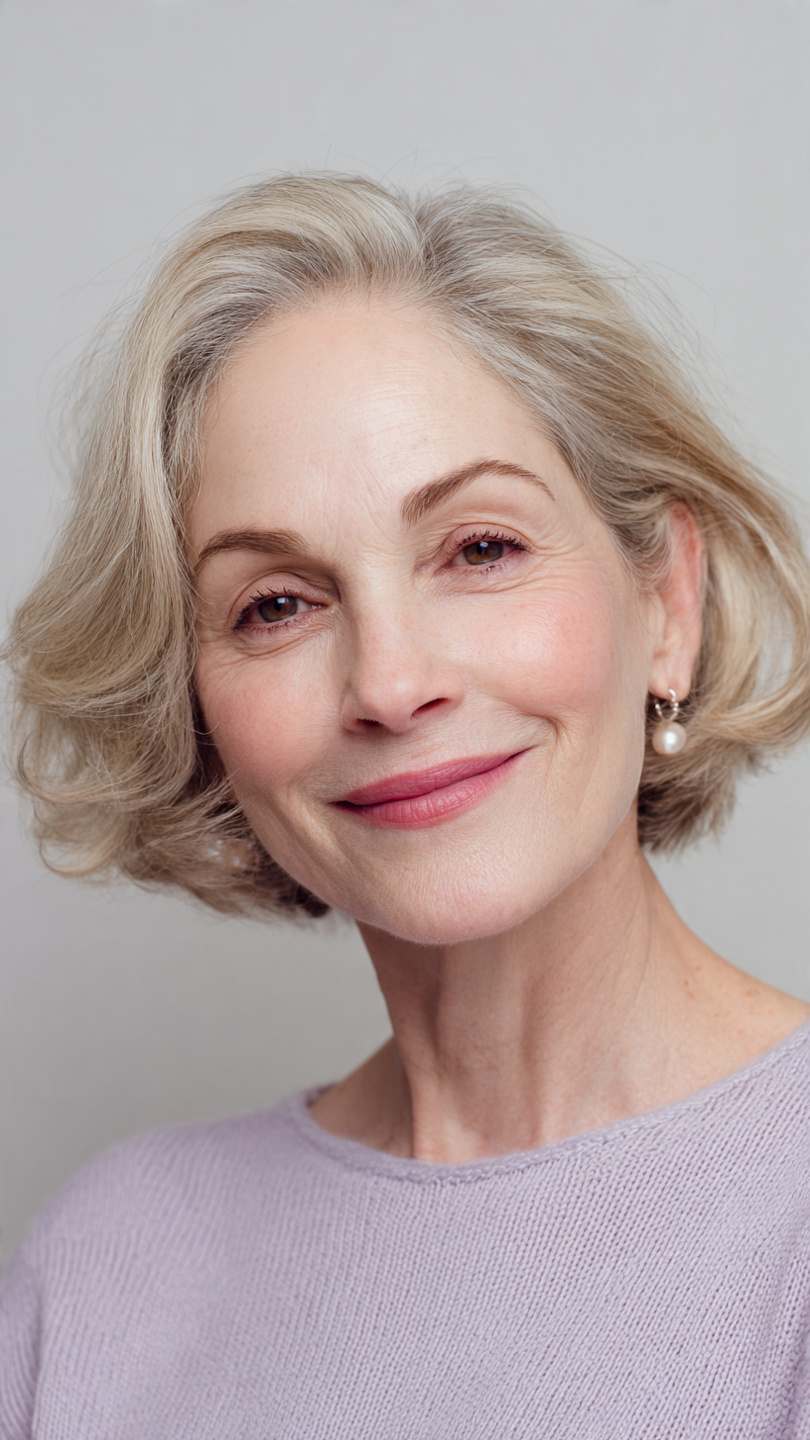
    11. The Long Pixie with Choppy Ends

    • What it is: A pixie that keeps length (1–2 inches) throughout, but with blunt, uneven, “choppy” tips.
    • Why it works: The choppy ends create the illusion of thicker, denser hair. It’s edgy yet age-appropriate.
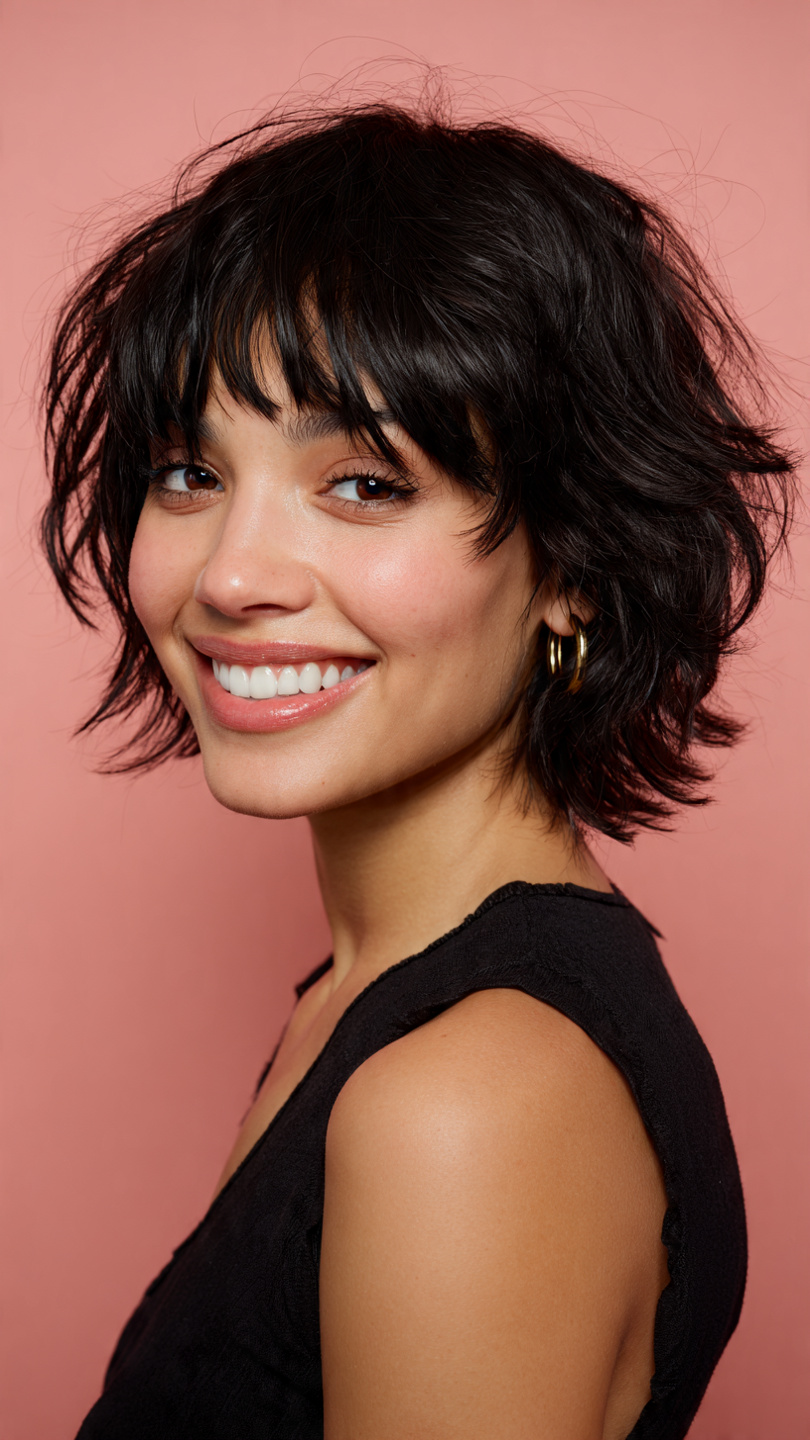
    • Best for: Medium to thick hair; adding texture to straight, flat hair.

    12. The Curly Top with Clean Sides

    • What it is: Sides and nape are clipped very short or shaved, while the top is left in soft curls or waves.
    • Why it works: High contrast and very modern. It puts all the volume and attention on top, lifting the face instantly. Easy to maintain with trims.
    • Best for: Bold personalities; strong bone structure; women who want a dramatic, artistic cut.

    How to Choose the Right Short Hairstyle for You

    With so many options, narrowing it down can feel overwhelming. Ask yourself these three simple questions:

    1. How much daily styling time do you want?
      • 5 minutes or less → Try the Wash-and-Wear Curly Pixie (#8) or Ultra-Short Buzz Cut (#10).
      • 10–15 minutes → The Classic Silver Pixie (#1) or Feathered Pixie (#5) are ideal.
    2. What is your natural hair texture?
      • Curly or coily → Embrace it with the Soft Curly Crop (#2) or Curly Top with Clean Sides (#12).
      • Straight or fine → Add volume with the Stacked Bob (#7) or Long Pixie with Choppy Ends (#11).
    3. What do you want the haircut to accentuate?
      • Your eyes → Wispy bangs (#3) or a side-swept style (#6).
      • Your cheekbones → An asymmetrical cut (#9) or tapered nape (#4).

    Essential Maintenance Tips for Short Hair Over 70

    Short hair is lower maintenance, but not no maintenance. Follow these guidelines:

    • Trim every 4–6 weeks. Short cuts lose their shape faster than long hair. A small trim keeps the silhouette clean.
    • Use volumizing products sparingly. A pea-sized amount of mousse or lightweight cream is enough. Heavy products weigh down fine hair.
    • Protect your scalp. With shorter hair, your scalp gets more sun. Apply a light SPF spray or wear a stylish hat outdoors.
    • Switch to a satin pillowcase. It reduces friction, prevents breakage, and keeps your style intact overnight.
    • Work with your natural growth patterns. Cowlicks and waves become more visible when hair is short. A good stylist will cut with them, not against them.

    What to Tell Your Stylist (Exact Phrases to Use)

    Bring this list to your appointment:

    • “I want a dry cut at the end so I can see how it really falls.”
    • “Keep the nape tapered, not blocked.”
    • “Add texture to avoid a heavy, helmet-like look.”
    • “Leave a little length around the ears for softness.”
    • “Show me how to style it with just my fingers and a blow-dryer.”

    Red flag phrases to avoid: “Make it easy” (too vague) or “Just take off the damage” (often leads to uneven results).


    Adapting Hairstyles for Mobility or Health Issues

    If you have arthritis, limited hand strength, or are undergoing medical treatment, these adjustments help:

    • Use styling tools with large, padded handles. Look for “universal design” brushes and combs.
    • Try a leave-in conditioner spray. No rubbing or massaging needed—just spray and go.
    • Ask for a “sleeper cut.” This is a short style that looks good even after sleeping on it (the Curly Pixie #8 and Buzz Cut #10 are excellent choices).
    • Consider a gentle perm. If your hair has thinned, a body wave can add volume without daily effort. Always do a patch test first.
    • Wigs and toppers as options. Many women over 70 keep a very short natural cut (#10) and wear a wig or hairpiece for special occasions—this gives you two looks in one.

    Common Concerns Addressed

    “Won’t short hair make me look older?”
    No—a badly cut short style makes anyone look older. A well-cut, textured, modern short style is actually more youthful than long, limp, stringy hair that drags the face down.

    “I have a double chin. Can I still go short?”
    Absolutely. Choose styles with height on top (like the Classic Pixie #1 or Stacked Bob #7) and softness around the ears. The vertical lift balances fullness below.

    “My hair is very thin. What should I avoid?”
    Avoid blunt, one-length cuts and heavy bangs. Instead, choose choppy ends (#11), feathered layers (#5), or a curly crop (#2) for built-in volume.

    “Will I regret cutting off my long hair?”
    Start with a longer short style—like a textured bob (#3) or long pixie (#11). You can always go shorter later. Many women find the freedom liberating within a week.


    Conclusion

    Your 70s are not a time to hide or fade away. They are a decade of experience, confidence, and self-knowledge—and your hairstyle should reflect that. The right short cut will save you time in the morning, keep you cooler in summer, and frame your face in a way that highlights your best features.

    Whether you choose a bold asymmetrical pixie, a wash-and-wear curly crop, or the timeless elegance of a silver classic, the goal is the same: to feel like yourself, only easier. Short hair doesn’t mean boring hair. It means intentional hair. It means waking up and running your fingers through it—and being ready for whatever the day brings.

    So save the photos, book the appointment, and take the leap. You might just wonder why you didn’t do it years ago.