
For decades, older women were told to stick to safe, sensible "helmet" cuts or simple one-length bobs. But style has no expiration date. Enter the short shag: a choppy, textured, and surprisingly liberating haircut that breaks every boring rule. Unlike severe, rigid styles that can highlight thinning hair or a changing hairline, the short shag uses layers, movement, and volume to create a look that is youthful, edgy, and remarkably easy to maintain. Whether your hair is fine, curly, silver, or stubbornly straight, this rock-and-roll cut adapts to you—not the other way around.
Here are seven compelling reasons to book that appointment today:
1. Instant Volume and Lift at the Crown
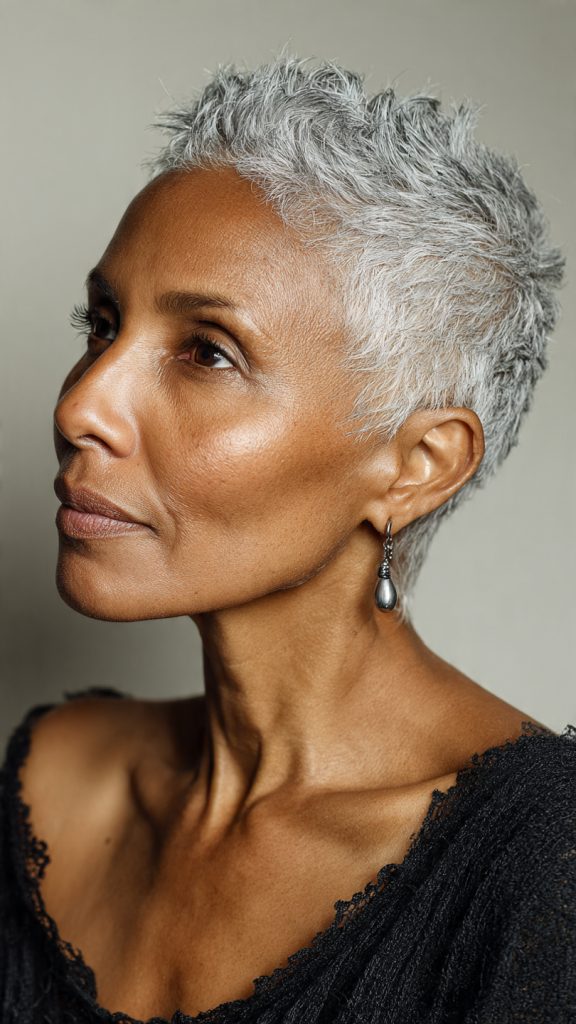
As we age, hair naturally loses density. A short shag strategically removes weight from the bottom, pushing volume up to the crown. By using short, stacked layers on top, the cut creates natural lift that lasts all day without heavy products. This vertical height balances softening facial features and gives the illusion of thicker, fuller hair instantly.
2. Softens the Face with Wispy Fringes
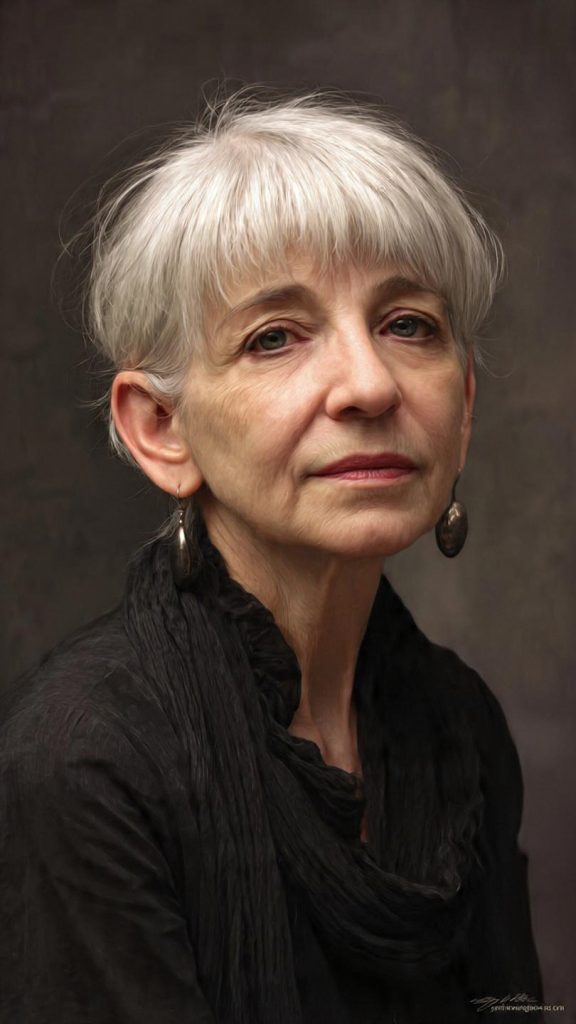
Harsh, blunt cuts can accentuate fine lines and jowls. The shag’s signature wispy bangs—whether curtain-style, side-swept, or choppy—softens the forehead and draws attention upward to your eyes. The textured edges around the ears and nape create a blurred, gentle frame that makes the whole face look more relaxed and approachable.
3. Embraces and Enhances Natural Silver and Gray
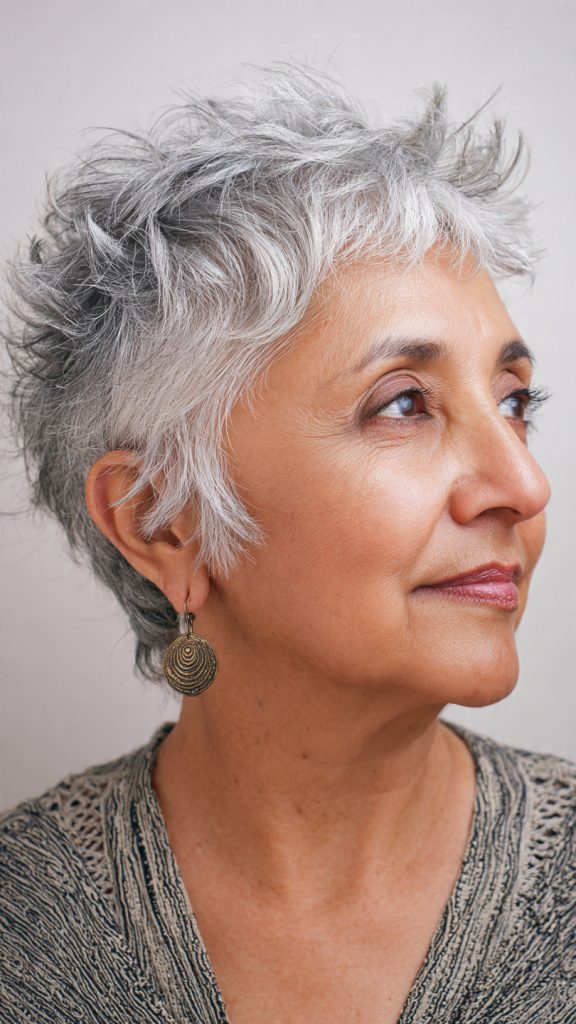
The short shag is a dream for naturally gray or transitioning hair. Gray hair often has a coarser, wiry texture that resists smooth styles but loves layers. The choppy ends blend gray regrowth lines seamlessly, so you can grow out color gracefully or rock a full silver mane. The cut’s messy, lived-in vibe turns natural texture into an intentional, chic statement.
4. Low Maintenance for a Busy or Active Lifestyle
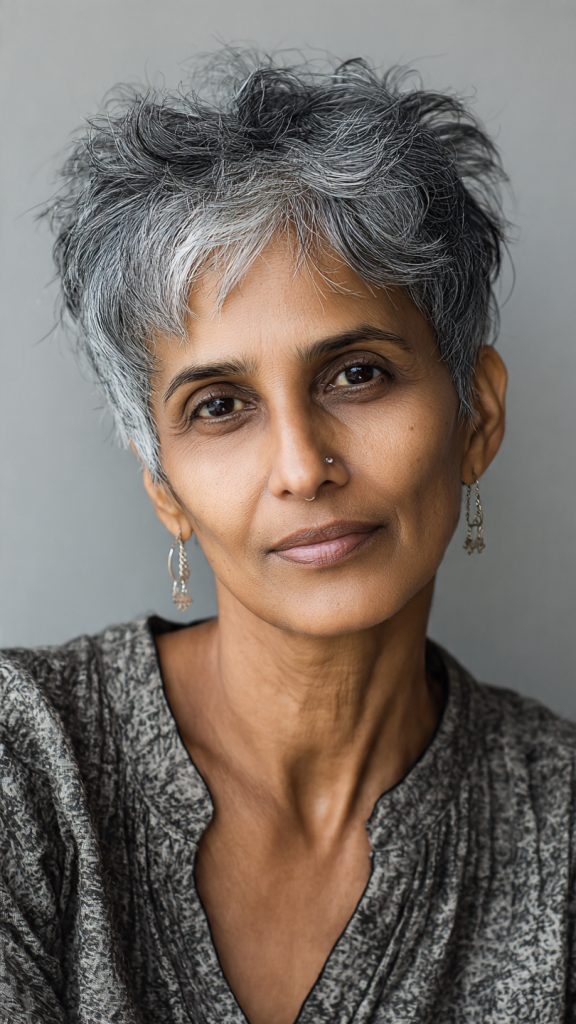
Forget blowouts and hot rollers. A short shag is designed to air-dry beautifully. Because the layers are deliberately uneven and textured, a little bedhead looks like "style," not neglect. Simply spray in some sea salt texturizer, scrunch with your fingers, and go. It’s the perfect wash-and-wear cut for women who want to look polished without the daily time commitment.
5. Hides Thinning or Receding Hairlines
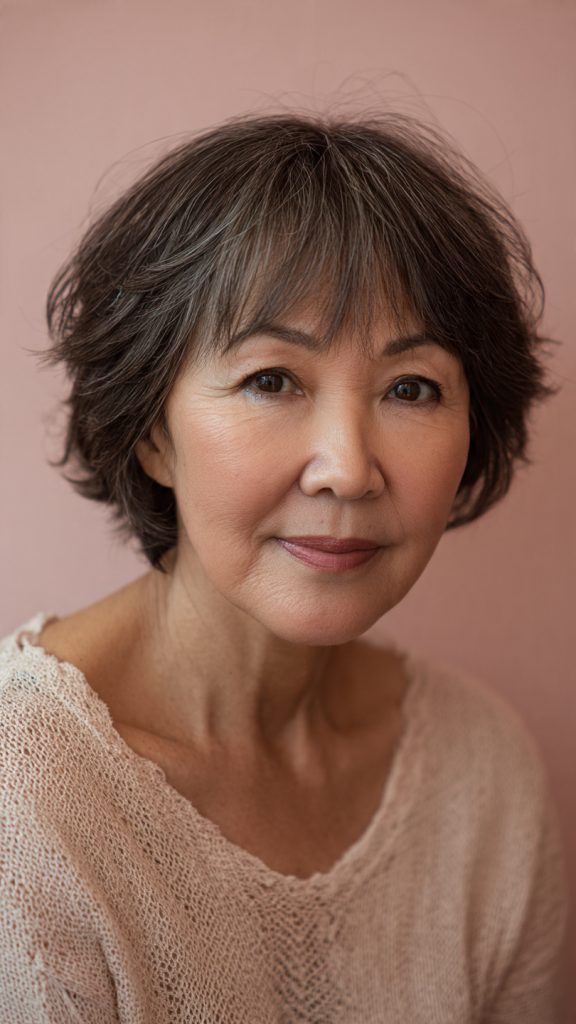
A receding hairline or sparse temples can feel frustrating, but the short shag offers clever camouflage. Longer, piece-y layers around the hairline can be swept forward or to the side to conceal bare spots. Additionally, the overall choppiness creates optical density—the uneven ends reflect light differently, making every strand appear thicker than it actually is.
6. Works with Curly and Wavy Textures
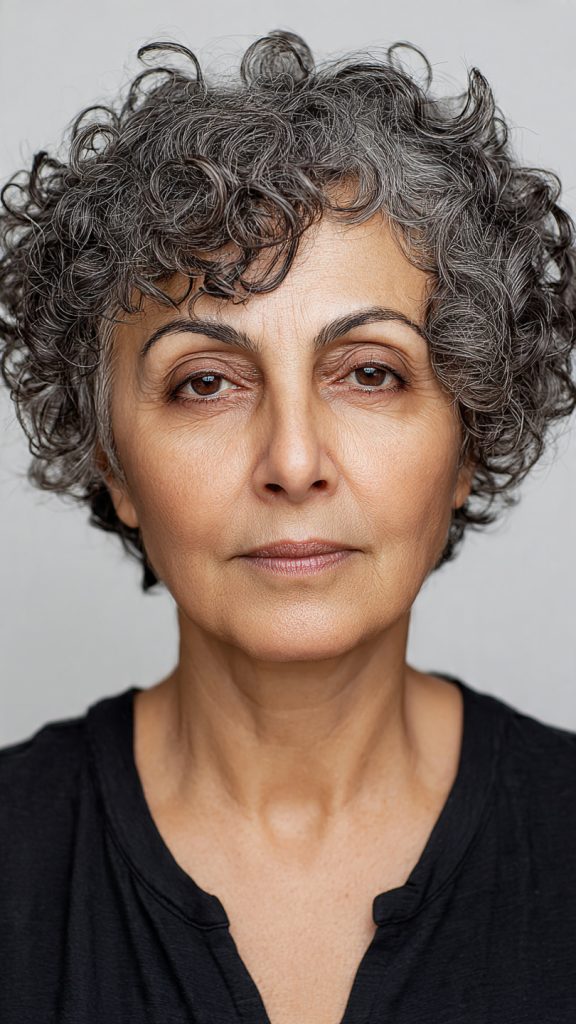
Curly hair can become heavy and triangular as it grows. A short shag liberates curls by cutting internal layers that allow each ringlet to bounce individually. This removes the "pyramid" shape, giving you a rounded, airy silhouette. For older women with natural waves, the shag encourages your curl pattern to form soft, romantic shapes without frizz or excessive product.
7. Gives a Confident, Modern Edge
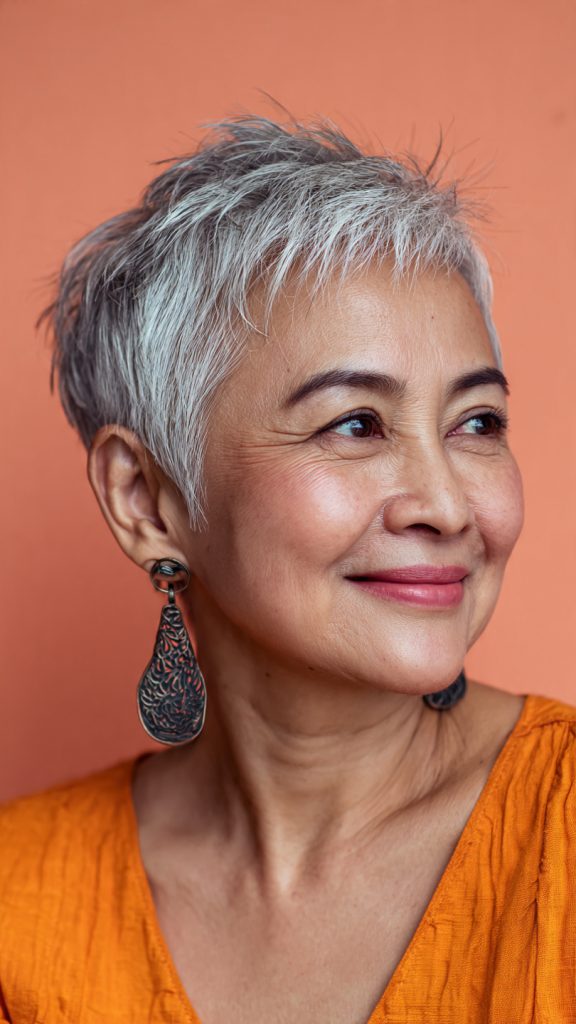
Perhaps the most important reason: the short shag says you don’t take yourself too seriously. It has a playful, slightly rebellious attitude that defies the notion that older women must blend into the background. Paired with bold glasses, silver hoops, or a swipe of lipstick, this cut becomes a signature of confidence. It tells the world, "I’m still here, and I’m still having fun with my look."
How to Know If a Short Shag Is Right for You
Before you book that salon appointment, consider these three quick checks:
- Face shape: The short shag is incredibly forgiving. Oval, round, square, and heart-shaped faces all suit this cut—just adjust the bang length and side volume. For very long faces, keep more width at the sides; for very round faces, add height at the crown.
- Hair type: Fine hair thrives on the shag's volume-boosting layers. Thick hair benefits from the weight removal. Curly hair loves the bounce. Even thinning hair works well with strategic piece-y layering.
- Commitment level: If you prefer slick, perfectly smooth styles, the shag may frustrate you. This cut celebrates imperfection. Ask yourself honestly: do I have the patience to let my hair be a little messy?
What to Tell Your Hairstylist
Walk into the salon with confidence. Use these exact phrases:
- "I want a short shag with lots of internal layers, not a stacked bob."
- "Keep the perimeter soft and uneven—nothing blunt."
- "Leave length for wispy bangs that I can sweep to the side."
- "Take weight out of the ends so the crown lifts naturally."
- "Show me how to style it with just my fingers and a texturizing spray."
Pro tip: Bring one reference photo (use any of the prompts above) and one "don't" photo—usually a smooth, helmet-like cut. Visuals prevent miscommunication.
Styling Tips for Every Morning
The short shag is low-maintenance, but not no-maintenance. Here's your 5-minute routine:
| Step | Product | Action |
|---|---|---|
| 1 | Leave-in conditioner | Apply to damp hair, focusing on ends |
| 2 | Texturizing spray or sea salt spray | Mist evenly, scrunch with fingers |
| 3 | (Optional) Volumizing mousse | Work into roots only for extra lift |
| 4 | Dry | Air-dry or use a diffuser on low heat |
| 5 | Finishing touch | Rub a drop of argan oil between palms and lightly skim over ends |
Avoid: Heavy gels, waxes, or serums. They weigh down the layers and kill the shag's signature movement.
Maintenance Schedule
| Frequency | Action |
|---|---|
| Every 4–6 weeks | Trim to keep the shape. The shag grows out better than most cuts, but layers blur without regular trims. |
| Every 8–12 weeks | Professional reshaping if you have curly or very thick hair. |
| Daily | Less than 5 minutes of styling (see above). |
| Monthly | Deep conditioning treatment, especially for gray or color-treated hair. |
Common Concerns—And Why They Shouldn't Stop You
"I'm too old for layers."
False. Age has nothing to do with layers. In fact, older hair benefits more from movement and texture than any other age group.
"My hair is too thin."
The shag is actually recommended for fine hair. Short layers create the illusion of density. Just avoid over-texturizing (ask your stylist to use scissors, not a razor, on fine hair).
"I don't want to look like I'm trying too hard."
The shag's secret weapon is effortlessness. It doesn't scream "look at me"—it quietly says "I know what works." That's confidence, not trying.
"What if I hate it?"
Hair grows. But more importantly, a good shag can always be softened into a classic bob in one trim. Start with longer, softer layers, then go shorter if you love it.
Conclusion
The short shag haircut is more than a trend—it's a practical, beautiful solution for older women who refuse to sacrifice style for ease. It delivers volume where you need it, softness around your face, and a daily routine that takes less time than brewing coffee. Unlike rigid cuts that fight against natural texture and aging hair patterns, the shag works with what you have, celebrating silver strands, waves, fine hair, and everything in between.
From the Black woman embracing her natural silver crown to the White woman softening her features with wispy bangs, from the Latina rocking gray texture to the East Asian woman camouflaging a thinning hairline—this cut is genuinely universal. It asks for little and gives back confidence, edge, and hours of your week.
So call your stylist. Bring a photo. Say the words "short shag." Then wake up tomorrow, spray, scrunch, and walk out the door looking like you already have your life together—even if the laundry is still waiting.
You're not too old for this cut. You're exactly the right age.



Leave a Reply