
If you’ve been wearing the same side-swept or no-bangs look for years, curtain bangs might just be the refresh you didn’t know you needed. Unlike heavy, blunt bangs that can feel high-maintenance or harsh, curtain bangs are soft, face-framing, and incredibly versatile. They gently part in the middle (like, well, a curtain), drawing attention to your eyes and cheekbones while softening fine lines around the forehead and brows. For women over 50, the right curtain bangs can add volume, movement, and a modern-yet-timeless feel—without requiring a full chop.
Below are 10 well-structured ideas to help you find your perfect version:
1. The Classic Long Curtain Bang
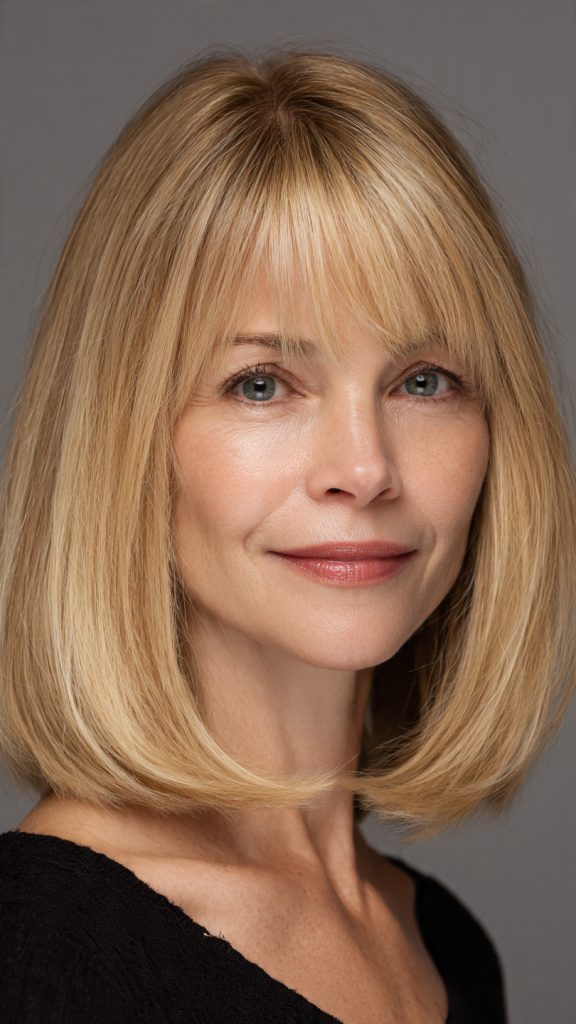
Best for: Medium to long hair, oval or heart-shaped faces
These bangs start at the crown and gradually taper to chin length. Sweep them to each side to create a soft “S” shape. The length keeps them low-maintenance and easy to tuck behind your ears when desired.
2. The Wispy Gray Blend
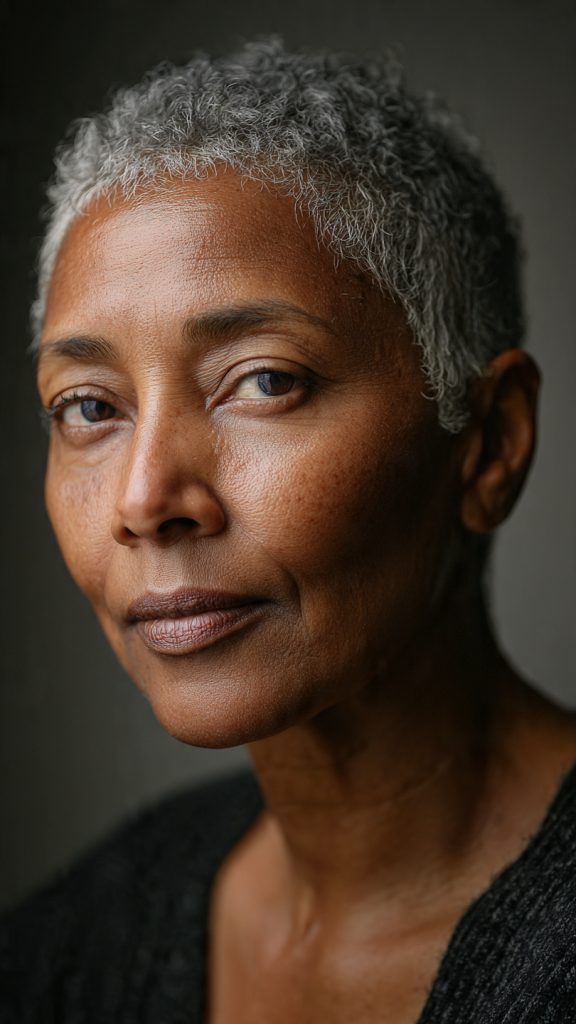
Best for: Naturally gray or silver hair
Thinner, wispy curtain bangs allow your gray roots to blend seamlessly. Ask your stylist for point-cutting to remove bulk. This style softs facial contrast and looks stunning with silver tones.
3. The Volumizing Lift (for Thinning Hair)
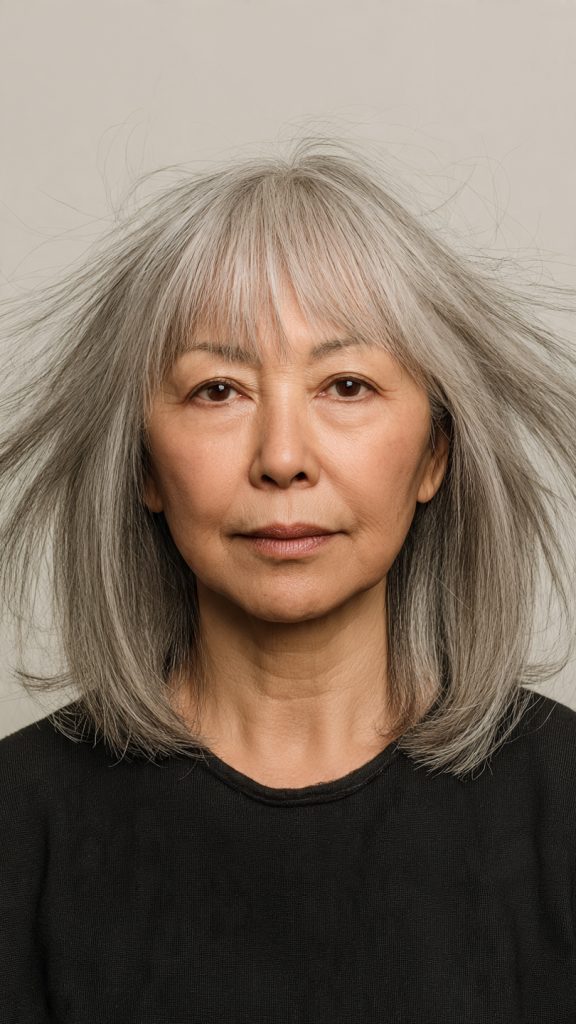
Best for: Fine or thinning hair
Curtain bangs cut with a slight “bend” at the root can visually add density. A light root lift product and a round brush blow-dry will create a gentle wave that lifts the mid-face area.
4. The Curly or Wavy Curtain Bang
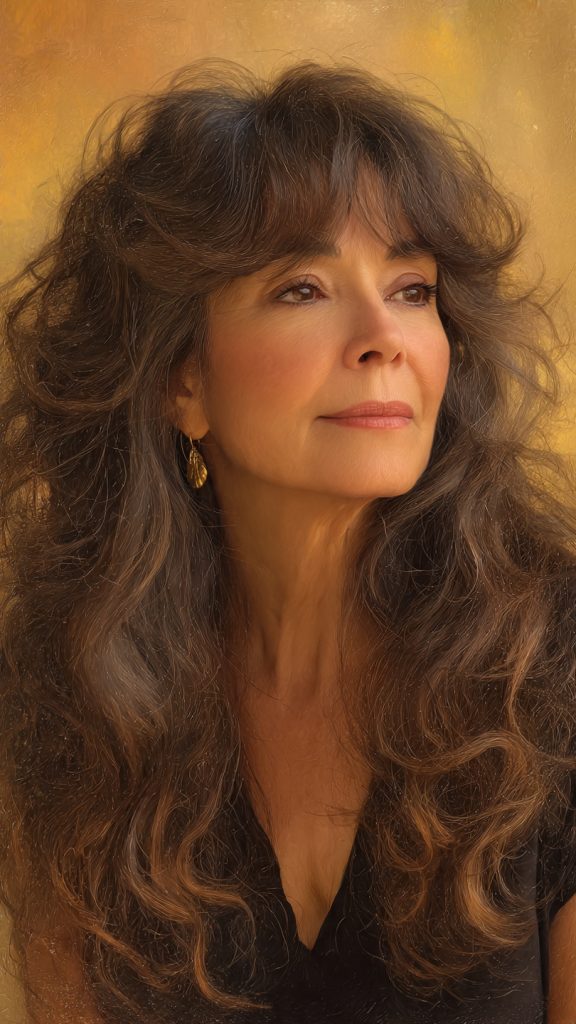
Best for: Natural curls or permed hair
On curly hair, curtain bangs should be cut dry and longer than straight styles—curls will spring up. They frame the face without adding width at the cheeks, balancing rounder or square face shapes.
5. The Shag-Layered Combo
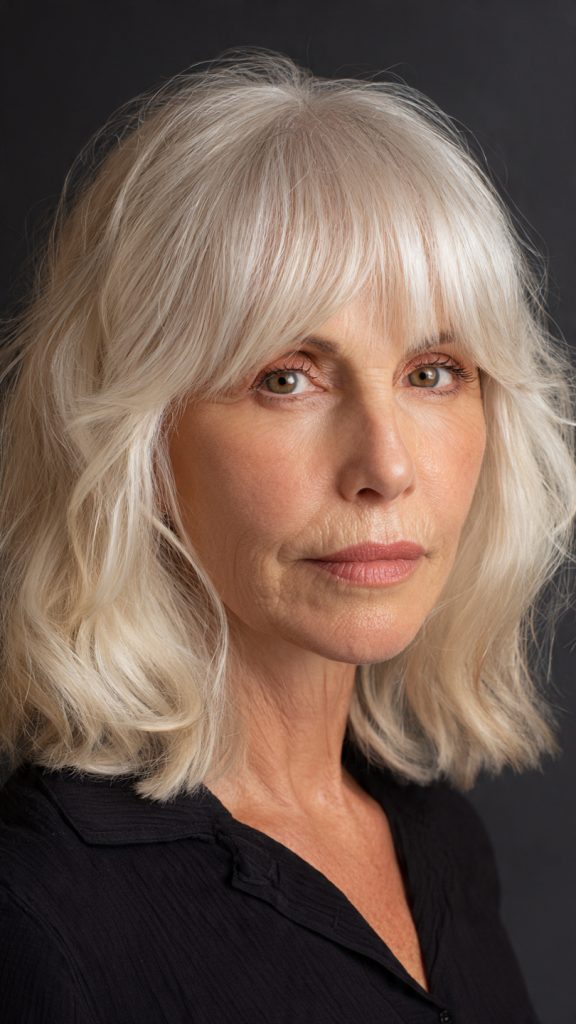
Best for: Shoulder-length or shorter cuts
Pair curtain bangs with a layered shag. The bangs connect into the shortest layers, creating texture and movement. This is ideal for women who want an edgy, low-styling-effort look.
6. The Side-Parted Curtain (a.k.a. the Hybrid)
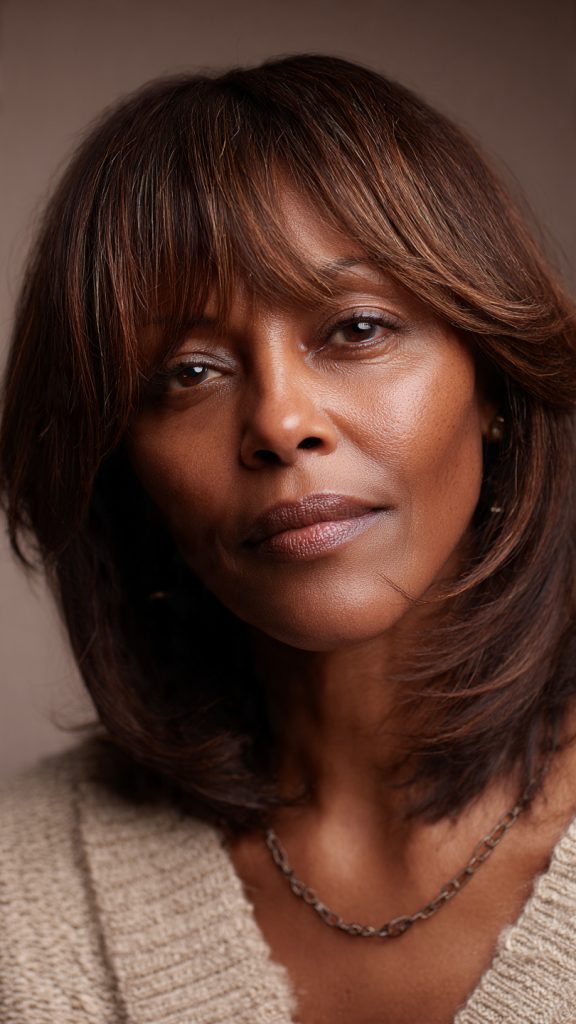
Best for: Those nervous about a full middle part
Ask for curtain bangs but style them with a slightly deeper side part. You’ll still get the face-framing effect without feeling like you’ve changed your part completely. Great for transitioning gradually.
7. The Brow-Skimming Length
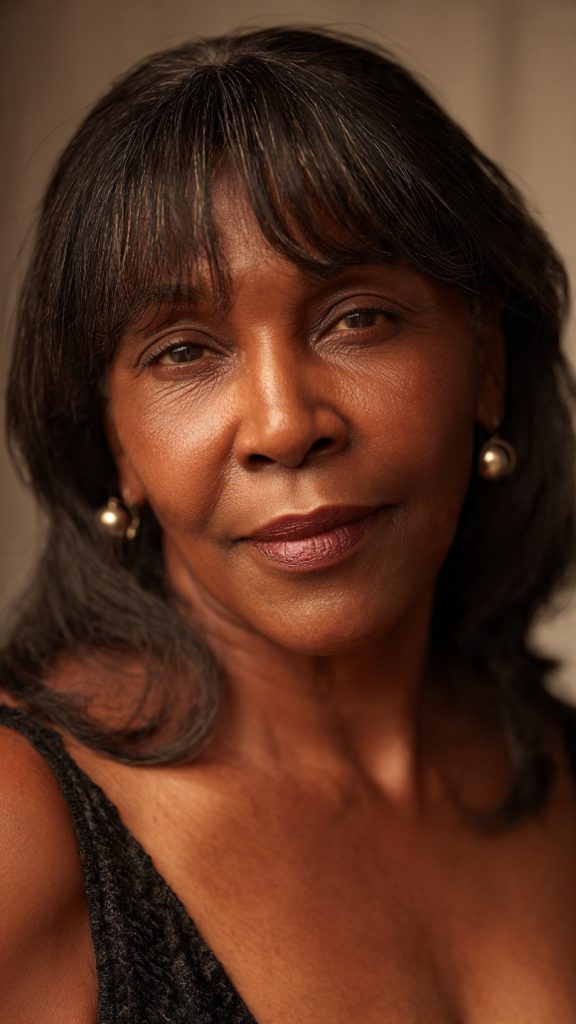
Best for: Deep-set or hooded eyes
Keep curtain bangs just below the brow bone—not in the eyes. This opens up the eye area and softens forehead wrinkles. Pair with a lightweight texturizing spray to avoid a heavy look.
8. The Glamorous Blowout Bang
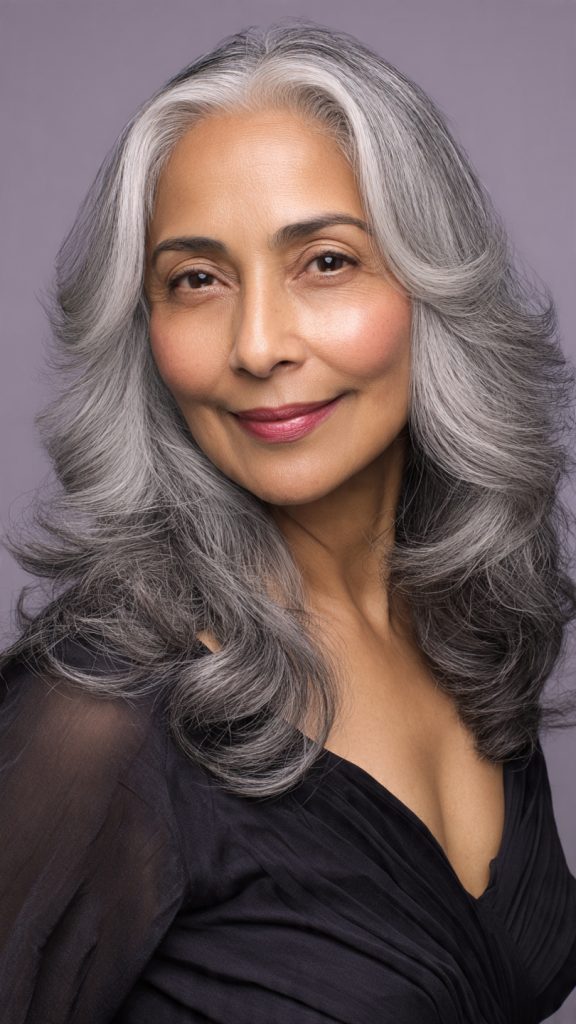
Best for: Special occasions or weekly styling
Cut curtain bangs with extra length (nose-to-chin). Use a large round brush and blow-dry them away from your face. The result is a polished, voluminous style that mimics a salon blowout.
9. The Minimalist’s No-Style Style
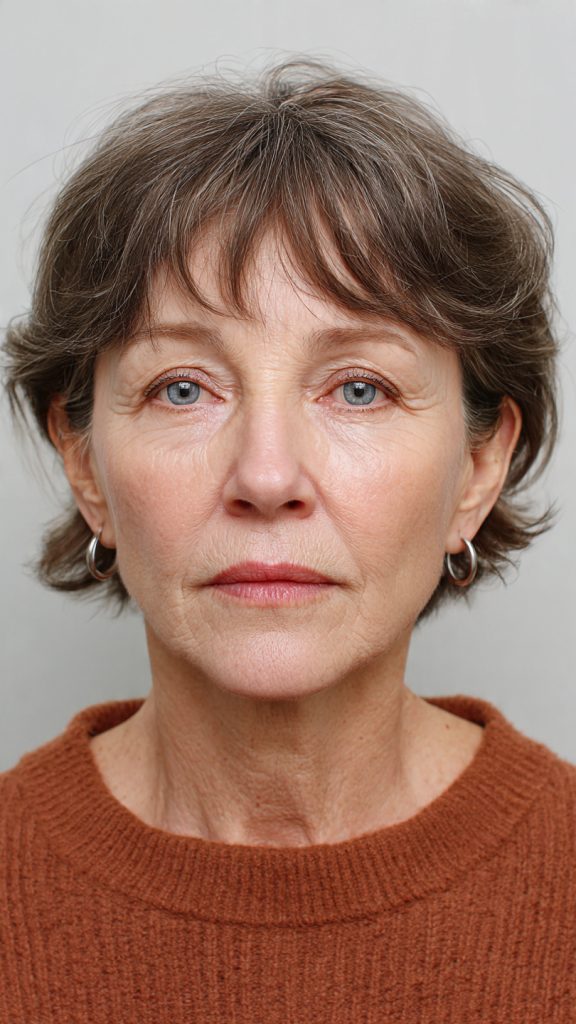
Best for: Wash-and-go routines
Choose micro-curtain bangs: very short at the center (just above brows) and gently longer at the temples. They fall into place with just fingers and air-drying—no heat needed. Ideal for low-maintenance women.
10. The Face-Framing Fade (for Short Pixies or Bobs)
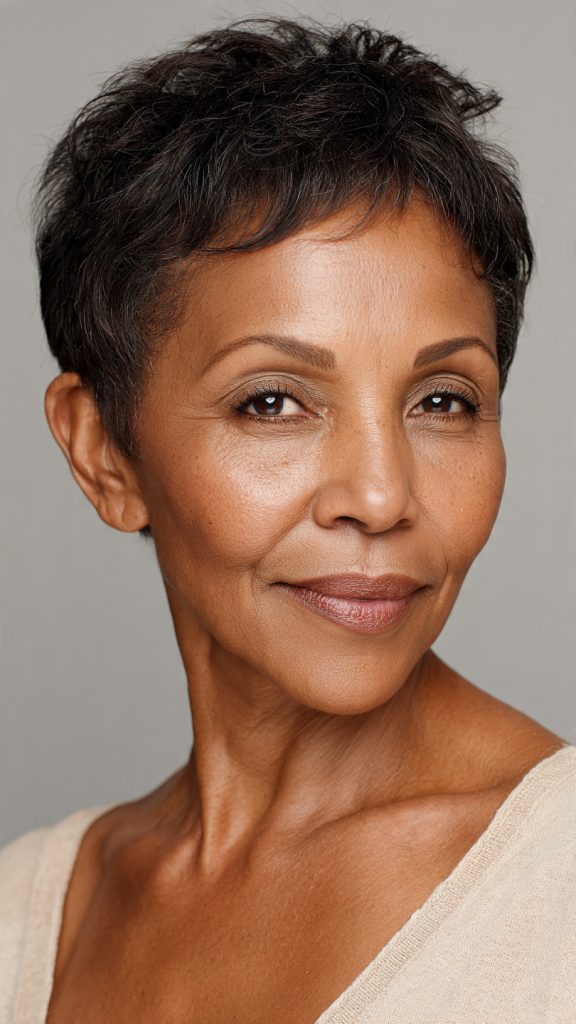
Best for: Short hair, strong jawlines
In a pixie or short bob, curtain bangs become elongated pieces at the temples that blend into the sides. This elongates the neck and highlights cheekbones. Ask your stylist for “soft curtain texture” rather than a blunt fringe.
What to Ask Your Stylist Before Getting Curtain Bangs Over 50
A good consultation prevents regret. Bring these exact questions to your appointment:
- "Can you cut them dry first?"
Curtain bangs behave differently on dry hair, especially if you have any wave or curl. A dry cut shows you exactly where they'll fall. - "How much forehead will you leave visible?"
More visible forehead = softer, more open look. Less visible = more dramatic. Ask for a middle ground if unsure. - "Will these work with my cowlick or widow's peak?"
Curtain bangs are forgiving, but a skilled stylist will adjust the parting or length to work with—not against—your natural growth patterns. - "Show me where they'll hit when my hair is air-dried vs. blown out."
Curtain bangs shrink when air-dried and lengthen when blown straight. Know both lengths before they cut. - "Can you point-cut instead of blunt-cut?"
Point-cutting removes weight and adds softness. Blunt cuts on curtain bangs can look harsh on mature faces.
Daily Styling: 2 Minutes or Less
Curtain bangs should simplify your routine, not complicate it. Here are three no-fuss methods:
Method 1 – The Round Brush Blowout (1–2 minutes)
Dampen just the bangs. Use a small round brush (1.5 inches). Brush forward, then roll away from your face. Blow warm, then cool to set.
Method 2 – The Velcro Roller Hack (no heat)
Dampen bangs. Roll one large velcro roller away from your face. Do makeup or dress. Unroll after 5–10 minutes. Finger-comb apart.
Method 3 – The Pinch-and-Dry (30 seconds)
For straight or slightly wavy hair: wet bangs, pinch them between two fingers, and blow-dry downward while shaking gently. No brush needed.
Pro tip: Never pull curtain bangs straight down when wet. Always sweep them to the sides as they dry—that's what creates the "curtain" effect.
Maintenance Schedule: What to Expect
| Task | Frequency | Notes |
|---|---|---|
| Trim | Every 4–6 weeks | Curtain bangs grow out gracefully, but lose their shape after week 6 |
| Full wash | As usual | You don't need to wash bangs separately unless you have very oily skin |
| Dry shampoo | Every other day | Light spritz on the roots of bangs only—keeps them from separating |
| Deep condition | Weekly | Avoid the bang roots; condition only the ends |
| Full recut | Every 3–4 months | The rest of your hair may need a refresh, but bangs need more frequent trims |
Growing them out?
Curtain bangs are the easiest bangs to grow out. After 8 weeks without a trim, they become face-framing layers. After 12 weeks, they tuck behind your ears completely. No awkward phase.
Who Should Skip Curtain Bangs (Honestly)
Curtain bangs are versatile, but not universal. Consider skipping them if:
- You have very strong cowlicks at both front corners – The bangs may split unnaturally.
- You wear your hair in a tight ponytail 5+ days a week – The bangs will need restyling every time you take it down.
- You have extremely oily skin – Bangs absorb oil and may look greasy by midday unless you're committed to dry shampoo.
- You prefer zero hair on your forehead – That's fine! Try a deep side-swept long bang instead.
If any of these sound like you, consider long face-framing layers (no forehead coverage) or a soft curtain bang that starts past your eyebrows (minimal forehead contact).
The Best Hair Textures & Face Shapes for Curtain Bangs Over 50
Face shapes that shine with curtain bangs:
| Face Shape | Why It Works | What to Avoid |
|---|---|---|
| Oval | Almost any length works | Nothing—you're lucky |
| Round | Vertical lines from the center part elongate the face | Very short bangs that stop at the widest part of cheeks |
| Heart | Softens a pointed chin | Heavy, thick bangs that widen the forehead further |
| Square | Curved bangs soften a strong jaw | Blunt, straight-across bangs |
| Long/oblong | Horizontal movement breaks up length | Ultra-long bangs that pull the face down further |
Hair textures that take curtain bangs beautifully:
- Fine hair – Yes, with texturizing spray. Avoid heavy products.
- Medium hair – Ideal. Holds shape without effort.
- Thick hair – Yes, but ask for internal layering to remove bulk.
- Curly hair – Yes, but cut dry and 1–2 inches longer than desired.
- Wavy hair – Perfect. The wave adds natural volume.
- Straight hair – Yes, but may need a tiny bit of texture powder for grip.
Texture that needs extra consideration:
Very coily/kinky hair – Curtain bangs are beautiful, but they require a curly specialist and regular hydration. Ask for "soft curly curtain fringe."
Products That Make Curtain Bangs Behave
You don't need a shelf of products. Start with these three:
- Tiny round brush (1–1.5 inches) – Anything larger won't create the curve. Olivia Garden or Denman make excellent small brushes.
- Dry shampoo (powder or spray) – Apply to bang roots only. Klorane or Batiste work well. Powder formulas last longer.
- Lightweight texture spray or sea salt spray (diluted) – Spray on hands, then finger-comb through bangs. Avoid spraying directly on the roots.
What to skip:
Heavy oils, serums, or pomades. Curtain bangs should look airy, not piecey or greasy.
Conclusion
Curtain bangs are not a "young woman's" hairstyle. In fact, they offer something that blunt bangs and severe side-swept styles cannot: softness, movement, and an effortless lift that draws the eye upward. For women over 50, that upward lift is everything. It brightens the eyes, softens forehead lines, and creates a gentle frame that no other cut quite achieves.
The ten ideas above give you a roadmap—whether you want wispy gray blends, volumizing lifts for thinning hair, or a wash-and-go minimalist fringe. The key is starting longer than you think you need, finding a stylist who listens, and embracing a few minutes of simple styling each morning.
And if you decide curtain bangs aren't for you? They grow out into beautiful face-framing layers in just a few weeks. No drama, no regret.
So go ahead. Book that trim. Bring a photo. And enjoy the most forgiving, flattering, and fun bang style you've ever had—at any age.

Leave a Reply