
A larger forehead is often a sign of maturity, intelligence, and strong facial structure—think of celebrities like Ty Burrell, Jude Law, or Riz Ahmed. The key is not to hide your forehead completely, but to choose a haircut that balances your proportions, draws the eye to your best features, and gives you a confident, modern look.
How to Choose the Right Cut for Your Face Shape
Not every cut on this list will suit every face shape. Use this quick guide before heading to your barber.
| Face Shape | Recommended Style from Above |
|---|---|
| Oval | Almost anything works, especially the Textured Fringe or Side-Swept Pompadour |
| Round | Go for height and asymmetry: Side-Swept Pompadour or Deep Side Part with a Low Swoop |
| Square | Softening styles like the Messy Caesar Cut or Curly Top Drop work best |
| Oblong / Rectangle | Styles that add width and cover part of the forehead: Modern French Crop or Brushed-Forward Quiff |
| Diamond | The Tapered Brush-Up or Low Fade with a Heavy Top add balance to a narrow chin |
Below are 10 well-structured ideas designed to work with your forehead, not against it.
1. The Textured Fringe (Cropped Bangs)
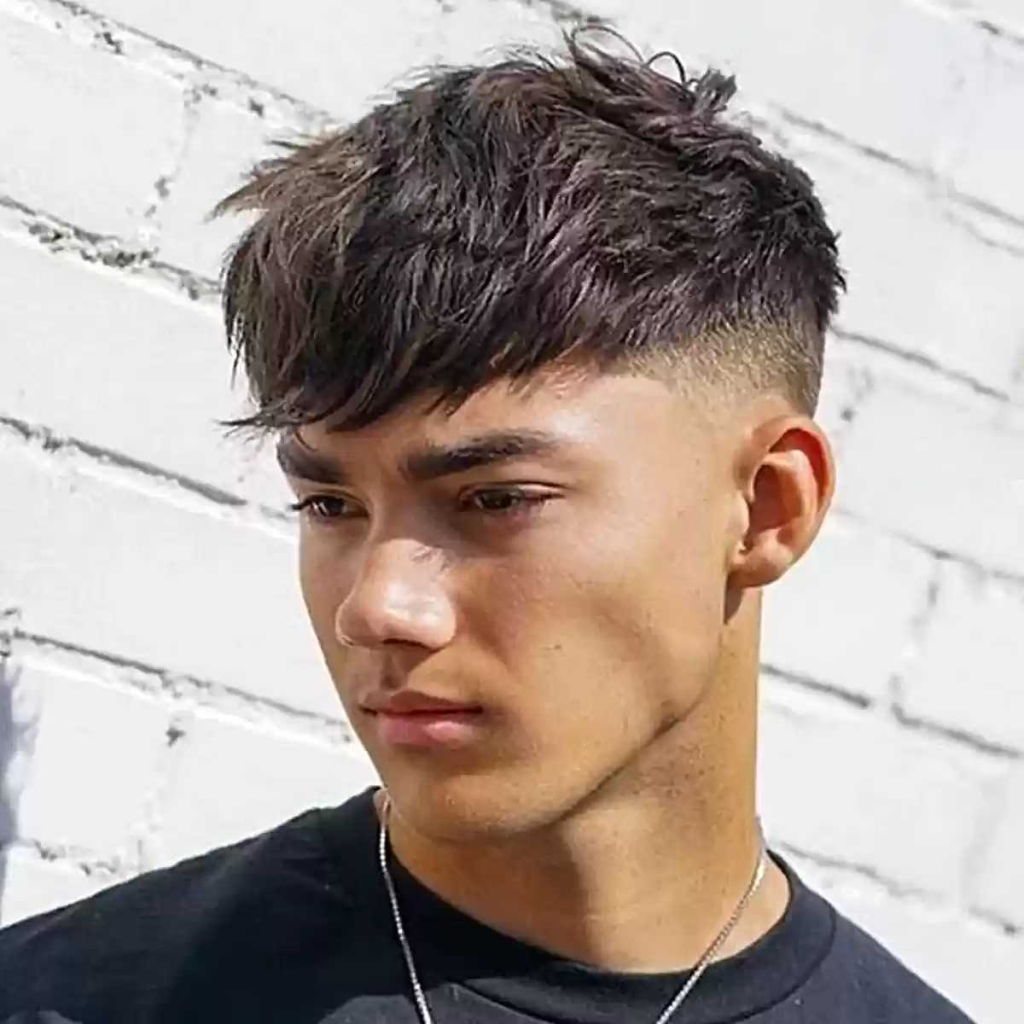
A textured fringe lands right at the brow line, breaking up the vertical expanse of the forehead while keeping the look casual and youthful.
2. The Modern French Crop
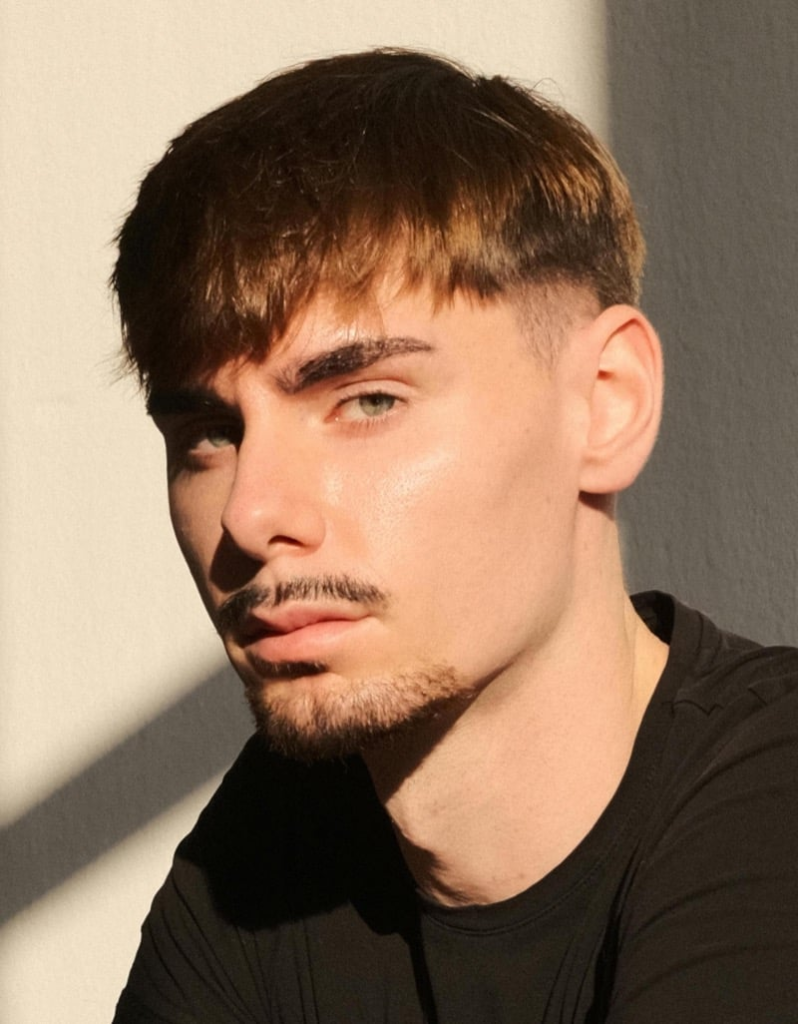
Similar to the fringe but with shorter sides, this cut uses a blunt, horizontal line of hair to create an optical illusion that reduces perceived forehead length.
3. The Side-Swept Pompadour
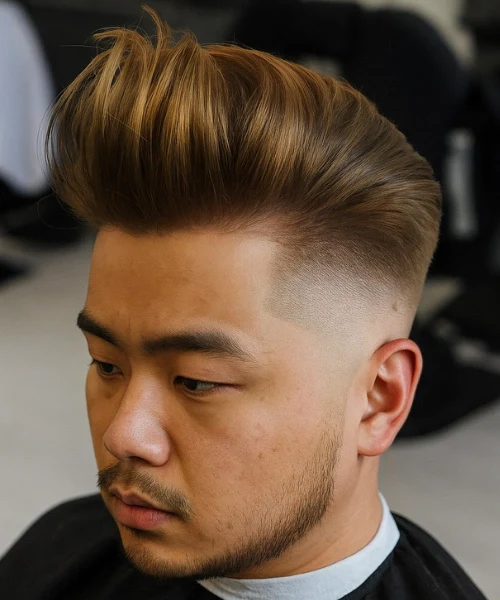
By directing volume upward and diagonally across the forehead, this classic cut shifts focus away from the hairline and toward the upper corners of your face.
4. The Low Fade with a Heavy Top
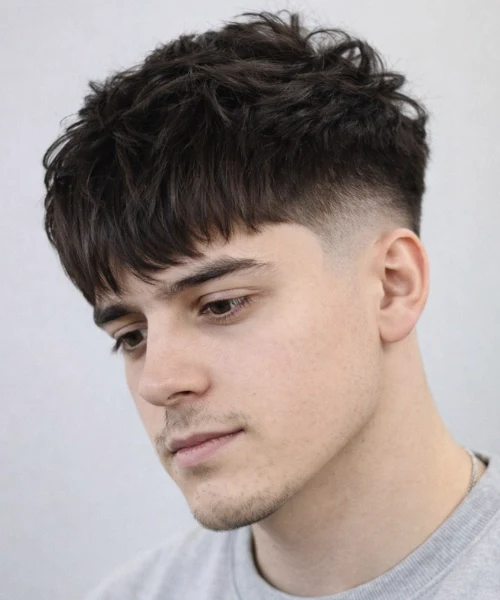
Keeping significant length on top while fading the sides low creates a top-heavy balance that visually narrows and shortens the forehead area.
5. The Brushed-Forward Quiff
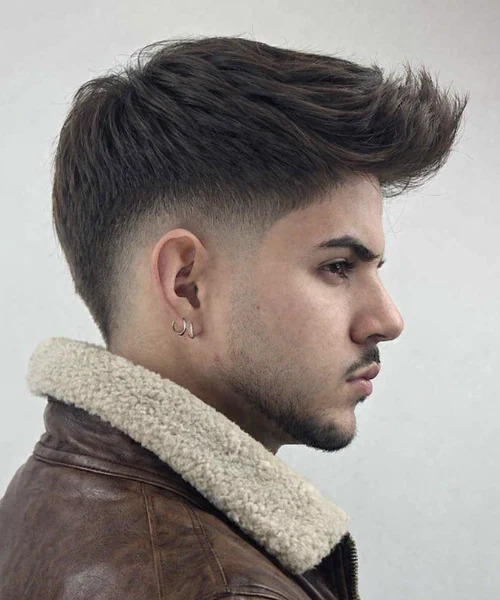
Instead of pushing the quiff straight up, brush it forward and slightly to the side so it falls softly over the hairline to mask the forehead's starting point.
6. The Slicked-Back Undercut (With a Twist)
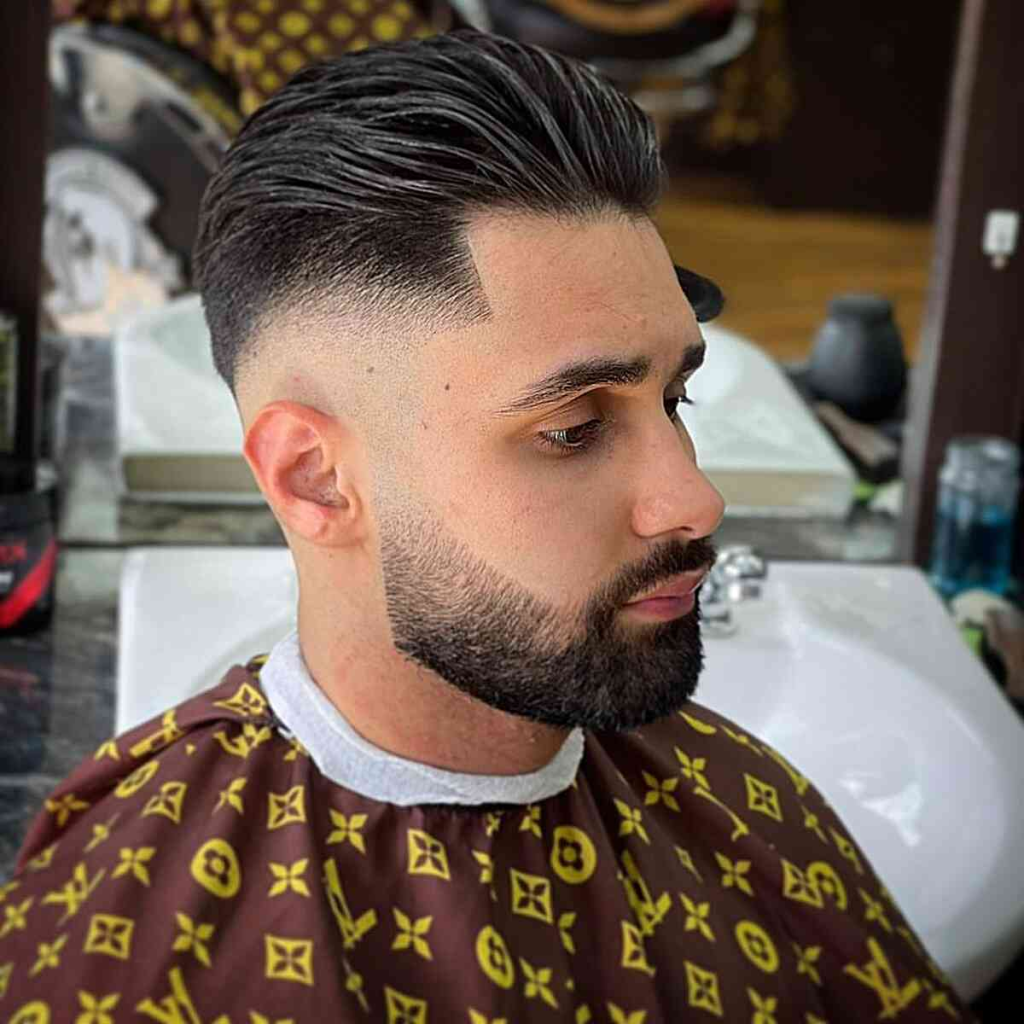
Avoid a tight slick-back; instead, leave a few centimeters of length at the front hairline to fall naturally forward before slicking the rest back, creating a soft "break."
7. The Messy Caesar Cut
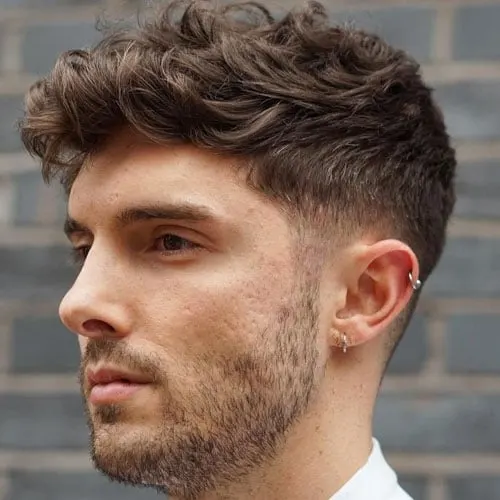
A short, horizontally layered fringe that is slightly choppy and uneven—this cut is excellent for adding texture and distraction right at the center of the forehead.
8. The Curly Top Drop
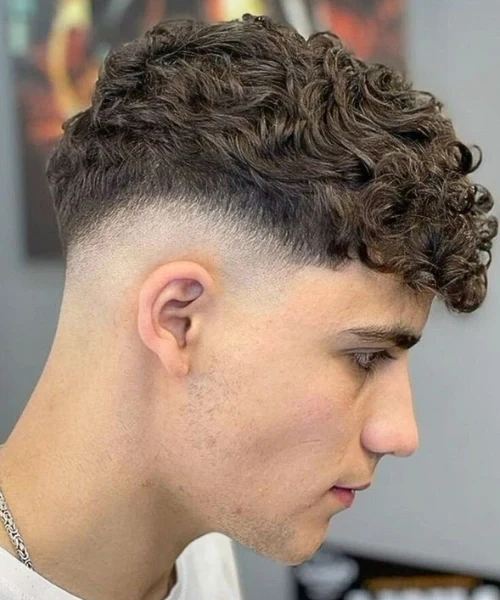
If you have curly or wavy hair, let the curls grow longer on top and "drop" over the forehead, as the natural volume and irregular shape will break up the flat line of the hairline.
9. The Deep Side Part with a Low Swoop
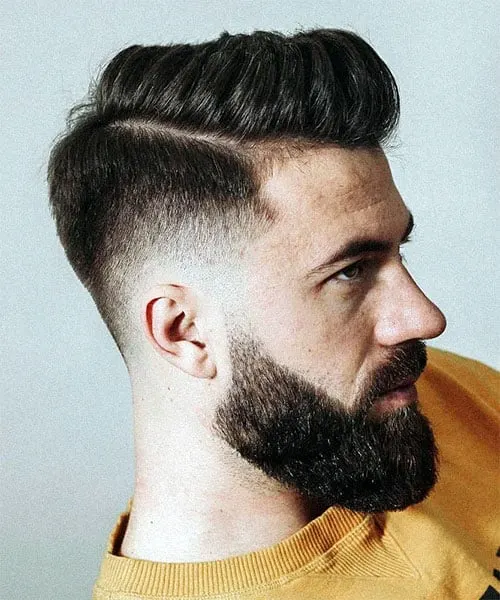
A dramatic side part (far to the left or right) combined with hair swept low across the brow creates an asymmetrical line that divides and diminishes the forehead's width.
10. The Tapered Brush-Up
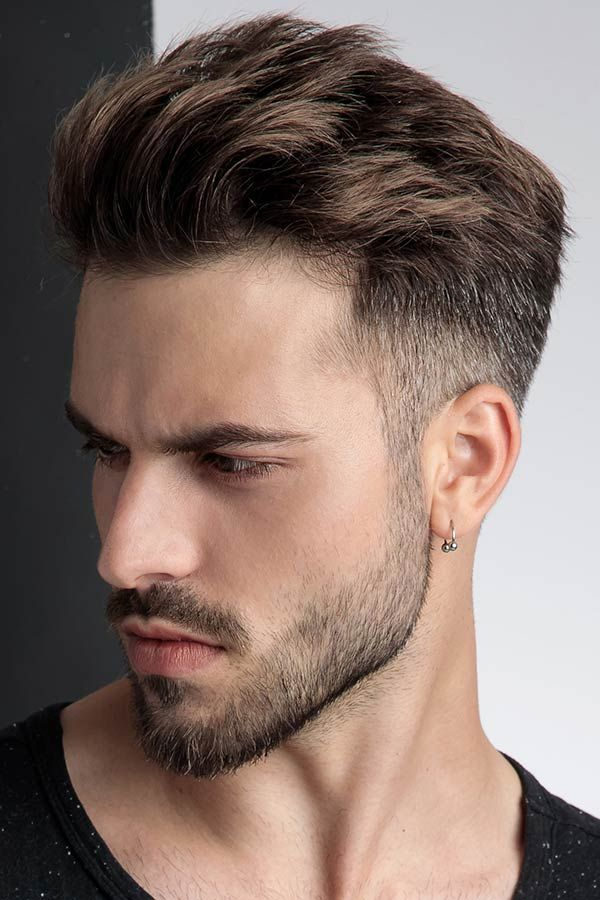
A shorter, cleaner option where the hair is brushed up but kept compact—not high—so the forehead is visible but framed by strong, defined sidewalls that add width to the lower face.
What to Avoid If You Have a Big Forehead
Before diving into the best cuts, it helps to know which styles typically work against a larger forehead. Avoiding these will save you from unflattering proportions.
- Very short, uniform crops (e.g., a tight buzz cut): These remove all length on top, leaving your forehead as the most prominent feature.
- Slicked-back styles with no forward break: A tight, gel-slicked look that pulls every hair away from the hairline exposes the full forehead without any softening element.
- High-volume pompadours with no fringe: Piling all the height straight up can elongate your face further rather than balancing it.
- Severe middle parts: A middle part often frames both sides of the forehead equally, which can widen its appearance rather than narrowing it.
Frequently Asked Questions
Does a big forehead mean I'm balding?
Not necessarily. Many men simply have a naturally high hairline or a larger forehead due to genetics. If your hairline has gradually receded over years, that may be maturing. If it's rapid or patchy, consult a dermatologist.
Can I still buzz my hair if I have a big forehead?
Yes, but avoid a uniform short buzz. Instead, try a "burr" cut where the front is left slightly longer (just a few millimeters) to create a faint shadow line that breaks up the forehead.
Which haircut is best for thinning hair on top with a big forehead?
The Modern French Crop or Messy Caesar Cut. Both keep hair short enough to look dense but long enough to cover the hairline. Avoid high-volume styles that expose thin areas.
How long does my hair need to be for a fringe style?
Typically 3–4 inches (7–10 cm) on top. Your barber can cut the fringe while keeping the crown slightly longer for volume.
Conclusion
A larger forehead is not a flaw to hide—it's a feature to work with. The right haircut can shift proportions, draw attention to your eyes and jawline, and give you a signature look that feels intentional rather than compensatory. Whether you choose a soft textured fringe, a bold side-swept pompadour, or a low-maintenance French crop, the goal is balance, not coverage.
Remember to communicate clearly with your barber, use the right products at home, and embrace your unique facial structure. With the 10 cuts above—and the practical tips on styling, maintenance, and face shapes—you're now equipped to walk into any barbershop with confidence. Your best haircut is waiting for you just a few inches of length away.

Leave a Reply