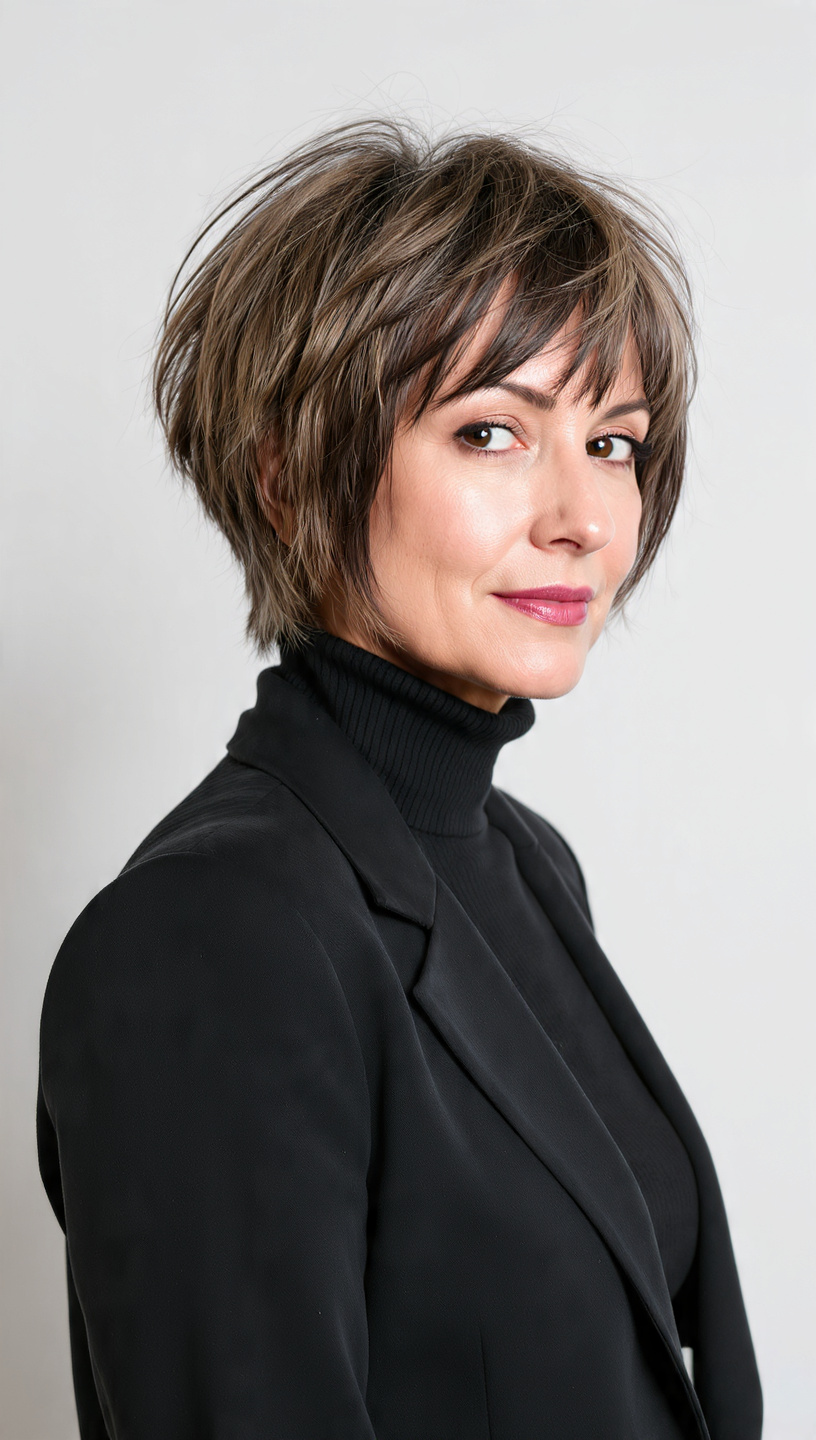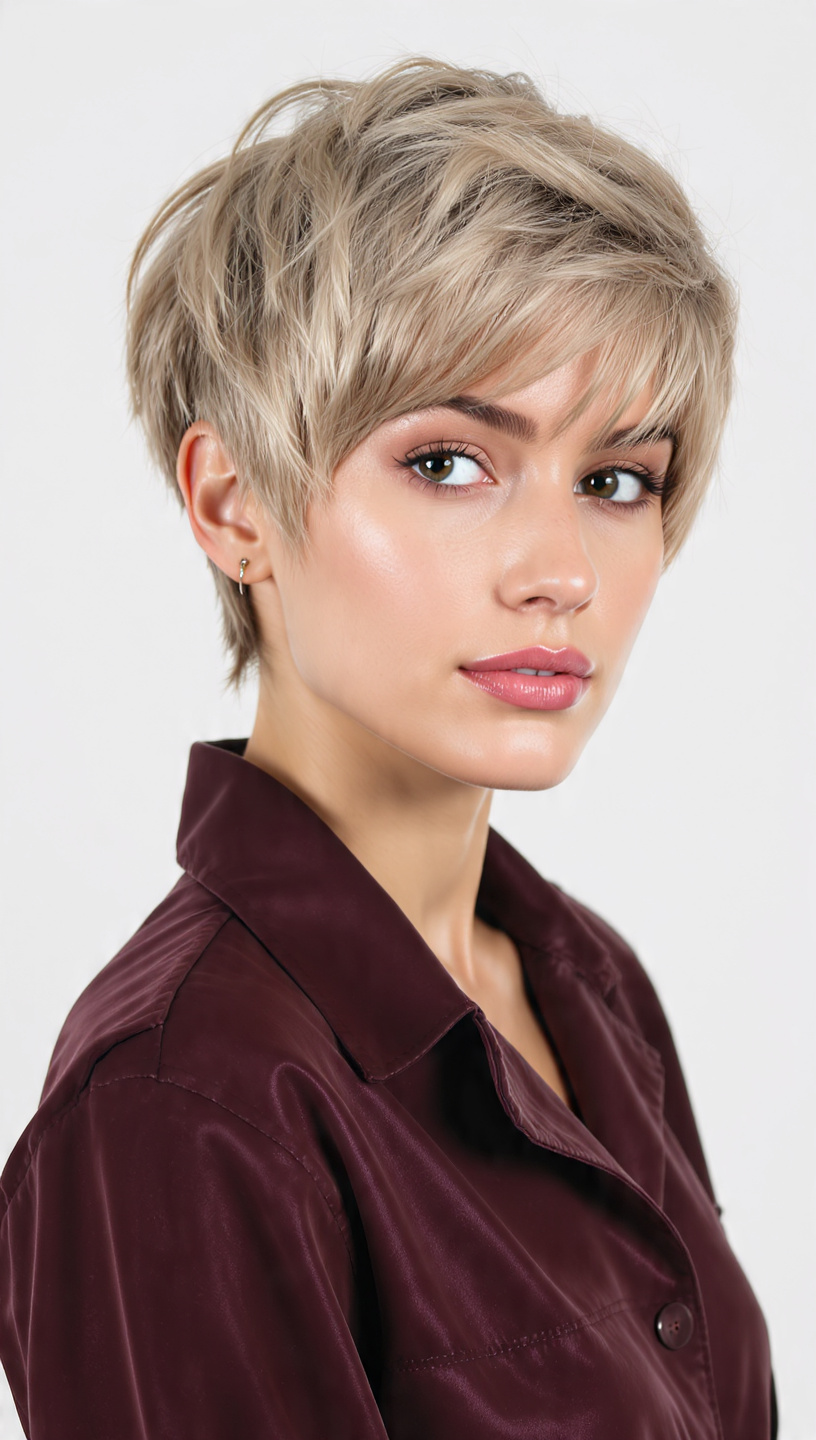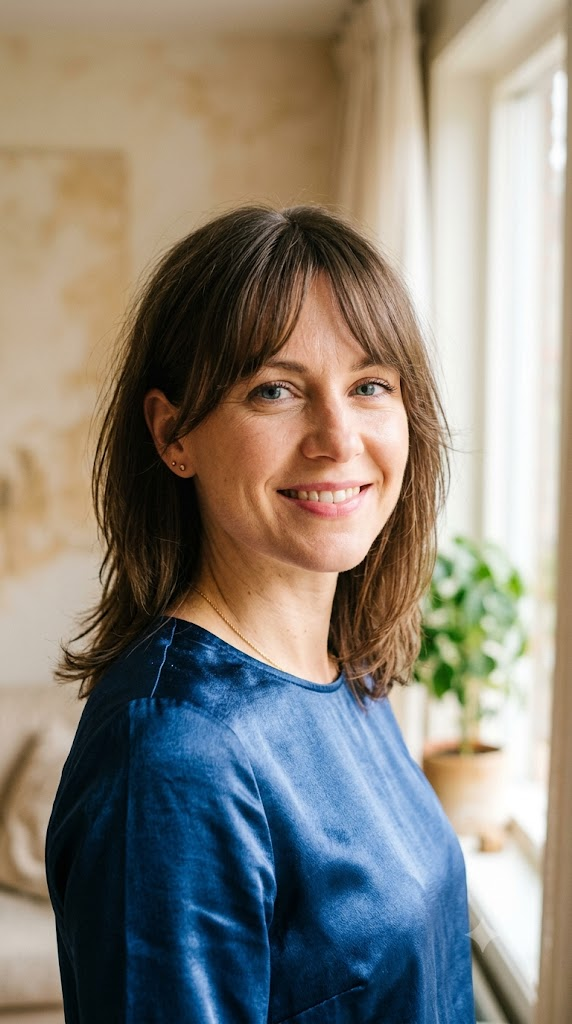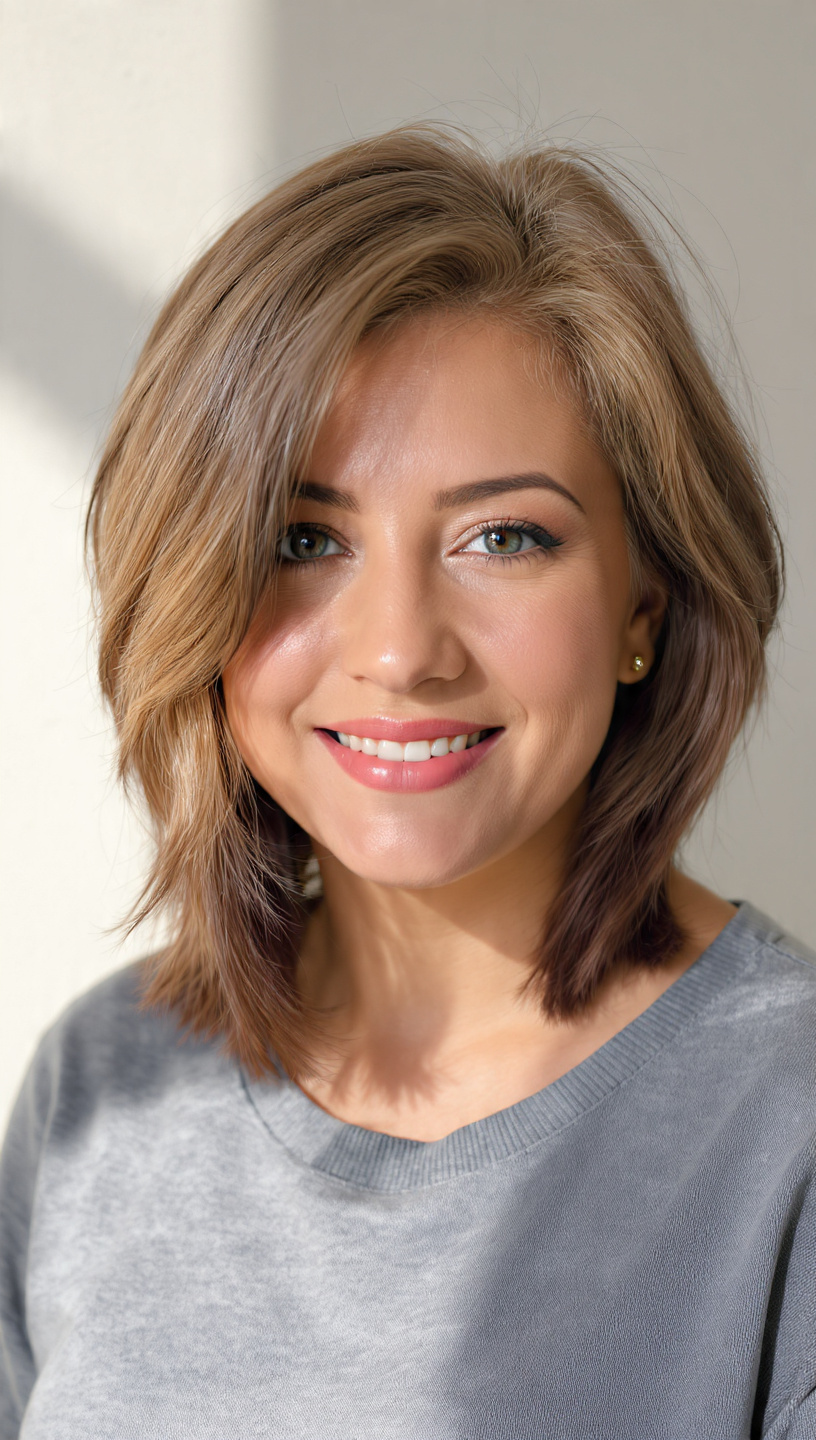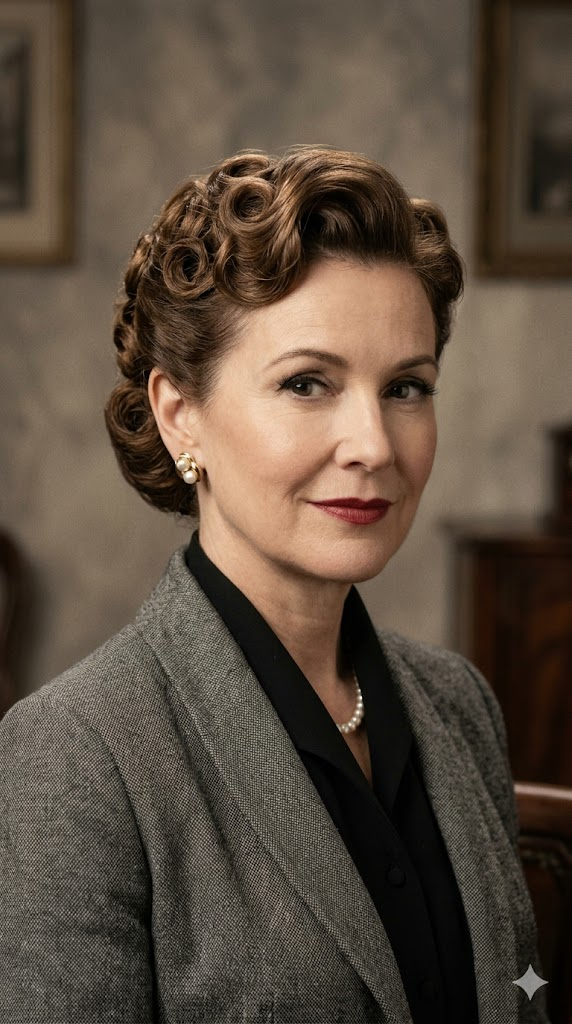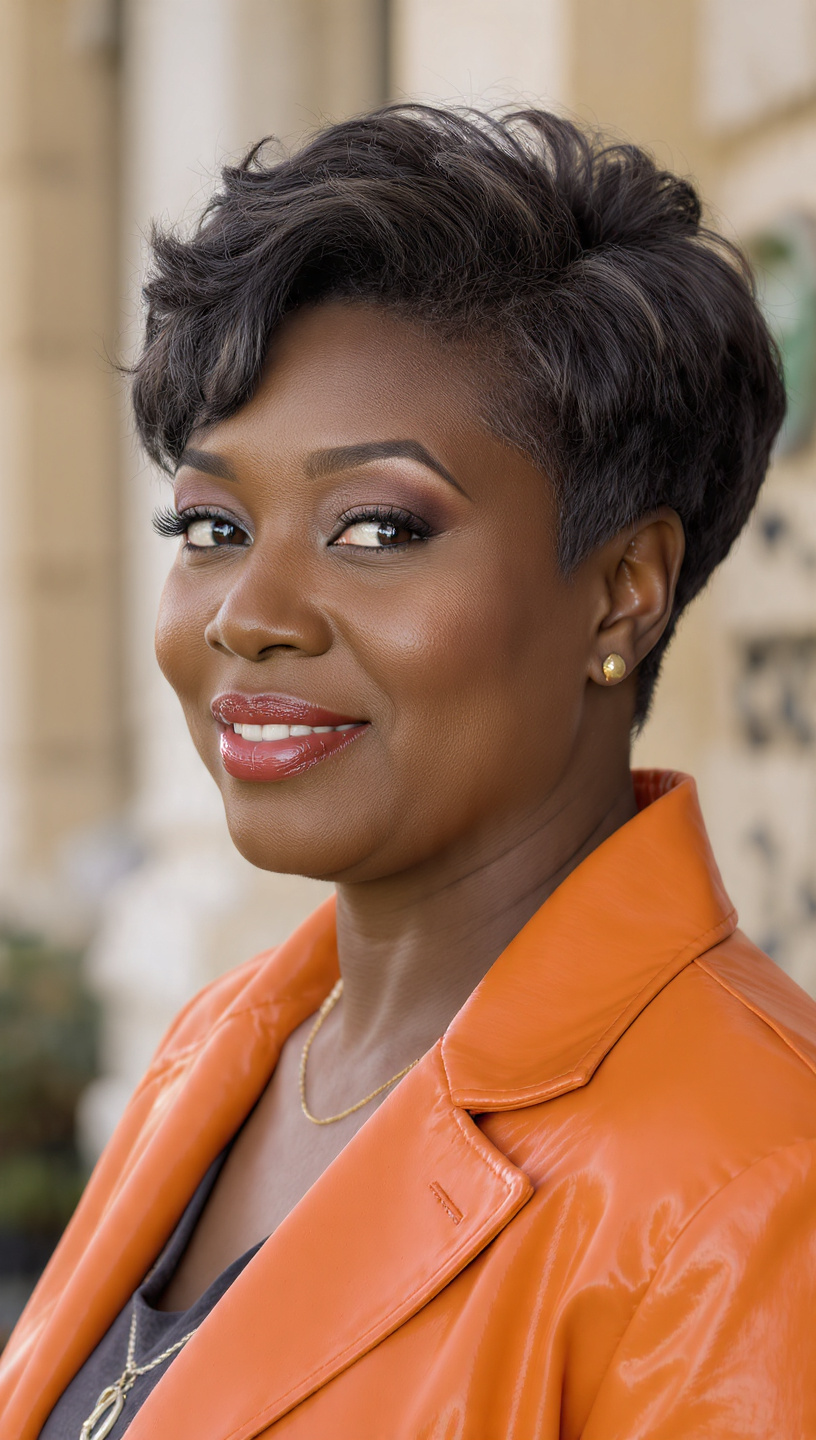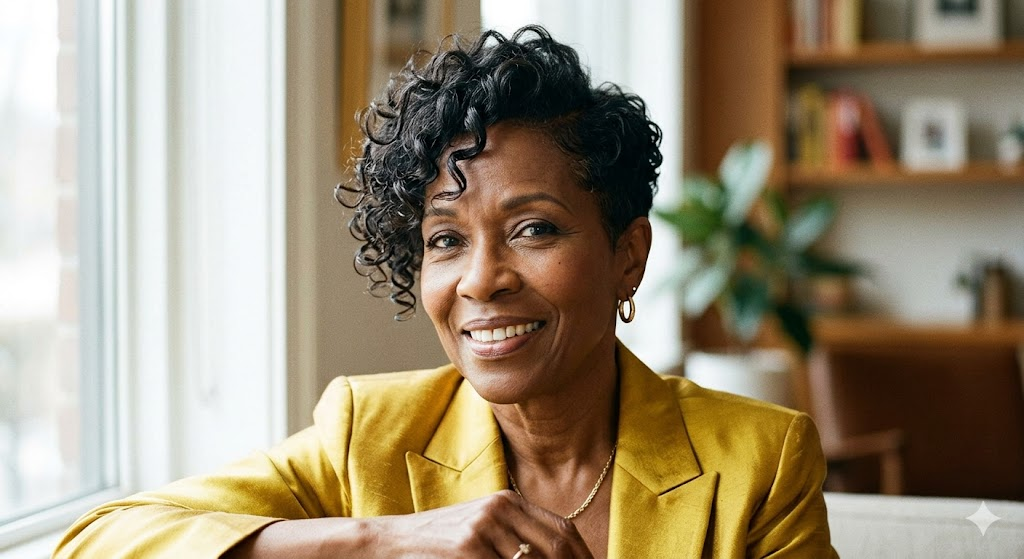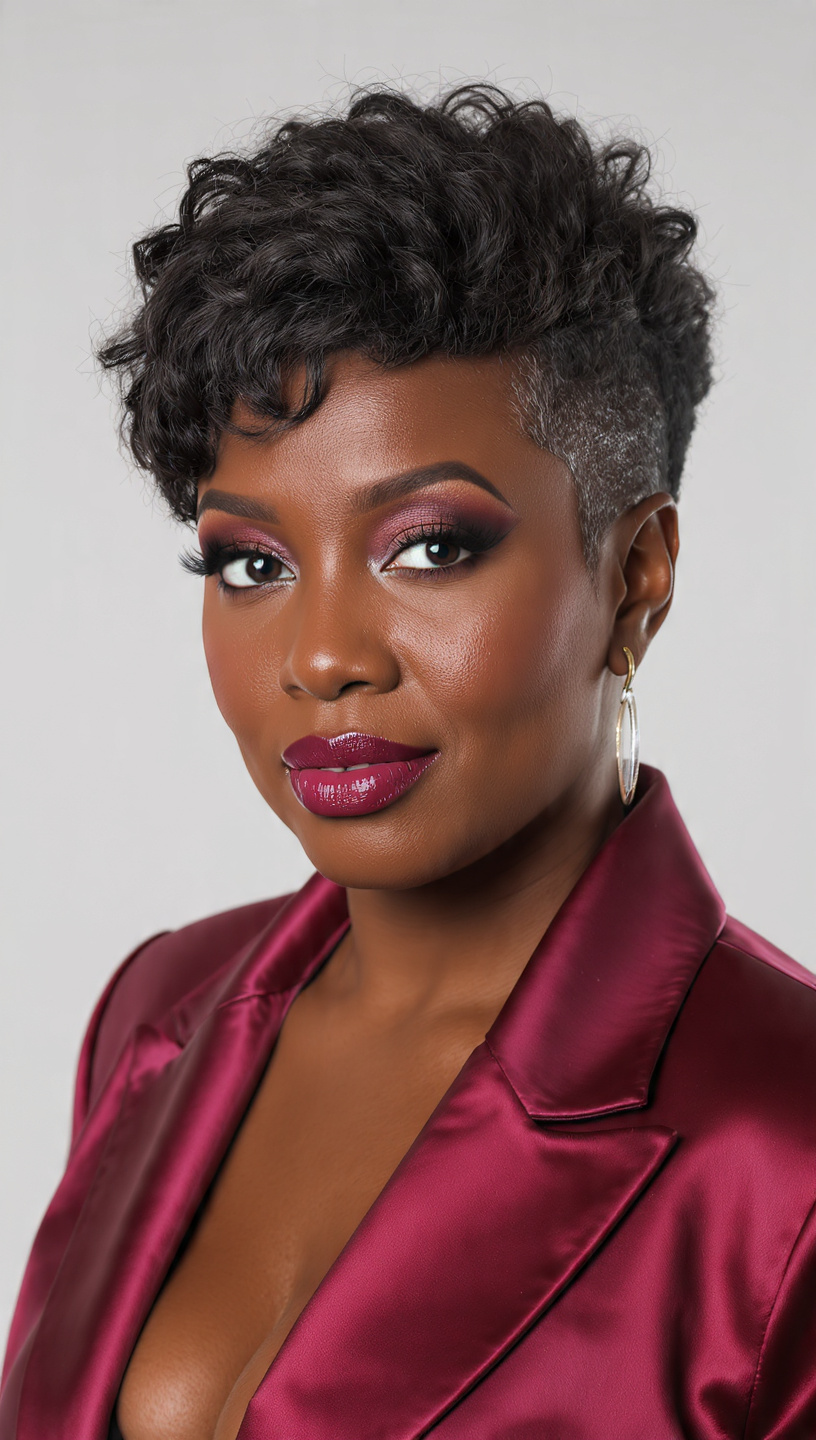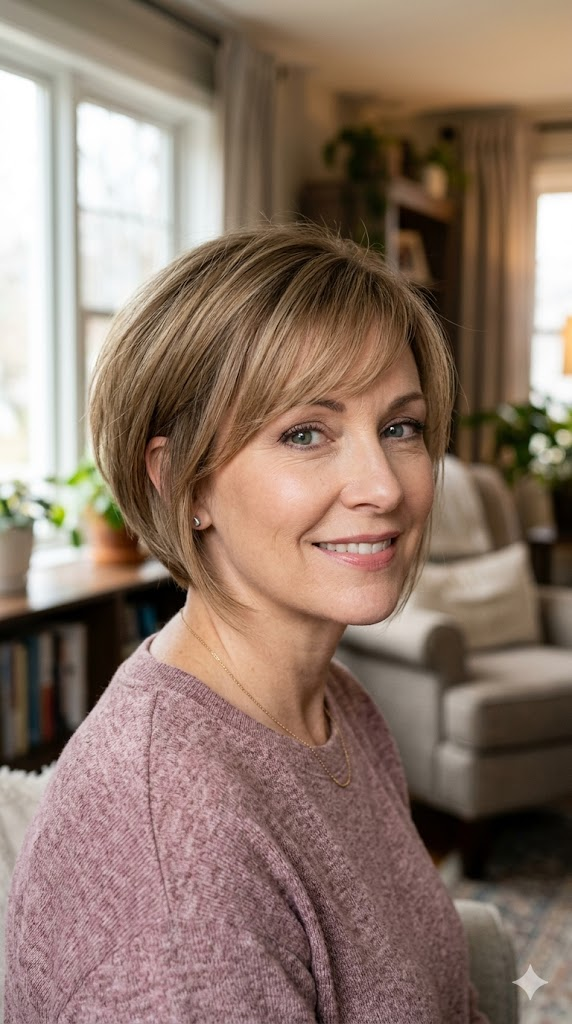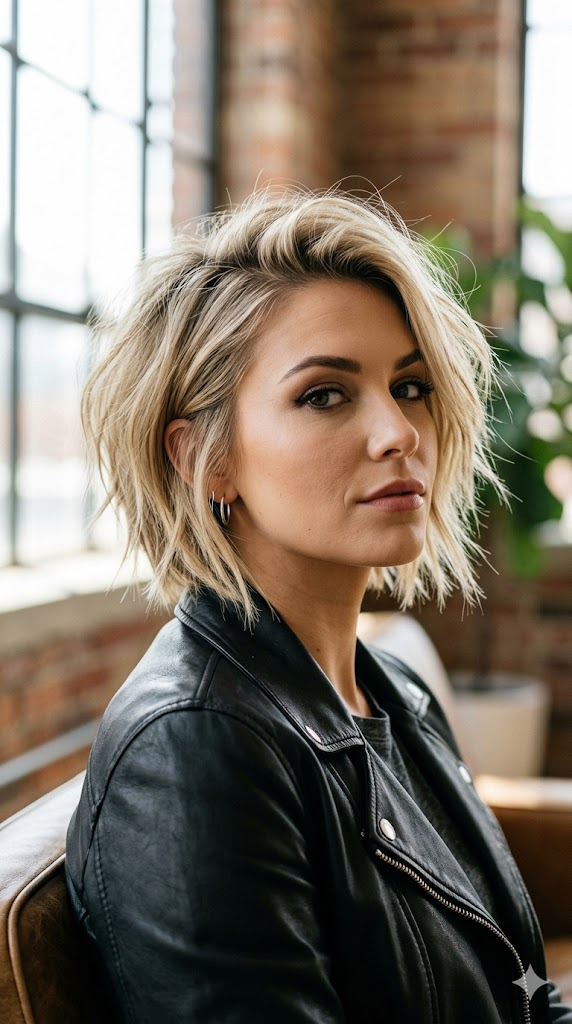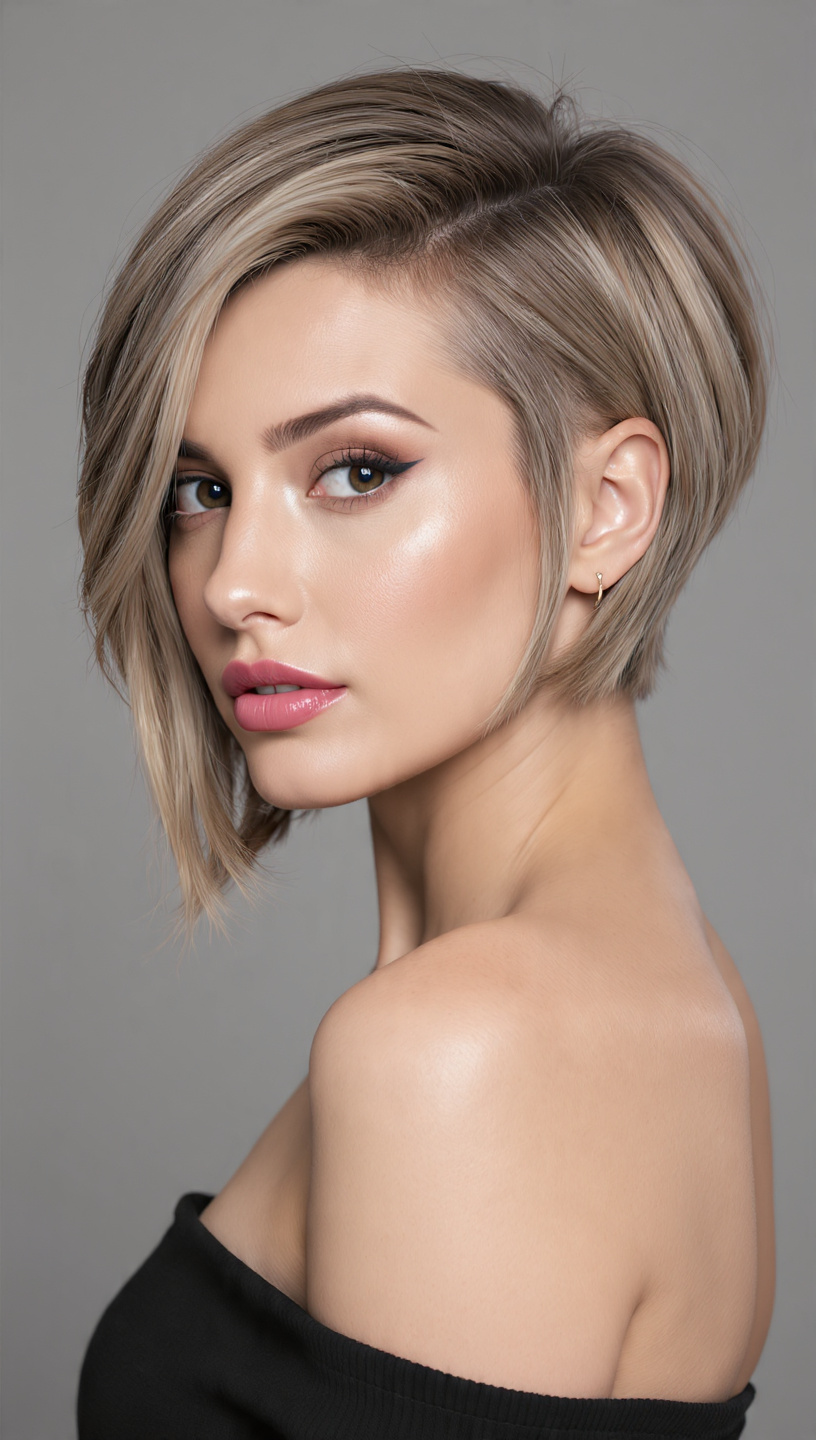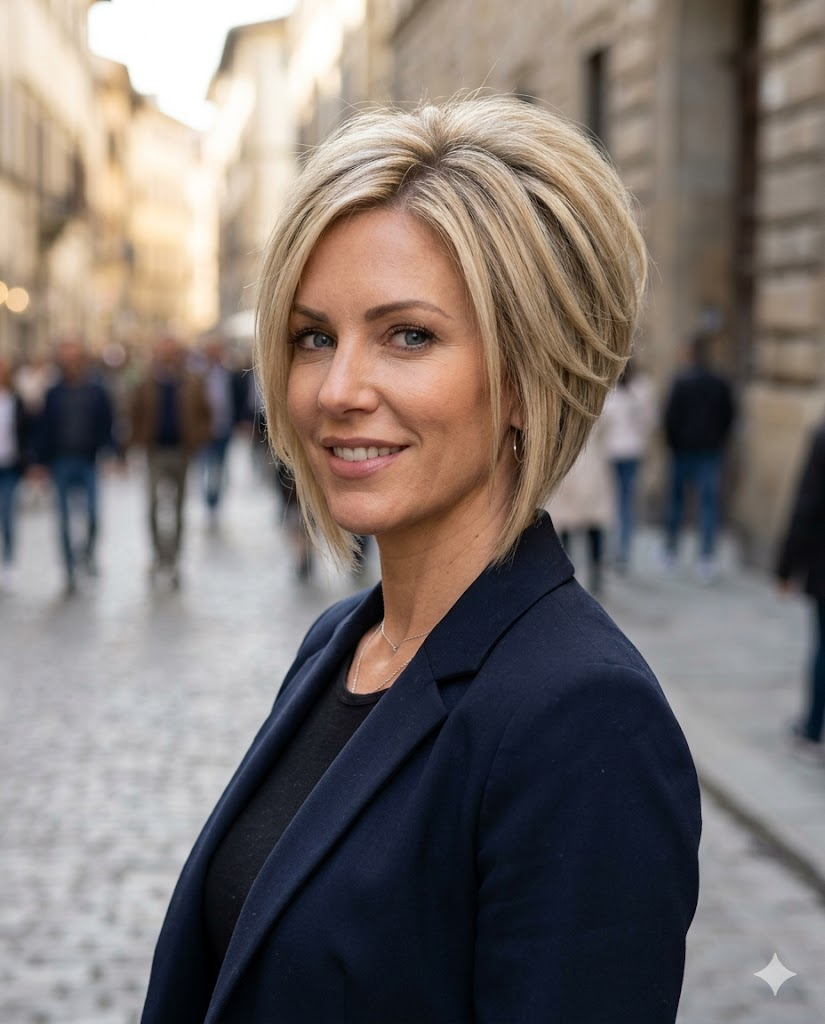
Blog

  • The Best Haircuts for Fine Hair — Volume Without the Drama

    The Best Haircuts for Fine Hair — Volume Without the Drama

    Fine hair doesn’t need more product. It needs a better cut.

    Fine hair is consistently one of the top hair concerns for women — not because fine hair is difficult to style, but because most women with fine hair have been given the wrong cut for it and compensated with an exhausting product routine ever since. The right cut for fine hair creates the illusion of volume structurally, without relying on mousse, dry shampoo, and constant backcombing to hold a shape that collapses by lunchtime.

    This guide covers the cuts that work hardest for fine hair in 2026: the lob with invisible layering, the blunt bob, the bixie, the butterfly at medium length with conservative layering, and the specific pixie variations that add visual density. But more importantly, it covers the cuts that actively hurt fine hair — the very short layers and dramatic layering techniques that make fine hair look thinner, not fuller. The difference is specific and actionable.

    → The single most damaging thing you can do to fine hair: over-layer it. Too many layers on fine hair leave the ends wispy and the overall style looking thin. Ask your stylist for ‘minimal layering — just enough for movement’ rather than ‘lots of layers for volume.’

    The Fine Hair Edit: 15 Structural Cuts for Effortless Density:

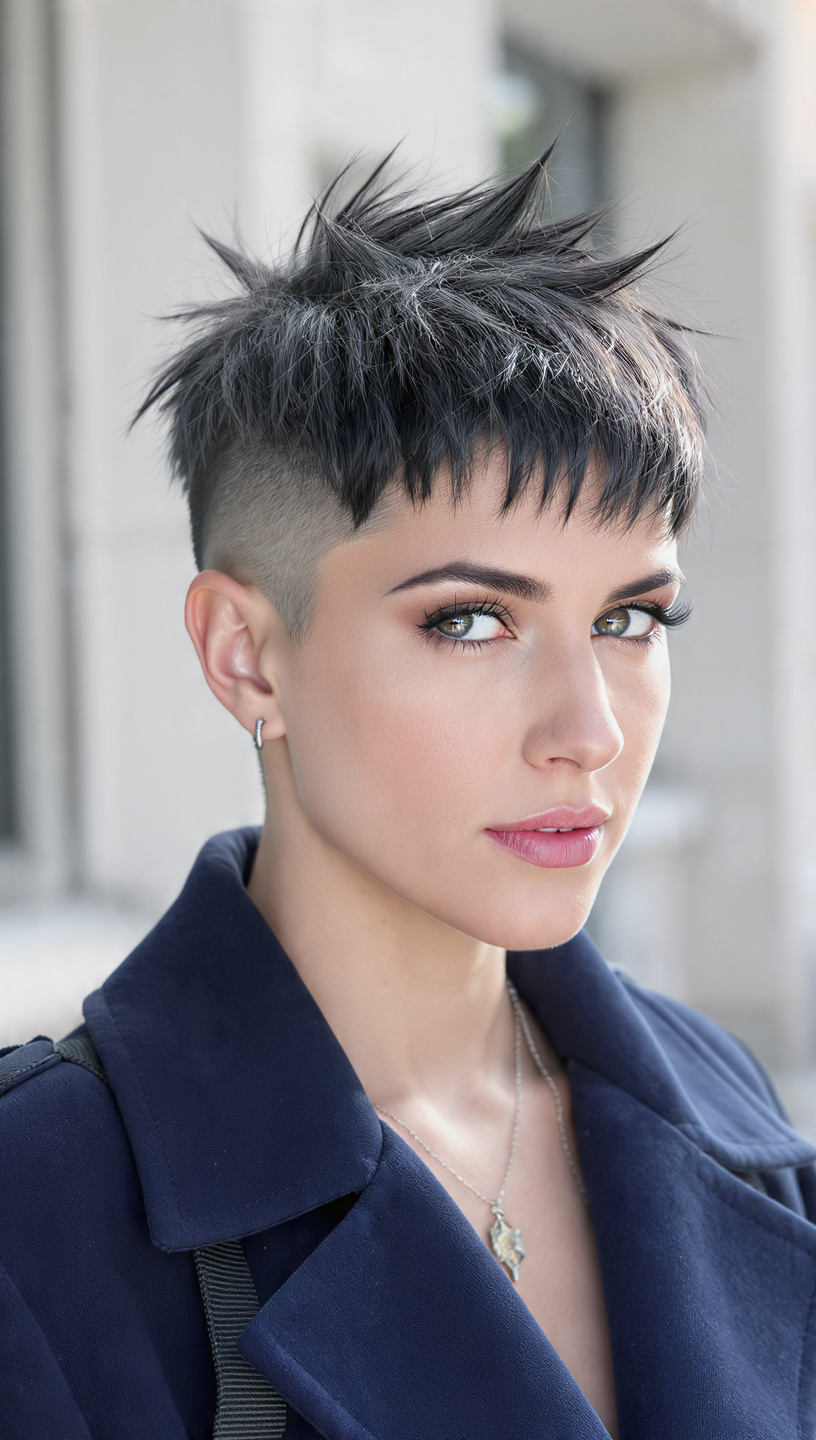
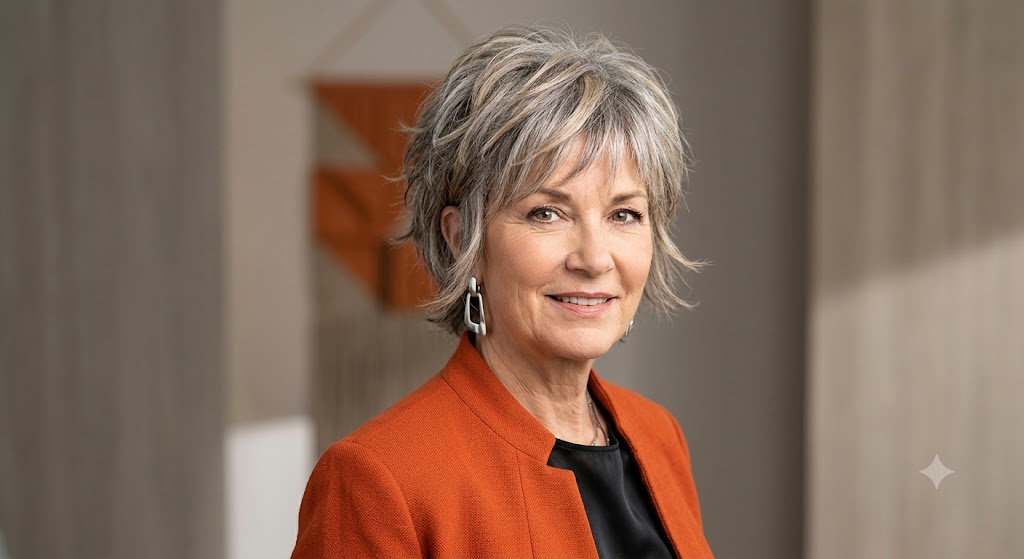
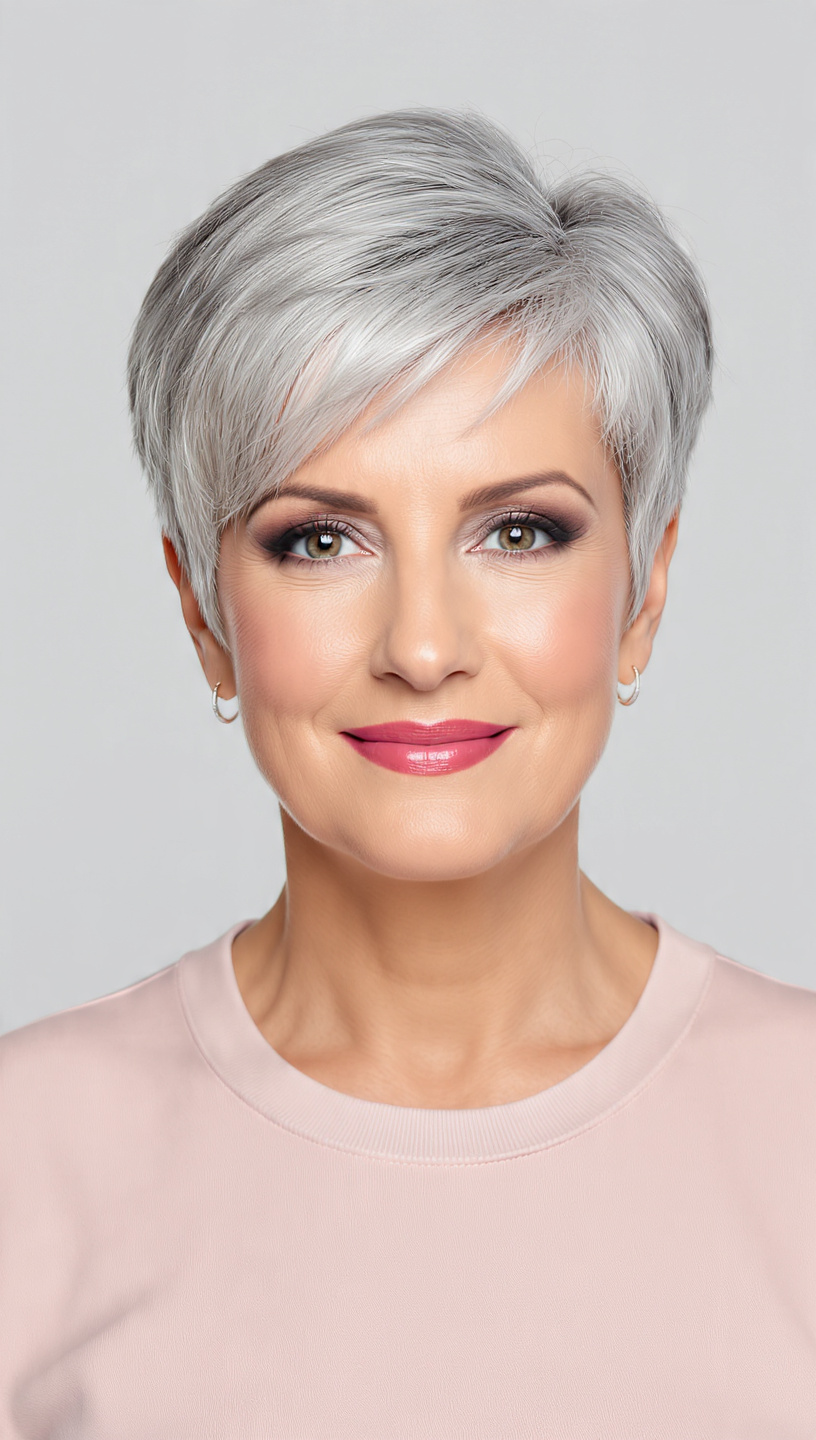
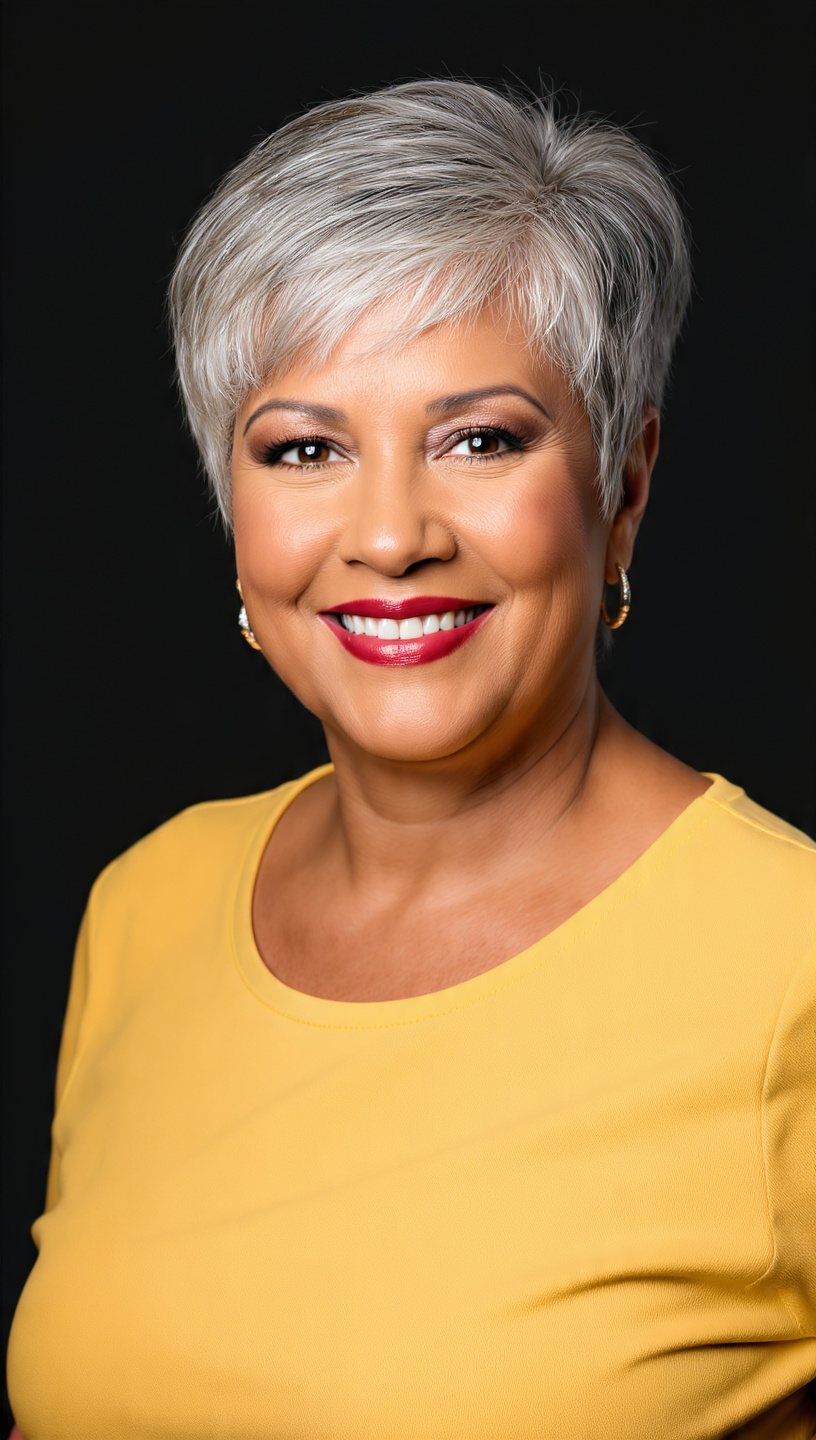
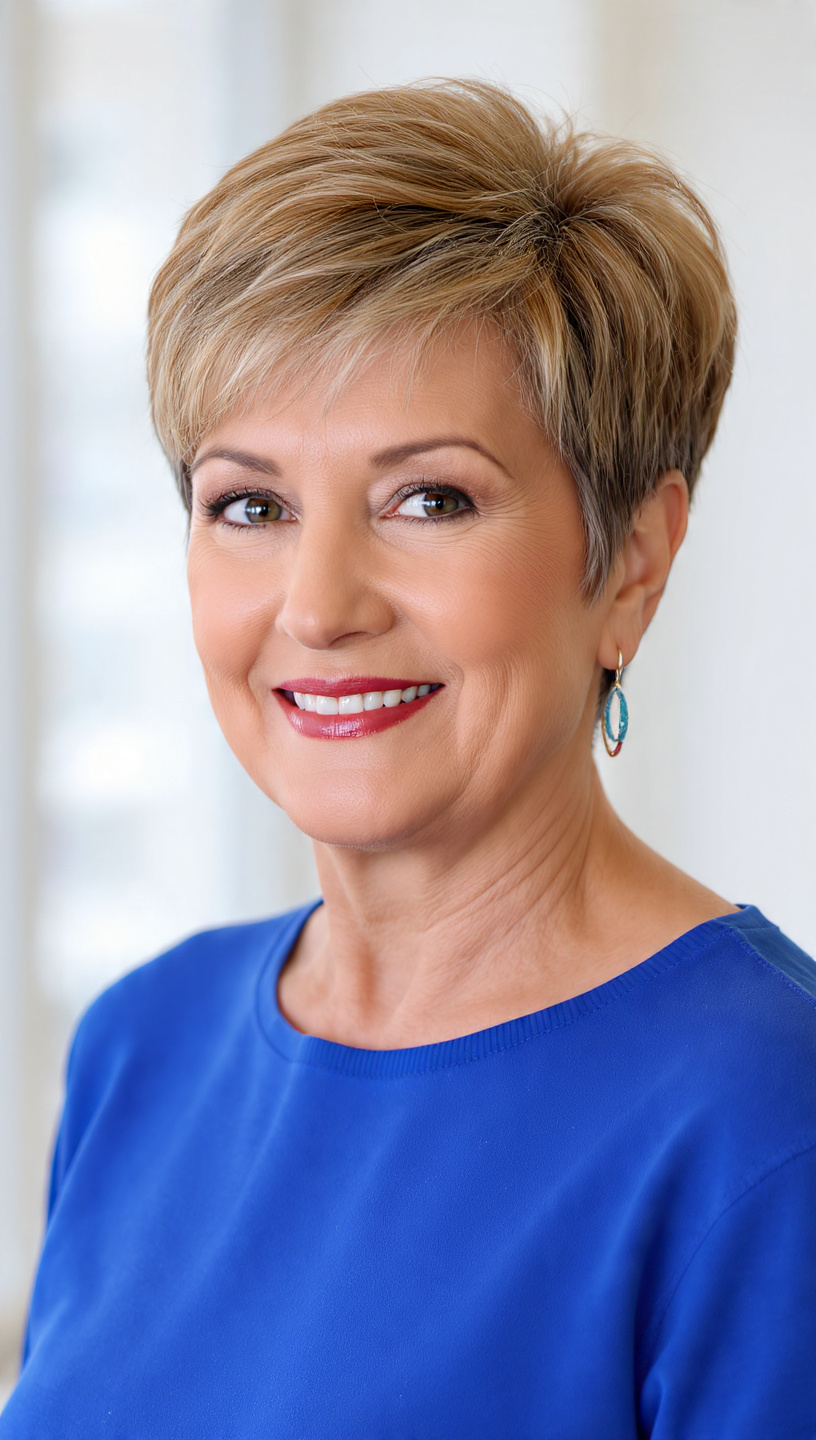
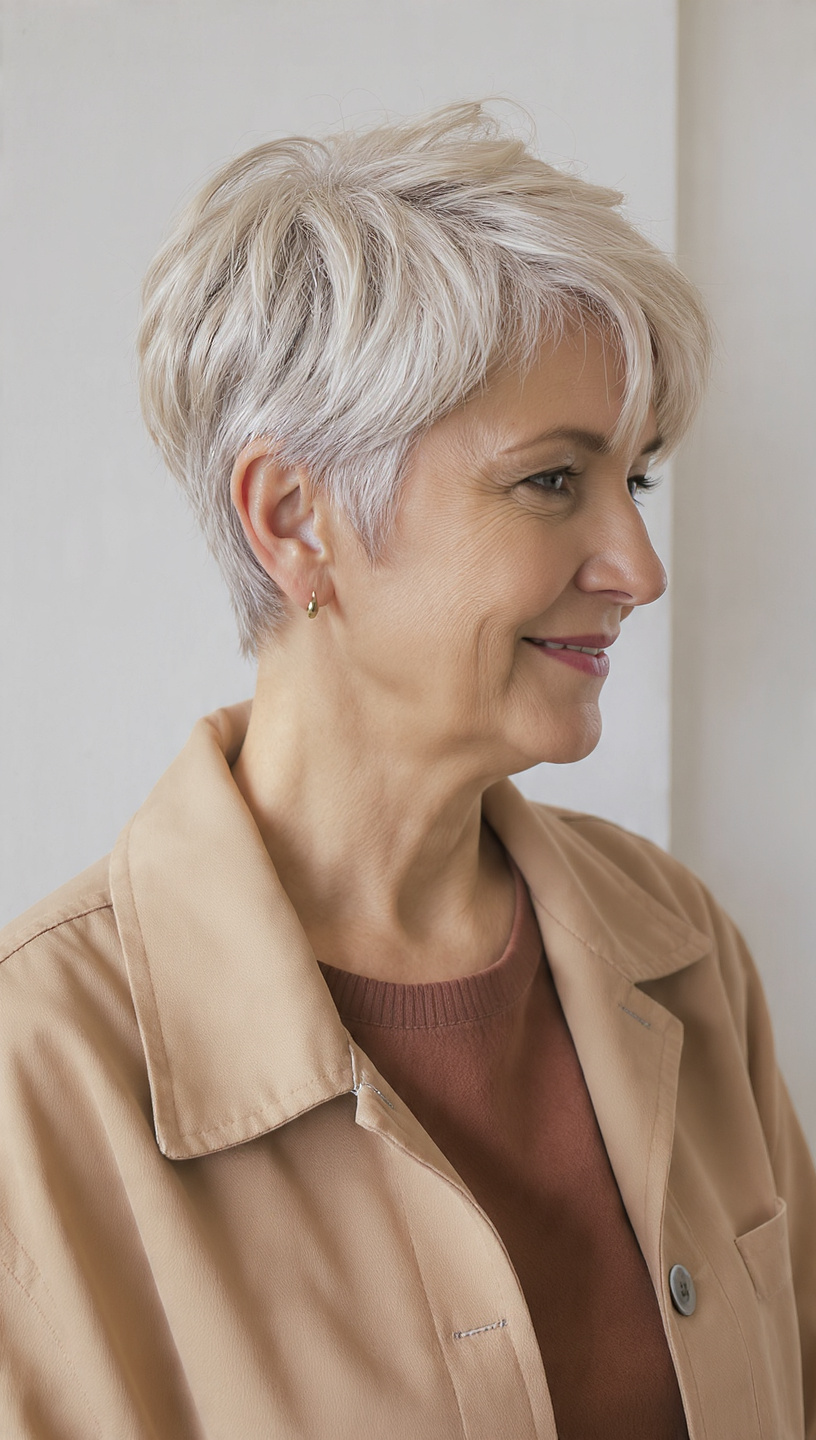
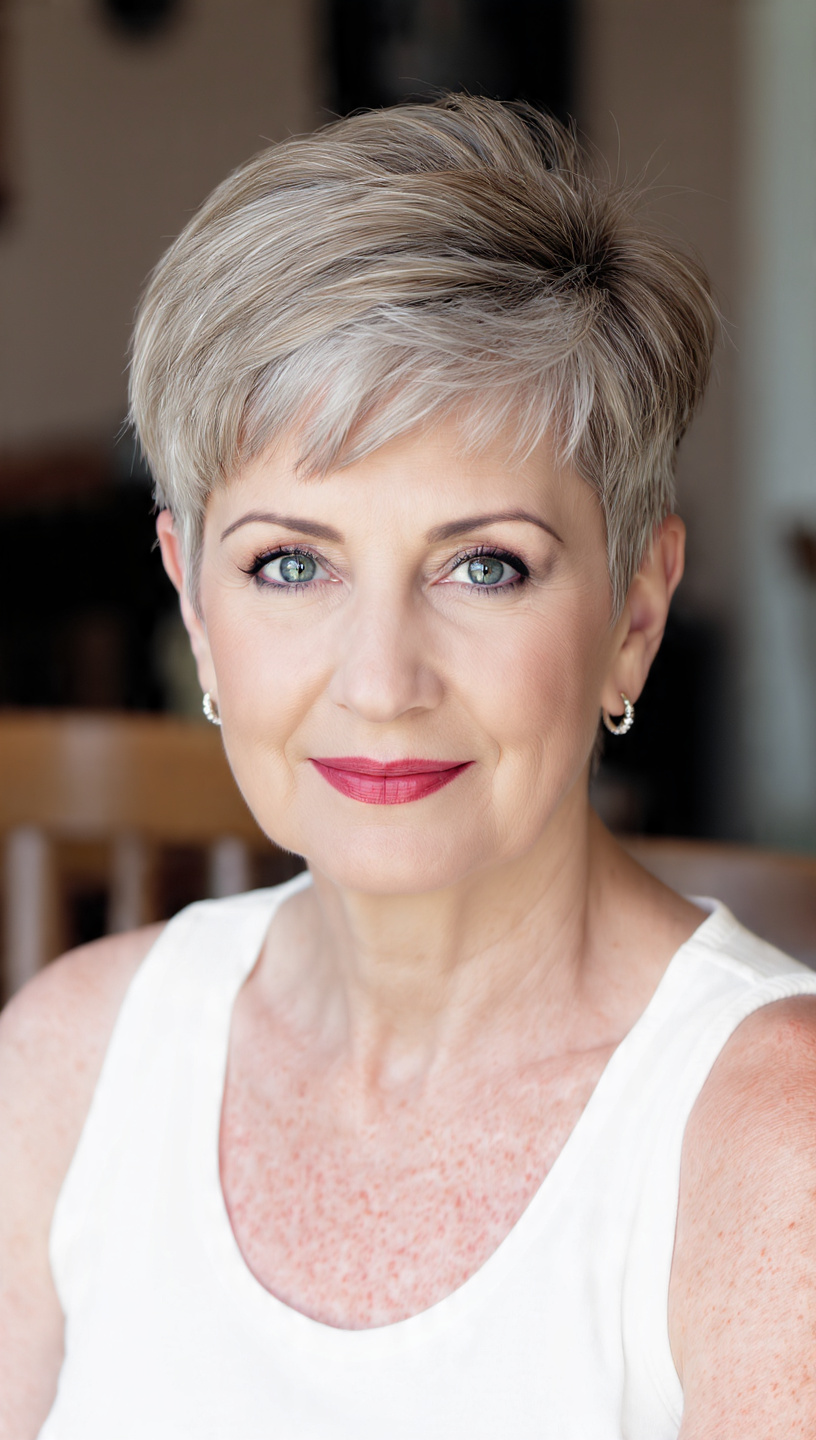
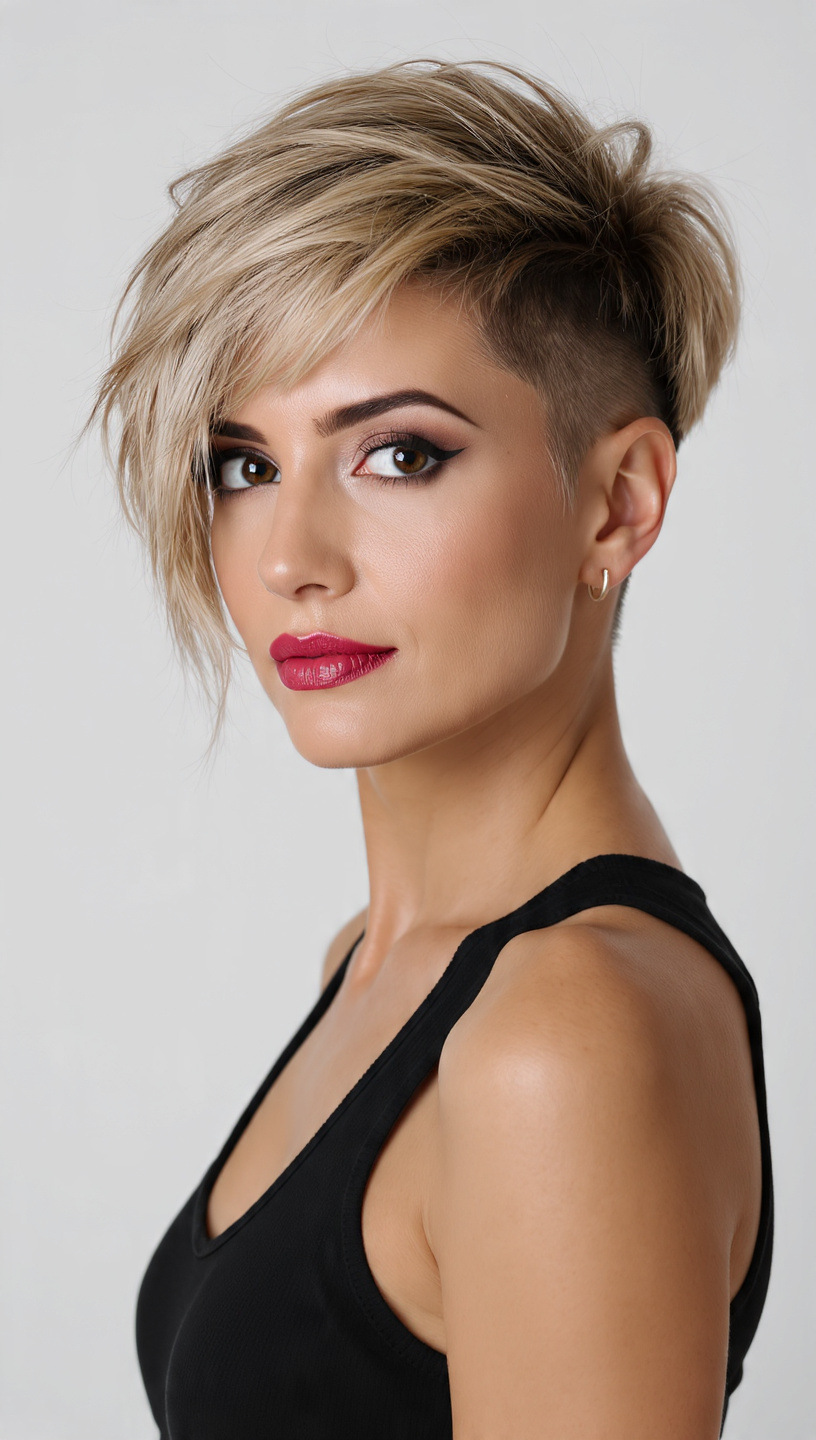
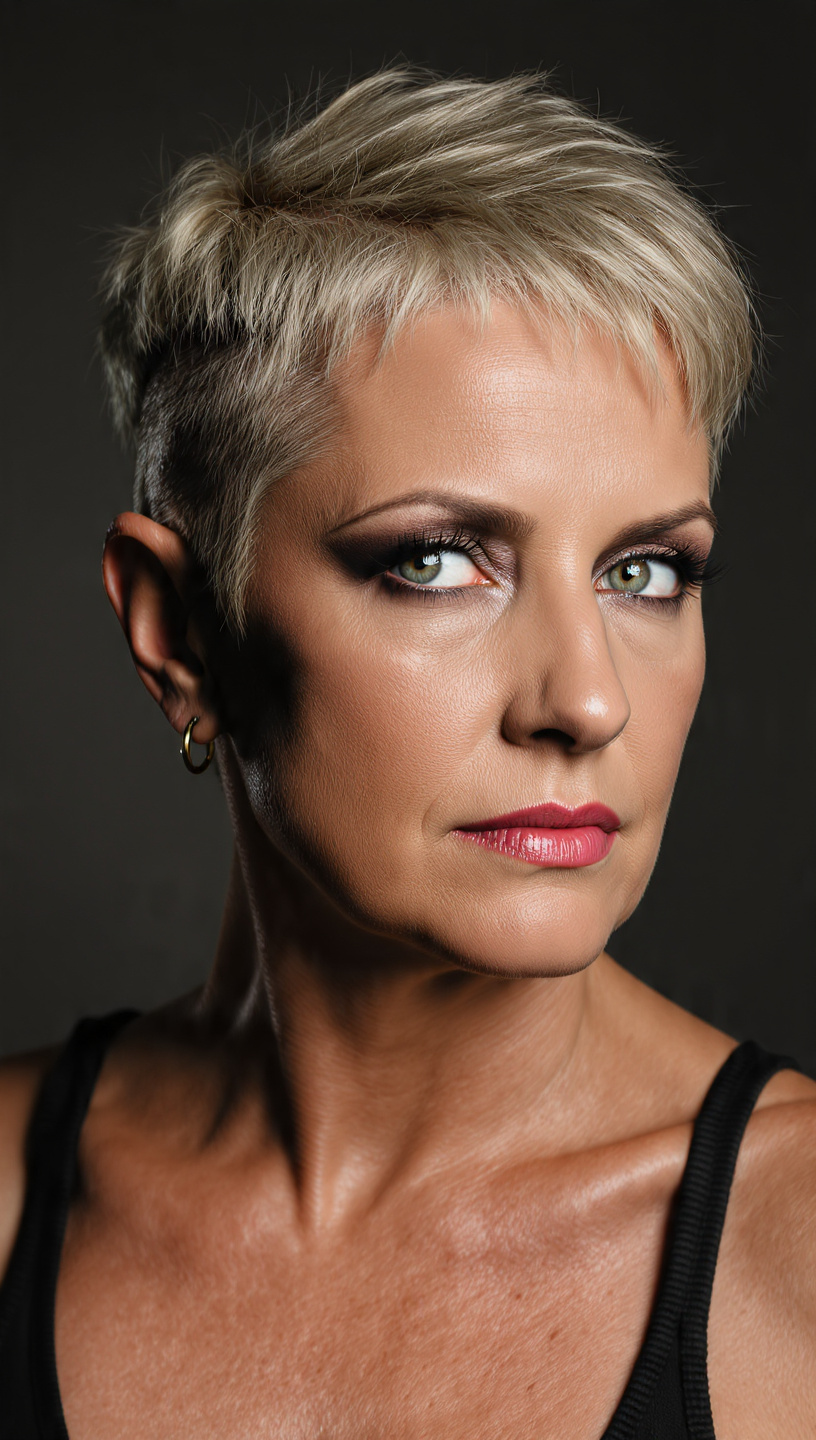
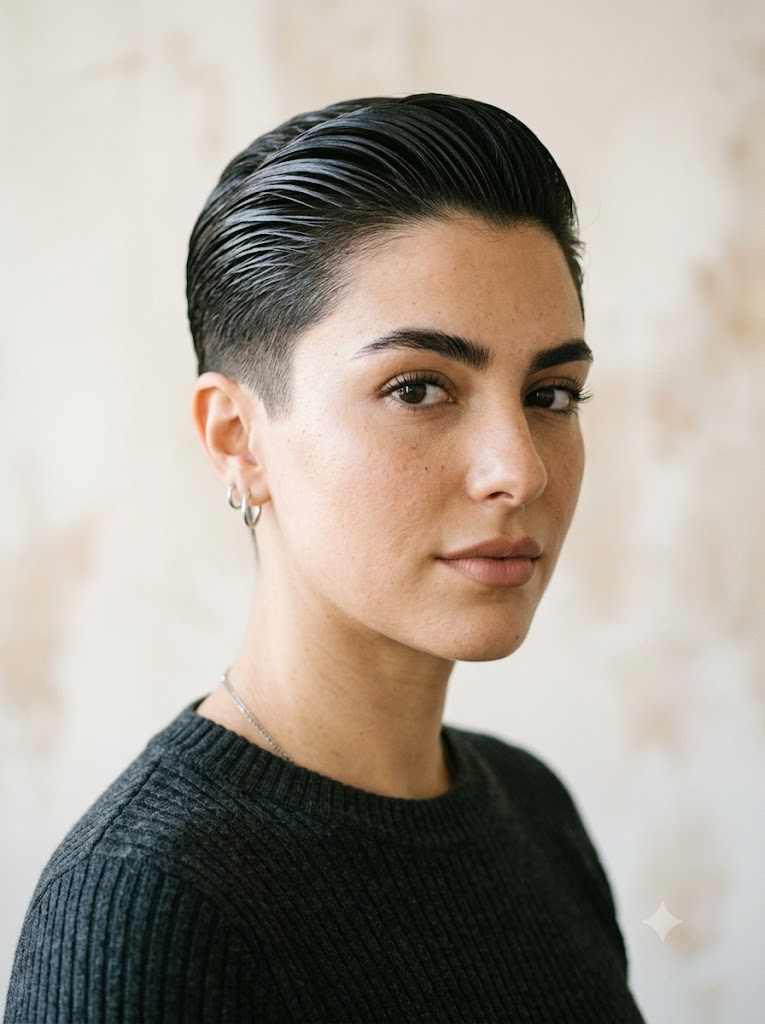
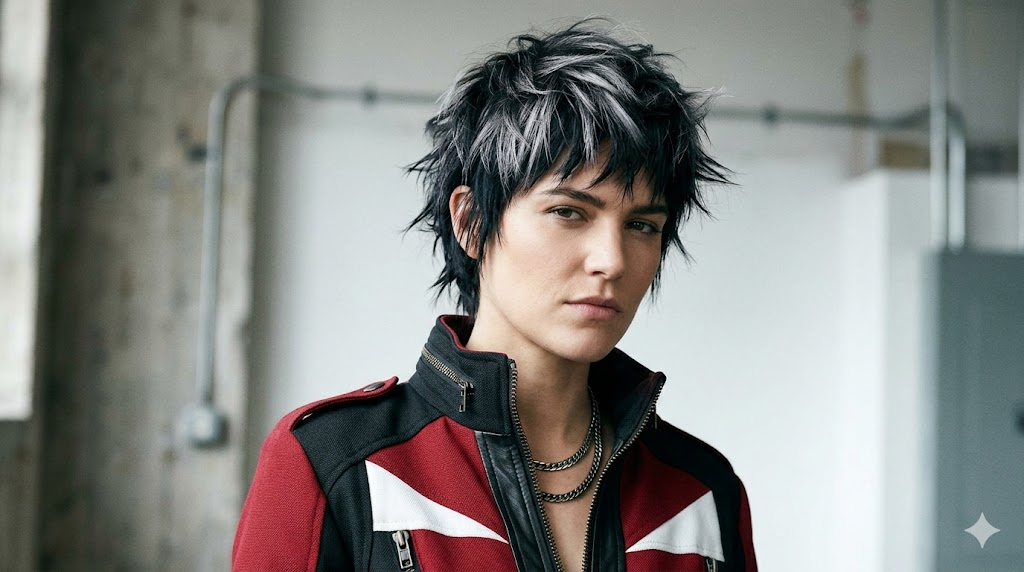
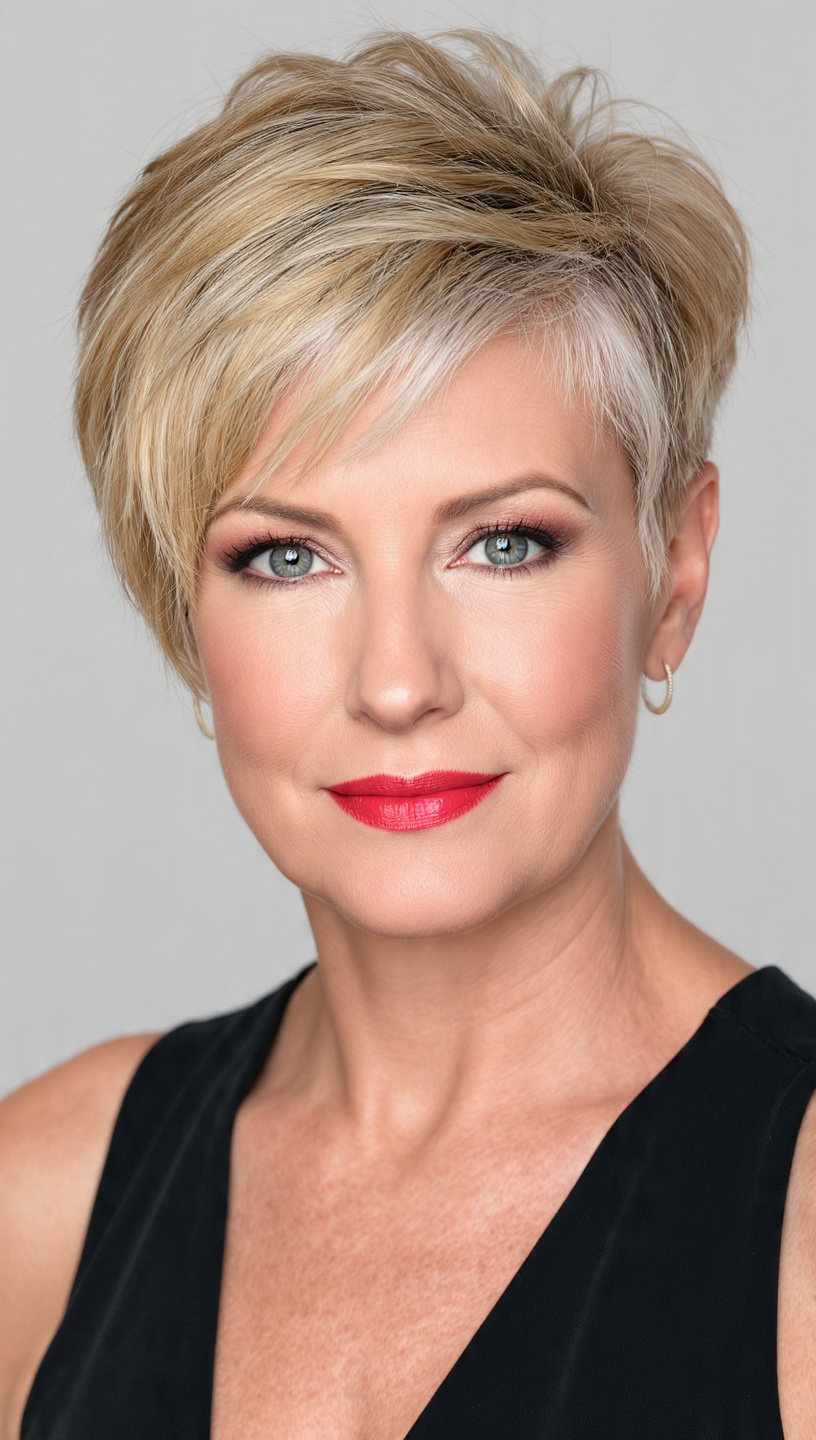
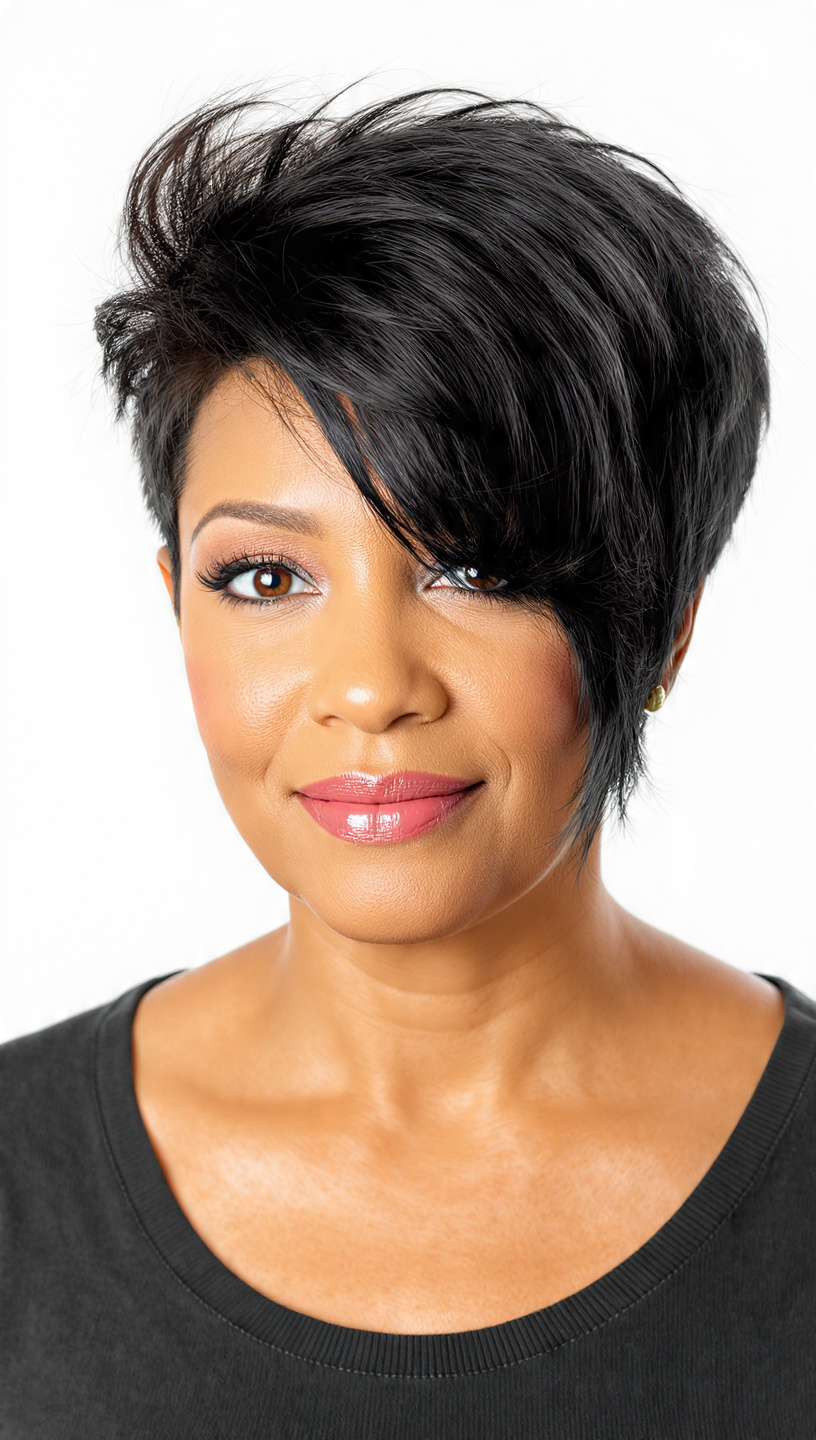
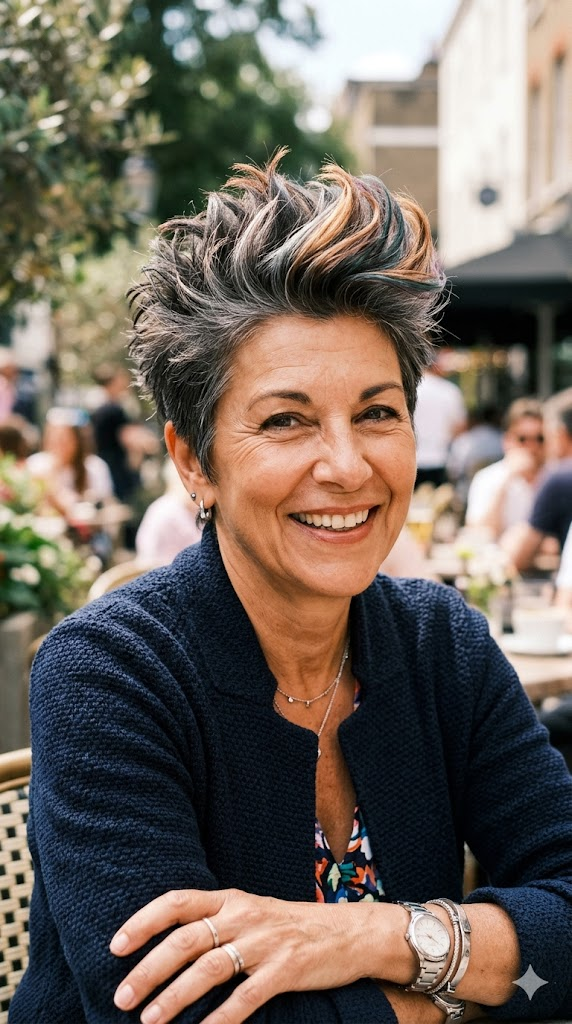
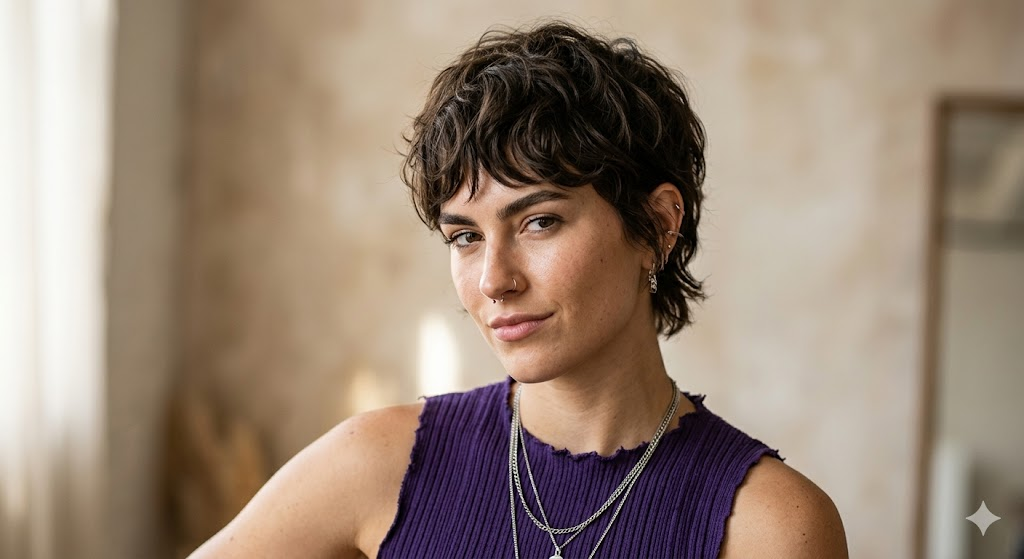
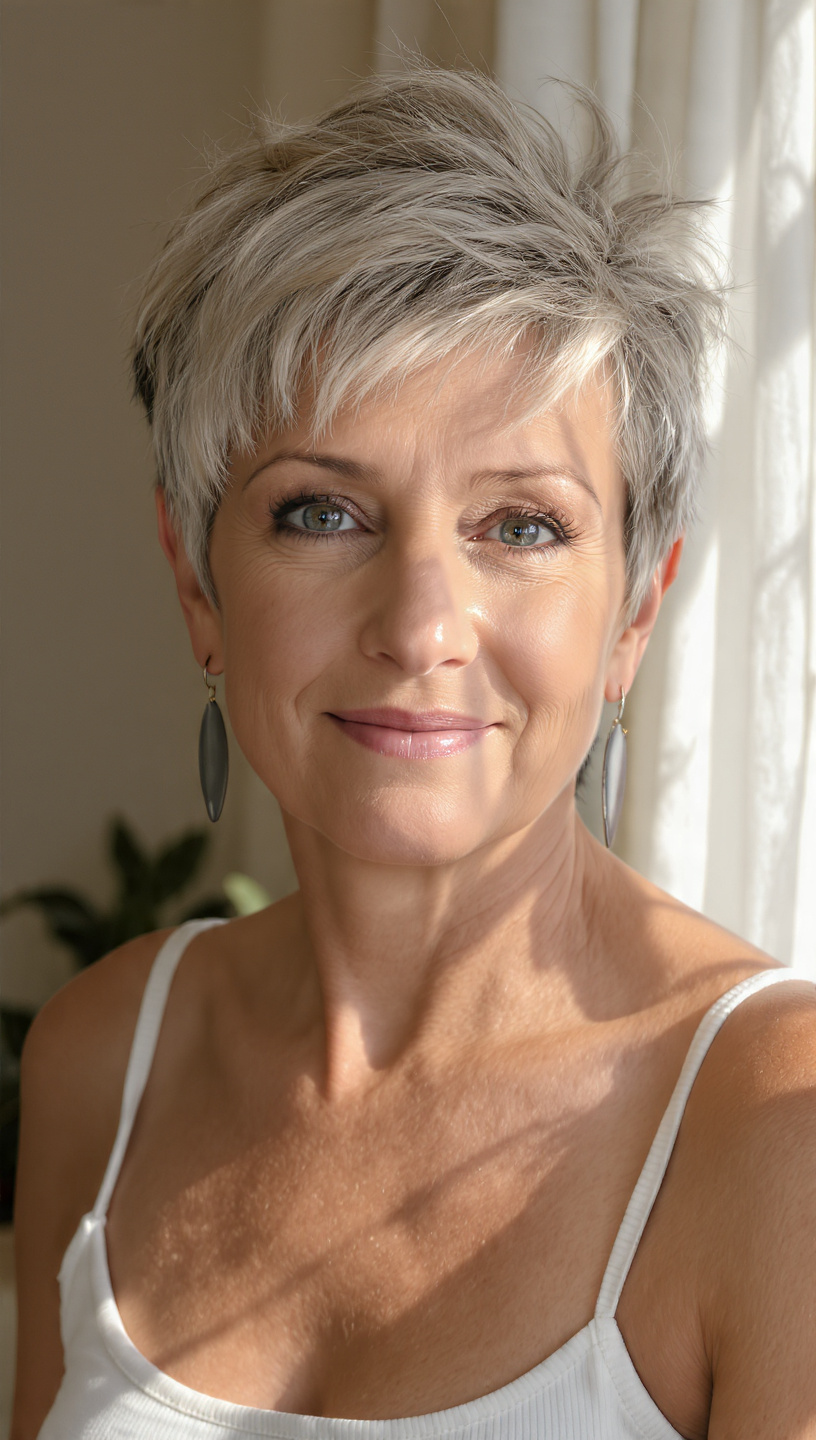
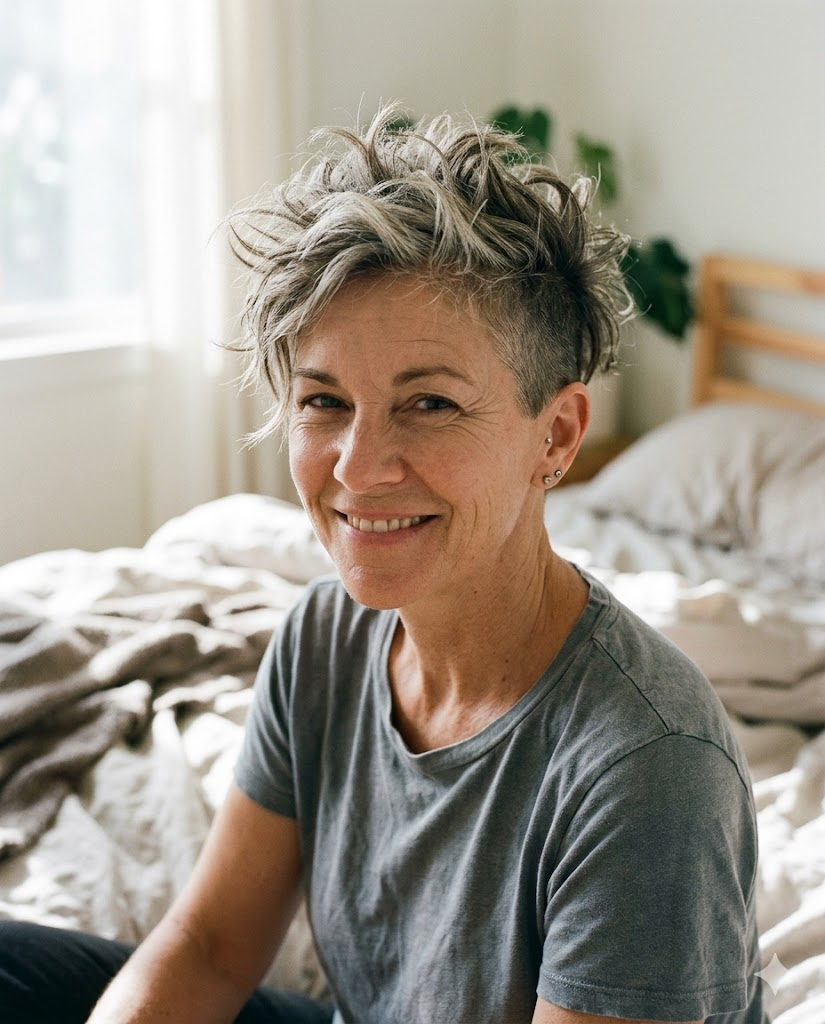
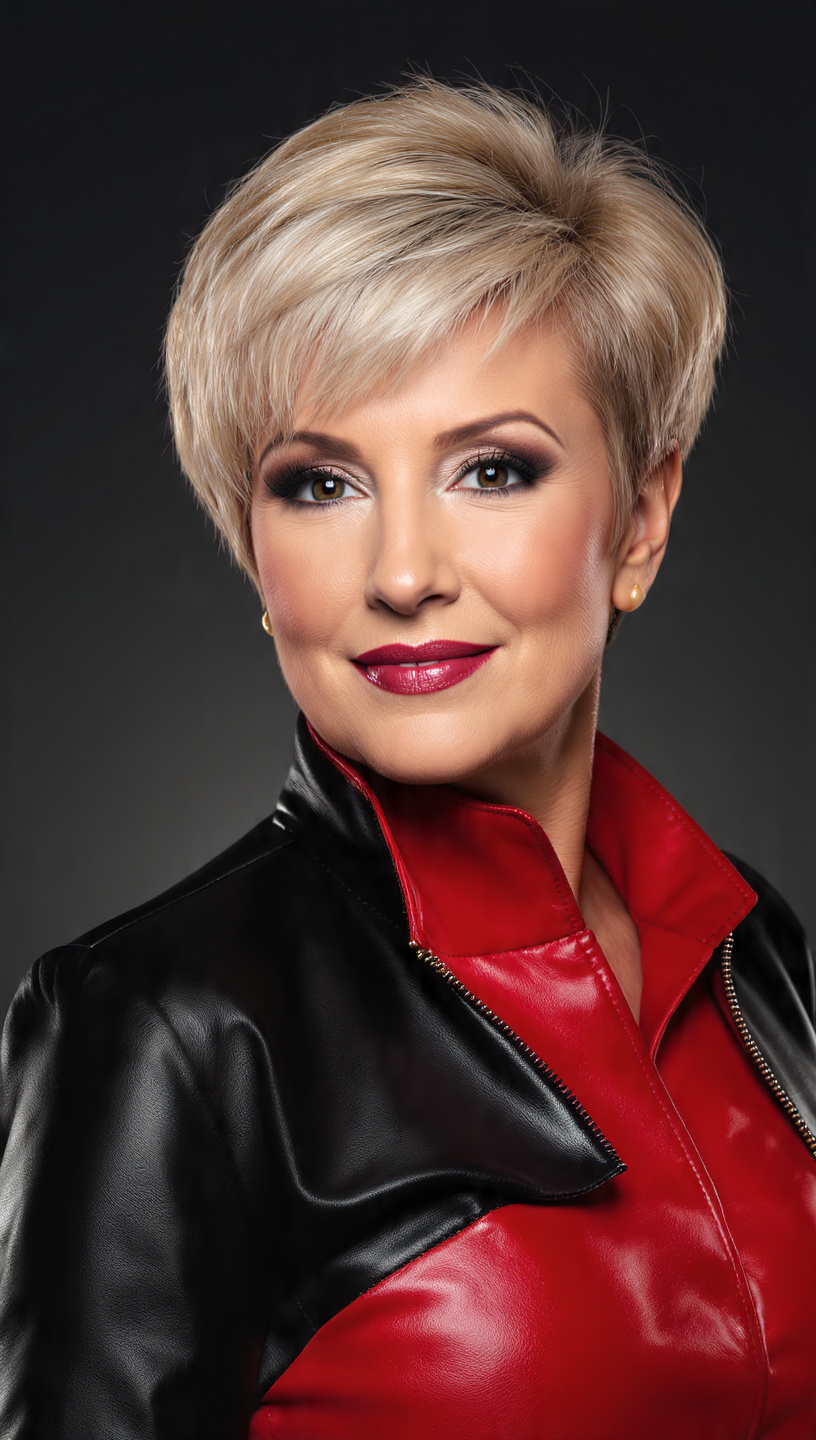
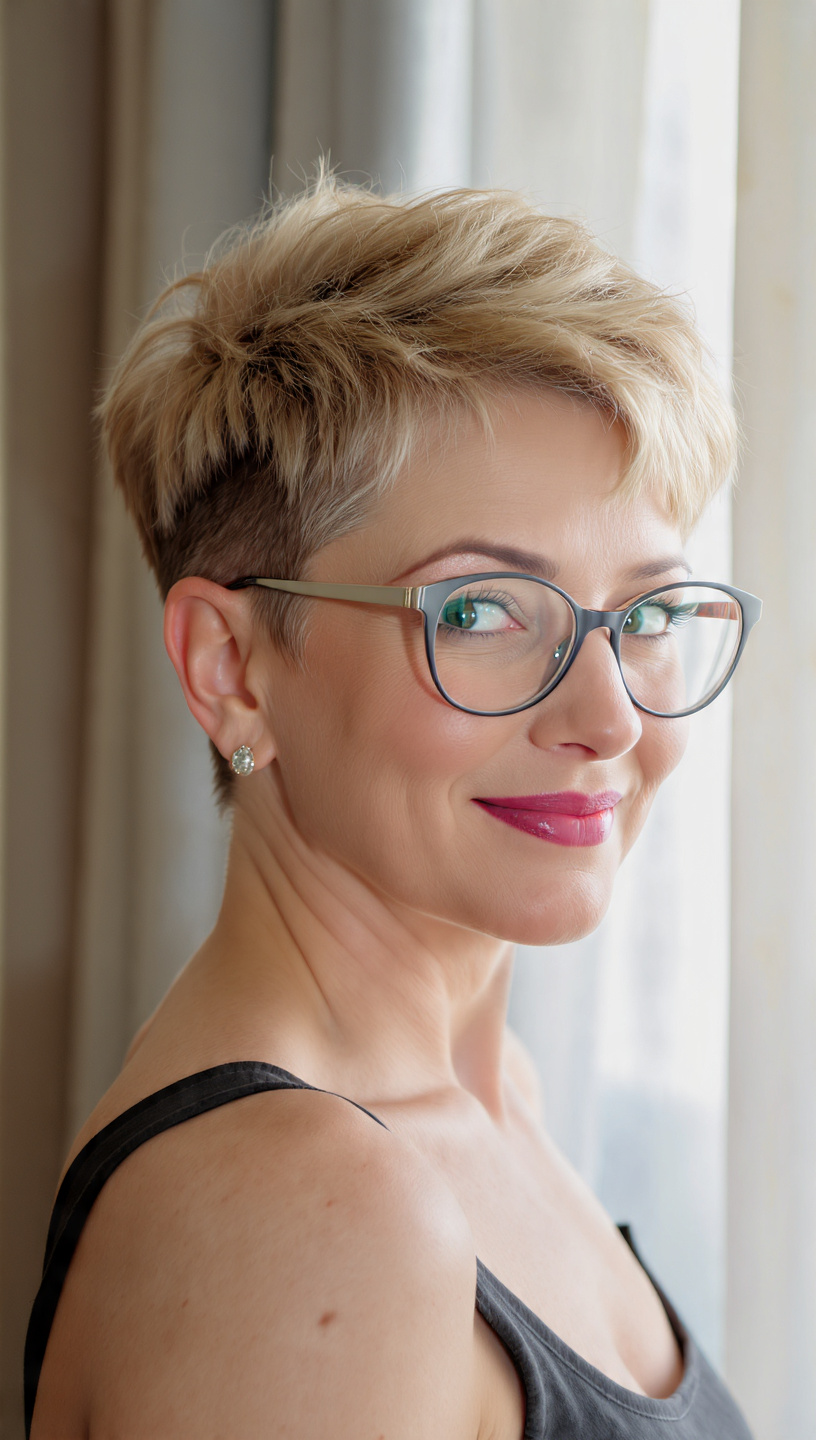
    1. Two-Tone Pixie Undercut

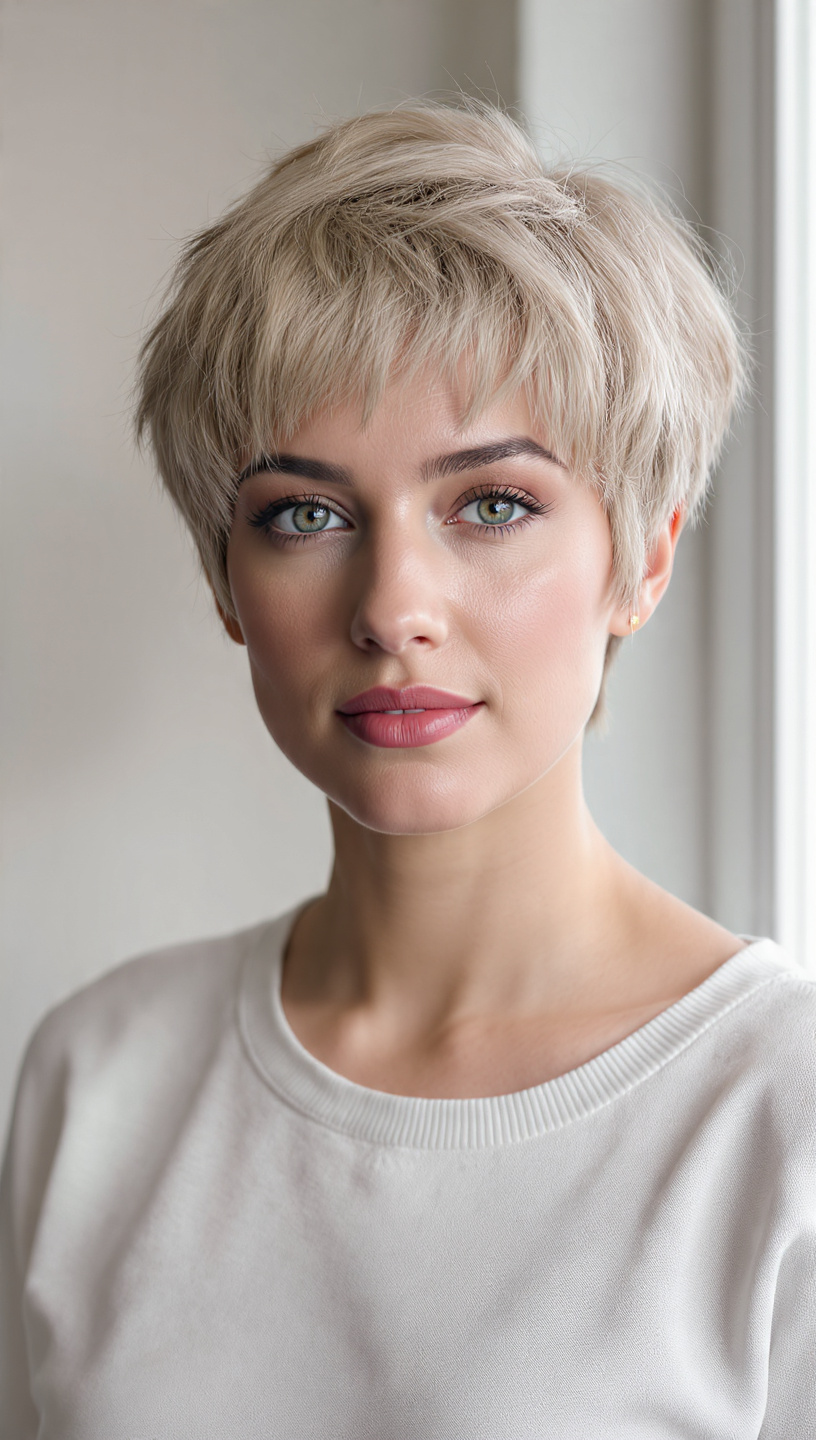
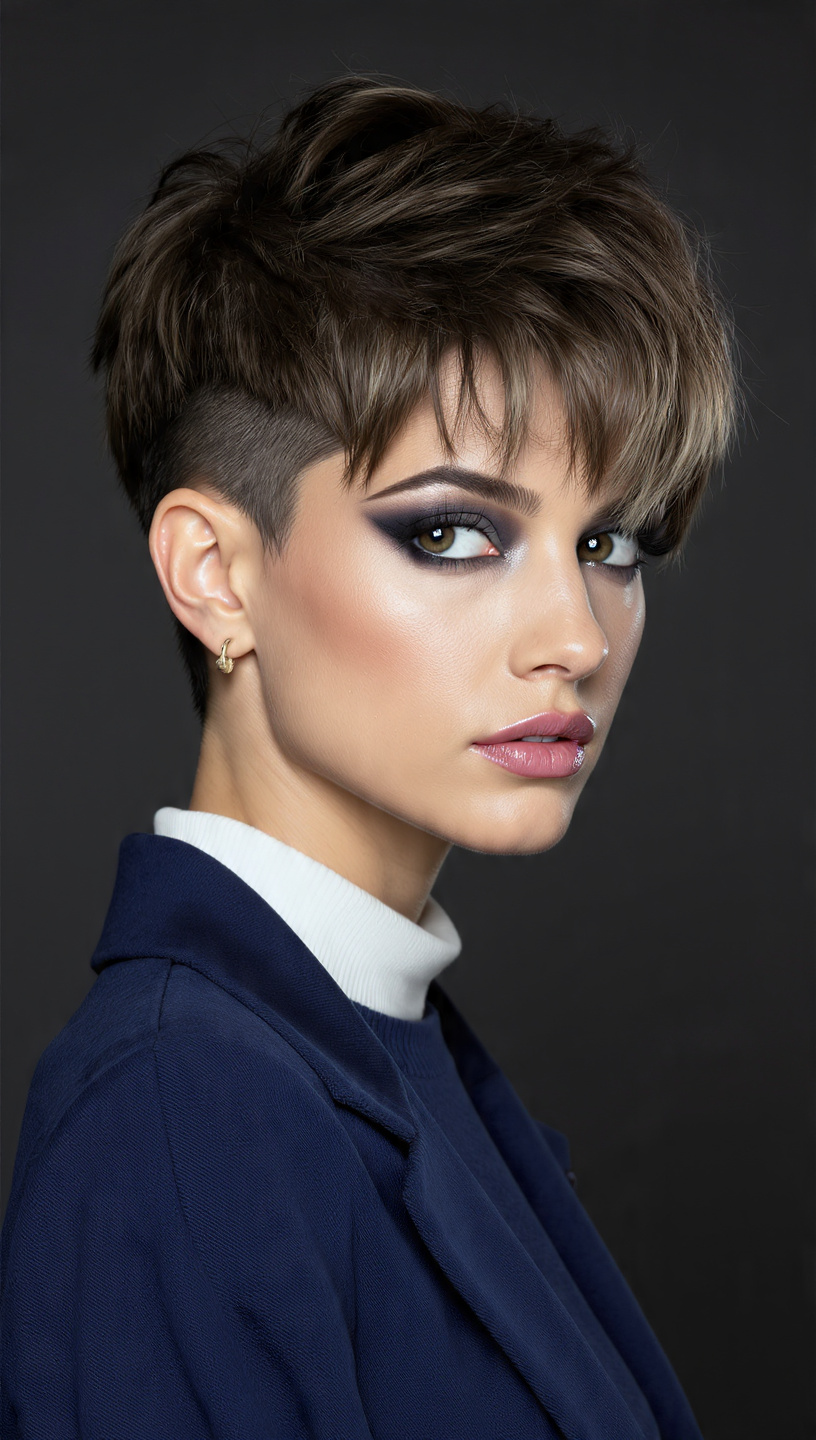
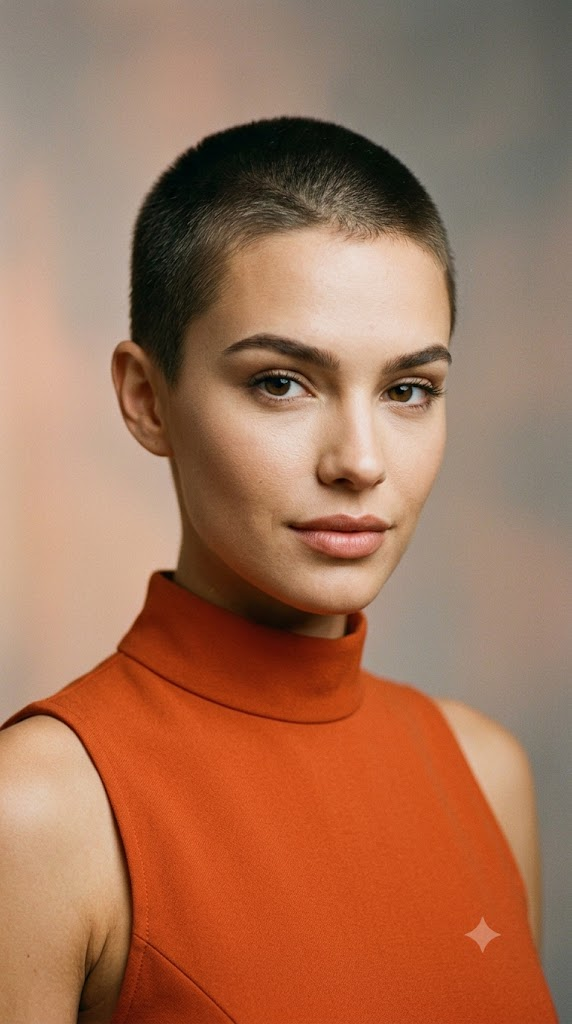
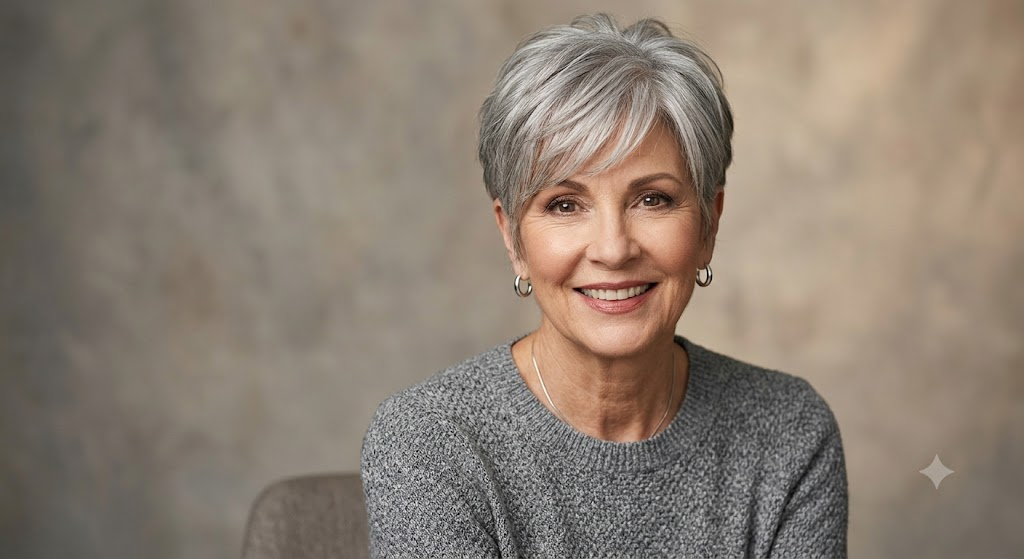
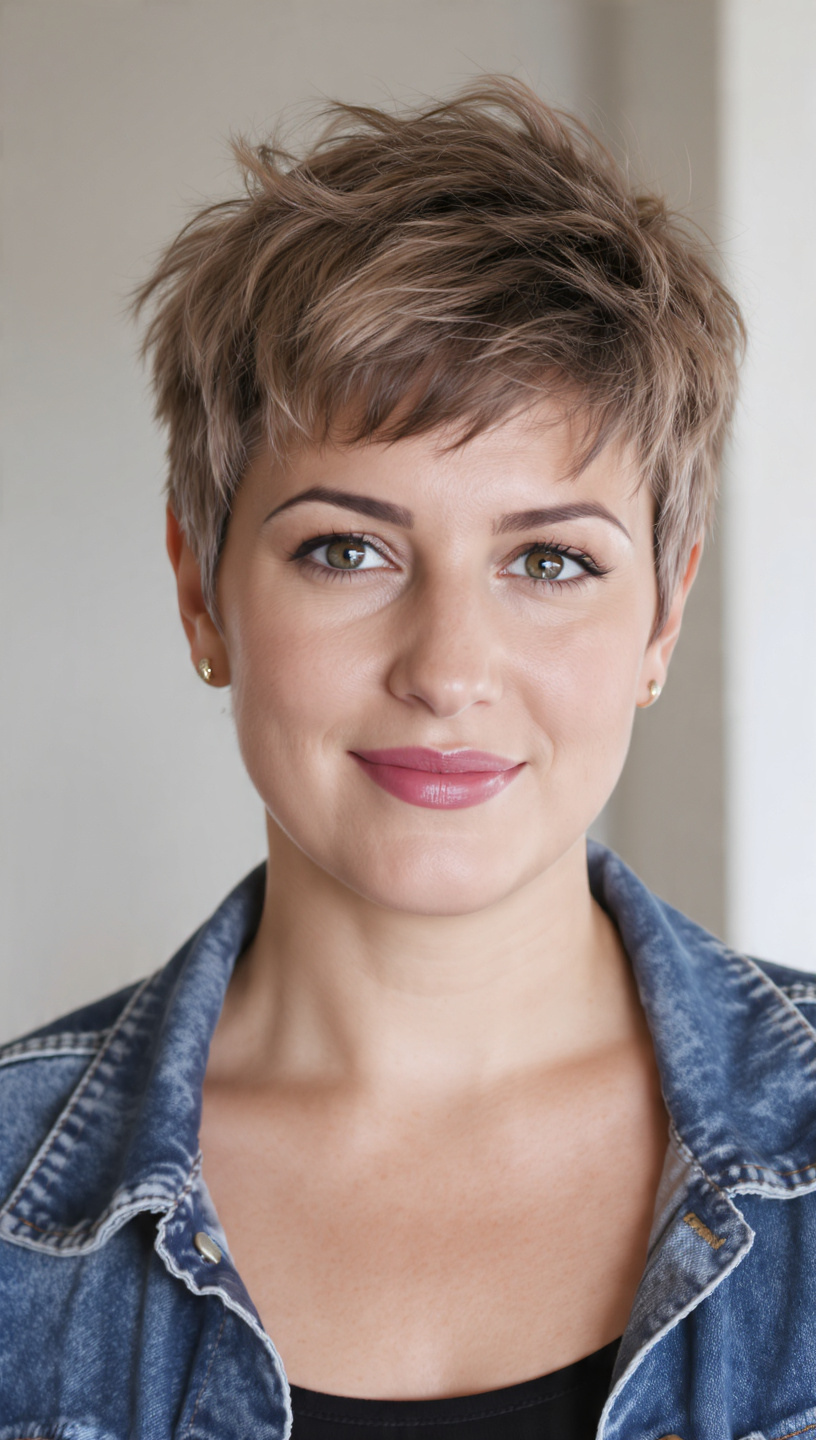
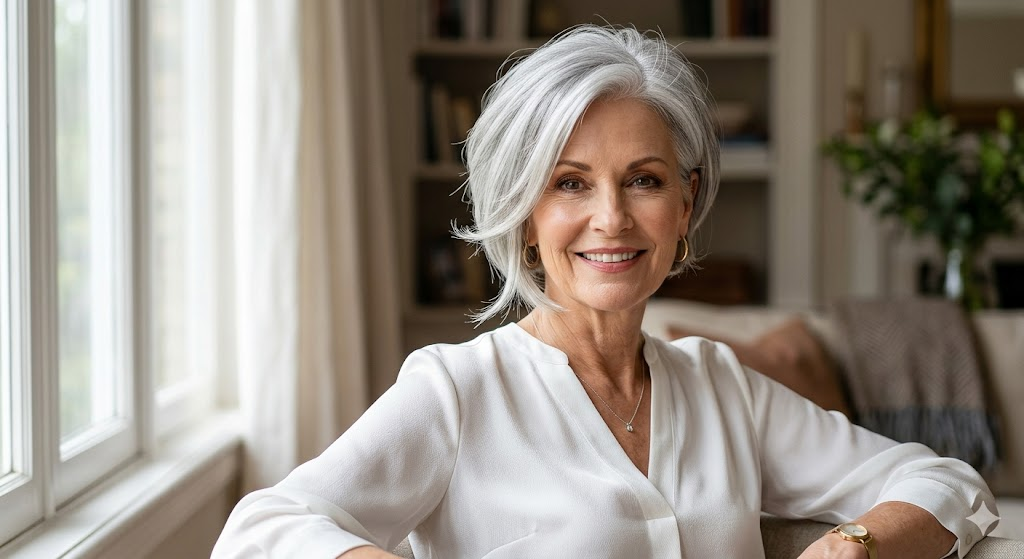
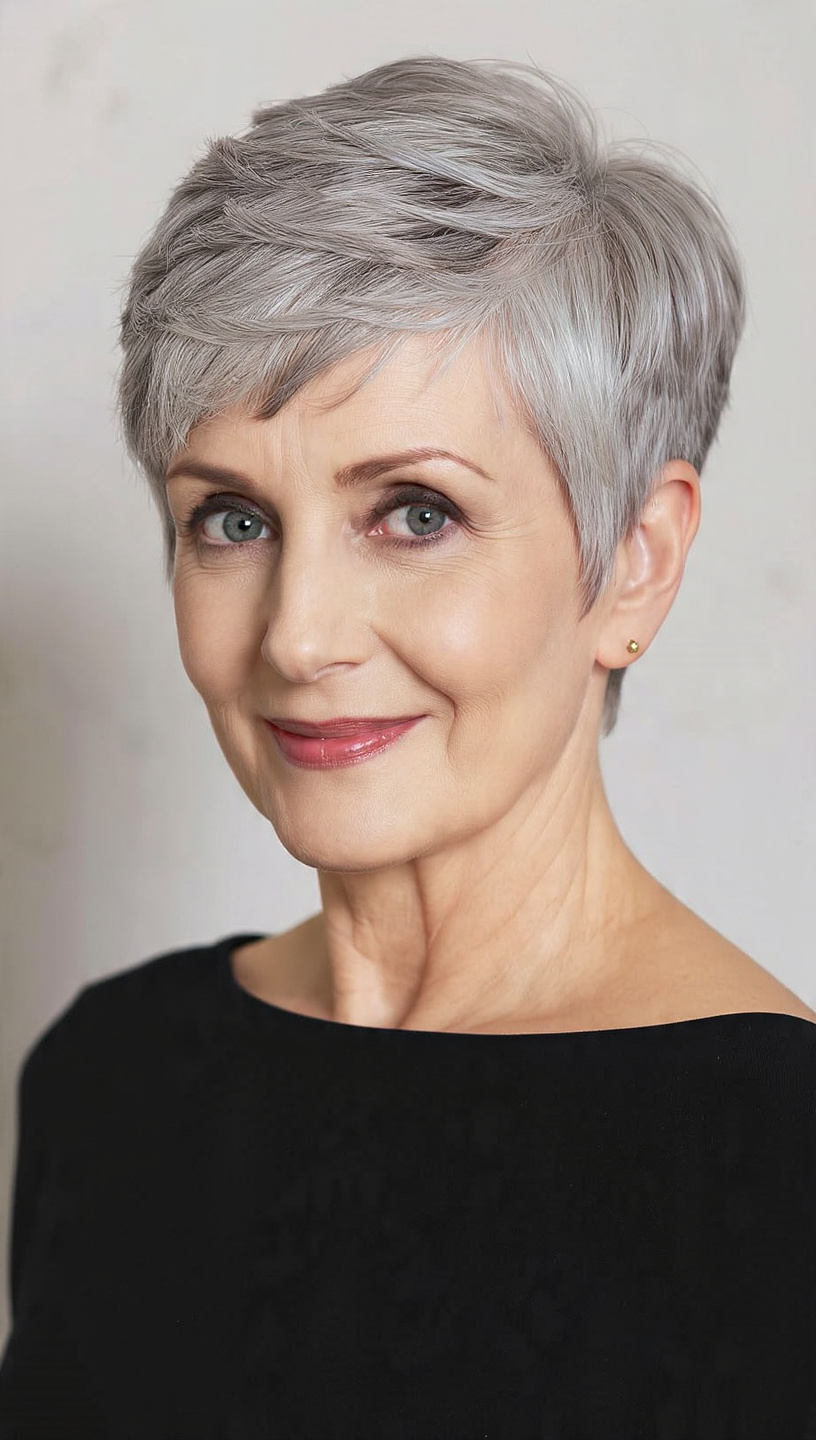
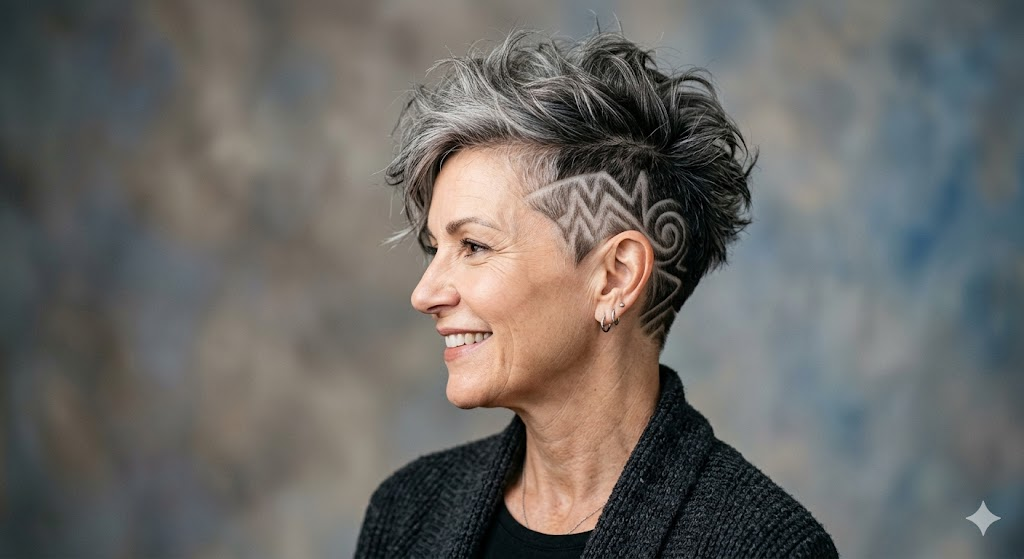
    Structural Support for Fine Hair: This style utilizes two key 2026 principles to maximize volume. Structurally, the very short undercut on the sides eliminates weight that often drags fine hair flat. Visually, the contrast between the darker base color and the light grey top creates a shadow effect at the root, simulating greater hair density at the scalp.

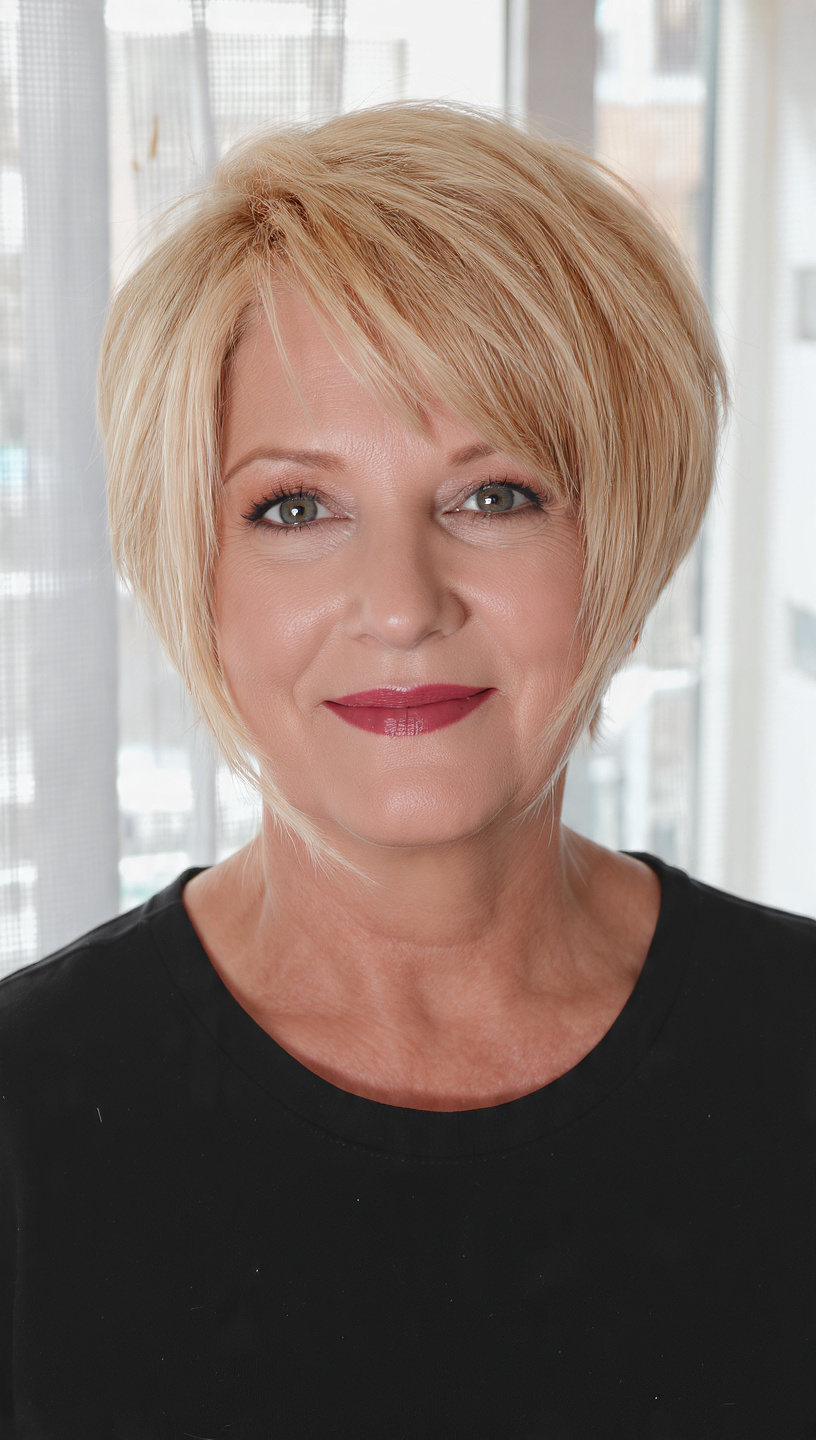
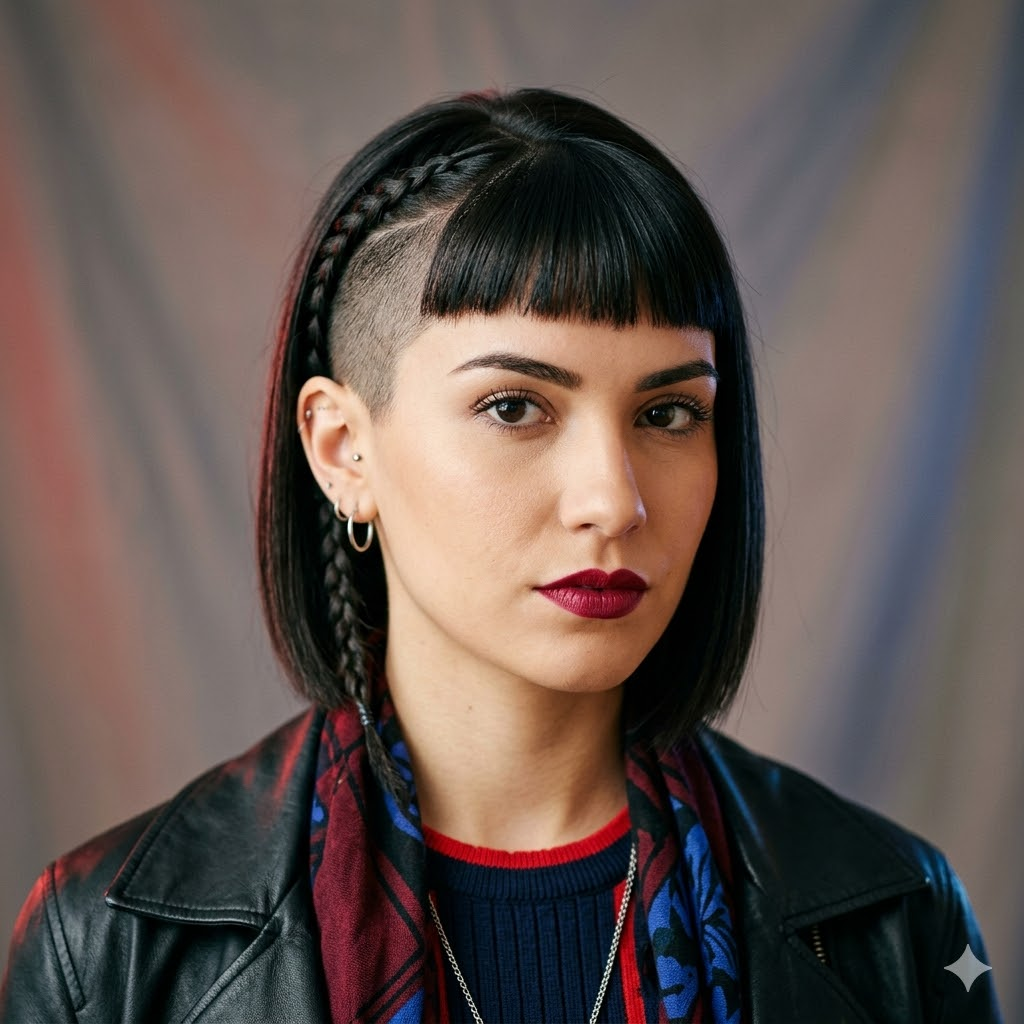
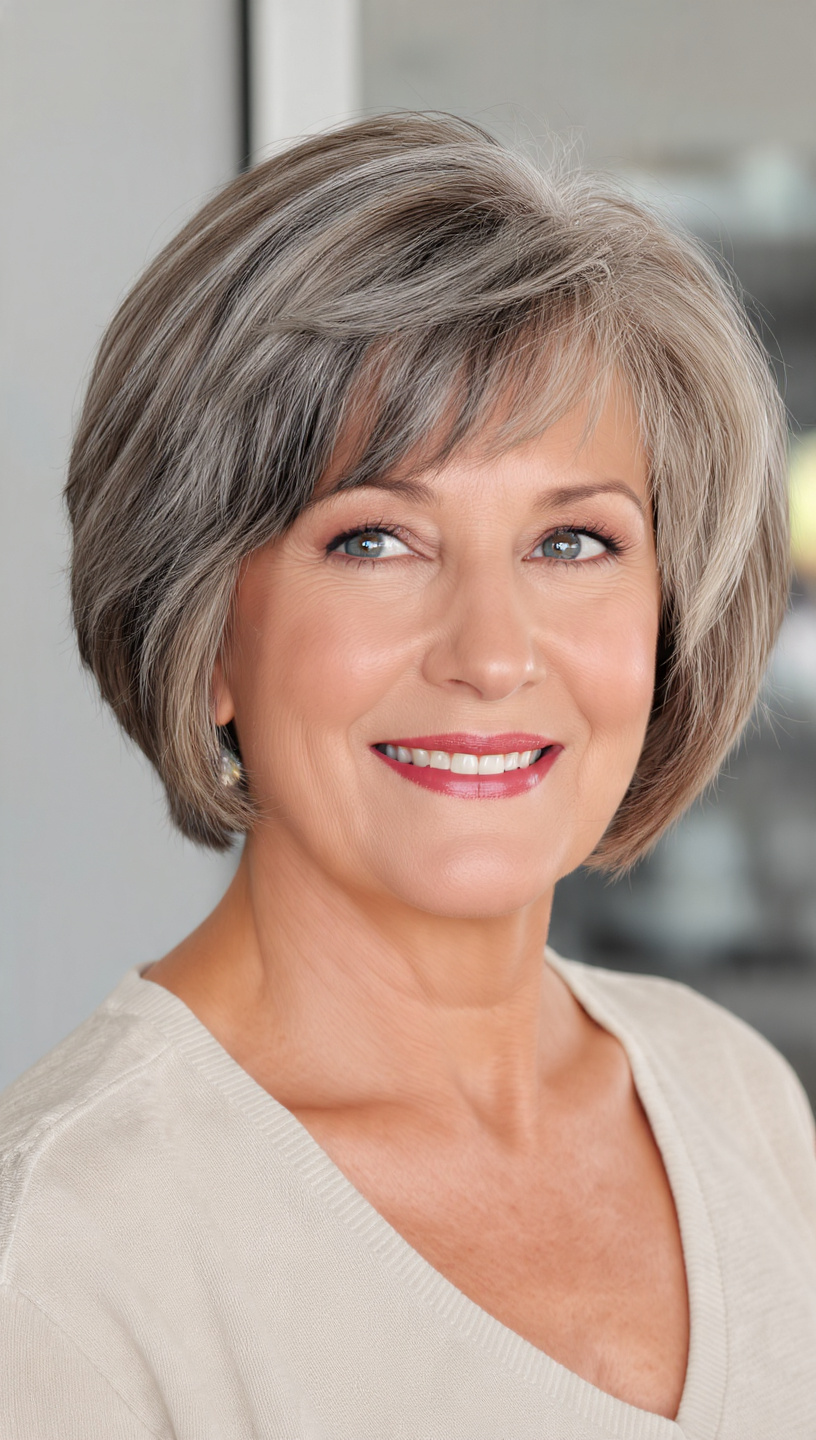
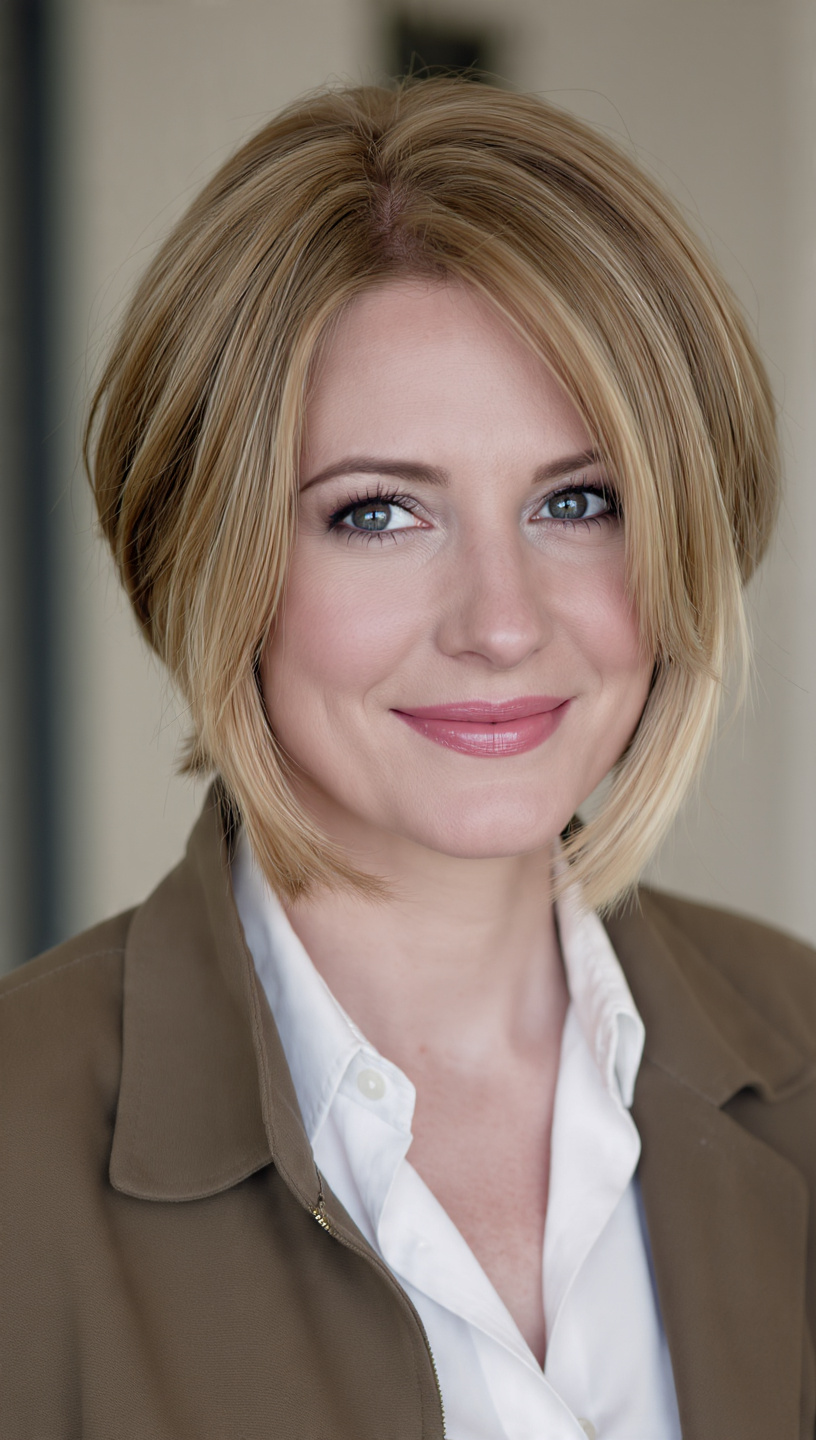
    2. Beveled Bob with Full Fringe

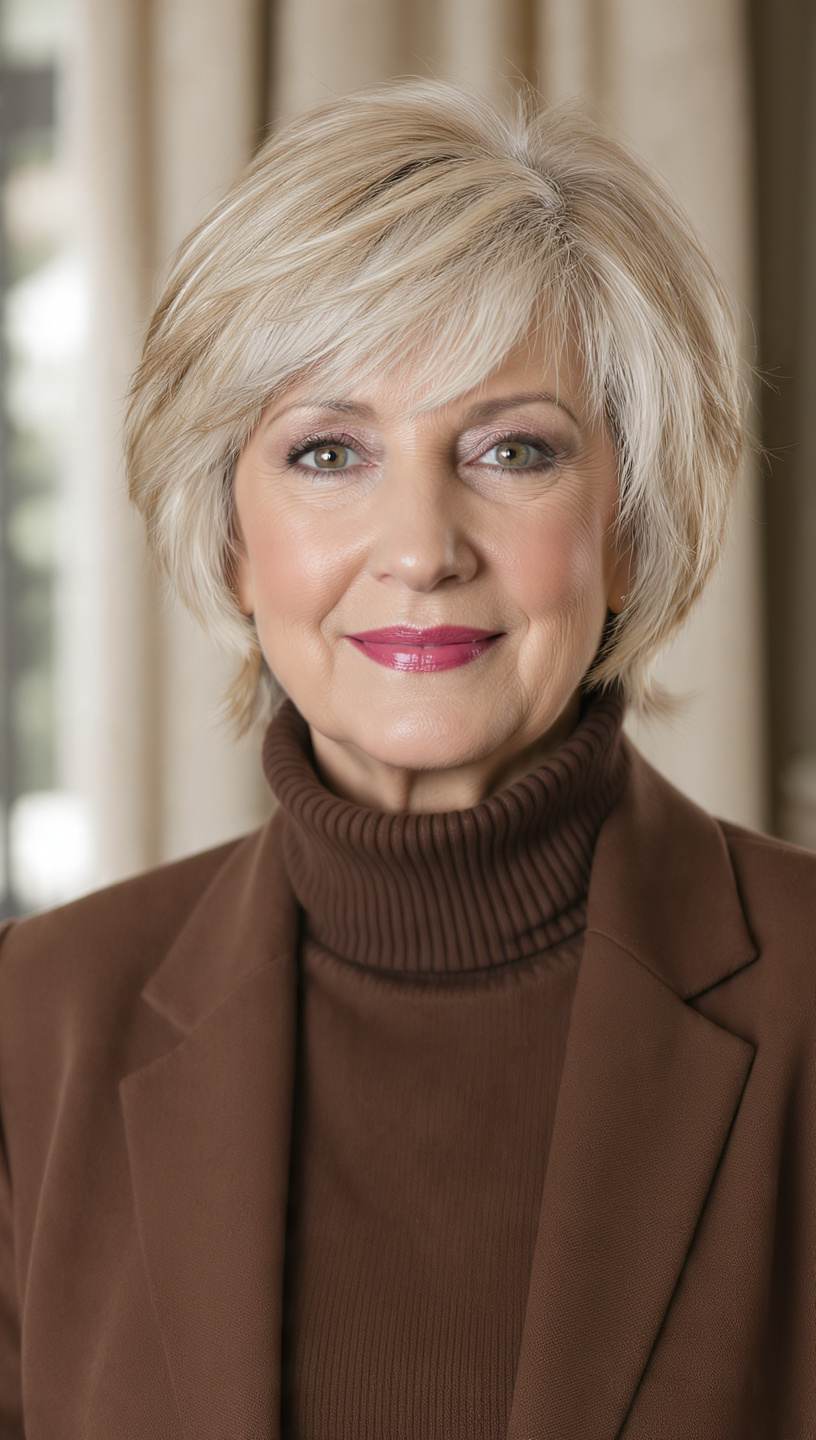
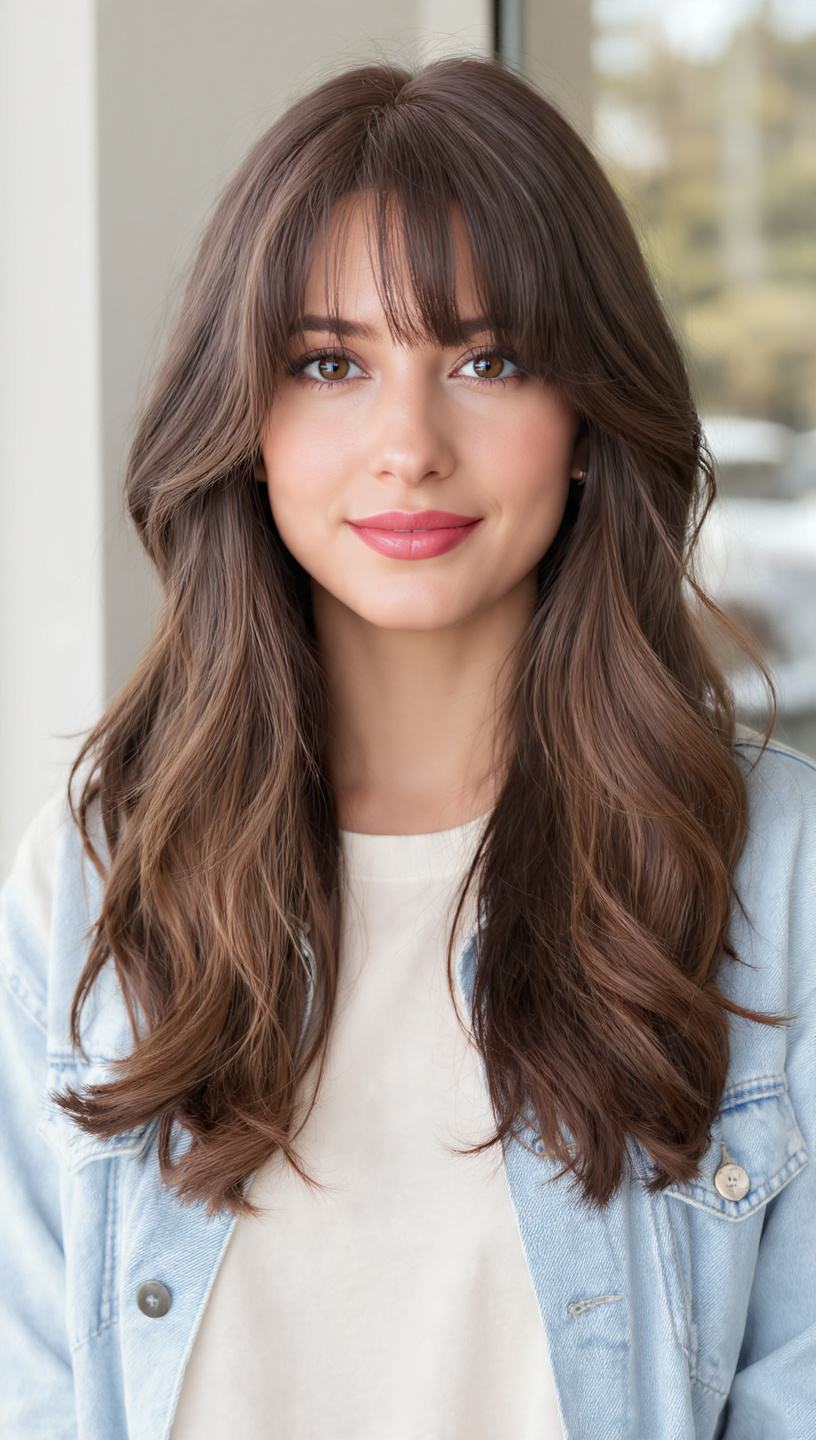
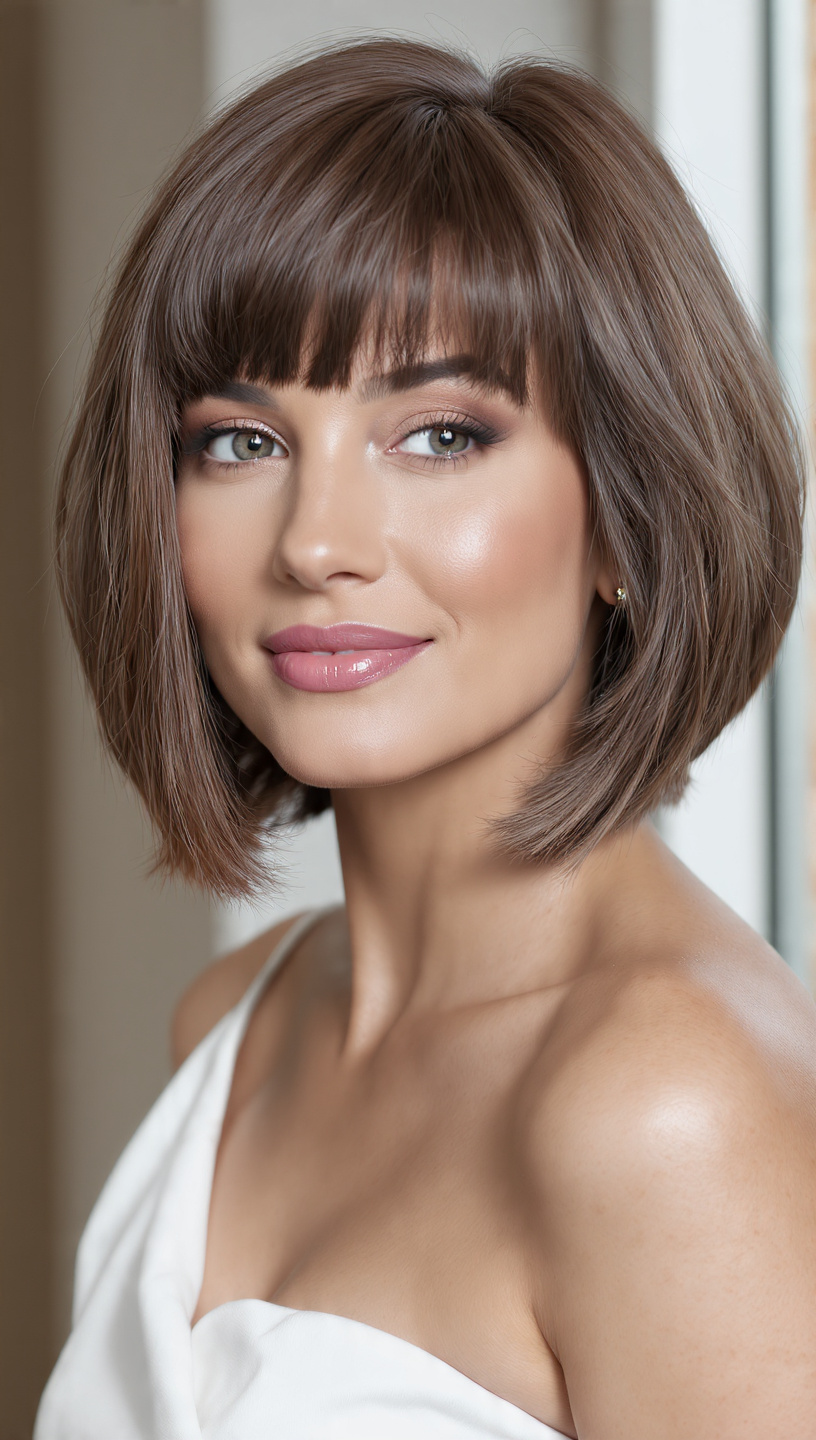
    The Blunt Perimeter and Hairline Architecture: This cut achieves visual thickness by employing a strict, blunt weight line at the chin. By keeping the ends heavy, it prevents the classic “wispy” look fine hair can acquire at shoulder length. The addition of a full, structured fringe provides immediate volume at the forehead, effectively framing the face and adding overall presence to the haircut.

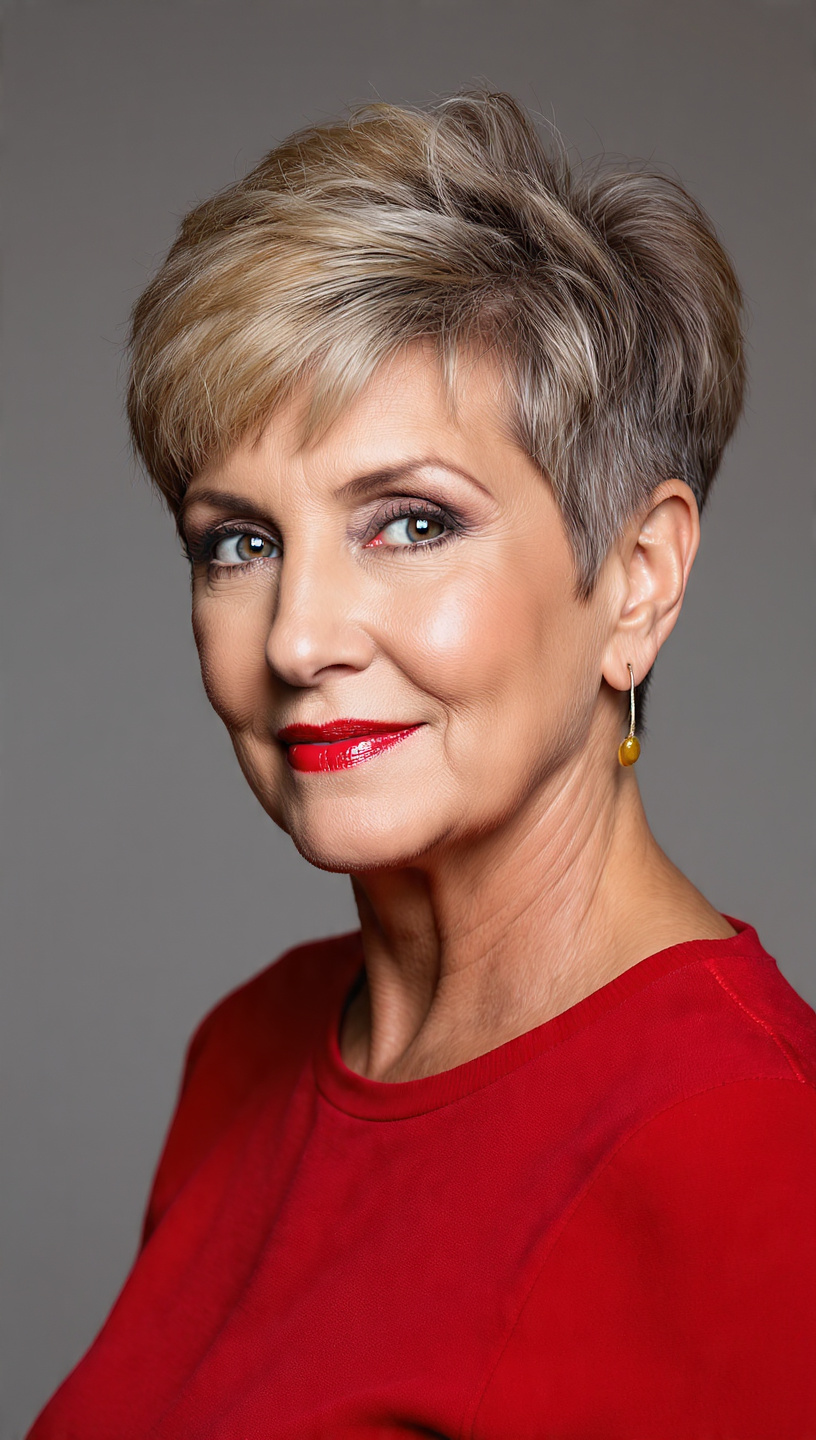
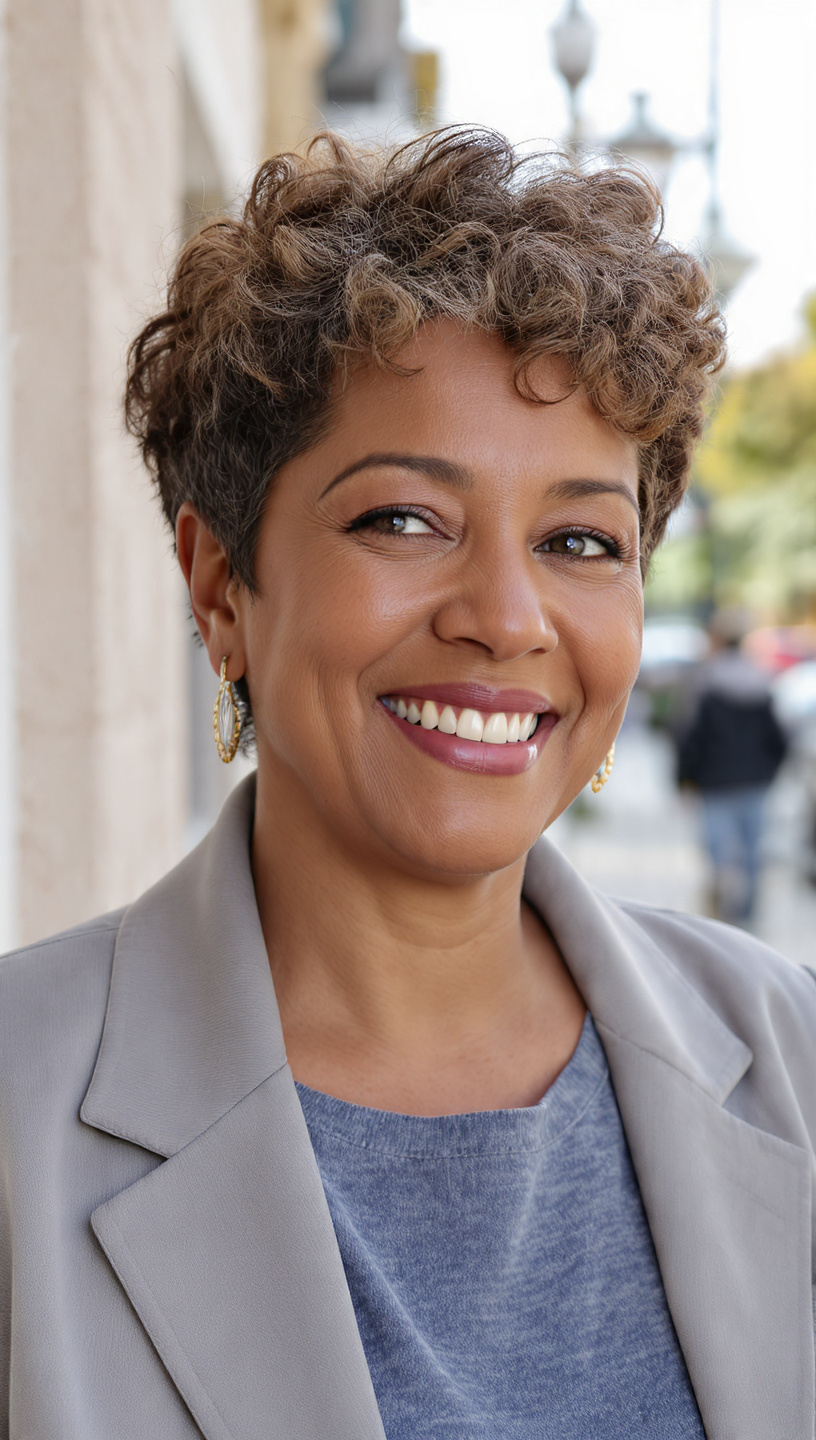
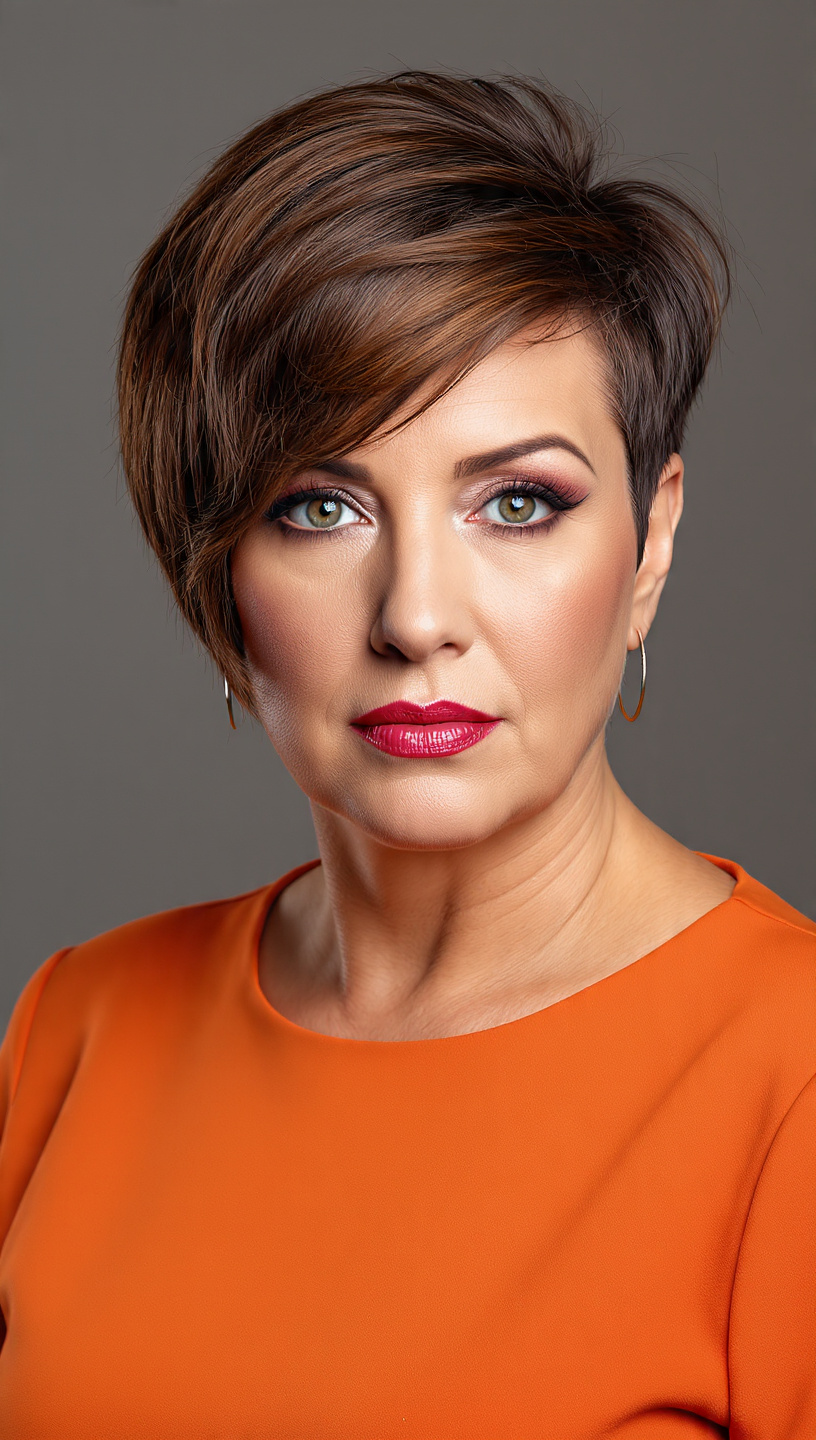
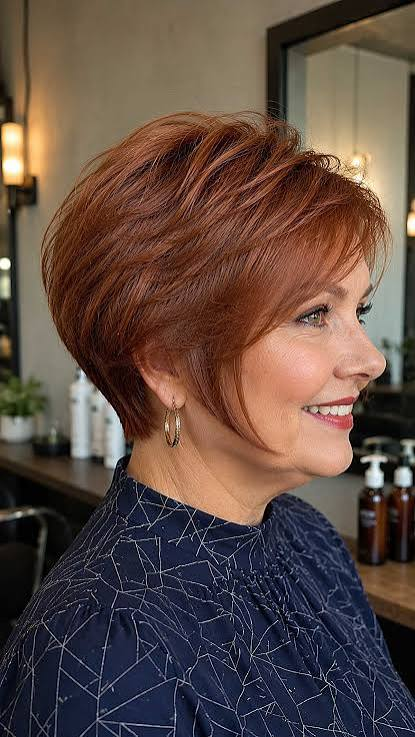
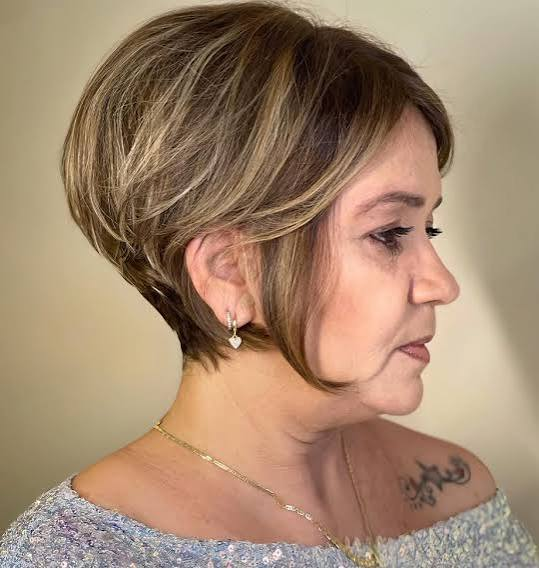
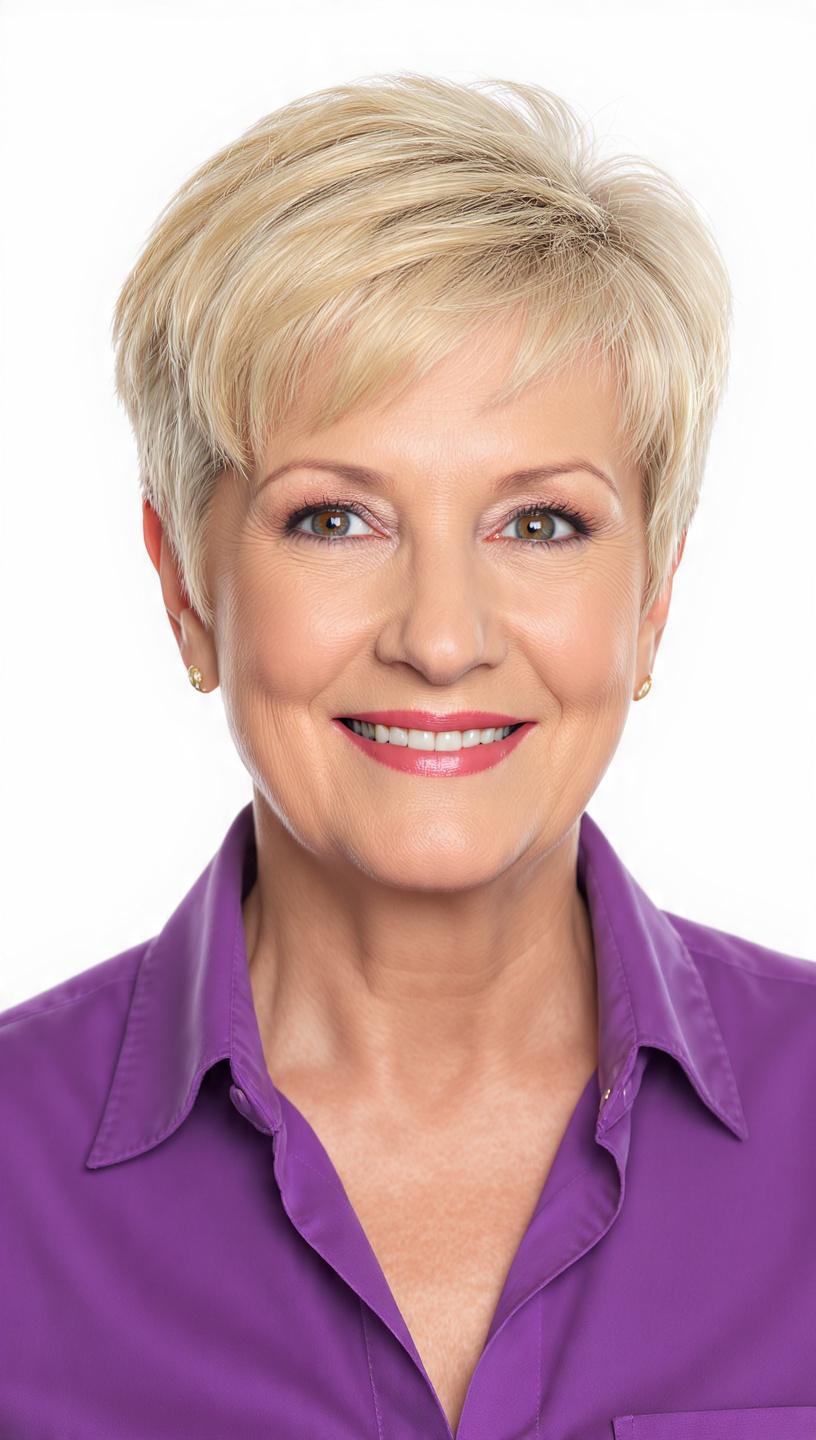
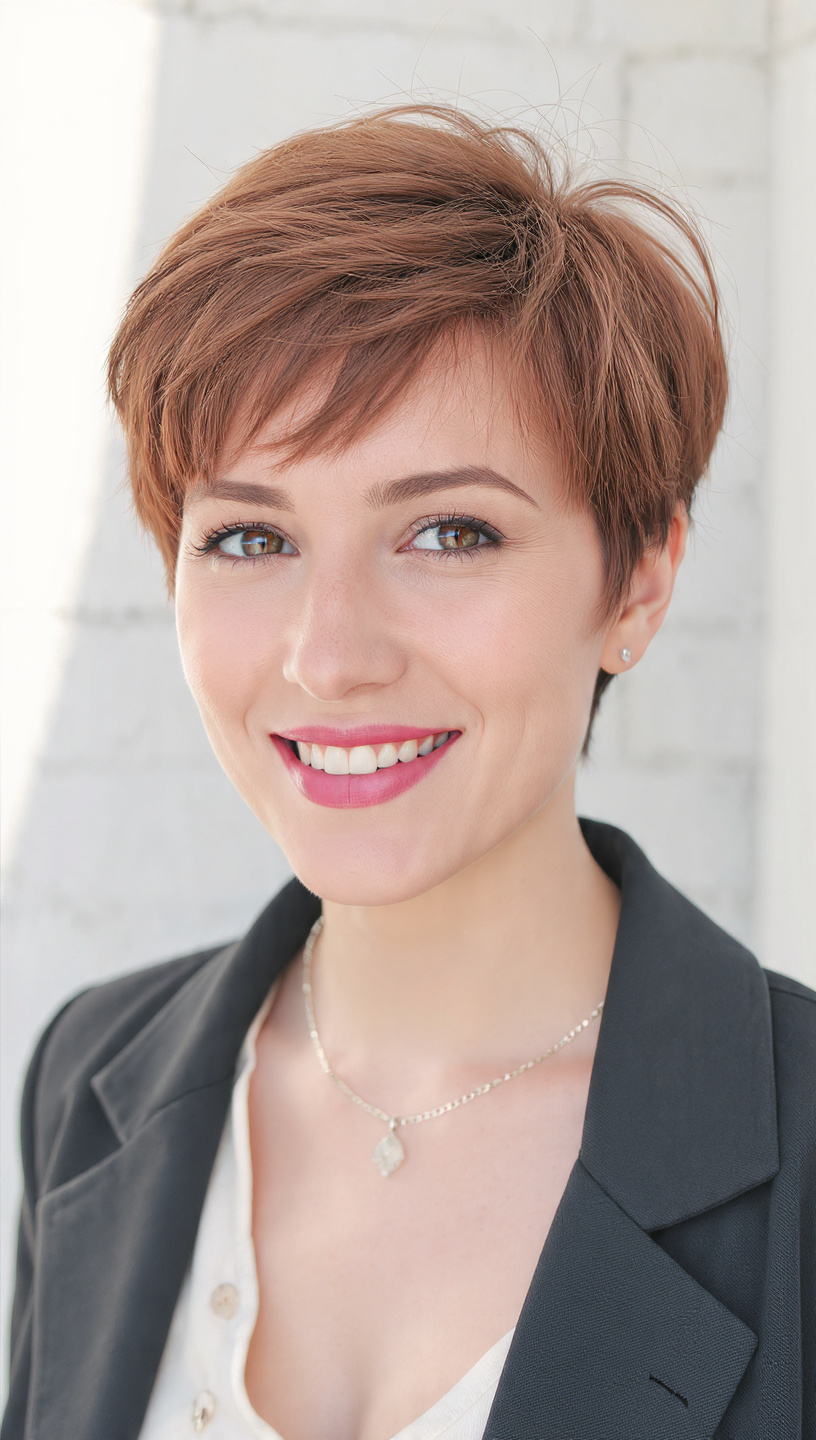
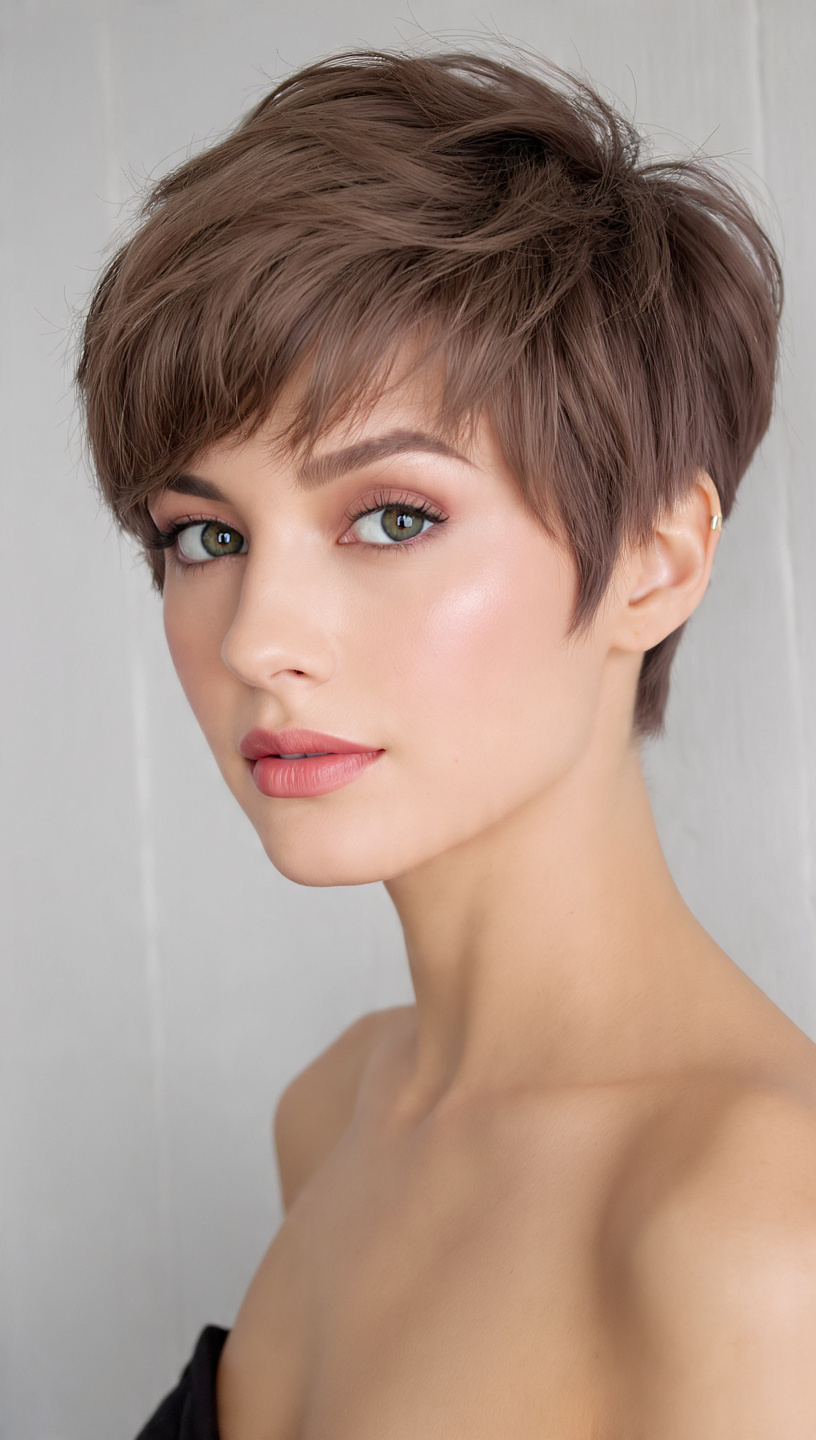
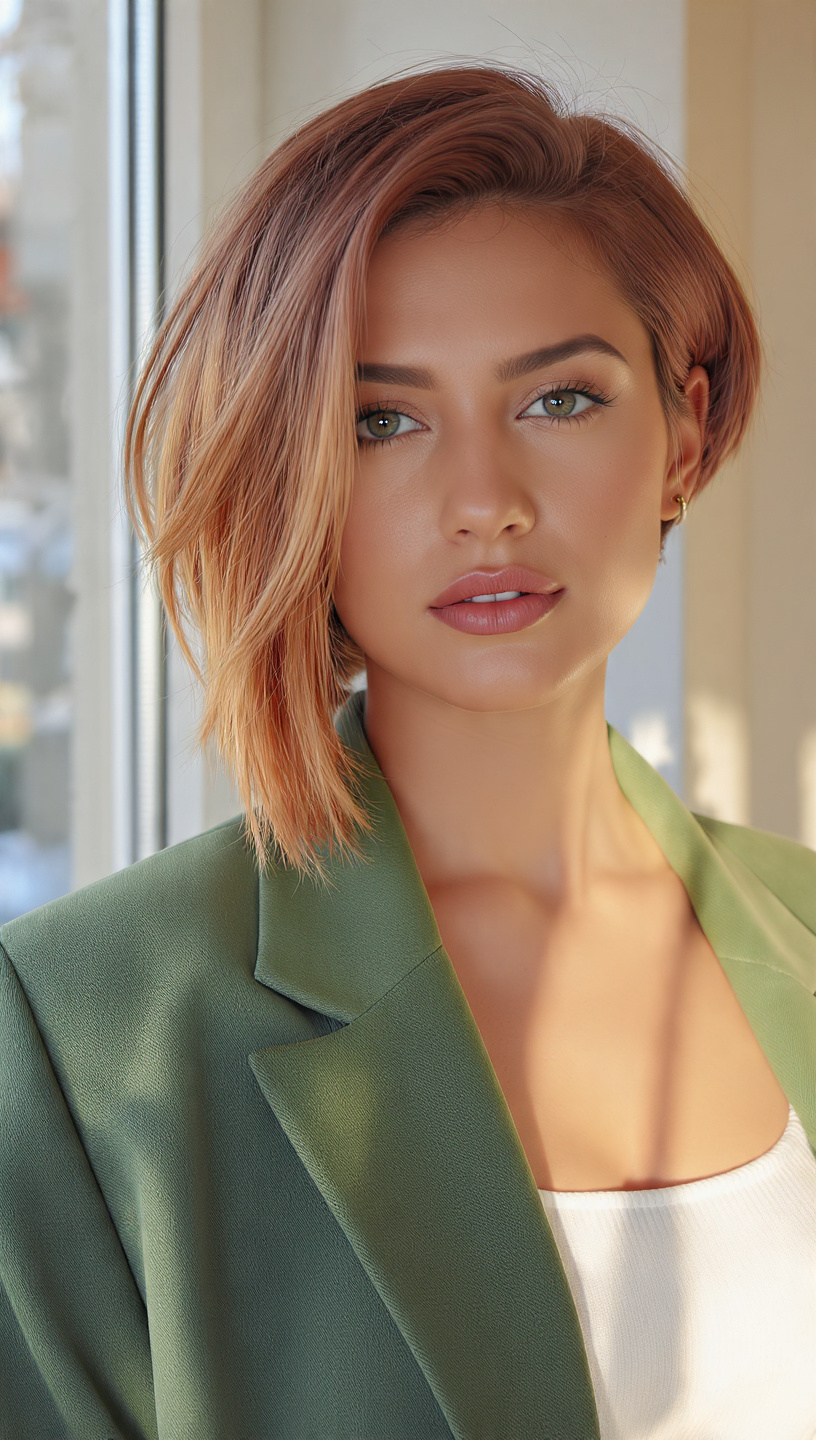
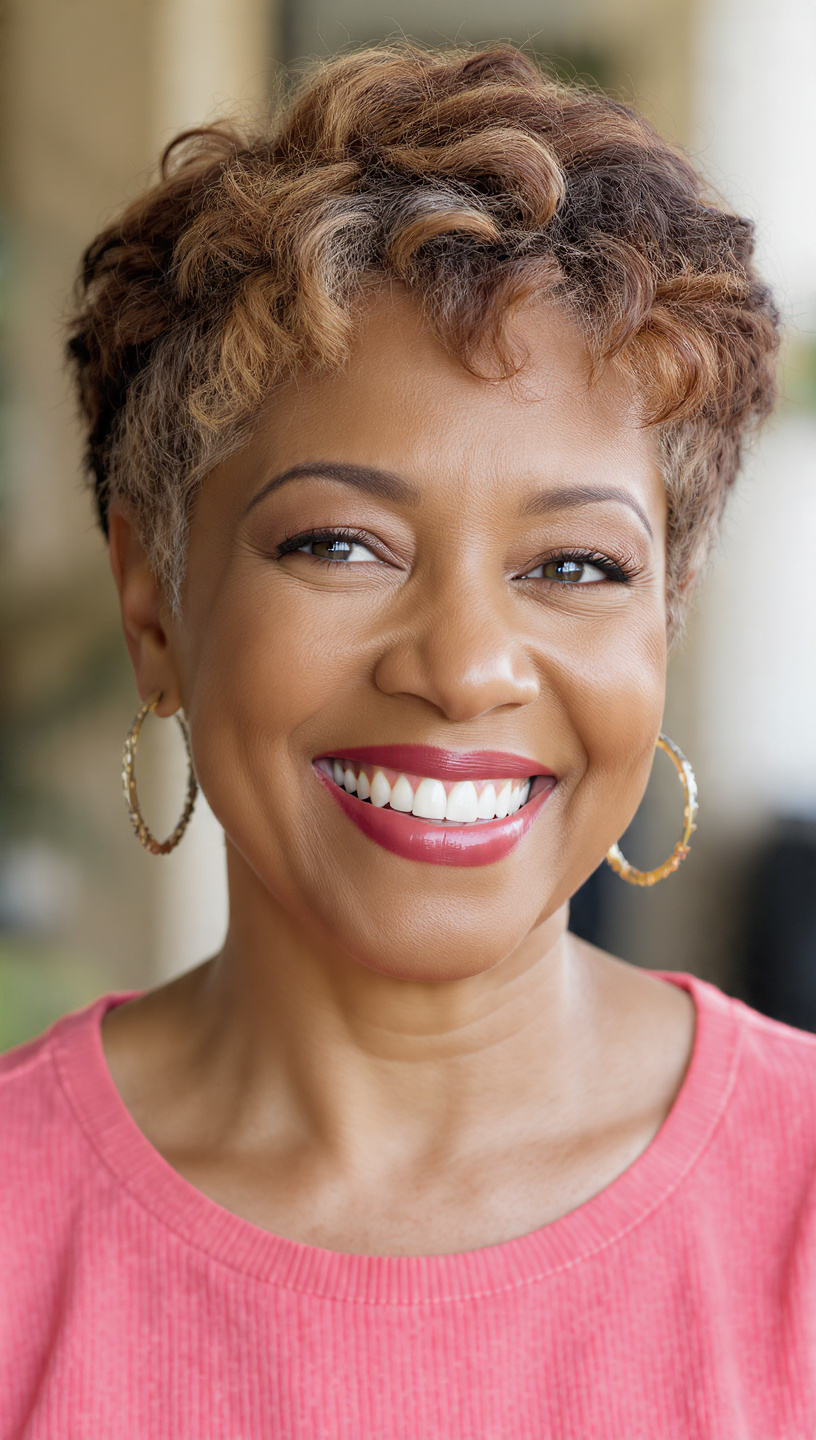
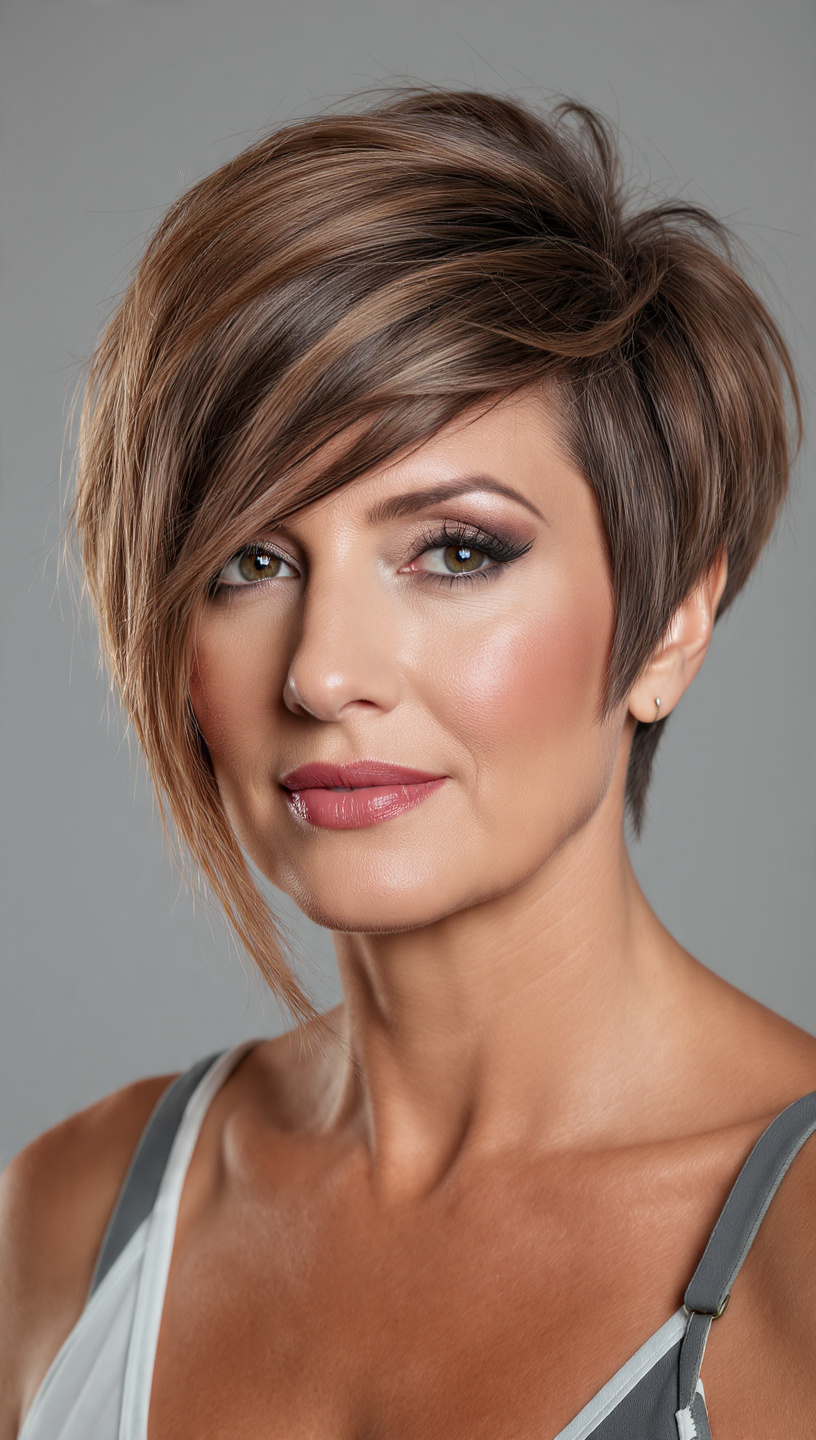
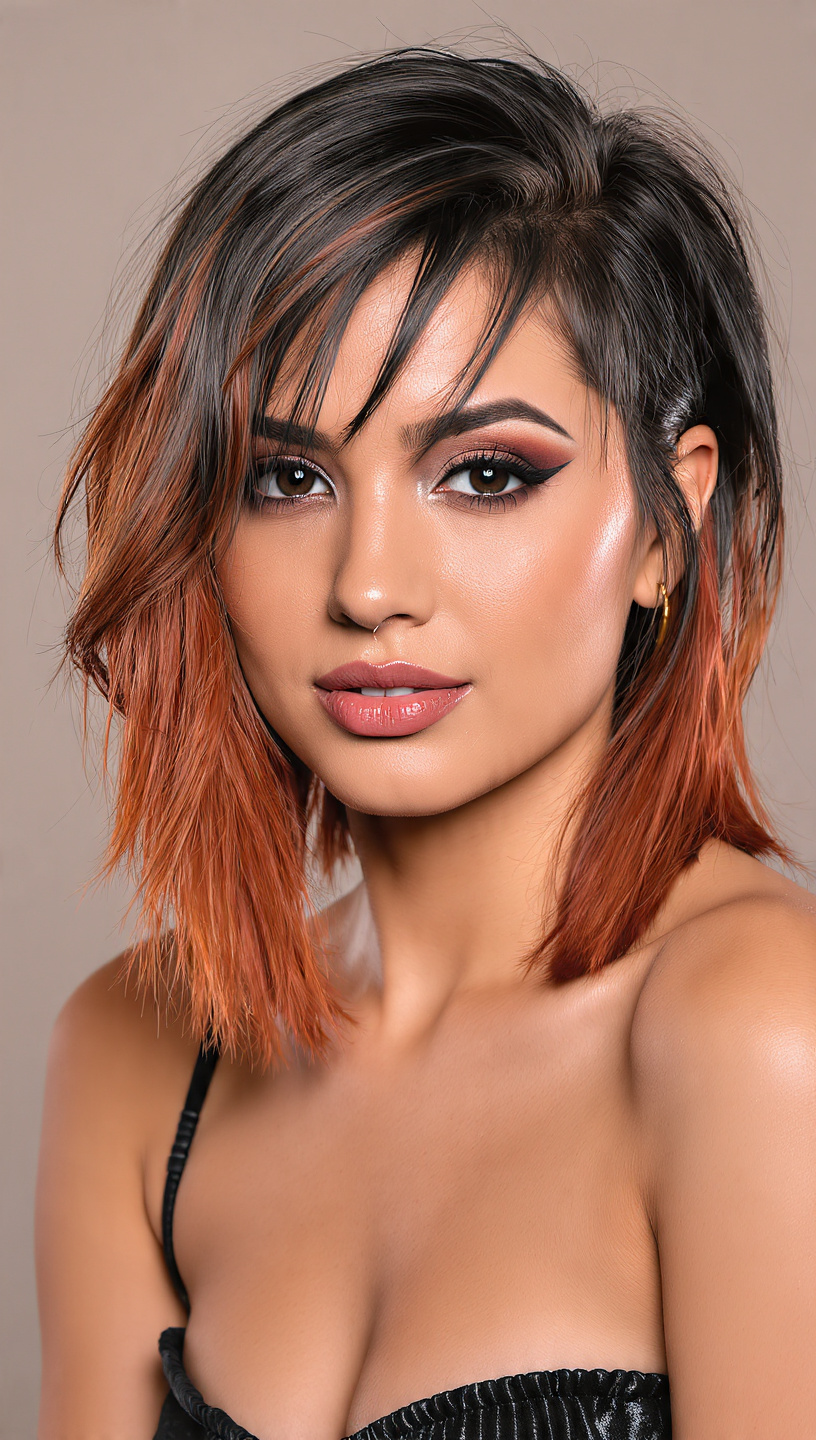
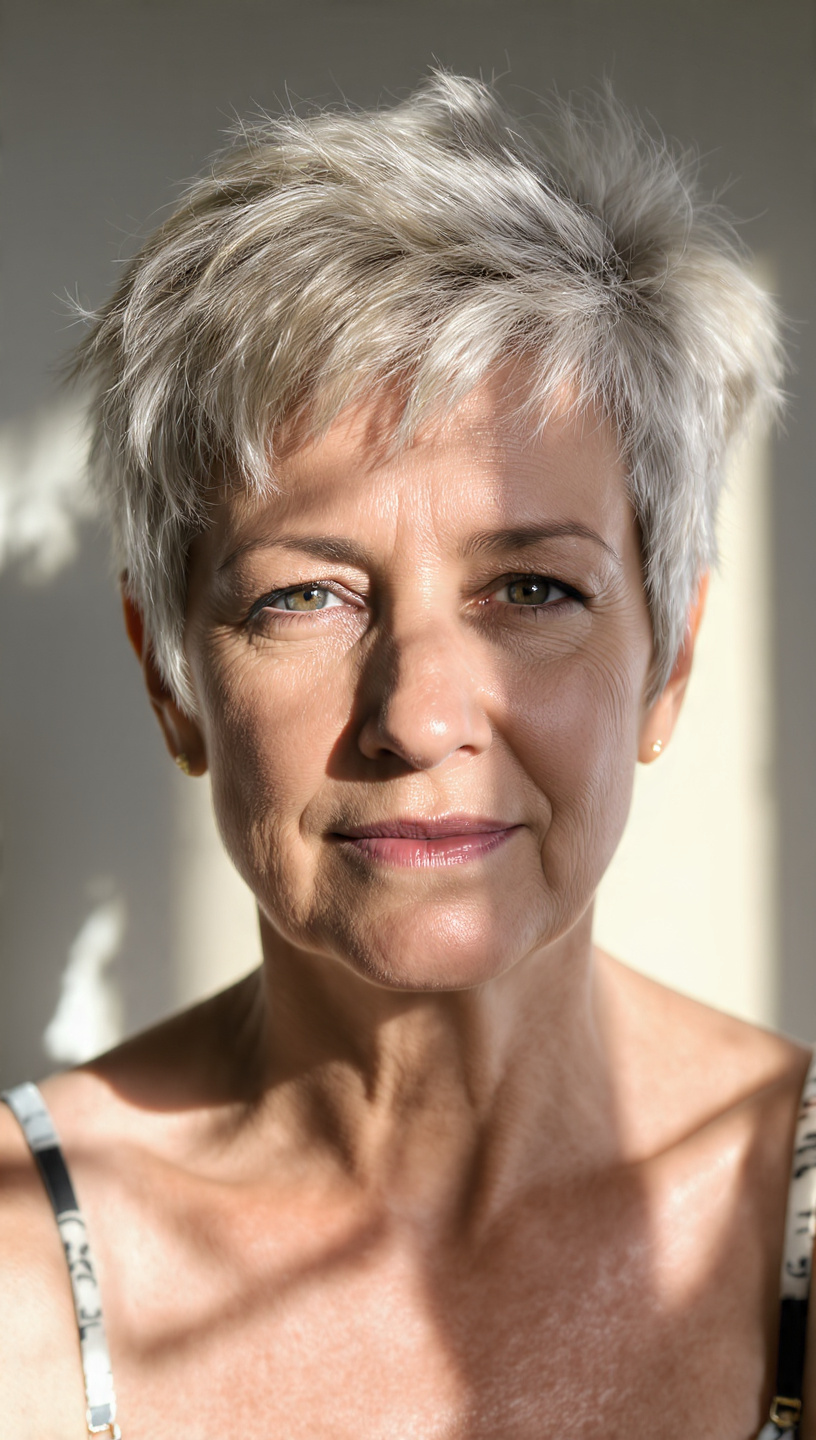
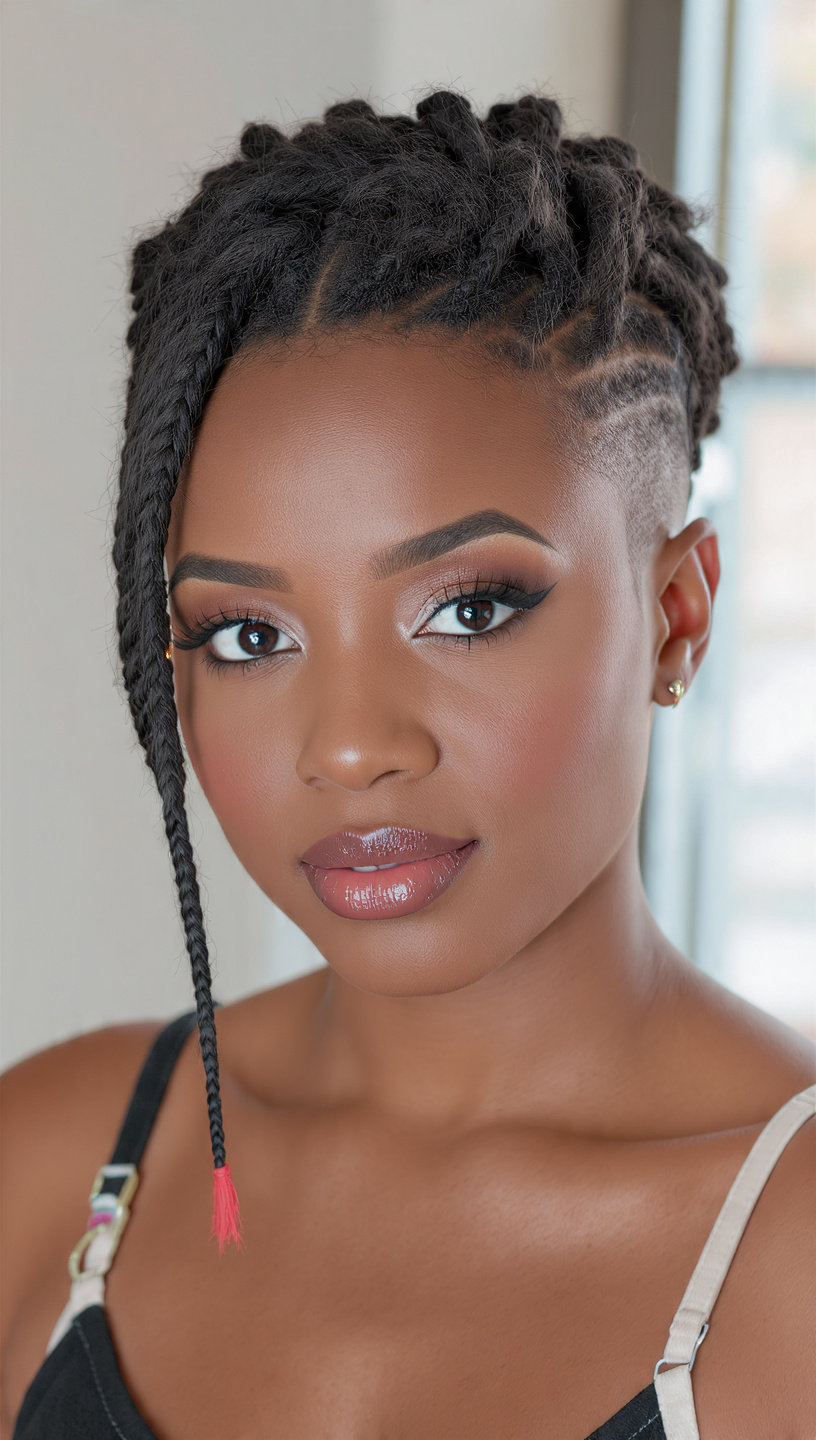
    3. Copper Tapered Short Cut

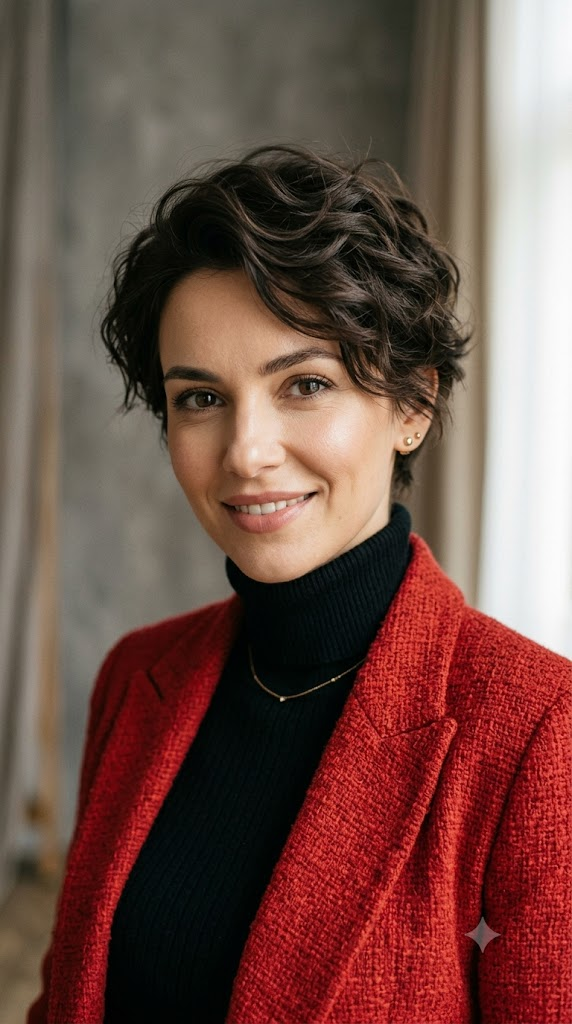
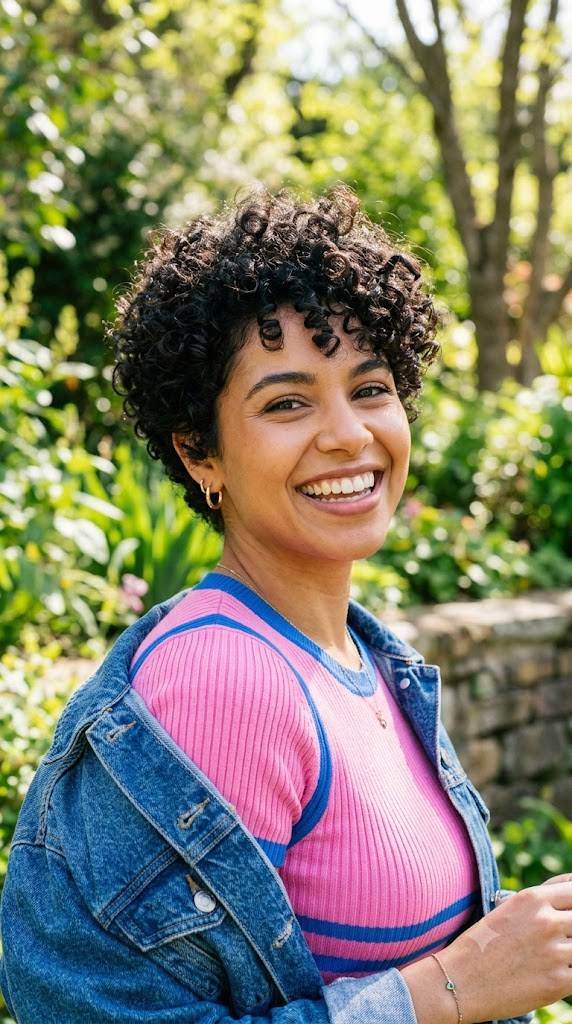
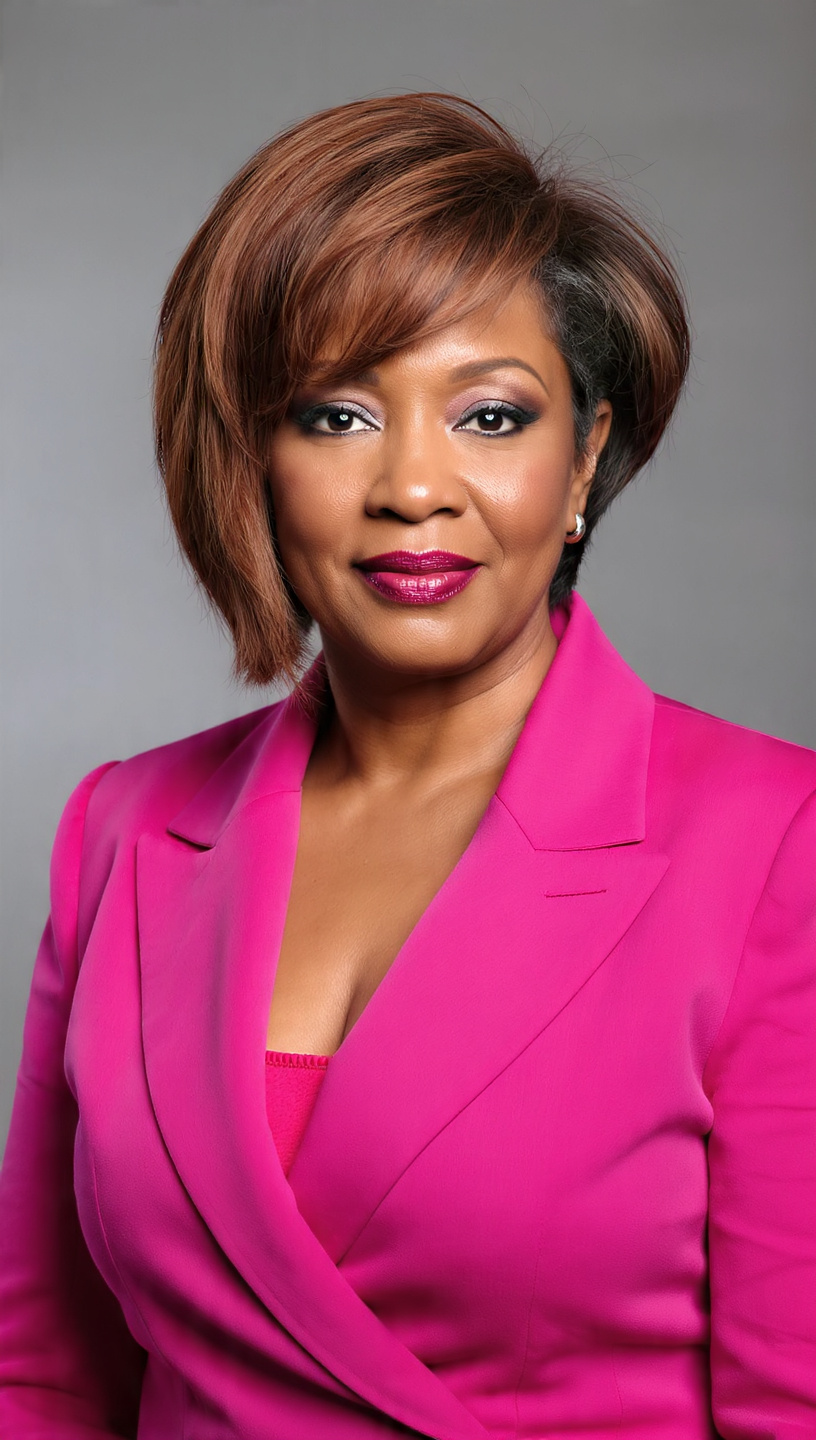
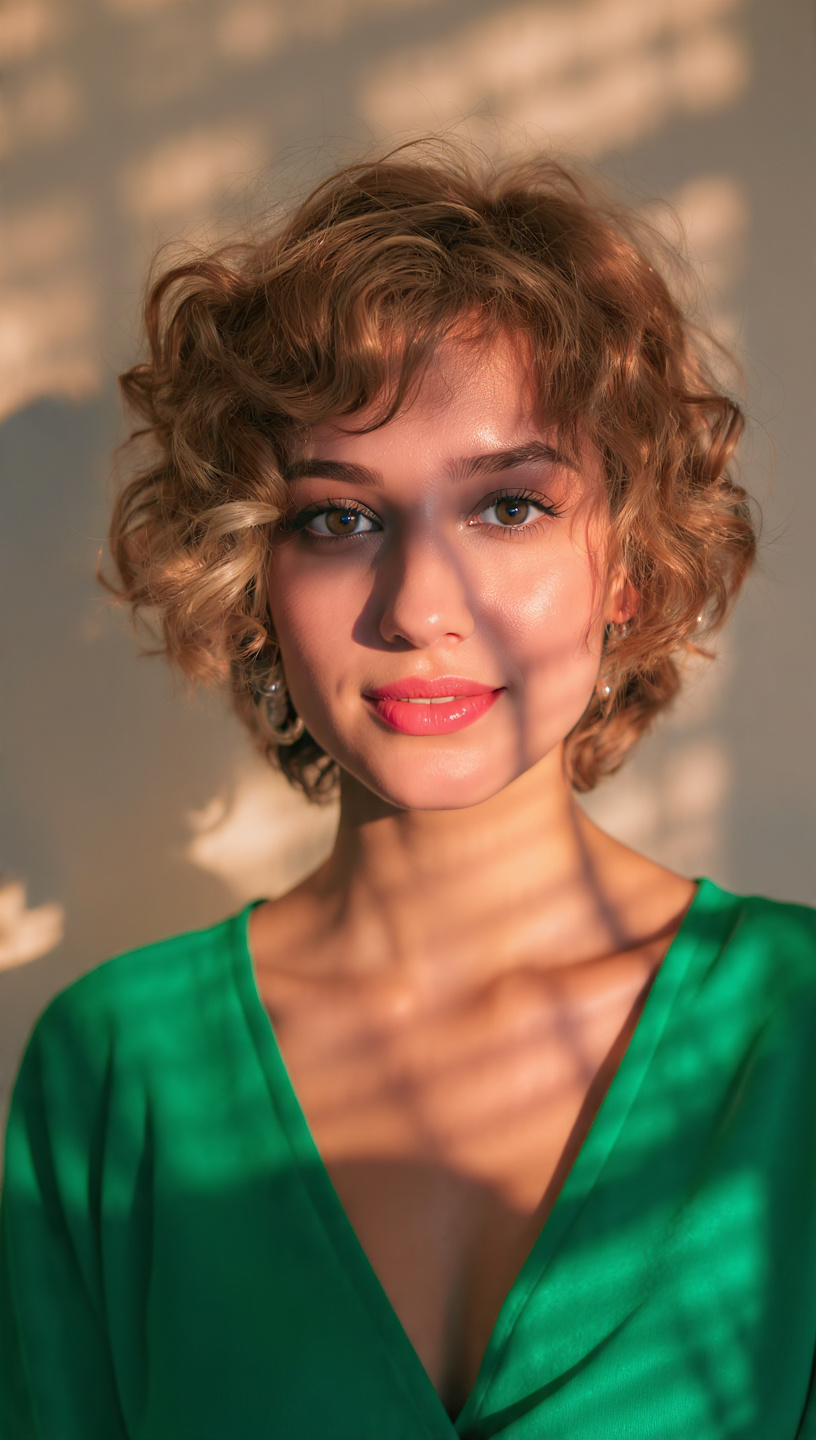
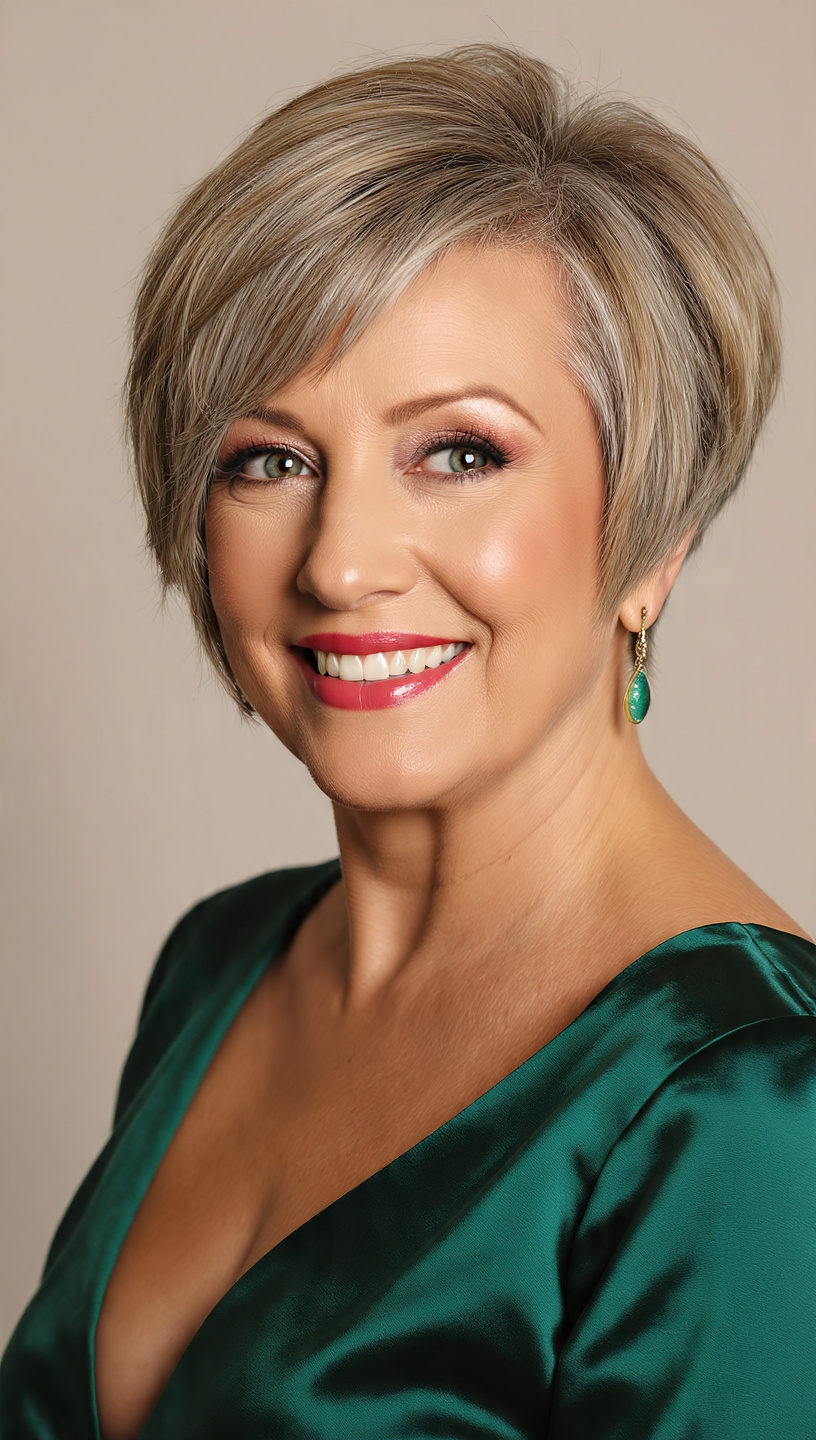
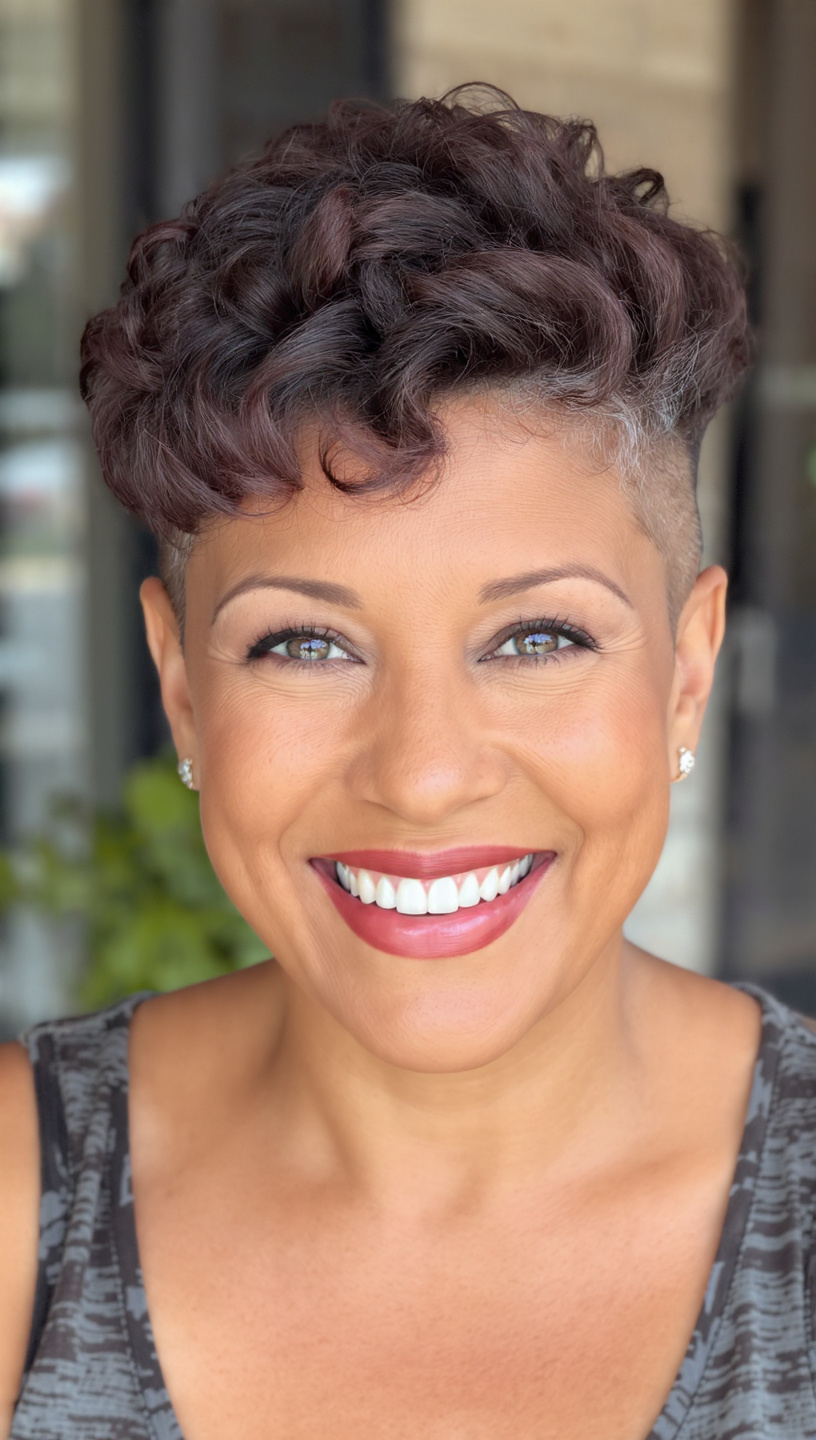
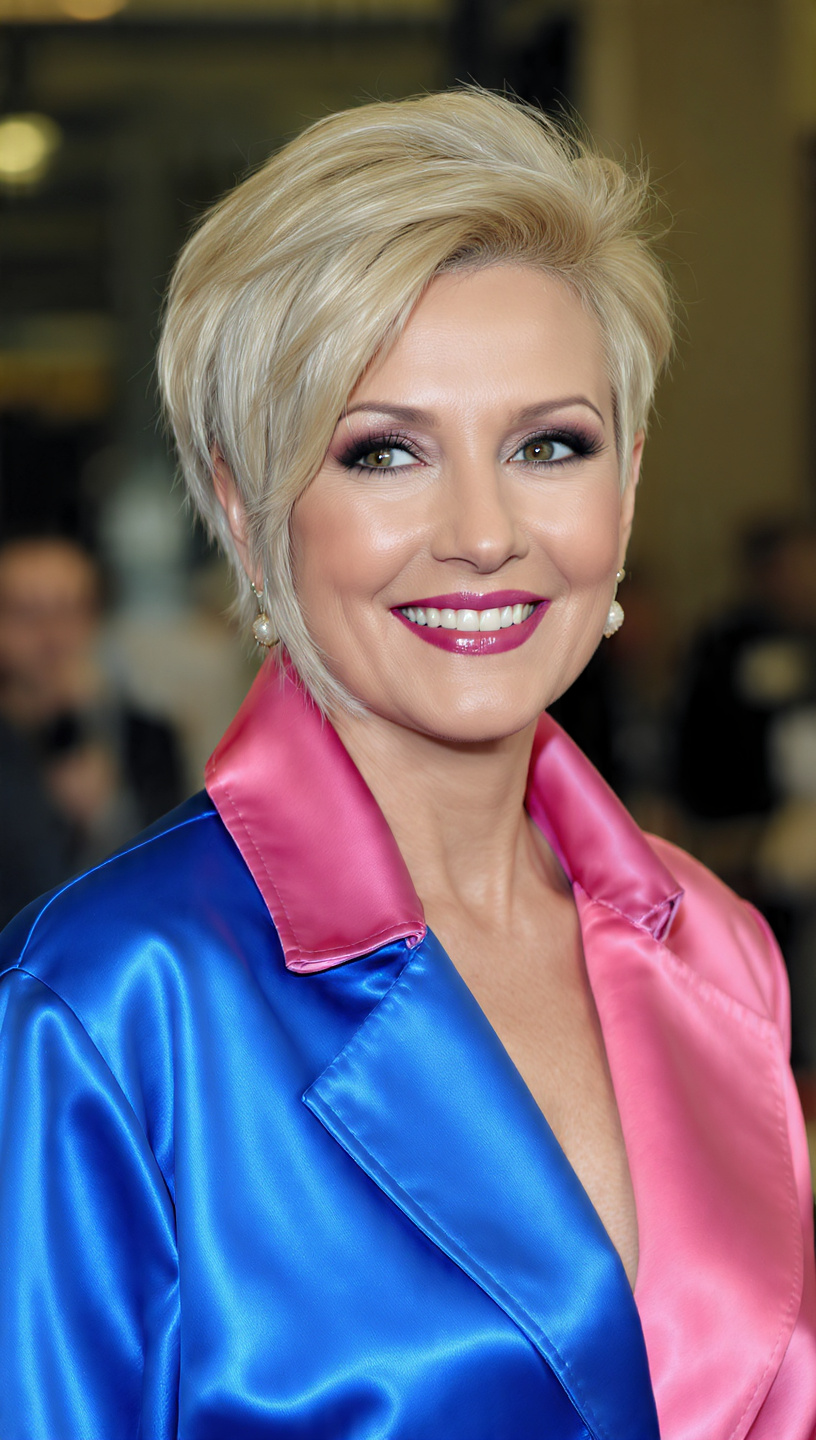
    Nape Management and Crown Density: The volume in this cut is entirely architected by the structure of the taper. By meticulously removing length at the nape and sides, all the natural weight of the hair is effectively pushed upward. This concentration of hair at the crown, combined with subtle texture, provides a permanent, gravity-defying lift that lasts all day without relying on sticky products.

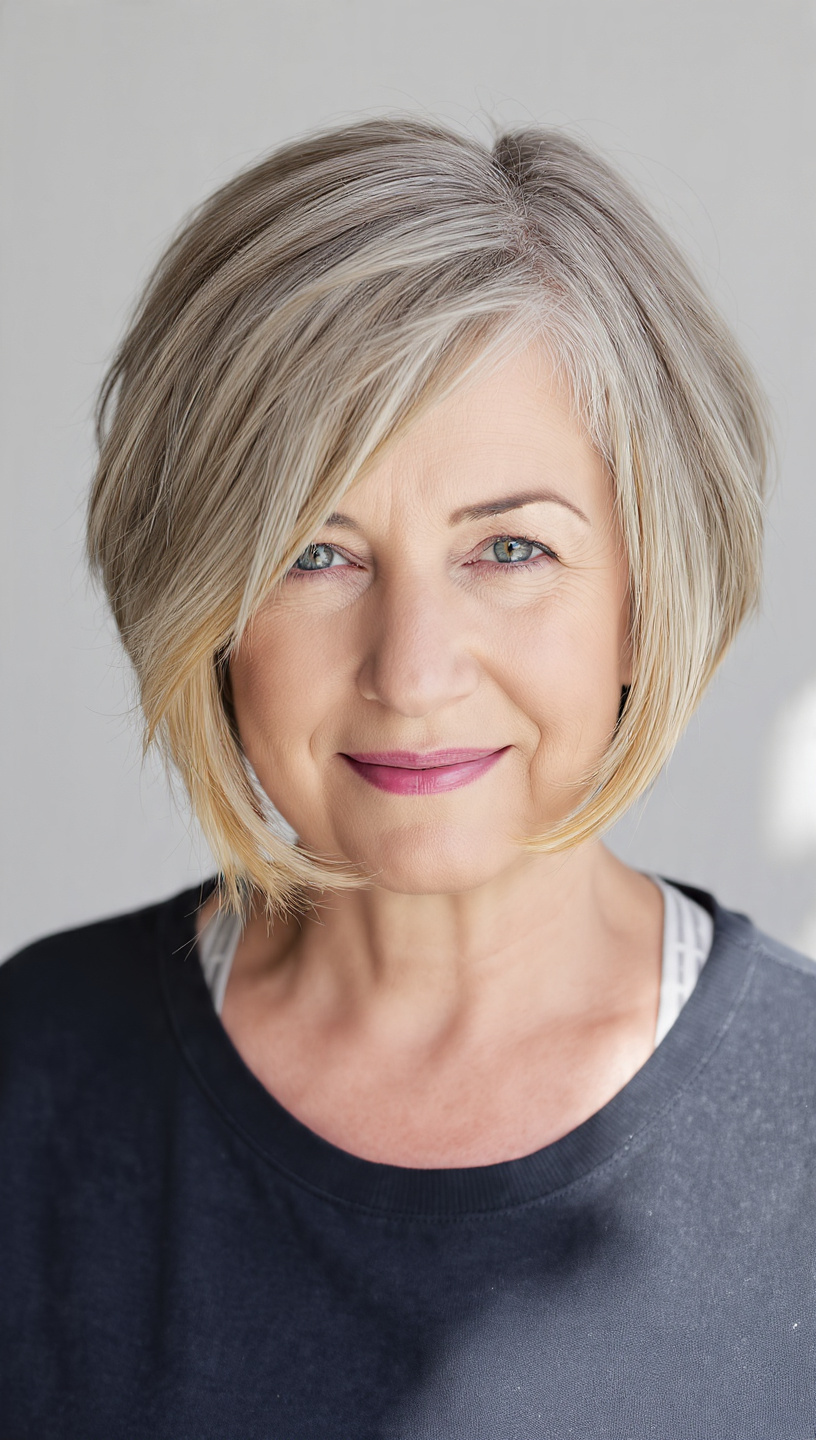
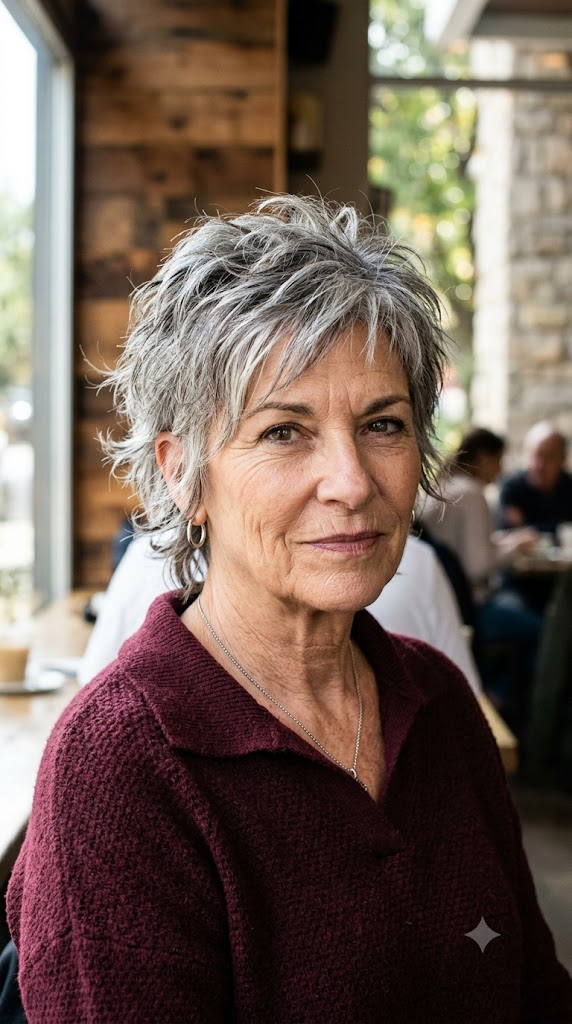
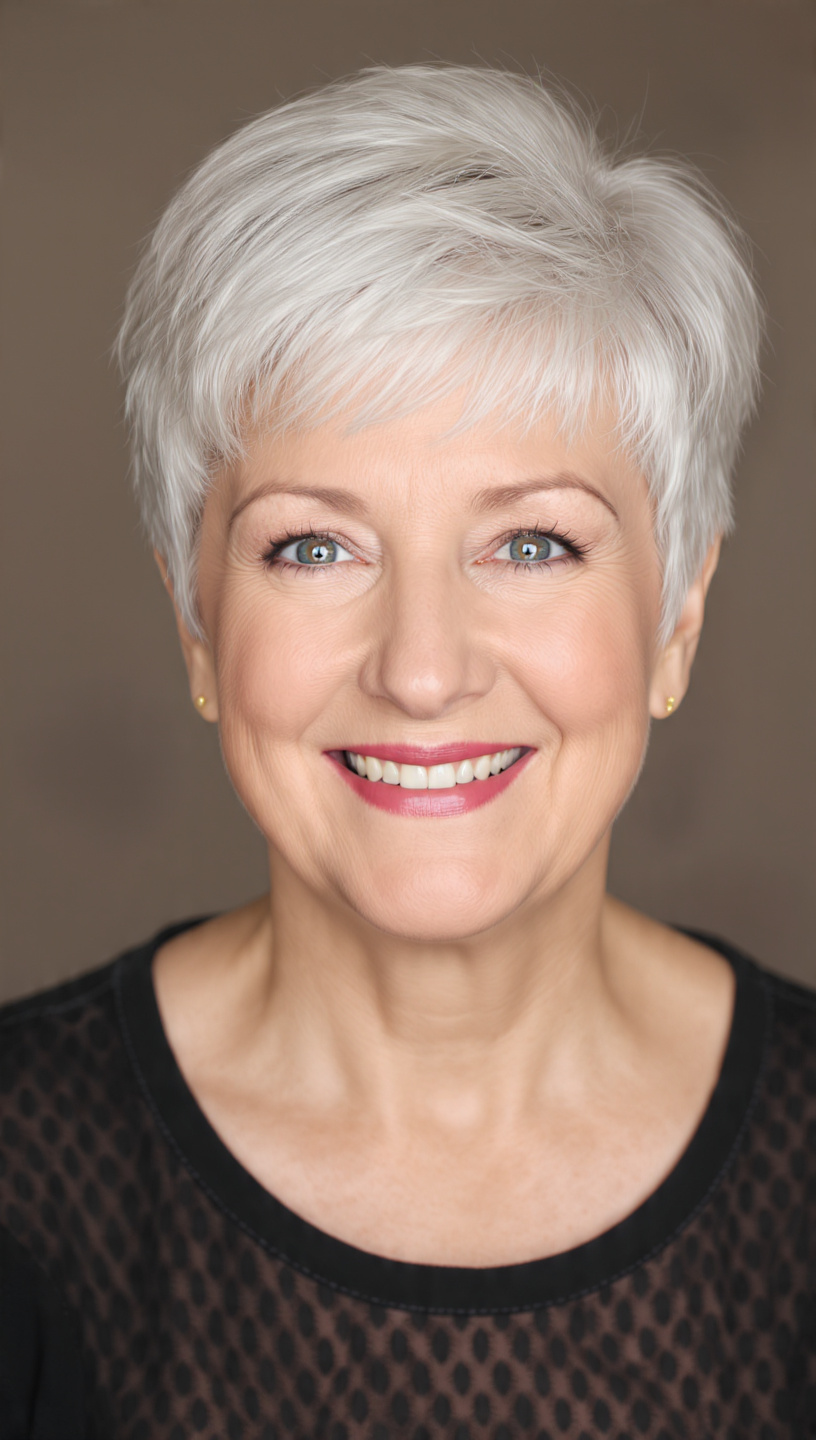
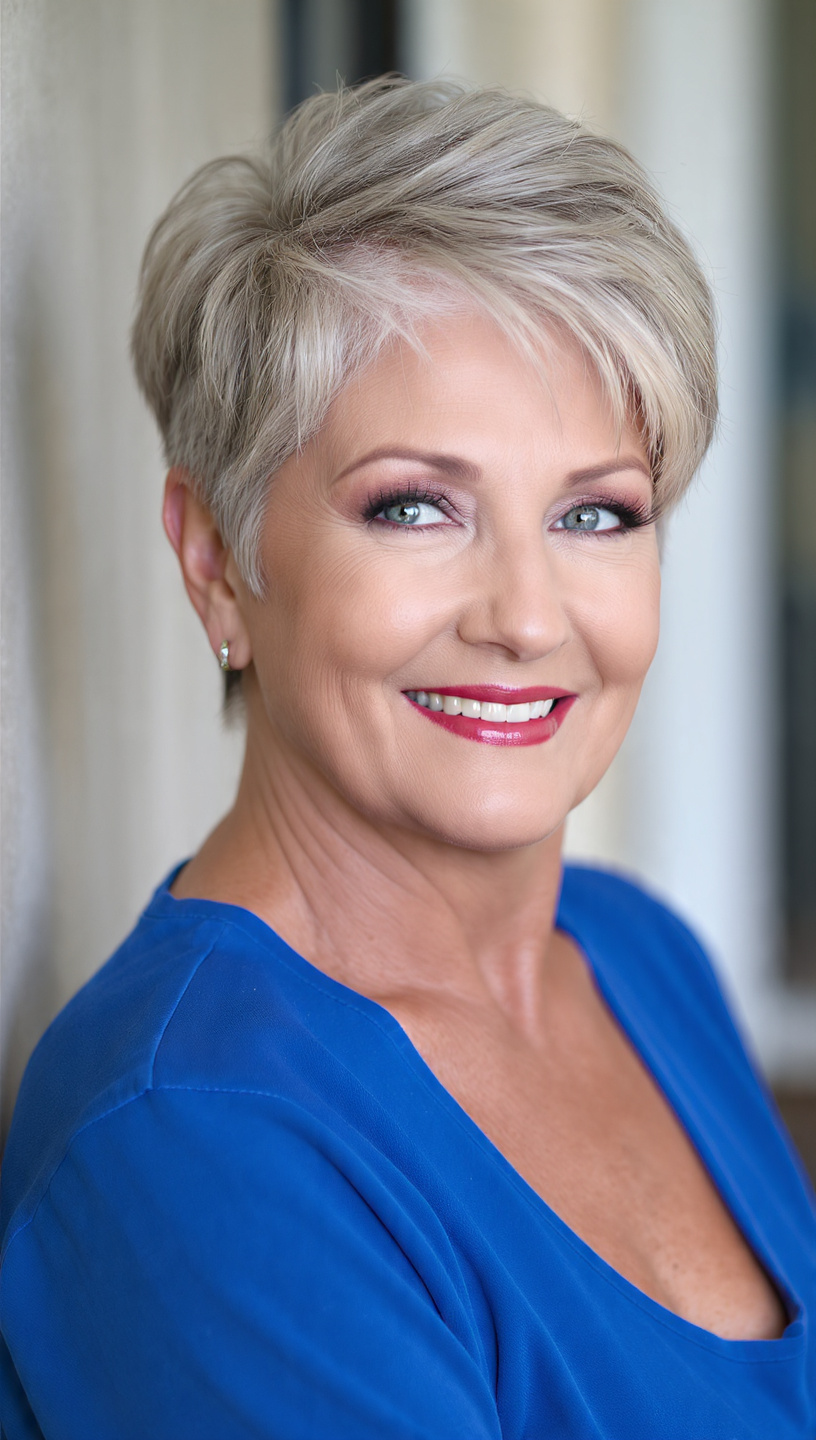
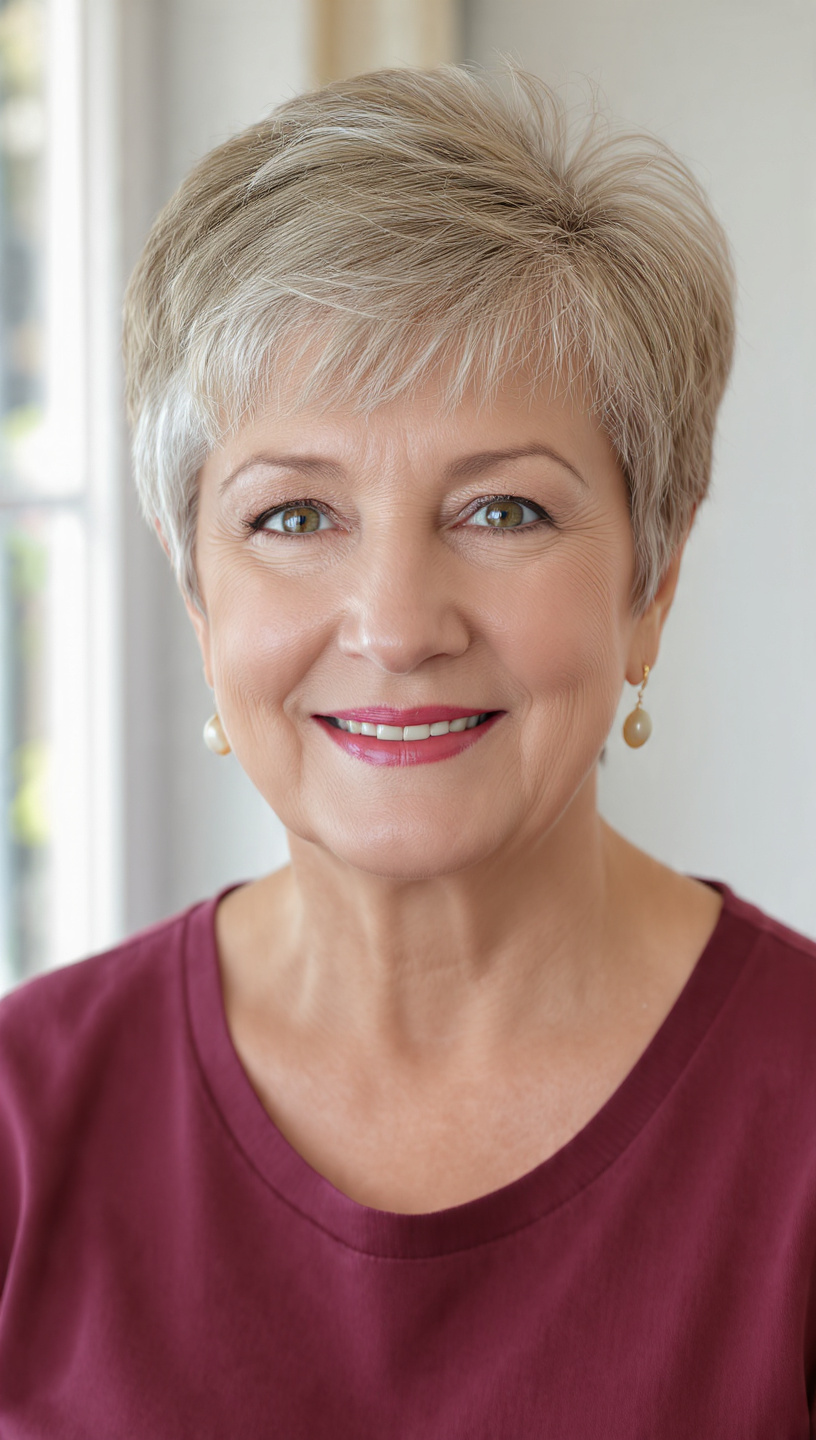
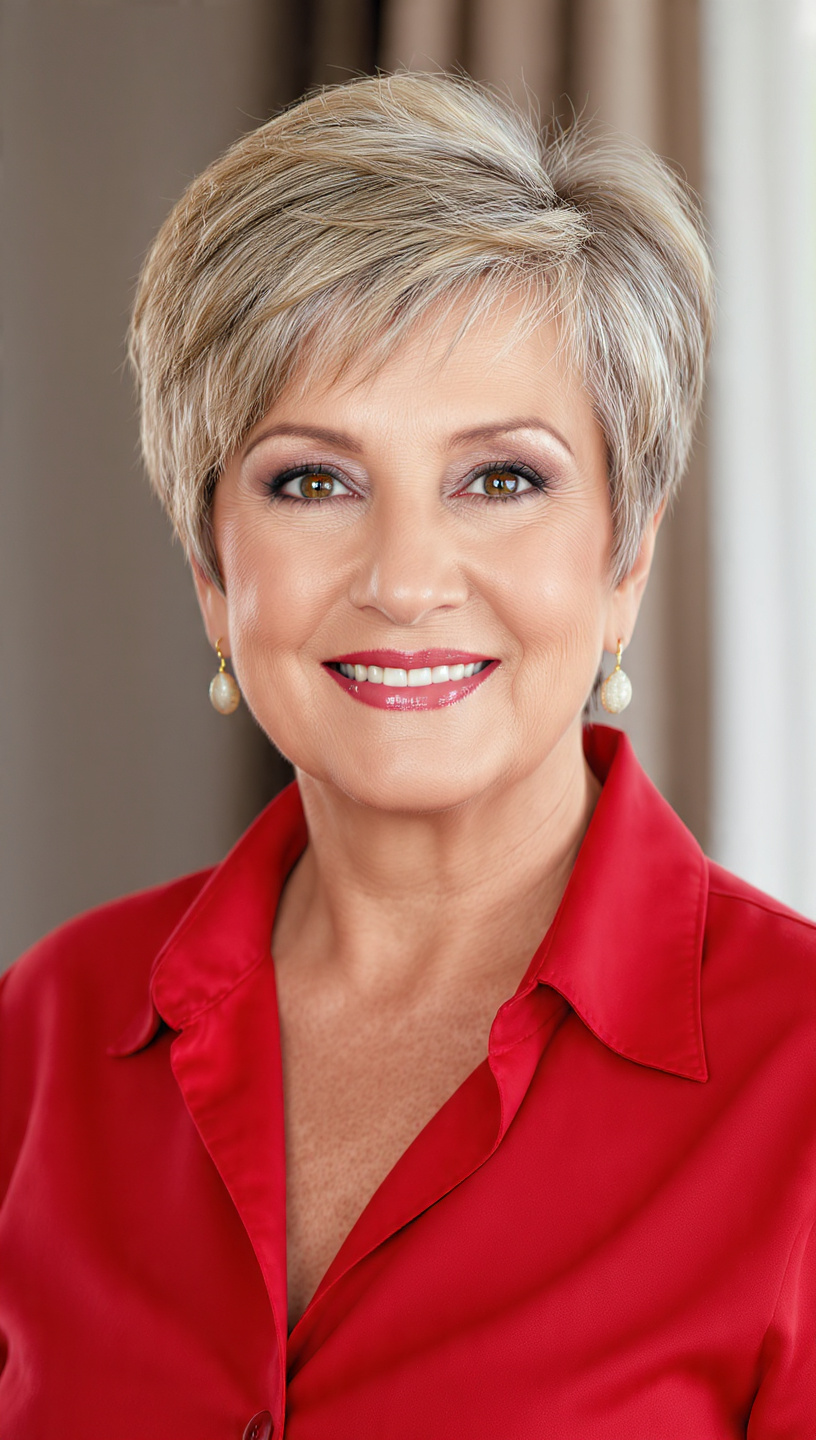
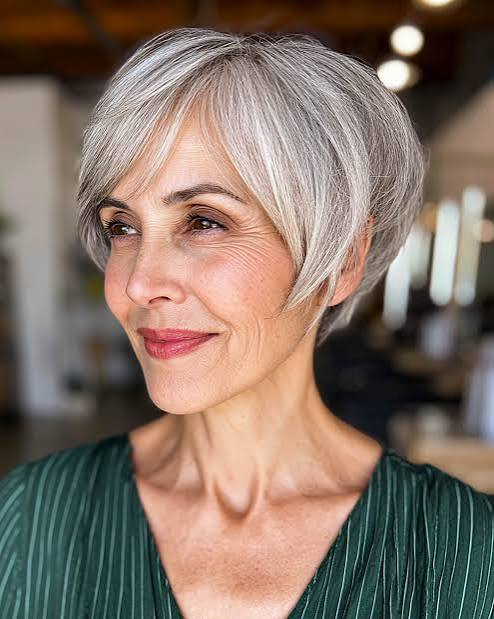
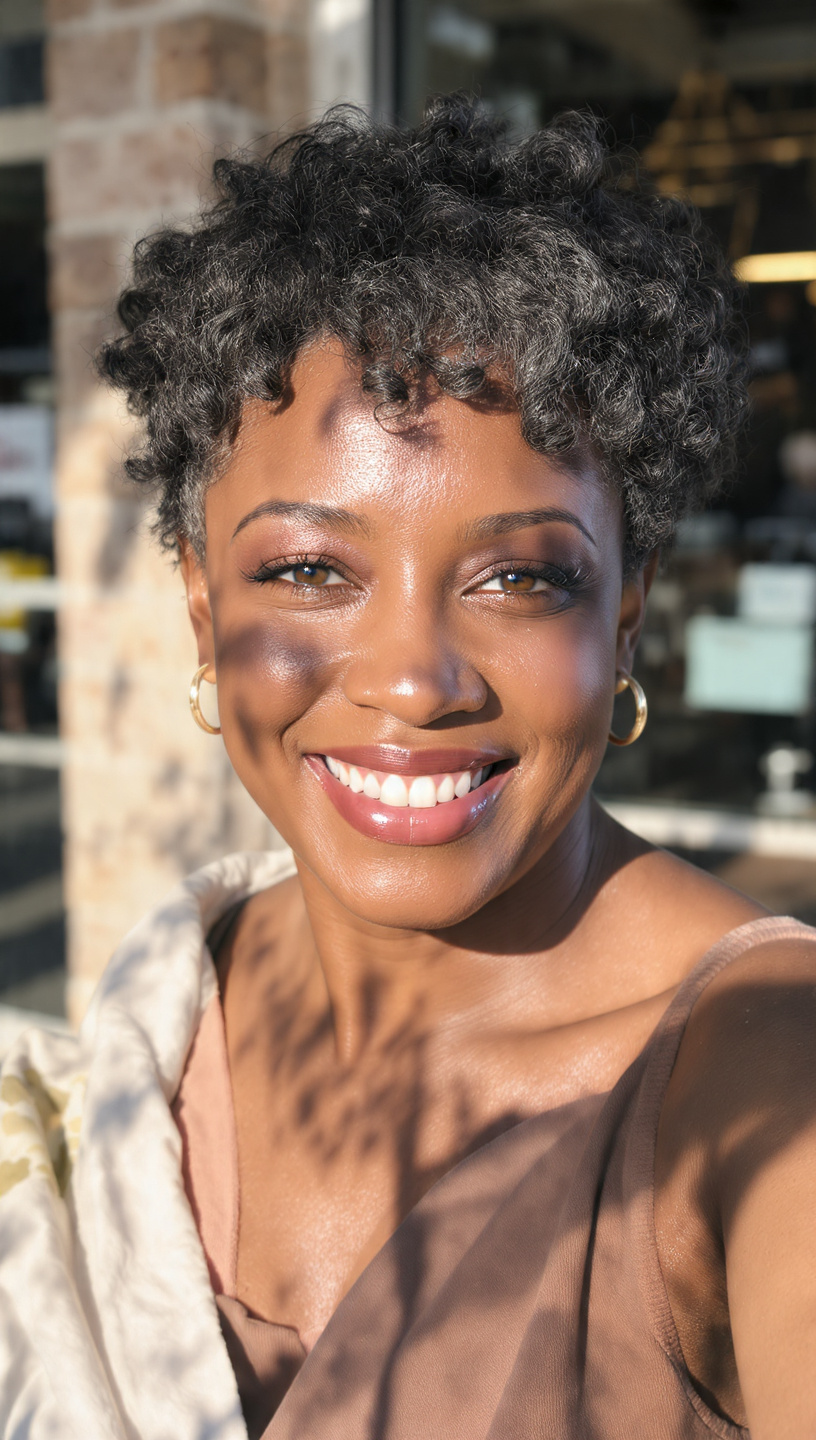
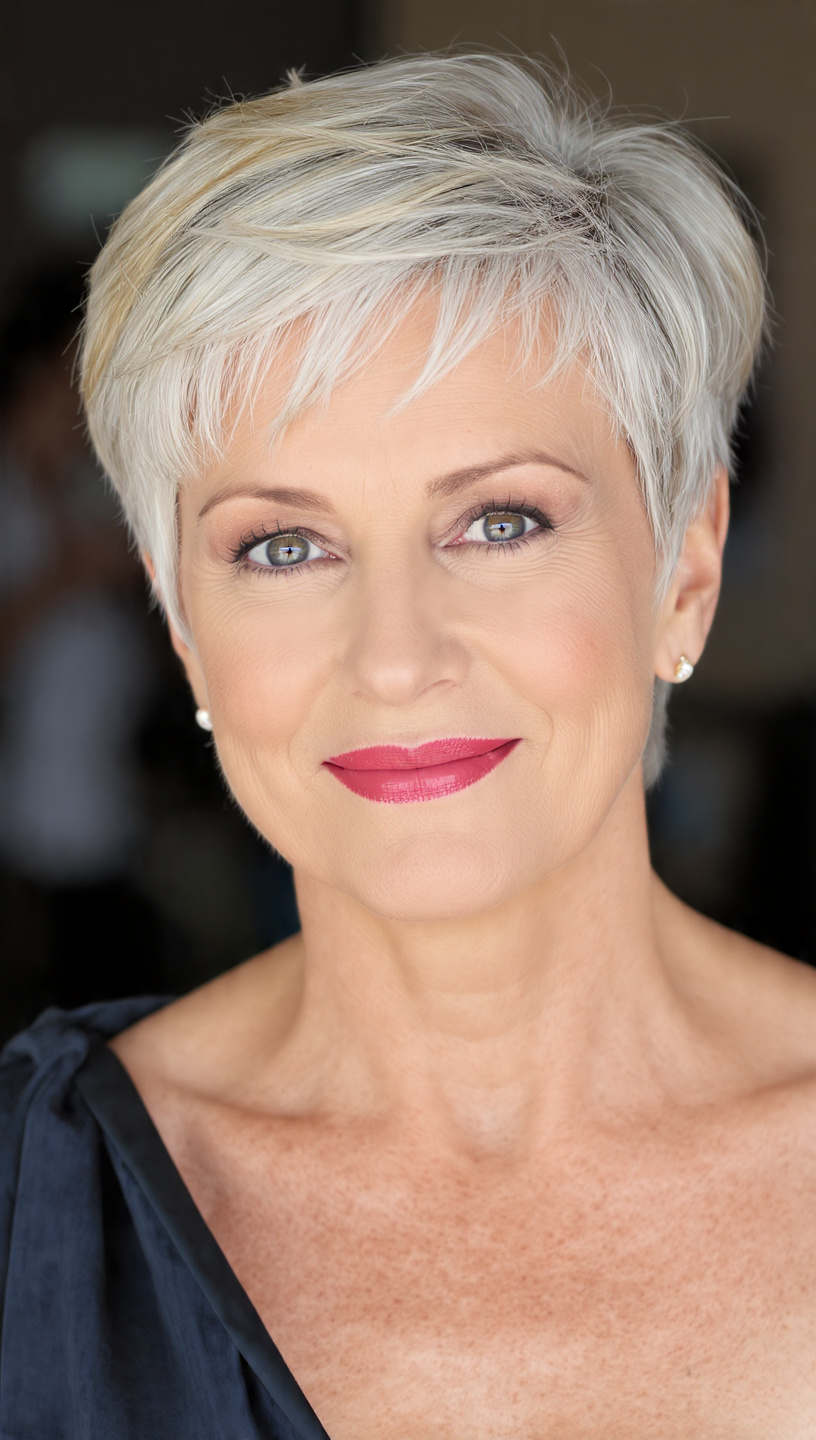
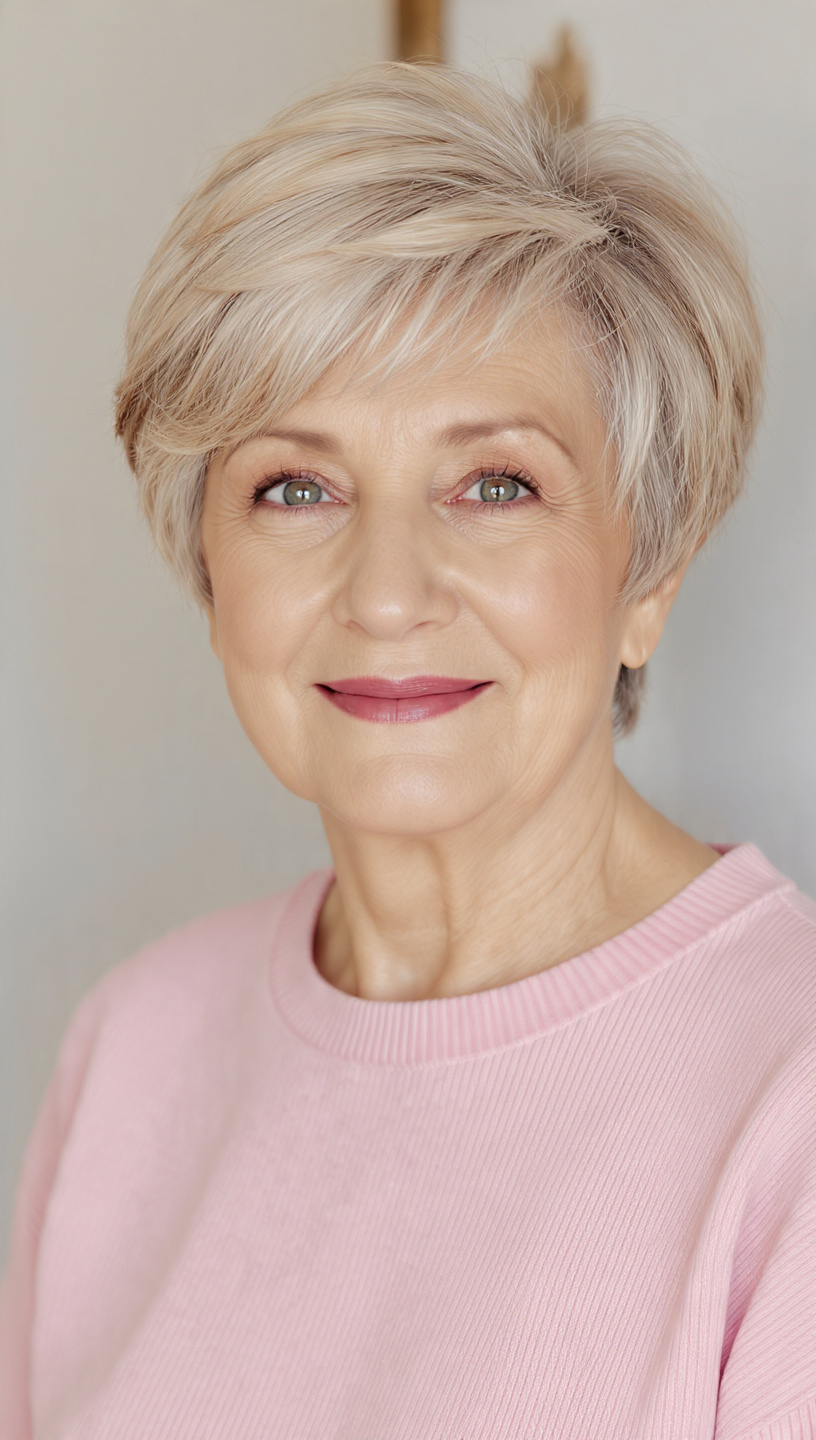
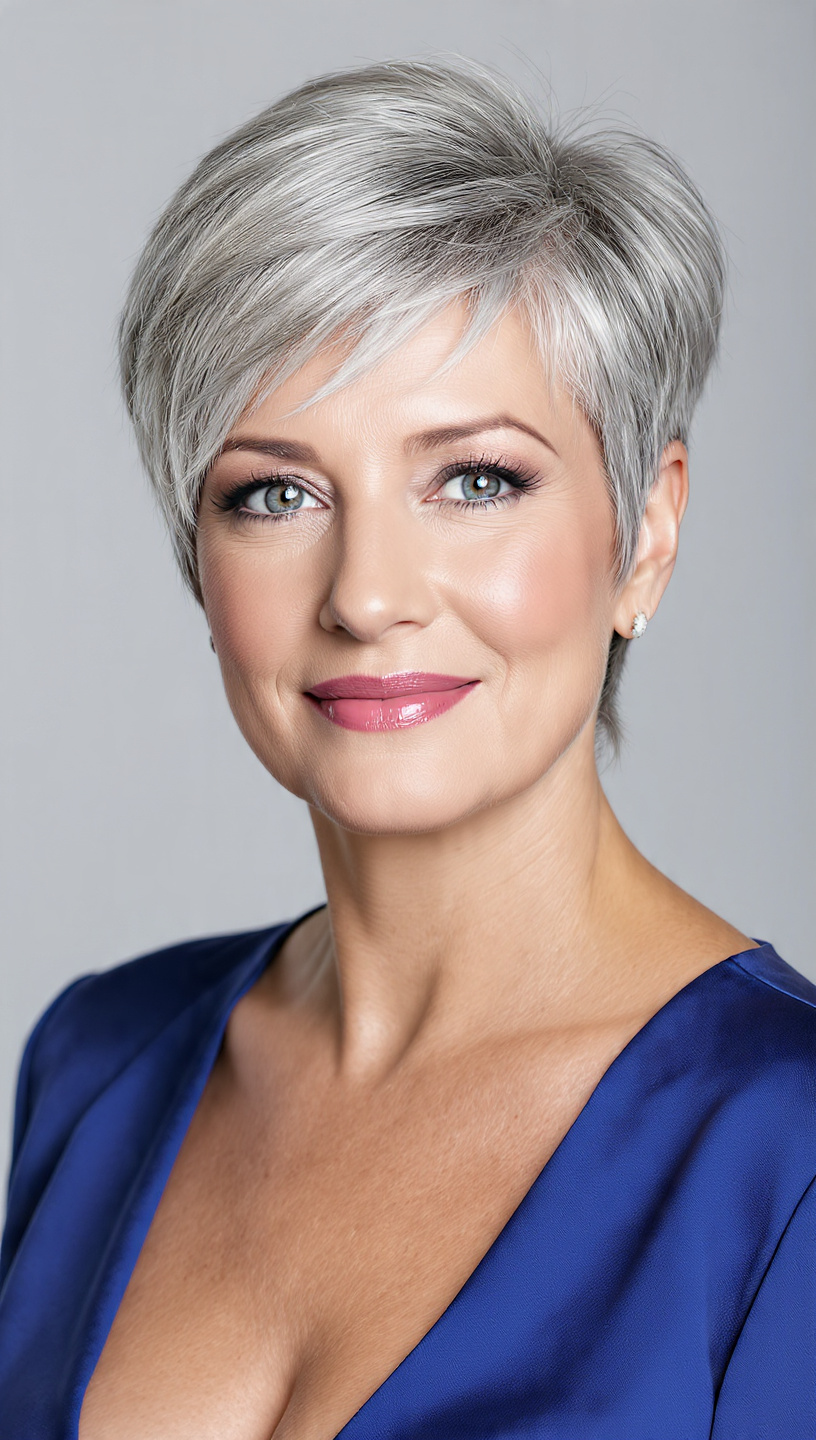
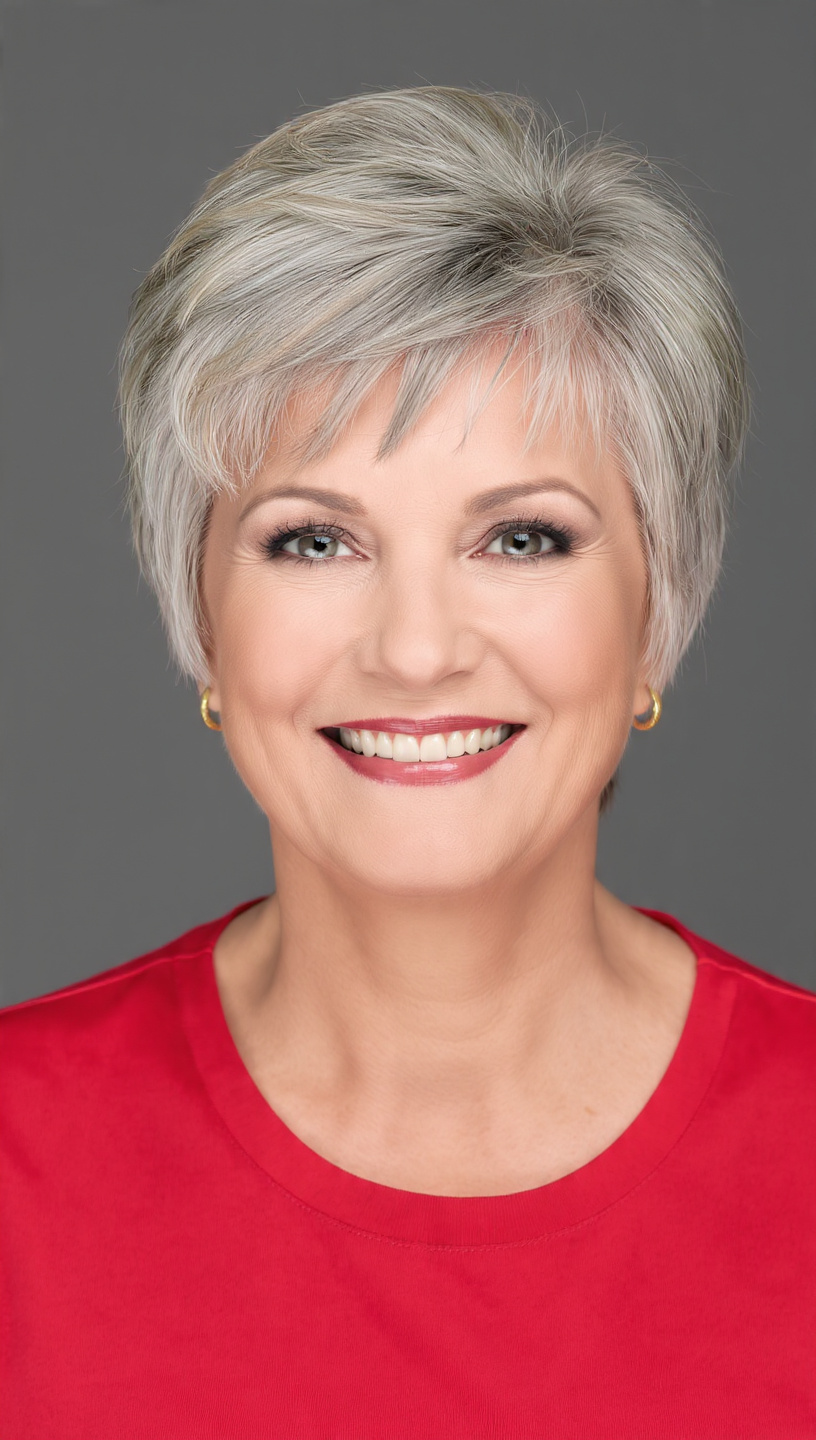
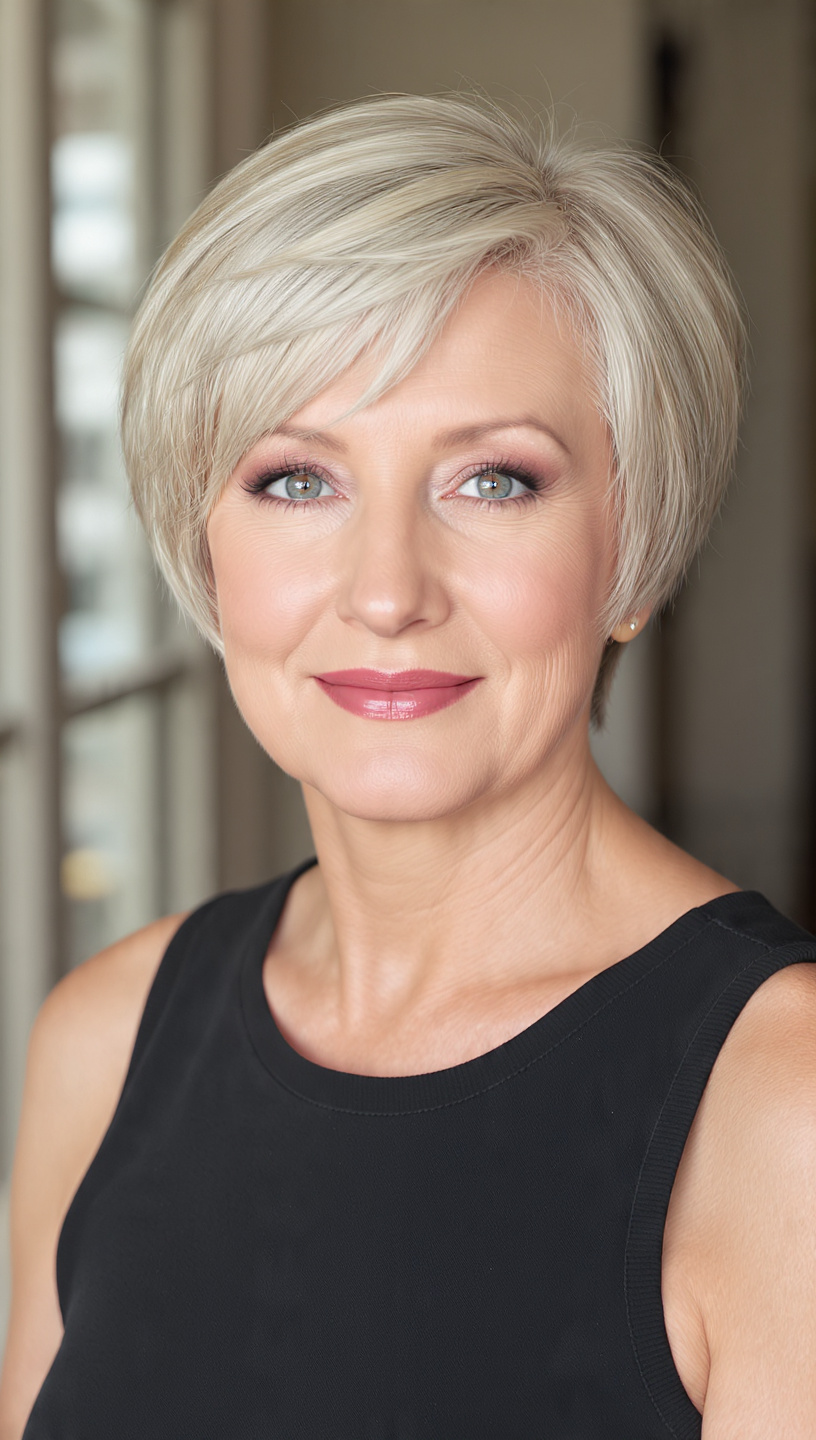
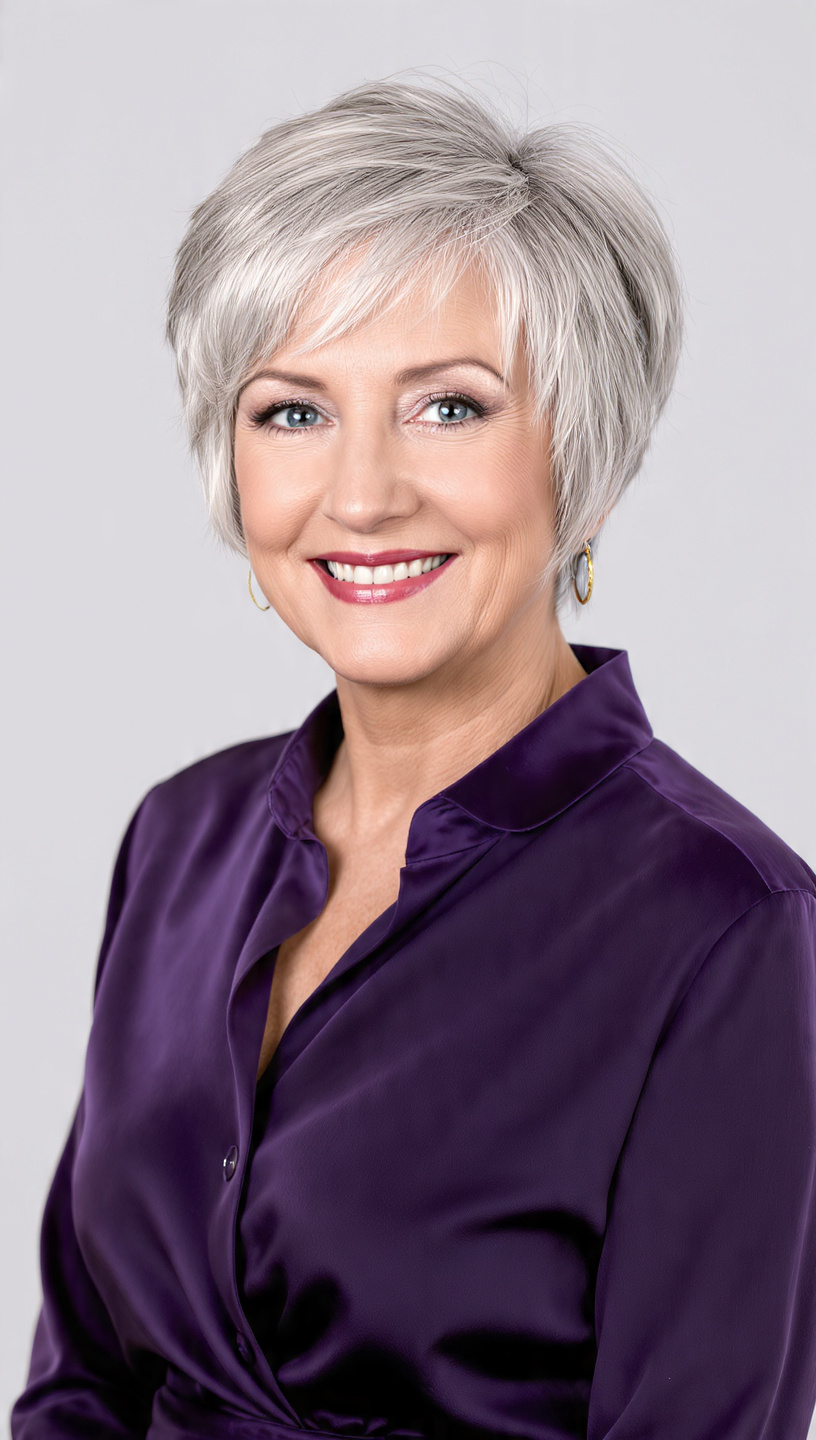
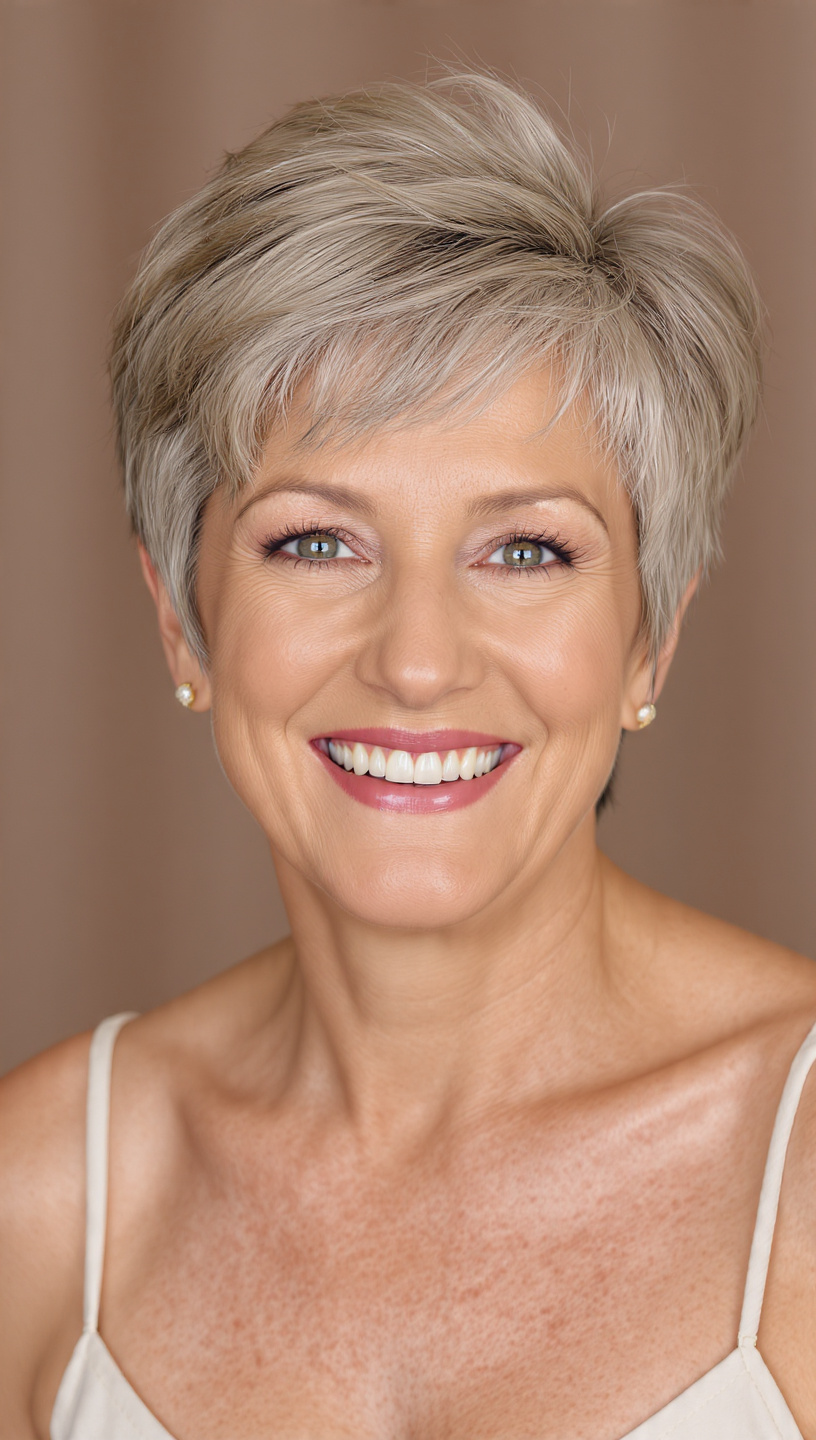
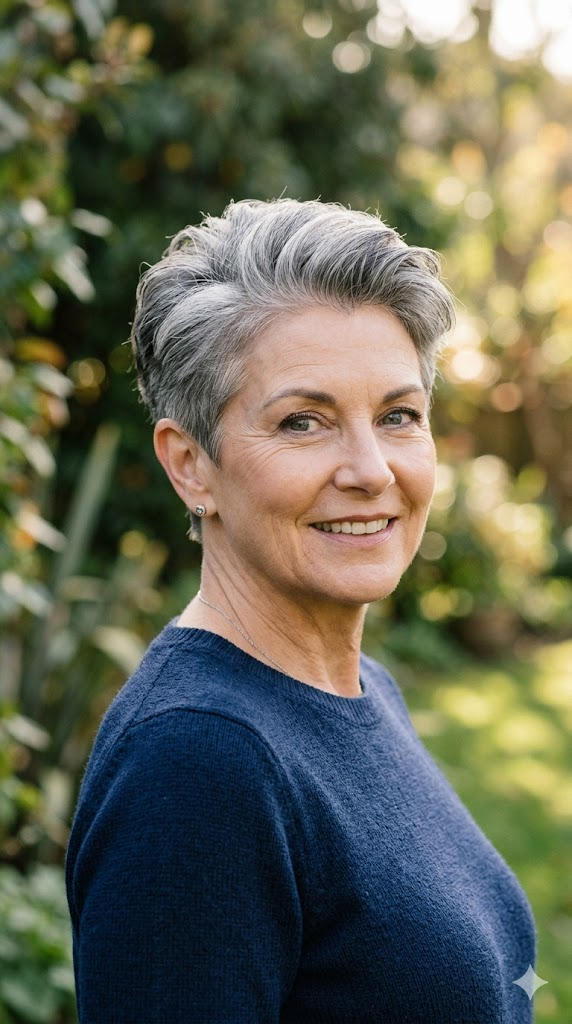
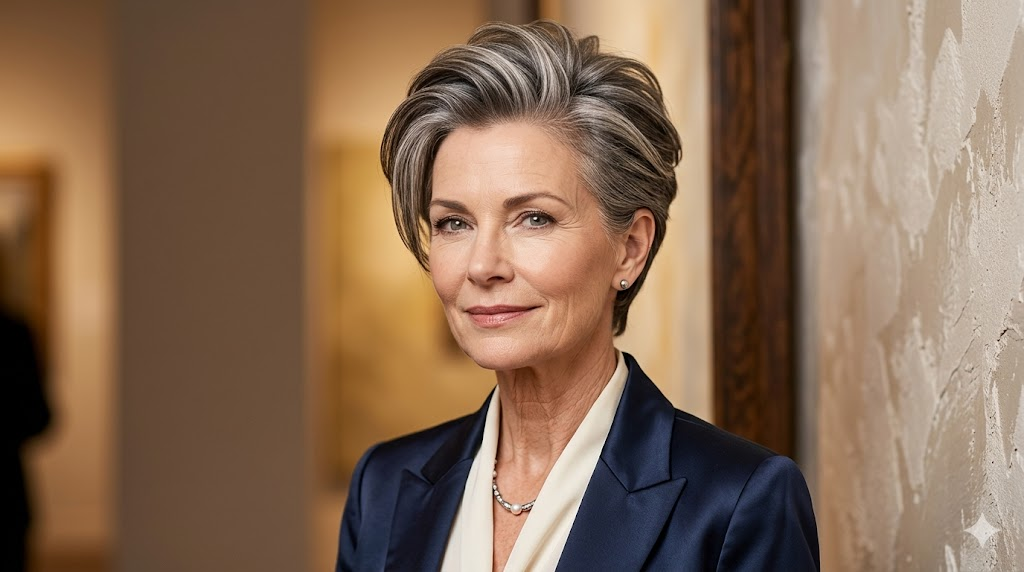
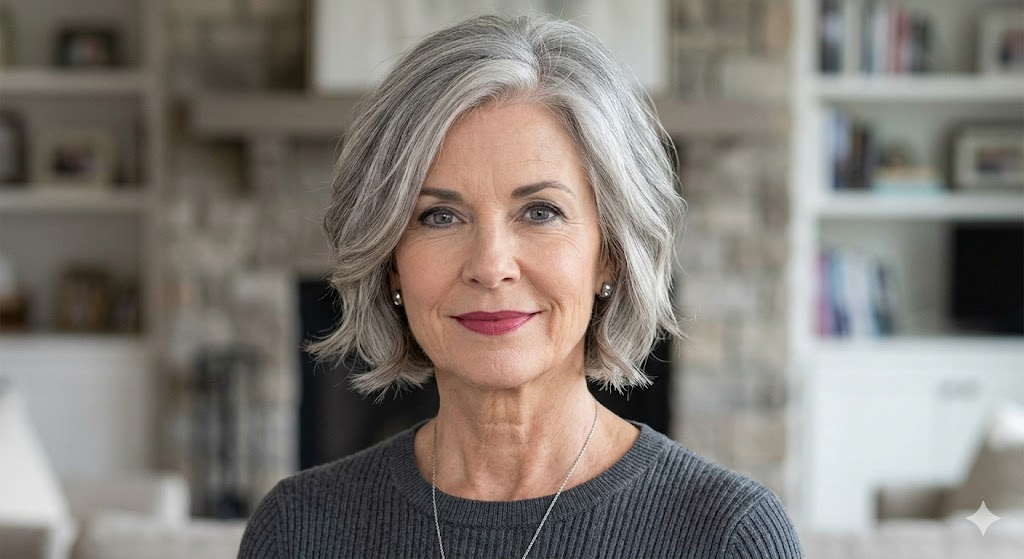
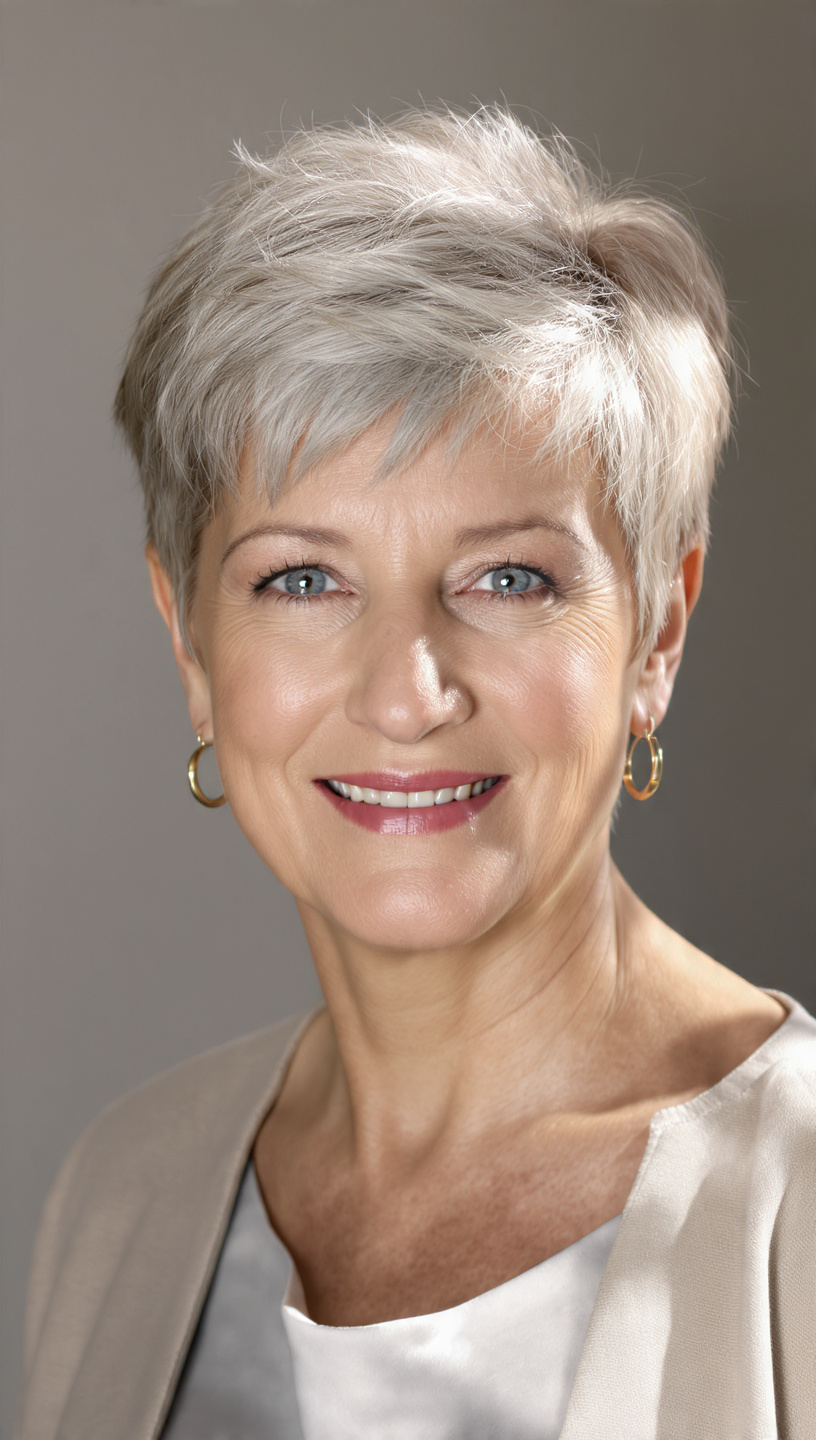
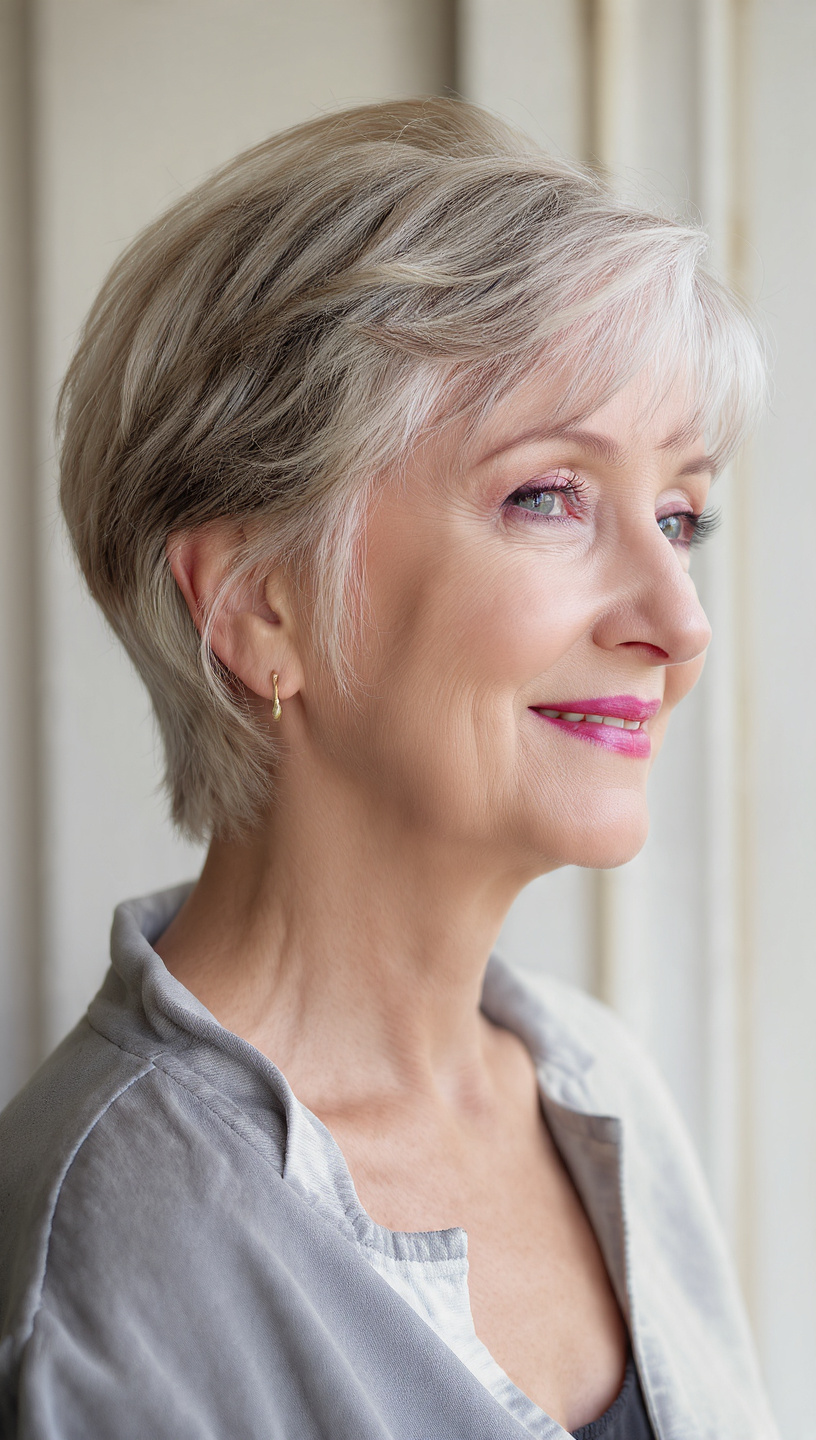
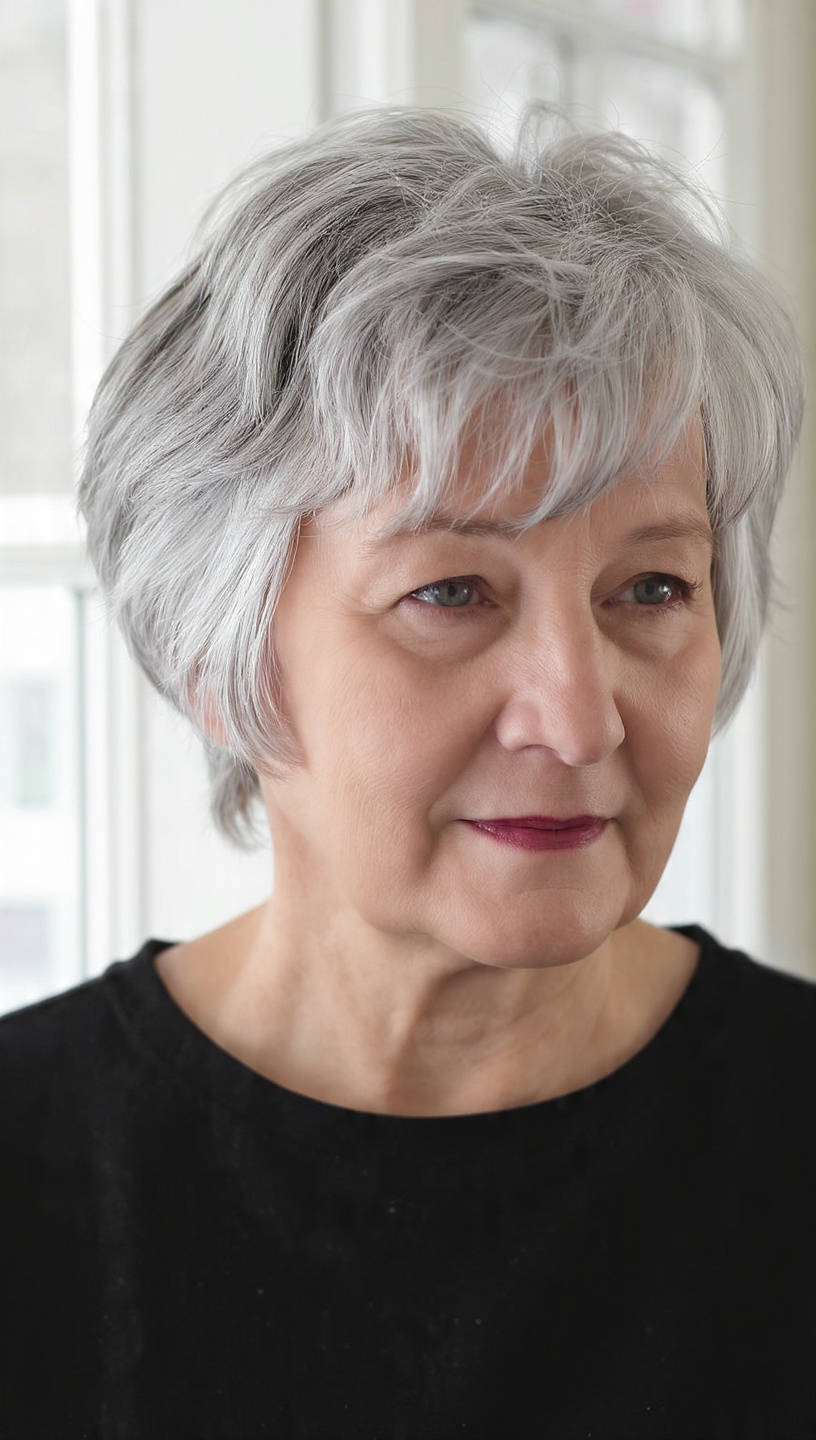
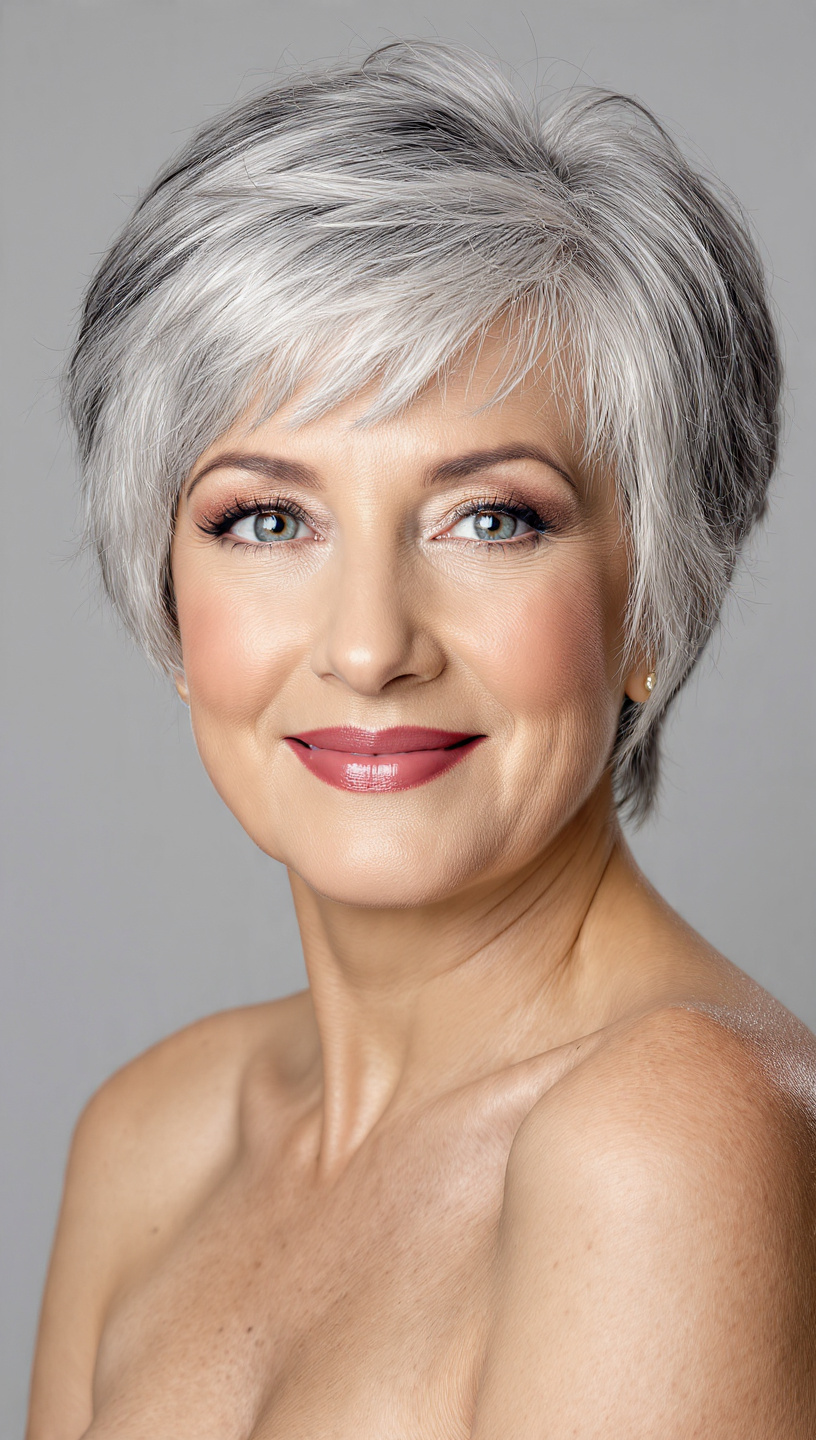
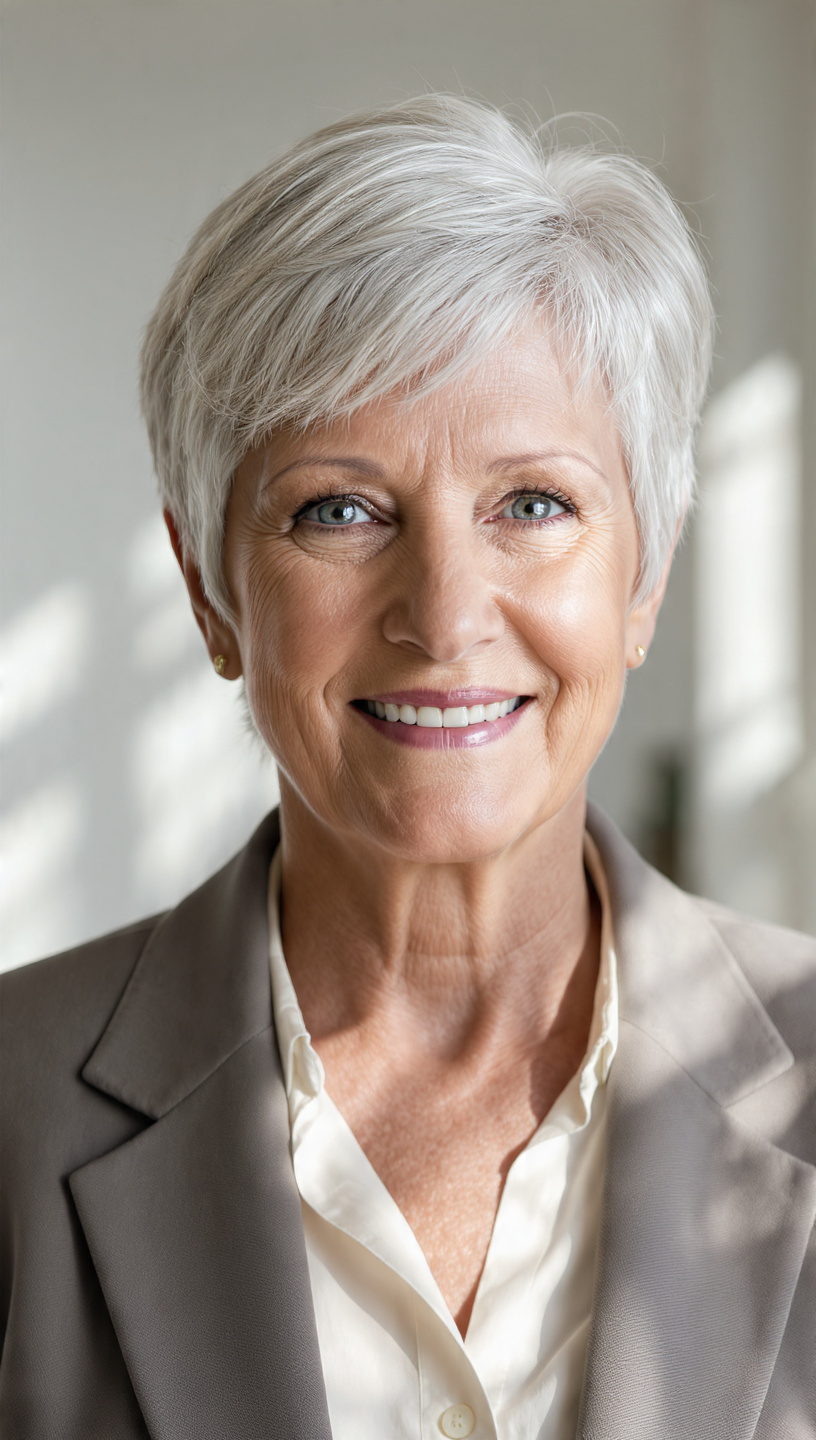
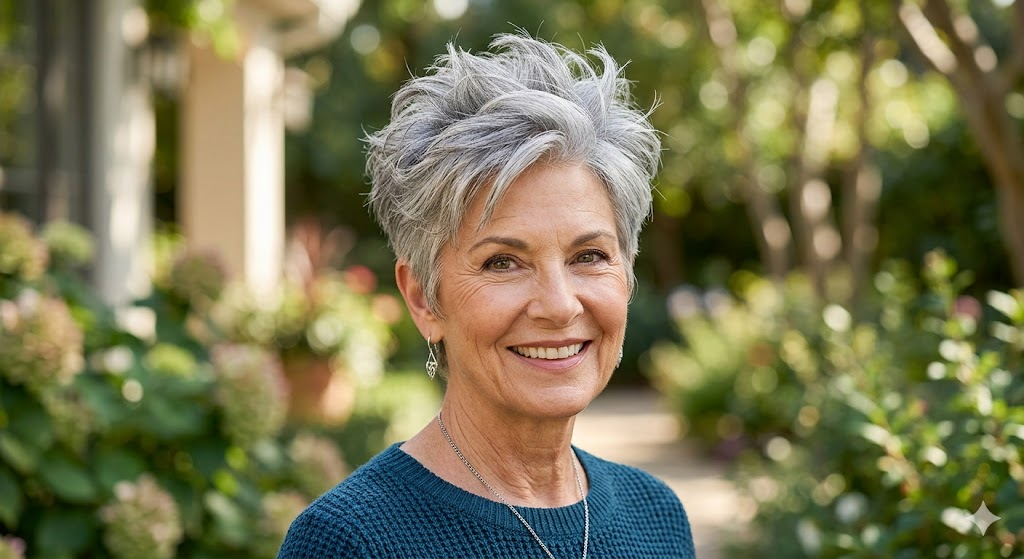
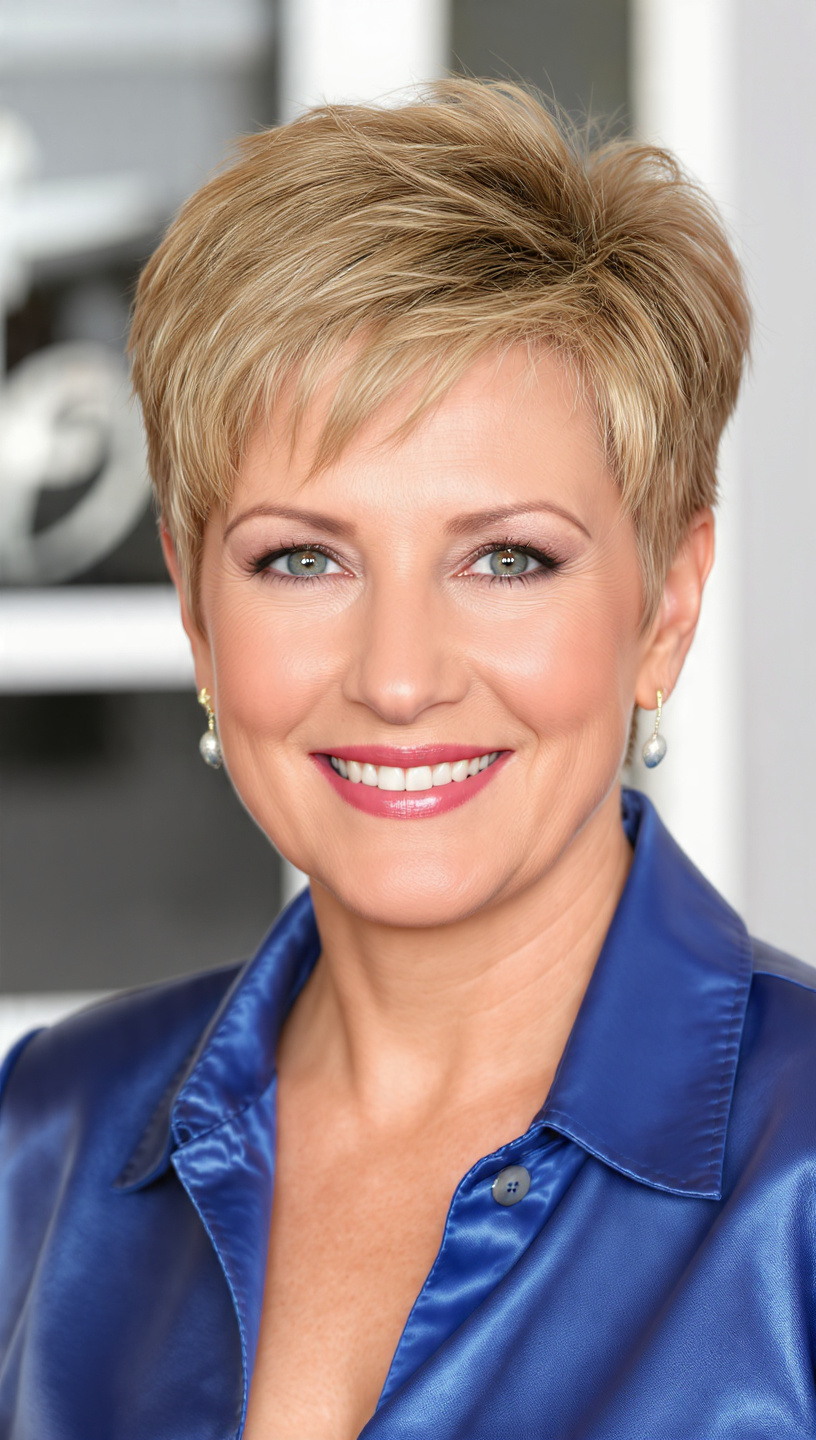
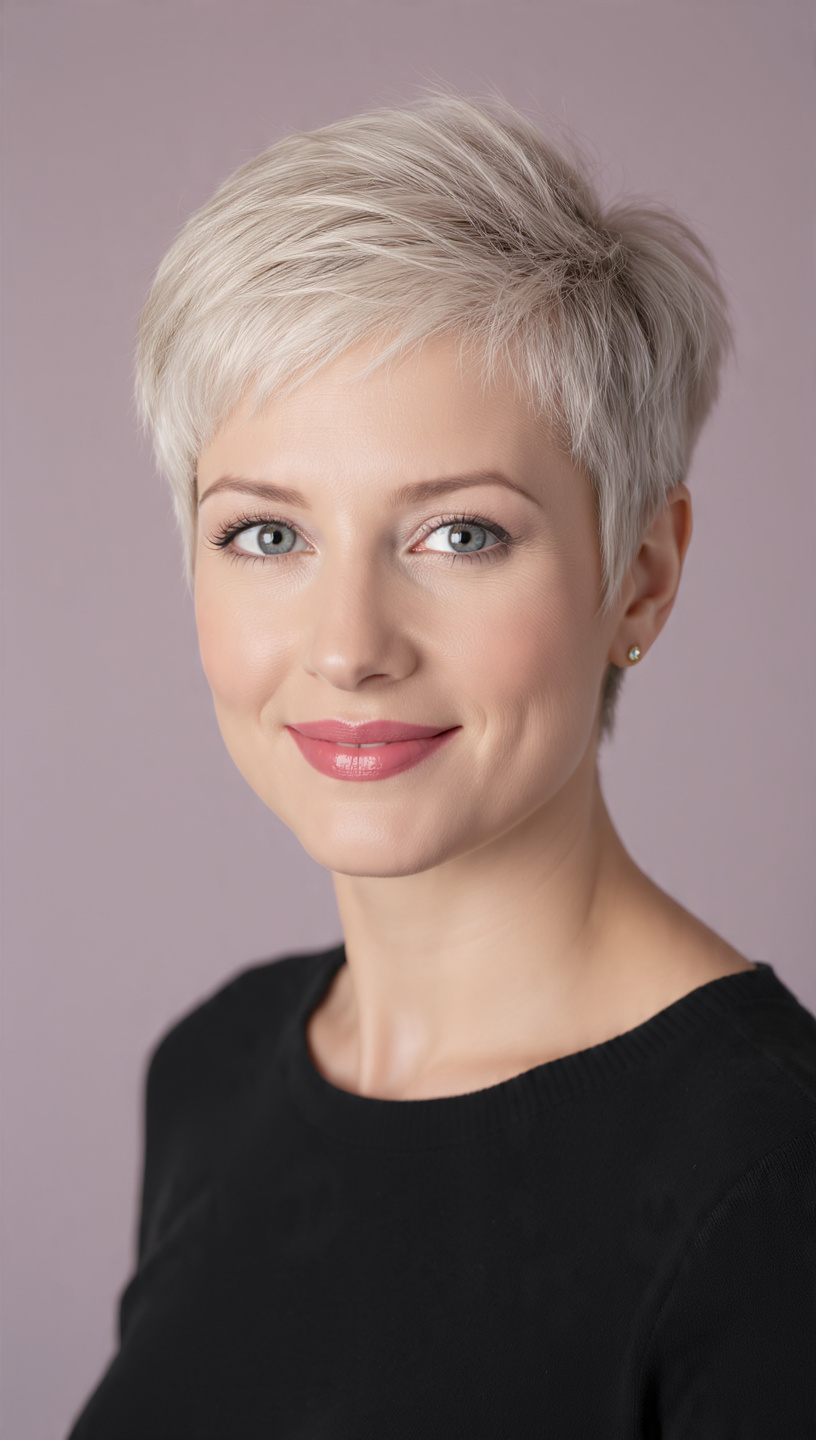
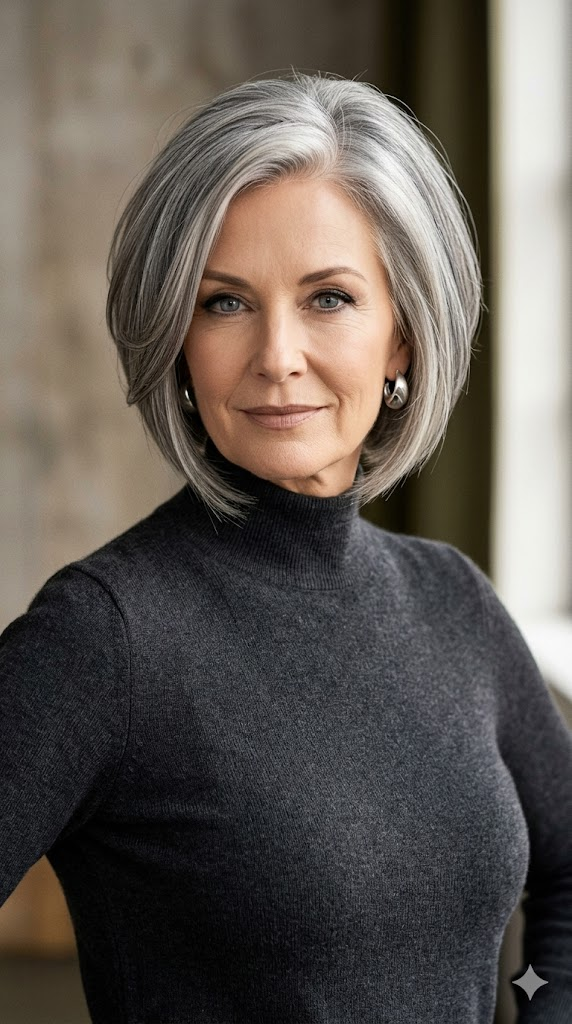
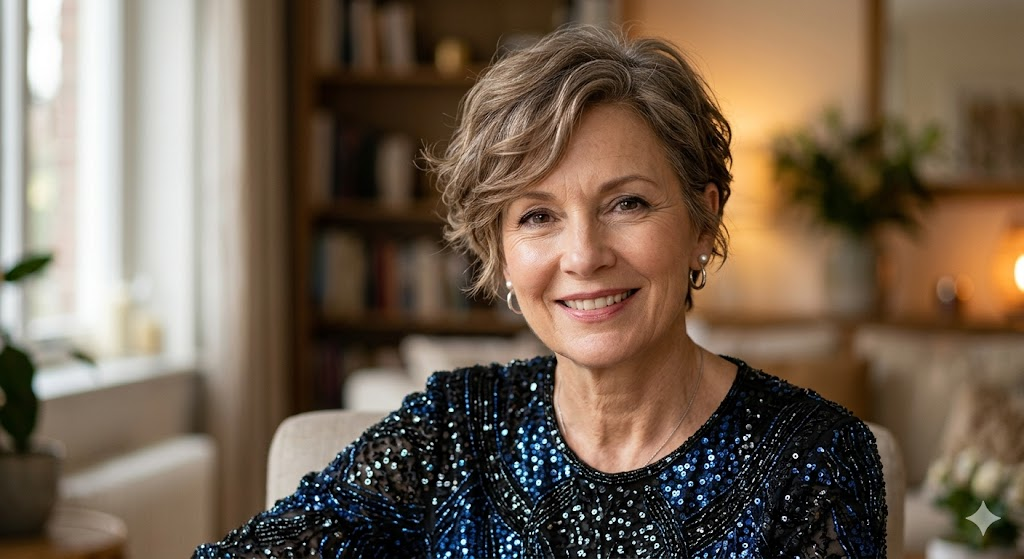
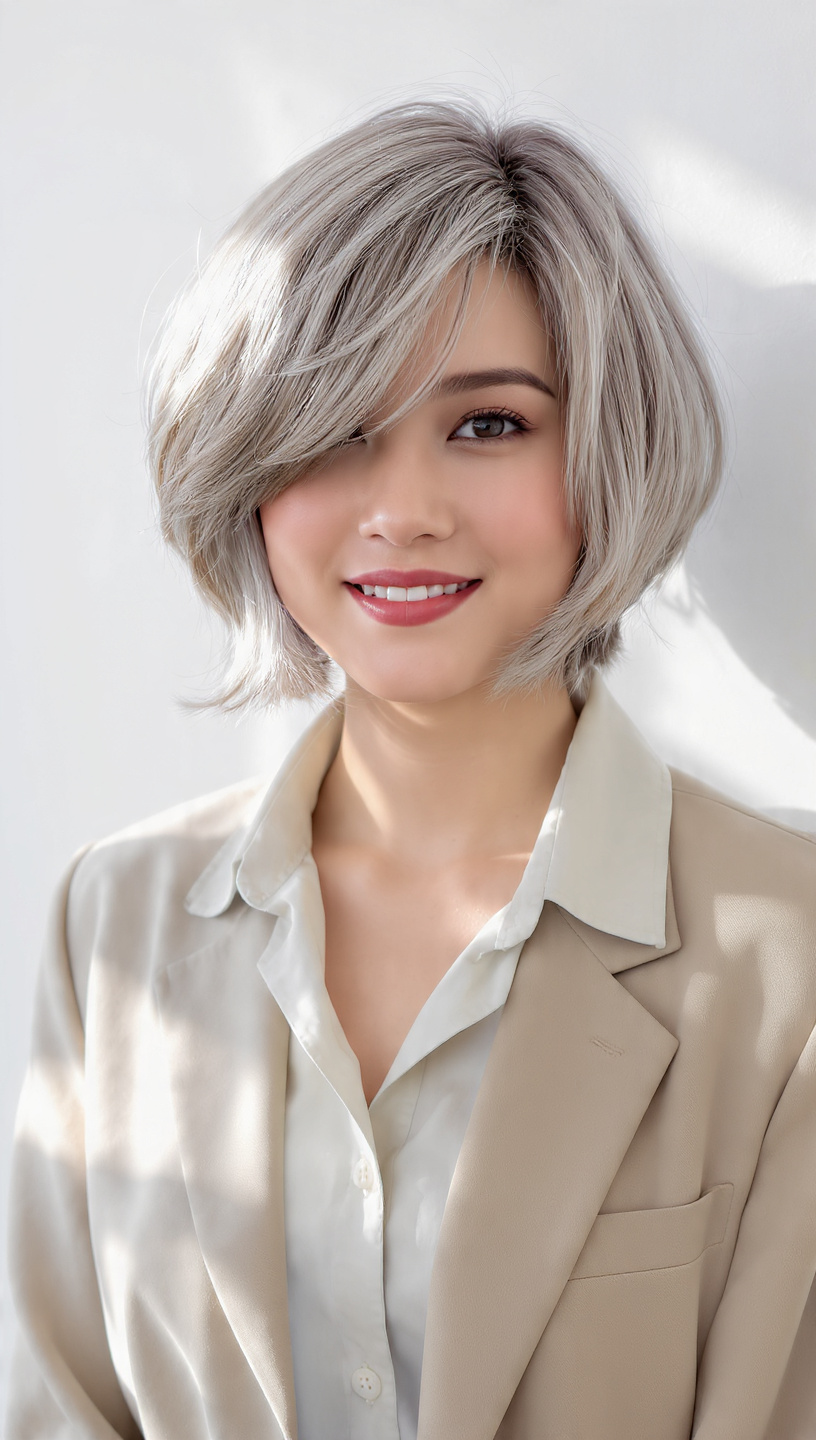
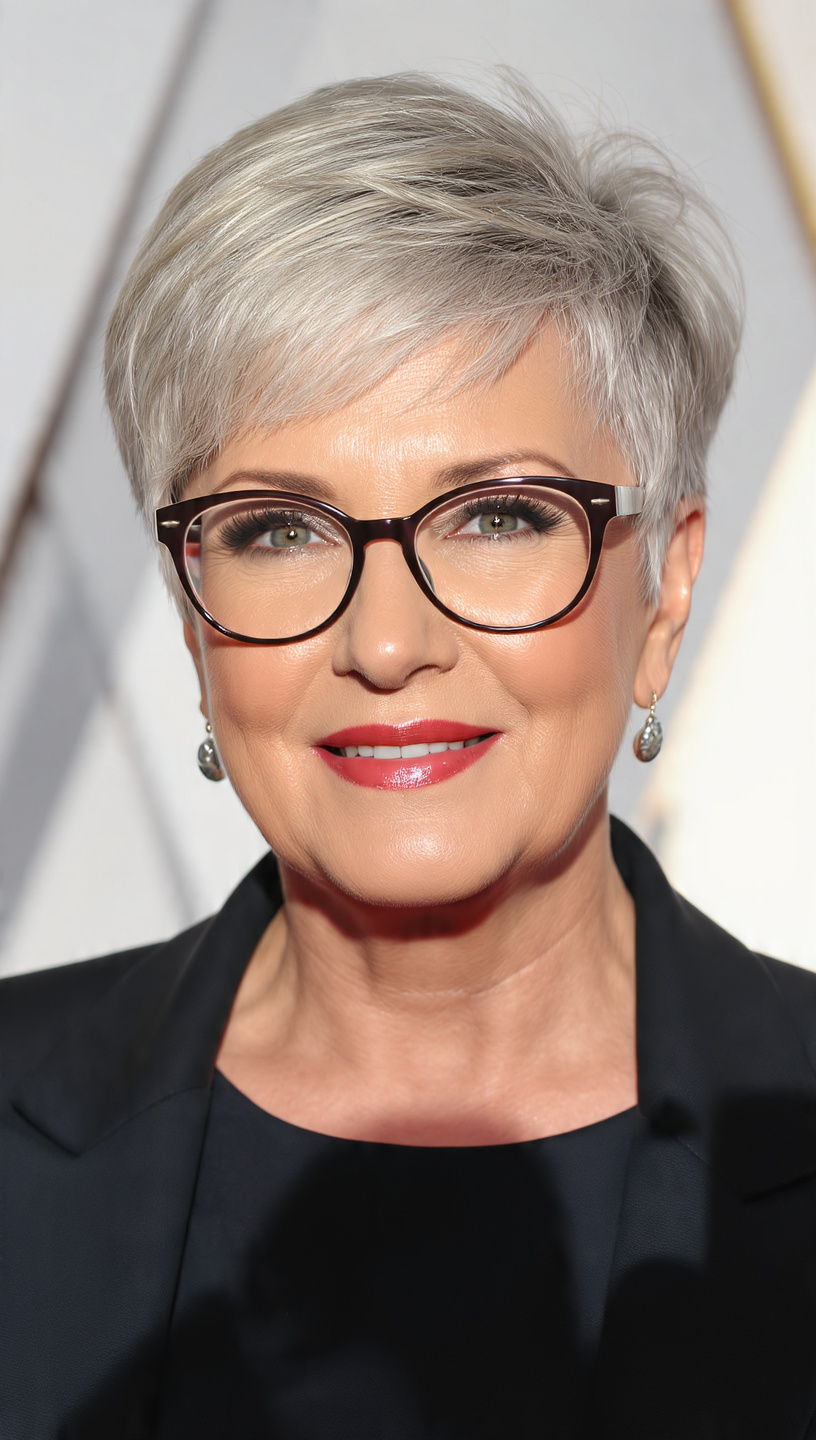
    4. Classic Grey Volume Crop

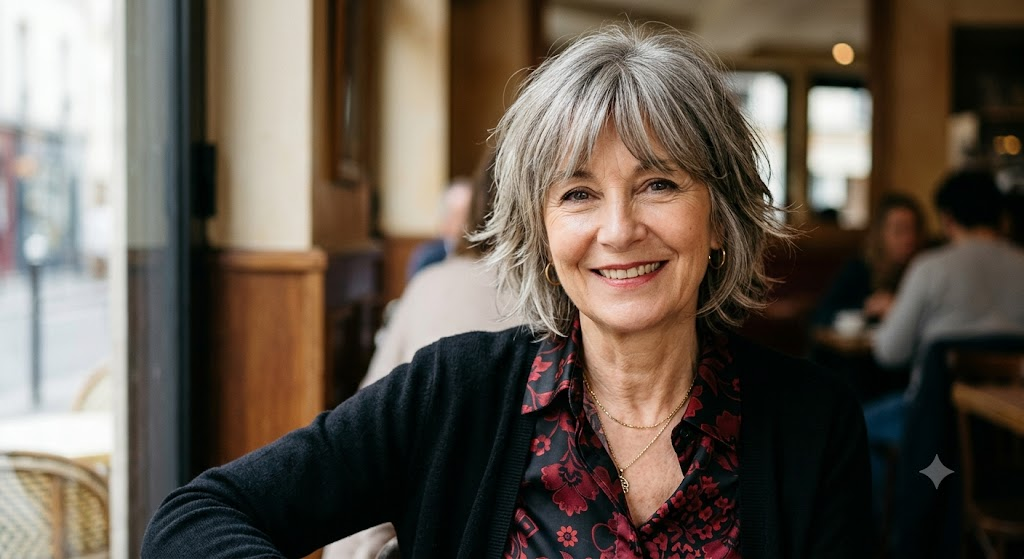
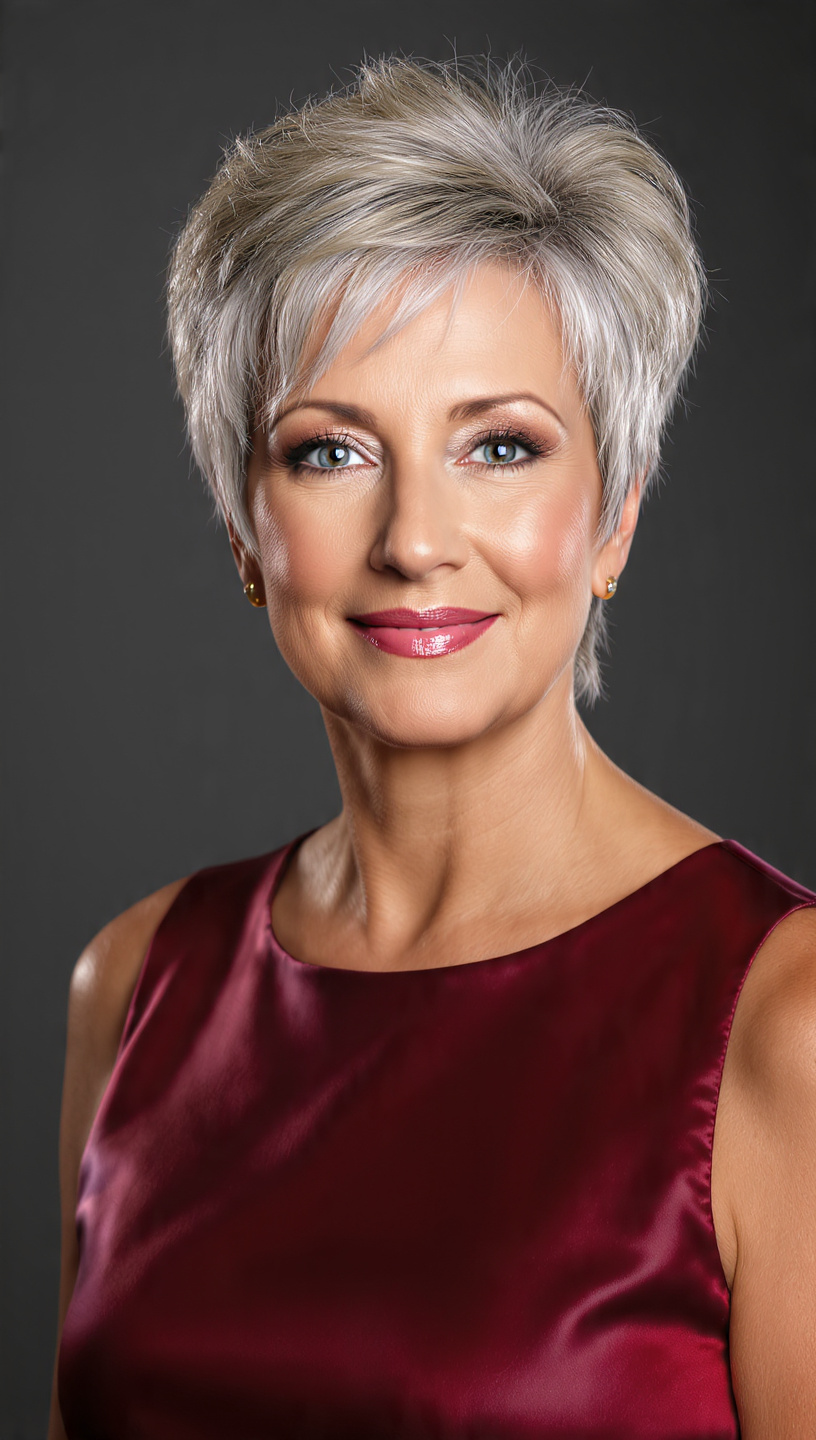
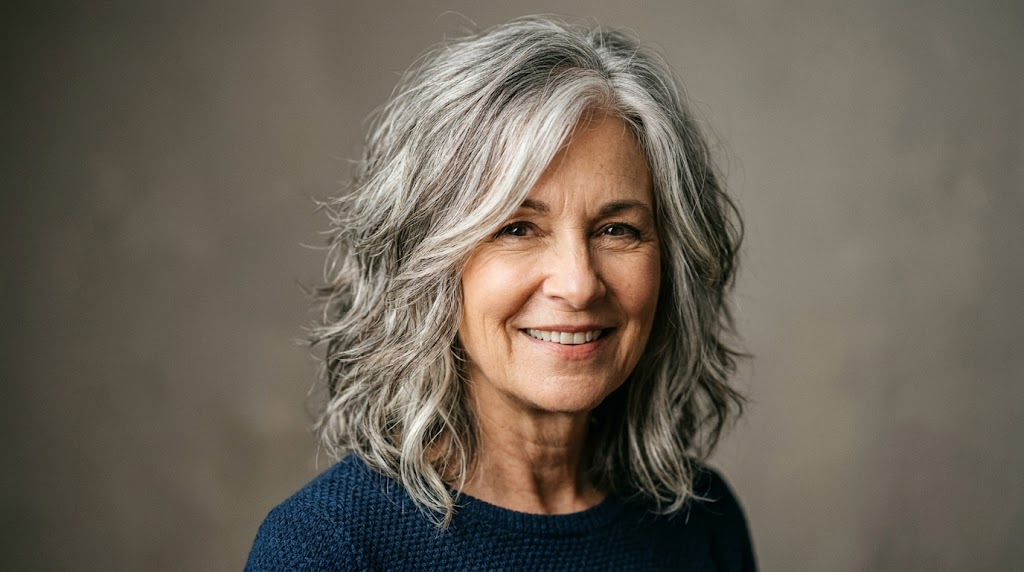
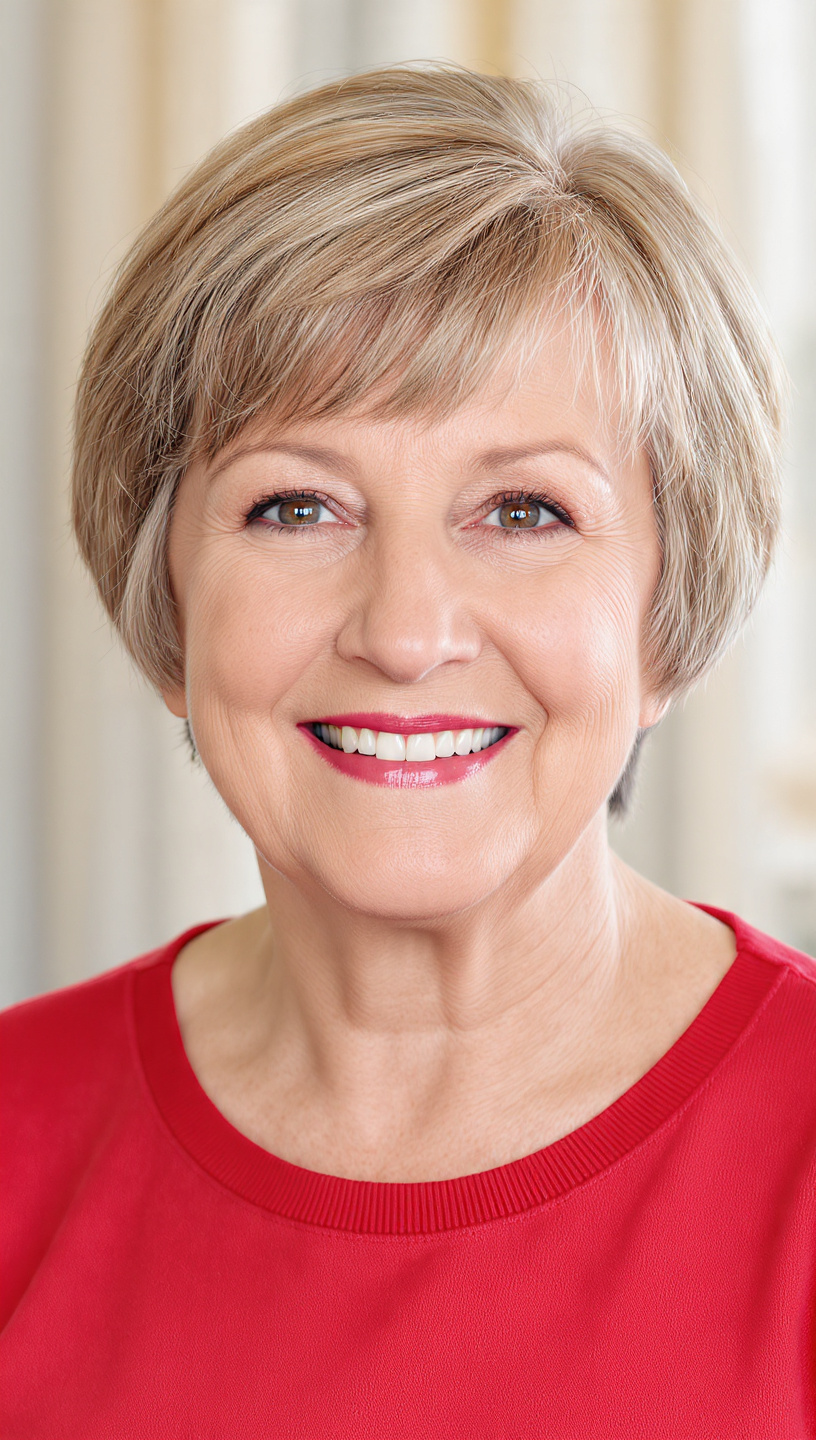
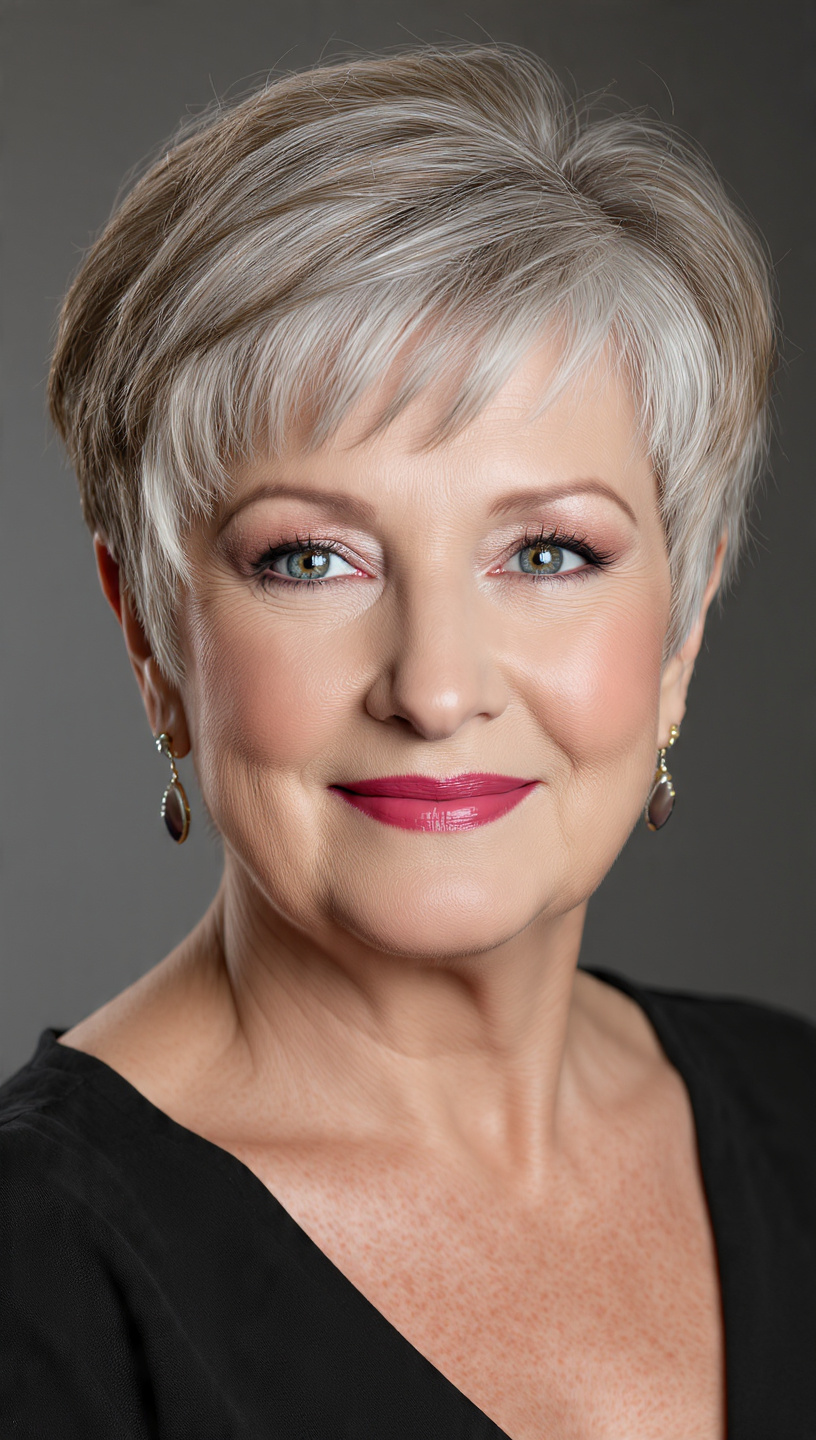
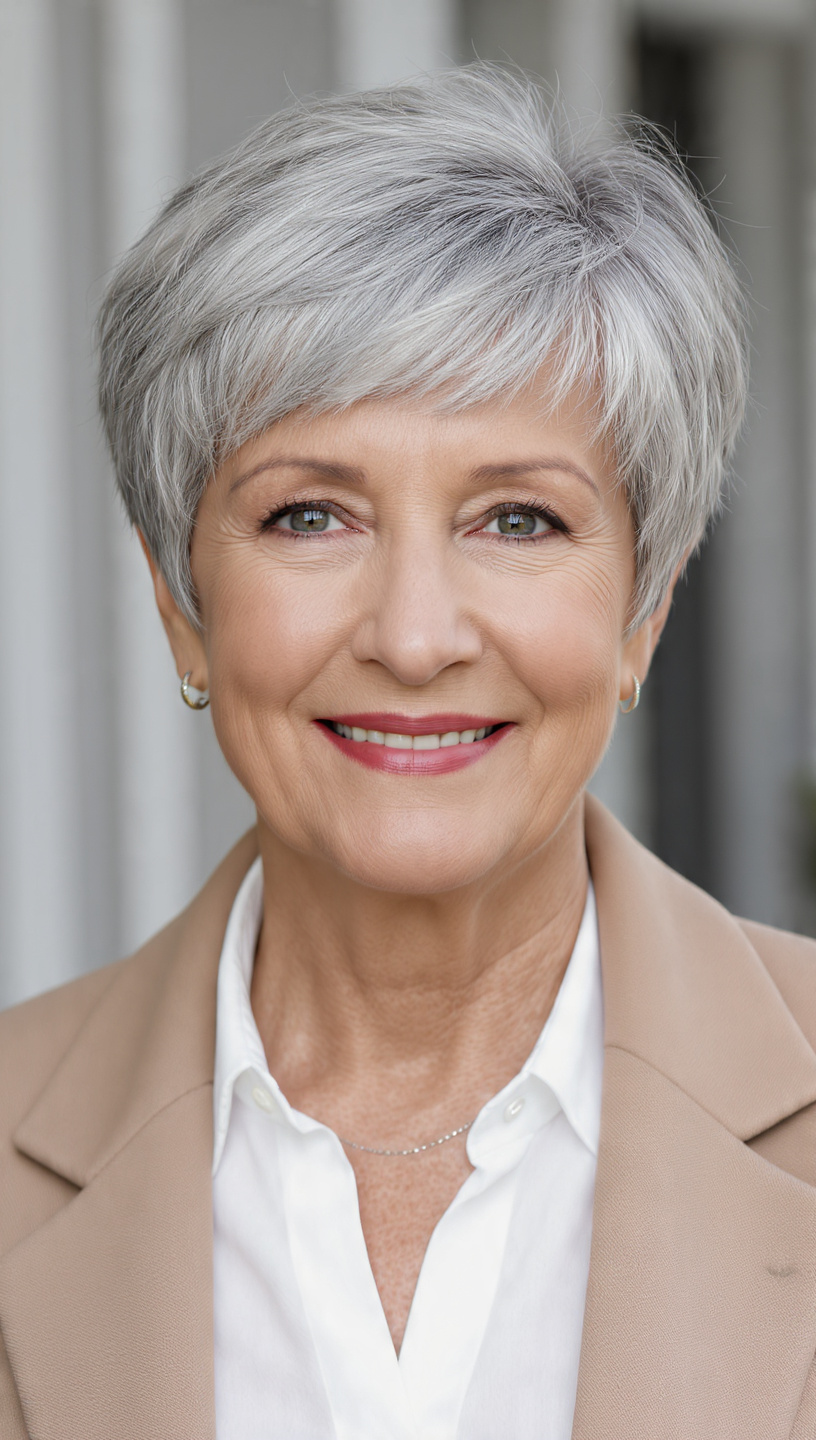
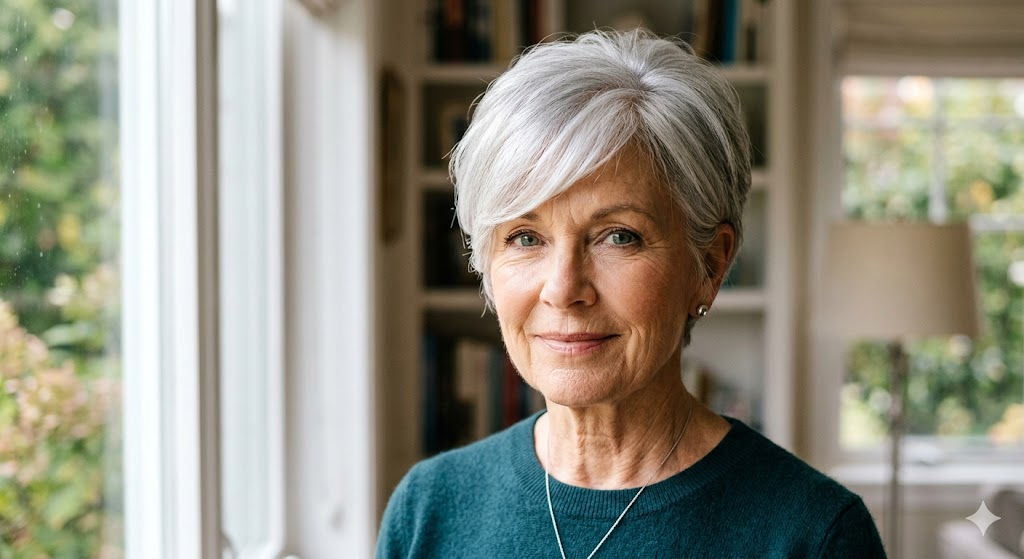
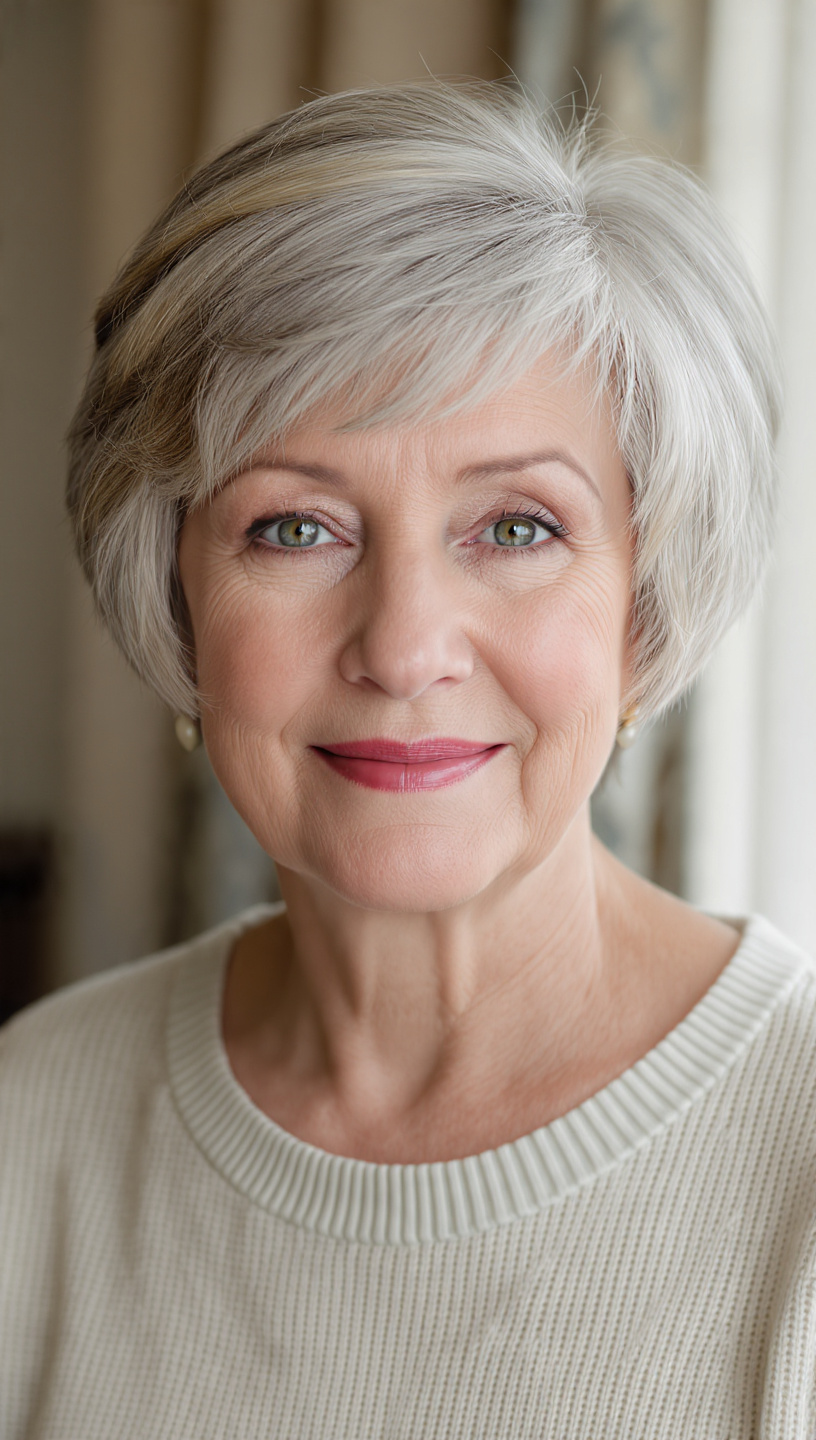
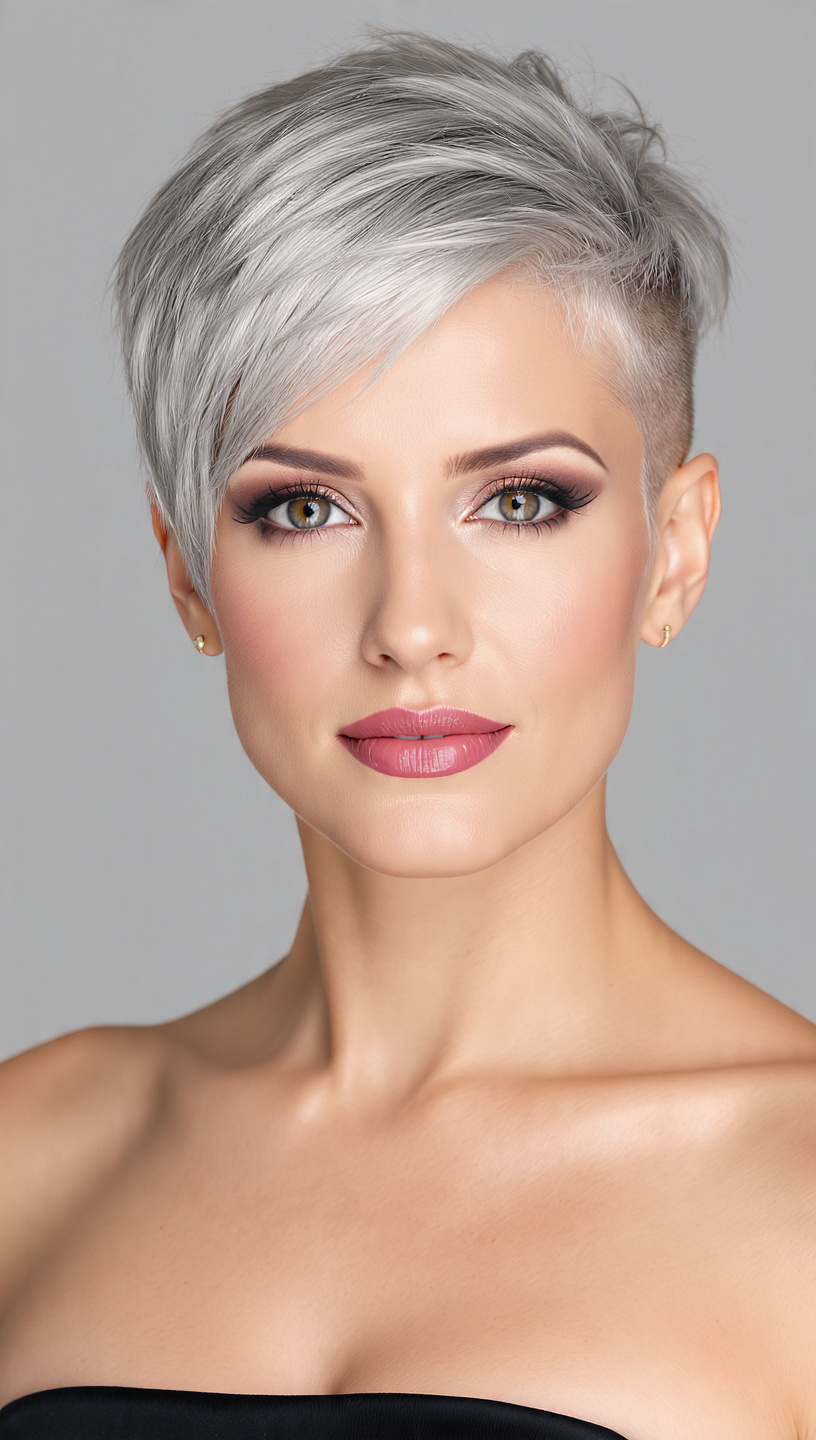
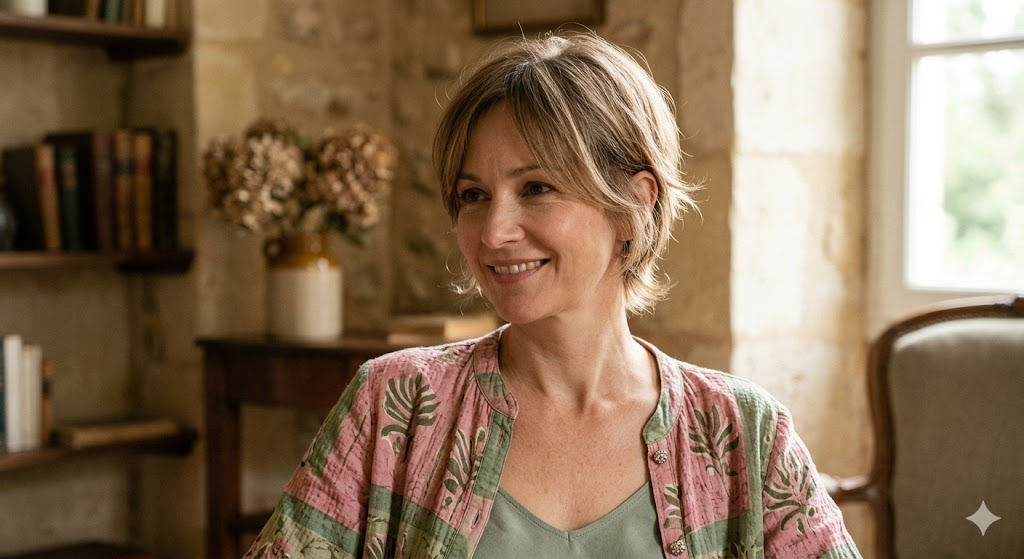
    Soft Structure and Integrated Layering: This haircut focuses on building fullness through a softly rounded silhouette. Integrated internal layering is used strategically to create pockets of air and lift among the fine strands, preventing them from compacting together and laying flat. This style emphasizes softness and shape rather than sharp lines, making it an excellent option for natural texture.

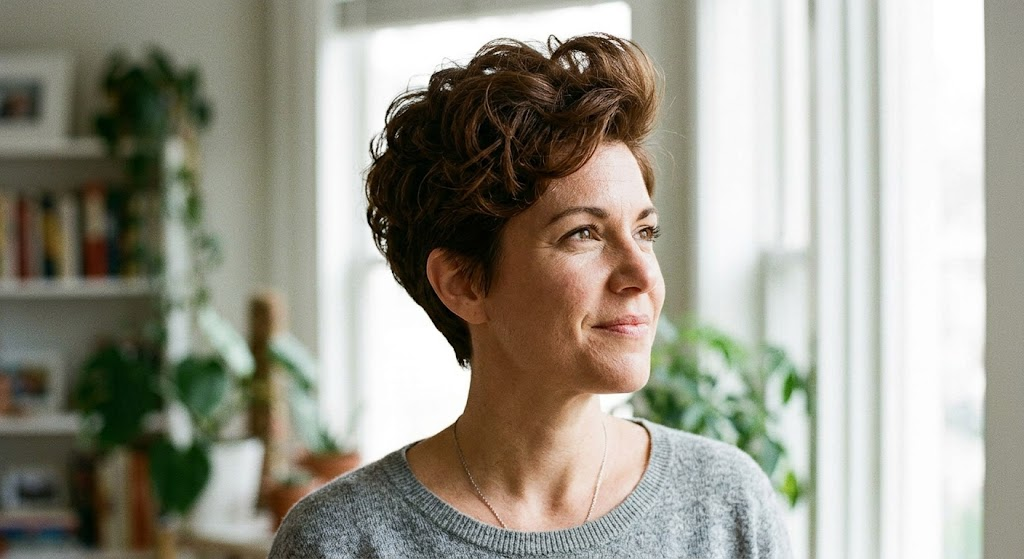
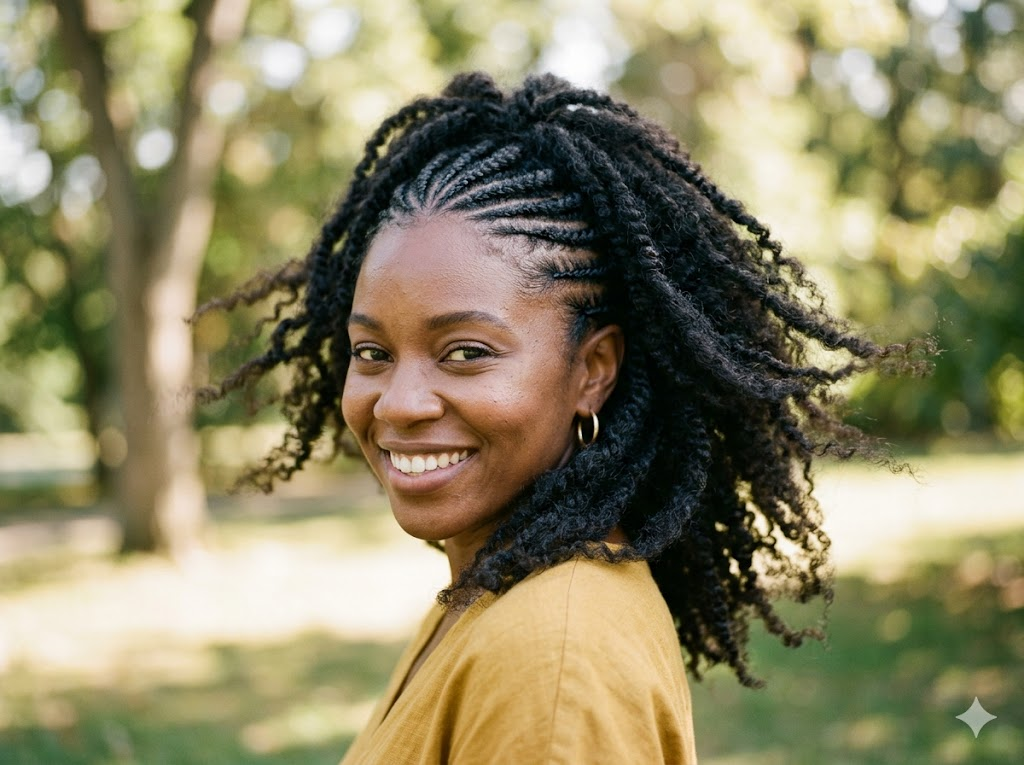
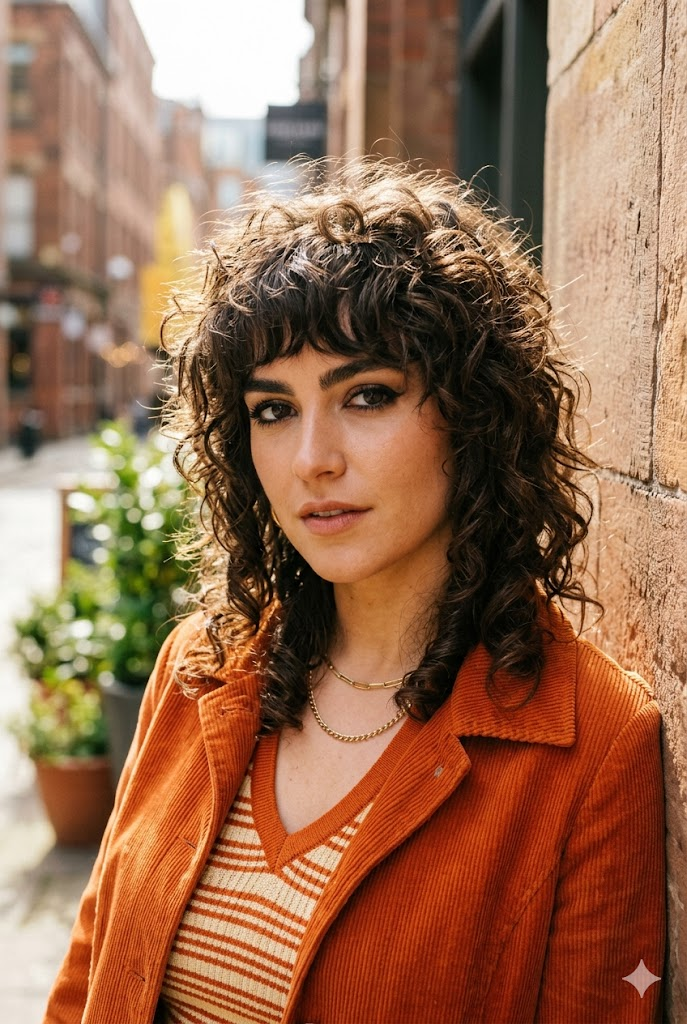
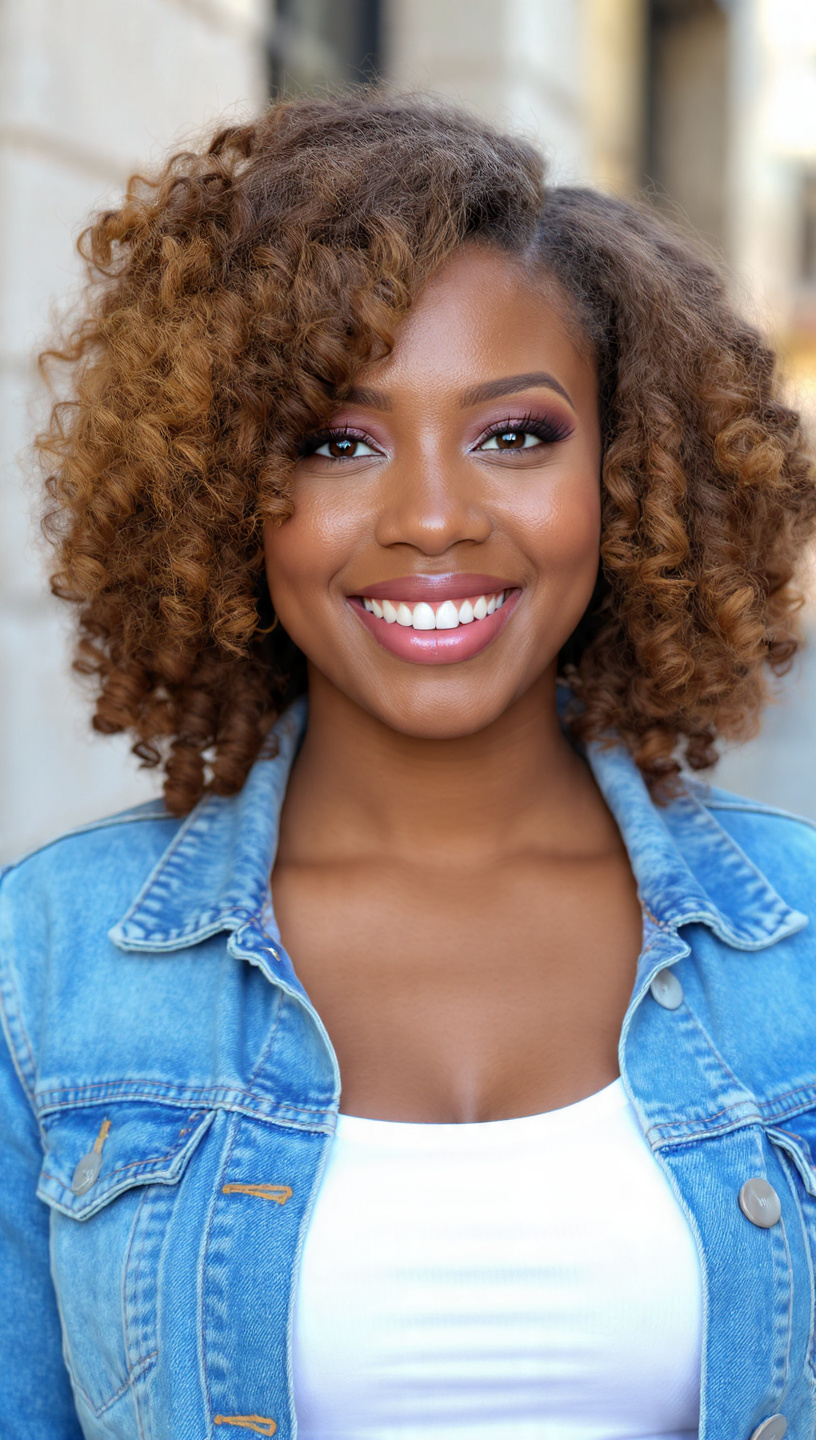
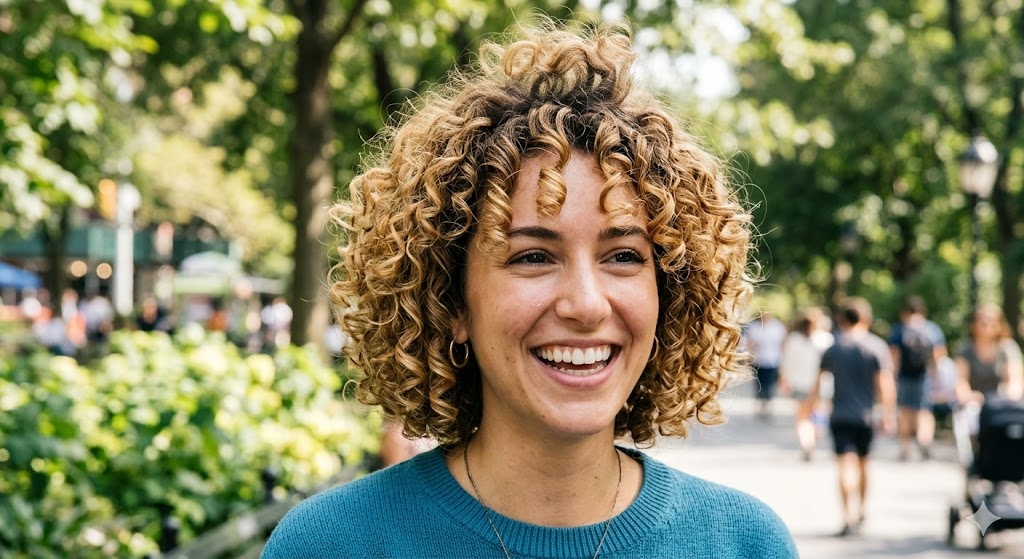
    5. Conservative Butterfly for Curly Fine Hair

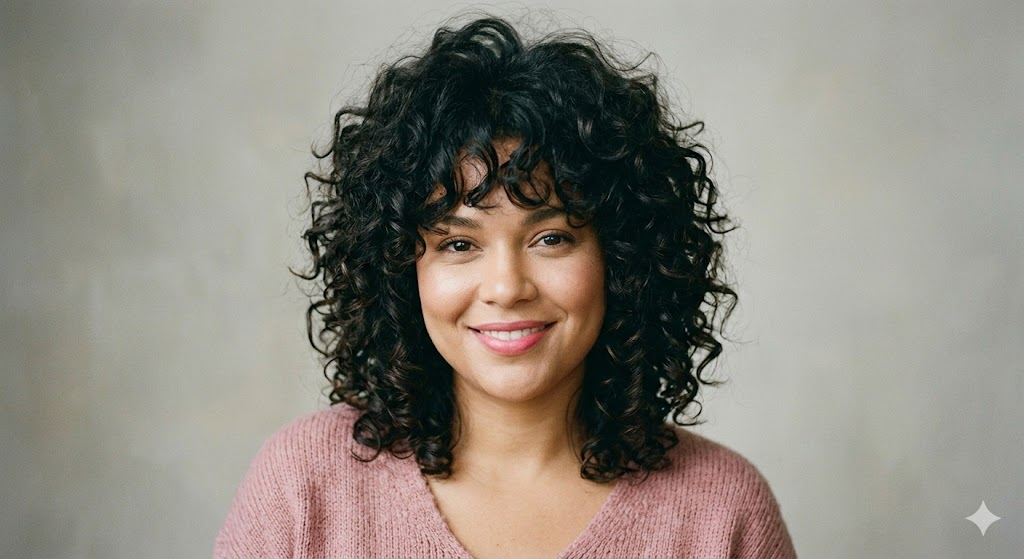
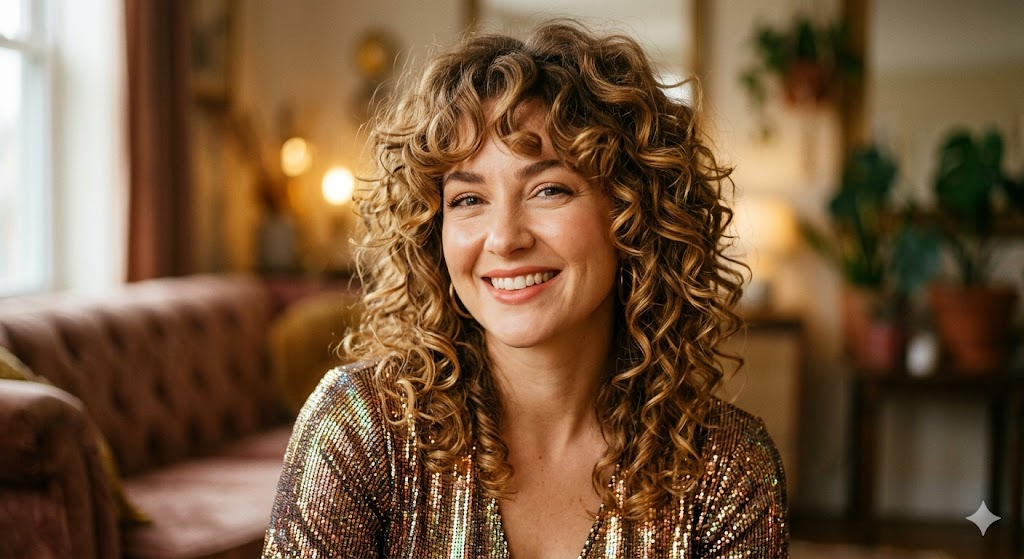
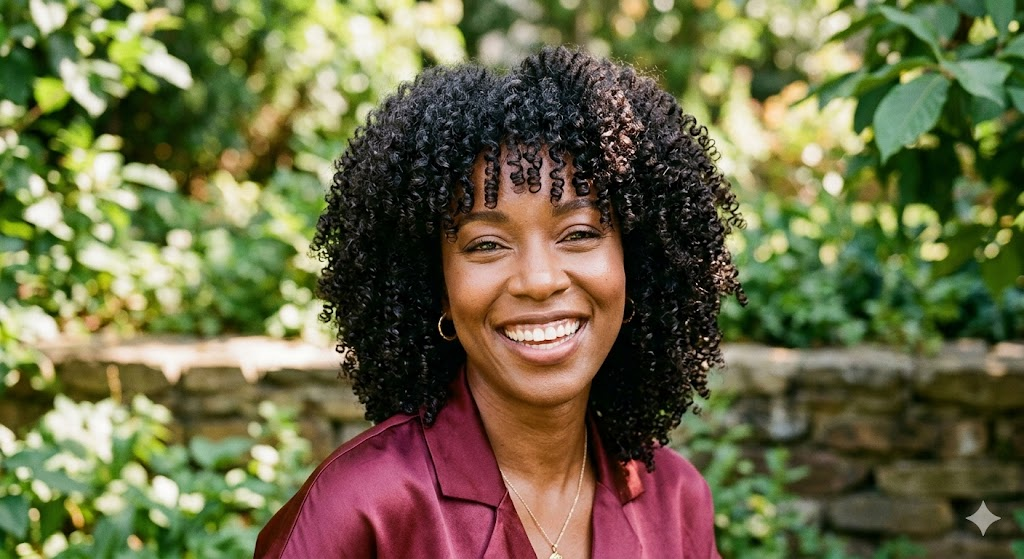
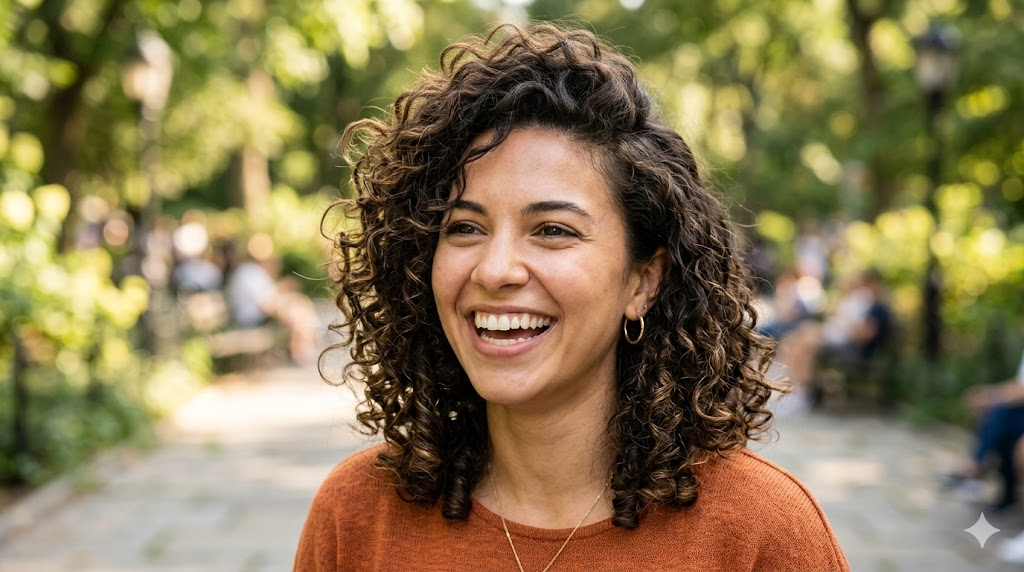
    Modified Layering for Long-Length Density: This is an ideal visual for adapting the popular “Butterfly Cut” for fine texture. The key modification is the concentration of volume: the shortest, face-framing layers provide lift and shape near the crown and eyes, but the underlying structure and perimeter at the shoulders remain blunt and dense. This careful balance prevents the ends of the hair from looking sparse or see-through.

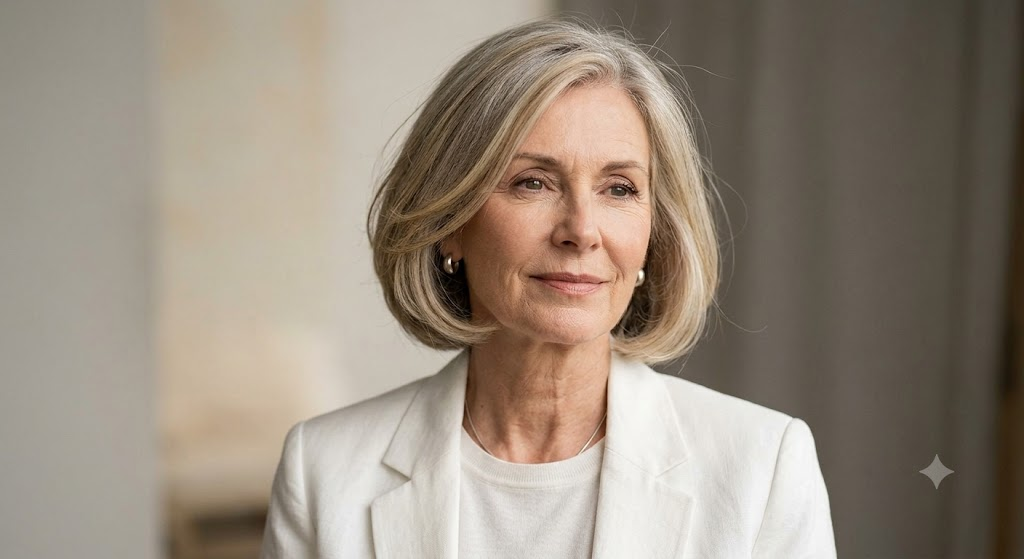
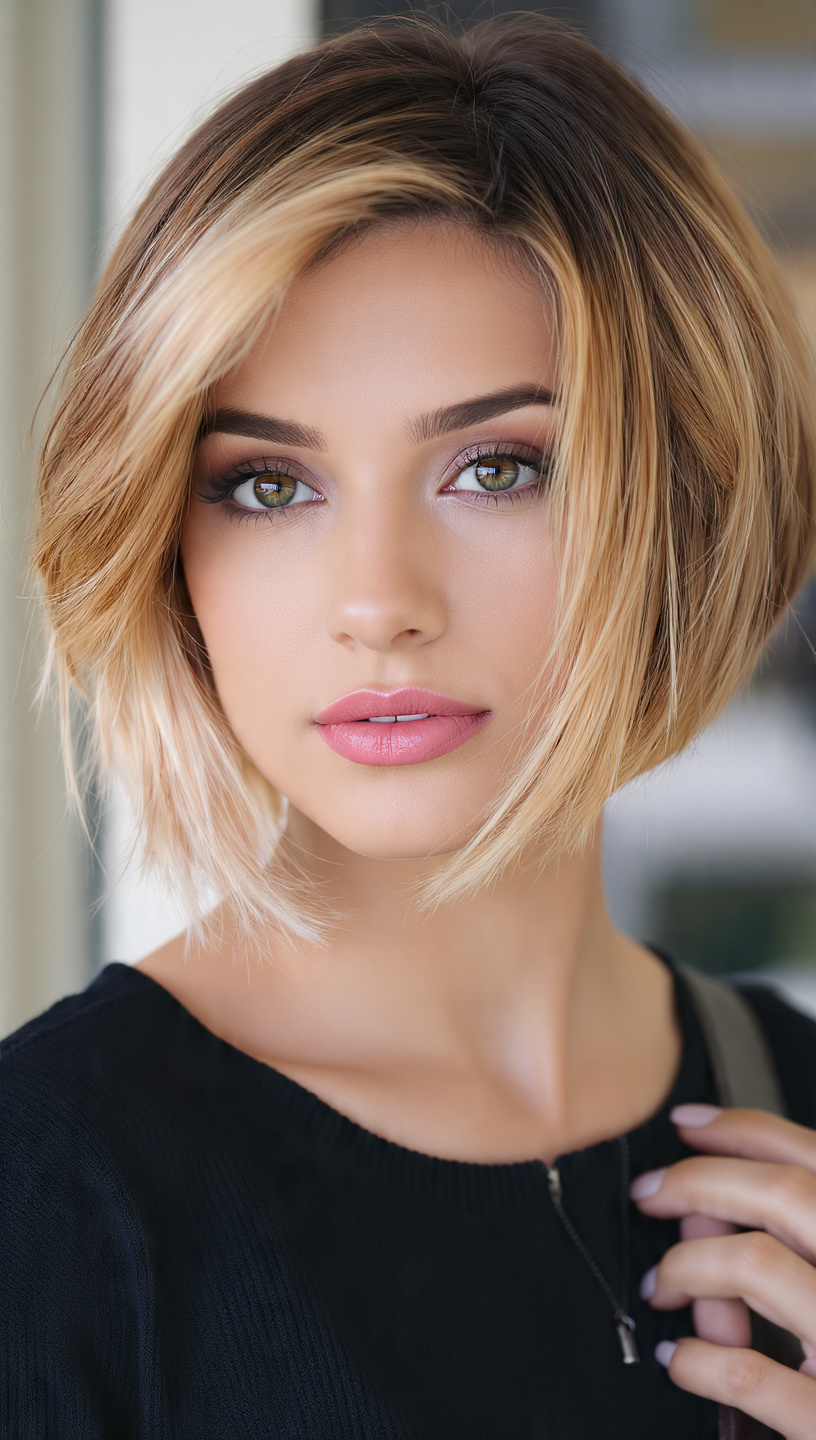
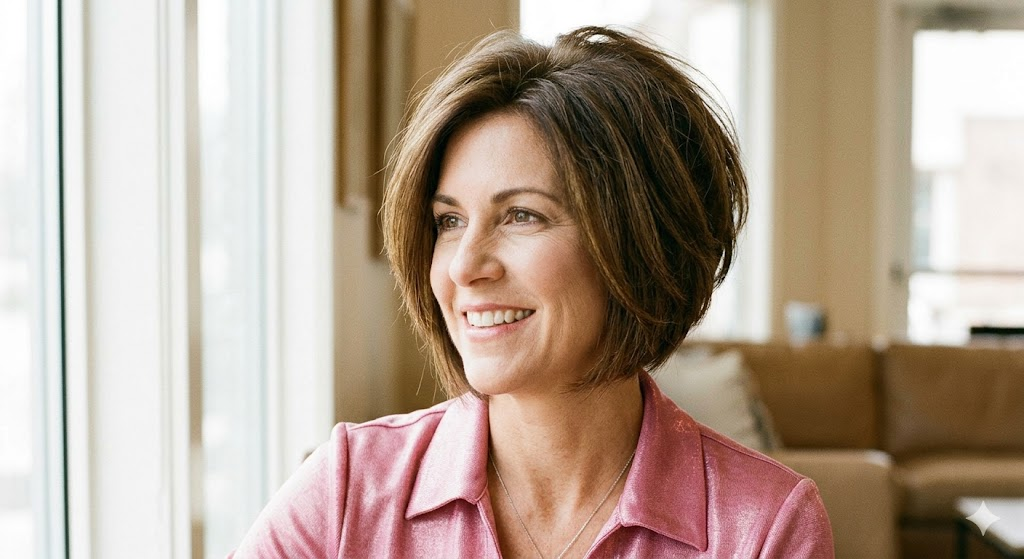
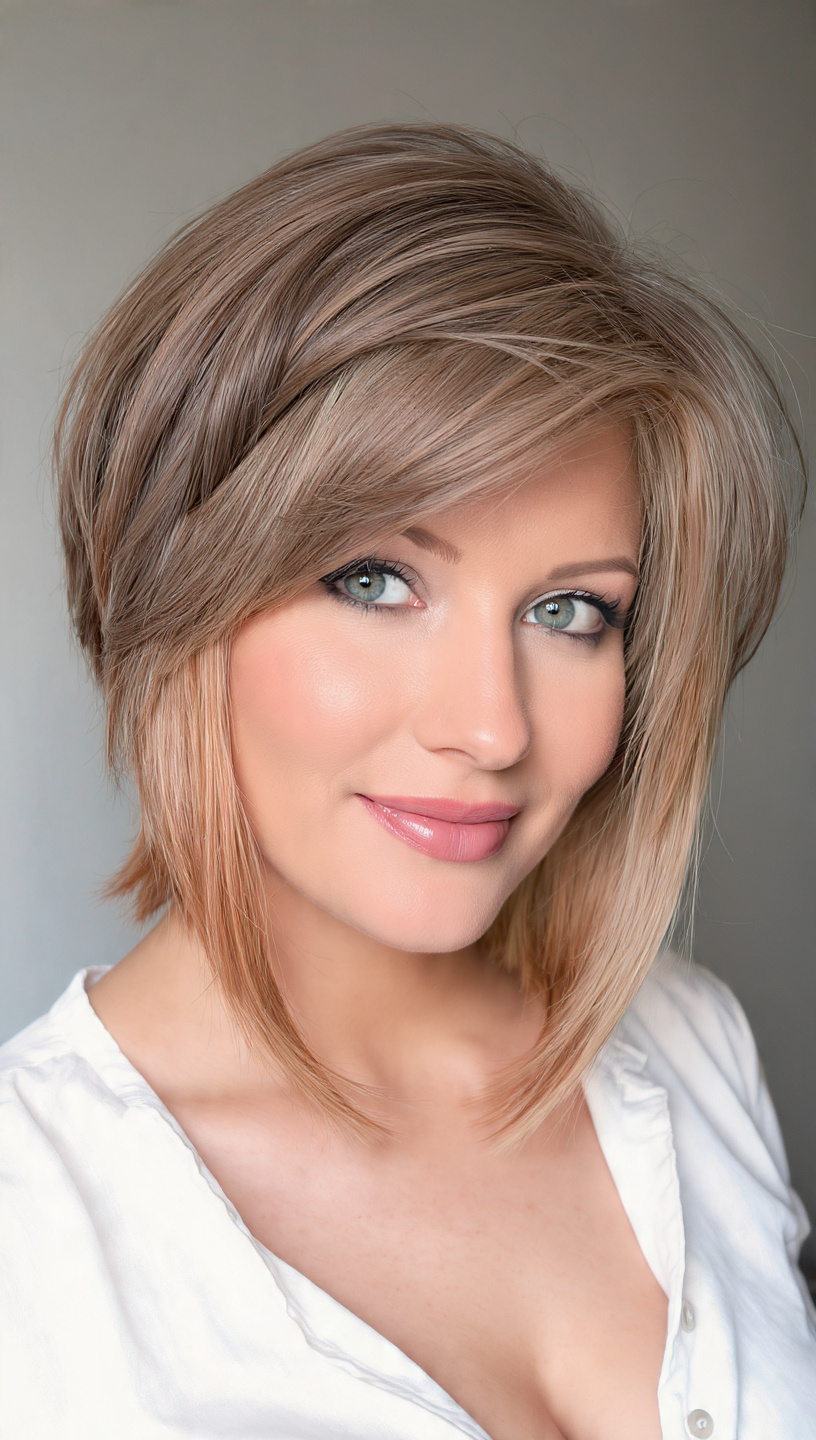
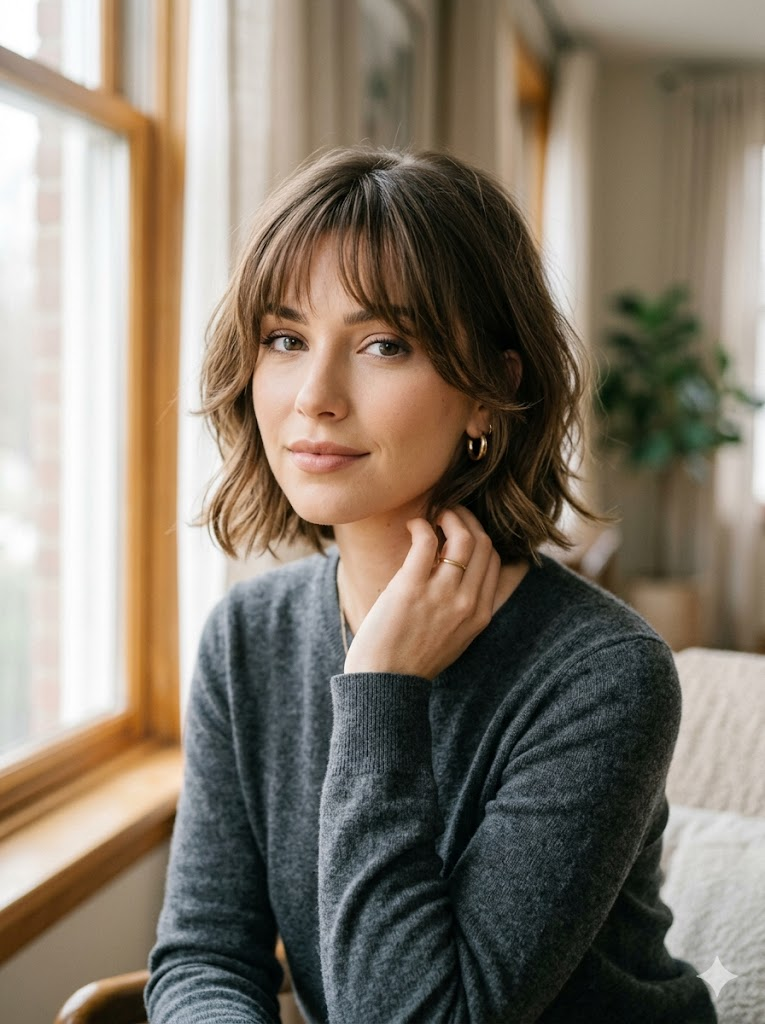
    6. The Mid-Length Lob with Soft Face-Framing

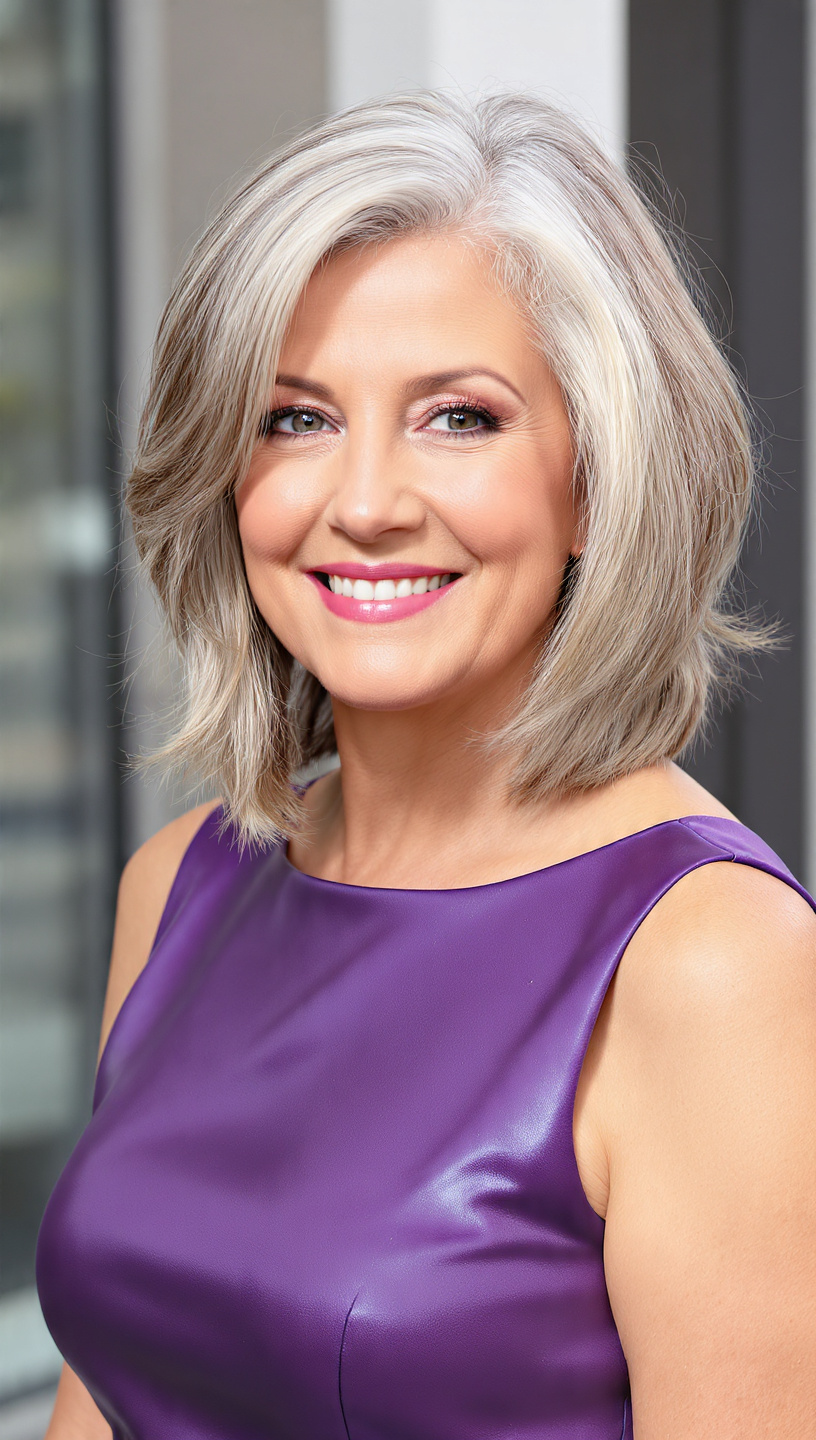
    Strategic Weight Distribution for Fine Strands: This cut illustrates the “safe zone” for fine-haired clients who want length. By maintaining a blunt perimeter at the base, the hair retains its maximum visual density. The internal weight is kept intact, while subtle face-framing pieces add movement and lift around the eyes without thinning out the overall silhouette.

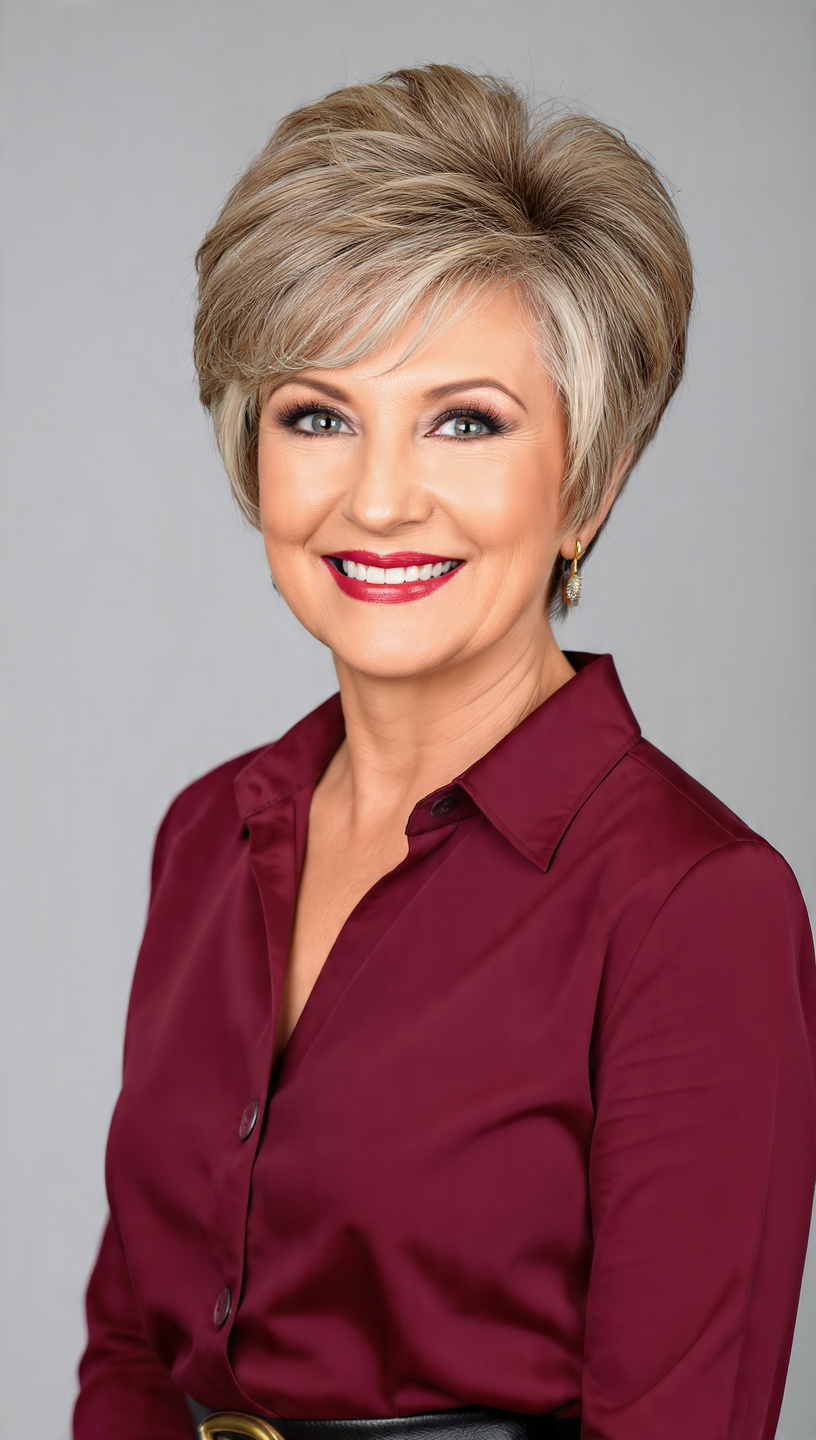
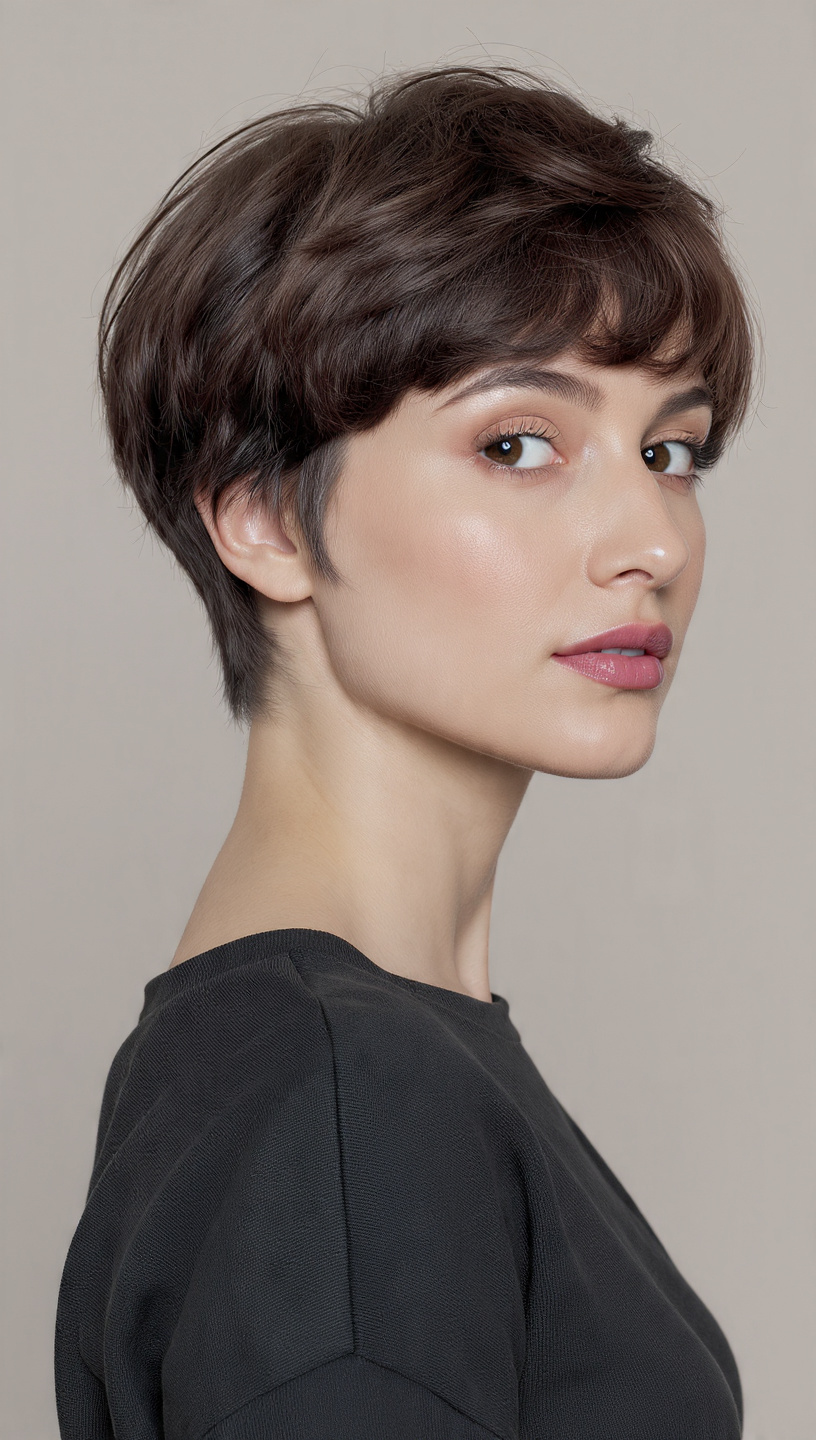
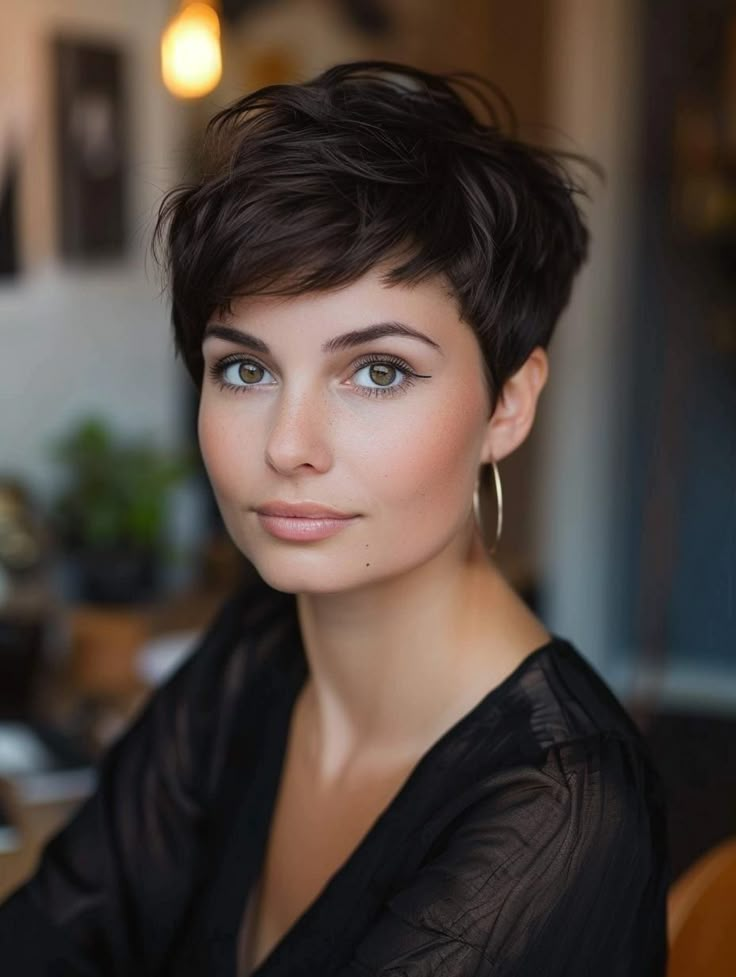
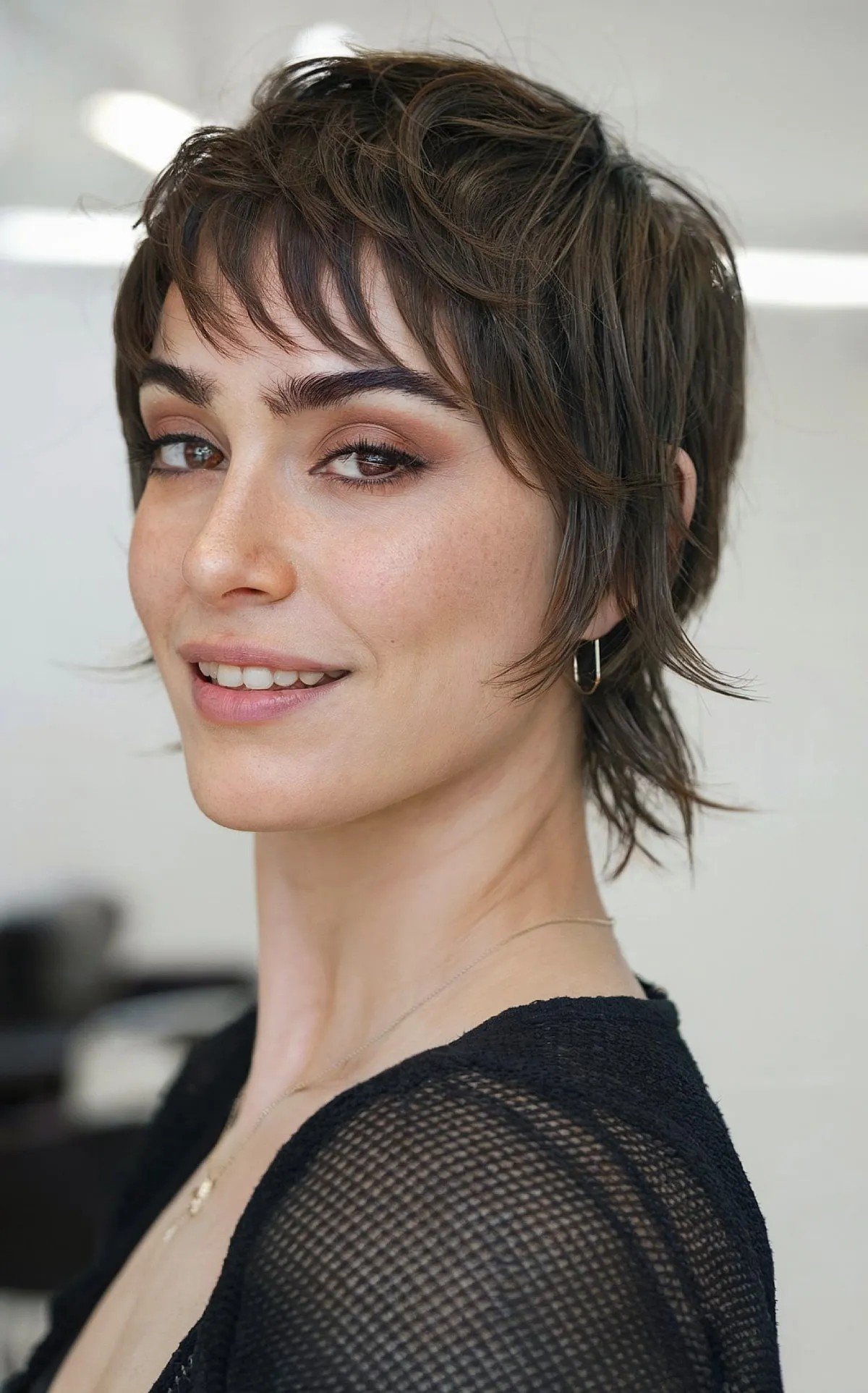
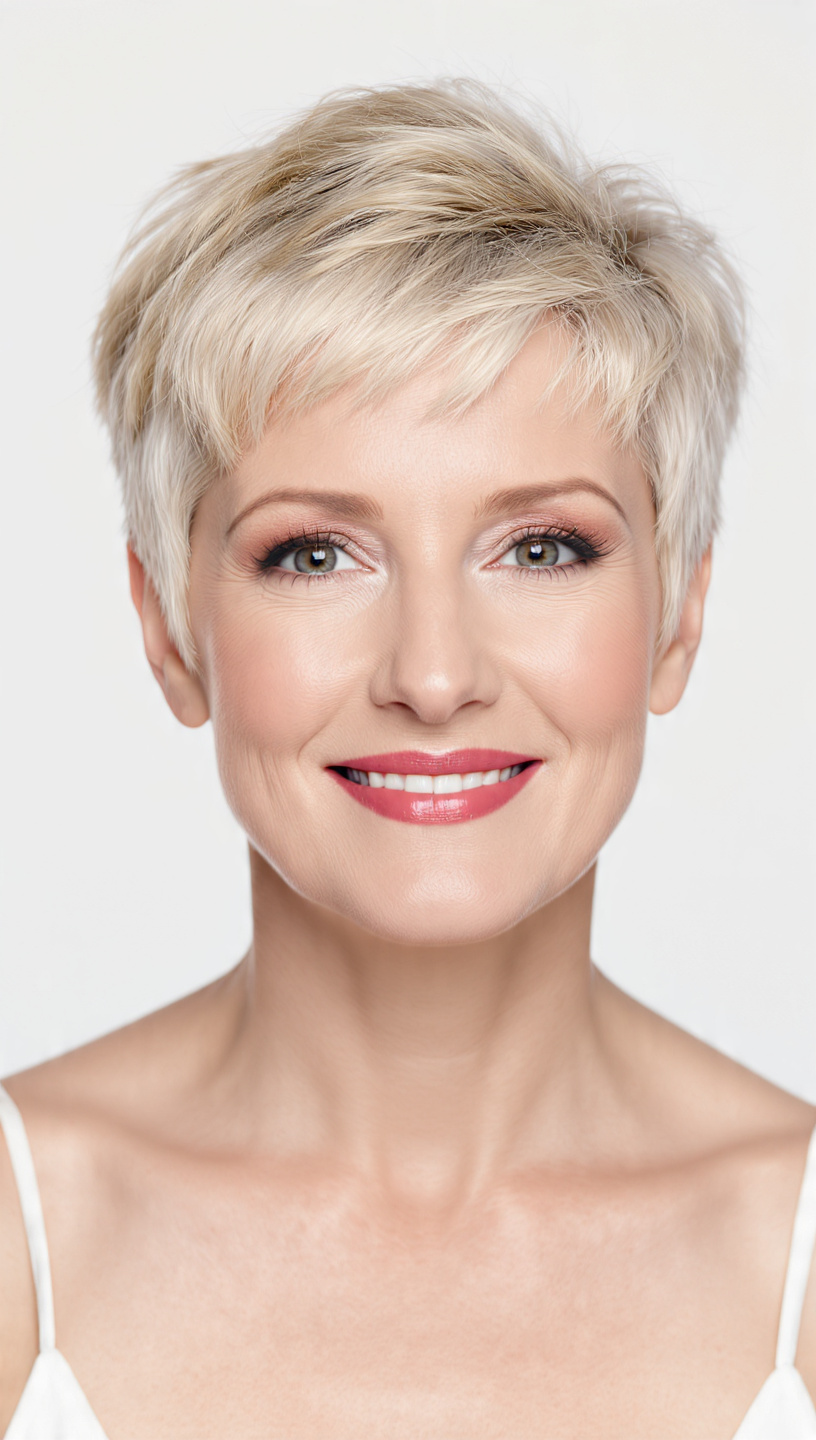
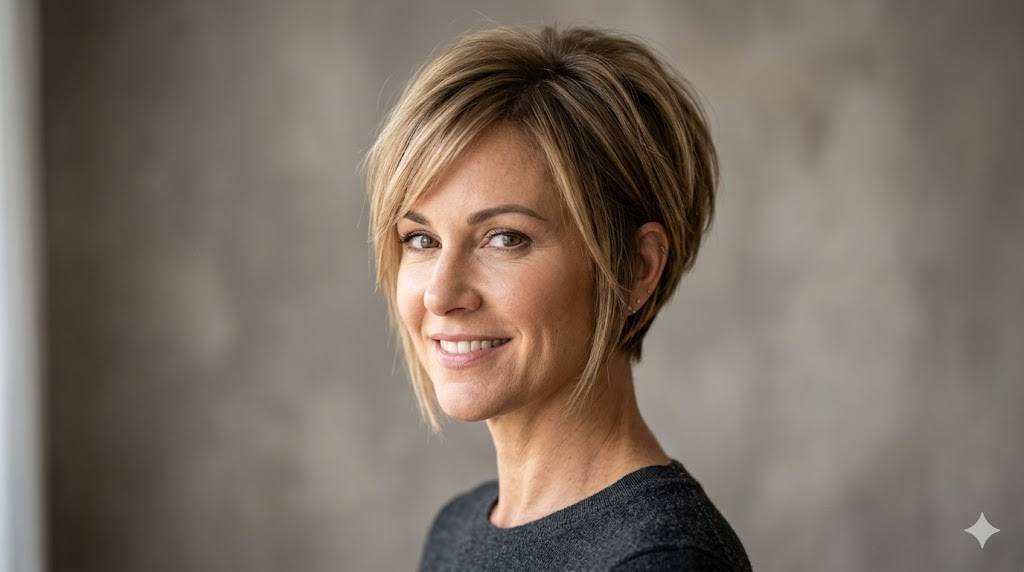
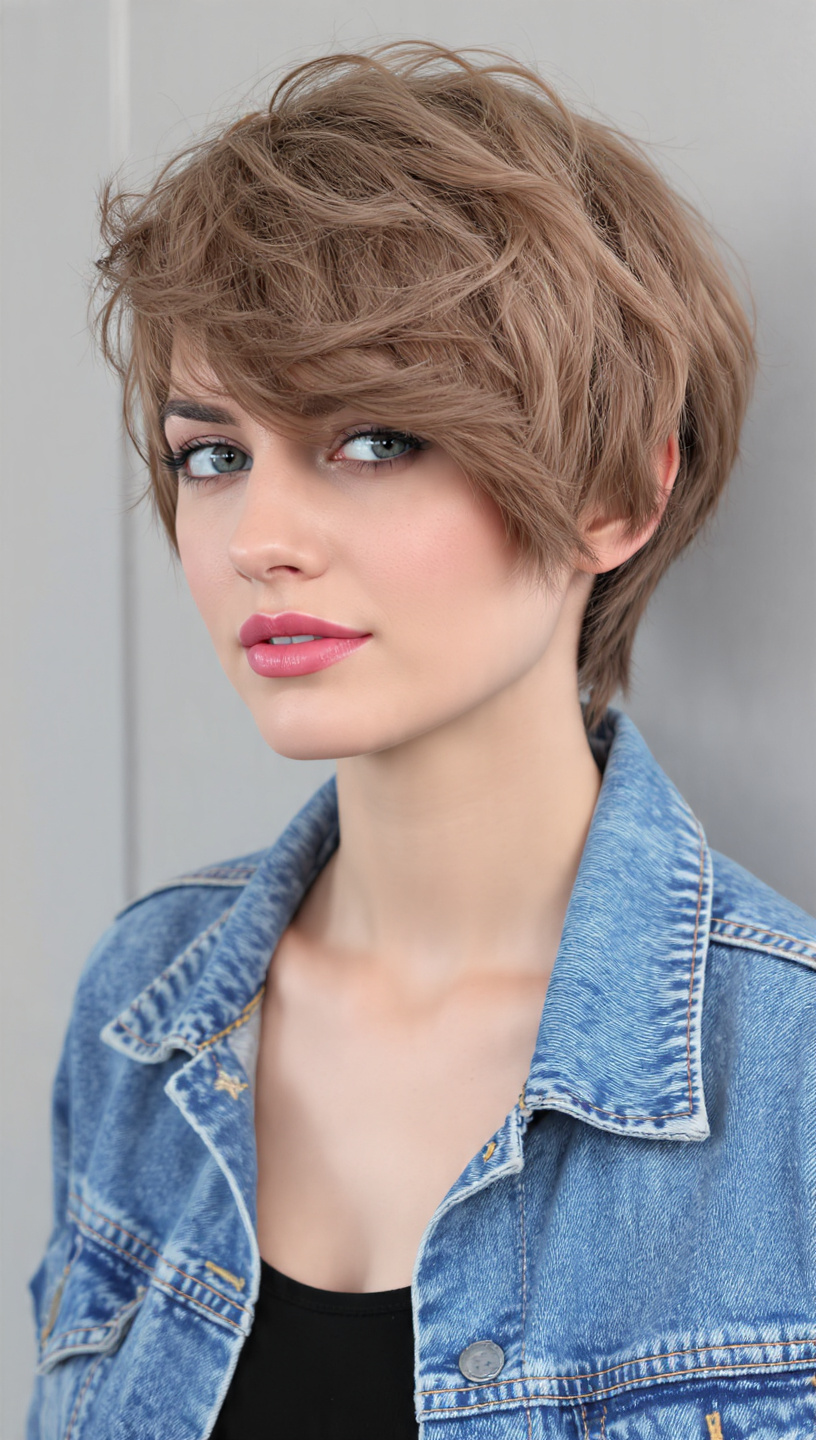
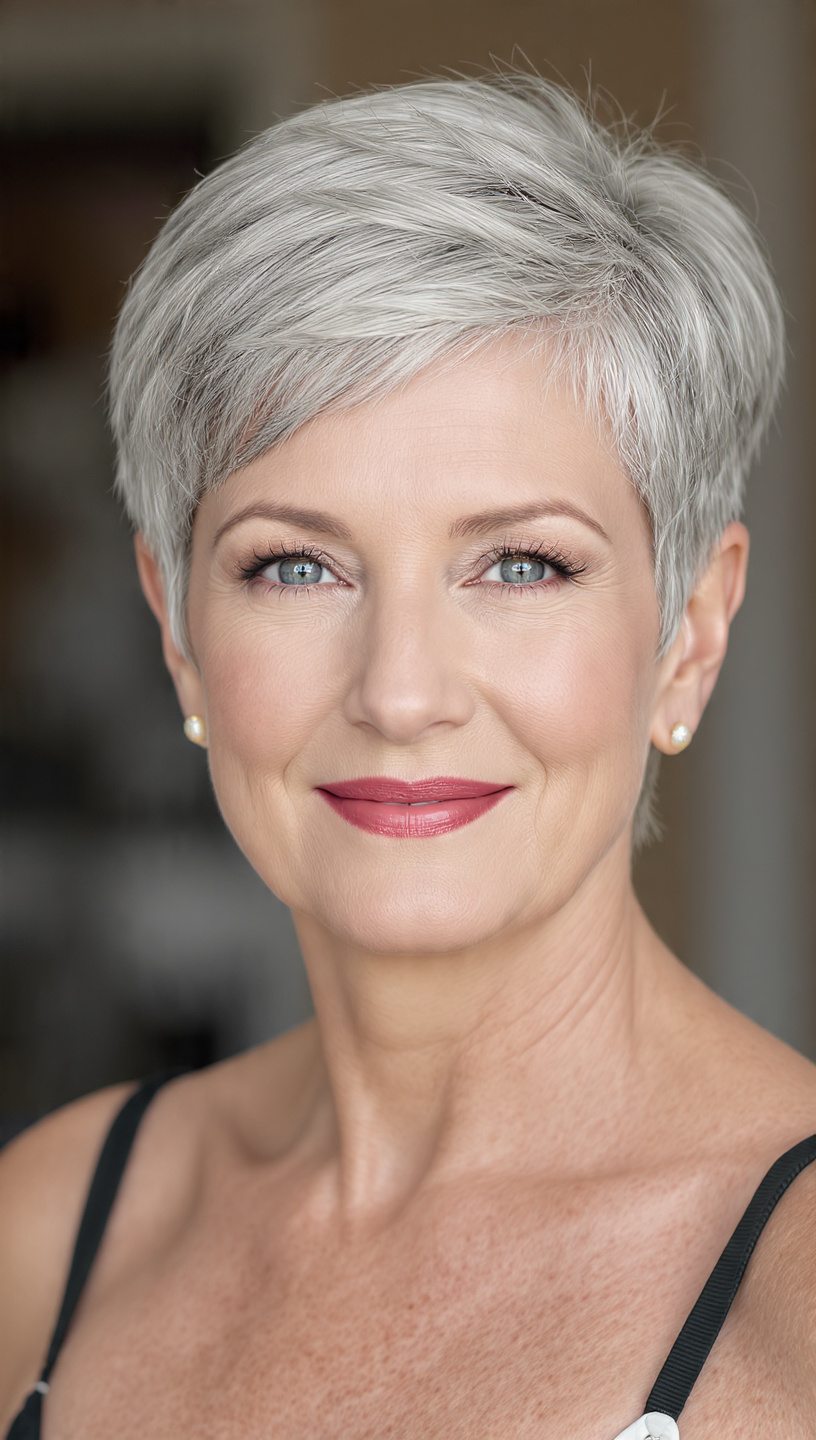
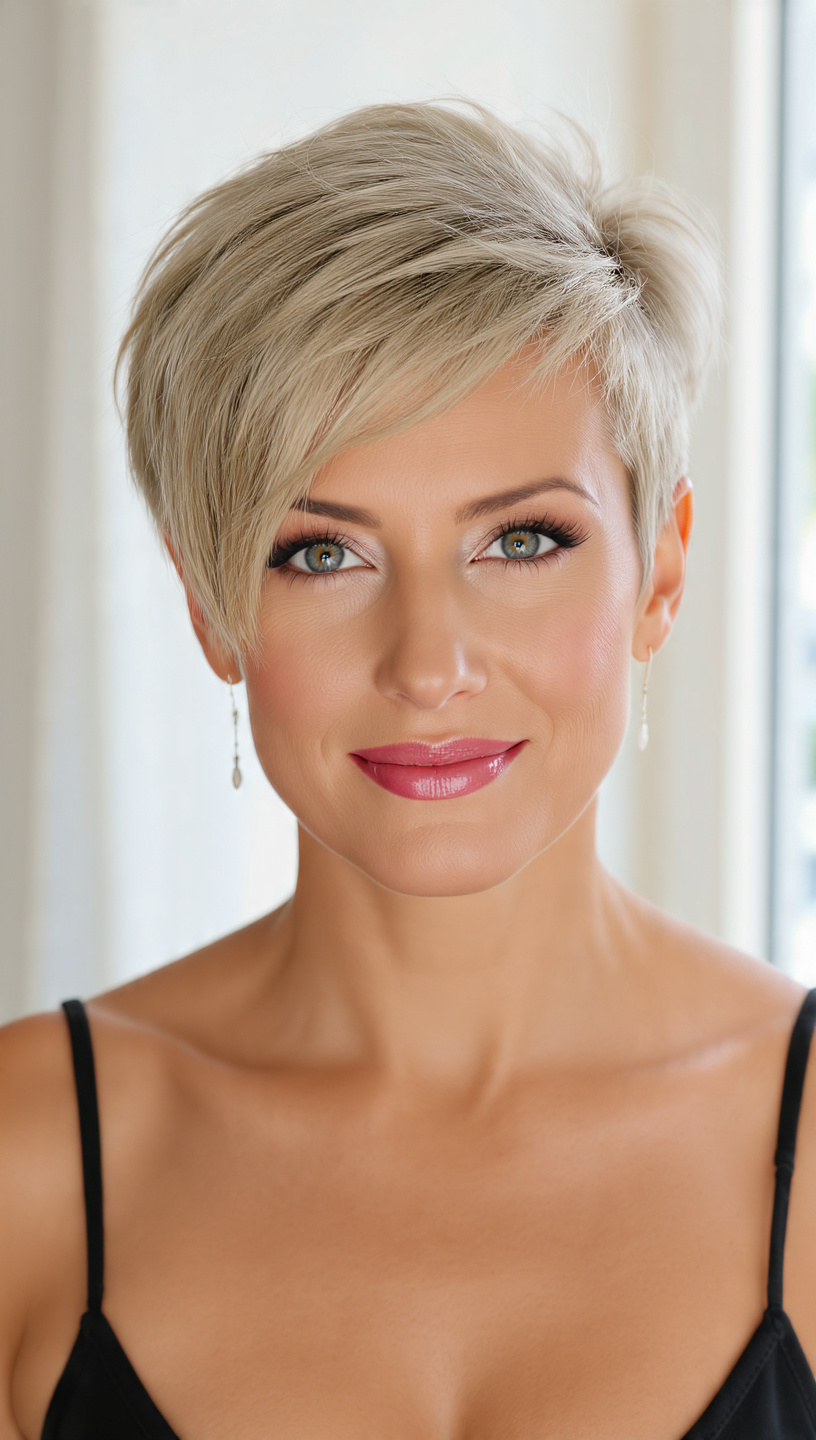
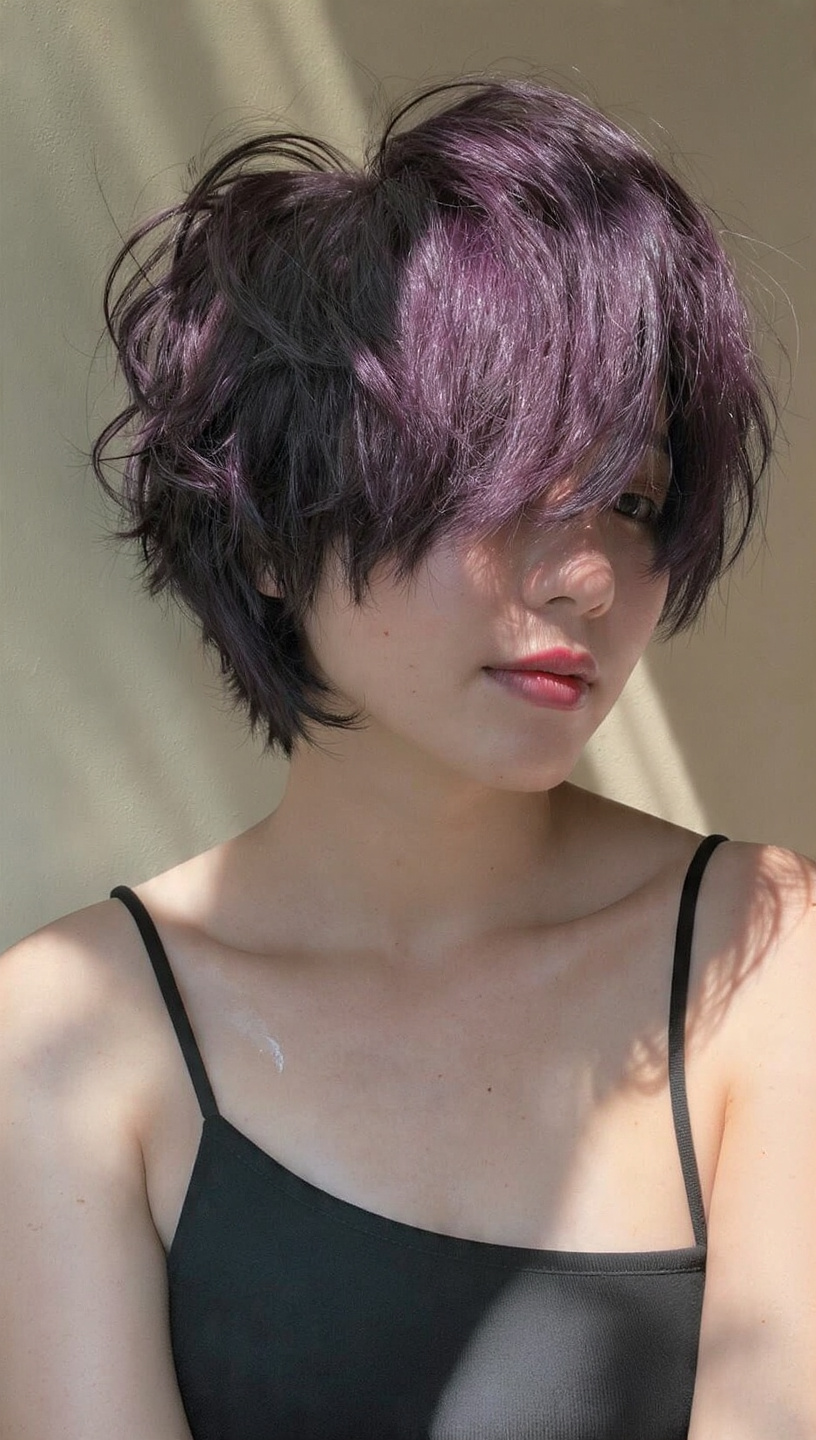
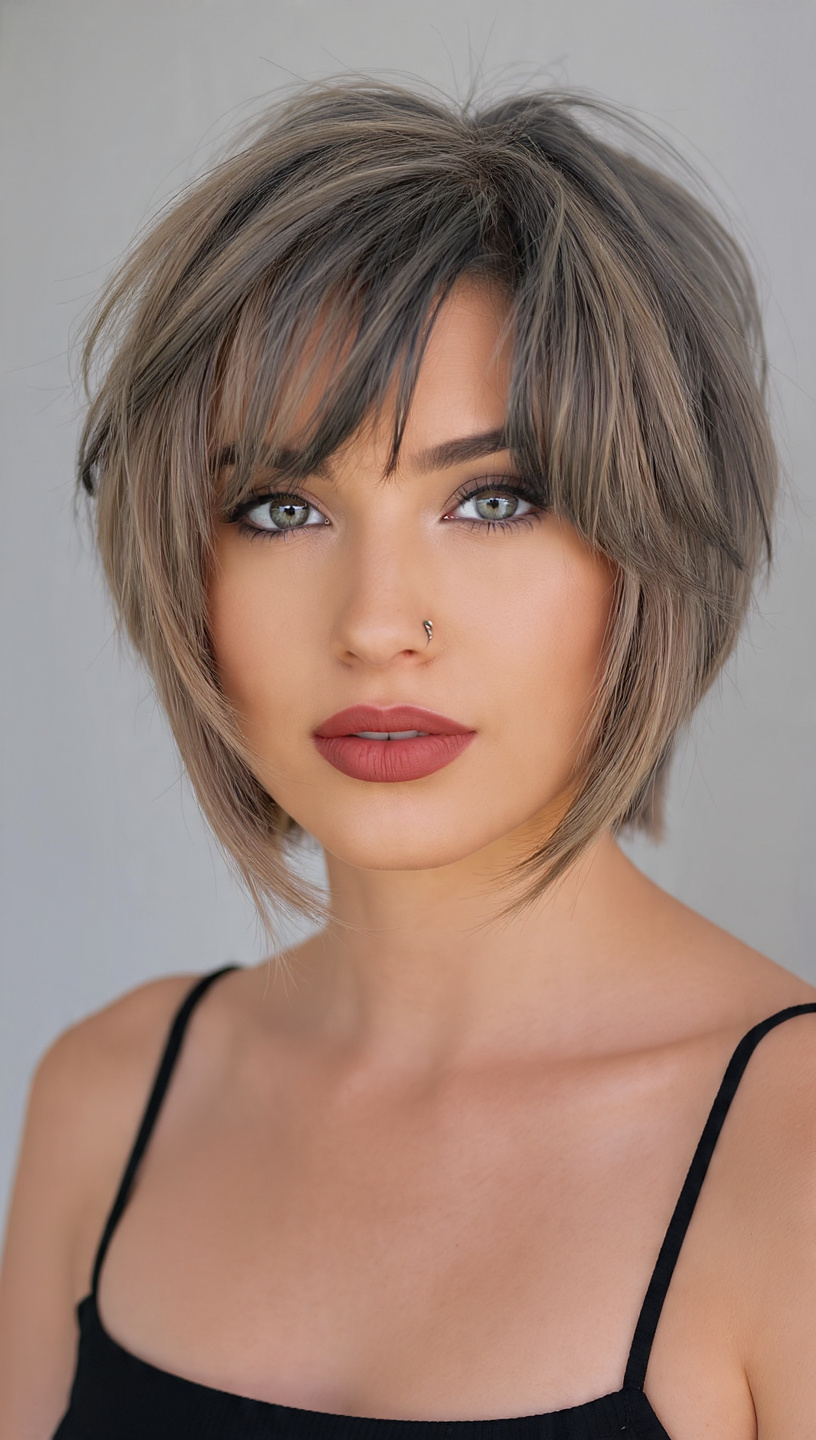
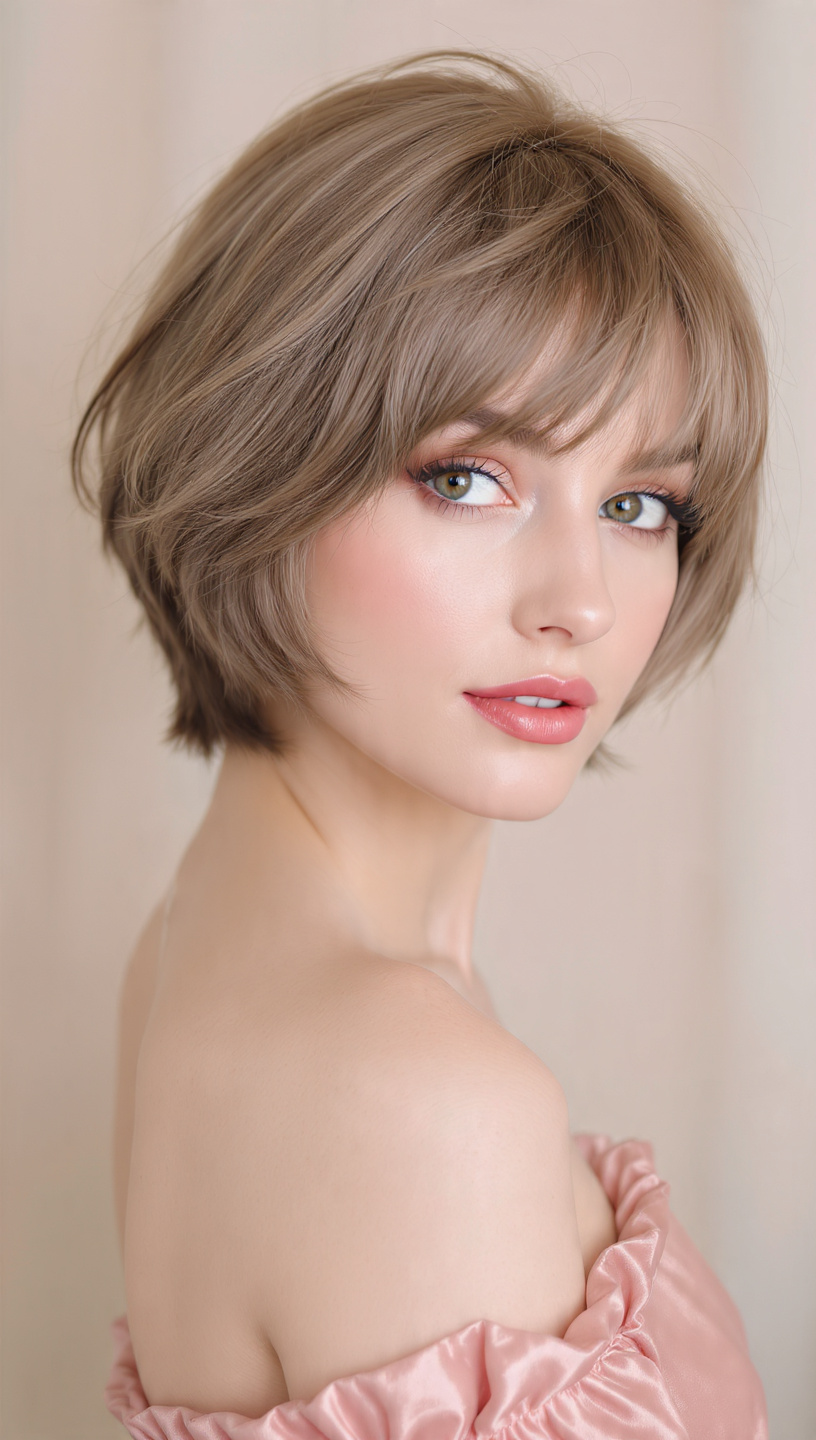
    7. The Textured Bixie with Micro-Fringe

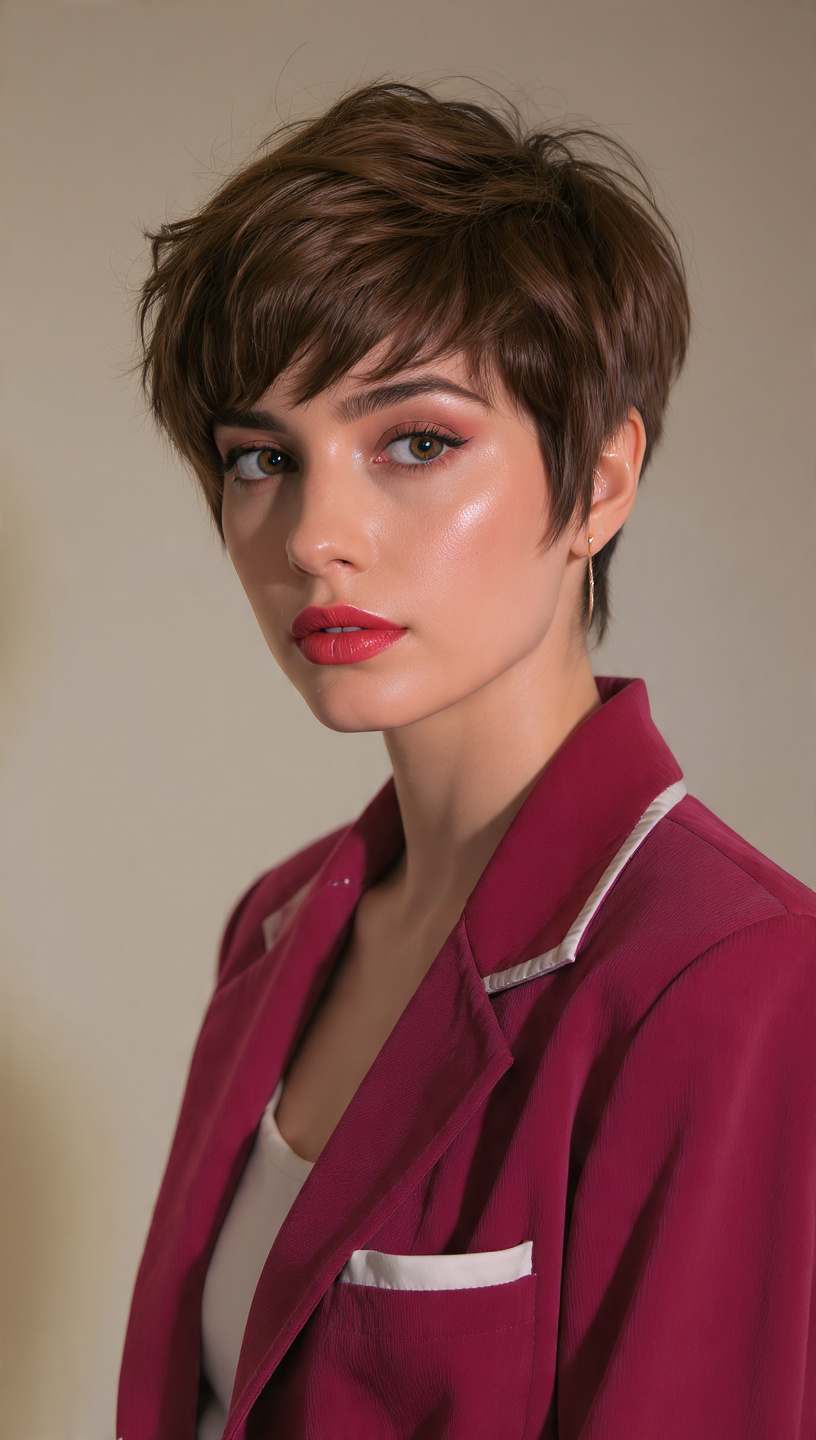
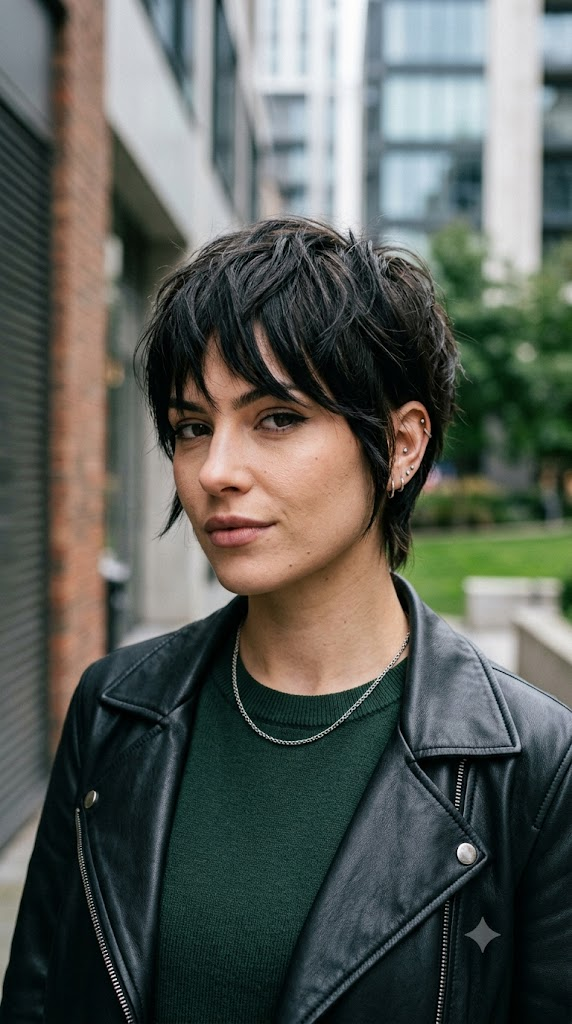
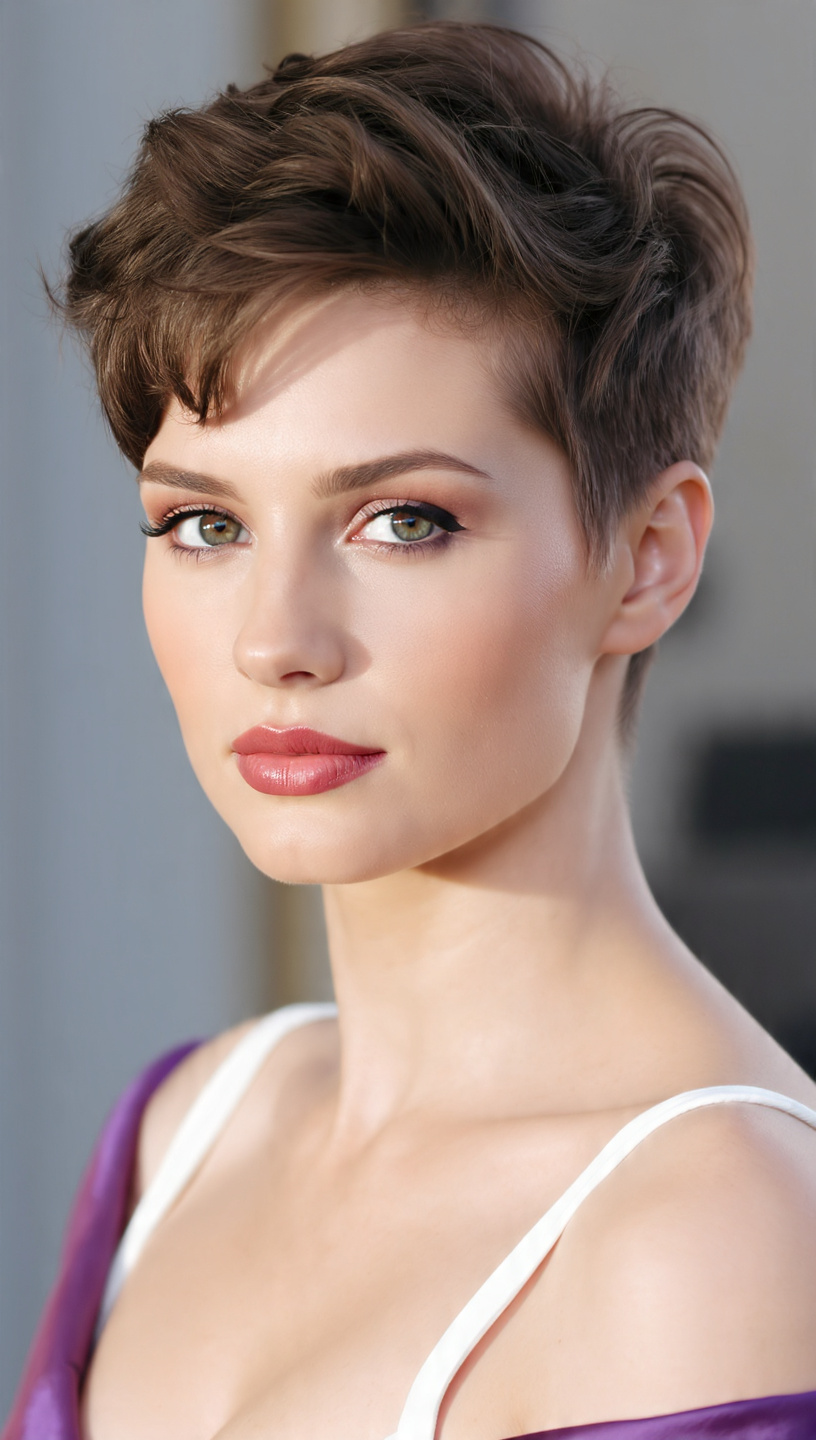
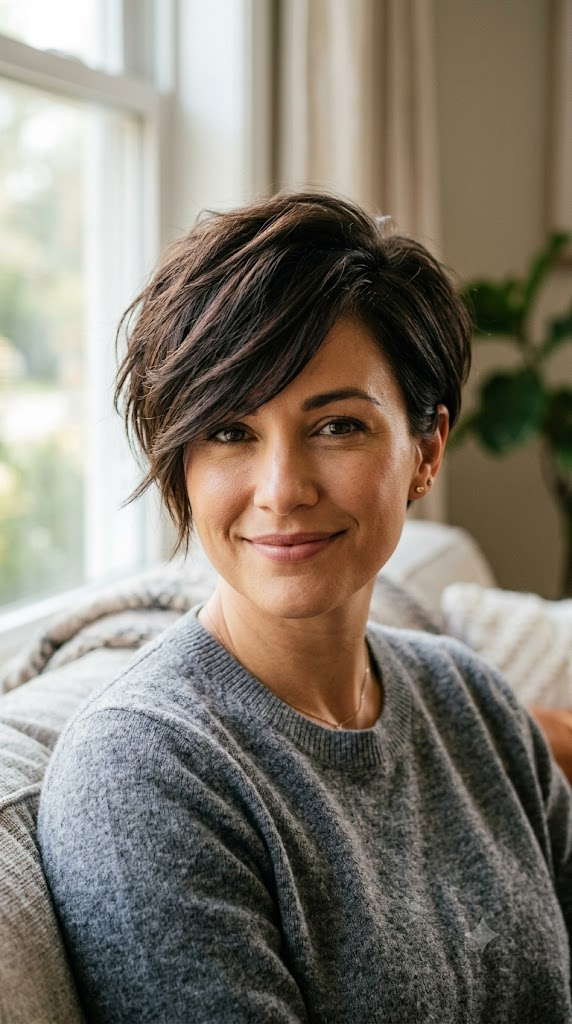
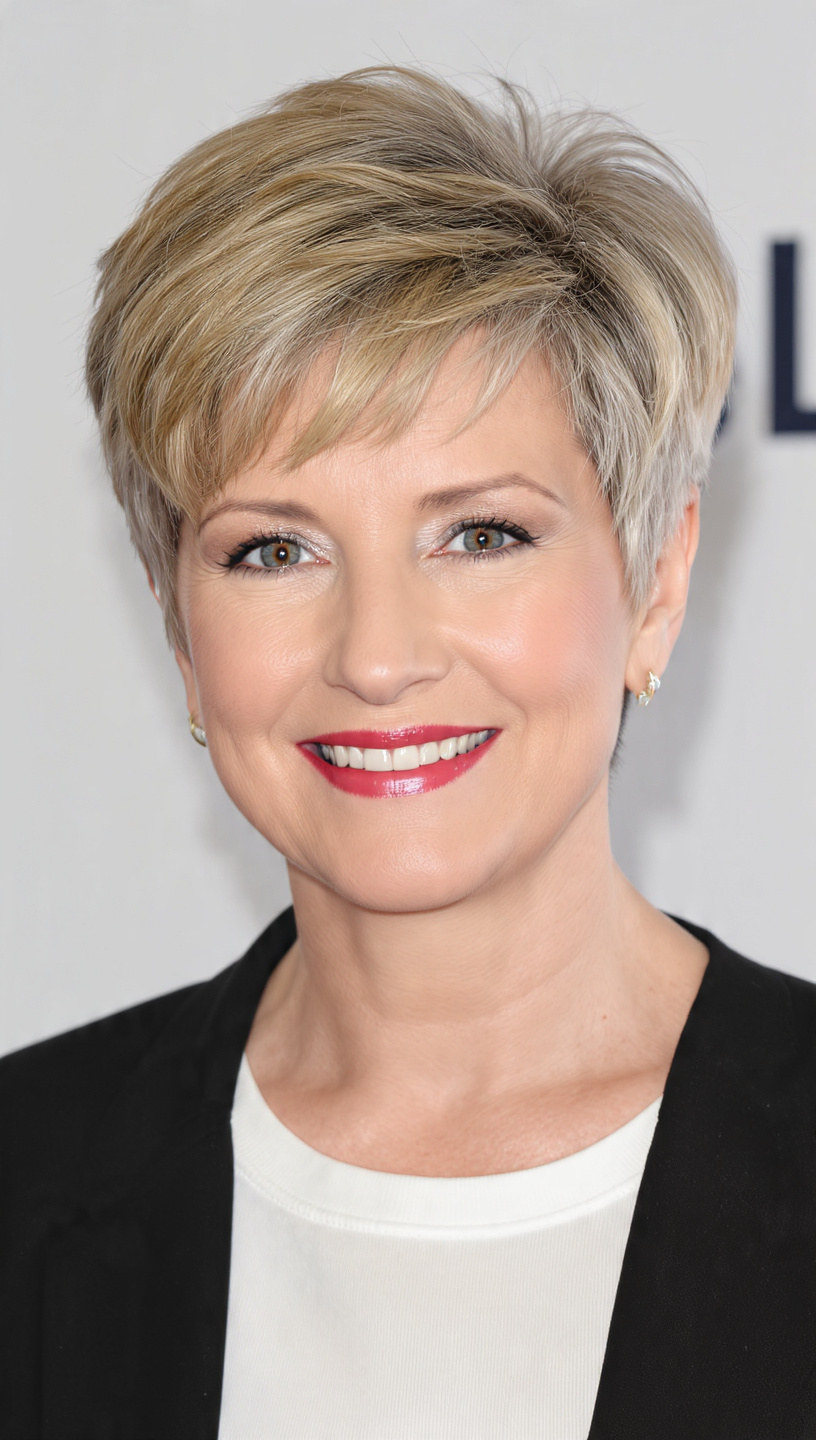
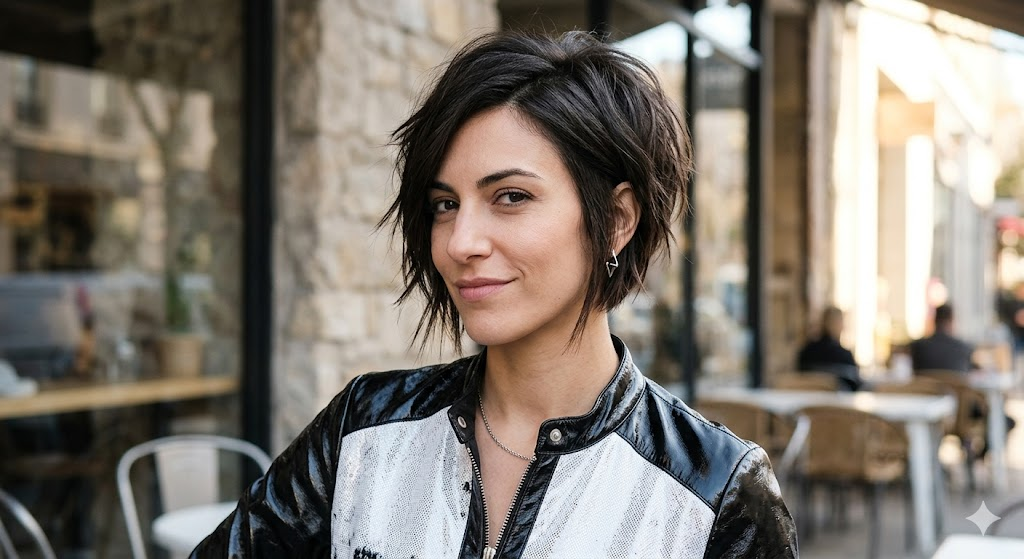
    Internal Texture and Crown Volume: A masterclass in “short but structured,” this cut uses internal texture to create height and separation. By keeping the nape and sides closely tailored, the fine hair on top is forced to stand up and create volume rather than lying flat. The micro-fringe adds an edgy, intentional feel that draws focus to the structure of the cut rather than the thickness of individual strands.

    8. The Platinum Graduated Bob

    Structural Stacking and Perimeter Strength: This is the ultimate “density” cut. The graduated stack at the back creates a solid foundation that literally props up the crown layers, providing volume that won’t collapse. The crisp, razor-straight lines at the jawline create a clear horizontal weight line, making the hair appear significantly thicker and more voluminous from every angle.

    9. Long Fine Hair with Sun-Kissed Ribboning

    Visual Dimension Through Color and Blunt Ends: For those who refuse to go short, this style demonstrates how to manage long, fine hair in 2026. The ends are cut in a solid, blunt line to avoid a wispy finish, while “ribboned” highlights add visual dimension. This color technique creates an optical illusion of depth, making the hair look multi-layered and full without the need for actual, thinning layers.

    10. The Ultra-Blunt Midi-Lob

    Maximum Density Through Weight Lines: This cut is the definitive answer to “wispy” ends. By maintaining a sharp, horizontal line just above the chest, the hair appears uniformly thick from roots to tips. The absence of traditional layering keeps the bulk of the hair intact, allowing the natural weight to create a sleek, expensive-looking finish that doesn’t collapse by midday.

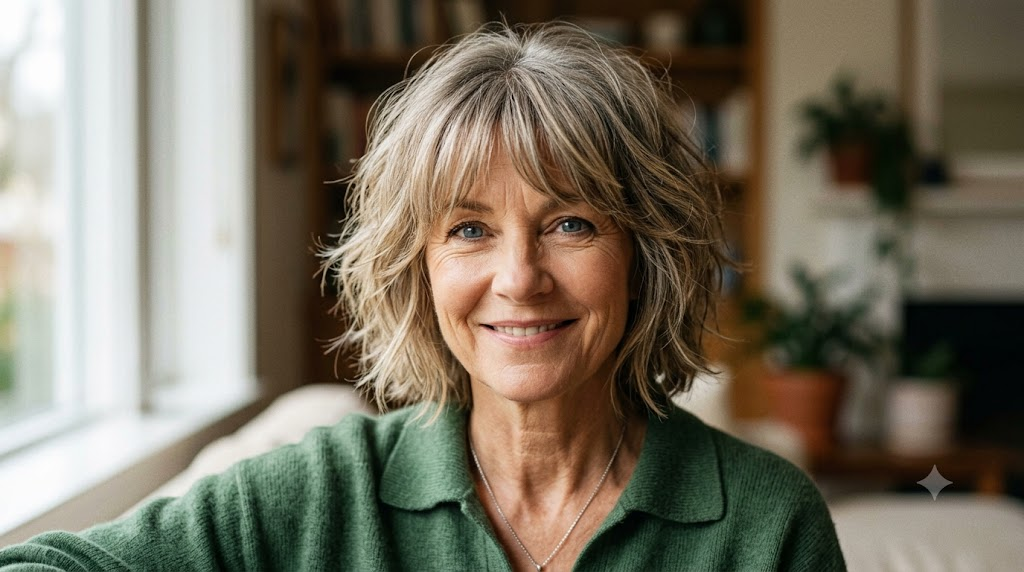
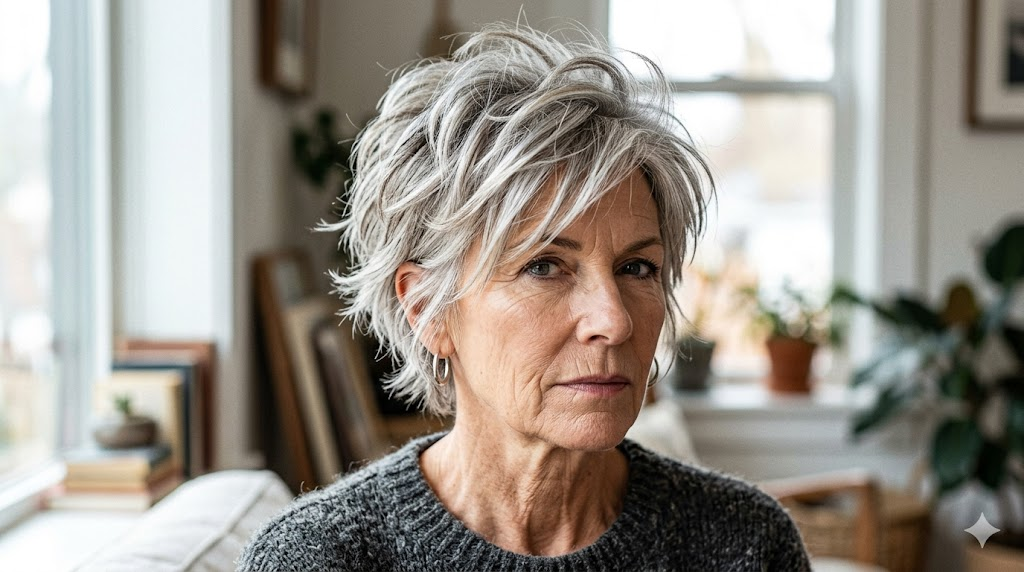
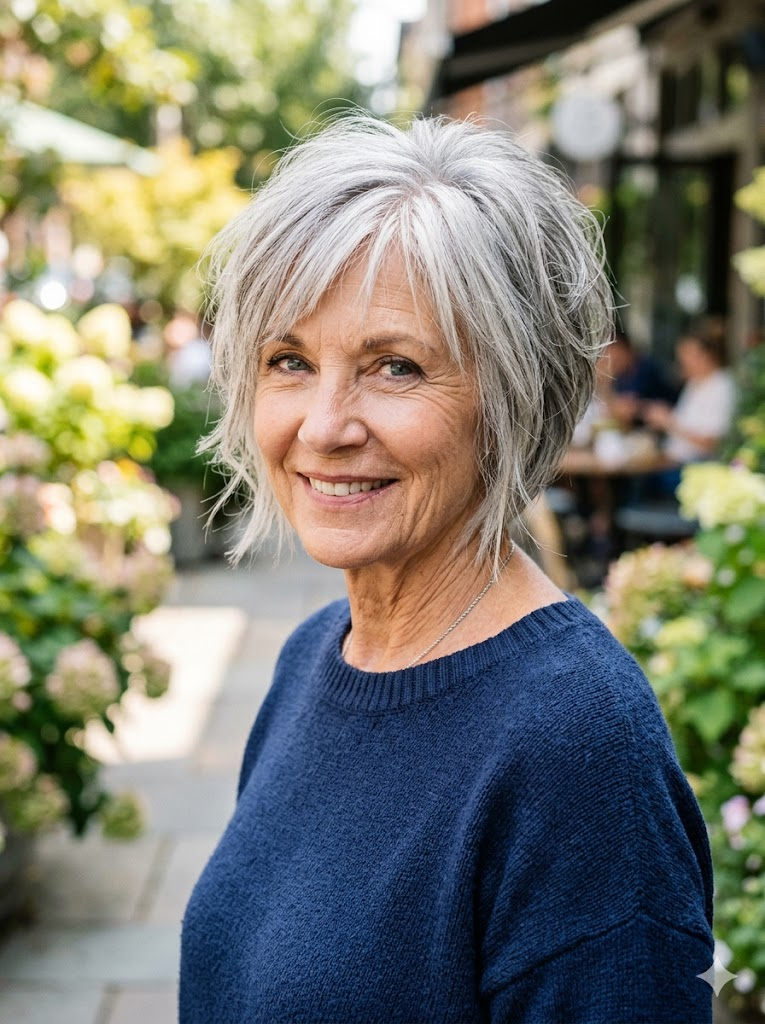
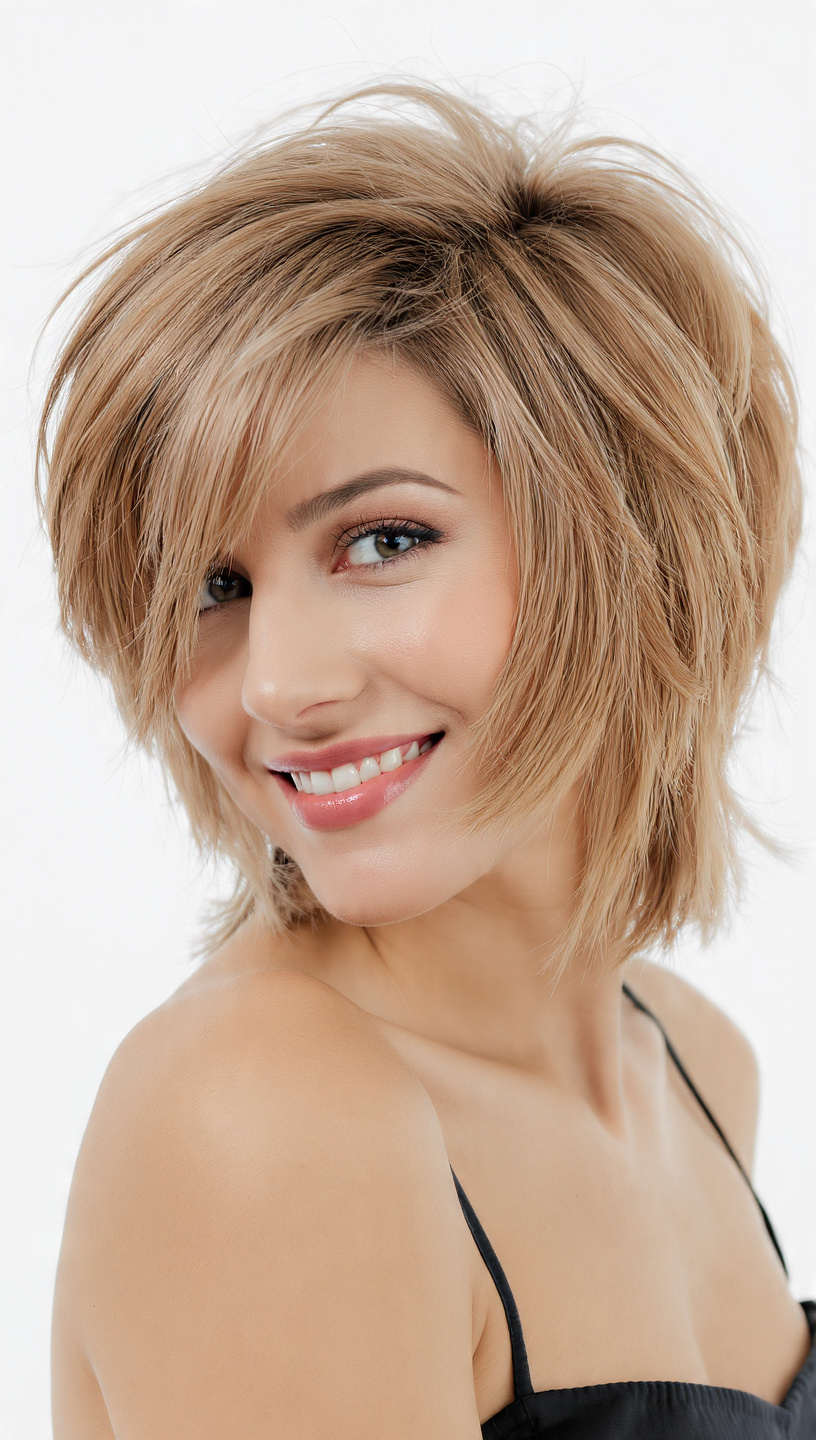
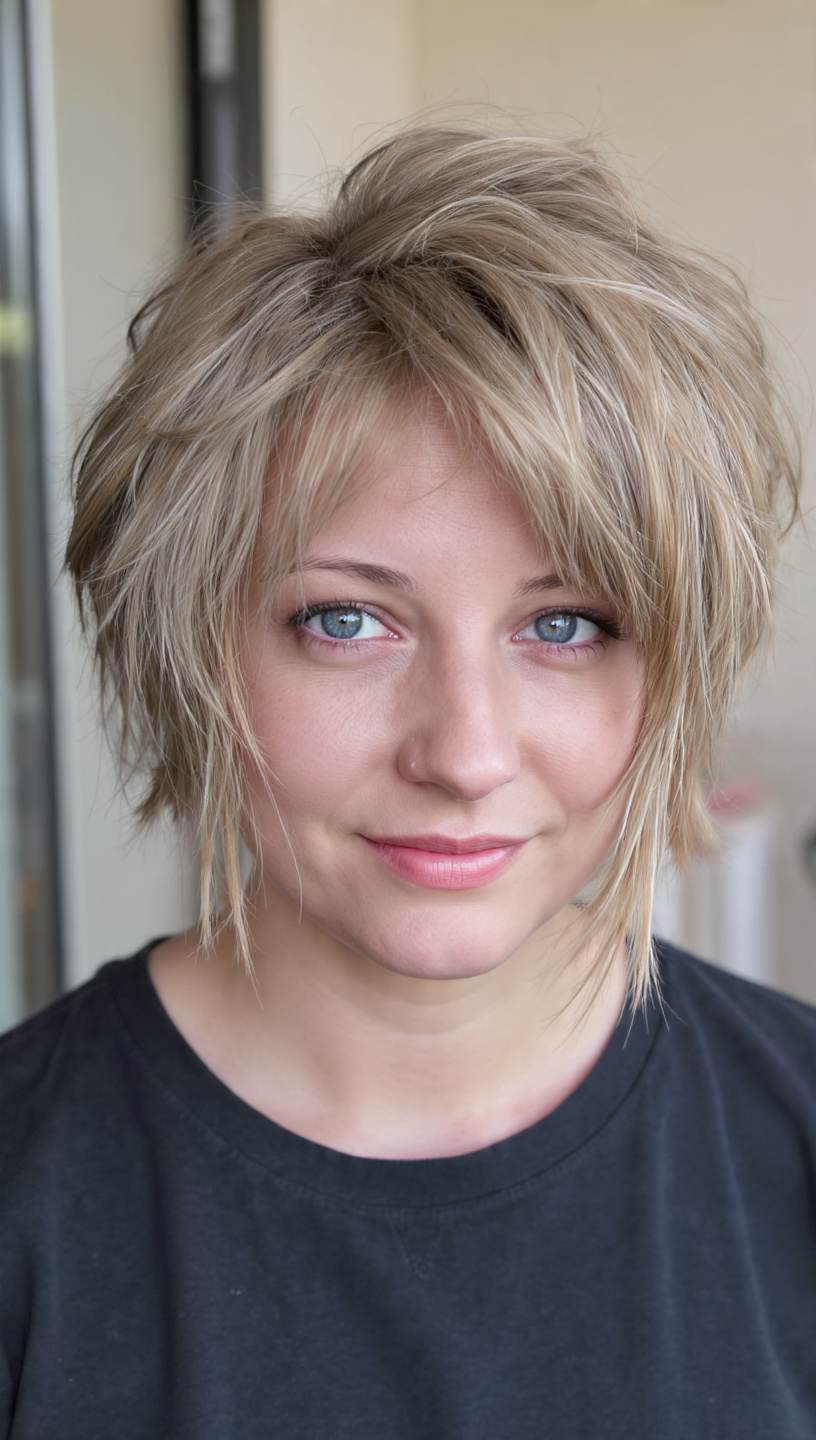
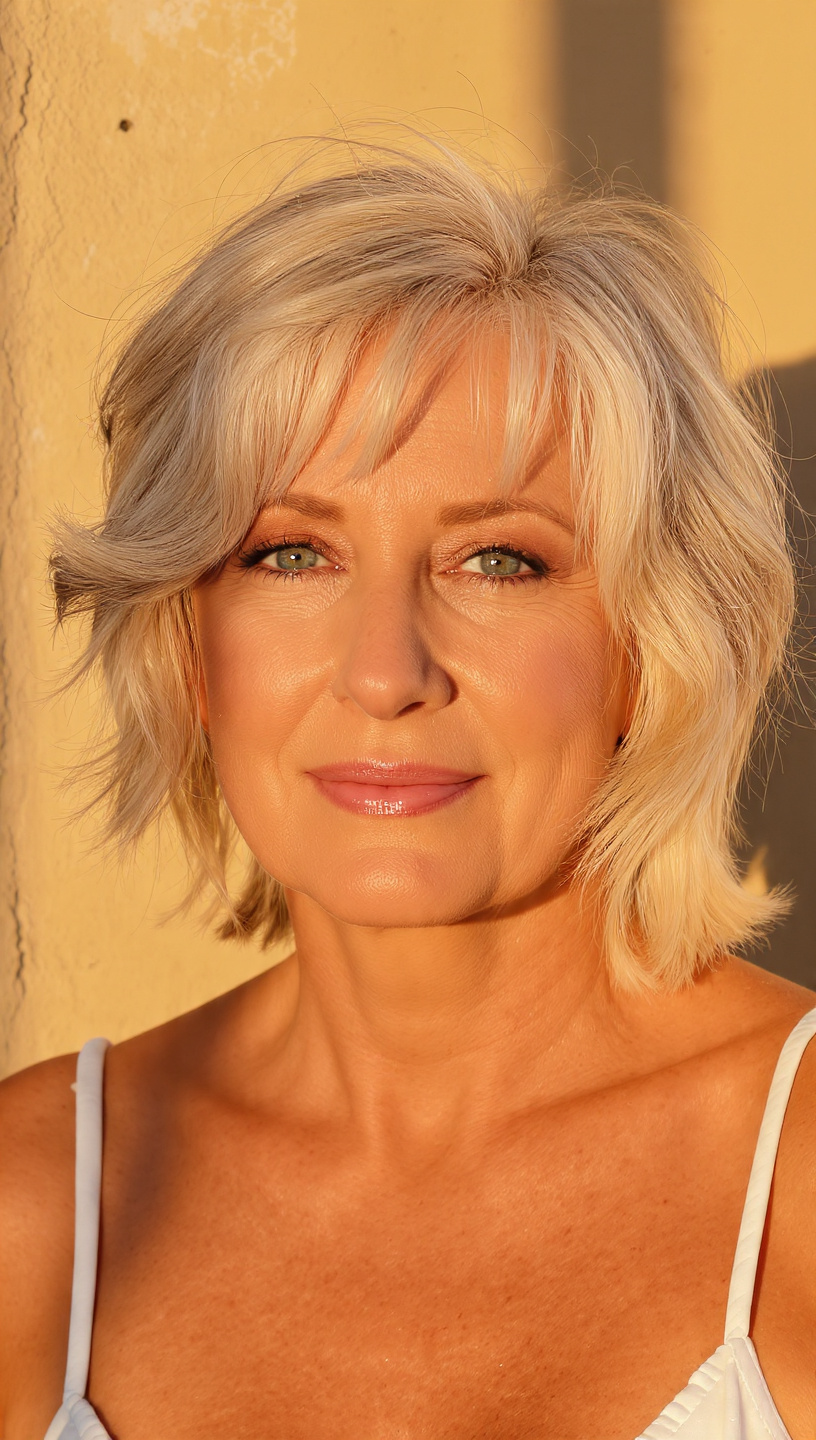
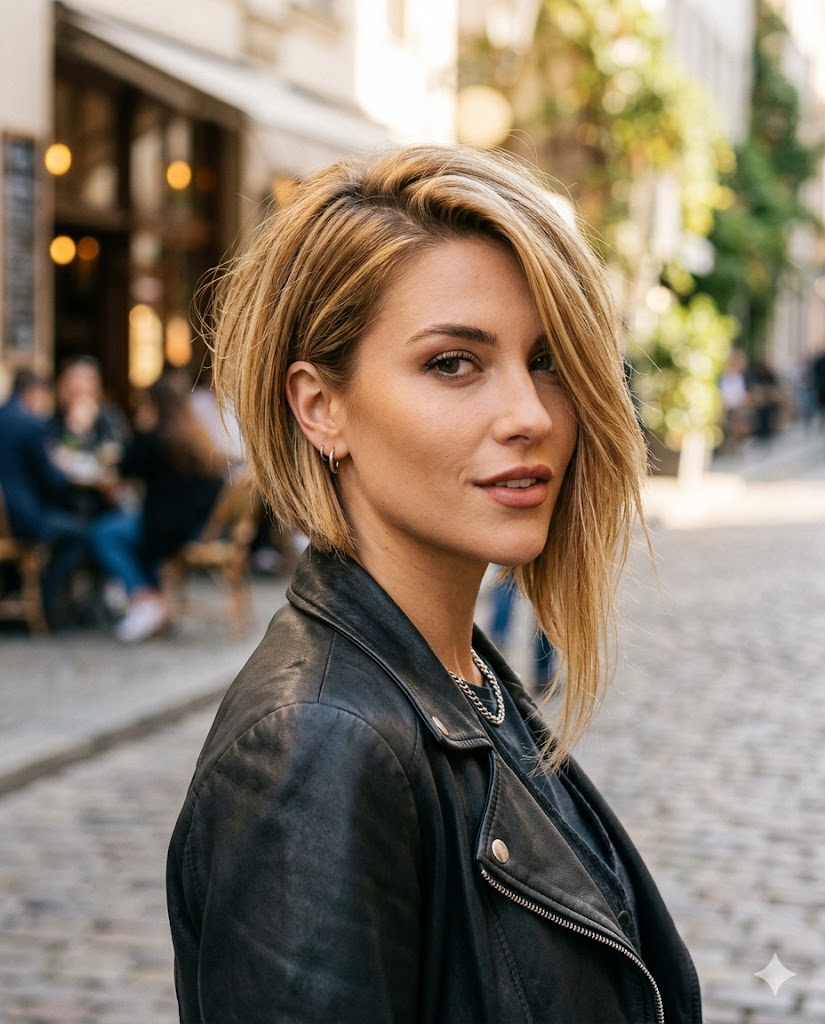
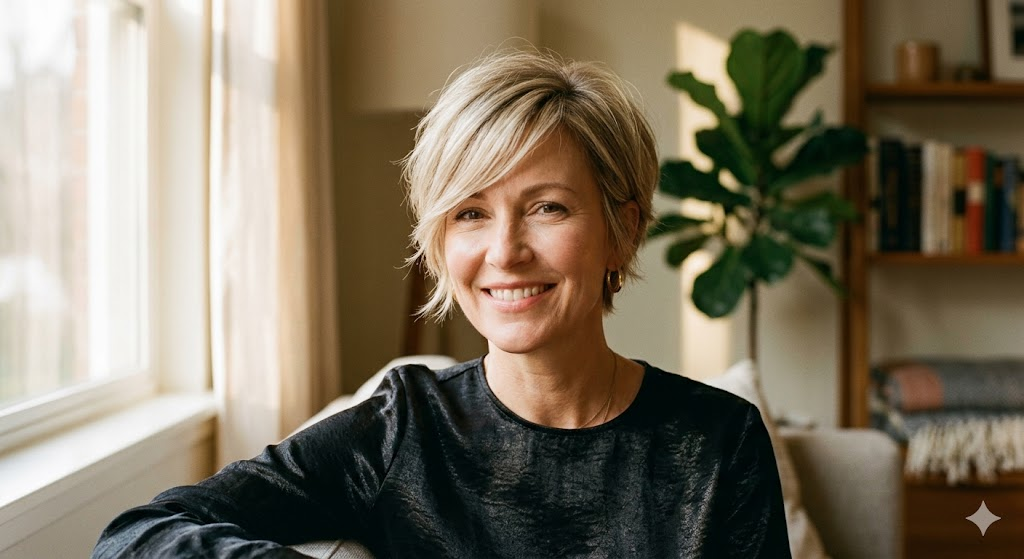
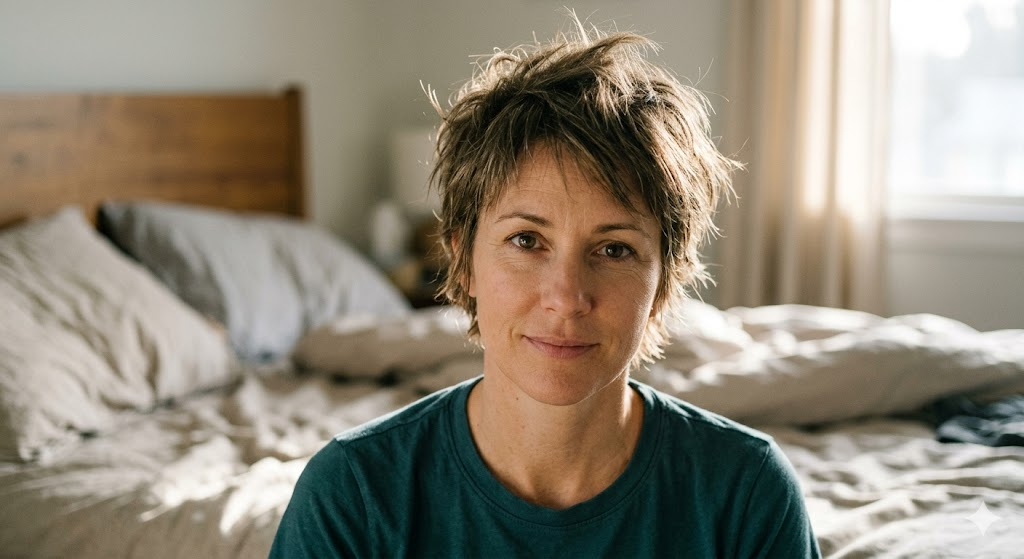
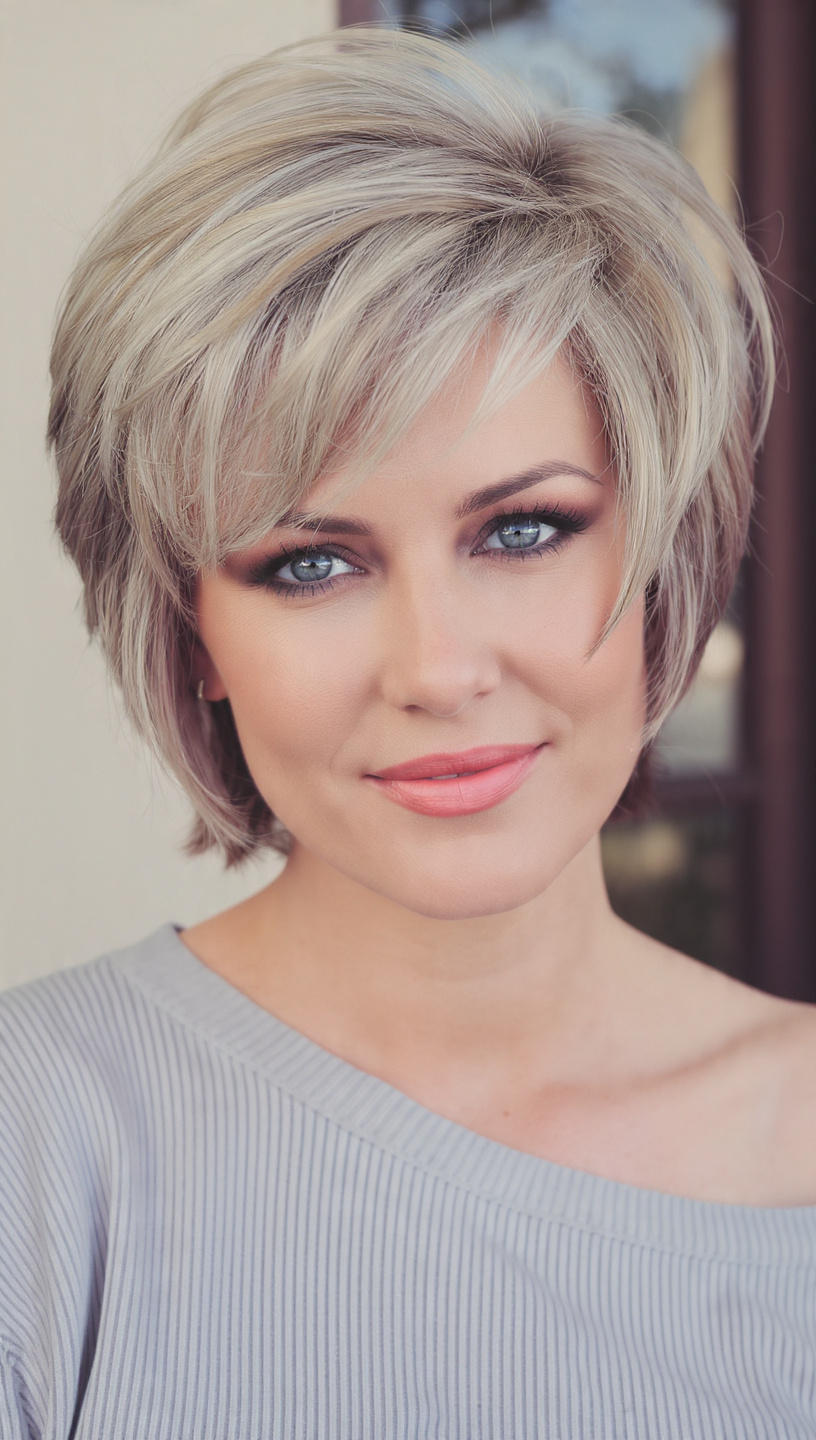
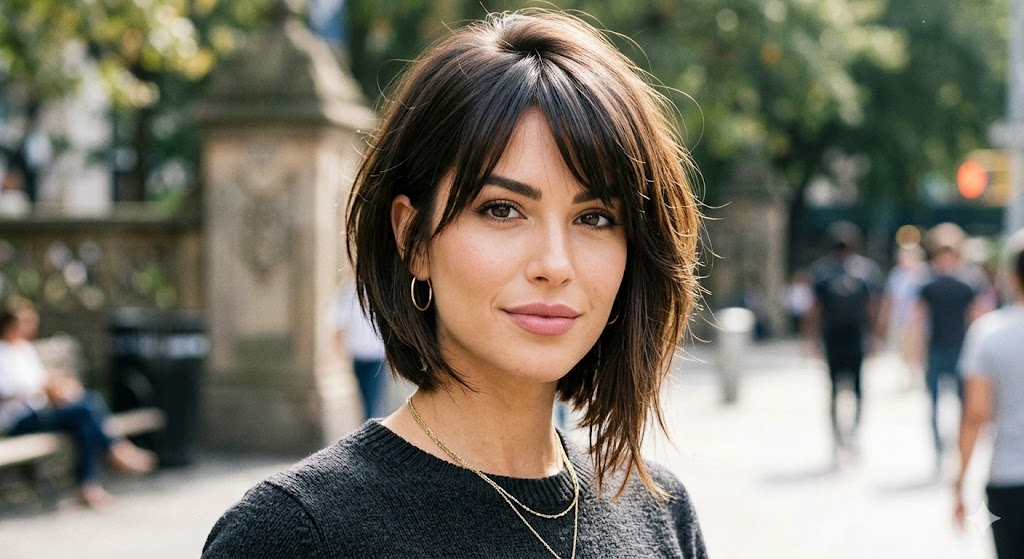
    11. The Texturized Bob with Wispy Fringe

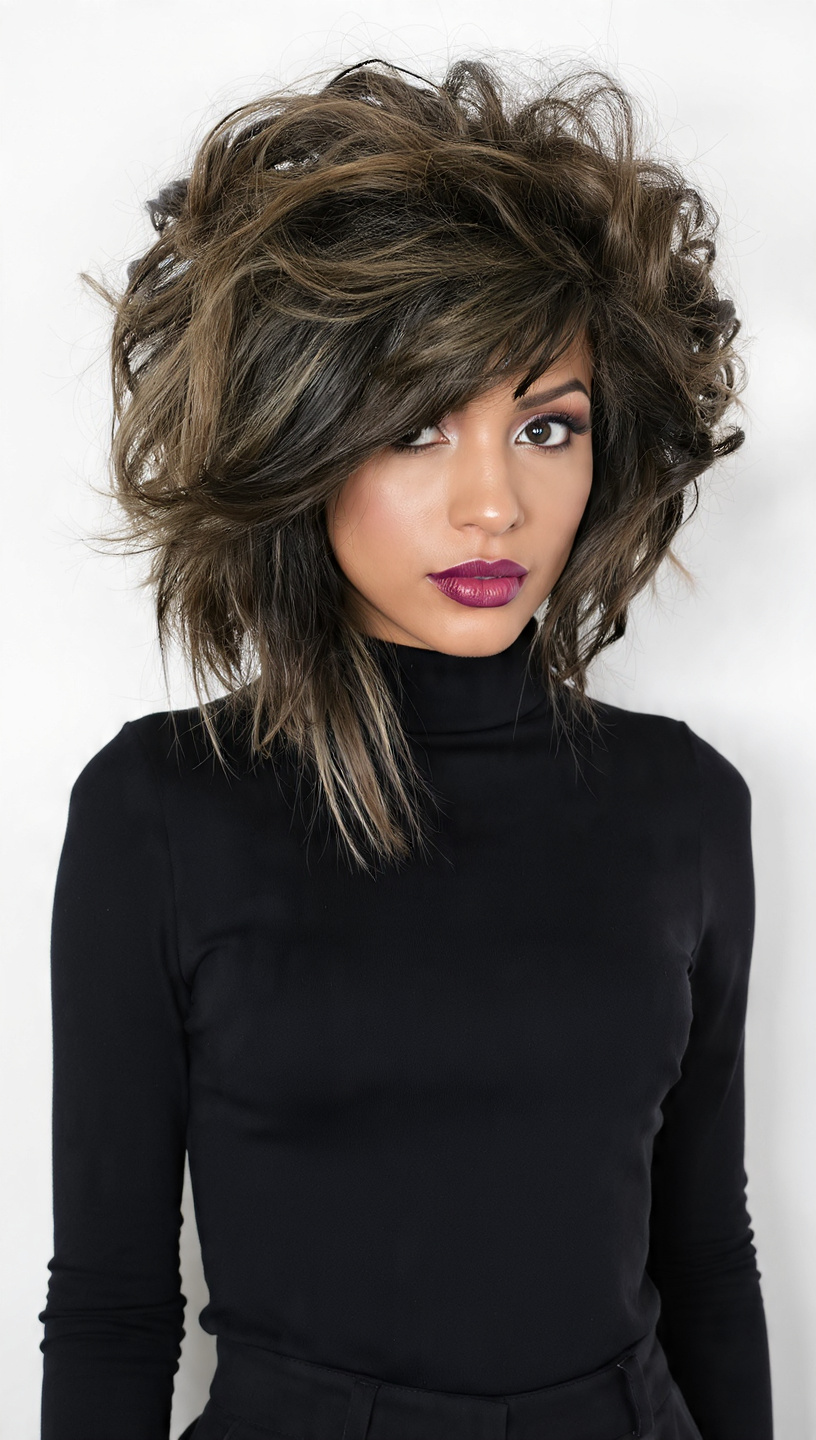
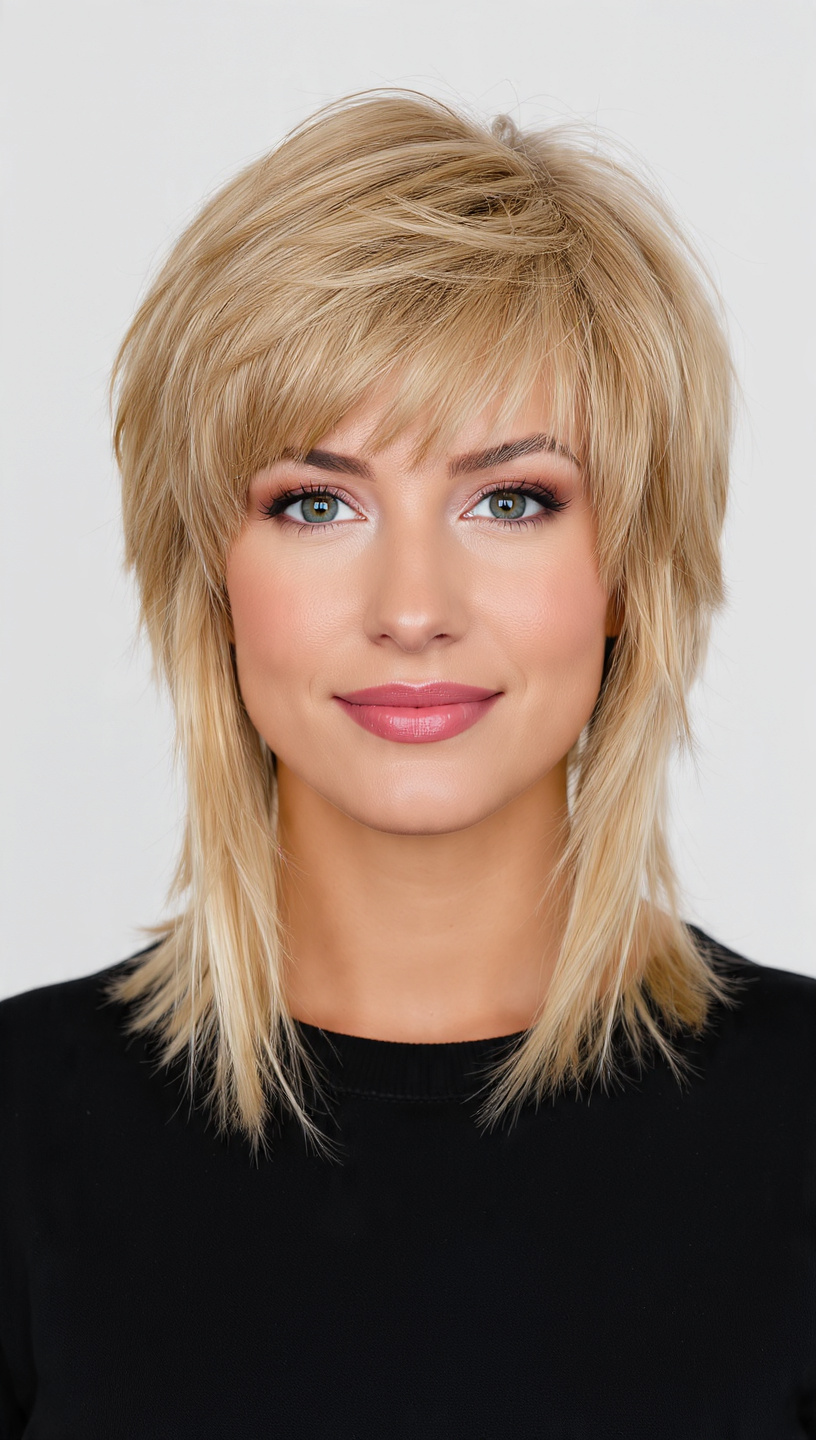
    Strategic Movement and Airiness: For fine-haired individuals who prefer a “lived-in” look, this bob uses internal texturizing rather than heavy external layers. The soft, piecey fringe adds immediate interest and volume at the crown, while the slightly shattered ends provide movement. This structure allows for a “messy” style that still feels full and intentional.

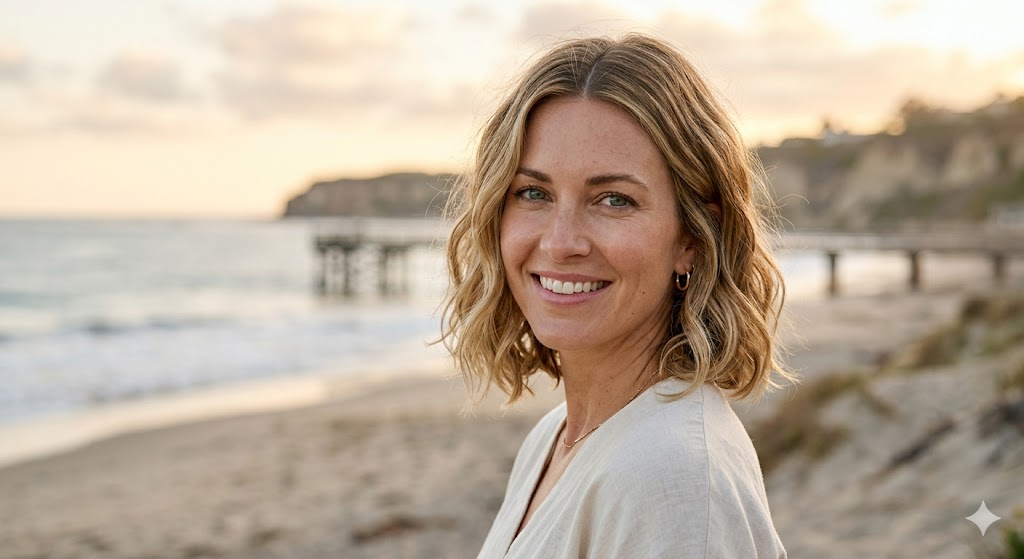
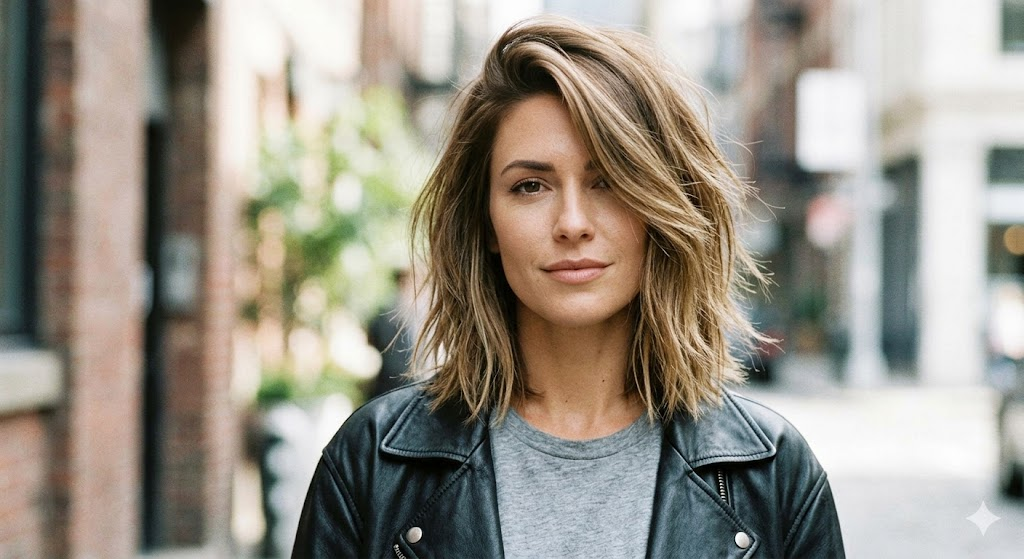
    12. The Dimensional Wavy Lob

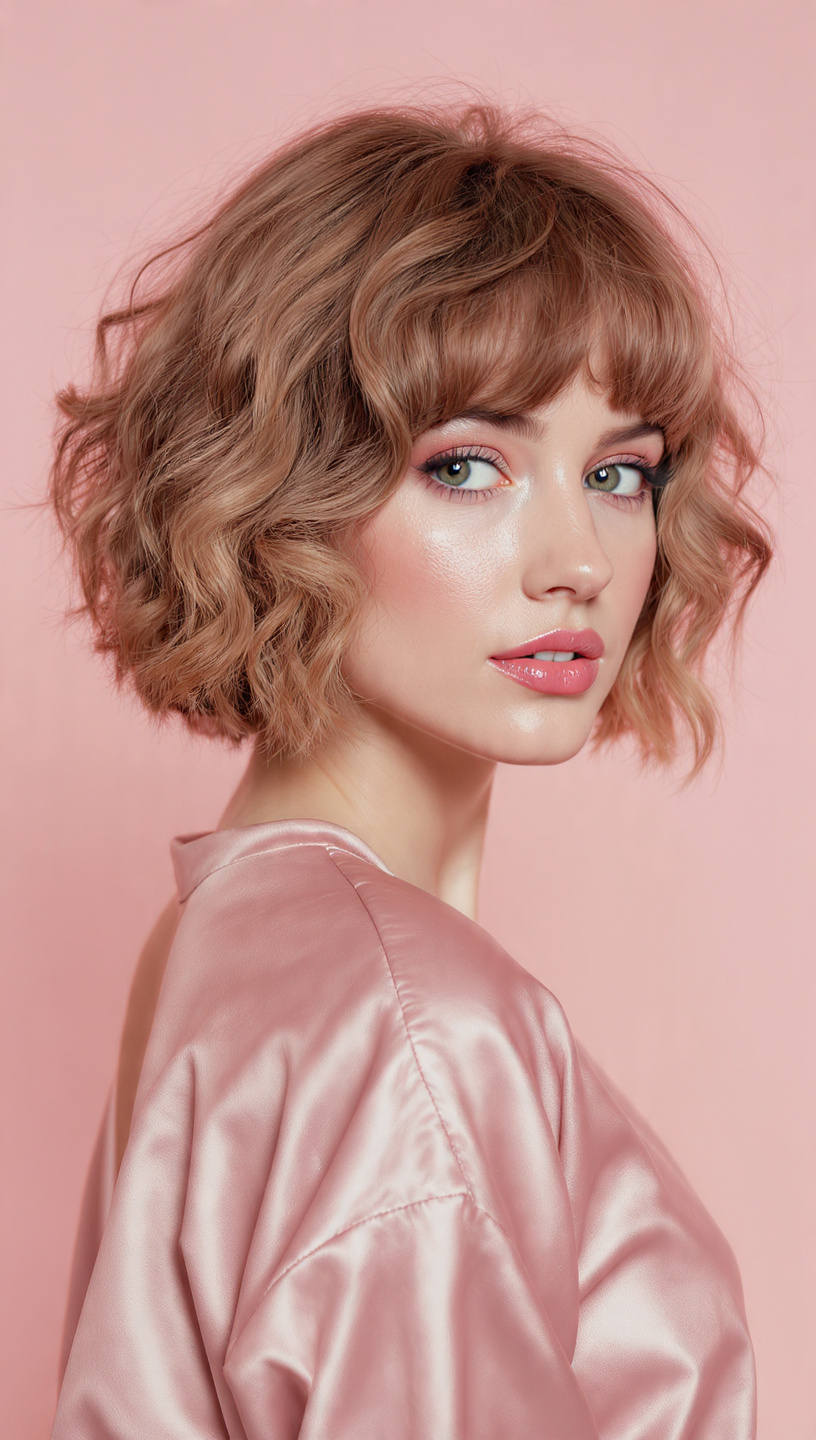
    Volume Through Wave and Color Architecture: This style demonstrates how a great cut and color work in tandem. The blunt mid-length provides the necessary foundation, while soft, internal “invisible” layers allow for the hair to hold a wave. The multi-tonal blonde highlights act as a “visual plumper,” adding depth and the illusion of a much thicker hair fiber.

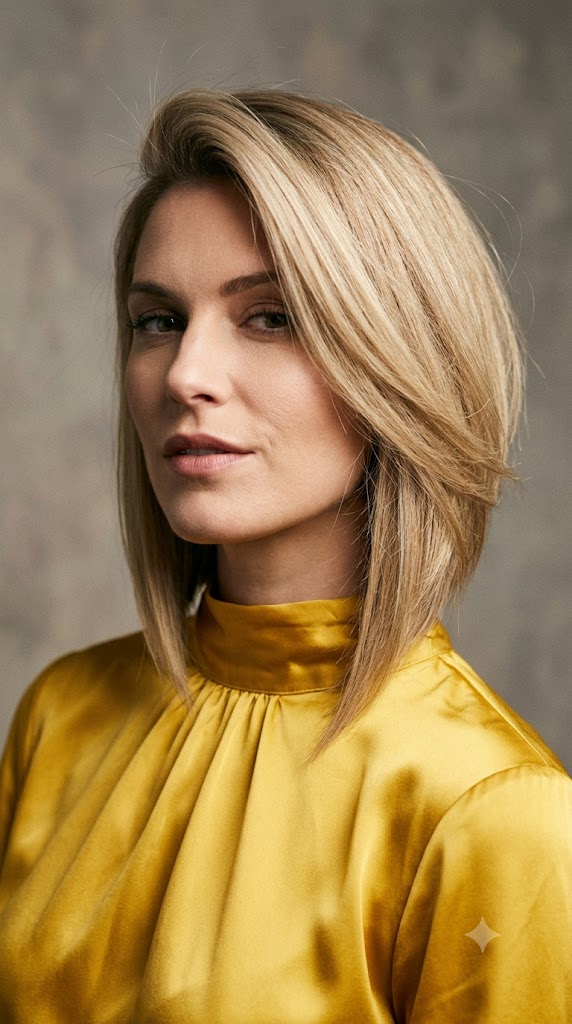
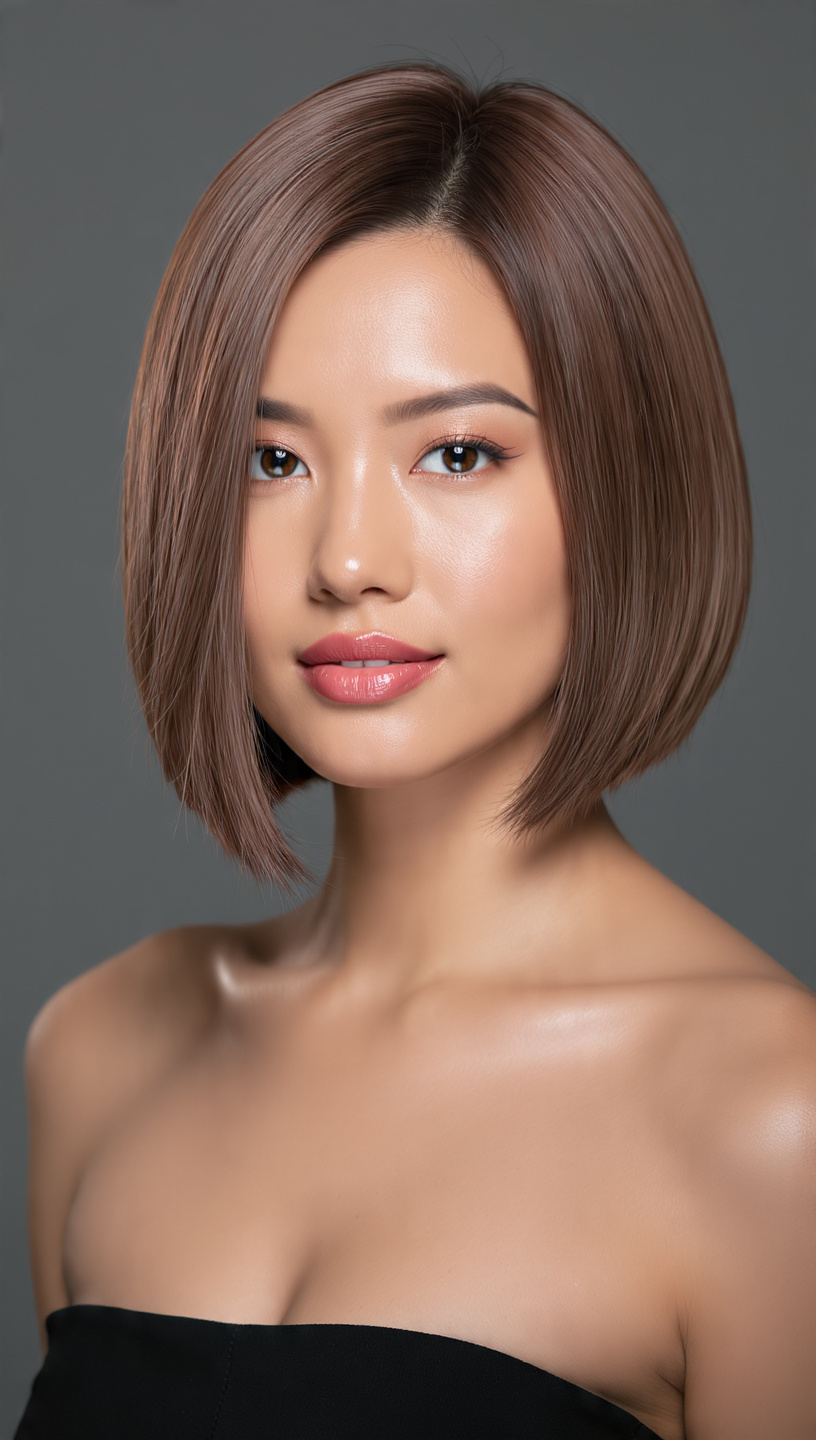
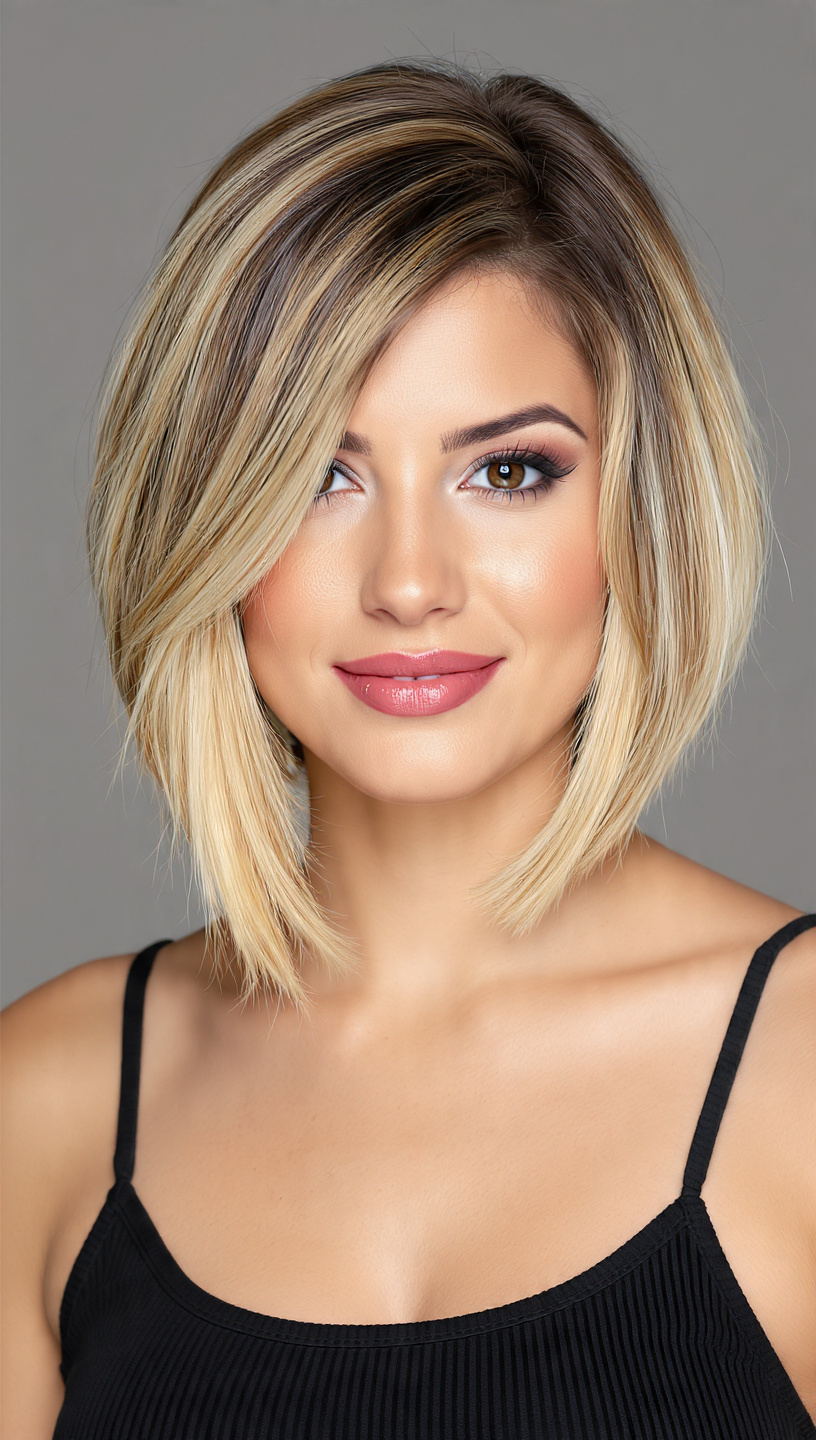
    13. The A-Line Sleek Bob

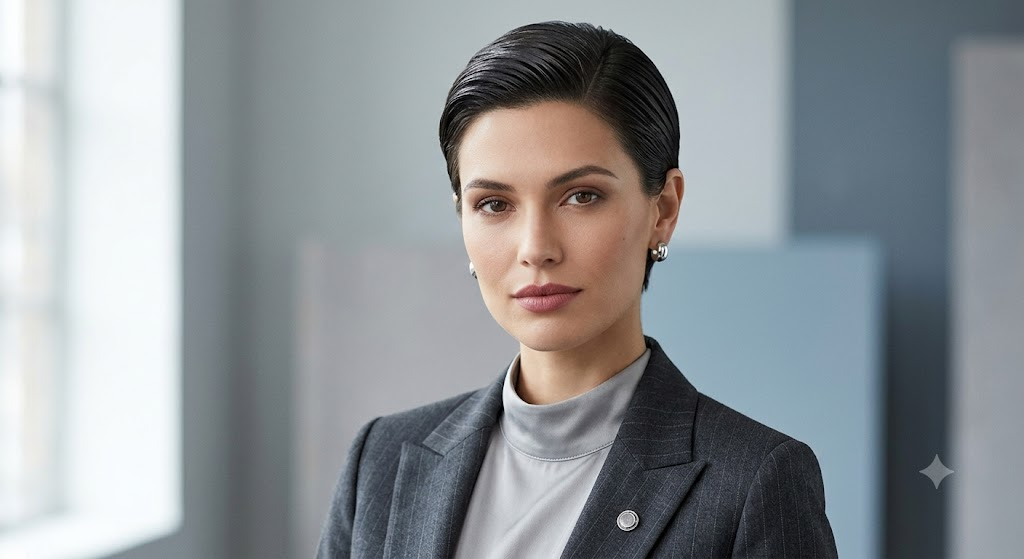
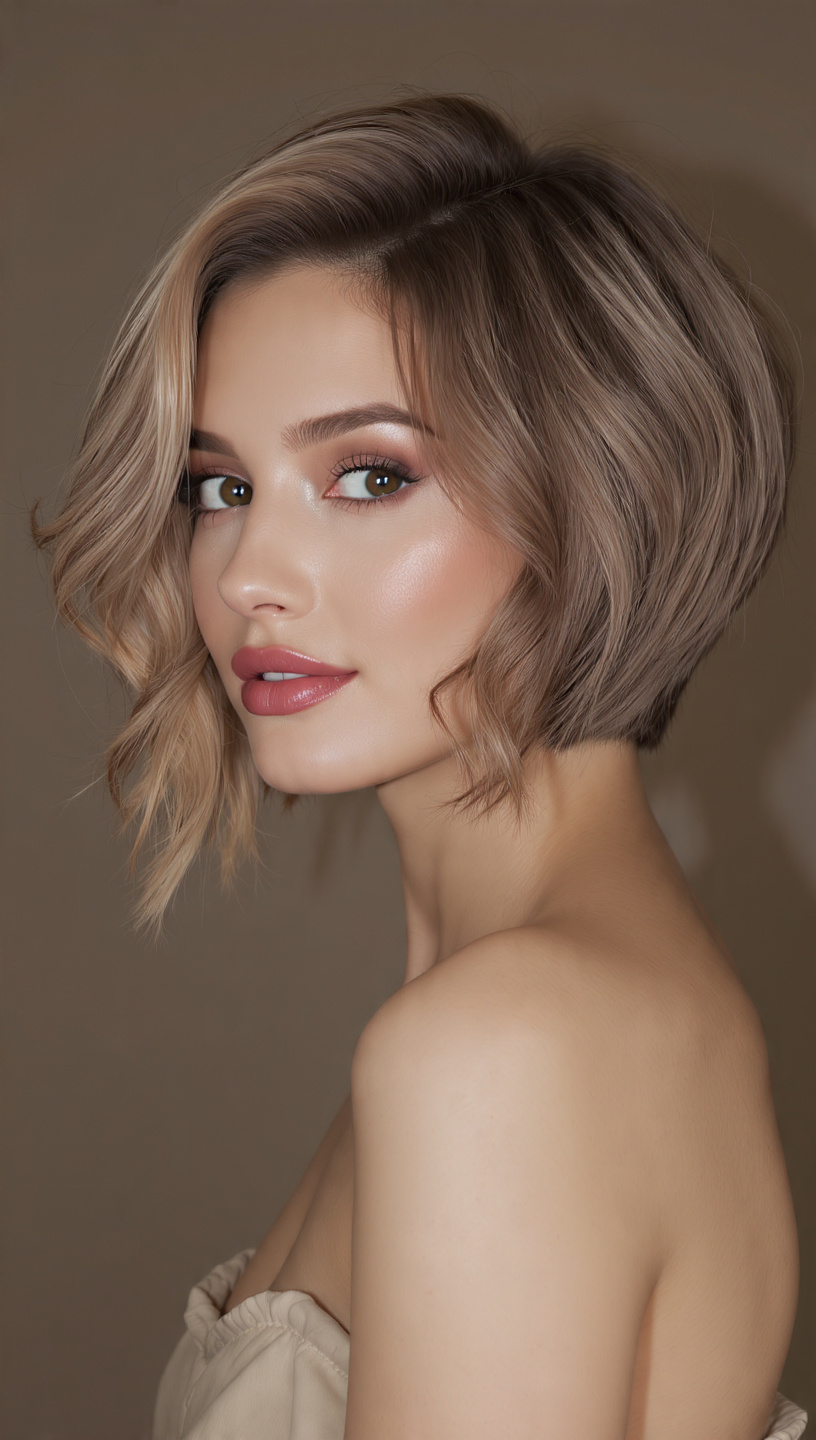
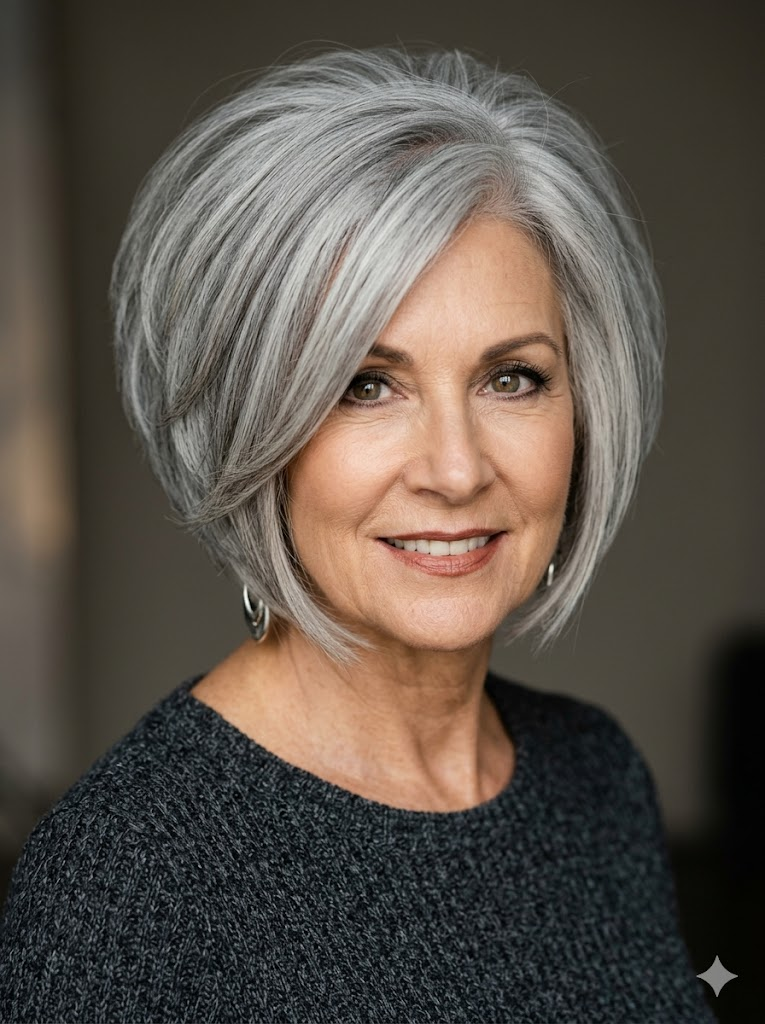
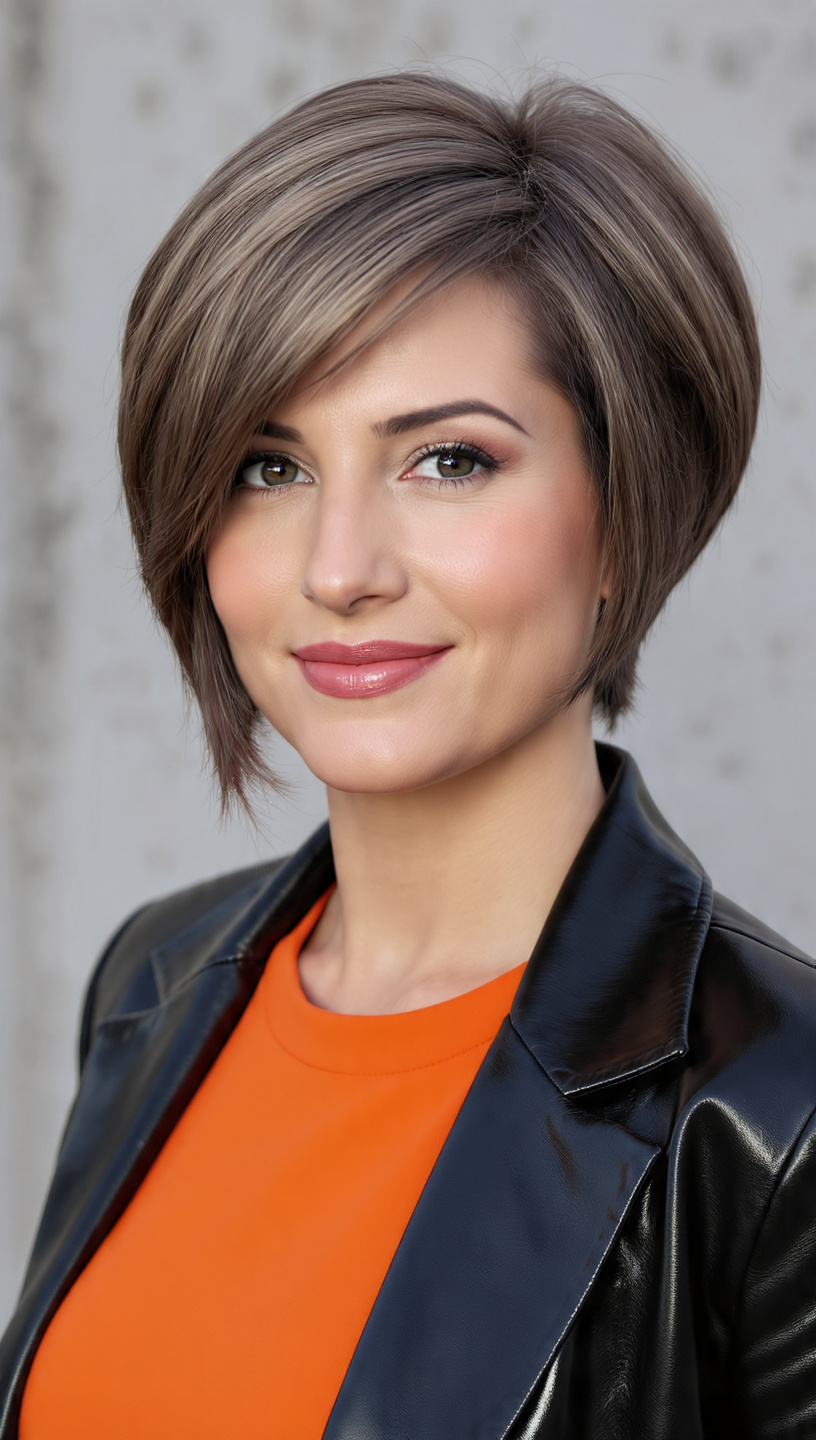
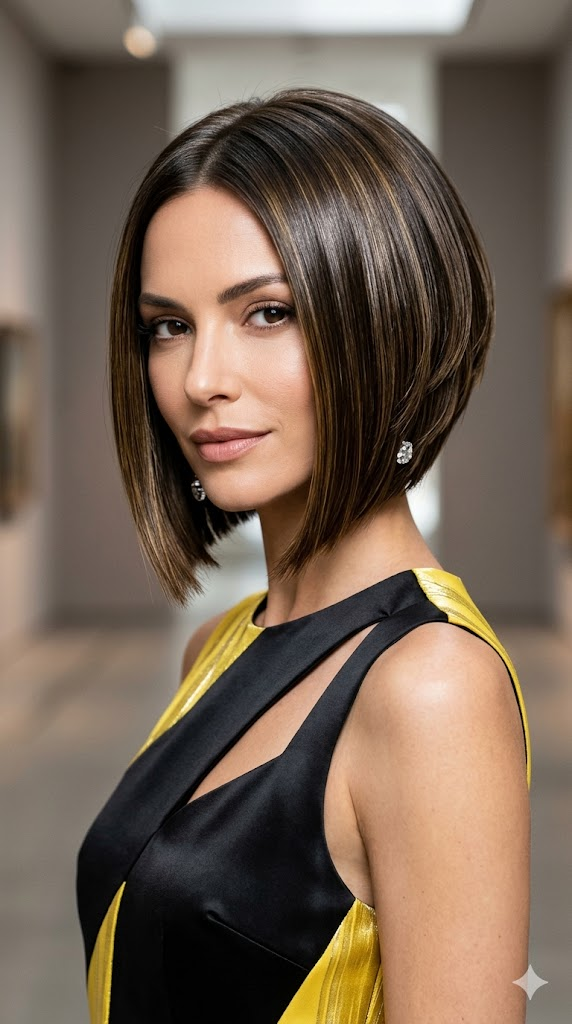
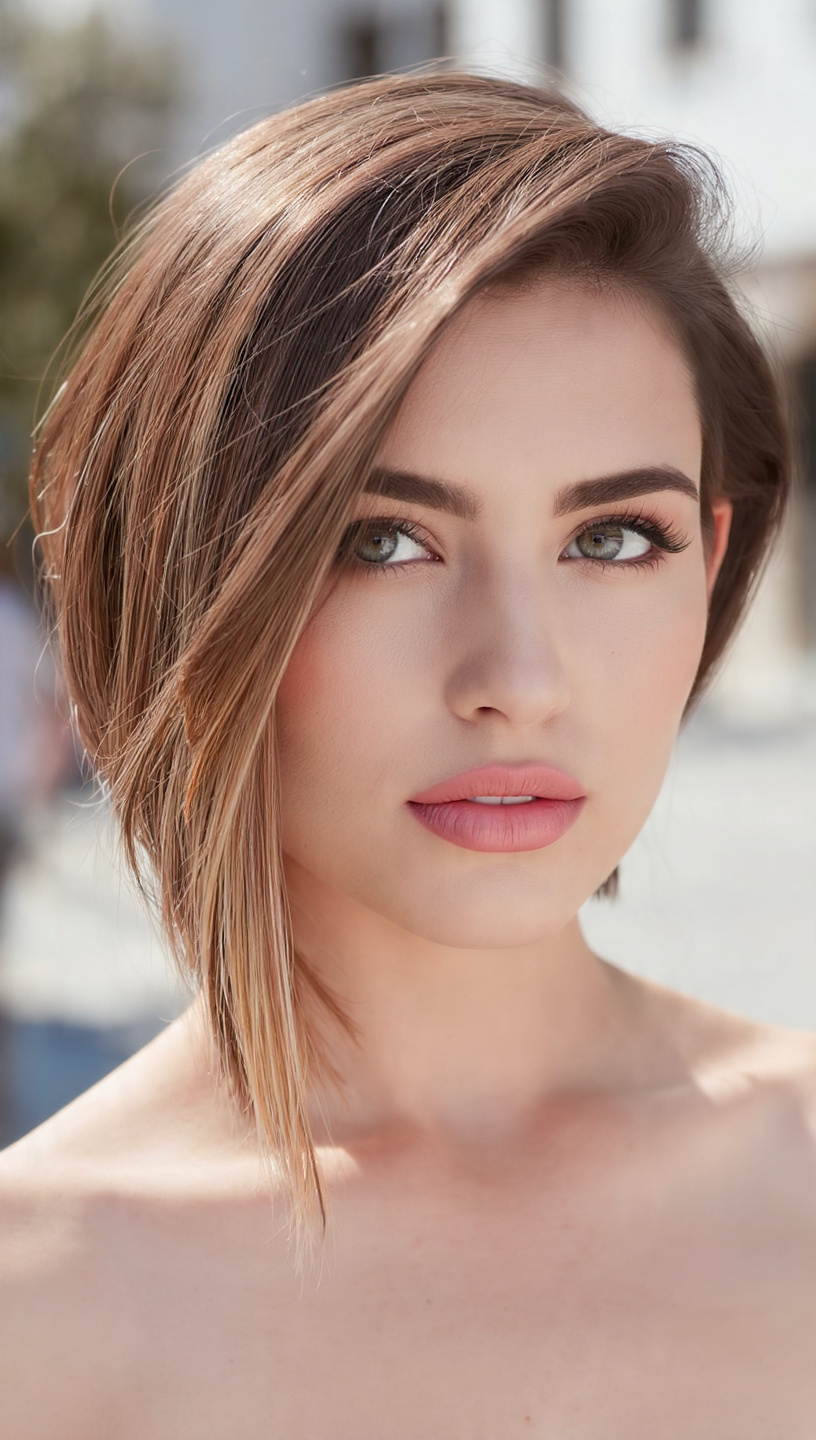
    Structural Forward Weighting: By subtly angling the cut so the hair is slightly longer toward the front, this style creates a “swing” that adds natural volume. This geometric approach directs the visual weight toward the face, ensuring the hair looks dense and healthy. It’s an ideal “zero-drama” cut that looks polished with minimal styling effort.

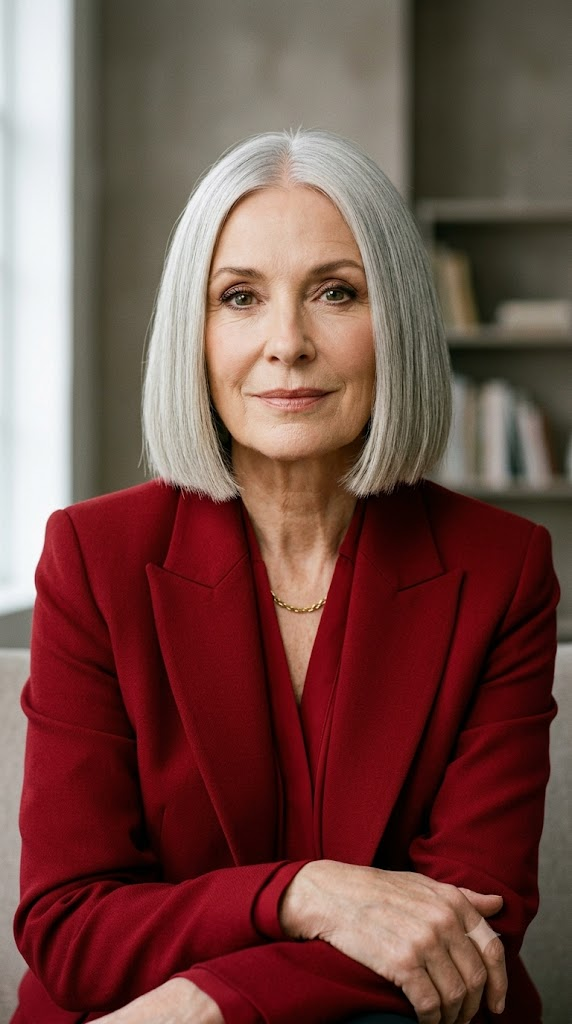
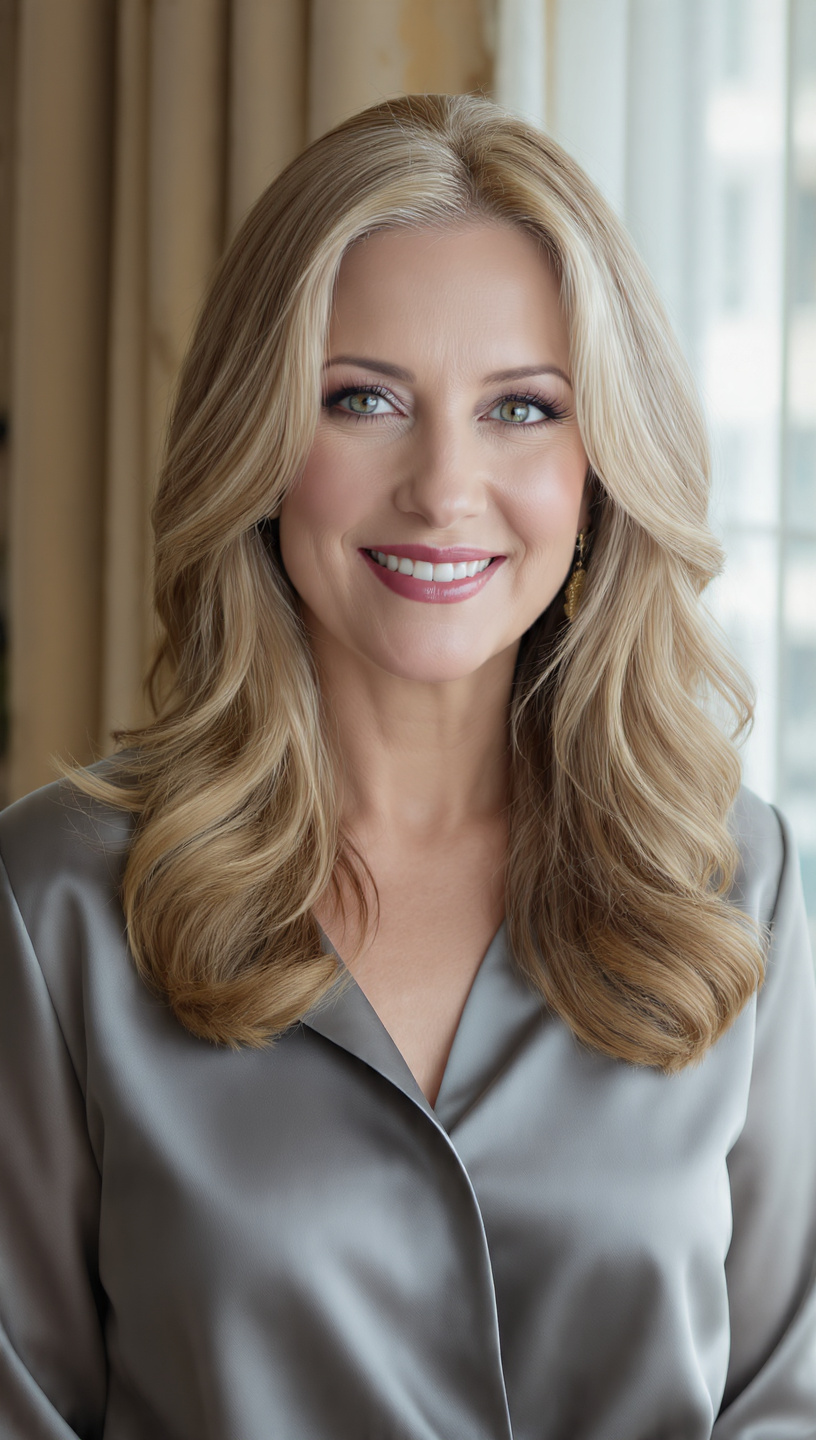
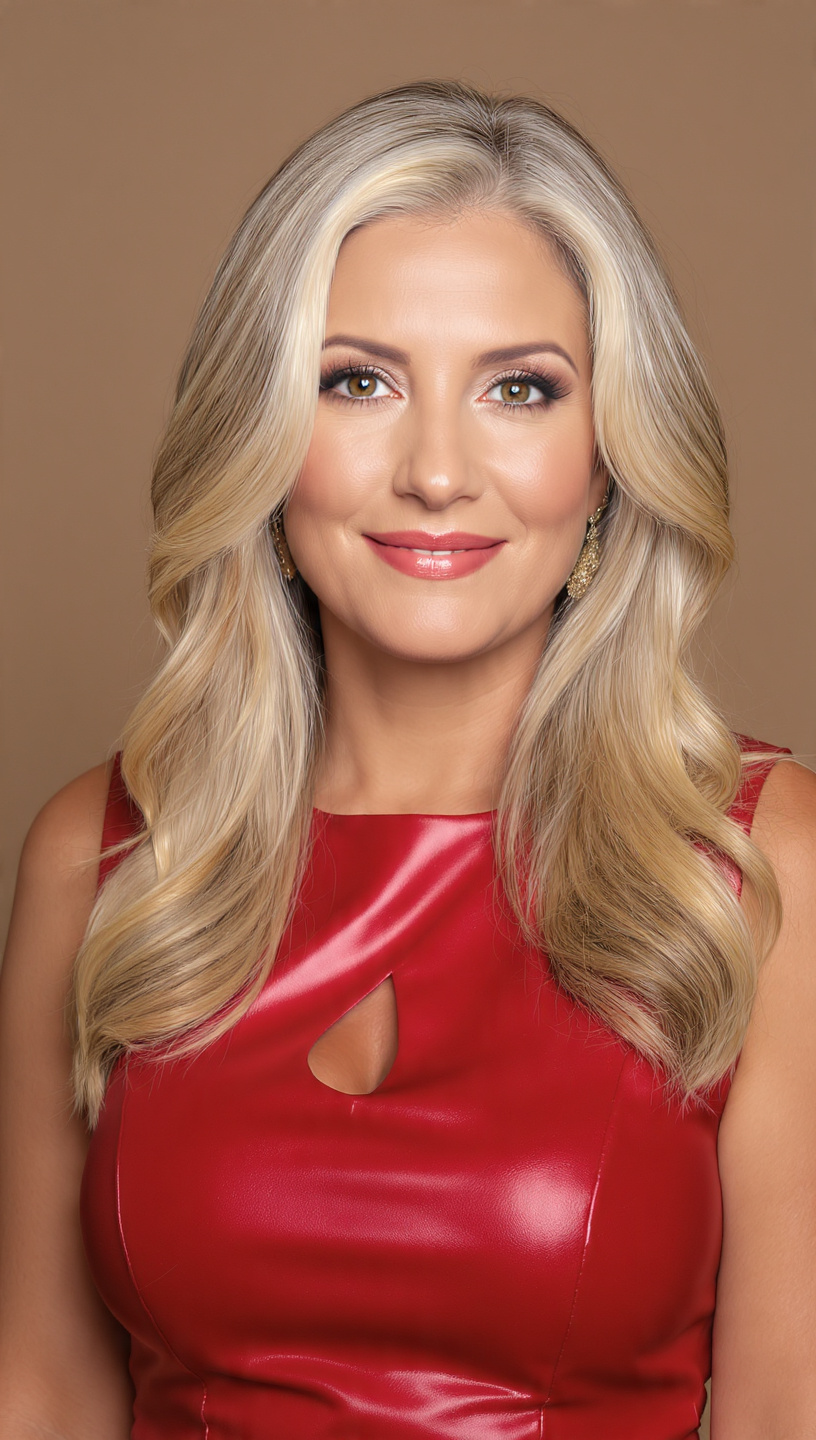
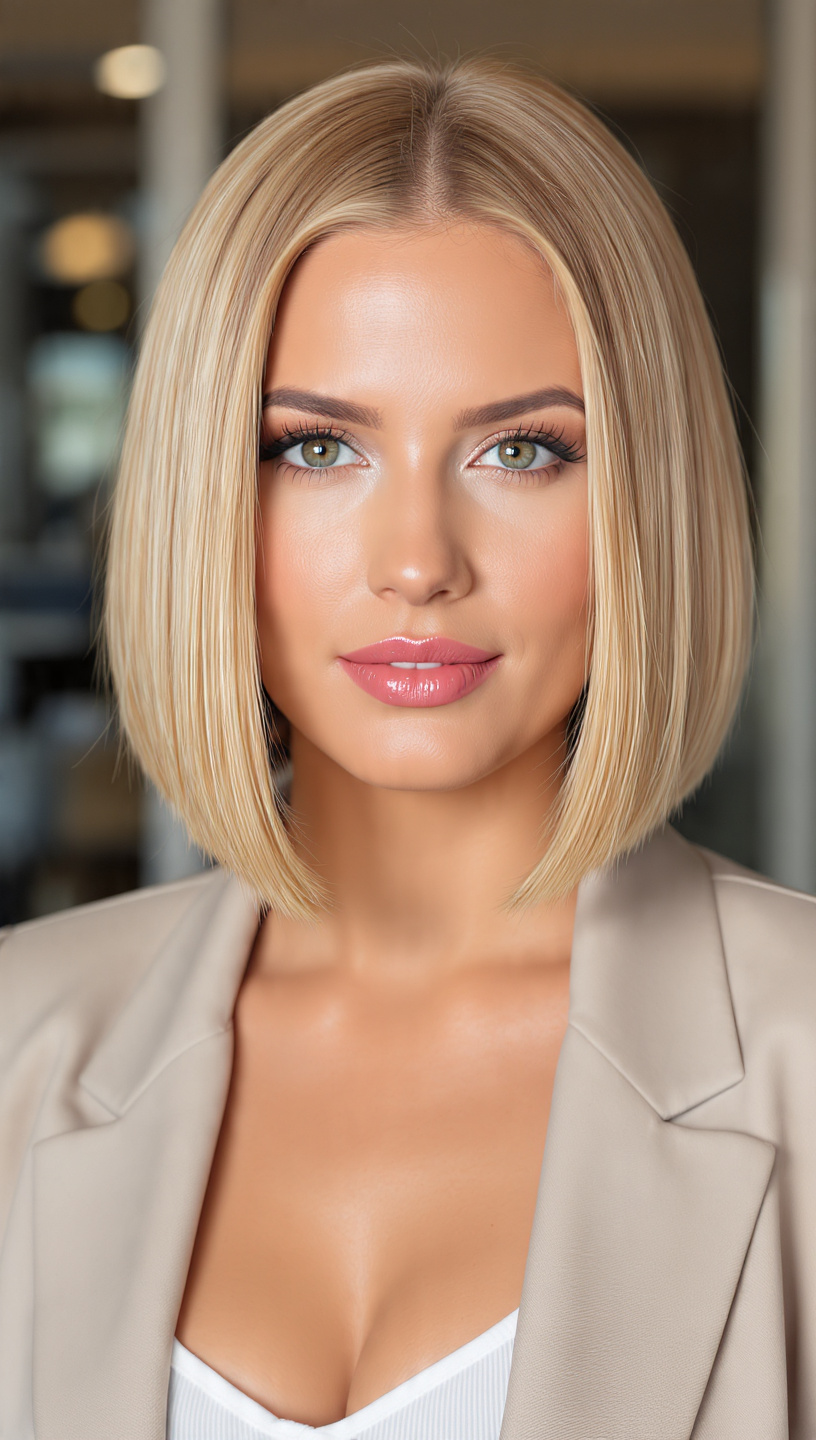
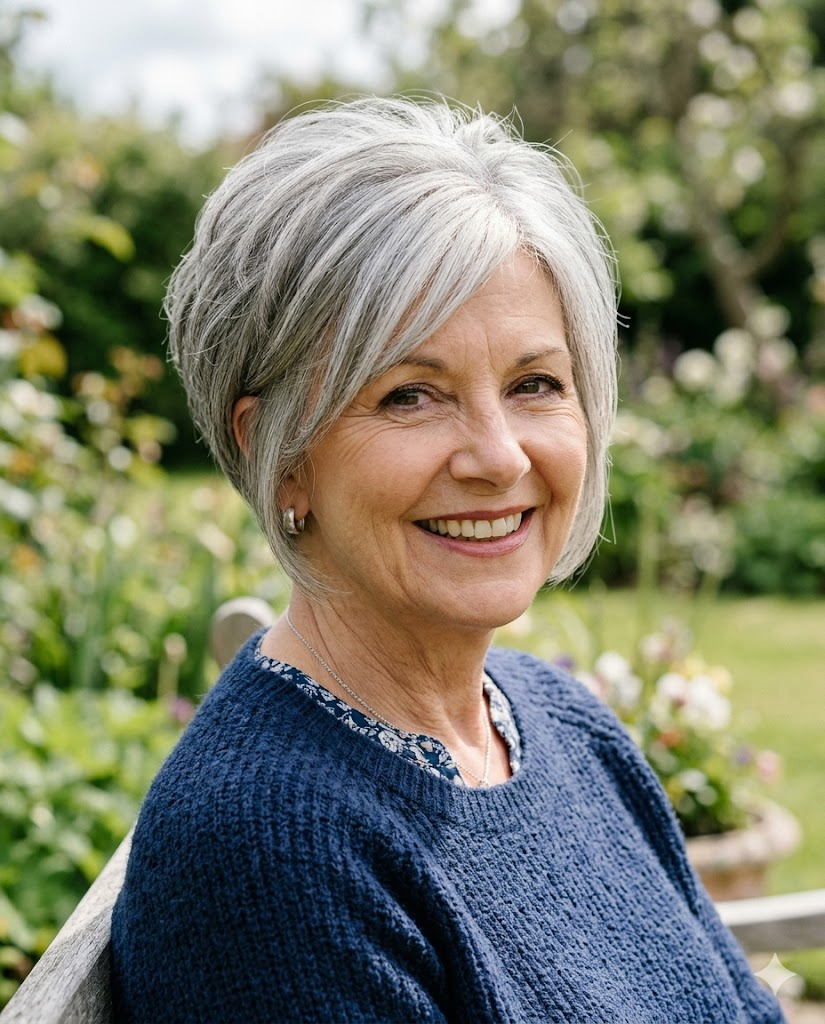
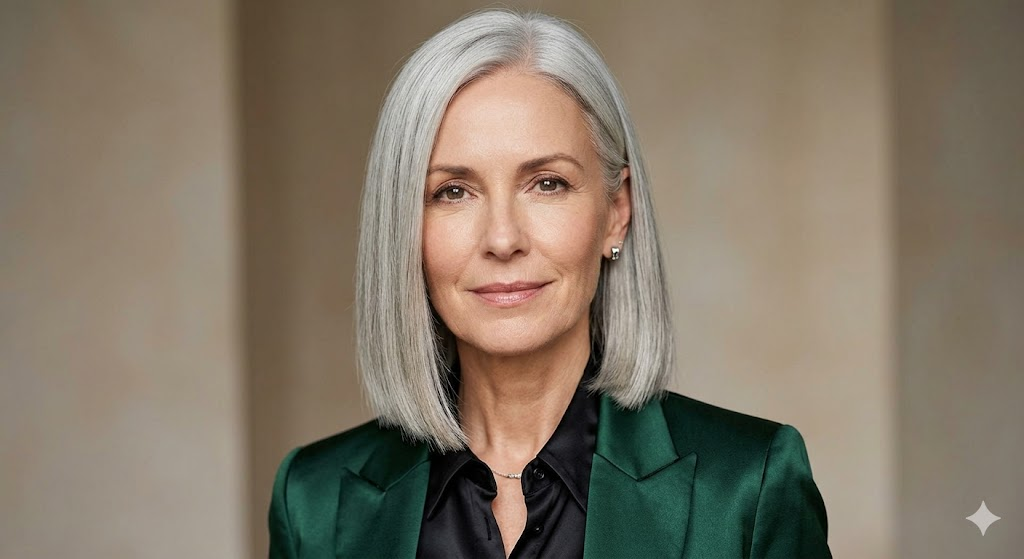
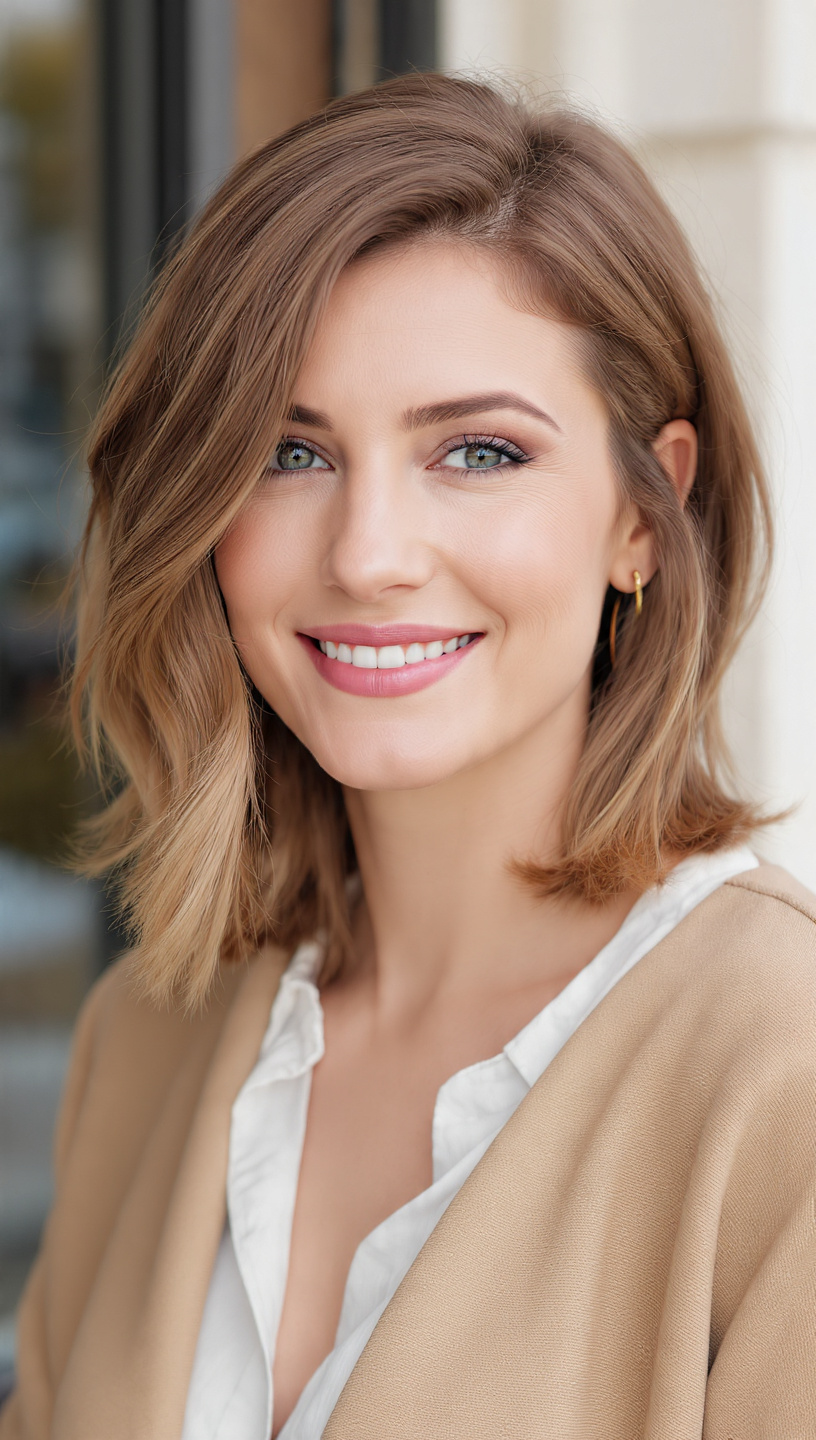
    14. The Classic Shoulder-Length Blunt Cut

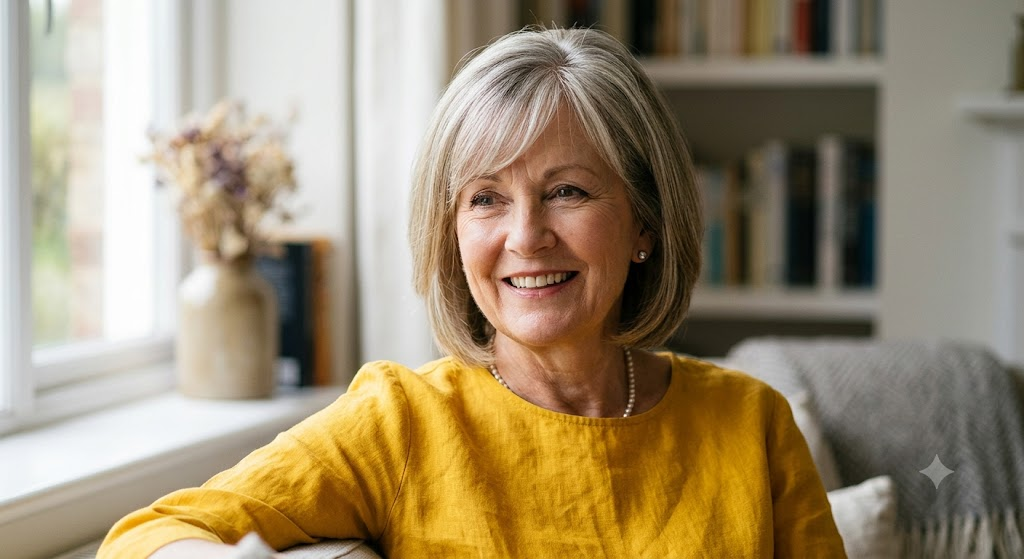
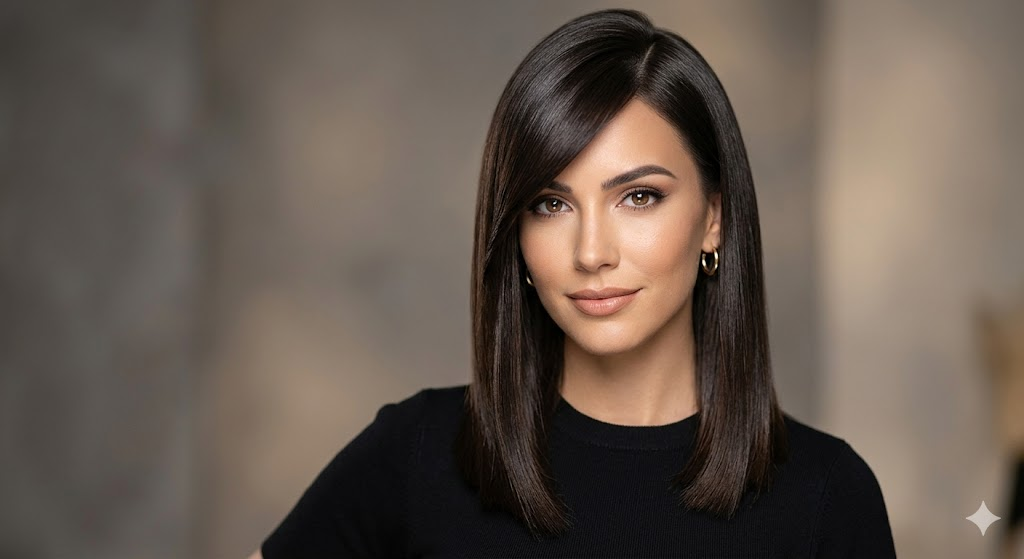
    The “Gold Standard” for Fine Hair: This image perfectly captures the power of a solid perimeter. By keeping the length consistent all the way around, the hair achieves a “curtain of silk” effect. The lack of thinning ensures that every strand contributes to the overall silhouette, providing a structural fullness that layering simply cannot replicate for fine textures.

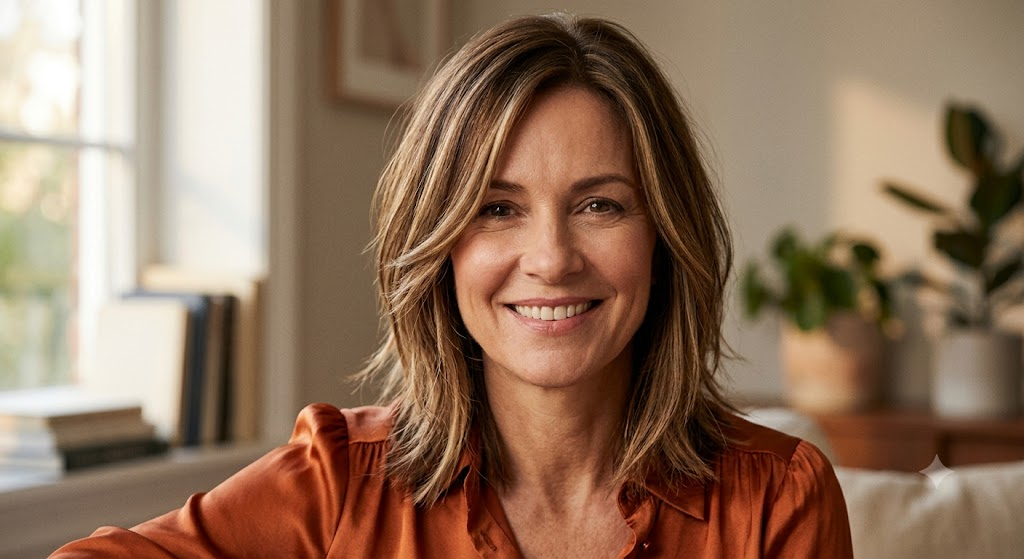
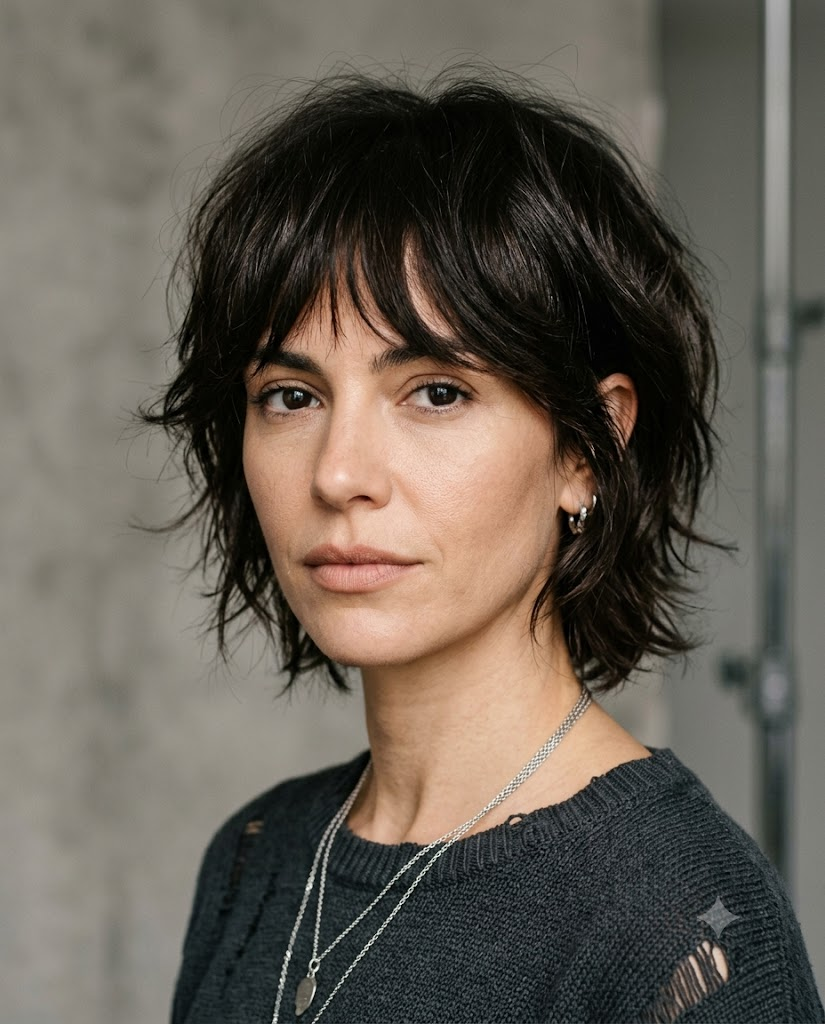
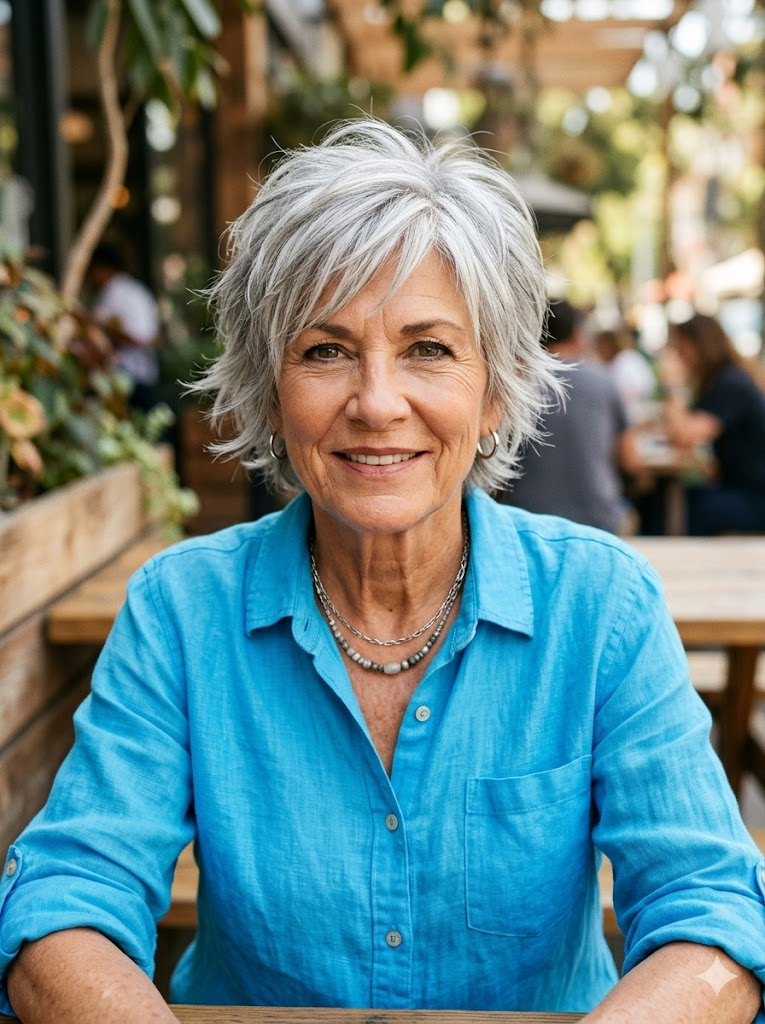
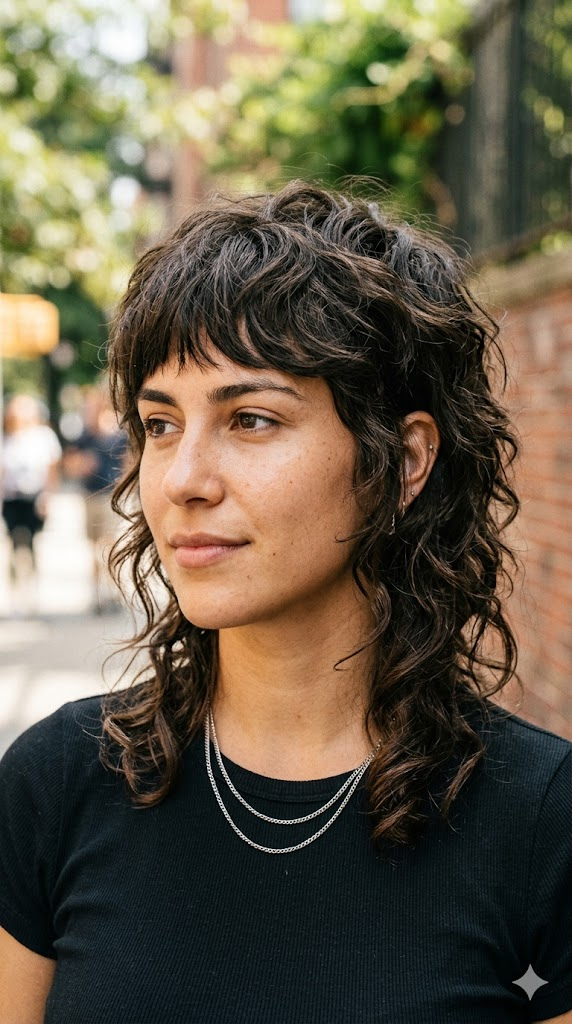
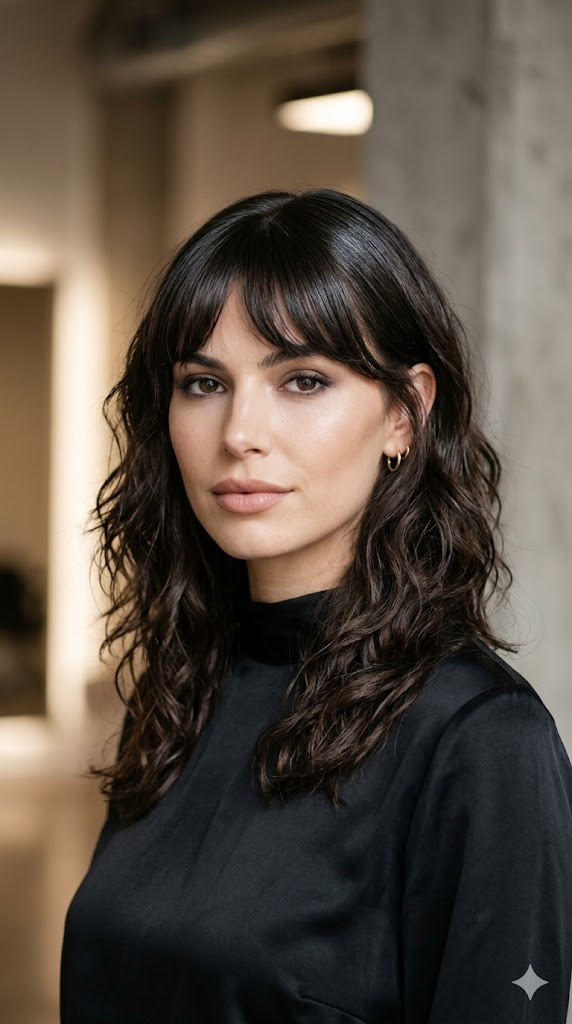
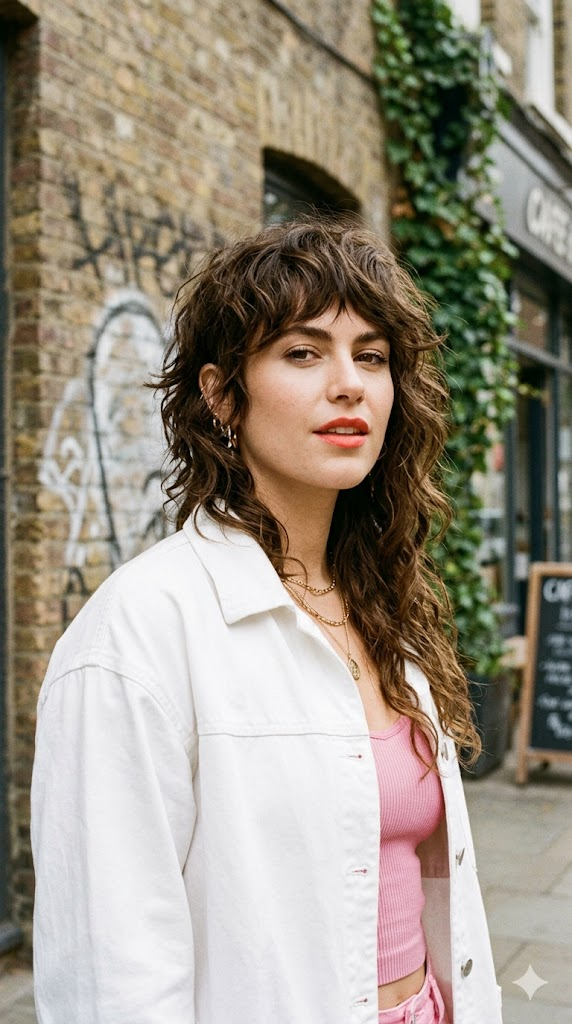
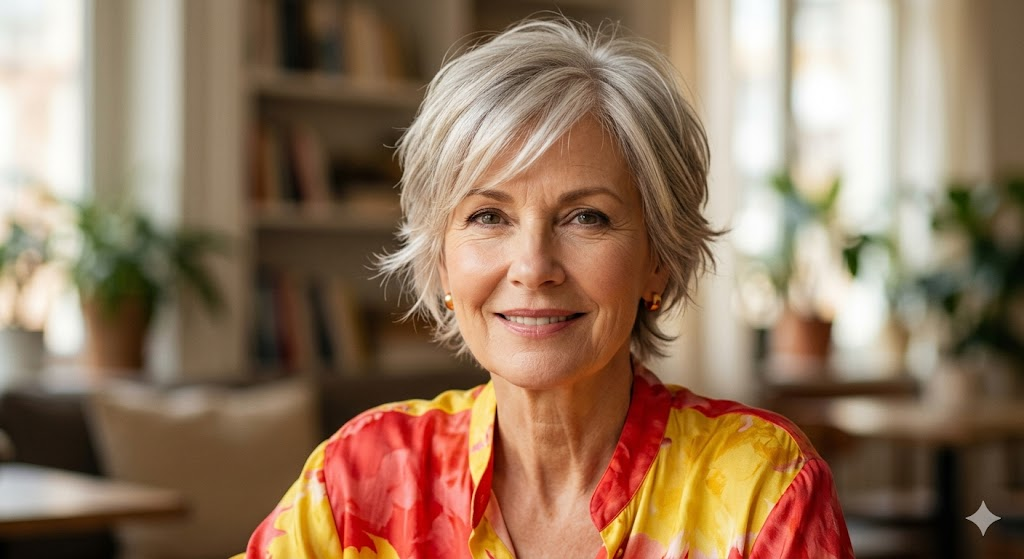
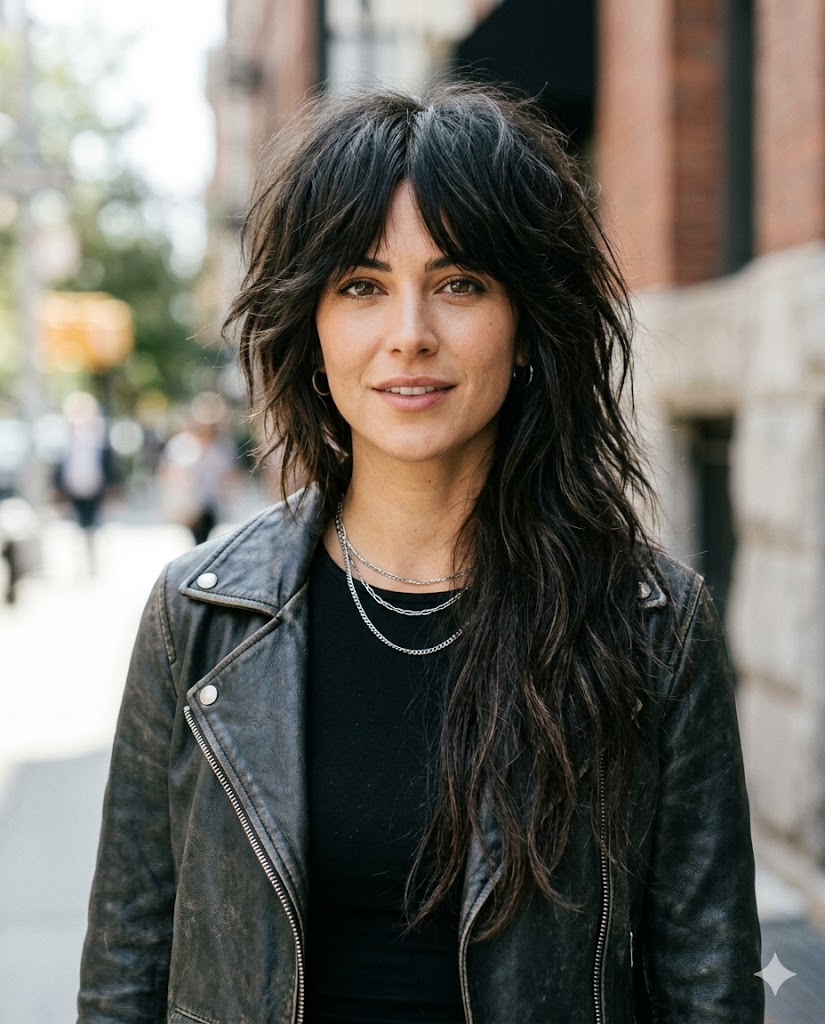
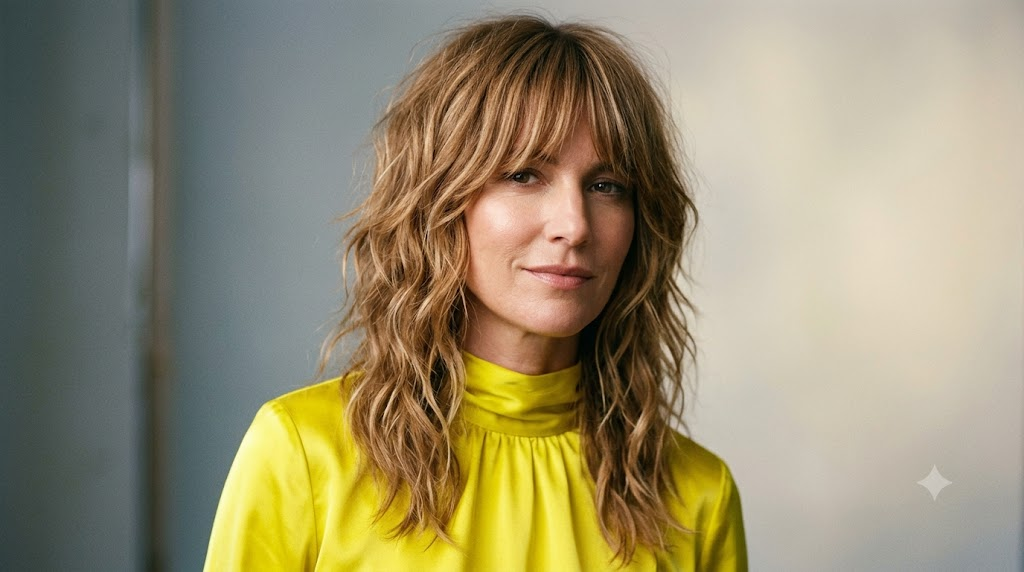
    15. The Modern Soft Shag with Bottleneck Fringe

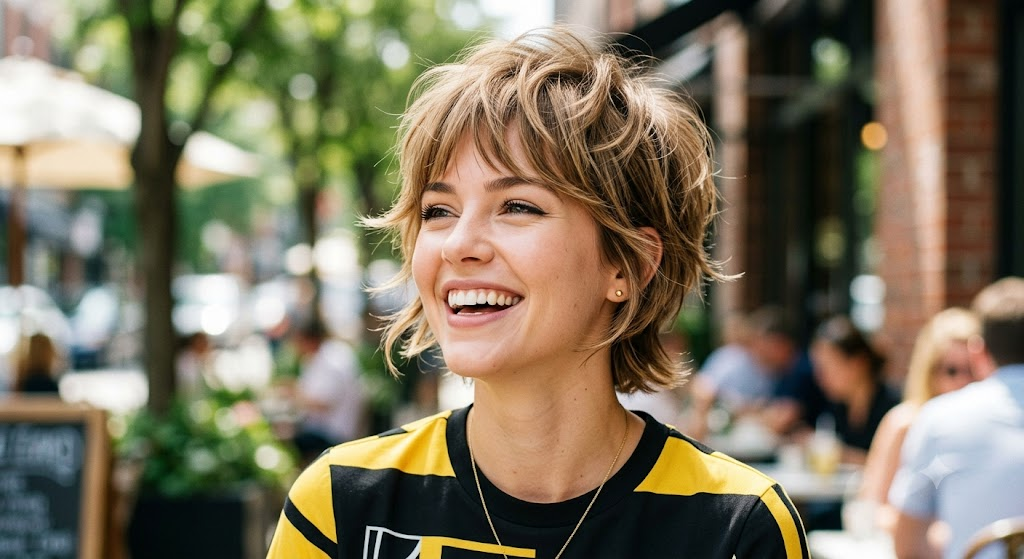
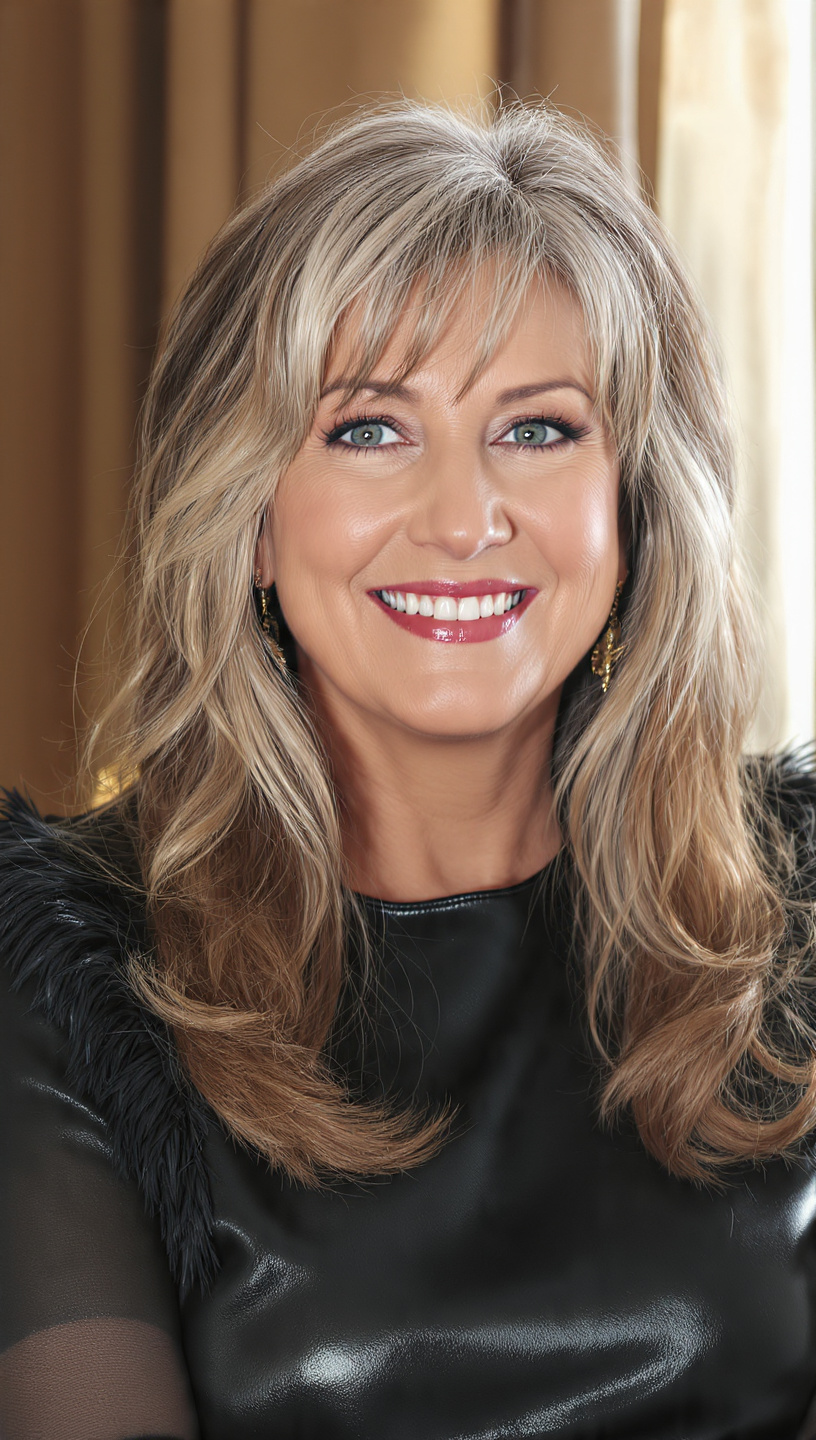
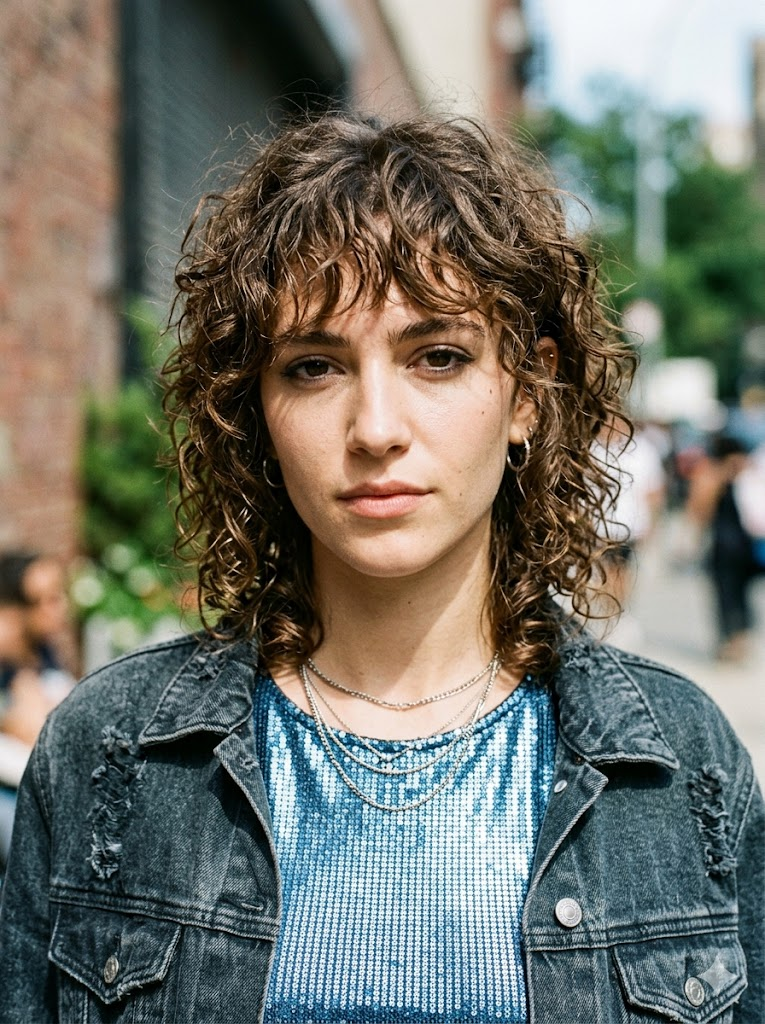
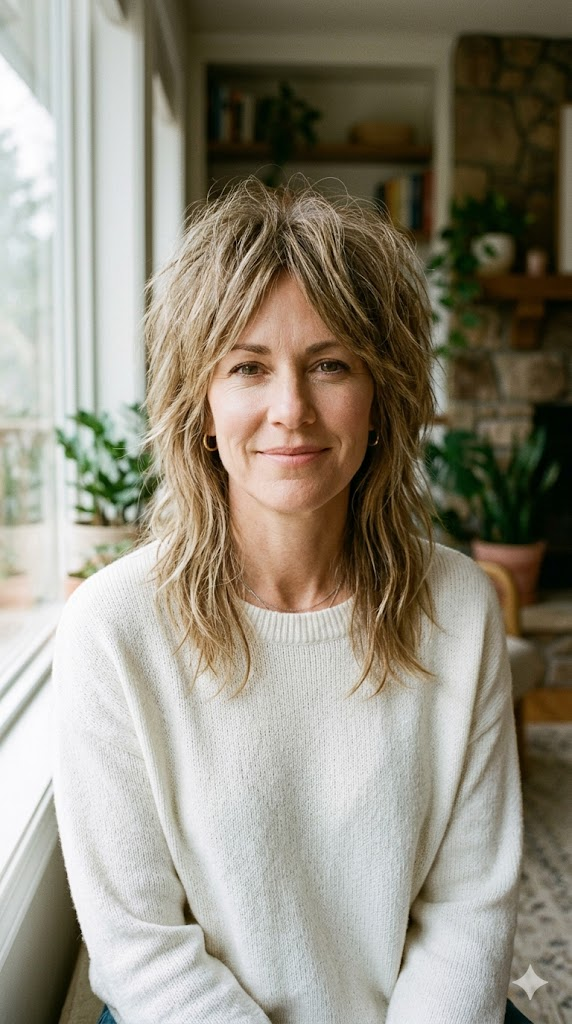
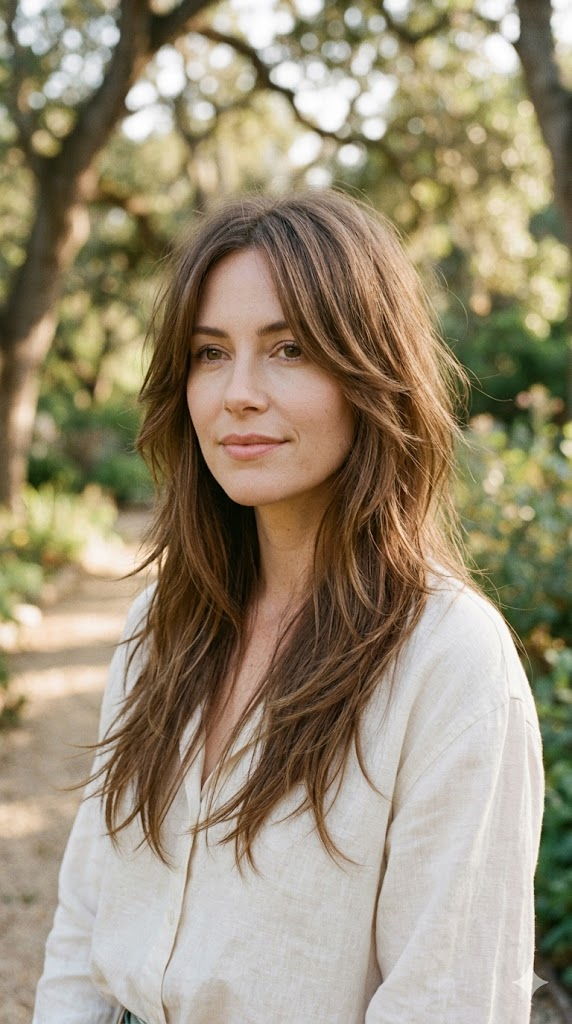
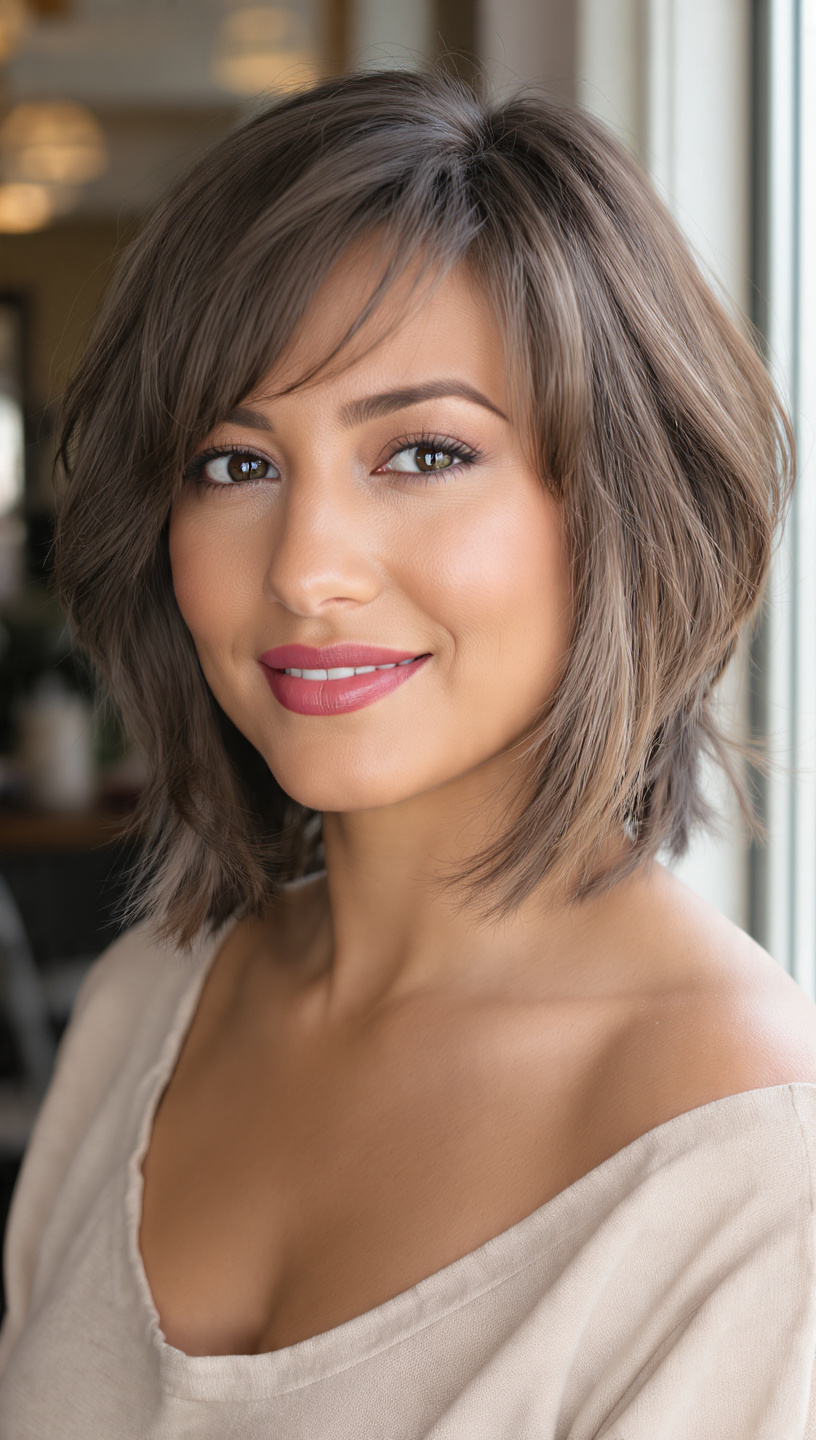
    Structural Movement without the Sparse Ends: This 2026 adaptation of the shag proves that fine hair can handle layers when executed with precision. By utilizing “bottleneck” fringe and face-framing “petals,” the cut creates significant volume at the crown and cheekbones where it matters most. To avoid the common pitfall of wispy ends, the perimeter is kept relatively blunt, ensuring the hair maintains its structural density while offering a breezy, effortless movement.

    Beyond the Chair: The “Fine Hair” Protocol

    • The “Root-Only” Rule: Guidelines for applying products only where they are needed to avoid collapsing the structure.
      The fastest way to sabotage a great cut is to weigh it down with product. Volumizers, mousses, and even conditioners should be applied primarily to the mid-lengths and roots (for lift), while keeping the ends as light as possible. A heavy, product-laden end will drag the entire style down. Less is always more; start with a pea-sized amount and add only if necessary.
    • Thermal Protection without the Weight: Prioritizing lightweight mists over heavy oils/creams for 2026’s “clean” aesthetic.
      The modern “clean” look prioritizes movement and airy texture, which is perfect for fine hair. Swap heavy serums and oils for ultra-fine thermal protection mists or sprays. These provide necessary heat protection without the slick, heavy coating that causes fine hair to stick together and look greasy or stringy.
    • Strategic Drying: Using a “rough dry” technique to 80% completion to encourage natural lift before introducing a brush.
      How you dry is as important as how you cut. Begin by “rough drying”—using your fingers to lift and agitate the hair at the roots while directing the hairdryer’s nozzle up and around the head. This sets the foundation for volume. Only when the hair is 80% dry should you bring in a brush to smooth and refine the ends. This technique locks in structural lift that can last for days.
    • The Micro-Trim Schedule: Why a 6–8 week “dusting” is essential to keep the blunt edges looking sharp and thick.
      The precision of a blunt edge is what creates the illusion of density for fine hair. As soon as those ends become uneven or begin to split, the solid line is lost, and the hair looks thinner. A “dusting” (a micro-trim of just a quarter inch) every 6–8 weeks is non-negotiable. It keeps the perimeter sharp, prevents splits from traveling up the shaft, and preserves the integrity of the cut.

    Conclusion: Confidence in the Cut

    • Structure Over Substance: Reiterate that the “drama” of styling ends when the physics of the haircut begins.
      The goal is to stop fighting your hair. When the cut is engineered correctly—whether it’s the solid line of a blunt bob or the internal architecture of a lob—the structure does the work for you. The endless cycle of “dramatic” styling—the backcombing, the dry shampoo buildup, the midday collapse—simply becomes unnecessary. A great cut is a foundation, not just a style.
    • The Freedom of Less: A final note on the time and money saved when you stop over-purchasing products.
      Fine hair is often the biggest spender in the beauty aisle, buying every “volumizing” product in hopes of a fix. The right cut flips that equation. By investing in precision haircuts instead of a cabinet full of band-aids, you reclaim both time and money. The daily routine becomes streamlined, effective, and intentional.
    • Final Thought: Fine hair isn’t a problem to be solved; it’s a texture to be mastered.
      Fine hair has a unique set of properties—it’s often silky, malleable, and responsive. When approached as a texture to be understood and enhanced with precise cuts and strategic styling, it becomes an asset. The goal is not to force it to be something it’s not, but to master its natural qualities to create looks that are chic, confident, and effortlessly full of life.
  • Summer Fits for Women Over 50: Chic, Cool & Effortless.

    Let’s be honest: the summer style advice aimed at women over 50 is often outdated. You’re told to cover up, stick to beige, or avoid trends altogether. But why would you? You’ve spent five decades learning what works—and what absolutely doesn’t.

    The secret to great summer dressing after 50 isn’t about hiding your arms or avoiding shorts. It’s about fit, fabric, and feeling good. You want linen that doesn’t scream “wrinkled mess.” You want shorts that don’t ride up. You want breathable layers that work for a farmers market at 10 AM and an outdoor dinner at 7 PM.

    Forget the old rules. Here are 10 real, wearable summer fits that prioritize sun protection, airflow, and quiet confidence—no frumpy capris or shapeless tunics allowed.

    10 Looks That Prove Style Has No Expiration Date:

    1. The Elevated Linen Set (Top + Wide-Leg Pant)


    Why it works: Takes the guesswork out of matching. Look for a sleeveless or short-sleeve button-up with a high-waisted, wide-leg linen pant in a saturated color (terracotta, sage, navy). The set looks like a dress but moves like loungewear. Add leather slides and a straw clutch.

    2. The Modern Knee-Length Short + Silk Tank


    Why it works: Ditch the tight “city short.” Opt for a 7-9 inch inseam with a relaxed, straight cut. Pair with a washable silk or modal tank in a complementary color. Throw on an open, long-line linen cardigan for arm coverage and air conditioning. Finish with minimalist leather sneakers.

    3. The Elevated T-Shirt Dress with a Structured Vest


    Why it works: A plain t-shirt dress can feel like a nightgown. Layer an unlined, lightweight cotton or linen vest (not a puffer) over it. The vest creates vertical lines, defines a shape without cinching, and covers the upper arms. Wear with low-profile white trainers or fisherman sandals.

    4. The Cropped Wide-Leg Jean + A Breathable Blouse


    Why it works: Crop jeans (not skinny, not acid wash) in a light wash or white denim. Pair with a camp collar or a soft popover blouse in cotton voile. Roll the sleeves once. The exposed ankle and loose top keep you cool while looking polished. Add espadrilles.

    5. The One-and-Done Maxi (with a side slit)


    Why it works: A long, fluid dress in a dark floral or solid navy. The key is the side slit—it allows air to circulate and makes walking easier. Look for a V-neck or a scoop neck. Avoid elastic shirring at the bust. Wear it solo with a long pendant necklace and leather slide sandals.

    6. The Airy Button-Up (Unbuttoned) + Matching Shorts


    Why it works: Think of it as a “shacket” for summer. A slightly oversized linen button-up worn open over a simple ribbed tank and high-waisted, loose-fit shorts (5-6 inch inseam). Keep the shirt and shorts in the same color family (e.g., cream-on-cream) for a lengthening effect.

    7. The Palazzo Pant + Fitted Knit Tank


    Why it works: Balance is everything. Wide, flowing palazzo pants (in a rayon or Tencel blend) get a modern update with a fitted, not tight, cotton knit tank. Tuck it in. The narrow top vs. wide bottom creates a sophisticated silhouette. Add wedge espadrilles for height.

    8. The “Third Piece” Look: White Jeans, Stripe Tee, & a Kimono


    Why it works: Classic pieces get a summer upgrade. Start with straight-leg white jeans and a navy/white striped Breton tee. The magic is the “third piece”: a lightweight, printed ankle-length kimono or duster in a watercolor floral. It adds interest, hides any midsection concerns, and flutters in the breeze.

    9. The Tennis Dress


    Why it works: Sporty is chic. Look for a golf or tennis dress made of moisture-wicking, stretchy tech fabric—not the clingy, thin kind. It should have a built-in shelf bra or a modest neckline. These dresses are designed for movement, dry quickly, and look fantastic with a clean white sneaker and a baseball cap.

    10. The Monochrome Jumpsuit (with a stretch waist)


    Why it works: Jumpsuits get a bad rap for bathrooms, but the right one is a summer hero. Look for a short-sleeve or sleeveless style in a dark, solid color (olive, black, chocolate) with a soft, elasticated back waist (not a drawstring). Wear a thin belt to define the waist. It’s one piece, zero effort, and looks incredibly expensive.

    The 5 Non-Negotiable Summer Fabrics for Women Over 50

    Not all summer fabrics are created equal. After 50, your skin changes, your body temperature regulates differently, and comfort becomes non-negotiable. Here’s what to look for on the tag—and what to leave on the rack.

    FabricWhy It WorksWhat to Avoid
    Linen (blended with Tencel or rayon)Breathes like nothing else. The blend reduces wrinkles while keeping airflow.100% stiff linen that feels like sandpaper.
    Cotton PoplinCrisp but lightweight. Holds its shape without clinging to anything.Cheap, thin cotton that shows every bump and wrinkle.
    Modal or TencelFeels like butter. Drapes beautifully over the body without clinging.Polyester blends that trap sweat and odor.
    Washable Silk (silk charmeuse or mulberry)Luxurious but practical. Regulates temperature better than any synthetic.Dry-clean-only silk for summer—too high maintenance.
    Performance Knits (athleisure-grade)Wicks moisture, dries fast, and doesn’t pill. Perfect for travel or humid days.Basic cotton jersey that stretches out and never recovers.

    The one fabric to retire: Acrylic. It’s plastic. It traps heat. And it makes you sweat in places you shouldn’t be sweating.


    What to Avoid This Summer (The 5 Outdated “Rules”)

    You’ve probably heard these for decades. Let’s retire them—permanently.

    ❌ 1. “You’re too old for shorts.”
    Wrong. You’re too old for short shorts. A 5-to-7-inch inseam with a relaxed fit is modern, comfortable, and perfectly appropriate at any age.

    ❌ 2. “Capris are a safe compromise.”
    No. Capris cut off the widest part of your calf and make most legs look shorter. Choose cropped wide-leg pants or knee-length shorts instead.

    ❌ 3. “Dark colors are more slimming.”
    Dark colors are also hotter, less joyful, and harder to accessorize. A saturated coral or soft sage will light up your face more than black ever could.

    ❌ 4. “Always cover your upper arms.”
    Only if you want to. But a flutter sleeve that flaps in the wind or a tight elastic cuff that cuts into your arm is worse than any bare arm. A relaxed, elbow-length sleeve or a lightweight duster is the better solution.

    ❌ 5. “Bigger clothes hide more.”
    Oversized and shapeless actually adds visual weight. The goal is structure—not tight, not baggy. A defined shoulder, a gentle waist, and a hem that hits the right place will always look better than a tent.


    How to Adapt These 10 Fits for Your Body Type

    One of the 10 outfits above will work for you. Here’s how to choose based on your shape.

    If you have…Start with this outfit from the listOne quick tweak
    An apple shape (weight around the middle)#1 The Elevated Linen SetKeep the top untucked or half-tucked. The wide-leg pant balances the middle.
    A pear shape (wider hips, smaller shoulders)#4 The Cropped Wide-Leg Jean + BlouseAdd a shoulder pad or a slightly structured top to balance your proportions.
    An hourglass shape#10 The Monochrome JumpsuitAdd that thin belt to define your natural waist. You’ll look like you were poured into it.
    A rectangular shape (straight up and down)#8 The “Third Piece” Look (kimono)The layered duster creates curves where there aren’t any.
    Petite (under 5’4″)#3 The Elevated T-Shirt DressKeep the vest shorter—hip-length, not knee-length. And avoid the maxi dress (it will swallow you).
    Tall (over 5’7″)#5 The One-and-Done MaxiYou’re one of the few who can wear a floor-length dress without alterations. Lean into it.

    A note on fit: If you’re between sizes, always size up and tailor down. A $20 hem or a $15 waist taken in will make a $100 outfit look like $1,000.


    The 10-Minute Packing List for a Summer Trip

    Planning a vacation? Here’s how to pack three of the outfits above into a carry-on and never repeat an outfit.

    The Capsule (pick 3 from the list above):

    • 1 pair of white straight-leg jeans (#8 or #4)
    • 1 linen set or jumpsuit (#1 or #10)
    • 1 maxi dress (#5)

    The 5 Mix-and-Match Pieces:

    • 2 simple tank tops (cream + navy)
    • 1 long linen cardigan or kimono (#8)
    • 1 pair of leather slides
    • 1 pair of white sneakers
    • 1 straw tote or crossbody bag

    Pro tip: Roll everything except the linen set. Hang the linen set in the bathroom while you shower—the steam will release the wrinkles without an iron.


    Real Women, Real Style (Mini Case Studies)

    Sometimes it helps to see these fits on someone like you. Here are three fictional but realistic examples based on actual style principles.

    Conclusion

    Here’s the truth no magazine cover will tell you: The most stylish women over 50 aren’t following “age-appropriate” rules—they’re following the weather and their own instincts.

    You don’t need to hide your arms, abandon shorts, or live in beige linen sacks. What you need is what you’ve always needed: clothes that fit well, fabrics that breathe, and silhouettes that make you feel like you—just a wiser, more discerning version.

    These 10 summer fits share one thing in common. They aren’t about chasing youth or surrendering to invisibility. They’re about choice. The choice to wear a tennis dress because it’s comfortable, not because you’re playing Wimbledon. The choice to add a side slit to a maxi dress because you want to feel the breeze. The choice to layer a vest over a t-shirt dress because you like the way it looks—not because someone told you to cover up.

    This summer, ignore the outdated “dos and don’ts.” Step outside in what actually feels good. Wear the wide-leg linen set to brunch. Rock the cropped jeans with sneakers. Buy that jumpsuit in olive green and wear it somewhere unexpected.

    Because here’s the final truth: Confidence isn’t about what size you wear or how old you look. It’s about how freely you move through a hot July day without tugging, adjusting, or second-guessing your reflection.

    So go ahead. Sweat in silk. Laugh in linen. And prove that summer style after 50 isn’t about fading away—it’s about showing up, unapologetically, in exactly what you want to wear.

  • 15 Summer Fits for Mums: Easy, Chic, and Kid-Proof Outfits

    Summer as a mum means juggling playground trips, coffee dates, grocery runs, and the occasional evening glass of wine on a terrace. You want to look put-together but not overdressed, comfortable but not frumpy, and cool in both senses of the word.

    That’s why I’ve put together 15 complete summer fits (outfits) designed for real mum life. Think breathable fabrics, forgiving cuts, easy movement, and clever accessories that do the heavy lifting. No ironing required at 7 AM. No outfits that betray you the second you have to chase a toddler.

    Let’s get you dressed for your best summer yet.

    15 Summer Fits for Mums That Actually Work:

    1. Linen Button-Up + Bike Shorts + Leather Slides

    • Why it works: Covers the bum, breathes like a dream, and lets you move freely.
    • Mum note: Throw it on over a swimsuit for pool pickup.

    2. Oversized Cotton Tee + Paperbag Waist Shorts + Slip-On Sneakers

    • Why it works: High-rise shorts hold you in; the tee hides any midsection worries.
    • Mum note: Tie the tee at the side for instant polish.

    3. Sleeveless Polo + Wide-Leg Cropped Trousers + Canvas Trainers

    • Why it works: Looks intentional but feels like pyjamas.
    • Mum note: Machine washable and no ironing needed.

    4. Jersey Wrap Top + Pull-On Denim Shorts + Espadrilles

    • Why it works: Wrap tops flatter every bust size; elastic shorts mean no zipper fights.
    • Mum note: Great for nursing mums (easy access).

    5. Rashguard Swim Top + High-Waist Board Shorts + Sport Sandals

    • Why it works: Sun protection without looking like a scuba diver.
    • Mum note: No need for a separate cover-up—just add shorts.

    6. Matching Sweatshorts Set (hoodie + shorts) + White Trainers

    • Why it works: Matching sets look expensive and take zero thought.
    • Mum note: Buy in heather grey or beige to hide kid handprints.

    7. Cotton Poplin Midi Dress + Zip-Up Hiking Sandals

    • Why it works: Breezy, modest bending-over length, and sandals with grip.
    • Mum note: Poplin doesn’t cling to sweat.

    8. Cropped Hoodie (unzipped) + Legging Shorts + Visor Cap

    • Why it works: Covers arms from sun but keeps core cool.
    • Mum note: Perfect for amusement parks or sports sidelines.

    9. Basic Tank + Linen Blend Culottes + Woven Slides

    • Why it works: Culottes give skirt-like airflow with shorts-like practicality.
    • Mum note: Tuck tank in front only for a 5-second shape.

    10. Striped Breton Top + White Cropped Jeans + Fisherman Sandals

    • Why it works: A classic that works on tired days. White denim looks crisp instantly.
    • Mum note: Buy stain-repellent spray for white jeans.

    11. Tie-Front Blouse + Elastic-Waist Midi Skirt + Low Wedges

    • Why it works: Tie-front creates waist without cinching. Midi length = no thigh chafe.
    • Mum note: Wedges are easier to walk in than flats on grass.

    12. Unlined Soft Blazer + Sleeveless Bodysuit + Raw Hem Shorts

    • Why it works: Blazer elevates shorts to “I have my life together.”
    • Mum note: Choose a machine-washable knit blazer.

    13. One-Shoulder Knit Top + Cream Trousers + Strappy Block Heels

    • Why it works: Knit stretches with you; block heels = no ankle rolls.
    • Mum note: Date night that doesn’t scream “trying too hard.”

    14. Silk-Blend Cami + High-Rise Barrel Jeans + Leather Mules

    • Why it works: Cami is cool; barrel jeans are trendy but roomy.
    • Mum note: Mules slip on silently (good for sneaking out at naptime).

    15. Short Puff-Sleeve Dress + Rattan Clutch + Tan Slides

    • Why it works: Puff sleeves balance upper arms; dress length hits above knee but not too short.
    • Mum note: Throw in a nude bike short underneath for playground peace of mind.

     The Accessories That Actually Work for Summer Mums

    The Wide-Brim Sun Hat – Not just for beach holidays. A packable, crushable straw or cotton hat protects your face and neck during park trips, sports days, and car boot sales. Go for a chin strap (detachable is fine) so you can chase a toddler without it flying off. Bonus: hides second-day hair instantly.

    Oversized Cotton Scarf or Muslin Wrap – The multi-tool you didnt know you needed. Use it as a nursing cover, a picnic blanket, a car seat sun shield, a shoulder wiper for sweaty babies, or an emergency top if someone spills. Choose a light colour to reflect heat. Wash it nightly; it dries by morning.

    Basket or Straw Tote – Lightweight, breathable, and holds everything. Skip leather or nylon that traps heat against your body. A medium open-top basket bag with a long shoulder strap lets you see inside (no digging for keys), and you can hose it off if a yoghurt pouch explodes. Look for one with an internal zip pouch for your phone and suncream.

    Minimalist Sunglasses – Polarised lenses are non-negotiable for driving and reducing glare off pavements. Go for a lightweight plastic frame that wont pinch behind your ears during long wear. Keep a cheap spare pair in the nappy bag or car glovebox.

    Slide-On Sandals (No Buckles) – You already have the one-shoe rule from Section 2. Now refine it: choose a pair with arch support, a non-slip sole, and a soft footbed. Leather or EVA foam are best. Avoid fabric straps that stay wet. Slides or fisherman sandals with velcro are faster than laces when you have a crying child in the other arm.

    A Thin Crossbody Phone Pouch – Your hands are for kids, snacks, and car doors. A slim, lightweight crossbody that holds just your phone, a card, and a lip balm keeps you free. Look for nylon or recycled polyester (quick-dry) with a breakaway clasp for safety around playground equipment.

    Hair Claws and Silk Scrunchies – Heat and humidity mean hair on the neck is torture. Keep a large claw clip in your bag and one in the car. Silk scrunchies dont pull baby hairs or leave a dent. Choose a bright colour so you can spot them in the bottom of your tote.

    Mini Hand Sanitiser on a Carabiner – Clip it to your bag strap or belt loop. After touching public changing tables, playground gates, or sweaty push handles, you can clean up without setting anything down. Bonus: the carabiner also holds a mini suncream or a pair of kids sunglasses.

    A Foldable Water Bottle – Staying hydrated stops heat exhaustion and keeps milk supply up if nursing. A collapsible silicone bottle (500ml) squashes into your bag when empty. Refill at any cafe or public fountain. Avoid metal bottles that turn into hot potatoes in the sun.

    The Multi-Pack Cotton Bralette – Not strictly an accessory, but it functions like one. A soft, wireless, cotton or bamboo bralette with a wide underband and adjustable straps replaces three bras. No underwire digging in, no sweaty foam cups. Wear it under linen shirts, sundresses, or alone on 35-degree days.

    “The Fabrics That Save a Mum’s Summer”

    Linen – The ultimate breathable hero. It lets air flow, dries fast, and looks effortlessly put-together even when wrinkled (embrace the crunch!). Go for a looser weave for max ventilation.
    Cotton Jersey – Soft, forgiving, and doesn’t fight you. A cotton jersey tee or dress moves with you during school runs and playground trips. Bonus: it won’t overheat in the car seat.
    Tencel & Bamboo – Naturally antibacterial, sweat-wicking, and buttery-soft. Ideal for sensitive skin (yours or baby’s) and humid days. They drape beautifully over curves without clinging.
    Quick-dry blends – The unsung heroes of splash pads, sudden rain, or sweaty walks. Look for recycled polyester or nylon blended with spandex – they wick moisture and dry in 20 minutes.

    Why polyester is a sweat trap:
    Classic polyester (non-wicking) seals in heat and moisture like a plastic bag. It traps odour, sticks to every roll or dip, and leaves you feeling damp and cranky by 10am. Save it for the kids’ costume box, not your summer uniform.


    Real Mum Hacks: How to Style These Fits in 90 Seconds”

    Pre-rolled outfits in the wardrobe – On Sunday night, roll 5 complete outfits (top + bottom + bra + undies) into separate drawer cubes or shelf bins. Grab, go, no thinking. Even a 90-second dash to the changing room works.

    One-shoe-for-three-looks rule – Pick a neutral, comfortable, water-resistant shoe (e.g. leather slides, crisp white sneakers, or tan fisherman sandals). That one pair works with:

    • Linen shorts + tee
    • A jersey midi dress
    • Lightweight trousers + tank
      No hunting for matching footwear ever again.

    Keeping a spare tee in the car – Stash a cotton jersey or bamboo T-shirt (rolled in a ziploc bag) in the glovebox or under a seat. Post-splash pad, post-ice cream meltdown, or post-spilled coffee – you have a fresh, non-sweaty top ready. Bonus: use it as a nursing cover or emergency towel.


    What Works for Every Body (Postpartum & Beyond)”

    High-rise waists – A game-changer for C-section recovery, diastasis recti, or simply wanting to sit down without a waistband digging in. High-rise shorts, skirts, and trousers hold you gently without squeezing.

    Shirring – Elasticated smocking (shirring) across bodices or waistbands stretches with your changing shape. It forgives bloat, postpartum belly, and weight fluctuations. Plus, no zips or buttons to wrestle with while holding a toddler.

    A-line shapes – Skims over hips, thighs, and lower belly while keeping you cool. An A-line linen dress or skirt lets air circulate and never clings. Instant polish with zero effort.

    Adjustable straps – For nursing mums or anyone whose bust size has changed (hello, weaning). Wide, adjustable shoulder straps on dresses, tops, or rompers let you customise the fit – no bra straps sliding off, no gaping armholes.

    Stretch where it matters – Side panels in shorts, elasticated back waists on linen trousers, or stretch-cotton blend in a pencil skirt. You don’t need head-to-toe Lycra – just give yourself room to breathe, bend, and chase a runaway kid.

  • What Haircut Suits Your Face Shape? A Plain-English Guide

    What Haircut Suits Your Face Shape? A Plain-English Guide

    This is the question behind every other question you’ve ever asked about your hair.

    Face shape is the foundational variable in every haircut conversation — and also the most misunderstood. Most guides tell you your face shape and then give you a list of cuts. This one tells you what you’re actually trying to achieve with your face shape, and then shows you how every major 2026 haircut either helps or doesn’t.

    There are six face shapes that most stylists work with: oval, round, square, heart, diamond, and oblong. Each has a different structural consideration — where width needs to be added or reduced, where height helps or hurts, where softness makes a face look more balanced. Once you understand the principle behind your face shape rather than just the prescription, you can apply it to any haircut, any fringe, any colour placement. This is that guide.

    → The honest truth about face shape guides: most people fall between two categories, not neatly into one. If you’re not sure whether your face is round or square, it probably has elements of both — and the most flattering cuts will be ones that address both tendencies simultaneously.

    What Haircut Suits Your Face Shape? The 2026 Guide to Geometric Balance:

    1. Oval

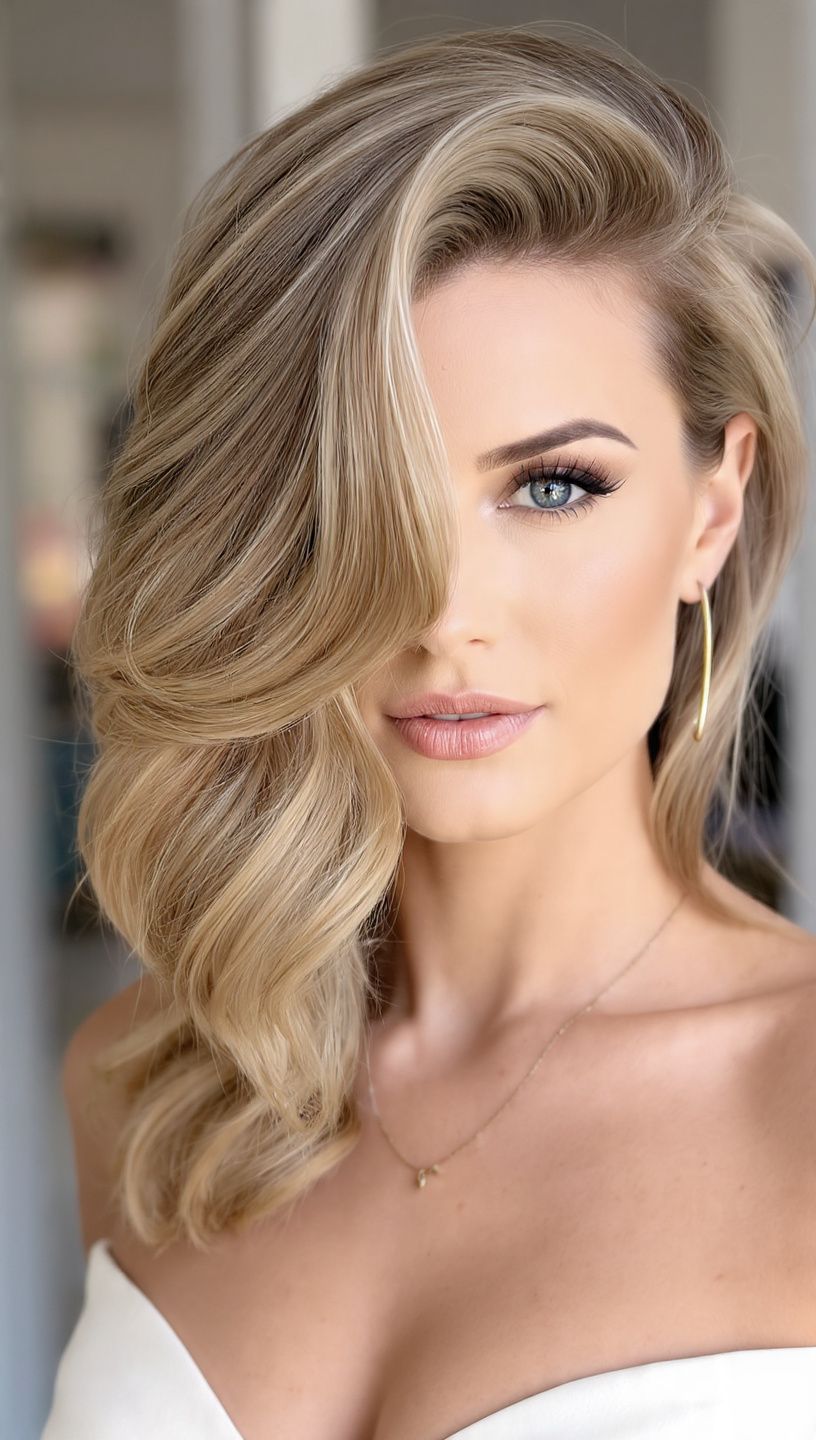
    The Side-Swept Hollywood Wave

    For an oval face shape, the goal is to maintain the natural symmetry without over-elongating the silhouette, and these voluminous side-swept waves achieve exactly that. By parting the hair deeply on one side, it adds a touch of lateral width at the temple and cheekbone level, preventing the face from looking too narrow. The soft, structured curls provide movement that complements the balanced proportions of an oval frame, showing how a “classic” look can be used to highlight a lack of sharp angles.

    The Architectural Blunt Fringe

    This style demonstrates how a heavy, straight-across fringe can intentionally alter the perceived proportions of an oval face by “capping” the vertical length. The sharp, horizontal line of the bangs draws immediate attention to the eyes and cheekbones, effectively shortening the face’s appearance for a more compact, high-fashion look. Because the oval shape is the baseline for balance, it can handle the stark geometry of pin-straight strands and a blunt fringe without looking “boxed in” or overwhelmed by the hair’s weight.

    2. Round

    The Textured Angled Lob

    This voluminous long bob is an ideal solution for a round face shape because it prioritizes verticality over lateral width. The deep side part and height at the crown create an elongated silhouette that offsets the face’s natural 1:1 proportions, while the textured layers are designed to hit below the chin to avoid adding bulk to the cheek area. By using Piecey movement to break up the circular outline of the face, this cut successfully introduces a sense of structure and “visual angles” that harmonize a soft jawline.

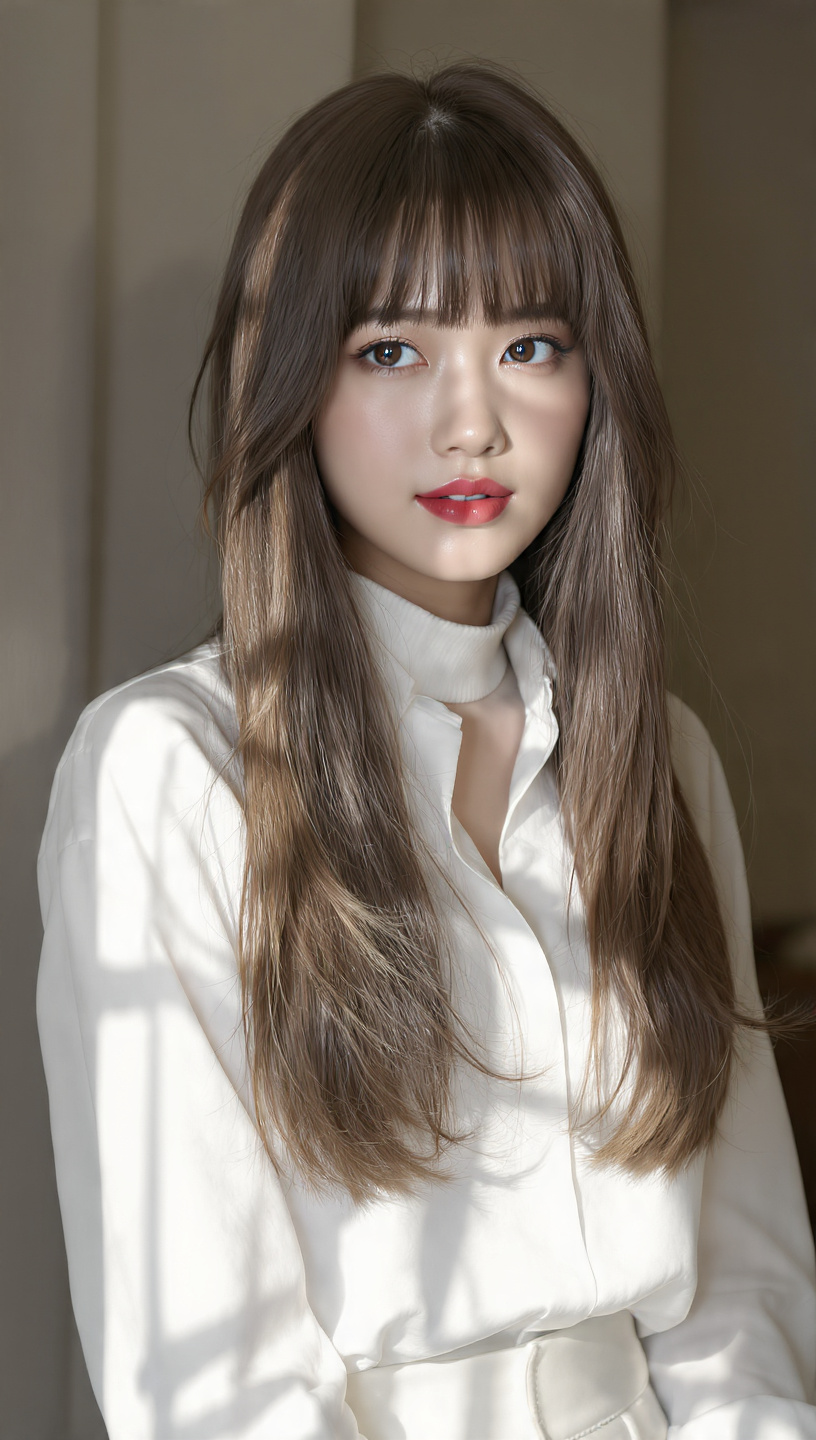
    The Face-Lengthening Wispy Fringe

    While heavy, blunt bangs can often “squash” a round face, this wispy, eyebrow-grazing fringe uses transparency to maintain a sense of height. The gaps in the bangs allow the forehead to remain partially visible, preventing the face from looking too short, while the straight, shoulder-skimming length provides a strong vertical frame that narrows the cheekbones. It’s a sophisticated example of how a horizontal element can be adapted to flatter a circular shape by keeping the texture light and the overall length sleek.

    3. Square

    The Brow-Skimming Arched Fringe

    This look is specifically designed to soften the strong, angular forehead typical of a square face shape by introducing a curved horizontal line. The slight arch in the bangs prevents the hair from creating a “box” around the face, while the long, straight layers provide a vertical frame that draws the eye downward, away from the jawline. By keeping the texture smooth and the length extended, this cut achieves a balance that prioritizes movement and structural softness.

    The Face-Framing Contour Layers

    For a square or “squound” face, these long, interior layers are the ultimate tool for breaking up a prominent jawline and adding visual “roundness” to the frame. The layers are cut to curve inward toward the face, acting as a soft contour that hides the sharpest points of the bone structure while the length adds a slimming effect. The result is a highly intentional 2026 style that creates a more oval-like appearance through clever layering and light-reflective color placement.

    4. Heart

    The Bottleneck Fringe Shag

    This style is an excellent structural solution for a Heart face shape because it uses a tapered “bottleneck” fringe to narrow the wide forehead while adding essential bulk around the jawline. The curtain-like bangs sweep outward, drawing the eye toward the cheekbones, while the heavy, textured layers below the chin fill in the visual “gap” created by a narrower lower face. By concentrating the movement and volume at the bottom of the cut, it effectively balances the top-heavy proportions of the heart archetype.

    The Mid-Length Butterfly Cut

    For a heart-shaped face, this mid-length butterfly cut provides a masterclass in adding lateral width right where the chin begins to taper. The voluminous layers are styled to flip outward at the jawline, creating a horizontal weight line that harmonizes with a wider forehead. The center part and soft, face-framing “wing” layers ensure that the temples remain streamlined, allowing the added volume at the bottom to create a more oval-like symmetry across the entire frame.

    5. Diamond

    The Tendril-Framed Low Pony

    This look is a tactical choice for the Diamond face shape, which features wide cheekbones and a narrower forehead and jaw. The long, soft tendrils left out of the ponytail act as a visual “contour,” grazing the outer edges of the cheekbones to minimize their width and create a smoother transition from the temples to the chin. By adding volume and waves to the lower half of the ponytail, the style also introduces much-needed horizontal weight near the jawline, effectively balancing the diamond’s naturally “pinched” lower face.

    The Sleek Mid-Part and Temple Fillers

    For a diamond face, the goal is often to add volume at the top and bottom to offset high, prominent cheekbones, and this sleek style uses a unique 2026 approach. The center part draws a vertical line that elongates the face, while the hair is kept flat against the widest part of the cheekbones to avoid any extra lateral bulk. The subtle placement of hair behind the ears allows the jawline to appear more substantial, while the long, straight strands provide a consistent frame that softens the dramatic angles of the mid-face.

    6. Oblong (often called Rectangular)

    The Voluminous Curtain Butterfly Cut

    For an Oblong face shape, the primary structural goal is to break up the long vertical line by adding significant lateral width, and this voluminous butterfly cut does exactly that. The curtain bangs sweep outward at the cheekbones, creating a horizontal focal point that effectively “cuts” the length of the face in half. By concentrating the largest curls and layers at the sides rather than the top, the style adds necessary bulk to the mid-face, making a long, narrow frame appear more balanced and oval-like.

    The Textured Mid-Length Shag

    This style is a masterclass in using texture to harmonize an Oblong or Rectangular face by prioritizing width through “messy” volume. The choppy layers are designed to kick outward, creating a wider silhouette that counters the face’s natural length. By avoiding flat, pin-straight strands—which would only drag the face downward—this cut uses multi-tonal highlights and air-light movement to fill in the space around the jaw and neck, providing a more compact and proportional look.

    The Hybrid Problem: What if You’re “In-Between”?

    Most people don’t fit neatly into a single geometric category. This section solves the ambiguity of being stuck between two shapes.

    • The “Squound” (Square-Round): For faces that have a strong jawline (square) but soft, full cheeks (round). The goal is to avoid adding bulk at the jaw (which widens a square) or softness at the cheeks (which widens a round). The solution is internal layering—removing weight from the interior of the hair while keeping the perimeter intact—to slim the silhouette without sacrificing structure.
    • The Dominant Feature Rule: Sometimes a specific feature overrides your overall face shape. A prominent nose might benefit from side-swept fringe that draws the eye horizontally; a high forehead might require weight at the hairline; a weaker chin usually needs volume or texture at the nape to create the illusion of a stronger profile. When a feature is this dominant, you cut for the feature, not the outline.
    • Focusing on the Goal: When you’re in-between, you have to choose your priority. Are you trying to soften a strong jawline? Or are you trying to narrow the width of your cheeks? Identifying the one thing you want to harmonize most helps your stylist decide which “half” of your hybrid shape to address.

    Hair Texture: The Great Shape-Shifter

    The same haircut behaves entirely differently depending on density and curl pattern. This section bridges the gap between geometry and reality.

    • Density vs. Shape: A blunt lob is the go-to for adding width to a narrow face—but if you have fine hair, that blunt edge creates the illusion of density. If you have thick hair, that same blunt edge creates actual bulk, which can overwhelm a smaller frame and requires texturizing or under-cutting to maintain the intended shape.
    • The Curl Factor: Curls don’t follow the same gravity as straight hair. Instead of thinking about face shape in two dimensions, curly cuts focus on the silhouette: a “triangle” shape (widest at the ends) drags the face down and adds width where you usually don’t want it. A “diamond” shape (widest at the ears/cheekbones, narrow at the ends) lifts the face and can be used to mimic the proportions of an oval shape regardless of your underlying bone structure.
    • Real-World Constraints: Your cowlicks and growth patterns are the boss. A perfect middle part for a heart-shaped face doesn’t work if your hair grows straight forward. This section covers how to identify your “hair behavior” (where it wants to go) before committing to a geometric ideal.

    The 2026 Toolkit: Digital & Chemical Enhancements

    Modern tools allow us to manipulate geometry without committing to a drastic chop.

    • AI Virtual Try-Ons: Gone are the days of holding a photo up to a mirror. Modern AR filters can map haircuts onto your specific face in real-time. This section advises how to use these tools to test the geometry of a cut—checking where the fringe lands on your brow or where the length hits your jaw—before you sit in the chair.
    • Contouring with Color: Using “Hair Strobing” —the strategic placement of highlights and lowlights—to alter perceived face shape. Lightness brings features forward and widens; darkness pushes features back and slims. You can “shorten” a long face by placing a horizontal ribbon of lightness at the cheekbones, or “narrow” a round face by keeping the darkest color along the perimeter of the hair.
    • Structural Perms: For those whose natural texture lacks the volume needed to balance their face shape, modern perms are about architecture, not tight curls. A “root volume” perm or a “body wave” can add the horizontal width a long face needs or provide the lift a heavy jawline requires to look balanced.

    From Pinterest to Reality: The Stylist Conversation

    Knowing the principle is useless if you can’t communicate it to the person holding the scissors.

    • Translating Principles to English: Stylists are visual artists, not mind readers. This section provides a script: instead of saying “I want a lob,” you learn to say, “I want a blunt perimeter to add density to my fine hair, but I need it to hit above my jawline so it doesn’t accentuate the width of my round face.”
    • The Three-Photo Rule: Why bringing just one photo sets you up for failure. You need a “Goal” photo (the vibe you want), a “No” photo (what you don’t like about the goal photo—e.g., “I like this but not the heavy fringe”), and a “Realistic” photo (a picture of your own hair texture at its best, or a photo of a cut on someone with similar density to yours).
    • Maintenance Levels: Every shape requires upkeep. A blunt cut that balances a square face requires sharp lines; if you don’t get trims every 6-8 weeks, the shape collapses. A textured, layered cut grows out more gracefully but requires daily styling to look intentional. This section helps you identify the “work-to-reward” ratio you’re actually willing to commit to.

    Conclusion: The Confidence Variable

    Geometry is a guideline, but style is personal.

    • The Rule-Breaking Exception: Sometimes the most memorable haircut is the one that defies your face shape. If you have a round face and want a severe, geometric bowl cut because it fits your punk aesthetic, the confidence you wear it with will override any “flattering” prescription. Style is about signaling who you are, not just hiding what you have.
    • Final Encouragation: Hair grows back. Geometry is just a starting point for exploration. The goal of this guide isn’t to trap you in a category, but to give you the vocabulary and understanding to experiment with purpose—so whether you follow the rules or break them, you’re doing it intentionally.
  • 15 Short Hairstyles for Fine Thin Hair That Actually Create Volume.

    If you have fine, thin hair, you’ve probably heard the same bad advice: “Just grow it long to weigh it down.” In reality, long hair often makes fine strands look flatter, stringier, and more transparent. The real game-changer? A great short cut.

    Short hairstyles remove excess weight, allowing your roots to lift and your natural texture to shine. But not every short cut works. The wrong bob can collapse into a triangle. The wrong pixie can highlight sparse areas. That’s why I’ve put together 15 specific, stylist-approved short hairstyles for fine thin hair—plus how to find the right stylist, the products that actually deliver, and the hard truths nobody mentions before you chop it all off.

    Let’s dive in.

    15 Short Hairstyles for Fine Thin Hair:

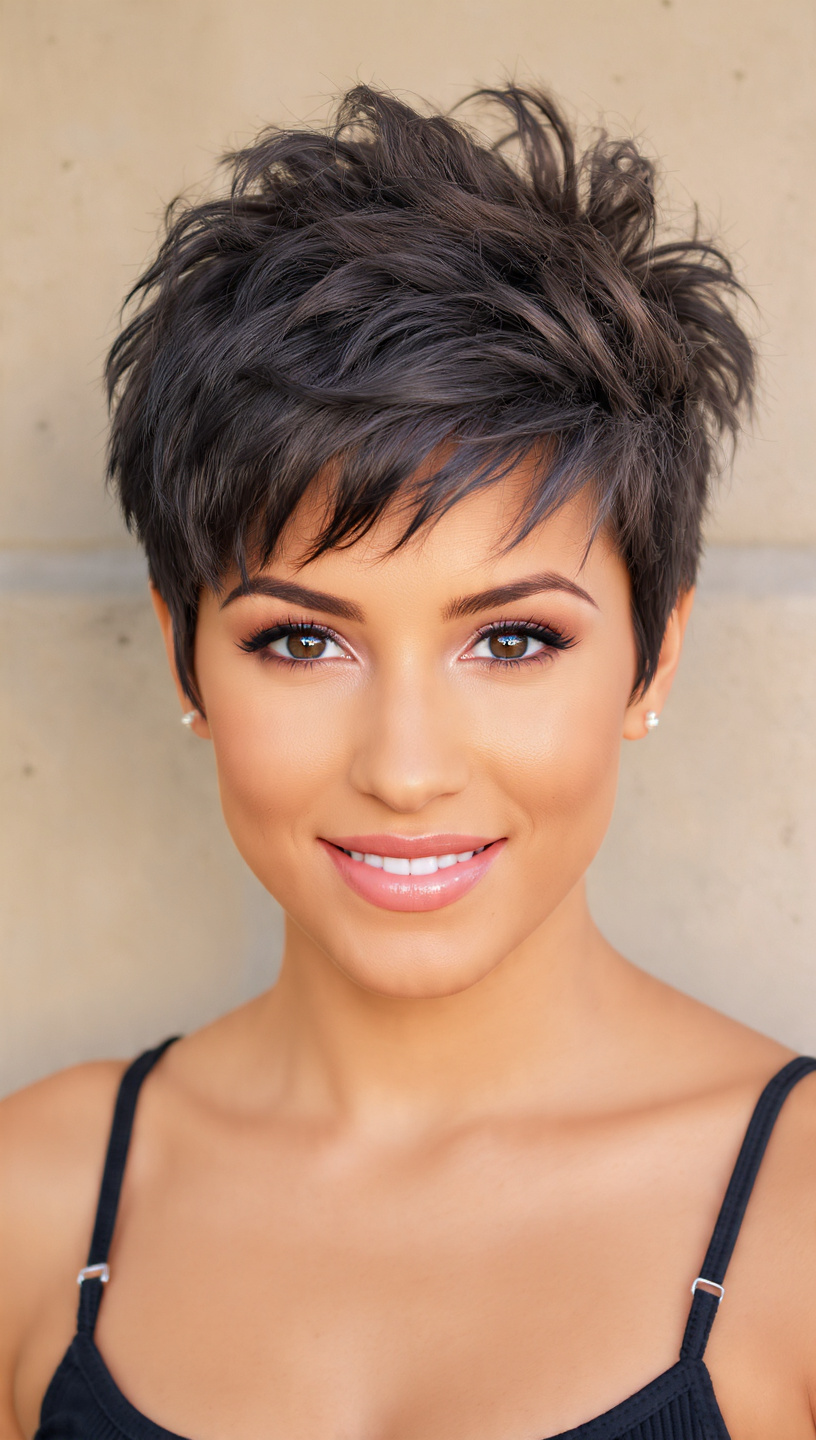
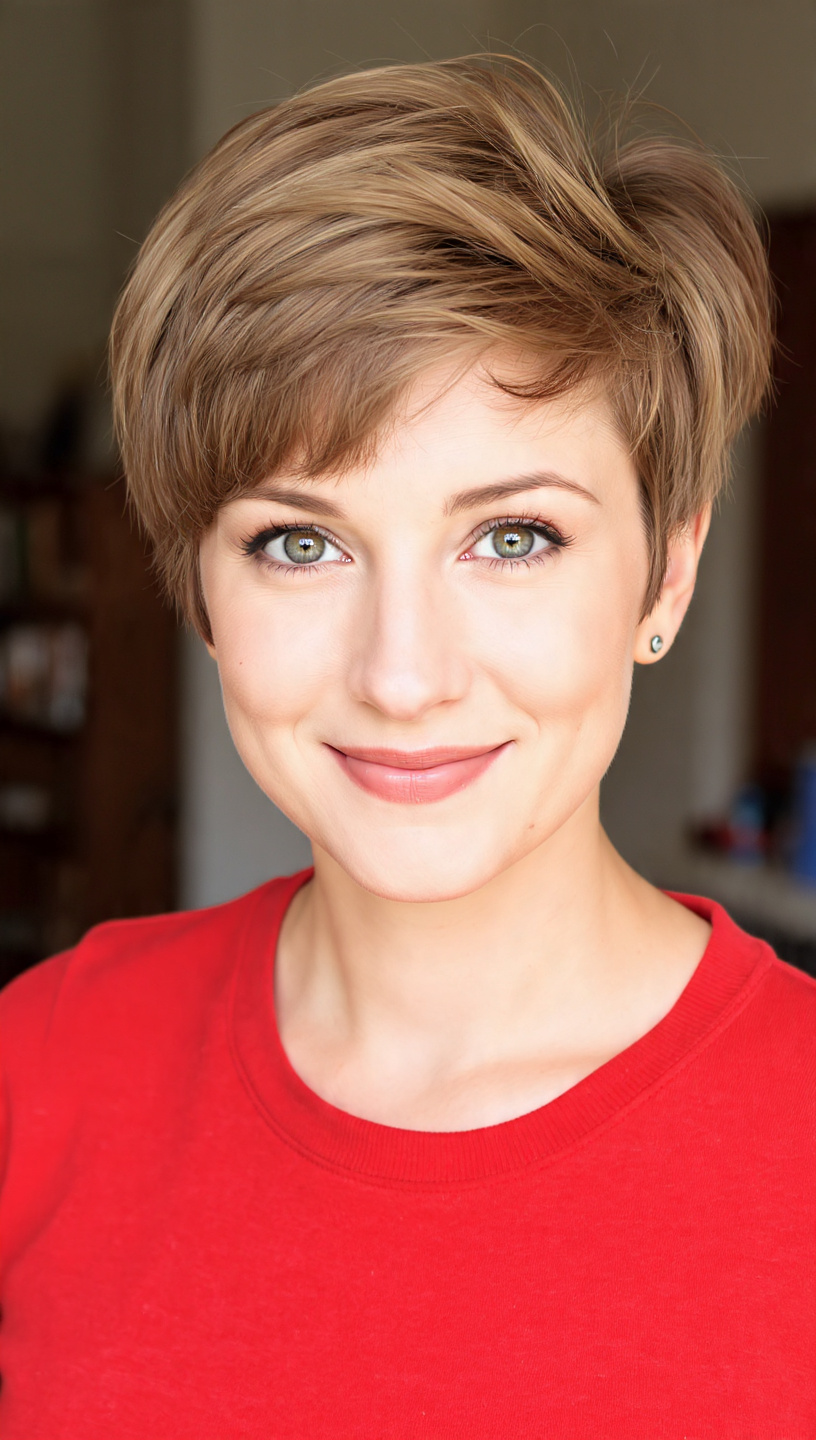
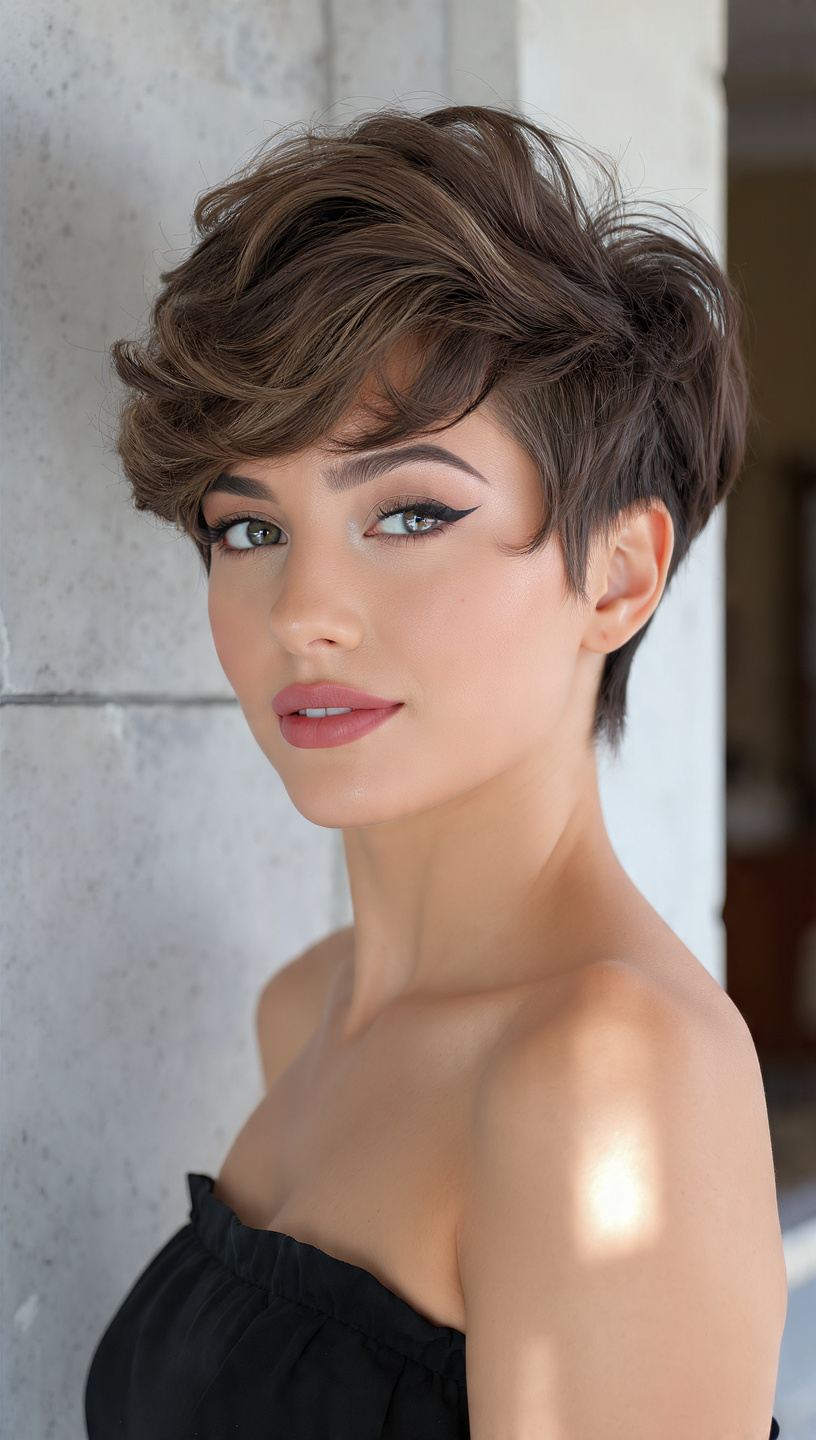
    1. Textured Pixie Cut

    Short, choppy layers on top with a tapered nape. The texture creates natural root lift, and keeping the back close to the head prevents the dreaded “mullet” effect while making the crown appear fuller.

    2. French Bob with Micro Bangs

    A jaw-length blunt bob with a slight undercurl and very short, straight-across micro bangs. The blunt ends create an illusion of density, while micro bangs draw visual attention upward and away from thinner areas at the crown.

    3. Cropped Shag

    A short, heavily layered cut with piece-y fringe and lots of internal texture. The layers remove weight so the hair doesn’t collapse, and the messy, lived-in volume tricks the eye into seeing more thickness than actually exists.

    4. Asymmetrical Pixie Bob

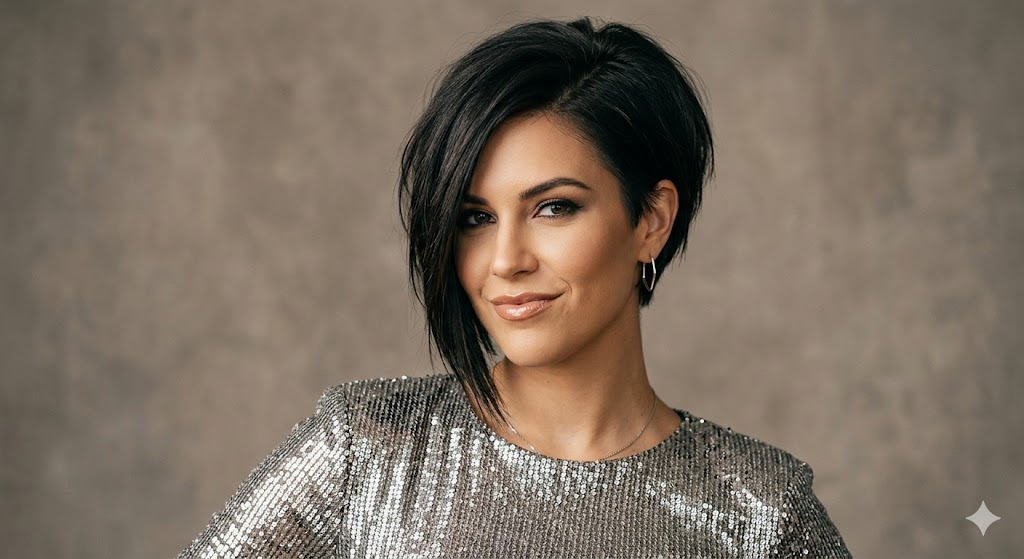
    One side is slightly longer than the other, with a short nape and a side-swept top. Asymmetry confuses the eye and creates the perception of more fullness on the longer side.

    5. Clipped Undercut Pixie

    The sides and back are buzzed very short (often with clippers), while the top is left longer and textured. Removing bulk underneath makes the top appear dramatically fuller by comparison.

    6. Wispy Layered Bob

    A chin-length bob with soft, feathery ends instead of blunt or heavy ends. The wispy finish prevents the “flat helmet” look and allows for gentle movement that doesn’t expose gaps.

    7. Modern Bowl Cut

    A rounded, soft-edged shape with a micro fringe and a visible weight line at the perimeter. Unlike the childhood version, this modern take uses blunt lines to create a solid, dense-looking silhouette.

    8. Tapered Pixie with Long Bangs

    Close-cropped back and sides with longer hair on top and long, side-swept bangs. The long bangs add versatility and provide coverage if you have a thin or receding hairline.

    9. Modern Mini Mullet

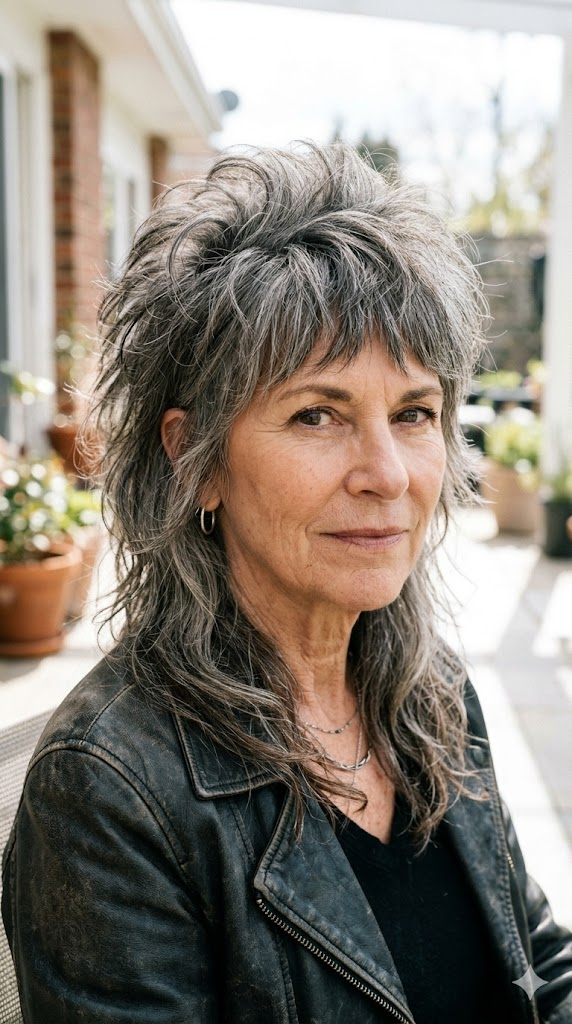
    Short sides, a stacked crown, and a wispy, slightly longer nape. The volume at the crown is the star here, and the shorter sides eliminate the weight that normally pulls fine hair flat.

    10. Chin-Length Graduated Bob

    A stacked interior in the back that pushes hair forward into a rounded, chin-length shape. The graduation creates a thick-looking curve at the perimeter without needing dense hair.

    11. Buzz Cut (Short Everywhere)

    Evenly buzzed to about a #3 or #4 guard all over. Thin hair actually looks intentional and chic at this length, and the uniform shortness removes any expectation of “volume” entirely.

    12. Side-Parted Pixie

    A deep side part with longer top hair swept dramatically to one side and a tapered back. The deep part creates instant height at the root on the heavier side.

    13. Curly Pixie (For Fine Curly Hair)

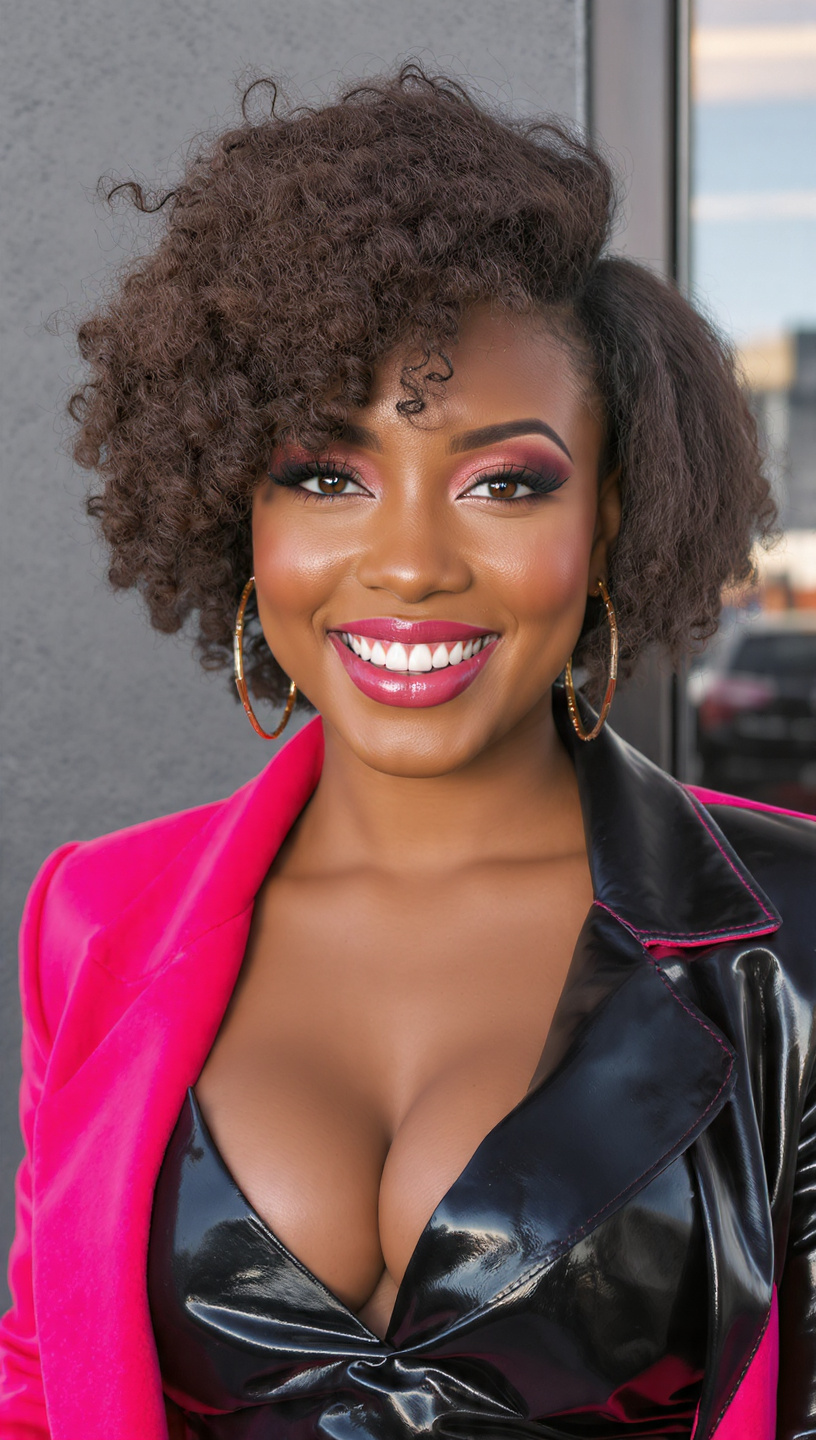
    Short sides and back with defined ringlets left longer on top. Removing weight lets fine curls spring up instead of stretching flat, resulting in surprising volume.

    14. Sleek Blunt Mini Bob

    An ear-length bob cut with no layers whatsoever. The blunt, straight line makes fine hair look thicker at the ends, and the short length prevents the weight that would otherwise pull it flat.

    15. Piece-Y Pixie with Highlights

    A textured pixie where individual pieces are visibly separated, paired with fine, strategic highlights. The color variation adds visual texture and depth where natural density is lowest.

    How I Chose My Stylist

    Fine, thin hair is unforgiving. A bad haircut will show every gap. Here’s exactly how I vetted my stylist:

    1. I looked for “fine hair” in their portfolio – not just “short hair.” Thin, fine hair needs a specialist.
    2. I asked two specific questions:
      • “Do you cut fine hair dry or wet?” (Good answer: dry or mostly dry, so they see how it naturally falls.)
      • “How do you avoid the ‘bald spot’ effect on a pixie?” (Good answer: point-cutting, not blunt shears all over.)
    3. I booked a consultation first – not a full cut. I watched how they handled another client’s fine hair.
    4. I avoided “trendy” salons that favor thick, coarse hair. Instead, I found an older stylist who specialized in thinning hair.
    5. I brought photos of bad cuts on fine hair too – so they knew what I didn’t want.

    Products That Work

    Forget heavy creams and oils. Fine, thin hair needs lightweight builders.

    Product TypeWhat to UseWhy
    ShampooVolumizing (sulfate-free but not heavy)Cleans without weighing down
    ConditionerApply only to ends – or use a spray leave-inRoots stay lifted
    Root LifterSpray mousse or foam (not cream mousse)Lifts at the crown without stickiness
    Texturizing SpraySea salt or rice protein sprayCreates grip for movement
    Dry ShampooPowder-based (not aerosol)Absorbs oil + adds instant grit
    Finishing ProductLight wax spray or dusting powderPiece-y definition without grease

    My current routine:

    1. Wash with volumizing shampoo (no conditioner on roots).
    2. Towel dry, spray root lifter, blow-dry upside down.
    3. Sprinkle dry shampoo at roots even on clean hair – it’s a volume cheat.
    4. Finish with texturizing spray on fingers, pinch pieces.

    What Nobody Tells You

    1. Your scalp will show more. Especially with a pixie or buzz cut. That’s normal. Embrace it, or use a tinted dry shampoo or scalp powder.
    2. You’ll need cuts every 3–4 weeks. Fine hair grows out fast, and a grown-out pixie looks messy, not “lived-in.”
    3. The first wash after a cut is scary. Stylists manipulate hair to look fuller. At home, it may seem flatter. Give it 3 washes to settle.
    4. Humidity is either your friend or enemy. Light texture sprays love humidity. Heavy serums hate it.
    5. You might miss “hiding behind” your hair. Short hair exposes your face completely. That’s emotionally different – and wonderful once you adjust.
    6. Pillowcases matter. Silk or satin prevents overnight flattening. Cotton crushes fine hair.
    7. You can still use a curling iron – but only on cool or low heat, and only on the top pieces.

    FAQ

    Q: Will short hair make my thin hair look even thinner?
    A: Only if it’s cut badly. The right short cut (textured top, tapered nape) creates an illusion of density. The wrong short cut (all one length, too heavy) does the opposite.

    Q: What’s the best short length for fine thin hair?
    A: Between 1–4 inches on top, with the back and sides shorter. Too long (past chin) loses volume. Too short (buzzed uniformly) is fine if you like the look, but it won’t create illusion volume.

    Q: Can I use hairspray?
    A: Yes, but only flexible hold. Avoid aerosol hairsprays with PVP – they glue strands together, exposing gaps. Try a working spray or texture spray instead.

    Q: Will thinning shears help?
    A: No! Thinning shears on fine hair create frizz and expose the scalp. Ask for “point cutting” or “slide cutting” instead.

    Q: How do I add volume overnight?
    A: Sleep with a tiny velcro roller at your crown. In the morning, remove, shake, add dry shampoo.

    Q: Are extensions an option?
    A: Not for fine, thin hair – they’re too heavy and will cause traction alopecia. If you want length, try a temporary topper or halo extension worn above your hair.


    Conclusion

    Short hair isn’t a compromise for fine, thin hair – it’s an upgrade. The right pixie, bob, or shag can give you more volume, movement, and confidence than you ever had with long, limp strands. The key is choosing a cut that removes weight strategically, finding a stylist who understands fine hair texture, and using featherlight products that build instead of burden.

    Yes, you’ll need more frequent trims. Yes, your scalp might show a bit more. But you’ll also run your fingers through your hair and feel lift – not flatness. You’ll catch your reflection and see shape, not sadness.

    Take these 15 prompts to your next consultation. Be honest about your density. And get ready to love your hair short.

  • Edgy Choppy Pixie Cuts for Women Over 50

    Let’s be honest for a second.

    Somewhere after 50, the hair advice gets… weird. “Shorten it.” “Soften it.” “Layer it but not too much.” As if turning 50 means turning in your edge.

    I’m not here for that.

    I spent years thinking edgy haircuts were for 20-somethings with nothing to lose. Then I looked in the mirror one morning – same bob, same soft layers, same “safe” length – and realized something.

    I’ve earned the right to be bold.

    So I did what any reasonable woman with a Pinterest board and a little attitude would do. I tried nine different choppy, textured, downright cool pixie cuts. Spiky ones. Undercuts. A shaggy mullet situation that made my husband do a double take.

    And here’s what I learned:
    Edgy doesn’t have an expiration date. It just gets better with confidence.

    In this article, I’m sharing all nine styles – plus the exact AI prompts I used to visualize them before going to my stylist. Whether you’re fully gray, still coloring, or rocking silver roots with a platinum crop, there’s a choppy pixie here with your name on it.

    I Tried 9 Edgy Pixies After 50 – Here’s What Actually Looks Cool:

    1. The Spiky Silver Crop


    I tried this when my roots went full gray—and wow. Ask your stylist for short, piece-y layers on top with a little length in the crown. A dab of texture paste, and suddenly I feel like a rockstar picking up my grandkids.

    2. The Undercut Pixie


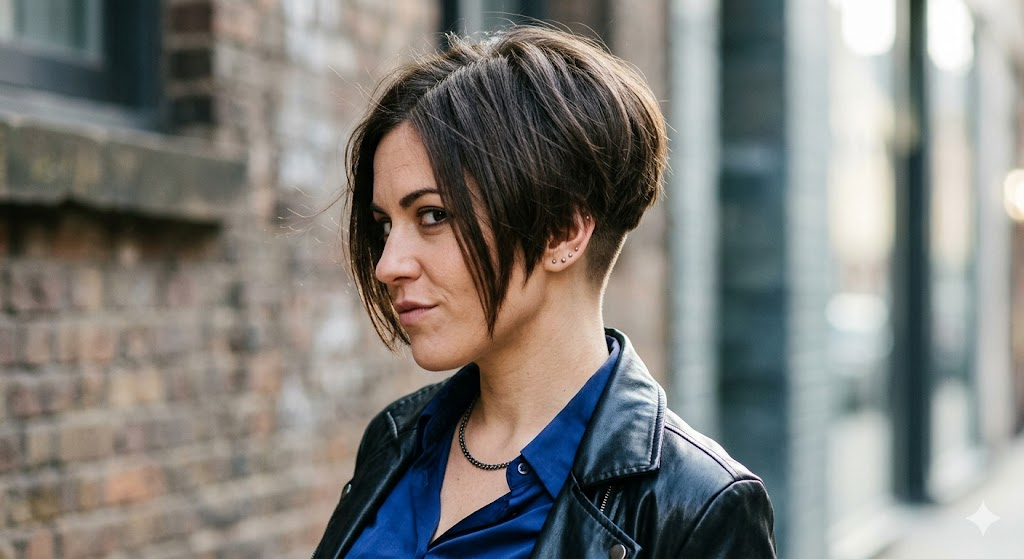
    Yes, at 50+. Shave one side (or both!) just above the ear. Keep the top long and choppy. It’s rebellious but refined. I get compliments from 20-somethings and fellow “women of a certain age” alike.

    3. The Tousled Bedhead Pixie


    No heat. No fuss. Just razor-cut choppy ends and a little sea salt spray. This is my go-to for travel, busy weeks, or whenever I want to look effortlessly cool.

    4. The Deep Side-Swept Bang


    Longer on top, short in back. Sweep a heavy, choppy bang across your forehead. It hides forehead lines if you want, but honestly? It just looks dramatic in the best way.

    5. The Asymmetrical Chop


    One side longer, one side cropped close. It throws off symmetry and adds instant edge. Pair with bold earrings, and you’ve got a signature look.

    6. The Textured Finger-Wave Pixie


    Old Hollywood meets punk. Short, choppy layers styled into soft, messy finger waves. I use a little gel and my fingers—no comb needed. Vintage, but make it modern.

    7. The Bold Bleach & Crop


    Who says platinum is for the young? A choppy pixie in ice white or silver lavender feels fierce. Dark roots growing in? Even edgier.

    8. The Messy French Crop


    Think short fringe, choppy around the ears, slightly longer on top. Mess it up with matte clay. It’s androgynous, artsy, and takes two minutes to style.

    9. The Shaggy Pixie Mullet


    Business in front (short choppy layers), party in back (a little length at the nape). It’s unexpected, playful, and perfect for anyone who’s tired of “polite” haircuts.

    How I Chose My Stylist (And You Can Too)

    Not all pixie cuts are created equal. And not all stylists get the over-50 edgy look.

    Here’s what I learned the hard way:

    Ask for a stylist who specializes in short, textured cuts. Look at their Instagram. If every photo is a long blowout or a basic bob? Run.

    Bring photos. Not just one. Three. Show them what you love and what you don’t love.

    Say these exact words: “I want choppy, piece-y texture. Not soft and rounded. I’m okay with visible scalp in spots. I want edge.”

    Trust your gut. If they hesitate or say “let’s start longer,” find someone else. You’re not being difficult. You’re being clear.

    I found my stylist through a local Facebook group for women over 50. Best recommendation I ever got.


    Products That Make a Choppy Pixie Behave (Without Looking Helmety)

    An edgy pixie needs the right products. Too much gel? You look wet and stiff. Too little? You look like a surprised hedgehog.

    Here’s my real-tested lineup:

    For spiky texture:
    A pea-sized amount of matte paste or clay. Rub between palms, scrunch into dry hair. I love Bumble and Bumble Sumotech or the drugstore gem Got2b Glued Spiking Glue (use literally a dot).

    For messy, tousled looks:
    Sea salt spray on damp hair. Blow-dry with your fingers. Finish with a texture spray. Not Your Mother’s Beach Babe is cheap and fantastic.

    For finger waves or hold:
    Lightweight gel mixed with a drop of hair oil. Apply to wet hair, shape with fingers, air-dry. Ouidad Advanced Climate Control Gel won’t flake.

    For second-day revival:
    Dry shampoo at the roots. Rub in. Then a tiny bit of texture powder. Big Sexy Hair Powder Play is magic.

    One rule I live by: less is more. Start with half of what you think you need. Add more if your hair looks sad.


    What Nobody Tells You About Going Short After 50

    Let me be real with you for a minute.

    Cutting your hair into an edgy choppy pixie isn’t just a haircut. It’s a mindset shift.

    Here’s what surprised me:

    You will see your face more. All of it. Your cheekbones, your jawline, your ears. I noticed wrinkles I’d forgotten about. Then I realized… nobody else is zooming in like that. And honestly? I started liking what I saw.

    People will react. Some will love it. Some will say “oh, you cut your hair” in a tone that means “I wouldn’t.” Let them. It’s not their head.

    You’ll save so much time. My morning routine went from 25 minutes to 7. I’m not exaggerating.

    You’ll touch your head constantly. It feels that good. Prepare to be that woman.

    Growing it out is annoying but possible. If you hate it (you won’t), it’s 6-8 weeks of awkward. Headbands and barrettes exist.

    The biggest surprise? How free I felt. Like I’d been carrying around heavy hair I didn’t need anymore.


    Frequently Asked Questions From My Pinterest Community

    I asked my followers what they were scared to ask. Here’s what they said—and my honest answers.

    “Will a choppy pixie make me look older?”
    No. A soft, helmet-y, over-curled grandma pixie will. Choppy, textured, piece-y cuts add volume and movement. That reads as young and energetic.

    “What if I have thin hair?”
    Perfect. Choppy pixies are made for fine hair. The texture creates the illusion of density. Just keep it shorter on the sides and longer on top.

    “How often do I need a trim?”
    Every 4-6 weeks. Sorry. That’s the trade-off for looking this good. Learn to love your stylist.

    “Can I still wear ponytails?”
    Not really. But you can wear cute clips, headbands, and barrettes. I’ve collected five fun clips and rotate them.

    “My husband says he likes my hair longer.”
    Mine too. Then he saw me with the asymmetrical chop and changed his mind. But honestly? Your hair, your head, your life.

    “What if I cry in the salon?”
    Happens more than you think. Bring a photo. Take a deep breath. And remember—hair grows. But confidence? You have to choose that.

    Conclusion

    So there they are—nine edgy, choppy pixie cuts that prove style has no age limit.

    Here’s what I really want you to take away from this.

    You don’t need permission to be bold. Not from a stylist. Not from a magazine. Not from anyone who says “aren’t you a little old for that?”

    I walked into my salon with a screenshot of that asymmetrical chop and a knot in my stomach. I walked out feeling like myself again—just a fiercer, more fun version.

    And yes, I got a few stares. The good kind.

    Whether you go for the spiky silver crop, the undercut you’ve secretly wanted for years, or that shaggy pixie mullet that makes you laugh just thinking about it… do it for you. Do it because you’re not done being seen. Do it because 50, 60, 70+ is the perfect time to stop playing it safe.

    Save this post. Bookmark your favorite style. Take it to your next appointment.

    And when someone asks, “Wow, what made you cut your hair like that?”

    Just smile and say: I finally decided to have fun.

  • 14 Easy & Medium-Length Hairstyles for Older Women

    When you’ve found the perfect medium-length haircut, you’ve found the sweet spot. Not as high-maintenance as long hair, not as severe as a short crop—medium hair offers versatility, softness, and endless styling potential.

    If you’re an older woman looking for easy, everyday looks that still feel fresh and modern, these 14 medium hairstyles are for you. They work with texture, thinning hair, gray roots, and busy schedules.


    1. The Classic Layered Lob

    The long bob (“lob”) sits between the chin and collarbone. Adding soft layers throughout removes bulk and creates movement.
    Why it works for older women: Layers camouflage thinning areas and make fine hair look fuller.
    Easy tip: Air-dry with a bit of mousse for effortless waves.

    2. Soft Feathered Cut

    Feathering means the ends are lightly textured inward or outward. This style was big in the ’70s/’80s, but modern versions are softer and less “winged.”
    Why it works: Frames the face beautifully and softens jawlines.
    Easy tip: Blow-dry with a round brush just at the ends.

    3. Chin-Length Blunt Cut

    A blunt cut (no layers) at chin level looks polished and strong. Best on straight or slightly wavy hair.
    Why it works: Creates the illusion of thicker, healthier hair.
    Easy tip: Use a flat iron to tuck ends under for a sleek finish.

    4. The Shag (Modern Version)

    A medium shag has choppy layers, fringe/bangs, and lots of texture. It’s intentionally messy.
    Why it works: Hides gray regrowth, works with natural curl or wave, and adds volume on top.
    Easy tip: Scrunch in a salt spray and let it air-dry.

    5. Side-Swept Curls

    Keep your medium-length hair curly or permed, then sweep most of it to one side, pinning the smaller side back.
    Why it works: Instantly lifts the face and looks glamorous without effort.
    Easy tip: Refresh curls with a spray bottle and a dab of curl cream.

    6. The Low Ponytail (Wrapped)

    Gather hair at the nape of the neck. Take a small strand from underneath, wrap it around the elastic, and pin it.
    Why it works: Elegant, two-second style that hides thinning at the crown.
    Easy tip: Backcomb the crown slightly before pulling back for volume.

    7. Textured Bob with Wispy Bangs

    Bangs can be intimidating, but wispy, eyebrow-grazing bangs are forgiving and easy to grow out.
    Why it works: Softens forehead wrinkles and draws attention to eyes.
    Easy tip: Wash just the bangs in the sink to refresh your whole look.

    8. Half-Up Twist

    Take the top half of your medium hair, twist it loosely, and pin it at the back of your head. Leave the rest down.
    Why it works: Keeps hair off the face while showing off length. Great for curly or straight hair.
    Easy tip: Pull out a few face-framing pieces for softness.

    9. The French Twist (Fake Version)

    For a dinner or wedding: Gather hair low, twist upward, and secure with a claw clip or spin pins. Let the ends flip out.
    Why it works: Looks complicated but takes 2 minutes.
    Easy tip: Don’t worry about perfection—messy twists are trendy.

    10. Stacked Bob (Back Layers)

    A stacked bob has shorter layers in the back, graduating to longer in the front.
    Why it works: Adds massive volume to the crown—ideal for very fine or flat hair.
    Easy tip: Blow-dry the back upside down for extra lift.

    11. Loose Beach Waves (Heatless)

    Braid damp hair in 2-3 loose braids before bed. Undo in the morning for soft, rippled waves.
    Why it works: No heat damage, looks youthful, and hides uneven density.
    Easy tip: Run a drop of serum through ends after unbraiding.

    12. The Deep Side Part

    Simply change where you part your hair—go from middle to a deep side part.
    Why it works: Instantly creates height at the root and camouflages a thinning hairline.
    Easy tip: Use a bit of volumizing powder at the new part.

    13. Low Messy Bun (Medium Length)

    Even with shoulder-length hair, you can make a small bun. Gather hair, twist into a coil, and secure with a scrunchie, leaving ends poking out.
    Why it works: Chic, comfortable, and protects fragile ends.
    Easy tip: Use a velvet scrunchie to avoid breakage.

    14. The Rolled Under Bob

    After blow-drying your medium bob, take 1-inch sections and roll them under with a large round brush, pinning them to cool.
    Why it works: Gives a polished, salon finish that lasts 2-3 days.
    Easy tip: Do this once after washing; just finger-comb on day 2.


    Quick Comparison Table

    StyleBest for hair typeTime needed
    Layered lobFine to medium5 min
    Feathered cutStraight/wavy10 min
    Blunt chin cutThick or straight3 min
    Modern shagCurly or wavy2 min (air-dry)
    Side-swept curlsCurly/permed4 min
    Low ponytailAny2 min
    Wispy bang bobFine, straight8 min
    Half-up twistAny3 min
    Fake French twistMedium/thick5 min
    Stacked bobFine, flat7 min
    Heatless wavesAny0 min (overnight)
    Deep side partAny1 min
    Low messy bunAny (medium length)3 min
    Rolled under bobStraight, thick10 min (once)

    Before you go, here are a few things I’ve learned about working with medium hair at any age. Gray or silver hair can have a different texture—coarser or silkier than before—so adjust your products accordingly. Don’t fight your natural pattern; if you have curls, lean into them with a shag cut. Keep soft headbands, claw clips, and silk scrunchies handy—they make any medium style look intentional. And finally, book a trim every 8–12 weeks. Medium hair shows split ends faster than short hair.

  • The Blunt Bob — When Clean Lines Are the Whole Point

    The Blunt Bob — When Clean Lines Are the Whole Point

    No layers. No softening. Just one clean, deliberate line. The blunt bob is 2026’s most confident cut.

    The blunt bob takes the bob’s already-graphic silhouette and removes every softening element — no hidden layers, no feathering, no graduation. What remains is a precise perimeter, a clean edge, and a shape that looks exactly as intentional as it is. In 2026, hairstylists describe it as ‘less about softness and more about intention — a graphic silhouette that feels modern and powerful.’

    This article covers the full range of the blunt bob in 2026: the varsity bob (chin-skimming with subtle layers), the ripped bob (textured ends created with a vertical chopping technique), and the classic blunt cut at collarbone length. Each variation, which face shape it suits, the products that make clean lines hold, and the one thing that separates a great blunt bob from one that just looks heavy.

    → The secret to a blunt bob that doesn’t feel heavy: the cut itself. Ask your stylist to ‘bevel the ends slightly inward’ underneath the perimeter — this invisible technique gives the bob its swing without disrupting the clean outside line.

    17 Blunt Bobs That Prove Clean Lines Are Everything in 2026:

    The Polished Perimeter

    This look showcases the classic blunt bob at its most sophisticated, featuring a clean, horizontal edge that hits just below the chin. The deep brunette strands are styled with a high-shine finish, emphasizing the “glass hair” effect that makes a blunt cut feel like a deliberate design choice. By utilizing the invisible bevel technique, the ends tuck slightly inward toward the jawline, ensuring the silhouette remains sleek and controlled rather than boxy.

    The Textured Ripped Bob

    Representing the more lived-in side of the 2026 trend, this variation combines a strict blunt baseline with soft, vertical texture through the mid-lengths. The warm honey-toned hair features face-framing pieces that break up the density, offering a bridge between traditional layers and the modern graphic movement. It is the ideal version for those who want the power of a blunt cut but prefer the movement and volume of a more “ripped” and airy finish.

    The High-Contrast Graphic Bob

    This ultra-blunt, ink-black style is the epitome of the “confident cut,” stripped of all softening elements to highlight a singular, razor-sharp line. The lack of graduation or hidden layers creates a heavy, luxurious weight at the perimeter that sits perfectly parallel to the shoulders. Because the color is monochromatic and the texture is ironed flat, the focus remains entirely on the architectural silhouette, making it a powerful statement of intent and modern elegance.

    The Sculpted Varsity Bob

    A precision-engineered “Varsity” cut, this style skimmed exactly at the chin line to create a compact and athletic frame for the face. The rich chestnut hue and side-profile view reveal how the density is managed to stay close to the neck, preventing the “triangle” effect often feared with shorter blunt styles. It represents the height of 2026 hair architecture, where the hair moves as a single, cohesive unit rather than a collection of feathered pieces.

    The Minimalist Scandi-Blunt

    This bright platinum version demonstrates how a blunt cut can provide maximum density and impact for finer hair textures. By removing any wispy ends or soft graduation, the perimeter appears thicker and more “solid,” which is the core goal of the 2026 aesthetic. The minimalist styling and centered part draw the eye directly to the crispness of the bottom edge, proving that even the simplest execution can feel high-fashion when the lines are this clean.

    The Architectural Angle

    This honey-toned blunt cut demonstrates how a clean perimeter can be used to create a dramatic, forward-leaning silhouette. By maintaining a solid weight line that angles slightly toward the chin, the cut provides a sharp, structured frame that feels both intentional and modern. The lack of surface layers allows the multi-dimensional color to shine, proving that when the lines are this precise, the hair becomes a powerful accessory in its own right.

    The Raven Ripped Bob

    Combining a blunt baseline with deep, vertical texture, this ink-black style is a masterclass in the “ripped” aesthetic. The wave pattern softens the overall look while the ends remain strictly horizontal, ensuring the graphic integrity of the bob isn’t lost in the movement. It is the ultimate choice for those who want the density of a blunt cut but crave a more dynamic, “cool-girl” finish that catches the light through every intentional ridge.

    The High-Gloss Heavy Hit

    This chin-skimming bob celebrates maximum density and a flawless, mirror-like surface. With no visible graduation or softening, the hair falls as a single, weighted unit that emphasizes the strength of the jawline. The deep brunette shade and glass-hair finish highlight the 2026 preference for “intention over softness,” resulting in a graphic silhouette that looks exactly as powerful and deliberate as it is meant to be.

    The Minimalist Platinum Perimeter

    This shoulder-grazing blunt cut uses a cool platinum palette to make the clean, horizontal baseline the focal point of the style. The absence of traditional layers ensures that the hair retains its thickness from root to tip, creating a solid architectural shape that feels fresh and sophisticated. By pairing the sharp perimeter with subtle face-framing tucks, the look achieves a balanced, curated vibe that defines the “quiet luxury” of modern hair trends.

    The Pastel Precision Micro-Fringe

    This striking bubblegum pink look pairs a sharp, neck-skimming perimeter with an ultra-short micro-fringe, heightening the graphic impact of the 2026 blunt trend. The monochromatic color choice removes any visual distraction, forcing the eye to focus on the deliberate, horizontal lines of the cut. By eliminating all softening around the face, this style achieves a high-fashion, “editorial” silhouette that feels modern, powerful, and entirely intentional.

    The Archival Architectural Crop

    This deep espresso bob features a heavy, rounded fringe that seamlessly integrates with a sharp, chin-length baseline. The density of the cut creates a solid architectural block, emphasizing the 2026 shift away from feathered layers and toward graphic, singular shapes. With a flawless, high-gloss finish, this look highlights the beauty of a thick weight line, demonstrating how a blunt cut can be used to carve out a sophisticated and commanding frame for the face.

    The Voluminous Luxe Blunt

    Offering a softer take on the clean-line aesthetic, this creamy blonde bob uses subtle internal weight removal to achieve maximum bounce and swing. While the bottom edge remains strictly blunt, the styling incorporates a sweeping, “old Hollywood” volume that contrasts beautifully with the sharp perimeter. It serves as the perfect example of the 2026 “Varsity” vibe, where the cut’s structural integrity allows for glamorous, airy movement without the need for traditional surface layers.

    The Copper Ripped Texture

    This vibrant ginger-toned style showcases the “Ripped Bob” technique, blending a horizontal blunt baseline with piecey, vertical texture. The deliberate “imperfections” in the finish provide a modern, edgy contrast to the solid perimeter, making it a versatile option for those who prefer an off-duty aesthetic. By maintaining a sharp weight line at the bottom, the cut ensures that even with beachy waves and textured ends, the overall silhouette remains rooted in the “clean line” philosophy.

    The Copper Gradient Curve

    This chin-length bob highlights how a deep copper gradient can emphasize the precise architecture of a blunt cut. The solid, clean-cut perimeter provides a sharp contrast to the soft, piecey fringe, creating a sophisticated balance between structural strength and facial framing. By maintaining a single, deliberate weight line at the base, the style ensures the hair looks remarkably thick and healthy, serving as a prime example of why removing graduation is the key to 2026’s most confident silhouette.

    The Icy Collarbone Classic

    A masterclass in the “classic blunt” variation, this icy blonde style sits perfectly at the collarbone to elongate the neck and frame the décolletage. The straight-across edge is achieved through high-precision cutting that removes every softening element, resulting in a graphic perimeter that feels both modern and powerful. This look relies on a high-shine finish to make the “one clean line” the focal point, demonstrating how a simple shape can become a high-impact style statement.

    The Platinum Ripped Bob

    This look introduces a textured, “off-duty” energy to the blunt bob trend by combining a sharp baseline with vertical, piecey waves. The platinum highlights accentuate the “ripped” ends, giving the hair a dynamic movement that still honors the strict horizontal weight line underneath. It is the ideal choice for those who want a graphic silhouette that remains versatile enough to be worn with a more relaxed, effortless finish without losing its intentional edge

    The Dimensional Wavy Lob

    This shoulder-skimming variation uses subtle internal layers to manage density while keeping the perimeter strictly blunt and horizontal. The soft waves add volume and dimension to the ash-blonde tones, proving that the blunt trend can be adapted for a softer, more romantic aesthetic. By avoiding traditional feathering or graduation at the bottom, the cut maintains a solid and healthy appearance that stays true to the “clean lines” philosophy of the season.

    The 2026 Variations: Beyond One-Size-Fits-All

    • The Varsity Bob: The classic chin-skimming length. Discussion on how it frames the face and creates a “youthful-yet-structured” vibe.
    • The Ripped Bob: The “edgy” blunt. A deep dive into the vertical chopping technique that adds texture to the ends while maintaining a strict horizontal weight line. (This section now merits its own dedicated sidebar or deep-dive callout, as hinted in the article’s intro.)
    • The Collarbone Blunt: The “sophisticated” length. Ideal for those who want the graphic impact without the commitment of a shorter crop.

    The Architecture: Face Shapes and Proportions

    • Square/Angular Faces: How a collarbone length softens the jaw without sacrificing the blunt edge.
    • Round/Heart Faces: The benefits of the chin-skimming “Varsity” cut to create a visual “anchor” and structure.
    • Oval Faces: The freedom to experiment with micro-bangs or extreme, jaw-grazing lengths.

    The Stylist’s Secret: Avoiding the “Heavy” Look

    • The “Invisible Bevel”: The technical “cheat” of cutting the under-layers slightly inward to encourage natural swing and curve (expanding on the article’s core tip).
    • Movement vs. Bulk: Engineering the hair so it doesn’t “triangle” or look like a heavy block of fabric.
    • The Consultation: Key phrases to use (e.g., “internal weight removal,” “bevel the ends inward”) to ensure the perimeter stays sharp but the hair stays light.

    The “Wet vs. Dry” Finish: Textures of 2026

    • The Glass Finish: Achieving the ultra-reflective, mirror-like surface that makes a blunt line look like fine art.
    • The Air-Dried Blunt: Debunking the myth that blunt bobs must be ironed; how natural texture creates a “cool-girl” contrast.
    • The “Power Tuck”: Styling tips for tucking hair behind the ears to emphasize the jawline and the precision of the cut’s back-to-front transition.

    Color Strategies to Enhance the Line

    • Monochromatic Depth: Why solid colors (jet black, espresso, or platinum) make the blunt edge “pop” more than traditional highlights.
    • The “Internal Glow”: Using subtle balayage hidden inside the hair that only reveals itself when the bob moves.
    • Root Shadows and Silhouette: Ensuring the color doesn’t “break” the visual weight of the bottom line.

    From Day to Editorial: Transitioning the Look

    • The Off-Duty Look: Using sea salt sprays for a “ripped” texture that still honors the blunt base.
    • The Formal Polish: The 2026 trend of the “Extreme Side Part” to create a dramatic, asymmetrical architectural shape.
    • Accessorizing the Edge: Matching the cut with minimal, metallic hardware or heavy headbands.

    The Commitment: Living with the Blunt Bob

    • The “Grow-Out” Reality: Managing the transition as the precision fades and the cut evolves into a “lob.”
    • The Workout Factor: Tips for keeping a precision cut intact during movement and avoiding the dreaded “ponytail dent.”
    • The Trim Schedule: Why the blunt bob requires a strict 6-week “dusting” to maintain the graphic effect.

    Conclusion: Intention as a Style Statement

    • The Final Word: The blunt bob isn’t just a haircut; it’s a commitment to a specific, high-polish aesthetic.
    • Final Encouragement: Choosing the version that feels like “you” in 2026.

    New Sections for Deeper 2026 Context

    [New Section] The “Ripped Bob” Technique: A 2026 Signature
    This section directly addresses the question posed at the end of your query and fulfills the promise of the introductory article.

    • The Philosophy: Why texture on a blunt line is the defining juxtaposition of 2026—controlled rebellion.
    • The Technique: A step-by-step breakdown of the “vertical chopping” method. How the stylist uses the tips of shears to slice into the last inch of hair, creating separation and grit without disturbing the solid perimeter line.
    • Styling for the Ripped Effect: The shift from a flat iron to a texture paste or dry shampoo spray. The goal is piece-y separation that looks effortless, not unfinished.

    [New Section] The Blunt Bob Gallery: 2026 Stylist Spotlights

    • A visual-forward section featuring 2-3 stylists quoted in the article, showcasing their interpretation of the three variations (Varsity, Ripped, Collarbone).
    • Quote Integration: Use the stylist quotes from the article’s intro here to reinforce authority. E.g., “As one stylist notes, the look is ‘less about softness and more about intention—a graphic silhouette that feels modern and powerful.’”

    Suggested Sidebar/Technical Note

    Sidebar: The 2026 At-Home Protocol

    • Tool Up: A medium-to-large round brush for the “Varsity” bounce; a flat iron for the “Glass Finish”; a texture spray for the “Ripped” look.
    • The Golden Rule: When styling at home, always blow-dry the hair in the direction of the cut (downwards) to seal the cuticle. For the “Varsity” look, a slight inward bevel with a round brush provides that 2026 bounce without looking dated.
    • Product Picks: A curated list of the 2026 essential products—a weightless volumizing mousse, a high-shine finishing spray, and a matte texture paste for definition.
  • The Cloud Cut — Soft, Voluminous, and Everywhere This Season

    The Cloud Cut — Soft, Voluminous, and Everywhere This Season

    Big, soft, rounded, and full of movement. The cloud cut is spring 2026’s most distinctive shape.

    The cloud cut is named for exactly what it produces: a soft, rounded, voluminous shape that gives long hair an almost weightless quality. Unlike the butterfly cut’s deliberate two-tier contrast or the wolf cut’s choppy texture, the cloud cut is about fullness and curve — layers that create a rounded silhouette from every angle.

    Celebrity stylists including Dimitris Giannetos have predicted the cloud cut as one of the standout looks of spring 2026, particularly for women with long, full hair who want something

    12 unique cloud cut styles countdown to try in 2026:

    12. The Aqua-Shag

    This look leans heavily into the “Wolf” and “Shag” territories, characterized by a vertical, rectangular silhouette rather than the rounded sphere of a true cloud cut. The layering is intentionally choppy and disconnected, with a heavy concentration of volume at the crown that drops into shattered, piecey ends. Its matte texture and sharp, straight face-framing fringe prioritize an edgy, separated aesthetic over the seamless, weightless flow of the season’s most popular rounded shape.

    11. The Structured Bi-Level

    A textbook example of the “Butterfly Cut,” this style features a deliberate two-tier contrast that creates a sharp diamond silhouette. The top layers are curled tightly inward to form a faux-bob effect, while the lower lengths remain distinctly separate with a blunt, heavy perimeter. The high-contrast color palette further emphasizes the lack of seamless blending, opting for a structured, architectural volume rather than the airy, unified curvature of a cloud cut.

    10. The Bombshell Wave

    This image perfectly encapsulates the Cloud Cut’s “walking on air” philosophy through its impeccably rounded and convex silhouette. The layers are invisible and seamless, melting into one another to create a continuous, rolling wave of volume that lifts away from the face in soft, bouncy curves. The finish is diffused and airy, giving the hair a light-as-a-feather quality that appears voluminous and effortless from every angle.

    9. The Polished Perimeter

    This version represents the luxury, high-gloss evolution of the Cloud Cut, utilizing a soft-blunt perimeter to create a “bubble” of density at the ends. The internal layering is used to distribute weight horizontally, ensuring the silhouette remains spherical and full without appearing bottom-heavy. With its impeccable blending and smooth, convex face-framing, the look achieves a refined, cloud-like fullness that feels both expensive and weightless.

    8. The Golden Ethereal

    This look is a masterclass in the Cloud Cut’s “weightless” philosophy, featuring a perfectly rounded silhouette that creates a 360-degree halo of volume. The internal layering is so seamless that it’s nearly invisible, allowing the hair to lift away from the face in soft, convex curves rather than falling flat. With its blurred, soft-blunt perimeter and airy, sun-kissed finish, the style achieves the effortless, “walking on air” movement that defines Spring 2026’s most distinctive shape.

    7. The Curly Cloud Crop

    An ideal adaptation for short and wavy textures, this cut demonstrates how the “rounded logic” can prevent curly hair from becoming bottom-heavy or triangular. The layers are strategically stacked to create a soft, spherical “halo” effect that frames the face with diffused, bouncy volume. By maintaining a soft perimeter and removing internal weight, the cut allows the natural curls to float freely, embodying the ethereal and romantic vibe of the cloud aesthetic on a shorter canvas.

    6. The Sculpted Cloud Bubble

    This high-volume bob perfectly illustrates the “Cloud Crop” evolution, utilizing extreme internal lift to create a dramatic, spherical “bubble” silhouette. The face-framing pieces are meticulously curved inward and upward, melting seamlessly into the rest of the hair to avoid any harsh, disconnected tiers. Its ultra-polished finish and dense yet airy ends showcase a sophisticated, luxury take on the trend, providing maximum impact and 3D movement for a shorter length.

    5. The Golden Fringe Cloud

    This style serves as a perfect reference for integrating “Cloud Bangs” into the season’s signature silhouette. The long, wispy fringe melts seamlessly into curved, face-framing layers, avoiding any sharp lines or disconnected tiers characteristic of older trends. By maintaining a soft-blunt perimeter and building internal volume that kicks outward at the ends, the look achieves a unified, rounded shape that feels incredibly light and feminine.

    4. The Deep Espresso Cloud

    This look is a masterclass in maximalist volume, showcasing how the Cloud Cut creates a 360-degree spherical silhouette on ultra-thick hair. The internal layering is expertly executed to remove weight without sacrificing density, allowing the massive, rolling waves to “float” with effortless rebound. Its high-shine finish and polished, convex curves embody the “luxury-coded” aspect of the trend, providing a dramatic yet soft-edged halo of movement.

    3. The Ethereal Snow Crop

    Adapting the Cloud Cut for a shorter length, this “Cloud Crop” utilizes airy, white-blonde texture to emphasize the weightless nature of the trend. The cut features a highly rounded, almost halo-like perimeter that softens the facial features through continuous, rolling curves. The styling is intentionally diffuse and “fluffy,” perfectly capturing the walking-on-air aesthetic by ensuring each layer is separated yet unified within the spherical form.

    2. The Textured Afro Cloud

    This image beautifully illustrates the “Curly Cloud” adaptation for natural coils, prioritizing a perfectly spherical “halo” shape over traditional vertical length. The internal architecture of the cut allows the volume to expand horizontally and upward in a soft, continuous arc, creating a high-impact silhouette that feels balanced and light. The blurred perimeter and soft texture highlight the ethereal, cloud-like quality of the hair, making it a standout example of the trend’s versatility across all hair textures.

    1. The Sculpted Tapered Cloud

    This look is a striking example of the “Curly Cloud” adaptation for shorter textures, where the rounded volume is concentrated entirely on the crown and mid-section. By utilizing a sharp, tapered undercut with artistic detailing, the cut forces the eye upward toward the “cloud” of natural curls, which are layered to create a perfect, weightless sphere. The silhouette is impeccably rounded, maintaining that ethereal, 360-degree volume while providing a modern, structured edge that feels both high-fashion and incredibly light.

    Anatomy of a Trend: What Makes it a “Cloud”?

    • 360-Degree Rounding: Explaining the departure from “V-cut” or “U-cut” layers in favor of a spherical silhouette that looks full and curved from every angle.
    • Internal Weight Removal: The technical secret—hidden layering that allows hair to “float” without losing its perimeter density, creating an almost weightless quality.
    • The “Blur” Effect: How texturized, soft ends create a halo-like finish rather than sharp, blunt lines, distinguishing it from sharper cuts.

    The Comparison: Cloud vs. Butterfly vs. Wolf

    • Cloud vs. Butterfly: Swapping the distinct “two-tier” contrast for a seamless, continuous flow that emphasizes fullness and curve.
    • Cloud vs. Wolf: Moving away from shaggy, edgy rock-and-roll texture toward polished, luxury volume.
    • The “Vibe” Shift: Why 2026 is favoring “soft glamour” over “rebellious grit,” as predicted by celebrity stylists like Dimitris Giannetos.

    Is the Cloud Cut for You? (Compatibility Guide)

    • Hair Types:
      • Thick Hair: Using the cut to manage bulk and add movement.
      • Fine Hair: Building the illusion of density through strategic stacking.
    • Face Shape Architecture: How the rounded layers soften square jawlines and add width to narrow face shapes.
    • Length Requirements: Why “Long” is the gold standard for this cut, but mid-length adaptations are rising.

    In the Chair: How to Consult with Your Stylist

    • Vocabulary Matters: Keywords to use (e.g., “concave layers,” “internal airiness,” “soft face-framing”).
    • The Visual Guide: Why showing a 3D video or a profile-view photo is more effective than a front-facing selfie to convey the rounded silhouette.
    • The “No-Go” List: What to avoid—asking for “no thinning shears” on the top layers to prevent frizz and maintain the polished finish.

    The Evolution: Cloud Adaptations for Short & Curly Hair

    • The “Cloud Crop”: Bringing the rounded volume logic to bobs and lobs.
    • The Curly Cloud: How to use the “Decomposed” cutting method to create a soft, voluminous halo of natural curls.
    • The Cloud Fringe: Incorporating ultra-light, wispy bangs that melt into the side layers.

    The Science of “Float”: Chemistry & Products

    • Weightless Hydration: The importance of silicone-free moisture to keep layers from collapsing.
    • Molecular Support: Using bond-builders to give the hair “spine” and “rebound.”
    • Anti-Gravity Tools: A spotlight on dry texture sprays and volumizing foams that provide grip without grit.

    Styling the Cloud: The Art of the Airy Blowout

    • Step-by-Step Prep: From towel-dry to heat protectant.
    • The Oversized Round Brush: Techniques for maximalist curves and “under-tucked” ends.
    • The Silk Roller Secret: How to maintain the shape overnight using jumbo rollers.
    • Modern Tools: The role of multi-styler air tools in achieving the look at home.

    The “Cloud” Lifestyle & Fashion Pairing

    • The Wardrobe Connection: How the hair trend mirrors the “Soft Office” and “Modern Romantic” runway looks of 2026.
    • Effortless Glamour: Why a well-executed Cloud Cut looks “done” even when air-dried with minimal product.
    • Day-to-Night: Transitioning the volume from a soft daytime bounce to a high-drama, evening “Power Cloud.”

    Social Media & The Digital Impact

    • The “Video-First” Cut: Why the Cloud Cut is designed for movement and “main character” social media content.
    • The DIY Warning: Explaining why the complexity of internal layering makes this a “professional-only” trend.

    Maintenance and Longevity

    • The Refresh Cycle: Suggested trim schedules (8–10 weeks) to keep the shape from becoming bottom-heavy.
    • At-Home Care: Weekly clarifying treatments to prevent product buildup from weighing down the “Cloud.”

    Conclusion: The Soft Revolution

    • Summary: Why the Cloud Cut is more than a trend—it’s a return to healthy, tactile, moving hair.
    • Final Thought: Embracing the weightless, voluminous energy of Spring 2026.
  • Short Hair, Big Personality — 20 Pixie Cuts That Aren’t All the Same

    Short Hair, Big Personality — 20 Pixie Cuts That Aren’t All the Same

    If 2025 was the year of the bob, 2026 is the year the pixie takes it back.

    The pixie cut is having its biggest cultural moment in years. Stylists from London to New York are reporting it as their fastest-growing request heading into 2026 — not the safe, conservative pixie of a decade ago, but something bolder, more textured, more individual. The pixie in 2026 is a personality.

    What most pixie roundups miss is how different 20 pixie cuts can actually look. The textured pixie is almost nothing like the sleek French pixie. The long pixie barely resembles the micro crop. The pixie with a fringe is an entirely different proposition from the pixie with a side sweep. This article shows all 20 with the specific details — the texture, the length, the face shape it suits most — so you can find the version that looks like you rather than like a haircut.

    → The most important question to ask before booking a pixie: how much daily styling are you willing to do? A textured pixie needs almost none. A sleek pixie needs heat tools every morning. A long pixie sits somewhere in between. The answer determines which version your stylist should give you.

    The Pixie Countdown: 20 Styles for 2026

    20. The Curly Shaggy Mullet-Pixie

    The “wolf cut” makes its curly debut for 2026, combining the natural bounce of 3B/3C curls with a longer, tapered mullet silhouette. This style prioritizes volume and texture, utilizing the longer nape to “frame” the shoulders while keeping the sides short and coiffed to balance the face. It is a true low-maintenance choice; after applying a curl-defining mousse, it can be air-dried to create maximum definition, letting the natural curl pattern dictate the final, effortless shape. This versatile cut suits round and square face shapes, using its height and layered volume to lift and elongate the features.

    19. The Rainbow Textured Wolf Pixie

    This edgy, multi-tonal crop is the ultimate “personality” cut for 2026, blending the shaggy layers of a wolf cut with the tight, tapered sides of a classic pixie. The style relies on heavy point-cutting to create those sharp, piecey spikes on top, which are further emphasized by a playful palette of pastel highlights against a platinum base. Because this look thrives on a “messy-on-purpose” vibe, it is remarkably low-maintenance for daily styling—requiring only a dab of matte texturizing paste to define the ends—making it an ideal choice for those with straight to wavy hair who want maximum impact with minimal mirror time.

    18. The Polished Side-Swept Bixie

    Bridging the gap between a bob and a true crop, this sophisticated “bixie” is defined by its long, face-framing layers and a deep, sleek side-sweep that tucks neatly behind the ear. The cut features a soft, tapered nape that keeps the silhouette clean while allowing the length on top to provide movement and a sense of “security” for those new to short hair. This style leans toward medium maintenance, as achieving that glass-like finish on the dark, chestnut tresses typically requires a quick pass with a mini flat iron and a drop of shine serum each morning.

    17. The Ginger Tapered Coif

    This warm, copper-toned pixie is all about soft volume and approachable texture, featuring a jagged, eyebrow-grazing fringe that adds a youthful, modern energy to the face. The cut is expertly tapered around the ears and neck to keep the shape structured, while the top is left long enough to be coiffed forward or swept to the side depending on the mood. It is a highly versatile option that suits heart and oval face shapes beautifully, offering a “wash-and-go” lifestyle where a simple air-dry with a lightweight mousse provides enough hold to keep the layers looking intentional and voluminous.

    16. The Platinum Sculpted Wave

    A masterclass in precision and vintage-inspired glamour, this icy blonde pixie uses the scalp as a canvas for high-definition finger waves that provide a rhythmic, architectural texture. This is a high-polish, high-maintenance look that sits very close to the head, making it a bold choice that highlights the cheekbones and eyes with zero hair-to-face interference. While it requires a dedicated styling routine involving high-hold gels and specific comb techniques, the result is a sophisticated, “quiet luxury” aesthetic that stands out as the most formal and structured version of the 2026 pixie trend.

    15. The Sunset Copper Micro-Crop

    This vibrant, fiery copper pixie is the epitome of the “personality” cut, featuring a wispy, asymmetric fringe that softens the forehead while drawing all the attention to the eyes. The length is kept incredibly short around the ears and nape to maintain a clean, architectural silhouette that highlights a strong jawline and high cheekbones. Perfect for the woman who wants to spend less than five minutes on her hair, this style requires only a tiny amount of lightweight styling wax to define the piecey texture on top, offering a sophisticated yet daring look that works beautifully on straight, fine-to-medium hair.

    14. The Electric Neon Jellyfish Pixie

    Blending a vivid fuchsia hue with a modern “wolf-cut” silhouette, this textured crop is for the boldest 2026 trendsetters who want a look that feels alive and moving. The style features longer, shaggy layers at the back—reminiscent of a micro-mullet—paired with a choppy, face-framing fringe that embraces natural waves and volume. It is a low-maintenance dream for those with thick or wavy hair, as the cut is designed to look better as it air-dries into its “lived-in” state, making it the ultimate choice for a rebellious yet curated aesthetic.

    13. The Midnight Plum Spiky Shag

    This high-contrast, deep plum pixie utilizes extreme point-cutting to create dramatic, vertical texture that defies gravity. The ultra-short, jagged micro-fringe creates a striking, avant-garde frame for the face, while the longer, flared layers at the back add an edgy, punk-inspired dimension. To maintain this “spiked” effect, a high-hold matte paste is essential to piece out the ends every morning, making it a medium-maintenance choice for those who want their hair to reflect a sharp, creative personality.

    12. The Bold Undercut Side-Sweep

    The ultimate “hidden” statement, this pixie features a dramatic contrast between a clean-shaved side fade and a long, voluminous top that sweeps elegantly across the face. This version of the bixie-hybrid allows for incredible versatility; the longer section can be styled sleek for a “quiet luxury” vibe or tousled for a more casual, undone feel. Because the shaved section requires a trim every few weeks to stay sharp, it sits in the high-maintenance category for maintenance, but its ability to frame and lift the features of a round or oval face makes it a transformative favorite for 2026.

    11. The Sculpted High-Shine Pin-Curl Pixie

    A high-gloss revival of 1920s architecture, this sculpted pixie uses the natural coily texture of natural hair to create rigid, geometric pin curls that sit close to the scalp. This technique offers zero heat damage but maximum structure, making it a masterpiece of texture and precision that frames the face with powerful, vintage elegance. Because the waves are set with high-hold gels, this look sits firmly in the high-maintenance styling category, but its “stay-put” finish offers days of uninterrupted glamour. Perfectly suited to oval and heart face shapes by defining the jaw and forehead, it proves that a short cut can still offer maximum intricacy and personality.

    10. The Platinum Punk Micro-Mullet

    This choppy, textured micro-mullet is for the boldest personality, pairing a platinum blonde hue with a striking, uneven micro-fringe that hits high on the forehead. The style features short, “fairy” sideburns and is tapered around the ears, leaving longer, shaggy layers at the back to create that signature ’70s punk edge. This cut relies on matte texturizing pastes to define the piecey, gravity-defying top, making it a medium-maintenance choice for those with straight or wavy hair who want a rebellious yet carefully curated aesthetic. Perfectly suited to diamond and heart faces, it uses its internal texture to balance a narrower forehead.

    9. The Dark Plum Bowl-Cut Undercut

    A sophisticated play on geometry and shadow, this dark, rich plum pixie is defined by a precision-cut, architectural bowl-cut frame that sits high on the temples. This classic silhouette is updated for 2026 with a dramatic hidden undercut, allowing the top section to create that sharp edge while removing bulk from the neck. This cut is high maintenance for trims (4 weeks to maintain the edge) but medium maintenance for daily styling, as its precise structure works best with a quick flat-iron polish. This transformative cut suits oval and square faces by using its horizontal lines to balance facial width, creating a structural look that stands out.

    8. The Platinum Glass-Skin French Pixie

    This ultra-chic, platinum blonde crop is the gold standard for “quiet luxury” in 2026, featuring a deep side-part and a sleek, tucked-behind-the-ear finish. The cut is precision-tapered at the nape to create a crisp silhouette that accentuates the neck and jawline, while the longer top sections provide a smooth, reflective surface. It is a high-polish, medium-maintenance style that requires a mini flat iron and a drop of high-shine serum to maintain its architectural “glass” finish, making it a perfect match for those with straight hair and oval or heart-shaped faces.

    7. The Tapered Curly Coif

    Embracing natural 3A/3B texture, this rich chocolate-brown pixie uses a sharp taper around the ears and nape to create a dramatic contrast with the voluminous, curly top. The internal layering is designed to encourage bounce and height, preventing the hair from laying flat and instead creating a soft, rounded shape that lifts the features. This is a low-maintenance, “wash-and-go” dream; simply apply a curl-defining cream to damp hair and air-dry for a result that looks curated but feels effortless. It is particularly flattering for round and square face shapes, as the vertical volume helps to elongate the profile.

    6. The Fade-Detail Faux Hawk

    A bold, gender-neutral statement, this edgy pixie features a precision skin fade on the sides that transitions into a textured, gravity-defying top. The hair is kept longer through the center and styled upward and forward to create a modern “faux hawk” silhouette that radiates confidence and personality. While the daily styling is a quick two-minute process with a high-hold matte pomade, the fade itself requires high-maintenance salon visits every three weeks to keep the lines sharp. This architectural look works wonders for diamond and heart face shapes by adding structural balance to the forehead.

    5. The Salt-and-Pepper “Bixie” Swing

    This sophisticated long pixie—or “bixie”—perfectly highlights natural gray transitions with a mix of icy white and deep charcoal tones. The cut features a graduated, stacked back that adds instant volume to fine hair, paired with chin-length face-framing layers that offer the security of a bob with the lightness of a crop. It falls into the low-maintenance category, as the soft, feathered ends are designed to move naturally without the need for intensive heat styling. This versatile, swinging silhouette is an excellent choice for all face shapes, particularly for those looking for an elegant, age-defying transition into shorter lengths.

    4. The Burgundy Wave with Precision Etching

    This deep wine-colored crop is a masterpiece of texture and graphic detail, featuring high-definition waves that hug the scalp for a sleek, reflective finish. The standout feature is the sharp, horizontal etched line across the temple, which adds a futuristic, high-fashion edge to the classic tapered sides and clean-cut nape. While it requires high-hold gels and regular barber visits to keep the etched design crisp, the daily maintenance is minimal once the pattern is set. This architectural look is particularly striking on heart and oval face shapes, using its close-cropped structure to highlight the cheekbones and eyes.

    3. The Curly Undercut Coif

    Embracing natural 3C/4C volume, this dynamic pixie features a dramatic contrast between the tight, faded undercut and the lush, bouncy curls piled high on top. The styling is designed to push the texture forward, creating a soft, curly fringe that frames the forehead and adds height to the overall silhouette. It is an ideal low-maintenance “wash-and-go” choice; a simple application of curl-defining cream is all that’s needed to let the natural pattern shine. This cut works wonders for round and square faces, as the concentrated volume on top helps to elongate and balance the features.

    2. The Crimson Asymmetrical Sweep

    A bold, multi-tonal masterpiece, this deep red pixie features a dramatic side-sweep that grazes the cheekbone, offering the movement of a bob with the edginess of a crop. The hidden, darker undercut provides a structural base that makes the vibrant crimson layers on top appear even more voluminous and multidimensional. This style sits in the medium-maintenance category, as achieving that smooth, glass-like finish on the long fringe requires a quick pass with a mini flat iron and a smoothing serum. It is an excellent choice for those wanting to play with face-shape correction, as the diagonal line of the sweep beautifully contours the face.

    1. The Sun-Kissed Textured Shag

    This multi-dimensional pixie-shag hybrid uses honey-blonde highlights to emphasize its heavy, piecey layers and “lived-in” texture. The cut features a softer nape and feathered sideburns, giving it a delicate, ethereal quality that feels both modern and timeless. It is the ultimate low-maintenance style for fine-to-medium hair, as it thrives on air-drying and a quick touch of matte texturizing spray to define the ends. Perfectly suited for all face shapes, this versatile cut is particularly effective at adding volume and movement to hair that might otherwise lay flat, creating a signature look that feels effortless.

    The Pixie Toolkit: 2026 Essentials

    A great pixie isn’t just cut; it’s maintained. To capture the effortless “personality” of the 2026 pixie, you need the right products and tools to execute the look without spending hours in the mirror.

    • Paste vs. Pomade: The golden rule of modern pixie styling is knowing your finish. Reach for a matte texture paste when you want a lived-in, piece-y look—think the shaggy pixie or the textured crop. It adds grip and definition without shine, making hair look naturally tousled. Conversely, a high-gloss pomade or glass hair serum is essential for the sleek French pixie or deep side-swept styles. This gives that polished, wet-look finish that feels incredibly chic and editorial for 2026.
    • The Mini-Tools: Full-size styling tools are overkill for a pixie. Two items are non-negotiable: a 0.5-inch flat iron for precision bending—allowing you to flip out a tiny fringe or smooth down stubborn nape hairs—and a boar-bristle brush. Used on dry hair, this brush distributes natural oils from the scalp to the ends (preventing that “greasy on top, dry on the bottom” phenomenon) and smooths the cuticle for a glossy, healthy finish.
    • Silk for Short Hair: Because short hair is closer to the scalp, it shows every crease and cowlick from sleep. A silk or satin pillowcase isn’t just a luxury; it’s a styling tool. By reducing friction, it prevents the chaotic “bedhead” that often plagues pixie cuts, allowing you to wake up with your shape intact and your texture ready to go.

    IV. The “In-Between” Strategy: Planning Your Growth

    One of the biggest hesitations about going short is the dreaded grow-out phase. But in 2026, we’re planning for it. A great pixie isn’t a haircut you’re trapped in; it’s a style that evolves with intention.

    • The Nape Trim: The secret to avoiding the awkward “mullet stage” is a simple one: keep the back short. Even when you are letting the top and sides grow out for a “bixie” (bob-pixie), scheduling a quick trim to clean up the nape hair every 4-6 weeks keeps the silhouette intentional and polished rather than shaggy.
    • Accessory Intervention: When your length hits that frustrating point where it’s too long to style up but too short to tuck behind the ears, accessories become your best friend. Statement clips (think pearl-embellished or metallic barrettes) can pin back heavy sides. Silk scarves folded into thin headbands can disguise uneven lengths while adding a pop of color that screams personality.
    • The Evolution: Recognize the milestone. Your pixie hasn’t just “grown out”; it has officially become a “Bixie.” This is the sweet spot where the length of a bob meets the texture of a pixie. Embracing this stage as a distinct style—rather than a transitional mess—makes the process feel like a fun evolution rather than a chore.

    V. Face Shape & Features: The Customization Key

    While the “personality” of the cut is paramount, the geometry of the cut should complement your unique features. Here is how to tailor the 2026 pixie to your bone structure.

    • Square & Sharp: If you have a strong jawline, the goal is softness. Avoid cuts that end exactly at the jaw, as this emphasizes the width. Instead, opt for wispy edges and a textured, piece-y fringe. Soft layers that frame the face—like the classic French pixie with curtain bangs—break up the angles and create a sense of movement that balances the structure.
    • Round & Soft: The objective for round face shapes is to create the illusion of length. You want height and volume on top. A voluminous textured pixie or a pompadour style that lifts at the crown will elongate the face. Keep the sides close-cropped or tucked behind the ears to avoid adding width to the cheekbones.
    • Oval & Balanced: Consider yourself the “blank canvas” of pixie cuts. With balanced proportions, you can handle the most daring looks. This is the face shape best suited for the Micro-Buzz, the ultra-short Cropped Pixie, or architectural shapes with heavy, blunt fringe. If you want a cut that looks like high art, an oval face shape can carry it with ease.

    VI. The Maintenance Map

    A pixie isn’t a one-size-fits-all commitment. Before you book, know how much time you are willing to dedicate to upkeep. Your lifestyle dictates your cut.

    • High Maintenance (3–4 Weeks): Precision cuts like the French Pixie (with its sharp, clean lines around the ears and neck) and the Micro-Crop require strict adherence to a 3-to-4-week trim schedule. Because these styles rely on exact geometry, even a quarter-inch of growth can distort the silhouette.
    • Medium Maintenance (6 Weeks): Tapered and Sculpted styles—where the sides are faded but the top retains length—offer a grace period. You can usually push this to six weeks before the shape starts to feel bulky or untidy.
    • Low Maintenance (8–10 Weeks): If you hate the salon, lean into texture. Shaggy pixies and Bixies are the ultimate low-maintenance cuts. These styles are designed to look better with a bit of “overgrowth.” The intentional messiness means that as the hair grows, it simply looks more effortless, allowing you to go 8 to 10 weeks between trims.

    VII. Conclusion: Beyond the Chair

    Getting a pixie cut is an act of confidence, but ensuring it feels like you requires clear communication and a shift in perspective.

    The Consultation: Don’t just show a photo; use specific phrases that capture the “personality” you want. Instead of saying “I want it short,” tell your stylist: “I want it to look effortless even when it’s done,” or “I want the texture to be the focal point,” or “I want the shape to soften my features.” These phrases give your stylist the blueprint to customize the cut to your hair type and face shape, rather than just replicating a generic image.

    The Confidence Factor: Ultimately, the pixie is about the vibe rather than the facial structure. For years, the narrative around short hair was dominated by the question, “Can I pull this off?” In 2026, we are replacing that question with a better one: “Does this feel like me?”

    A pixie cut doesn’t hide you; it reveals you. It announces that you value style over convention and personality over length. Whether you choose the razor-sharp precision of a French crop or the wild freedom of a textured shag, the right pixie isn’t just a haircut—it’s the most honest thing you’ll wear. So go ahead. Take it back.