Blog

  • Effortless Updos for Medium-Length Hair: Chic Styles for Every Occasion

    Medium-length hair occupies the ultimate sweet spot in styling—it offers enough volume for intricate looks without the heavy lifting required for long tresses. While it can sometimes feel like your hair is in an “in-between” phase, it is actually the ideal canvas for updos that look sophisticated but take less than ten minutes to master. From sleek, low-slung buns that exude polished professionalism to textured, airy twists perfect for a weekend brunch, mastering a few key techniques can transform your daily routine. This guide explores versatile styles that prioritize ease and aesthetic longevity, ensuring you look intentional and put-together with minimal effort.

    8 Intentional Updos That Take Less Than Ten Minutes:

    High-Volume Twisted Updo

    This high-placed updo focuses on architectural volume, making it an ideal choice for medium-length hair that benefits from added texture. The style is created by gathering the hair at the crown and organizing it into large, soft twists that are pinned to create a cascading effect. By leaving out a singular, wavy tendril at the temple, the look gains a touch of romantic softness that balances the structured height of the main arrangement. It is a sophisticated option for formal events or weddings where a dramatic silhouette is desired. This style maximizes the hair’s natural highlights and lowlights, ensuring every twist and turn catches the light for a multi-dimensional finish.

    Sleek Polished Topknot

    The polished topknot is a masterclass in clean lines and “quiet luxury” aesthetics. This look pulls the hair back tightly into a high, secure bun with a flawless finish that emphasizes the wearer’s facial features and jewelry. For medium hair, this style is easily achievable by using a smoothing balm to eliminate flyaways and create a mirror-like shine. The compact nature of the bun ensures it remains secure throughout the day, making it as functional as it is fashionable. It is a powerful choice for professional settings or high-fashion moments where a sharp, intentional appearance is the goal.

    Textured French Twist Hybrid

    A modern evolution of the classic French twist, this hybrid style incorporates loose, airy textures and soft layering. The hair is swept upward and tucked, but instead of a rigid roll, it features visible sections that add depth and a sense of movement. This technique is particularly flattering for medium lengths as it creates the illusion of more hair while remaining lightweight. The addition of delicate, wispy strands around the ears and nape of the neck provides a lived-in feel that keeps the look contemporary. It perfectly suits a refined yet relaxed wardrobe, offering aesthetic longevity that never feels over-engineered.

    Sculpted High Bun with Face-Framing Waves

    This style combines a tightly sculpted high bun with deliberate, high-contrast face-framing curls. The sleekness of the base provides a clean canvas, while the two defined, spiral-curled tendrils add a playful, vintage-inspired element to the overall look. This updo is excellent for medium-length hair because it utilizes the density of the hair at the crown to create a full, rounded bun without overwhelming the proportions of the face. It strikes a unique balance between traditional formal hair and modern trend-driven styling. Finishing the look with a high-shine serum ensures the curls remain defined and the bun stays perfectly in place.

    Sculpted Braided Bun with Side-Swept Fringe

    This sophisticated updo combines a high, braided bun with a dramatic side-swept fringe that frames the face beautifully. The hair is pulled into a high ponytail and woven into a thick, structured braid before being coiled into a secure bun, creating a look that is both architectural and secure for medium-length hair. The sleek finish on the sides is complemented by a deep side part and a soft, wavy tendril, adding a romantic touch to an otherwise structured silhouette. This style is perfect for formal occasions where you want a balance of modern precision and classic glamour, ensuring every angle looks intentional and polished.

    Half-Up Bow Accent with Soft Waves

    For a playful yet refined aesthetic, this half-up style utilizes a large silk bow to elevate classic medium-length waves. The top section of the hair is gathered smoothly at the crown, providing a subtle lift that elongates the profile while leaving the rest of the hair to fall in lush, voluminous curls. This look is particularly effective for showcasing dimensional highlights and soft texture. The bow serves as a focal point, bringing a “coquette” charm to the outfit that feels feminine and fresh. It is an ideal choice for daytime events or spring gatherings where ease and effortless style are the primary goals.

    Vertical Claw Clip Twist

    This vertical twist offers a chic, modern update to the standard claw clip look, making it a staple for functional daily styling. The hair is gathered at the nape and twisted upward against the back of the head, secured with a tortoiseshell clip to create a sleek, elongated shape. The ends are tucked neatly to maintain a clean line, emphasizing the natural gradient of the hair color. This updo is perfect for medium lengths as it provides a secure hold that lasts all day without the need for multiple pins. It reflects a minimal, “quiet luxury” vibe that pairs effortlessly with a capsule wardrobe and refined basics.

    Braided Half-Up Style with Cascading Curls

    This intricate half-updo utilizes symmetrical Dutch braids to pull the hair away from the face, meeting at the crown to create a textured, voluminous top section. For medium-length hair, this technique is excellent for adding height and visual interest without the complexity of a full updo. The remaining lengths are styled into soft, romantic barrel curls that fall elegantly over the shoulders, showcasing the hair’s natural depth and shine. It is a versatile choice for brides or formal event guests, offering a secure, intentional look that maintains the femininity of loose hair. The combination of structured braiding and fluid waves ensures the style remains balanced and photogenic from every angle.

    Why Medium-Length Hair Is a Hidden Superpower

    Many assume longer hair is required for elegant updos, but medium-length strands offer distinct advantages. They hold curls and twists more naturally without excessive weight pulling them down. Pins and clips grip better, and styles tend to stay intact longer because there’s less mass to shift. Plus, medium-length hair dries faster, textures more easily, and never overwhelms your facial features—making every updo look balanced and intentional rather than heavy or overdone.


    The Essential Toolkit for 10-Minute Updos

    Before diving into specific styles, equip yourself with a few key tools:

    • Bobby pins (textured or matte): These grip better than smooth ones.
    • Small clear elastics: Ideal for securing sections invisibly.
    • Spiral hair pins: A game-changer for holding buns with fewer pins.
    • Dry texture spray or volumizing powder: Adds grip and body to otherwise slippery clean hair.
    • Flexible-hold hairspray: Keeps flyaways in check without stiffness.
    • A soft-bristle brush and a rat-tail comb: For smoothing and sectioning.

    With these on hand, any updo becomes faster, more secure, and more forgiving.


    Three Go-To Updos for Everyday Wear

    1. The Twisted Low Bun
    Pull hair into a low ponytail, split into two sections, twist each, then wrap them around each other and pin. Takes 3 minutes. Looks elegant with a middle part or side-swept front pieces.

    2. The Messy French Twist (for Medium Hair)
    Gather hair to one side at the back, twist upward, tuck the ends under, and secure vertically with spiral pins. Leave a few face-framing strands loose. Perfect for rushed mornings.

    3. The Half-Up Knot
    Take two small sections from above each ear, tie them into a loose knot at the crown, and pin the tail underneath. Effortlessly chic for second-day hair.


    Dressing It Up – Evening and Event-Ready Styles

    When the occasion calls for something more polished, small tweaks elevate everyday updos:

    • The Sleek Low Ponytail Wrap: After making a low pony, take a thin strand from underneath, wrap it around the elastic, and pin. Instantly refined.
    • The Braided Accent Bun: French or Dutch braid one side of your head from the temple, then gather all hair into a low side bun. The braid adds texture without complexity.
    • Pearl or Gold Pin Embellishment: Even a basic twist bun becomes party-ready with two decorative pins crossed at the center.

    The key is restraint—one intentional detail beats five scattered elements.


    Common Mistakes (And How to Avoid Them)

    • Starting with hair that’s too clean: Freshly washed hair often slips. Use dry shampoo or texture spray for grip.
    • Over-pinning: More pins don’t always mean more security. Two well-placed spiral pins often outperform eight bobby pins.
    • Pulling too tight: This causes tension headaches and makes updos look severe. Leave slight softness at the crown.
    • Forgetting the nape: Loose hairs at the neck can make a style look undone. A quick mirror check and two extra pins solve this.

    Longevity – Keeping Your Updo Fresh All Day

    To ensure your effortless updo lasts from morning coffee to evening plans:

    • Spray texture product before styling, not after.
    • Pin in a crisscross pattern (X-shape) for maximum hold.
    • Carry two extra pins and a mini hairspray for touch-ups.
    • If pieces fall, don’t fight them—re-pin loosely or intentionally pull out a few face-framing strands to reset the style.

    Conclusion

    Medium-length hair doesn’t demand perfection—it rewards intention. As these styles and techniques show, you don’t need length, hours, or professional training to create updos that feel polished, personal, and perfectly suited to your day. Whether you’re twisting a quick bun before a meeting, pinning a textured knot for brunch, or adding a single pearl pin for a wedding, the power lies in simplicity. Master a few foundational moves, trust your tools, and remember: the most effortless look isn’t the one without flaws—it’s the one that lets you stop fussing and start living. So go ahead, pin it up, and step out with confidence. Your hair is already in its sweet spot.

  • Quick and Easy Hairstyles: Stress-Free Looks for Kids

    Quick and Easy Hairstyles: Stress-Free Looks for Kids

    Efficiency is the secret to a successful morning, especially when it comes to grooming and getting out the door on time. Finding hairstyles that are both fast to execute and sturdy enough to survive a busy day of school and activity allows for a much smoother daily transition. These simple styling solutions focus on minimizing effort while maximizing hold, ensuring that hair remains tidy and out of the way without requiring a massive time investment. Whether you are dealing with a tight schedule or a restless toddler, these practical approaches prove that looking put-together doesn’t have to be complicated.

    18 Quick and Easy Hairstyles for Kids: Simple Solutions for Every Morning

    1. Quick and Easy Geometric Parted Buns

    Creating a high-impact look often starts with the foundation of the style, as seen in this geometric parting technique that organizes hair into clean, triangular sections. By using a rattail comb to create precise lines, you can gather hair into small individual ponytails secured with colorful elastic bands or star-shaped clips before feeding them into two larger buns. This structured approach not only looks professional but also serves a functional purpose by keeping flyaways flat and ensuring the style remains intact during physical activities. Adding soft pink bows at the base of each bun provides a charming finish to a look that balances technical precision with a playful, youthful energy.

    2. Quick and Easy Side-Twist Accents with Bows

    This style offers a sophisticated take on traditional pigtails by incorporating flat twists that sit close to the scalp, feeding into neat, secured ends. The hair is parted to the side, with thick sections twisted firmly to provide a textured, dimensional appearance that stays secure throughout the day. By placing oversized coordinating bows at the start of the twists, you add a layer of intentionality to the routine without adding significant time. This is an excellent solution for managing thicker hair textures, as the twists help to compress volume and keep the style looking crisp and organized from morning until evening.

    3. Quick and Easy Half-Up Bubble Rows

    Combining the elegance of soft waves with the practicality of a secured front, these half-up bubble rows are ideal for keeping hair out of the face while showcasing natural length. Two parallel rows of hair are sectioned from the hairline to the crown and divided into small “bubbles” using gold metallic bands. This creates a repetitive, eye-catching pattern that adds a modern flair to the overall look. Because the rest of the hair is left loose, it maintains a sense of movement and comfort, making it a versatile choice for school pictures or weekend events where both durability and aesthetic appeal are priorities.

    4. Quick and Easy Sculptural Bubble Ponytail

    For a bold and protective style that prioritizes maximum security, the sculptural bubble ponytail stands out as a top-tier choice. The hair is gathered into a single, sleek high ponytail and then segmented into large, rounded sections using gold bands placed every few inches. This creates a dramatic, tiered effect that prevents tangling and keeps the hair unified regardless of how active the day becomes. It is a highly efficient way to style long hair, as it eliminates the need for constant brushing and repositioning, providing a polished and confident look that holds its shape beautifully until the day is done.

    5. Quick and Easy Braided Crown Accents

    This style offers a creative way to keep hair secure and out of the face by using small, manageable braids that act as a natural headband. By sectioning off three small portions of hair at the front and crown and securing them with vibrant blue elastics, you create a sturdy base for simple three-strand braids that drape elegantly over loose hair. This look is particularly effective for active days because the initial elastic anchors prevent the braids from slipping or loosening. It is a time-efficient method to add visual interest and a touch of athletic flair to a classic down-style without requiring complex braiding expertise.

    6. Quick and Easy Butterfly Puff Buns

    Transforming a standard double-bun look into something whimsical is easily achieved with the right accessories, as seen in this asymmetrical puff style. The hair is divided with a clean, curved part and gathered into two voluminous puffs positioned at different heights to create a modern, playful silhouette. To finish the look, small butterfly clips in varying shades of purple are scattered throughout the puffs, adding a layer of texture and charm. This approach is perfect for textured hair, as it celebrates natural volume while keeping the morning routine short and the results securely in place for a full day of school or play.

    7. Quick and Easy Butterfly-Shaped Half-Up

    For a style that feels special yet remains grounded in simplicity, this heart-shaped sectioning adds a delightful focal point to a half-up hairstyle. By dividing the top section of the hair into three small, triangular segments and securing them with colorful bands, you can create a central “clover” or heart motif that feeds into the back. The inclusion of subtle glitter or small decorative beads within these sections adds a celebratory touch that is perfect for birthdays or school events. This technique ensures the hair stays flat against the head and out of the eyes, allowing the rest of the hair to flow naturally in soft, manageable waves.

    8. Quick and Easy Embellished Updo

    When a more formal appearance is needed on short notice, a sleek updo accented with simple gems provides a sophisticated solution with very little effort. The hair is gathered into a high, textured bun, while the front sections are smoothed down with a center part for a clean, editorial finish. The look is instantly elevated by the strategic placement of small, stick-on rhinestones along the hairline, mimicking a tiara or a starry night. This style is highly durable and keeps hair completely out of the way, making it a functional choice for performances or family gatherings where you want a look that stays pristine for hours.

    9. Quick and Easy High Voluminous Puff

    Celebrating natural texture is effortless with a high voluminous puff that keeps hair gathered neatly while allowing its natural shape to shine. This style begins by smoothing the hair upward toward the crown of the head and securing it with a single, soft elastic band to maintain maximum volume. By focusing on a sleek perimeter and a full, rounded top, you create a look that is both balanced and functional for school or playground activities. It is a highly efficient choice for mornings where time is limited, providing a polished and confident appearance that holds up beautifully throughout a busy day without the need for constant adjustments.

    10. Quick and Easy Braided Ponytail Accent

    Integrating a simple side braid into a standard ponytail is a fantastic way to add texture and security to finer hair textures. The style features a Dutch or French braid that travels along the side of the head, acting as a sturdy anchor for shorter layers before being pulled into a mid-height ponytail. Adding a soft floral or bow accessory at the base of the tie provides a bright, personalized finish that makes the routine feel intentional. This approach is excellent for active kids because the braid prevents flyaways from slipping out during movement, ensuring the style remains neat and organized from the morning commute until the end of the day.

    11. Quick and Easy Sunburst Braided Updo

    For a more structured look that offers exceptional durability, this sunburst braiding pattern organizes the hair into clean, curved sections that feed into a central top knot. By using precise parting to create a radiating effect, you can braid small sections toward the crown, keeping the hair flat and secure against the scalp. To finish the look, a large fabric bow or pom-pom is placed at the top to hide the gathering point and add a pop of color. This style is particularly effective for managing thicker textures and providing a protective hold that lasts through several days of wear with minimal maintenance.

    12. Quick and Easy Multi-Puff Sectioning

    This variation on double buns uses distinct triangular parts to create a series of voluminous puffs that gather hair securely at different points. By sectioning the hair into three or four manageable quadrants and securing each with a gold claw clip or decorative band, you can distribute volume evenly and prevent the hair from becoming tangled. This technique is remarkably fast and provides a modern, trendy silhouette that works well for both casual and formal settings. It is a practical solution for busy mornings, as the claw clips allow for quick adjustments while the sectioning ensures the hair stays tidy and out of the way.

    13. Quick and Easy Horizontal Braided Band

    Creating a “braided headband” effect across the crown is a simple way to manage loose hair while maintaining a playful, half-up aesthetic. This look involves taking a horizontal section of hair and weaving it into three parallel braids that rest across the top of the head, secured at the ends with colorful elastics and star-shaped clips. This structured “band” keeps hair out of the eyes without the need for plastic headbands that can slip or cause discomfort. It is a versatile choice that pairs well with loose waves or a side ponytail, offering a secure and stylish solution for school days that require both focus and a touch of flair.

    14. Quick and Easy Quad-Section Puffs

    For a balanced look that evenly distributes volume, dividing the hair into four equal quadrants creates a sturdy and playful silhouette. Using a clean “X” part at the crown, each section is gathered into a small puff and secured with snag-free elastics. This style is particularly effective for active kids as it keeps weight distributed and prevents the hair from pulling or becoming loose during play. Scattering small, colorful star-shaped clips throughout the puffs adds a bright, decorative finish that takes only seconds to apply but makes the overall look feel personalized and intentional for school or weekend outings.

    15. Quick and Easy Face-Framing Braids with Scrunchies

    Combining soft, natural volume with secure face-framing accents is a great way to manage hair while letting its texture take center stage. This style features two thin braids at the front hairline that drop down to the shoulders, accented with lime green beads for a touch of fun. The rest of the hair is pulled back into high pigtail puffs and secured with oversized, colorful scrunchies in contrasting yellow and blue. The scrunchies provide a soft, comfortable hold that won’t damage the hair, while the front braids ensure that shorter layers stay out of the eyes throughout the day.

    16. Quick and Easy Rainbow Bead Accents

    Adding a pop of color to straight or smoothed hair can be achieved quickly through small, repetitive sectioning along the hairline. By gathering tiny segments of hair and securing them with neon-colored elastic bands in a row, you create a structured “headband” effect that keeps hair flat and organized. This technique is ideal for mornings when you want a look that feels more intricate than it actually is, as it requires no complex braiding or twisting skills. The result is a vibrant, durable style that keeps the face clear and holds its shape regardless of gym class or recess activities.

    17. Quick and Easy Triple Bun Mohawk

    This variation on the classic bun offers a more architectural and modern look by lining up three distinct puffs from the forehead to the nape of the neck. By sectioning the hair horizontally, you create a “mohawk” silhouette that is exceptionally secure and keeps hair completely off the neck and face. This is an excellent protective style for textured hair, as it minimizes tangling and keeps the ends tucked away safely. Whether you choose to leave the puffs natural and voluminous or wrap them into tighter buns, this three-tier approach provides a polished, confident look that remains pristine from morning until evening.

    18. Quick and Easy Beaded Front Twists

    This style combines the practicality of a gathered high puff with the decorative detail of face-framing twists, creating a look that is both durable and visually striking. The hair is sectioned at the front into tidy squares and secured with metallic gold cuffs, which provide a sturdy anchor for the two-strand twists that drape toward the face. By finishing the ends with small black beads, you ensure the twists stay weighted and in place throughout the day, while the remaining hair is swept into a voluminous puff at the crown for maximum comfort. This approach is highly efficient for busy mornings, as it keeps the hair organized and managed while adding a layer of intentional, coordinated detail with very little extra effort.

    19. Quick and Easy Soft Bow Headband

    For infants and toddlers with shorter or finer hair, a wide fabric headband is the ultimate time-saving accessory that provides an instant polished look. This soft, elasticated band features a large, coordinated bow that sits comfortably at the crown, helping to keep wispy curls away from the face while adding a charming focal point to any outfit. Choosing headbands made from breathable materials ensures all-day comfort without causing tension or irritation to the scalp. This approach is ideal for busy mornings as it requires zero styling tools or complex sectioning, offering a reliable way to ensure your little one looks put-together and ready for the day in just seconds.

    Quick Wins for Busy Mornings

    • Low ponytail – Smooth hair back, secure with one elastic. Done in seconds.
    • Top knot – Gather hair at the crown, twist, and wrap into a bun.
    • Single braid – A basic three-strand braid keeps hair neat all day.
    • Half-up clip – Pin back just the top section to keep hair off the face.
    • Headband style – Slip on a stretchy headband — instant polish with zero effort.

    Why Speed Matters

    • Reduces morning stress for both parent and child
    • Leaves extra time for breakfast, packing bags, or shoes
    • Prevents tears over tangles or “bad hair days”
    • Builds independence — kids can learn a few simple styles themselves

    Essential Tools to Keep on Hand

    • Soft hair elastics (no metal parts)
    • A wide-tooth detangling brush
    • Snap clips or small jaw clips
    • Stretchy, seamless headbands
    • A spray bottle with water (to tame flyaways)

    Fastest Hairstyles by Hair Type

    For straight or fine hair:

    • Low ponytail
    • Half-up clip
    • Headband only

    For wavy or curly hair:

    • Messy top knot
    • Loose single braid (to prevent frizz)
    • Pineapple ponytail (high and loose)

    For thick or long hair:

    • Bubble ponytail (adds control without tight pulling)
    • Twist bun
    • Two braids (split the work in half)

    30-Second Emergency Styles

    • The “no-brush” low bun – finger-comb and twist
    • The backwards cap – hide messy hair instantly
    • The side sweep – push everything to one side and clip
    • The double ponytail – two small pigtails at the nape

    Pro Tips for Longer Hold

    • Dampen hair slightly before styling
    • Avoid elastics with metal — they slip and snag
    • Twist sections before clipping for extra grip
    • Use a tiny dab of gel or mousse for slippery hair
    • Let sleep styles do the work (braid at bedtime)

    Conclusion

    A hectic morning doesn’t have to mean a hair emergency. By keeping a few go-to styles in your routine — like the classic ponytail, a simple braid, or a quick bun — you can turn grooming from a daily struggle into a seamless part of your family’s rhythm. The real goal isn’t perfection; it’s consistency and calm. When kids feel comfortable and look neat with minimal fuss, everyone wins. With these stress-free, efficient hairstyles, you’re not just saving time — you’re starting the day with confidence, creativity, and a lot less chaos. After all, the best hairstyle is the one that lets you walk out the door smiling.

  • The Art of the Aquatic Mane: Essential Hairstyles for the Modern Swimmer

    The Art of the Aquatic Mane: Essential Hairstyles for the Modern Swimmer

    The transition from the poolside to the water should be seamless, yet for many women, the looming threat of tangled knots and chlorine damage causes a moment of hesitation. Hair is porous, and without a strategic approach, it acts like a sponge for salt and chemicals, leading to brittle ends and faded color. However, functionality doesn’t have to come at the cost of aesthetics. By choosing styles that prioritize structural integrity and minimize friction, you can protect your hair’s health while maintaining an elevated, intentional look. This guide explores curated styling solutions that keep your hair secure, manageable, and resilient against the elements.

    12 Tangle-Free Hairstyles for Your Next Swim:

    1. Braided High Ponytail with Side Detail

    A textured, high-volume ponytail is elevated by tight side braids that sit flat against the scalp. This technique is ideal for keeping shorter face-framing layers secure, preventing them from slipping out if you choose to wear a swim cap or face the wind on a boat deck. The braided accents add a touch of intentional edge to a classic silhouette, making it a versatile choice for a beach-to-boardwalk transition.

    2. Sculpted Dutch Braid Low Bun

    For maximum security and structural integrity, these thick Dutch braids offer a symmetrical, organized look that keeps every strand in place. By feeding the braids into a compact low bun at the nape, the weight of the hair is evenly distributed, reducing tension on the scalp. This style is particularly effective for those with thick or textured hair, providing a flat base that fits comfortably under silicone caps.

    3. Sun-Kissed Braided Low Chignon

    This style blends effortless summer vibes with functional design. Diagonal braids lead into a soft, coiled low bun, creating a look that feels elevated yet practical for a day by the pool. By keeping the hair gathered low, you minimize the risk of tangling caused by water movement, while the intricate braided detail ensures the style remains secure even as it dries.

    4. Precision Braided High Bun

    A masterclass in protective styling, these fine, uniform braids are gathered into a sleek, high-profile bun. This look offers total control and minimizes the hair’s overall porosity by keeping it tightly wound and off the shoulders. It is a highly durable option for active swimmers, providing a clean, “quiet luxury” aesthetic that highlights the facial features while offering the ultimate defense against salt and chlorine.

    5. The Dual Bubble Ponytail

    A playful twist on the traditional functional ponytail, this segmented style is perfect for very long hair. By using soft elastics to create “bubbles” down the length of two separate ponytails, the hair is segmented, drastically reducing the risk of mid-length tangling or “matting” when wet. This method keeps the hair aerodynamic and organized, offering a modern aesthetic that transitions effortlessly from the pool to poolside lounging.

    6. Quad Dutch Braid Low Buns

    For maximum control and the ultimate “cap-ready” profile, this style utilizes four tight, parallel Dutch braids that lead into compact buns at the nape. This symmetrical design offers superior grip, ensuring that no stray layers escape during vigorous activity. The low bun placement is essential for a proper, snag-free swim cap fit, while the intricate, structured look maintains a high-end, powerful athletic vibe when worn without a cap.

    7. The “X” Crossover Dutch Braids

    A geometric, high-security option that leverages the structural integrity of intersecting braids. Two Dutch braids cross over each other and merge into secure pigtails, creating a robust, low-tension hairstyle that distributes weight evenly across the scalp. This technique is highly effective at anchoring hair against drag in the water, providing a durable, friction-resistant solution for active swimmers.

    8. The Sleek Dual-Merging Braid

    A sophisticated combination of security and minimalism. Two clean Dutch braids follow the contour of the head, merging into a single, polished braid at the nape. This sleek design reduces drag while offering comprehensive coverage, keeping hair flat and secure against the head. It is an ideal style for those requiring maximum hydrodynamic performance without sacrificing an elegant, composed presentation.

    9. Twisted Halo with Segmented Tail

    This elegant style combines the security of a crown twist with the modern utility of a bubble ponytail. By twisting the side sections away from the face and securing them at the nape, you manage shorter layers that often fly loose. The addition of segmented elastics down the remaining length prevents the mid-shaft and ends from knotting in the water, offering a romantic yet highly functional aquatic look.

    10. The Effortless High Space Buns

    A playful and youth-focused classic, these high-set space buns are a go-to for keeping hair completely out of the water while wading or lounging. By dividing the hair into two symmetrical top-knots, you distribute the weight away from the nape, allowing for comfort during movement. This style is particularly effective for those who want to avoid getting their ends wet while maintaining a vibrant, photogenic aesthetic.

    11. Braided Accent Space Buns

    For a more structured take on the space bun trend, these tight micro-braids lead directly into coiled buns. The braiding adds a layer of scalp security, ensuring that fine hair or baby hairs stay flat and organized. This is an ideal transition style for those who move from a morning workout to a social afternoon, as the braids keep the foundation of the style crisp and sleek even in humid, poolside conditions.

    12. The Ultra-Secure Twisted Braid

    A masterclass in streamlining, this high-tension twisted ponytail offers a singular, dense braid that significantly reduces the hair’s surface area. By tightly winding the strands, you create a rope-like effect that is less prone to absorbing excess chlorine and much easier to detangle post-swim. This style provides a clean, athletic profile that is both incredibly durable and aesthetically minimal.

    The Pre-Swim Ritual – Sealing Out the Elements

    • Saturate with fresh water first. Dry hair absorbs up to 35% of its weight in pool water. Rinsing thoroughly with clean water before entering fills the hair shaft, leaving little room for chlorine or salt to penetrate.
    • Apply a protective sealant. Use a lightweight, water-resistant leave-in conditioner or a few drops of vitamin E, argan, or coconut oil. This creates a temporary barrier along the cuticle, repelling chemicals while locking in moisture.
    • Avoid soaking dry hair in chlorinated water. Think of the pre-swim routine as a raincoat for your strands—invisible, fast, and highly effective at preventing brittleness and color fade.
    • Time investment: under 60 seconds. This small habit saves minutes of post-swim detangling and extends the life of your hair color and elasticity significantly.

    Strategic Styling – Three High-Performance Looks

    Option 1: The High-Tension Bubble Pony (Best for long, straight or wavy hair)

    • Segment the ponytail into small sections using snag-free elastics every two inches to create “bubbles.”
    • Position the ponytail high on the head to keep hair out of the water during backstroke and reduce drag.
    • Finish with a silicone swim cap—the textured surface grips the bubbles better than a smooth ponytail.

    Option 2: The Low-Profile Dutch Braid Crown (Best for thick, curly, or textured hair)

    • Create an inverted Dutch braid starting at the nape and working upward, wrapping around the head like a halo.
    • Pin the end discreetly behind an ear; this distributes tension evenly and eliminates pressure points.
    • Fits comfortably under Lycra or silicone caps without leaving crimp marks or causing breakage along the hairline.

    Option 3: The Four-Strand Flat Braid (Best for medium, fine, or color-treated hair)

    • Use four strands instead of three to create a flatter braid that lies closer to the scalp, reducing water exposure.
    • Apply minimal tension to protect fragile follicles from traction alopecia.
    • Alternate between left-leaning and right-leaning versions on consecutive swim days to prevent repetitive stress.

    Post-Swim Recovery – Restoring What the Water Took

    • Rinse within 15 minutes. Use cool or lukewarm fresh water immediately after leaving the pool. Hot water opens the cuticle, locking in chemical residue instead of releasing it.
    • Use the right shampoo. Once a week, apply a chelating shampoo to remove minerals like copper and iron (the culprits behind green discoloration in blonde and gray hair). On daily swim days, stick to a gentle sulfate-free cleanser.
    • Condition and detangle carefully. Apply a pH-balancing conditioner, then a leave-in detangler while hair is still damp. Use a wide-tooth comb starting from the ends and working upward.
    • Never brush wet hair aggressively. Wet strands are at their lowest elasticity; aggressive brushing guarantees breakage.
    • Air-dry whenever possible. Heat styling immediately after chlorine exposure produces straw-like texture. If you must use heat, apply a thermal protectant and use the lowest effective setting.
    • Consistency is key. With daily recovery habits, your hair can withstand years of regular swimming without visible compromise.

    Conclusion

    The modern swimmer no longer has to choose between peak performance and personal style. By embracing techniques that prioritize protection—reducing friction, limiting chemical absorption, and securing strands against the pull of the water—you transform hair care from an afterthought into an intentional part of your routine. Whether you opt for a sleek, low-tension bun, a series of durable braids, or a silicone-lined cap paired with a pre-swim sealant, the principle remains the same: preparation prevents damage. Ultimately, the art of the aquatic mane isn’t about fighting the water; it’s about working with it. With the right style in place, that moment of hesitation before diving in becomes a quiet confidence—knowing your hair is as resilient as you are.

  • The Art of the Half-Up: Effortless Versatility for the Modern Woman

    The Art of the Half-Up: Effortless Versatility for the Modern Woman

    The half-up, half-down hairstyle remains a perennial favorite for its unique ability to marry the polished structure of an updo with the soft, romantic flow of loose locks. It is the ultimate stylistic compromise—functional enough to keep hair away from the face, yet effortless enough to maintain a sense of movement and ease. Whether executed with razor-sharp precision for a formal event or tossed together with a silk scrunchie for a weekend morning, this silhouette offers a canvas for personal expression that transcends seasonal trends. In this guide, we explore the nuances of the half-up aesthetic, focusing on intentionality, texture, and the subtle details that elevate a simple tuck into a curated look.
    10 Elevated Half-Up, Half-Down Hairstyles for a Timeless Look:

    1. The Sculptural Honey-Blond Twist

    This look centers on a sophisticated interplay of architectural twists and cascading silkiness, creating a silhouette that is both structured and fluid. The foundation consists of voluminous, high-gloss waves in a dimensional honey-blond palette, where the deeper base tones provide a shadow that makes the brighter highlights pop. At the crown, the hair is meticulously sectioned and swept back into a series of overlapping horizontal twists. This technique hides all visible fastenings, creating a seamless transition from the smoothed, tucked top to the expansive curls below. The intentionality behind the hair’s movement ensures that even as the loose lengths flow, the crown remains polished and secure. It is a masterclass in using hair as its own accessory, relying on the natural luster and weight of the strands to build a shape that feels both timeless and deeply curated.

    2. The Sleek Crown and Natural Coils

    This style is a striking study in contrast, juxtaposing a high-shine, ultra-smooth crown with the dense, organic texture of natural curls. The hair is parted with razor-sharp precision and swept back with a firm, sleek finish that minimizes flyaways and emphasizes the scalp’s clean lines. This controlled foundation serves as a launchpad for the main event: a breathtaking explosion of tight, springy coils that tumble from the mid-section down the back. The transition is marked by a deep burgundy satin bow, which provides a weighted focal point without overshadowing the hair’s natural volume. By keeping the front section strictly flat and the back section expansive and wild, the look celebrates the versatility of coily hair, proving it can be both strictly formal and effortlessly expressive in a single silhouette.

    3. The Dimensional High-Volume Cascade

    Focused on maximum impact and red-carpet elegance, this variation utilizes heavy, structured curls to create a sense of dramatic movement. The top portion of the hair is pulled back into a high-set anchor point, but rather than a simple tie, the hair is layered and crossed to create a wider, more cushioned base at the crown. This adds significant height and a “lifted” effect to the profile. From this elevated position, the hair falls in thick, glossy spirals that have been brushed out just enough to merge into a singular, cohesive wave pattern. Two delicate, face-framing tendrils are left out at the temples, providing a soft, intentional border that breaks the sleekness of the pulled-back section. The result is a highly contoured look that uses the hair’s own density to create a sense of luxury and aesthetic longevity.

    4. The Elevated Tropical High-Pony

    This silhouette reimagines the high-ponytail hybrid by focusing on extreme verticality and the raw beauty of long, defined curls. The hair is gathered at the highest point of the crown, pulling the sides and front into a sleek, tension-filled base that highlights the wearer’s bone structure. Once secured, the ponytail acts as a fountain, allowing the curls to spill forward and down in a dense, textured waterfall that reaches well past the shoulders. The inclusion of a singular, vibrant pink floral clip at the base of the pony serves to ground the height and add a pop of organic color that mimics the softness of the hair. With a single, thin curl left loose to trail along the jawline, the style balances the severity of a tight pull with the romanticism of loose, wandering texture.

    5. The Ash-Blonde Minimalist Tuck

    This look demonstrates how the half-up silhouette can be adapted for shorter, shoulder-grazing lengths with a focus on understated elegance. The hair features a cool, ash-blonde tone with subtle dimensional lowlights that add depth to the straight, blunt-cut base. Instead of a high-tension pull, the top section is gathered loosely and tucked with a soft, airy volume that suggests a relaxed, “lived-in” aesthetic. A small, circular metallic clip serves as a focal point at the back, providing a functional anchor that feels like a piece of quiet jewelry. The addition of a sweeping, chin-length side fringe softens the profile, allowing the hair to frame the face while maintaining the clean, functional benefits of a pinned-back style. It is an ideal example of how minimalist intentionality can transform a simple bob into a curated, polished statement.

    6. The Sculptural Cloud with Textured Bangs

    Embracing the architectural power of natural texture, this style utilizes a high-set gathering to create a dramatic, cloud-like silhouette. The hair is worked into a voluminous half-up puff at the crown, which provides striking verticality and highlights the dense, springy nature of the coils. A key feature of this look is the inclusion of a textured “fringe”—a thick section of curls that has been brought forward to graze the brow, adding a modern, edgy contour to the face. The sides are sleekly handled to emphasize the transition from the smooth temples to the expansive, airy volume above and behind. By allowing the natural texture to dictate the shape, the style achieves a sense of effortless confidence and artistic longevity, proving that the half-up silhouette can be a bold celebration of natural hair’s inherent movement and height.

    7. The Double-Rosette Honey-Gold Wave

    This variation leans into a romantic, ornate aesthetic by incorporating sculptural rosettes into a classic half-up foundation. The hair is a vibrant, warm honey-gold, styled into long, uniform “S” waves that provide a rhythmic, high-shine backdrop. At the crown, the hair is divided and manipulated into two soft, rose-like buns that sit stacked vertically, adding a unique three-dimensional element to the profile. This intricate detail elevates the style from a standard tuck to a curated piece of hair art. The hair at the temples is pulled back firmly to maintain a sleek front, while the cascading waves below offer a soft, feminine contrast. It is a masterful interpretation of the half-up look that prioritizes texture and ornate detail, making it a perfect choice for those seeking a style that feels both intentional and deeply artistic.

    8. The Twisted Crown with Polished Top-Knot

    This style showcases the beauty of protective styling within a half-up framework, using precisely executed twists to build a structured, high-fashion look. The hair is sectioned into neat, uniform twists that begin at the hairline, leading the eye upward toward a tightly coiled top-knot at the apex of the head. This elevated bun provides a clean, architectural finish that contrasts beautifully with the remaining twists that fall freely around the shoulders. The intentionality of the parting creates a rhythmic pattern across the scalp, emphasizing the craftsmanship behind the style. By gathering the top half into a secure knot, the look maintains a functional, face-baring silhouette while allowing the movement and texture of the twists to shine through in the back. It is a sophisticated, high-impact aesthetic that balances the durability of twists with the timeless appeal of a top-knot.

    9. The Copper-Glazed Bun and Coil Hybrid

    This style masterfully explores the intersection of sleek precision and expansive natural volume, unified by a vibrant copper-toned palette. The hair is divided horizontally with clinical accuracy, creating a high-contrast transition between the two halves of the silhouette. The upper section is pulled into an ultra-smooth, high-tension base that leads into a tightly coiled, spherical bun at the crown. This high-gloss, reflective finish highlights the rich metallic undertones of the copper glaze. Below the parting, the hair erupts into a dense, pillowy cloud of defined curls that provide a soft, tactile counterpoint to the structured bun above. By keeping the front section strictly flat and the back section horizontally wide, the look celebrates the architectural potential of coily hair while maintaining a curated, modern edge that feels both functional and high-fashion.

    10. The Bohemian Goddess Braid and Curl Fusion

    A breathtaking display of texture and dimension, this look utilizes a half-up silhouette to organize a voluminous sea of ash-blonde micro-braids and loose ringlets. The hair at the scalp is intricately woven into fine, uniform braids that alternate between dark roots and luminous blonde lengths, creating a rhythmic, striped effect across the crown. These braids are then gathered into a high, overflowing ponytail that spills down the back in a dense waterfall of curls. What makes this variation particularly striking is the integration of loose, spiraled strands that escape the braids, adding an airy, ethereal quality to the overall texture. A single, delicate braided tendril is left to trail over the shoulder, providing a soft frame for the face. This style is a definitive example of aesthetic longevity, blending the durability of protective braids with the romantic, free-flowing energy of a classic half-up cascade.

    The Architecture of Placement: Where Detail Meets Intention

    • Crown placement creates instant lift and the illusion of length, ideal for round or heart-shaped faces.
    • Temple-to-temple gathering softens the jawline and reads as more romantic than utilitarian.
    • Lower placement (at the back of the head) evokes Old World romance and works beautifully with longer lengths.
    • The width of your section changes everything: narrow reads as delicate, wide as dramatic.
    • Face-framing strands left out intentionally can shift the look from polished to bohemian in seconds.
    • The angle of the pull—straight back versus diagonally upward—determines whether the final silhouette feels relaxed or lifted.

    Texture as the True Foundation

    • Second-day hair is the ideal canvas, offering natural grip that freshly washed hair lacks.
    • Salt spray or texture mist adds beachy grit and helps the style hold without pins or elastics.
    • Dry shampoo at the roots provides invisible scaffolding, especially for finer hair types.
    • A dab of pomade tames flyaways and creates a sleek, editorial finish when paired with a fine-tooth comb.
    • The memory of yesterday’s curl pattern gives the half-up softness and volume that heat styling often cannot replicate.
    • Never fight your natural texture—the half-up looks best when working with, not against, what your hair wants to do.

    The Accessory as Signature

    • A velvet ribbon threaded through the gathered section whispers quiet luxury.
    • Pearl pins placed asymmetrically suggest whimsy without tipping into costume.
    • A single sleek barrette at the crown transforms the ordinary into the intentional.
    • Silk or cashmere scrunchies elevate a weekend morning look without overthinking it.
    • Minimalism wins—one thoughtful accent is almost always more powerful than several.
    • The hairstyle becomes a frame; the accessory becomes the art.

    From Coffee Run to Cocktail Hour: The Chameleon Quality

    • Sunday morning with leggings calls for a low, loose gather and a fabric scrunchie.
    • The office favors a slightly higher placement with flyaways smoothed back.
    • A dinner date shines with face-framing tendrils and a discreet clip rather than an elastic.
    • Black-tie asks for sleek tension, a taut pull, and pearl or metal accessories.
    • The gym works with a textured, grip-heavy half-up using a no-slip elastic.
    • Transitioning from day to night requires just two tweaks: go higher and swap fabric for metal.
    • The same hairstyle that holds your coffee can hold a champagne flute—no full redo required.

    Conclusion

    In a beauty landscape often divided between rigidly structured updos and unapologetically loose waves, the half-up hairstyle occupies a rare and valuable middle ground. It asks for neither full commitment nor total surrender—instead, it invites the modern woman to have it both ways: polish with softness, intention with ease. What makes the half-up enduringly relevant is not a single technique or trend, but its quiet adaptability. It can be sleek or undone, accessorized or stark, romantic or architectural—all while honoring the natural movement of the hair. As we continue to seek versatility in our daily routines, the half-up remains a quiet testament to the power of balance. It proves that you don’t have to choose between effort and effortlessness. Sometimes, the most intentional statement is the one that looks like you barely tried at all.

  • Braided Hairstyles for Black Women Over 50

    Braided Hairstyles for Black Women Over 50

    The conversation around hair and aging is shifting from maintenance to effortless expression. For women over 50, braided styles offer a perfect intersection of practical protection and modern elegance. Far from being just a convenient choice, braids serve as a canvas for showcasing natural silver transitions, highlighting facial features, and embracing a refined sense of personal style. Whether you are leaning into the ease of a low-manipulation routine or looking for a sculptural look for a special event, modern braiding techniques provide an elevated aesthetic that honors both your time and your crown.

    12 Sophisticated Braided Styles for Women Over 50:

    1. Sculptural Cornrows with Gold Accents

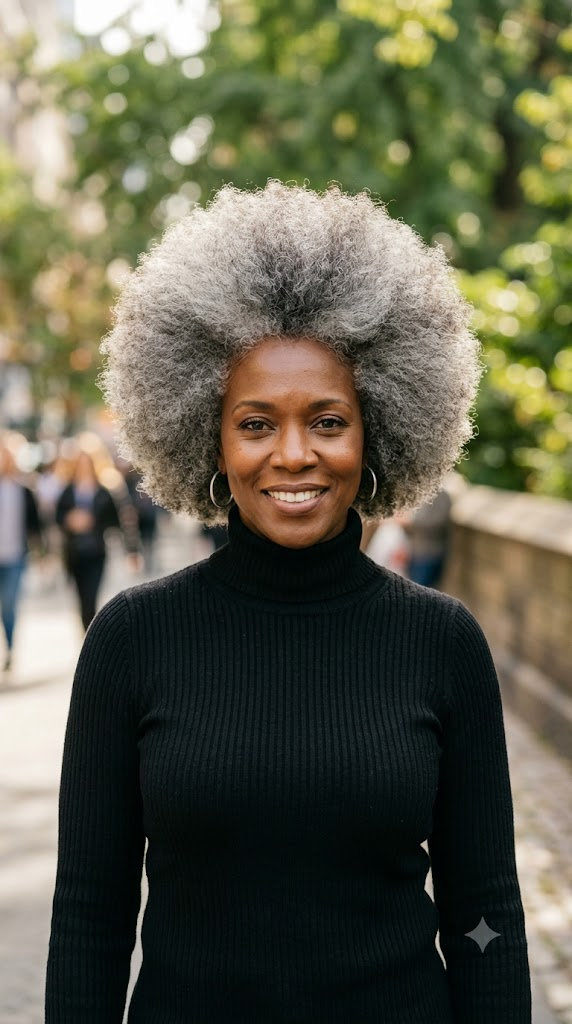
    This style features precisely sectioned cornrows that sweep back from the forehead, creating an elegant and architectural frame for the face. The braids transition into a soft, natural puff at the crown, offering a beautiful contrast between the structured base and the organic texture of the hair. Small gold beads are strategically placed at the termination of each braid, adding a touch of sophisticated hardware that elevates the look from a simple protective style to a curated accessory. This approach is particularly flattering for women over 50 as it highlights the brow and cheekbones while keeping the hair’s natural volume intact. It is a perfect choice for those who value a clean, artistic silhouette that feels both grounded and intentionally styled.

    2. Silver-Infused High Ponytail with Braided Base

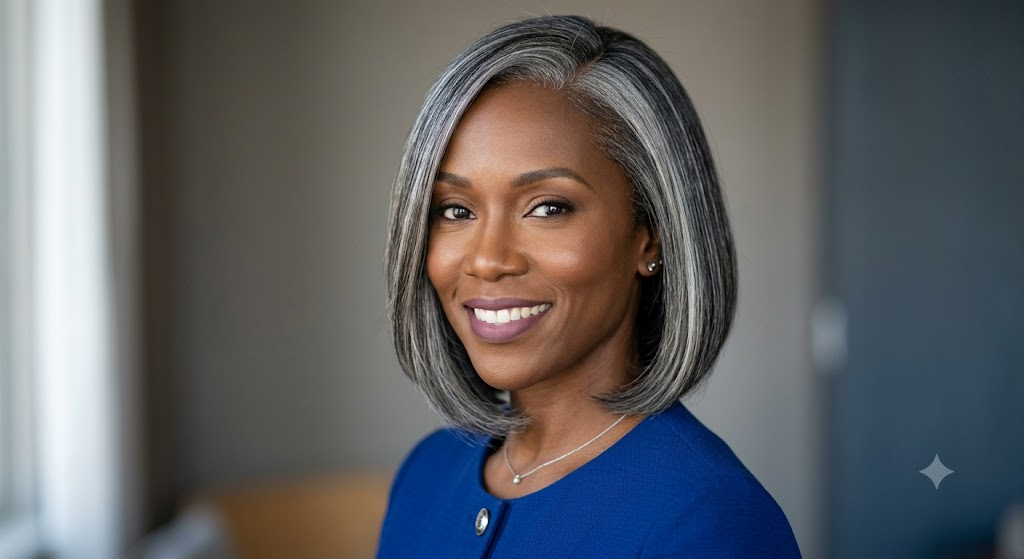
    This striking look showcases how high-contrast silver and charcoal tones can be used to create a modern, high-fashion statement. Neat, scalp-skimming braids lead into a dramatic high ponytail that flows freely over the shoulder, offering an instant “lift” to the facial features. The blend of icy silver extensions with natural salt-and-pepper hair creates a multidimensional finish that feels incredibly high-end. The long, soft waves of the ponytail add a romantic movement to the overall structured design, proving that braids for mature women can be both bold and soft. This style is ideal for the woman who wants a sophisticated, red-carpet-ready aesthetic that celebrates her natural color transition with absolute confidence.

    3. Intricate Micro-Braids with Cascading Waves

    For a look that balances meticulous detail with effortless flow, these micro-braids offer a stunning solution. The hair is braided into fine, uniform strands that transition into lush, cascading waves toward the ends, creating a soft and voluminous silhouette. The deep grey and silver palette provides a seamless and polished appearance that honors the natural aging process while maintaining a youthful energy. By keeping the braids small and lightweight, this style ensures comfort and flexibility, allowing the hair to move naturally with the body. It is an exceptionally graceful choice for formal occasions or daily wear, providing a textured, “quiet luxury” appeal that remains timeless and easy to manage.

    4. Side-Swept Salt and Pepper Twists

    This style embraces a relaxed yet refined aesthetic through the use of soft, side-swept twists that beautifully highlight a natural silver hairline. The hair is parted deeply to one side, allowing the silver-toned strands to frame the face like a halo, while the darker charcoal tones provide depth and contrast throughout the length. These twists offer a lower-tension alternative to traditional tight braids, making them an excellent choice for maintaining scalp health and hair elasticity. The shoulder-length finish is manageable and chic, perfect for the woman who prefers a style that feels personal and approachable. It is a testament to how simple, intentional styling can turn natural color transitions into a powerful fashion statement.

    5. Classic Center-Parted Silver Box Braids

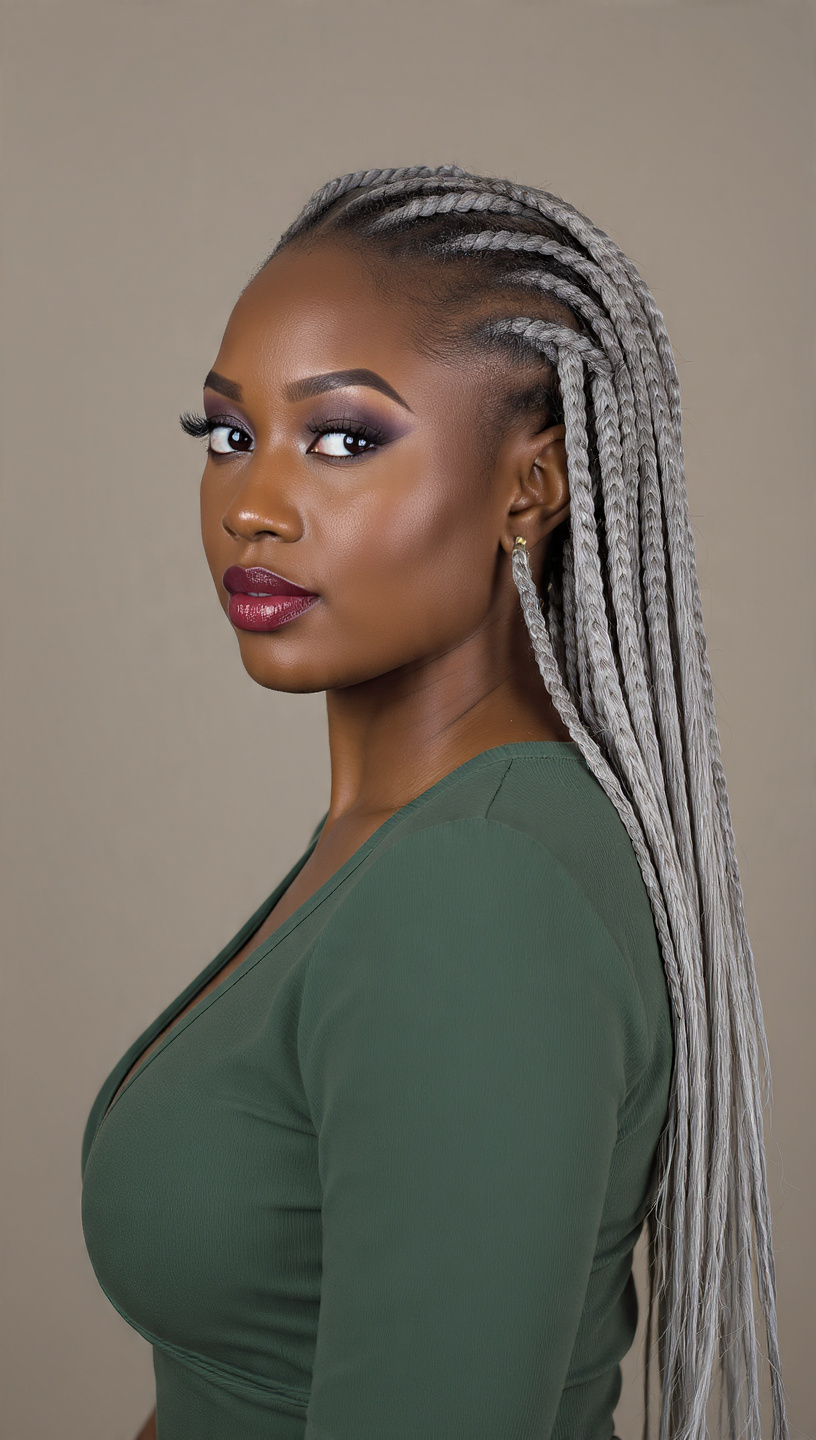
    This look features long, sleek box braids with a defined center part that creates a balanced and symmetrical frame for the face. The striking blend of silver and charcoal tones offers a sophisticated “salt and pepper” finish, allowing natural grey hair to transition seamlessly into the extensions. The clean parting highlights the forehead and eyes, providing an open and bright appearance that is both timeless and modern. For women over 50, this style is an excellent choice for its low-maintenance nature and its ability to provide protective length without sacrificing elegance. The uniform size of the braids ensures a neat, curated look that works effortlessly for daily wear or special occasions, embodying a sense of graceful confidence.

    6. High Braided Bun with Star Accents

    This creative style combines traditional cornrowing with a playful, high-volume bun at the crown. The hair is braided upward in precise sections, merging into a beautifully textured top-knot that showcases the natural curl and silver highlights of the hair. Small gold charms, including a delicate star, are woven into the braids to add a touch of personality and artistic flair. This “lifted” silhouette is particularly flattering as it draws the eye upward, highlighting the bone structure and providing a youthful energy to the overall aesthetic. It is a perfect example of how mature styling can remain experimental and fun while maintaining a high level of sophistication and intentionality.

    7. Shoulder-Length Box Braids with Gold Cuffs

    For a classic and manageable silhouette, these shoulder-length box braids offer a chic solution that is both practical and stylish. The hair is braided into medium-sized sections, falling gently around the collarbone to provide a soft frame for the face. Each braid is accented with metallic gold cuffs, which act as subtle jewelry for the hair, adding a refined, “quiet luxury” element to the protective style. This length is ideal for women who prefer a lightweight feel that doesn’t overwhelm the scalp or neck. The dark, rich color of the braids provides a striking contrast against the skin, creating a polished and grounded look that transitions perfectly from professional settings to relaxed weekend outings.

    8. Layered Salt and Pepper Twists

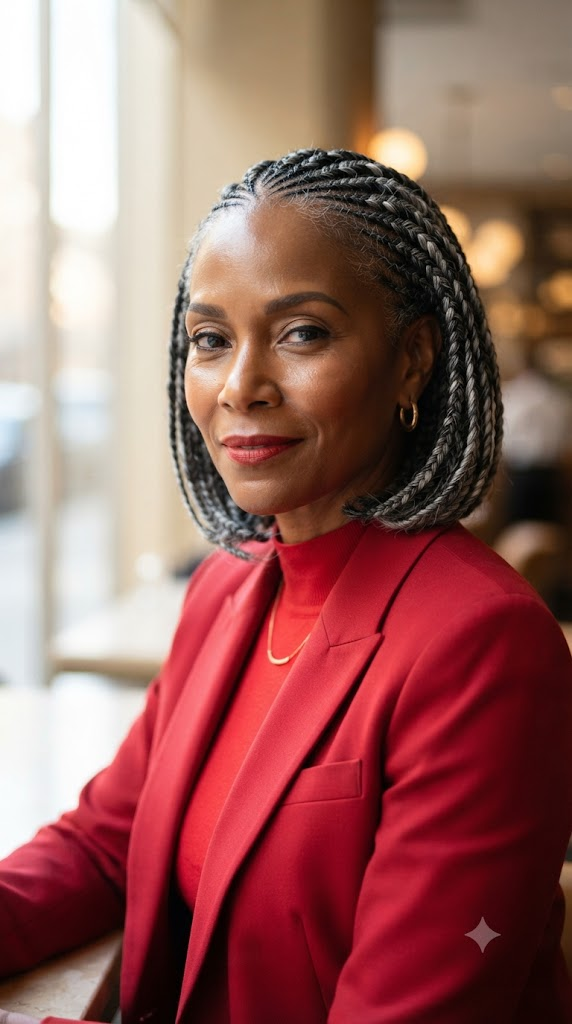
    This side-swept look features soft, textured twists that are cut into a layered, chin-length bob. The multidimensional color story—blending deep blacks with bright silver strands—mimics the natural graying pattern for an authentic and sophisticated finish. By opting for twists rather than tight braids, this style offers a gentler touch on the scalp, which is essential for maintaining hair density and health in mature years. The layered cut adds movement and volume, preventing the style from feeling heavy or static. It is a refined, artistic choice that feels deeply personal and effortless, proving that short, textured styles can be incredibly high-fashion while remaining easy to maintain day-to-day.

    9. Low Braided Chignon in Silver

    This sophisticated look features precise cornrows that sweep back into a neat, woven chignon at the nape of the neck. The monochromatic silver palette is strikingly modern, offering a uniform and polished finish that celebrates the beauty of grey hair. By keeping the volume concentrated at the back, this style provides a sleek, “face-lifting” effect that highlights the profile and jawline. It is an ideal choice for the woman over 50 who desires a professional and secure protective style that transitions seamlessly from a structured workday to an elegant evening out.

    10. High Voluminous Braided Bun

    This style emphasizes height and sculptural beauty, featuring thick, textured braids that are gathered into a bold bun at the crown. The rich contrast between the dark charcoal roots and the icy silver extensions adds a multidimensional depth that feels both intentional and high-fashion. The upward direction of the braids provides a natural lift to the facial features, while the substantial bun creates a powerful, regal silhouette. This is an excellent option for women who want to make a statement with their hair while keeping it entirely off the neck for maximum comfort and ease.

    11. Spiral Curls with Braided Crown

    For a softer, more romantic aesthetic, this style combines structured cornrows with a waterfall of tight, silver spiral curls. The braids at the front provide a neat and manageable base, while the loose curls add a playful, youthful volume that moves beautifully. This hybrid look is particularly flattering for mature women as the curls add a softness to the face, breaking up rigid lines. The bright silver tone throughout creates a radiant, halo-like effect that feels fresh and elevated, making it a standout choice for those who love a mix of texture and definition.

    12. Shoulder-Length Goddess Braids

    This classic shoulder-length style utilizes the “Goddess” technique, where the braids transition into soft, bouncy curls at the ends. The side part allows for a natural drape that frames the face elegantly, while the salt-and-pepper color blend keeps the look grounded and sophisticated. The medium length is incredibly versatile and lightweight, offering a chic bob-like silhouette that is easy to style daily. It represents a perfect balance of protection and femininity, providing a textured look that feels effortless and timeless for any occasion.

    Why Braids Are a Game-Changer for Women Over 50

    As hair naturally becomes finer, drier, or more fragile with age, braids offer a protective solution that minimizes breakage and reduces daily stress on the scalp. Unlike heat styling or chemical treatments, braids allow your natural hair to rest while still looking polished. They also eliminate the need for daily combing, blow-drying, or heavy products—making them a low-maintenance yet high-impact choice. For women embracing gray or silver transitions, braids can be styled to highlight those new hues, turning what some once saw as “aging” into a luminous feature.


    Choosing the Right Braid for Your Hair Texture and Length

    Not all braids are created equal, especially when working with mature hair. Here’s a quick guide:

    • Knotless Braids: Gentle on the scalp and edges, these start with your natural hair before extensions are added, reducing tension.
    • Crochet Braids: Ideal for women with thinner hair or sensitive scalps. Pre-braided or pre-twisted hair is looped through your natural hair with a crochet needle—quick, lightweight, and versatile.
    • Feed-in Cornrows: Great for showcasing silver roots or blending colors. They lie flat against the head and can be styled into buns, ponytails, or geometric patterns.
    • Senegalese Twists & Rope Twists: Softer and more flexible than traditional box braids, these work beautifully on medium to fine hair.

    If your hair is shorter, don’t worry—extensions can add length, or you can rock short, chic braided bobs that sit just above the shoulders.


    Protecting Your Edges and Scalp Health

    One of the biggest concerns for women over 50 is hairline thinning or receding edges. The good news: braids done correctly can actually protect your edges. Look for a stylist who understands tension control and avoids rubber bands at the roots. Styles like knotless braids, loose cornrows, or jumbo braids put far less stress on the hairline. Between installations, give your scalp a break—two to three weeks of rest before re-braiding is ideal. Keep your scalp moisturized with lightweight oils (like jojoba or argan) and avoid heavy buildup by washing your braids gently every 10–14 days.


    Embracing the Gray: Color and Blending Techniques

    Silver, white, and salt-and-pepper hair are no longer “transition” colors—they’re statement shades. Many women over 50 are choosing to enhance their natural gray by braiding with extensions that match or complement their silver tones. Think cool ash blondes, platinum, or even soft lavender for a playful touch. Alternatively, you can braid only your natural gray hair without extensions for an airy, ethereal look. If you’re not fully gray yet, lowlights in silver or champagne can blend new growth seamlessly into your braided style.


    Styling Ideas for Every Occasion

    Braids are surprisingly versatile. Here are a few ways to wear them:

    • Everyday Elegance: A low ponytail or loose side-swept braids with a silk scarf tied at the nape.
    • Work & Professional Settings: Sleek cornrows pinned into a low bun or a crochet bob in a natural black or dark brown.
    • Special Events: Add gold or pearl cuffs, beads, or ribbon-wrapped sections. A braided updo or halo braid looks stunning with evening wear.
    • Vacation & Active Days: High ponytail braids or pigtail twists keep hair off the neck and require zero daily styling.

    Maintenance Made Simple

    One of the greatest gifts of braids is the time they return to you. To keep them fresh:

    • Wrap your hair with a silk or satin scarf every night.
    • Spritz a leave-in conditioner or braid spray on your scalp weekly.
    • Cleanse with a diluted shampoo or witch hazel on a cotton pad between washes.
    • Re-braid any loose strands at the root to extend the life of your style (usually 4–6 weeks).

    Avoid keeping braids in for more than eight weeks, as mature hair can begin to matte or lock at the roots.


    Finding a Stylist Who Understands Mature Hair

    Not every braider understands the unique needs of women over 50. Look for a stylist who:

    • Asks about scalp sensitivity, thinning areas, and past hair loss.
    • Uses lightweight extensions (heavy hair can pull on fragile roots).
    • Avoids tight braiding and glue.
    • Has experience with gray or silver hair textures, which can be coarser or more wiry.

    Don’t be afraid to do a consultation first. A great stylist will celebrate your vision while protecting your hair’s health.

  • The Elevated Cute Hair Bun: A Masterclass in Effortless Versatility

    The Elevated Cute Hair Bun: A Masterclass in Effortless Versatility

    The hair bun is perhaps the most enduring silhouette in beauty, moving seamlessly from the quiet focus of a morning routine to the intentional elegance of an evening gala. No longer just a convenience for a busy day, the modern bun is a curated statement of personal style. It balances the intersection of quiet luxury and functional art, offering a way to frame the face and highlight the neckline with ease.

    Whether you are leaning into the soft, romantic textures of a lived-in “cloud” knot or the sharp, architectural lines of a sleek mid-bun, the key lies in the intentionality of the finish. This guide explores the most coveted bun styles, designed for those who value aesthetic longevity and a sophisticated, polished edge.

    12 Curated Hair Buns for Timeless Appeal :

    1. The “Cloud” Texture High Updo

    This style is the quintessence of the “Art of the Undone Bun,” prioritizing airy volume and intentional imperfections. The bun is strategically placed high on the crown, creating an elegant lift to the entire facial silhouette. The hair is gathered loosely, with individual sections looped and pinned to build a cloud-like, multi-dimensional texture. This texture provides structural intrigue without feeling rigid. Crucially, the “cute” and lived-in factor is amplified by the soft, face-framing tendrils and the nape wisps, which are lightly curled to add a romantic, effortless finish. It is a perfect example of a style that feels simultaneously grand and approachable.

    2. The Architectural, Sleek Chignon

    Focusing on the “Polished Sophistication” section of the article, this look is a masterclass in precision and quiet luxury. The bun is a perfect, sculpted loop sitting precisely at the mid-level point on the back of the head. It is achieved with highly reflective, smoothed hair, minimizing any flyaways. A key distinguishing feature is the intentional wrap of hair concealing the base, creating a seamless, architectural silhouette. This mid-level placement balances the profile perfectly. The sleekness of the main bun is contrasted by a few deliberate, soft tendrils framing the jawline, demonstrating that even a highly structured, “cute” bun retains its soft appeal.

    3. The Intricate, Wrapped Low-Bun

    This style exemplifies the “Occasion-Ready” adaptations, showcasing how a bun can mimic intricate, organic forms like a floral arrangement. Situated low at the nape of the neck, this style utilizes hair volume to create deep, twisted layers that wrap and tuck around each other. The texture is softer than the sleek chignon, yet more intentional than the messy bun, resulting in a complex, multi-layered tuck. The placement draws the eye downward, enhancing the neckline. The intricate wrapping technique ensures that the bun itself acts as the primary accessory, radiating a sense of classic, “quiet luxury” sophistication perfect for a formal event.

    4. The Sculpted High-Knot with Edge Detail

    This style seamlessly blends the structural integrity of the “Polished Sophistication” bun with the playful, modern artistry of “Nostalgic Accents.” The core of the look is a flawlessly smooth, donut-style bun placed firmly at the apex of the head. This high placement creates an instant “facelift” effect and maximizes shine. Its perfect, spherical symmetry is contrasted by the highly detailed, sculpted “baby hair” edges framing the forehead and temples. This deliberate contrast—the severe smoothness of the high knot paired with the delicate, artistic swirls of the hairline—creates an editorial, curated look that feels both timeless and high-energy.

    5. The Botanical Low Chignon

    This style serves as a beautiful representation of how botanical elements can elevate a classic silhouette into something deeply romantic. The bun is tucked low at the nape of the neck, featuring a soft, horizontal orientation that emphasizes the width and health of the hair. The texture is smooth but not severe, allowing the natural luster of the hair to shine under ambient lighting. Adorned with a delicate arrangement of fresh florals and greenery nestled into the side of the tuck, this look transitions from a simple updo to a curated, artistic statement. The floral accent adds a pop of natural color and a sense of “quiet luxury” that is perfect for outdoor events or editorial bridal spreads, proving that the right accessory can redefine the intentionality of a classic bun.

    6. The Ribbon-Accented Ribbon Space Buns

    Drawing inspiration from the “Nostalgic Accents” of the Y2K era, this style is a playful and artistic interpretation of symmetry. The hair is divided by a sharp, “S-curved” center part that adds a modern, graphic element to the look. Twin buns are set at a mid-level height, featuring a soft, voluminous tuck that allows the ends to remain hidden for a clean, spherical finish. The addition of long, slender silk ribbons tied into delicate bows at the crown of each bun provides a romantic, vintage touch. These cascading ribbons add movement and a sense of “aesthetic longevity” to a high-energy style, making it feel curated and thoughtfully designed rather than purely casual.

    7. The Braided Crown Top Knot

    A masterful execution of “Texture Transitions,” this style utilizes the structural beauty of intricate braiding to build a powerful, high-volume bun. The hair is gathered into sleek, uniform cornrows that sweep upward toward the apex of the head, creating a clean and architectural foundation. The bun itself is composed of many smaller braids coiled together to form a large, textured top knot. This placement creates a striking vertical line that elongates the neck and draws attention to the facial structure. The interplay between the scalp’s geometric patterns and the dense, braided texture of the bun reflects a high level of intentionality and craftsmanship, making it a standout choice for those seeking a bold yet sophisticated silhouette.

    8. The Sculpted French Twist Fusion

    This look offers a sophisticated blend of a traditional French twist and a modern, high-set bun, focusing on verticality and “quiet luxury.” The back of the hair is swept upward in a smooth, seamless motion, creating a polished surface that leads into a voluminous, lopped bun at the crown. The hair is tucked and pinned with hidden precision to create a series of soft, rolling folds that add depth and dimension. This elevated placement provides a refined profile that feels both professional and artistic. The lack of visible hardware or elastics gives the style an “effortless” yet highly calculated aesthetic, embodying the grace of a ballet-core classic with a more contemporary, textured twist.

    9. The Jeweled Braid-Wrapped Chignon

    This style is a sophisticated exploration of “Curated Accents,” where the hair itself becomes a canvas for high-end hardware. A thick, textured braid sweeps across the back of the head, leading into a low-set chignon at the nape. The bun is tucked with a soft, rounded finish that highlights the multi-tonal, ash-grey palette of the hair. What elevates this look into the realm of “quiet luxury” is the delicate string of pearls and crystals woven through the braid. This subtle glimmer adds a touch of ethereal elegance, transforming a classic braided updo into a curated, artistic masterpiece. It is an ideal silhouette for events that demand a balance of traditional craftsmanship and modern, high-fashion intentionality.

    10. The Sleek High-Gloss Knot

    Embodying the “Polished Sophistication” of a modern classic, this high-set bun is defined by its impeccable smoothness and high-shine finish. The hair is pulled back into a tight, secure placement at the crown, creating an architectural silhouette that emphasizes the profile and jawline. The bun itself is a full, spherical knot with a seamless wrap around the base, hiding any evidence of styling tools. This look is further refined by the expertly sculpted “baby hair” edges, which add a sharp, editorial edge to the soft roundness of the knot. It is a powerful, intentional style that radiates confidence and aesthetic longevity, making it a staple for a high-impact, curated wardrobe.

    11. The Geometric Braided Top Knot

    A striking example of “The Anatomy of Placement,” this style uses bold verticality and geometric precision to create a commanding presence. The back of the head features clean, crisp sectioning that leads into uniform braids, sweeping upward to the highest point of the head. The bun is a dense, voluminous coil of braids, stacked to create a textured crown that adds significant height and poise. This high-crown placement serves as an instant “facelift,” drawing all focus to the face and neck. The contrast between the intricate scalp patterns and the massive, braided silhouette of the knot demonstrates a high level of technical intentionality and a commitment to a bold, artistic aesthetic.

    12. The Floral-Crowned Braided Tuck

    This style celebrates the “Occasion-Ready” silhouette through a romantic fusion of texture and nature. The bun is a voluminous, low-set arrangement of thick braids coiled into a wide, horizontal chignon at the nape. Its intricate, woven texture is crowned by a lush, semi-circular arrangement of fresh white blossoms that bridge the gap between the hair and the head. This floral halo adds a sense of organic beauty and softness, making the bun feel deeply personal and artistic. The richness of the dark hair serves as the perfect backdrop for the bright petals, creating a high-contrast, “cute” look that feels timeless, intentional, and rooted in a classic, romantic tradition.

    Strategic Styling: Techniques for Every Hair Type

    Practical insights to ensure these styles translate from the screen to real life.

    • Building Volume: Utilizing texture sprays and light teasing to create fullness in finer hair.
    • Weight Management: Techniques for securing thick hair without sacrificing the delicate proportions of the bun.
    • The Second-Day Secret: Why natural oils provide the perfect grip for a long-lasting, secure hold.

    Occasion-Ready: Adapting the Silhouette

    Choosing the right bun based on the energy of the room and the demands of your schedule.

    • The Power Meeting: A low, sleek chignon that radiates authority and subtle confidence.
    • The Sunday Gallery Stroll: A loose, messy bun paired with a wide headband for a relaxed, artistic vibe.
    • The Evening Gala: An intricate, multi-twisted bun that mimics the complexity of a floral arrangement.

    The Anatomy of Placement: Choosing Your Angle

    Understanding how the height and position of a bun can completely shift your facial aesthetic.

    • High Crown: Creates an instant “lift” effect, drawing the eyes upward and lengthening the neck.
    • Mid-Level: The most versatile placement, offering a balanced profile that works with any outfit.
    • Low Nape: Evokes a sense of classic romance and softness, perfect for framing statement jewelry.

    Texture Transitions: Working with Natural DNA

    How to create a bun that feels authentic to your hair’s natural movement.

    • The Coiled Pineapple: Celebrating natural curls by gathering them high and loose to maintain ringlet integrity.
    • The Waveset Bun: Incorporating pre-styled waves into a low tuck to add romantic ripples and depth.
    • The Braided Foundation: Using Dutch or French braids that lead into the bun for a multi-textured finish.

    Nighttime Preservation: The “Sleep-In” Bun

    Utilizing the bun as a functional tool for maintaining hair health and morning efficiency.

    • The Silk Wrap Technique: Securing a loose bun with a silk scrunchie to prevent breakage and frizz overnight.
    • Heatless Waves: Using a high bun as a foundation for waking up with natural, voluminous curls.
    • Tension Management: Ensuring a loose enough hold to avoid scalp strain while resting.

    Seasonal Adaptations: Weather-Proofing Your Style

    Adjusting your technique to ensure aesthetic longevity regardless of the environment.

    • The Humidity-Resistant Twist: Using smoothing balms and high-tension placements to combat frizz.
    • Winter Accessories: Styling a low bun that accommodates beanies and scarves without losing its shape.
    • The Summer Escape: A secure, salt-spray-infused knot designed for effortless seaside transitions.

    The Minimalist’s Toolkit: Essential Hardware

    A look at the functional tools that act as the invisible architects of a perfect bun.

    • Seamless U-Pins: For securing heavy hair with a “floating” look that hides all mechanics.
    • Texturizing Dry Shampoos: Providing the necessary “grip” for fine hair to hold a voluminous shape.
    • Hand-Carved Hair Forks: A timeless, artistic choice for securing hair without the need for elastics.

    Conclusion: The Beauty of the Boundless Bun

    The true magic of the hair bun lies in its ability to be whatever you need it to be—a practical solution for a busy afternoon or a refined masterpiece for a milestone event. It is a style that transcends fleeting trends, relying instead on the harmony of texture, placement, and intentionality. By mastering these variations, you aren’t just tying your hair back; you are choosing a silhouette that reflects your mood and enhances your natural beauty with effortless grace. In a world of fast-paced changes, the bun remains a timeless anchor, proving that aesthetic longevity is always in style.

  • 12 Balayage Hair Colour Ideas For Effortless Dimension.

    12 Balayage Hair Colour Ideas For Effortless Dimension.

    Balayage remains the gold standard for achieving that coveted, sun-kissed glow without the harsh lines of traditional highlights. Unlike uniform coloring techniques, this hand-painted method focuses on seamless transitions and soft, natural growth, making it the ultimate choice for those seeking a high-end look with low-maintenance upkeep. Whether you are looking to brighten your natural brunette base or experiment with cool-toned platinum ribbons, these twelve balayage inspirations offer a sophisticated way to add depth and movement to your hair.

    12 Balayage Perspectives for Dimensional Depth:

    1. The Honey-Gold Sombré Melt

    This first look is a quintessential example of soft ombré, showcasing an ultra-smooth transition from a natural chestnut brown root into flowing, voluminous waves of golden honey. The blending is flawless, with the lighter tones saturated heavily through the mid-lengths and ends for a truly sun-bleached effect. The dimension is enhanced by the light catching the distinct, defined curls, which create a soft gradient that feels intentional and effortless.

    2. Deep Mocha and Walnut Dimension

    This portrait highlights the power of balayage on dark hair. While maintaining a deep, espresso-mocha base, fine ribbons of warm walnut and milk chocolate are strategically hand-painted throughout. These highlights are subtle but give the long, tumbling waves a rich, dimensional structure. The color placement is concentrated just below the eye level, which lifts the face, while the depth at the roots keeps the style grounded and low-maintenance.

    3. The Textured Bronde Bob

    This style is an excellent example of a high-contrast ‘bronde’ (brown-blonde) applied to a shorter, layered cut. The base remains a deep, smoky brown, but bold strokes of neutral beige and light ash-blonde are painted in thick sections, mimicking natural light reflection. This placement emphasizes the texture and layering of the bob, making the individual curls pop. The heavy concentration of highlights at the very ends against the dark interior provides substantial visual depth.

    4. Vivid Ultraviolet Ribboning

    Proving that balayage is not just for neutrals, this technique uses a bold, ultraviolet tone. A deep violet base provides the shadow root, while vibrant, cool-toned purple ribbons are painted through the mid-lengths and concentrated heavily into defined, structural barrel curls. This approach ensures that as the color shifts and catches the light, the dimensional contrast between the darker base and the brilliant purple is maximizing the hair’s perceived shine and movement.

    5. Seamless Cinnamon Copper Melt

    This look is an example of an immaculate gradient applied to warm, coppery hair. The transition begins with a soft, natural chestnut root that blends entirely seamlessly into mid-lengths saturated with bright cinnamon and soft auburn tones. The hand-painted technique is so precise that the distinct barrel curls, which fall into structured waves, showcase a continuous shift of light rather than harsh lines of demarcation. The heavy saturation on the ends maximizes the dimensional warmth and perceived health of the hair.

    6. The Iced Champagne Frame

    This portrait features a high-impact, high-contrast balayage tailored specifically for a face-framing effect. The base remains a deep, smoky brown, but bold strokes of exceptionally pale, cool, champagne blonde are applied starting near the root to frame the face. The back and mid-lengths use heavy ribboning that emphasizes the definition of the large, glamorous waves. The blend is sophisticated, ensuring that while the blonde is dramatic and bright, the transition into the darker interior layers is soft and curated.

    7. Smoky Ash-Silver Diffusion

    This technique is a striking display of dimensional gray. It utilizes a very dark, smoky brown base, transitioning dramatically into cool, diffused ribbons of light ash and bright silver. The application here is incredibly fine, creating a ‘veil’ of cool tone that shifts with movement. The layering of the cut highlights the multi-tonal silver accents, making the hair appear textured and voluminous. This look is perfect for those seeking an editorial, sophisticated take on a gray or silver palette.

    8. Creamy Platinum and Pearl Contrast

    This image showcases the intersection of creamy warmth and a bright platinum finish. It features a deep shadow root, providing strong contrast to the heavy application of very pale, creamy pearl blonde highlights that dominate the mid-lengths and ends. This placement emphasizes texture, creating the illusion of significant visual volume through the large, rolling waves. The blend is meticulous near the crown, ensuring a soft grow-out despite the powerful brightness of the platinum ribbons.

    9. Radiant Auburn and Copper Sweep

    This look celebrates the vibrancy of red tones through a sophisticated, high-shine melt. Starting with a deep, earthy auburn at the roots, the color gradually shifts into a bright, reflective copper through the mid-lengths. The application is exceptionally smooth, emphasizing the hair’s natural luster and the fluid movement of the soft, voluminous waves. This tonal balayage provides a monochromatic depth that feels rich, artistic, and perfectly curated for a bold yet polished aesthetic.

    10. The Luminous Champagne Lob

    Designed for a textured, shoulder-length cut, this balayage features a high-contrast blend of deep brunette and bright champagne blonde. Bold, chunky ribbons of cool-toned blonde are painted throughout to catch the light from every angle, significantly increasing the visual volume of the lob. The placement is strategic, ensuring the brightest pieces pop against the darker interior layers, creating a multidimensional “glow” that looks fresh and modern.

    11. Toasted Toffee and Hazelnut Curls

    This portrait showcases an elegant, warm-toned dimension on a deep chocolate base. Hand-painted ribbons of toasted toffee and hazelnut are woven through the hair, concentrating on the lower half to accentuate a series of tight, structured curls. The result is a luxurious, “expensive brunette” finish where the highlights provide just enough contrast to define the hair’s texture without losing the richness of the natural dark base.

    12. Midnight Cobalt Dip-Dye Melt

    A striking example of creative color, this balayage transitions from a sleek midnight black root into a vivid cobalt blue. Rather than a harsh line, the blue is “melted” into the dark base using a subtle ribboning technique, ensuring the transition feels intentional and artistic. The cool, oceanic tones are concentrated at the ends of the tousled waves, providing a high-impact, edgy finish that maintains a sophisticated editorial feel.

    The Timeless Appeal of Balayage

    Balayage has cemented its place as more than just a hair color trend; it is a lasting technique prized for its natural, sun-kissed results. Unlike traditional foil highlights that often create stark, uniform lines, balayage—a French word meaning “to sweep”—involves hand-painting color onto the surface of the hair. This allows for a seamless, graduated effect that grows out beautifully without harsh regrowth lines. It is the ultimate low-maintenance option for those who want to look effortlessly polished.

    Why Dimension Matters More Than Color

    When considering a hair transformation, many clients focus solely on the color—blonde, brunette, or red. However, the true secret to luxurious-looking hair lies in dimension. Flat, single-process color can often look one-dimensional and lack movement. Balayage excels at creating visual depth by weaving together multiple tones. By playing with light and shadow, skilled colorists can mimic the way natural light hits the hair, making it look thicker, healthier, and more dynamic. This section explores the 12 best ways to achieve that coveted dimensional look.

    How to Choose the Right Balayage for Your Skin Tone

    Choosing the right balayage is about more than just liking a picture; it’s about harmony. For fair skin tones, cool tones like ash, champagne, and platinum often look striking, while warm honey tones can add a healthy flush. For medium/olive skin, gold, caramel, and bronze tones enhance the natural warmth of the skin. For dark skin tones, rich mahogany, deep mocha, and bold copper create stunning contrast and brightness. Consulting with a professional colorist ensures that the tones chosen will complement your undertones and bring out your best features.

    Maintenance and Aftercare

    One of the greatest benefits of balayage is its low-maintenance nature. Because the technique avoids the root area, you can typically go 3 to 4 months between touch-ups. However, to keep the dimension looking fresh and the hair healthy, a proper aftercare routine is essential.

    • Use Purple Shampoo Sparingly: If you have blonde or cool-toned balayage, a purple shampoo once a week will prevent brassiness. Overuse can leave hair looking dull or ashy.
    • Hydrate, Hydrate, Hydrate: Lightened hair requires moisture. Invest in a high-quality hydrating mask to keep the ends soft and the color glossy.
    • Heat Protection: Always use a heat protectant before styling. Heat damage can cause color to fade faster and disrupt the seamless blend of the painted sections.

    Conclusion: Embracing Effortless Beauty

    In a world where beauty routines often demand hours of upkeep, balayage stands out as a celebration of effortless style. It is more than just a coloring technique; it is an investment in confidence and convenience. By moving away from rigid, high-maintenance color lines and embracing the soft, natural dimension of hand-painted highlights, you allow your hair to look its best every single day—whether styled in a sleek blowout, natural waves, or a messy bun.

    The 12 ideas explored above prove that there is a perfect balayage for everyone, regardless of hair length, texture, or base color. Whether you are drawn to the subtle warmth of caramel ribbons, the cool sophistication of ash brown melts, or the bold contrast of platinum pieces, the key lies in the dimension. This dimension mimics the organic way light interacts with hair, creating movement, depth, and a luminous glow that cannot be achieved with flat, single-process color.

    Ultimately, balayage offers freedom—the freedom to let your hair grow out gracefully, the freedom to style it without worrying about visible roots, and the freedom to enjoy a look that is polished yet inherently natural. When you choose balayage, you aren’t just choosing a hair color; you are choosing a lifestyle of low-maintenance luxury. So, take the leap, consult with a trusted colorist, and get ready to fall in love with the most dimensional, radiant version of your hair yet.

  • How to Grow Out a Bob Gracefully — Without a Single Awkward Phase

    How to Grow Out a Bob Gracefully — Without a Single Awkward Phase

    Growing out a bob doesn’t have to feel like serving a sentence.

    The awkward phase of growing out a bob is one of beauty’s most reliable frustrations. There’s the stage where it sits on the shoulder and does nothing. Then the stage where it’s long enough to be inconvenient but too short to tie back properly. Then the stage where it develops a strange interior layer that curls outward at the nape. Most people give up somewhere in the middle and cut it back to a bob.

    But each of these stages is solvable with the right trim strategy — and the difference between a graceful grow-out and an agonising one is usually just a 20-minute appointment every eight weeks where you know what to ask for. This guide maps out the exact stages of growing a bob to shoulder-length or beyond: which shapes to cut at each stage, what to ask your stylist for at each appointment, and how to use accessories, styling, and the butterfly cut’s layering philosophy to make every stage feel intentional rather than in-between.

    → The most important grow-out rule: keep trimming. The instinct when growing hair is to avoid scissors entirely — but regular small trims during a grow-out remove the damaged, uneven sections that make the awkward phases look worst. Every eight weeks, a small trim maintains a shape rather than undermining the growth.

    14 Seamless Grow-Out to Transitioning Your Bob Gracefully:

    1. The Sophisticated Silver Micro-Trim

    This classic jaw-length bob exemplifies the first phase of a graceful grow-out, where the focus is on maintaining a sharp, clean perimeter while allowing the natural silver tones to provide dimension. The cut features subtle internal weight removal to ensure the ends don’t become overly boxy as they transition toward the neck, keeping the silhouette light and mobile. By prioritizing a precise trim at this stage, the look remains intentional and polished, effectively bypassing the “triangle head” effect that often plagues early growth.

    2. The Floral Half-Up Transition

    As the bob moves into the nape transition phase, utilizing intentional hardware like a matte floral claw clip becomes a strategic way to manage mid-length layers. This half-up style pulls back the top sections that are finally long enough to pin, effectively taming the “interior layer” while allowing the bottom length to graze the shoulders. It is a perfect example of using accessories to bridge the gap between a short bob and a lob, creating a curated aesthetic that feels like a deliberate style choice rather than a temporary in-between phase.

    3. The Polished Butterfly Lob

    Representing the “Butterfly Evolution” of the grow-out process, this long bob incorporates deep, sweeping face-framing layers that blend older lengths with new growth. The side-swept volume at the roots and the soft, inward-curling ends draw the eye upward, highlighting the face and distracting from the hair’s transition over the shoulders. This stage is all about “The Face-Frame Bridge,” where the silhouette is softened with disconnected layers to ensure the hair moves with a sense of “quiet luxury” and intentionality as it approaches chest-length.

    4. The Voluminous Sculpted Shag

    Embracing maximum texture and height, this look demonstrates how to use the “Internal Architecture” of thick, coily hair to create a high-fashion focal point during a grow-out. By leaning into dramatic volume at the crown and sculpted face-framing pieces, the awkwardness of the length is completely neutralized by the boldness of the shape. This style utilizes a “Butterfly Cut” philosophy by layering the hair to move outward rather than just downward, turning a transitional length into a powerful, editorial statement that celebrates movement and natural density.

    5. The Face-Framing Flip

    This look beautifully illustrates the power of the “Face-Frame Bridge” by incorporating sweeping layers that curve away from the eyes, creating an intentional silhouette even as the length hits the jawline. By styling the front sections with outward volume, the haircut avoids looking like a heavy, growing-out mass and instead adopts a sophisticated, retro-inspired shape. This technique effectively manages the “Micro-Trim” phase by focusing on movement and lift around the face, ensuring the grow-out feels curated and high-end rather than a waiting game for more length.

    6. The Strategic Claw Clip Twist

    When the nape of the neck becomes a frustration during the middle months of growth, a large claw clip serves as the ultimate “Survival Toolkit” essential for a sleek, on-the-go aesthetic. This styling choice tucks away the awkward interior layers that tend to flip at the shoulder, while allowing the face-framing pieces to remain loose for a soft, intentional feel. It is a perfect example of how to handle the “Nape Transition” with a functional yet chic accessory that keeps the hair off the collar and maintains a polished, “quiet luxury” appearance.

    7. The Textured Golden Wave

    Transitioning a blonde bob becomes much more manageable when embracing heavy texture and “S-waves,” which act as a strategic camouflage for uneven lengths during a grow-out. The internal weight removal throughout the mid-lengths prevents the “triangle head” effect, allowing the curls to sit softly rather than stacking outward in a boxy shape. This style is ideal for those moving toward a “Butterfly Cut” evolution, as the multi-dimensional layers and tousled finish create a cohesive, intentional style that masks the exact stage of the hair’s growth journey.

    8. The Side-Swept Root Lift

    A dramatic side part is a highly effective way to shift the focal point of a bob during the early stages of growth, providing instant volume and a modern, asymmetrical edge. By lifting the hair at the root and sweeping it over, you can hide any “flatness” that often occurs when the hair starts to feel heavy and transition-weary. This approach works as a “Strategic Maintenance” hack, using a simple change in direction to refresh the haircut’s personality and give the illusion of a deliberate, edgy style while the back and sides gain the necessary length.

    9. The Polished Espresso Lob

    This voluminous long bob marks the successful transition through the “Nape Transition” phase, where the hair has finally cleared the shoulders with a smooth, inward-curving finish. By maintaining a deep side part and subtle face-framing layers, the style avoids a heavy or weighted look, instead embracing a sophisticated “quiet luxury” aesthetic that feels entirely intentional. This length is the perfect canvas for “The Face-Frame Bridge” philosophy, using a slight bend in the front sections to provide structure and elegance while the back layers catch up in length.

    10. The Mid-Length Transition to Long-Layered Integration

    This side-by-side comparison perfectly captures the journey from a texturized “lob” to a fully integrated, long-layered silhouette, emphasizing the importance of “Strategic Maintenance” over time. In the first phase, beachy waves are used as a clever styling hack to camouflage the unevenness that often occurs as hair hits the shoulder, effectively neutralizing the “triangle head” effect with soft, internal weight removal. The subsequent transformation shows the result of consistent “dusting” and shape-shifting; the hair has successfully transitioned into a sleek, V-shaped perimeter that eliminates the memory of the bob. This final length demonstrates a “Butterfly Evolution” where the previous short layers have been blended seamlessly into a cohesive, flowing look that moves with intentionality and “quiet luxury.”

    11. The Voluminous Butterfly Evolution

    As a bob transitions into the “Butterfly” phase, long, disconnected layers become essential for maintaining lift and movement. This style focuses on heavy face-framing pieces that bridge the gap between the original shorter lengths and the new growth reaching toward the shoulders. By utilizing a voluminous blowout that flicks the ends outward, the “in-between” length is transformed into a glamorous, intentional silhouette that effectively disguises the transition. It’s a prime example of how strategic layering can turn the most difficult grow-out stage into a high-fashion focal point.

    12. The Polished Headband Survival Strategy

    When a growing bob reaches the stage where it sits flat or develops an awkward interior layer at the nape, a structured headband becomes an indispensable tool for maintaining a curated aesthetic. By pulling the hair back and away from the face, this accessory instantly adds height and volume at the crown while neatly managing the length hitting the collarbone. This look demonstrates how to use “quiet luxury” hardware to bypass the frustration of daily styling, ensuring the grow-out feels like a sophisticated fashion choice rather than a temporary lapse in maintenance.

    13. The Half-Up Space Bun Bridge

    Embracing playful, high-positioned hardware like space buns is a genius way to manage top layers that have gained significant length but aren’t yet ready for a full ponytail. Combined with a soft, wispy fringe, this style utilizes “The Face-Frame Bridge” philosophy to keep the focus on the eyes and forehead rather than the shifting perimeter at the neck. The textured, pastel waves add a soft grit that masks any uneven ends, turning the mid-neck transition into a creative opportunity for bold, modern styling that feels entirely intentional.

    14. The Embellished Side-Tucked Wave

    Utilizing strategic hardware is a masterclass in navigating the early stages of a bob grow-out, especially when layers start to feel heavy or uncooperative. By pulling one side back with a series of jeweled pins, you instantly create a sleek, asymmetrical focal point that bypasses the “triangle head” effect often seen at this length. This styling hack not only manages the bulk near the ear but also allows the natural texture of the hair to shine on the opposite side, proving that the transition toward a lob can be an opportunity for high-glamour, intentional accessorizing rather than a beauty frustration.

    Strategic Maintenance: The “Internal Architecture”

    • Managing Density: How to address the “middle layer” that thickens as the hair grows, causing the bob to look dated.
    • The Science of the Split: Why a $1/8$-inch “dusting” every 8 weeks actually accelerates visible growth by preventing breakage.
    • The Nape Undercut (Optional): A secret trick for those with thick hair to remove the “shelf” effect during the mid-neck phase.

    The Face-Frame Bridge: Diverting the Eye

    • The Power of the Perimeter: How bangs or face-framing “bits” make an awkward length look like a “Shag” or a “Wolf Cut.”
    • Creating a Focal Point: Using bottleneck bangs to frame the eyes, drawing attention away from the length hitting the shoulders.
    • The “Tuck & Pin” Method: How to use face-framing layers to create the illusion of a finished style while the back continues to grow.

    The Survival Toolkit: Accessories & Products

    • The Power of the Silk Scarf: Using headwraps to disguise “flat” roots during growth spurts.
    • Product Swapping: Moving from heavy waxes to lightweight texturizing mists and serums for flow.
    • Strategic Hardware: Using decorative bobby pins to “fake” a shorter, pinned-back look on days when the length feels unmanageable.

    Conclusion: Consistency is King

    • Summary of the 8-Week Rule.
    • Final encouragement: The awkward phase is only awkward if it looks accidental; shape makes it style.

    Technical Note for Content:

    Remind readers that the average growth rate is 0.5 inches per month. By trimming only 0.25 inches every eight weeks, they are still netting a total of 0.75 inches of growth every two months, but with a silhouette that looks like a high-end haircut rather than a neglected one.

    Does this addition of the “Face-Frame Bridge” help bridge the gap between the different growth phases for your readers?

  • The Best Haircuts for Curly Hair — Work With It, Not Against It.

    The Best Haircuts for Curly Hair — Work With It, Not Against It.

    Curly hair doesn’t need to be tamed. It needs a cut that understands what it’s doing.

    The history of curly hair and haircuts is largely a history of stylists trained on straight hair attempting to apply the same techniques to a completely different structural reality. Dry cutting — cutting curly hair in its natural state rather than wet and straight — changed everything when it became mainstream, and the curly haircut is now one of the most specialised and considered techniques in a modern salon.

    This guide covers the best cuts for curly hair in 2026: the DevaCut philosophy and what it means in practice, how the butterfly cut translates to natural curl patterns (dramatically), what the wolf cut and shag look like on curly hair, and why the lob and micro bob behave completely differently on curls than on straight hair. It also covers the most important conversation to have with your stylist before any curly cut: shrinkage, and how much length to account for.

    → Before any curly haircut: ask your stylist if they cut curly hair dry or wet. A stylist who cuts curly hair wet and then straightens it to check the shape has not cut your curly hair — they’ve cut your straight hair. The two are different cuts.

    11 Sophisticated Curly Haircuts To Try In 2026:

    The Sculpted Curly Bob with Full Fringe

    This modern take on the curly bob avoids the dreaded triangle shape by utilizing strategic internal layering to create a soft, rounded silhouette that frames the face perfectly. By incorporating a full, curly fringe, the cut draws immediate attention to the eyes while maintaining a sophisticated balance of volume throughout the crown. It is an ideal choice for those seeking a manageable yet high-fashion look that celebrates the natural spring of tighter curl patterns without the weight of excess bulk.

    Mid-Length Voluminous Layers for Defined Curls

    For curls that crave movement and height, this mid-length layered cut provides the ultimate structural foundation to prevent the hair from looking flat at the roots. The shorter layers surrounding the face create a beautiful cascading effect, allowing each ringlet to bounce independently and showcase its unique coil definition. This style is the epitome of “quiet luxury” for curly hair, offering a polished and intentional look that transitions seamlessly from casual days to high-end events.

    The Maximum Volume Curly Shag

    Embracing a more bohemian and effortless aesthetic, this highly textured shag uses short, choppy layers to amplify volume and create a bold, expansive shape. The highlights throughout the curls add a dimension of light and shadow, making the texture pop and giving the hair a sun-kissed, lived-in feel. It’s a powerful statement cut that works with the hair’s natural inclination toward frizz and fullness, turning what many fight against into a deliberate and stylish asset.

    Dramatic Butterfly Layers on Cascading Curls

    The butterfly cut remains a top trend for 2026 because of its ability to offer the illusion of short hair’s volume while maintaining long-hair length. These dramatic, face-framing “wings” are cut into the curls to provide incredible lift around the cheekbones and jawline, while the longer back sections provide a beautiful flow of ringlets down the shoulders. This sophisticated silhouette is perfect for the minimalist who wants a high-impact transformation that enhances natural texture through expert-level engineering.

    The Tapered Long Cut for 3b Curls

    This elongated silhouette demonstrates the importance of weight distribution in tighter 3b curl patterns, ensuring the hair maintains height at the crown without losing its vertical flow. By incorporating subtle, face-framing “bits” and a centered part, the cut allows the curls to frame the features with intentionality rather than overwhelming them. It is a sophisticated choice for those who want to keep their length while benefiting from the structural integrity that a professional dry-cut provides.

    The Rounded Copper Coily Cut

    Specifically engineered for high-density coily textures, this rounded cut focuses on architectural shape to celebrate the hair’s natural volume and “fro” potential. The vibrant copper hue enhances the depth of the layers, while the tapered sides prevent the style from feeling too heavy around the jawline. This look is a testament to the “curl-by-curl” philosophy, as it ensures a perfectly symmetrical and balanced halo that remains consistent as it dries and shrinks.

    Deep Side-Parted Layered Curls

    For a glamorous and high-contrast aesthetic, the deep side-parted cut utilizes extreme layering to create a dramatic sweeping effect that adds immediate volume to the top of the head. This technique allows the curls to cascade elegantly over one shoulder, highlighting the defined ringlets and providing a soft, romantic frame for the face. It’s an ideal “quiet luxury” style that feels curated and polished, perfect for showcasing healthy, hydrated 3a-3c curls with maximum bounce.

    The Bright Blonde Curly Shag with Bangs

    This high-impact blonde shag combines a bold color choice with a heavy, textured fringe to create a youthful and energetic silhouette. The short layers throughout the crown are designed to prevent the hair from pulling flat, while the bright highlights accentuate each individual coil’s movement and shape. This cut is perfect for the minimalist who wants their hair to be their primary accessory, offering a balanced blend of “90s cool” and modern styling intentionality.

    Raven Side-Swept Cascading Curls

    This high-contrast, jet-black style utilizes long layers to manage the weight of high-density 3a-3b curls, preventing the hair from pulling flat at the roots. By maintaining a deep side part, the cut encourages a dramatic sweep of volume that creates an elegant, asymmetric frame for the face. It is a perfect example of “quiet luxury” for the minimalist woman who wants a look that feels naturally effortless yet remains structurally sound through intentional layer placement.

    The Platinum Curly Halo with Soft Fringe

    This expertly shaped mid-length cut showcases the power of the “dry cut” technique, ensuring a perfectly rounded perimeter that respects the natural bounce-back of 3c curls. The introduction of a soft, eyebrow-skimming fringe breaks up the forehead and draws immediate focus to the eyes, while the platinum blonde color adds a modern, high-fashion edge to the texture. This silhouette is specifically designed to eliminate the “triangle” effect, providing a balanced and airy volume that feels fresh and curated.

    The Effortless Curly Pixie Shag

    Short, cropped, and undeniably chic, this curly pixie shag is the ultimate beginner-friendly style for those transitioning to a more manageable length. By keeping the density focused at the crown and incorporating a tousled, piecey fringe, the cut highlights the cheekbones and creates a playful yet sophisticated profile. This style works with the hair’s natural movement to provide a “wake-up-and-go” aesthetic that perfectly aligns with the intentionality of a modern, minimal beauty routine.

    Curl Pattern Guide — Tailoring the Cut to Your Type

    Wavy (2a–2c):
    Wavy hair exists in a delicate balance—it craves volume but is easily flattened by excess weight. The primary goal for this texture is strategic weight removal. Without it, waves can form a triangle shape, looking heavy at the ends while lacking lift at the root. Techniques like point-cutting and long internal layers are essential. These methods remove bulk from the interior of the hair without disturbing the wavy perimeter, allowing the natural “S” shape to spring up. Asking your stylist to “ghost layer” (creating very subtle, weightless layers) can encourage lift at the crown without sacrificing the length that gives waves their characteristic movement.

    Curly (3a–3c):
    Curly hair requires a mathematical approach to cutting. Because curls contract as they dry, a cut that looks perfect when wet can shrink into a shapeless mass when dry. The focus here is strategic layer placement and calculating the “bounce back” factor—the percentage of shrinkage unique to your curl density. A skilled stylist will typically cut curly hair dry (or use the curl-by-curl method) to see exactly how each curl cluster sits. The goal is to distribute volume evenly, preventing the dreaded “pyramid” shape (narrow at the top, wide at the bottom) by using layering that supports the curl pattern from the root to the tip, ensuring the shape remains consistent as the hair dries and contracts.

    Coily (4a–4c):
    For coily textures, the cut is less about managing individual strands and more about sculpting a silhouette. Because coily hair experiences the highest degree of shrinkage (often 50-75%), traditional layering can sometimes lead to unintended bulk. The most effective approach is shape-first cutting, often referred to as tapering or fro-shaping. This involves cutting the hair in its naturally shrunken, dry state to define the overall outline—whether a rounded Afro, a high-top, or a tapered nape. This method celebrates the hair’s structural integrity, ensuring that the shape looks intentional and polished whether the hair is in a stretched state or its full, glorious coily volume.


    V. Styling Foundation: Post-Cut Maintenance

    A great haircut is a blueprint, but how you style it determines the final structure. Establishing a consistent post-wash routine is the key to making your cut last between salon visits.

    The LOC Method:
    This three-step method is the gold standard for sealing in moisture, which is critical for preventing breakage and maintaining the integrity of your cut.

    • Leave-in (L): Start with a water-based leave-in conditioner on soaking wet hair. This is the hydration base.
    • Oil (O): Apply a sealing oil (like jojoba, argan, or castor oil) over the leave-in. Oil penetrates the hair shaft and locks in the water and conditioner.
    • Cream (C): Finish with a thick curl cream or butter to define the curl clumps and smooth the cuticle. This creates a barrier against humidity and seals the shape you just paid for.

    The Art of the Finish:

    • Diffusing: Using a diffuser attachment on low heat with a “hover” method (not touching the hair until a cast forms) encourages root lift and faster drying. This method is ideal for adding volume and setting a structured shape.
    • Air-Drying: The gentlest option, air-drying allows the curl pattern to form entirely naturally. For thick hair, this requires patience. To prevent the weight of water from elongating the curls and ruining the shape, use a microfiber towel to gently scrunch out excess water first.

    Preserving the Shape:
    To protect your cut while you sleep:

    • The “Pineapple”: Gather your hair into a very loose, high ponytail right at the very top of your forehead. This prevents friction on the ends and preserves the curl clumps.
    • Silk Protection: Sleep on a silk or satin pillowcase or wear a satin bonnet. This eliminates friction that causes frizz and breakage, ensuring the shape lasts for 3-4 days post-wash.
    • [Inline Link #2] Recommended styling tools: PATTERN Beauty Curl Mousse for lightweight hold without crunch, or the Tangle Teezer for Curls to detangle wet hair without disrupting the curl pattern.

    VI. The “In-Between” Phase: Managing Growth and Health

    As your hair grows, the weight and density change. Managing this phase is crucial to maintaining the shape and health of your hair until your next cut.

    Trimming for Growth:
    There is a significant difference between maintenance trims and shaping cuts. A “dusting” involves trimming only the very tips (1/4 inch or less) to eliminate split ends while preserving every millimeter of length. This is ideal if you are actively trying to grow your hair longer. A structural cut, on the other hand, is required every 8–12 weeks to maintain the shape of a specific style (like a shag or a layered cut) and prevent the hair from looking bottom-heavy.

    The Density Factor:
    As hair gains length, gravity changes the game. A product cocktail that worked for shoulder-length thick hair may be too heavy for waist-length hair, or not moisturizing enough for a new pixie cut. You will need to adjust the amount of product you use based on the weight distribution. As hair grows, the “weight” moves lower, often requiring lighter products (like swapping a heavy cream for a mousse) to prevent the roots from looking flat.

    The Scalp Connection:
    A healthy cut starts at the scalp. Buildup of dead skin cells and product can clog follicles, hindering new growth and causing inflammation.

    • Exfoliation: Use a scalp scrub or a brush with soft silicone bristles to physically exfoliate the scalp once a week.
    • Stimulation: Regular scalp massages (using oils like rosemary or peppermint) increase blood flow to the follicles, promoting a healthy environment for strong, resilient hair to grow into your new cut.

    VII. The Salon Brief: Managing Your Appointment

    The outcome of your cut hinges on communication. Because curl patterns vary so widely, you must act as the expert on your own hair during the consultation.

    The Script:
    Be specific to avoid misinterpretation. Instead of saying “just a trim,” use phrases like:

    • “I want to maintain my length, but I need the density reduced from the underneath sections to remove the bulk.”
    • “Please account for shrinkage. I want the dry shape to hit my collarbone, even if it looks shorter when wet.”
    • “I prefer a dry cut so you can see my true curl pattern before taking off length.”

    Visual Communication:
    Bring reference photos, but use them as a guide for vibe and shape, not as a carbon copy. Acknowledge the limitations of your specific curl type. A photo of a loose, wavy butterfly cut (2b) is not a realistic expectation for tight coils (4c), but it is a great reference for layering placement. Point to the specific elements you like in the photo—”I love the volume at the crown and the face-framing pieces in this picture”—to give your stylist actionable goals.


    VIII. Conclusion & Expert Resources

    The Final Word:
    Thick, curly hair is not a problem to be solved; it is a unique texture to be engineered. The frustration of heavy, shapeless hair is rarely a flaw in the hair itself, but rather a mismatch between the cut technique and the hair’s density and curl pattern. By understanding the principles of weight removal, strategic layering, and proper styling maintenance, you transform your thick hair from a burden into a manageable, expressive asset. A well-engineered cut offers freedom—the freedom to wash-and-go, to wear your hair with confidence, and to spend less time fighting your texture and more time enjoying it.

    Product Recommendations:

    • Curlsmith Kit: Ideal for experimenting with protein and moisture balance to find what makes your specific cut look its best.
    • PATTERN Mousse: Excellent for providing hold on thick hair without the crunch, preserving the shape of layers.
    • Universal Diffuser Attachment: Essential for drying thick hair efficiently while encouraging curl clumping and root volume.
    • Silk/Satin Pillowcase: A non-negotiable investment to preserve the shape of your cut and prevent overnight frizz.
    • Tangle Teezer for Curls: The best tool for detangling thick, curly hair in the shower while conditioner is in, preventing mechanical damage.

    Related Reading:

    • The Butterfly Cut: A deep dive into the layered technique ideal for removing weight from thick, long hair while keeping perimeter length.
    • The Wolf Cut: How this hybrid shag-mullet style works specifically for thick, curly textures to create a rock-and-roll silhouette.
    • Air-Drying Techniques: A guide to refreshing and drying thick, curly hair without heat to maintain the integrity of your cut.
  • The Best Haircuts for Thick Hair — How to Lose the Weight Without Losing the Length

    The Best Haircuts for Thick Hair — How to Lose the Weight Without Losing the Length

    Thick hair is a gift that most thick-haired women spend years trying to manage. The right cut is the answer.

    Thick hair’s biggest problem isn’t volume — it’s weight. Dense, heavy hair pulls layers flat, resists movement, and makes some of the most popular cuts (the lob, the blunt bob) look solid and blocky rather than sharp and graphic. The solution isn’t more product or more time with heat tools. It’s a cut that removes the right weight from the right places.

    This guide covers the techniques that transform thick hair: point-cutting, internal layering, thinning shears used strategically, and the specific cuts that wear the best on dense hair — the butterfly cut, the wolf cut, the long shag, and the specific bob variations that work when the perimeter isn’t undermined by bulk. It also covers what not to do, because a bad cut on thick hair is genuinely more difficult to live with than a bad cut on any other texture.

    → When asking for weight removal on thick hair, be specific about where: ‘I want the bulk removed from the underneath sections and the mid-lengths, but I want to keep the perimeter clean.’ This tells your stylist exactly where to thin without disrupting the shape.

    14 Professional Techniques for Dense Hair:

    1. The French Girl Bob with Sliced Ends

    This chin-length bob is the ultimate solution for thick-haired women who fear the “mushroom” effect. By utilizing a “slicing” technique through the mid-lengths and ends, the stylist removes the internal bulk that usually causes short cuts to flare out. The result is a sharp, graphic silhouette that hugs the jawline beautifully. The addition of a soft, wispy fringe further breaks up the density of the hair, ensuring the style feels airy and Parisian-chic rather than heavy and solid.

    2. The Internal Layered Butterfly Cut

    For those who want to maintain maximum length, this butterfly cut is a masterclass in strategic weight removal. The face-framing layers provide instant lift and volume at the crown, while the longer, internal layers ensure the hair flows without feeling like a heavy curtain. By point-cutting the ends, the stylist creates a “shattered” look that allows the thick texture to move with fluidity. This cut is perfect for transforming dense, flat hair into a bouncy, multi-dimensional style that feels significantly lighter.

    3. The Textured Modern Wolf Cut

    The wolf cut is a game-changer for naturally thick hair because it leans into the hair’s volume rather than fighting it. This style features heavy layering throughout the crown and mid-lengths, which effectively “debulks” the hair while creating a cool, edgy texture. The choppy, shaggy ends prevent the hair from looking blocky at the shoulders, making it an ideal choice for someone looking to reduce daily styling time while maintaining a deliberate, high-fashion shape.

    4. The Sleek Sliced Lob

    This sophisticated long bob (lob) demonstrates how thick hair can look sleek and streamlined when the perimeter isn’t undermined by bulk. By removing significant weight from the underneath sections at the nape of the neck, the hair is able to lay flat and follow the curve of the shoulders. The subtle, invisible layering throughout the lengths ensures the hair remains manageable and smooth, proving that you don’t need a massive amount of volume to make a statement with thick hair.

    5. The Stacked Graduation Bob

    A stacked bob is the ultimate architecture for thick hair, using graduated layers at the nape to build a structured, lifted shape. By cutting the hair shorter at the back and leaving more length toward the front, the weight is shifted upward and away from the neck. This creates a sharp, angled profile that feels incredibly lightweight while still showcasing the natural density of the hair in a controlled, sophisticated way.

    6. The Textured Shaggy Lob

    This medium-length cut is all about removing bulk through choppy, disconnected layers. For thick hair that tends to feel like a “curtain,” this shaggy approach introduces “windows” of airiness, allowing for natural waves and movement. The feathered ends prevent the style from looking too bottom-heavy, making it an effortless option for someone who wants a wash-and-go look that doesn’t sacrifice style for manageability.

    7. The Face-Framing Internal Layer Cut

    When keeping length is the priority, internal layering is the secret weapon. This cut features long, sweeping layers that start around the collarbone to frame the face without thinning out the perimeter too much. It addresses the “heavy” feeling by thinning the mid-lengths, ensuring the hair has plenty of swing and bounce. This is a perfect example of a “stealth” cut—it looks like one solid length at first glance, but it’s engineered to feel much lighter.

    8. The Precise A-Line Lob

    For those who love a sleek, polished aesthetic, the A-line lob provides a clean perimeter without the blockiness. The hair is slightly shorter in the back to help the front sections lay flat and forward, preventing the “bell shape” often associated with thick, blunt cuts. By utilizing point-cutting on the ends, the stylist ensures the bottom edge remains sharp and graphic rather than chunky, resulting in a streamlined look that radiates intentionality.

    9. The Feathered Shag with Internal Layering

    This shaggy cut is a perfect example of how internal layering can reduce weight without losing substantial length. By integrating hidden layers throughout the mid-shaft, the stylist removes the bulk that typically makes thick hair feel heavy. The face-framing layers are highly textured and point-cut to create a soft, feathery silhouette that looks effortless and cool. This technique allows for beautiful movement, preventing the hair from collapsing into a dense, flat curtain.

    10. The Internal Volume Butterfly Cut

    For maximalists who want both volume and length, this voluminous butterfly cut is the ultimate choice. It utilizes deep, invisible internal layers starting near the collarbone to significantly reduce the bulk while still supporting a grand, bouncy look. The perimeter is point-cut rather than blunt, ensuring a “shattered” end texture that gives the multi-dimensional structure a light, flowing finish. It proves that weight removal can be used to engineer more movement and swing.

    11. The Texturized Long A-Line Lob

    This long A-line lob is a masterclass in weight distribution for a short-to-medium length. The cut is subtly shorter in the back, shifting the weight forward for a streamlined profile. Heavy point-cutting and texturizing throughout the ends prevent the “blocky” effect, creating a shattered, airy look that allows the natural wave of thick hair to define the style. The internal bulk has been removed, making the collarbone-length perimeter sharp and graphic rather than chunky.

    12. The Ultra-Long Face-Framing Sweep

    This striking cut is designed for women who refuse to lose any length. The “weight” problem is solved by point-cutting extensive, long face-framing sections that start near the chin and cascade dramatically. This removes a significant amount of bulk around the face and shoulders. For the extremely long perimeter, the stylist uses invisible, internal thinning at the mid-lengths to ensure the hair doesn’t feel like an immovable mass, resulting in a dramatic sweep of lightened-up texture.

    13. The Textured Short Shag

    For thick-haired women who want a dramatic change, this short shag is a brilliant example of intentional texture over sheer volume. By utilizing heavy point-cutting and slicing throughout the top and sides, the stylist removes the bulk that typically makes short cuts on dense hair look round or “helmet-like.” The result is a piecey, edgy silhouette where the hair moves independently. This cut turns density into an advantage, providing a built-in structure that holds its shape with minimal styling effort.

    14. The Multi-Dimensional Internal Layer Cut

    This long-layered look is engineered for maximum swing. The stylist has implemented deep internal layering and mid-length thinning to “debulk” the hair without compromising the lush, thick appearance. Strategic face-framing layers beginning at the cheekbone add a sense of lightness and lift, preventing the weight of the hair from pulling the crown flat. By point-cutting the perimeter, the ends remain soft and fluid, allowing the multi-toned texture to catch the light and create a sense of depth and airiness.

    What to Avoid: The “Red Flags” for Dense Hair

    • The “Triangle” Effect: Why blunt perimeters with no internal movement result in hair that flares out at the bottom.
    • Over-Layering the Crown: How too-short top layers can result in a “pouf” that is difficult to tame.
    • The “Mushroom” Bob: Why thick hair requires a graduated or undercut approach to avoid looking overly round.
    • Extreme Razoring: Why a razor on certain thick, coarse, or wavy textures can lead to frayed ends and flyaways.

    The Stylist Script: How to Talk the Talk

    • Be Specific on Location: “I want the bulk removed from the underneath sections and the mid-lengths, but I want to keep the perimeter clean.”
    • Ask for “Slicing”: Requesting a slicing technique rather than just thinning shears for a more tailored finish.
    • Visual Aids: Bringing photos that match your specific hair texture (wavy vs. straight) so the stylist understands how your hair responds to weight removal.

    Styling the “New” Texture: Maintaining the Airiness

    • The “Rough Dry” Technique: Why thick-haired individuals should blow-dry the roots and under-sections first to prevent the hair from settling into a heavy shape while damp.
    • Choosing Weightless Finishers: * Switching from heavy waxes to dry texture sprays to highlight the new layers.
      • Using lightweight hair oils only on the ends to prevent the “bulk” from returning via frizz.
    • The Role of Tension: How using a large round brush can help “stretch” the density, making the weight removal even more apparent and sleek.
    • Managing Regrowth: Why thick hair needs a “dusting” or a “weight-refresh” every 6–8 weeks to prevent the internal layers from becoming bottom-heavy again.

    Conclusion: Embracing the Lightness

    • Confidence in Density: Reiterate that thick hair is a luxury once the “weight” is managed correctly.
    • The Stylist Partnership: Remind the reader that a great cut is a collaboration—be vocal about your hair’s history and how it behaves in humidity.
    • The Final Result: You don’t have to choose between length and manageability; with the right architectural approach, you can have both.

    Sidebar/Tip Box: A quick guide to “The Nape Secret”—Ask your stylist to undercut or heavily thin the bottom two inches of hair at the base of the skull. This allows the rest of your hair to lay closer to your head, instantly reducing the “volume” without losing any visible length.