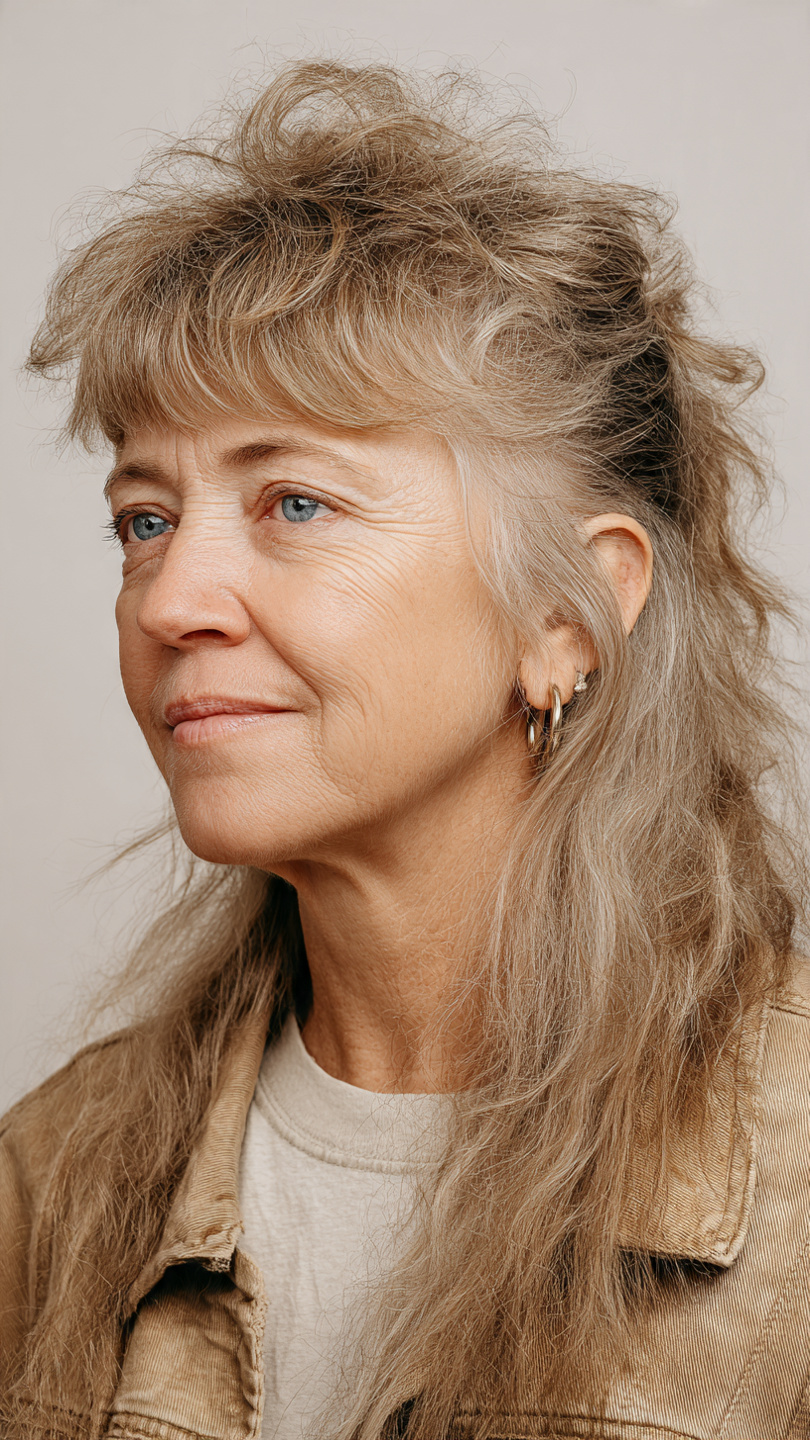
Forget the “business in the front, party in the back” cliché of your youth. Today’s mullet is a sophisticated, volume-boosting, and surprisingly chic haircut that works wonders for women over 50. By keeping length and softness around the face while adding texture and lift at the crown, the modern mullet offers a low-maintenance yet high-style solution for thinning hair, growing out gray, or simply embracing a bold new chapter.
Why It Works for Common Hair Changes After 50
- Thinning at the crown: The stacked or lifted top layers create density where you need it most, while the longer back draws the eye downward.
- Receding hairline: Side-swept bangs or soft face-framing pieces disguise a higher forehead naturally.
- Uneven graying: The “dramatic gray transition” and “salt-and-pepper” styles turn color inconsistency into intentional contrast.
- Lower hair elasticity: Shorter, lighter layers move easily without tugging or breaking, unlike long, heavy cuts that pull on fragile strands.
12 Modern Mullet Ideas for Women Over 50
1. The Silver Siren
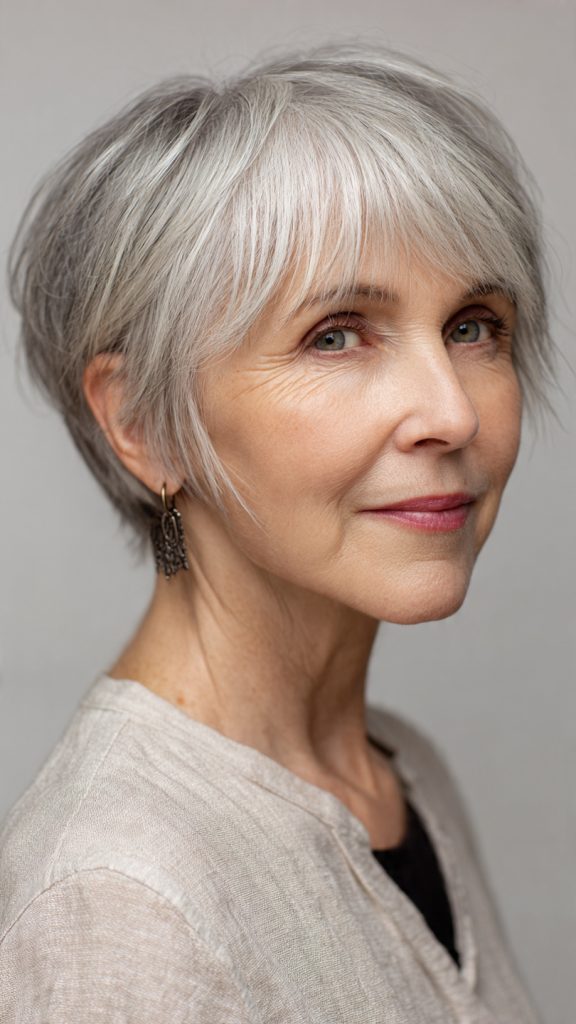
Embrace your natural gray or white roots with this icy, cropped-forward mullet that uses silver tones to highlight the texture difference between the sleek top and wispy back.
2. The Curly Q Shag
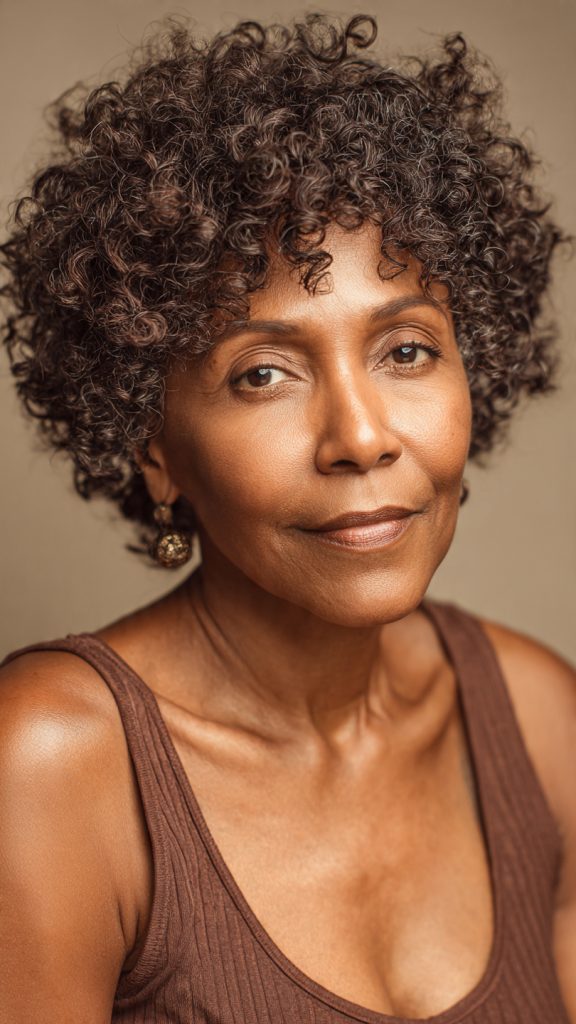
Ideal for naturally curly or permed hair, this style keeps the front layers light and face-framing while letting the back coils spring into a soft, rounded tail that camouflages thinning areas.
3. The Stacked Pixie-Mullet
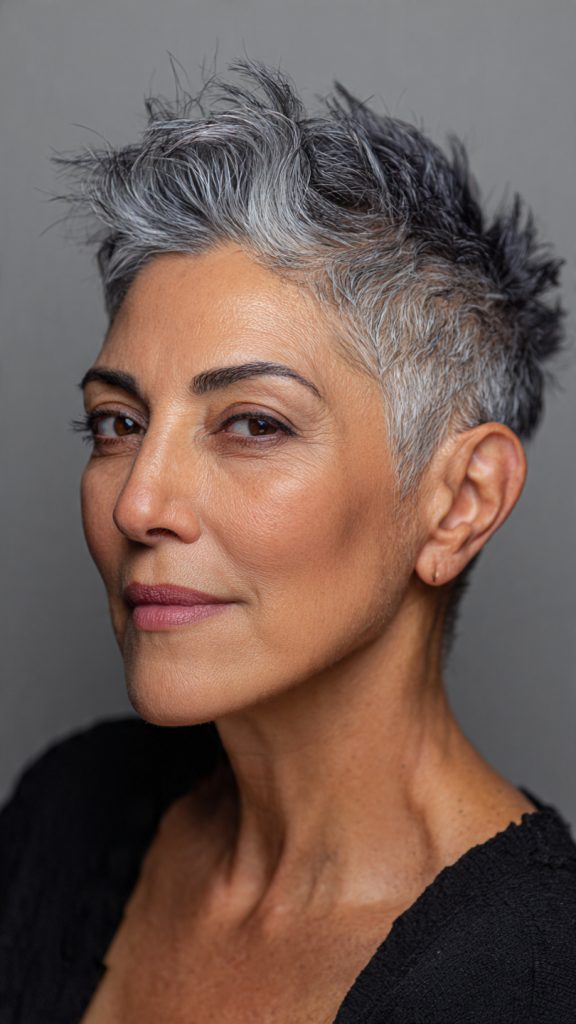
A hybrid of a classic stacked pixie and a mullet, this cut adds dramatic volume at the crown to create the illusion of fuller density, then feathers out into longer, delicate strands at the nape.
4. The Glass Hair Mullet
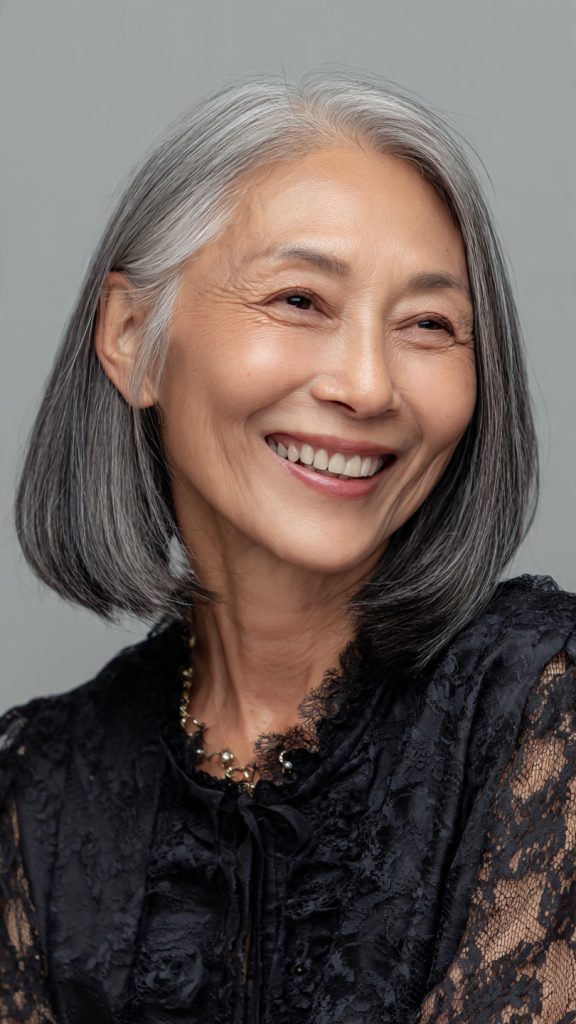
For the woman who prefers polish over punk, this version uses a center part and a high-gloss finish on straight, chin-length front sections that transition into a subtle, blunt longer back.
5. The Wispy Neck-Grazer
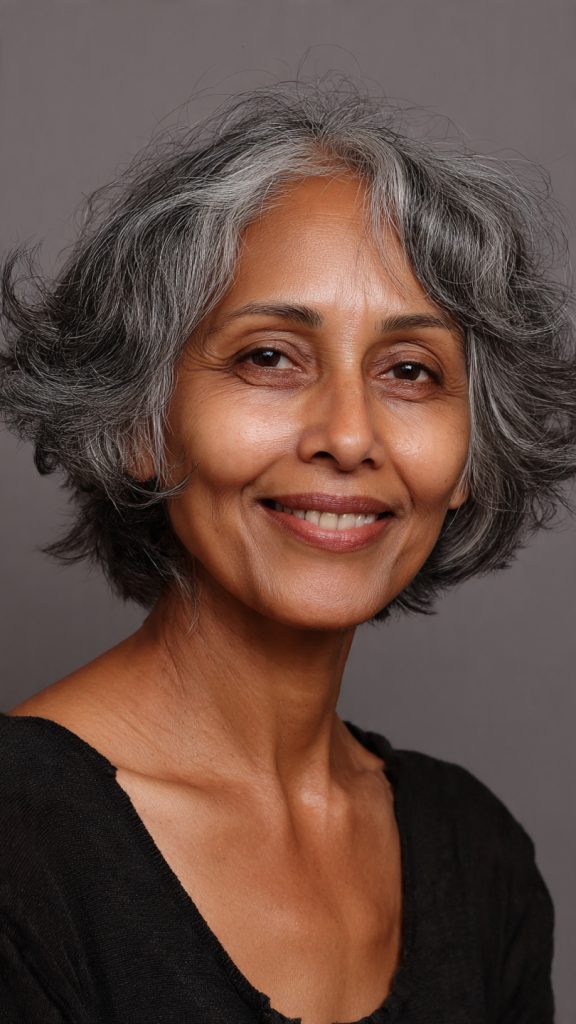
Short, feathered layers on top and around the ears keep the look soft and age-appropriate, while barely-there longer pieces at the back add a hint of rock-and-roll without being drastic.
6. The Salt-and-Pepper Micro-Mullet
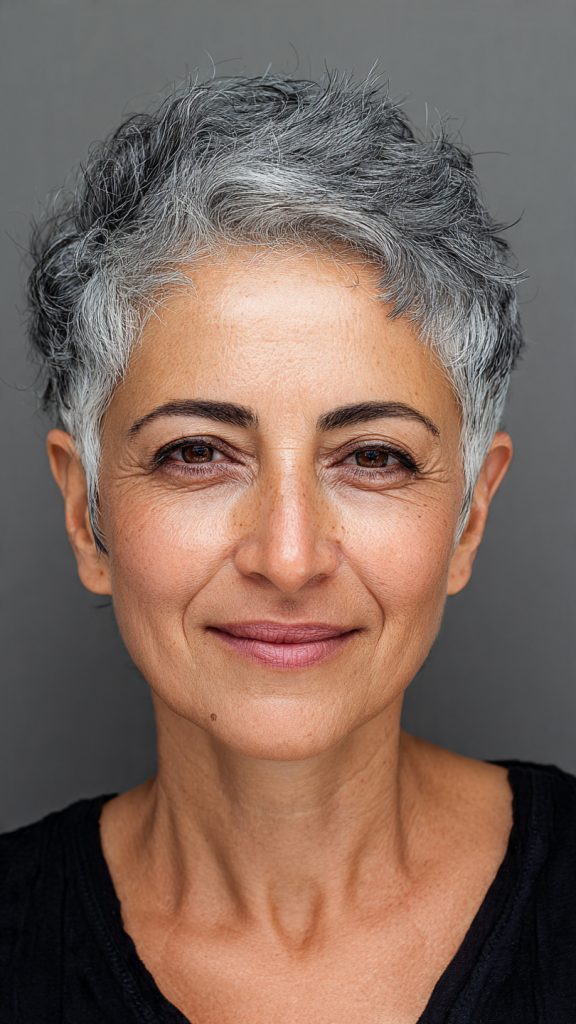
A shorter, more restrained take where the front is cropped to the brows and the back extends just an inch past the hairline, perfect for highlighting contrasting dark and light strands.
7. The Side-Swept Spectacular

Heavy side-swept bangs cover a higher forehead, while the rest of the cut gradually shortens on one side and lengthens into an asymmetrical mullet tail on the other for modern asymmetry.
8. The 70s Rocker Wave
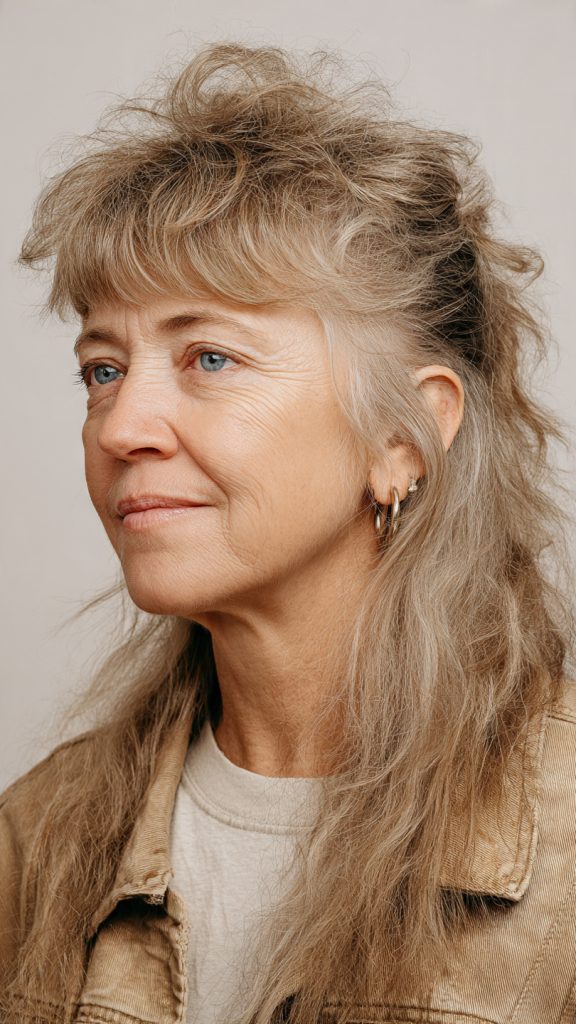
Medium-length, tousled waves are cut with a uniform texture throughout, but the back is left slightly heavier and longer, giving a disco-era feel that hides a multitude of styling sins.
9. The Sleek A-Line Mullet
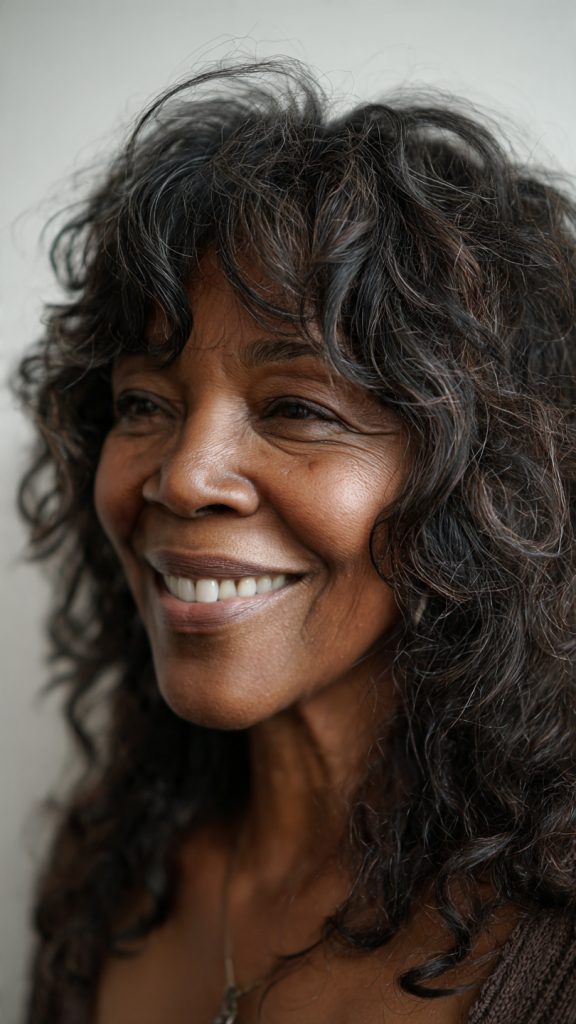
Think of an inverted bob that suddenly grows longer in the back. This polished version keeps the front and sides smooth and chin-length, then drops into a sleek, straight tail at the nape.
10. The Feathered Flick
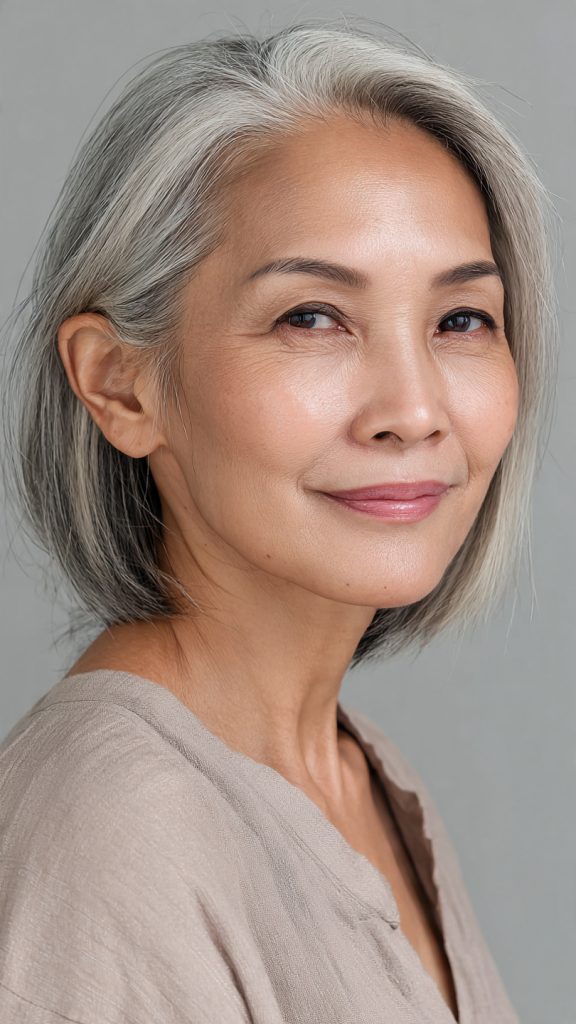
Soft, feathery layers (reminiscent of Farrah Fawcett) on top and at the crown volume are met with a barely-there elongated back that looks more like a grown-out bob than a traditional mullet.
11. The Low-Maintenance Lift

Specifically designed for very fine or post-menopausal hair, this cut uses internal layers to create a “hidden lift” at the roots in front, while the back is left longer but razor-textured to avoid a heavy look.
12. The Dramatic Gray Transition

Use growing-out roots to your advantage by cutting a sharp, dark front section that contrasts with a longer, fully-gray back section, making the two-tone process look
What to Tell Your Stylist (The Exact Language)
Walk into the salon with confidence. The modern mullet for women over 50 is not a drastic punk cut—it’s a strategic shape. Say this: “I want a modern shag-mullet hybrid. Keep the front soft and face-framing, add volume at the crown, and leave the back longer but lightweight. Do not cut above my ears on the sides. I want texture, not choppiness.” Bring a photo of one of the 12 styles above. A good stylist will know to point-cut rather than blunt-cut to avoid a heavy or harsh line.
Styling in Under 10 Minutes (No Heat Damage)
The beauty of this cut is low effort. For straight or wavy hair, apply a volumizing mousse to damp roots at the crown, then air-dry or use a round brush only on the front section. For curly or coily hair, scrunch in a lightweight curl cream, then diffuse upside down for 30 seconds to activate the mullet’s natural lift. Avoid heavy gels or oils near the crown—they flatten the signature volume. A quick finger-comb in the morning is often all you need.
The Confidence Factor: What Real Women Say
Across forums and salon reviews, women over 50 who switch to a modern mullet report the same feeling: unexpected freedom. One 62-year-old described it as “the haircut that finally matches my energy—fun, unapologetic, but still put-together.” Another noted that strangers stopped asking if she was tired and started asking for her stylist’s number. This cut signals that you are not fading into the background; you are simply rewriting the rules of what grown-up hair looks like.
Who Should Skip This Cut (Honest Advice)
The modern mullet is versatile, but not universal. If your hair is very straight and stick-fine without any natural bend, the front and back may blend into one shapeless length unless your stylist uses aggressive texturizing techniques. If you prefer slicked-back buns or daily ponytails, the shorter front layers will not reach the hair tie. And if you are growing out a very short pixie (shorter than two inches everywhere), wait three to four months before attempting a mullet—you need enough back length to create the signature tail.
Maintaining Your Mullet: The 6-Week Rule
Unlike longer cuts that hide growth, the mullet’s shape relies on precise proportions. Book a trim every six weeks—not eight, not twelve. The front and crown need refreshing to maintain volume, while the back can go two cycles before losing its shape. Between salon visits, use a dry texture spray at the roots to revive lift. Cost-wise, expect to pay the same as a short women’s cut ($50–$90 depending on your city), not a specialty “artistic cut” price.
How to Adapt These Ideas for Very Short or Very Long Starting Lengths
- Starting from a pixie (under 2 inches): Ask for a “growing-out mullet.” Your stylist will keep the front and crown short while leaving the back untouched for eight weeks. You will look a little shaggy during transition—embrace it or wear small barrettes.
- Starting from shoulder-length or longer: You can achieve any of the 12 ideas in one appointment. Expect to lose 3–5 inches overall. The investment is worth it; long hair past 50 often reads as severe or aging, while a mullet reads as intentional and fresh.
Conclusion
The modern mullet for women over 50 is not a nostalgic throwback or a desperate grasp at youth. It is a strategic, confidence-boosting haircut that solves real problems—thinning crowns, growing-out grays, low morning energy—while making you look like someone who still has somewhere interesting to go. Whether you choose the silver siren, the curly Q shag, or the dramatic gray transition, you are not just changing your hair. You are changing the conversation about what women over 50 are allowed to wear, to be, and to look like. So book the appointment. Save your favorite prompt. And walk out of that salon with a little more swing in the back and a lot more light in your face.
Leave a Reply