
As we age, hormonal shifts can lead to finer strands, lower density, and more visible scalp. But volume isn’t just for your twenties—with the right cuts, products, and techniques, you can create the look of dramatically thicker, fuller hair at any age.
What Causes Hair to Look Thinner After 50 (Briefly)
Hair naturally goes through cycles of growth, rest, and shedding. After 50, declining estrogen (during menopause) and, for some, shifting androgen levels can lengthen the resting phase and shorten the growing phase. This means slower regrowth, finer individual strands, and more visible scalp—especially at the crown and part line. Genetics, stress, nutritional changes, and certain medications also play a role.
10 Ideas for Thicker-Looking Hair Over 50
1. Get a blunt cut.
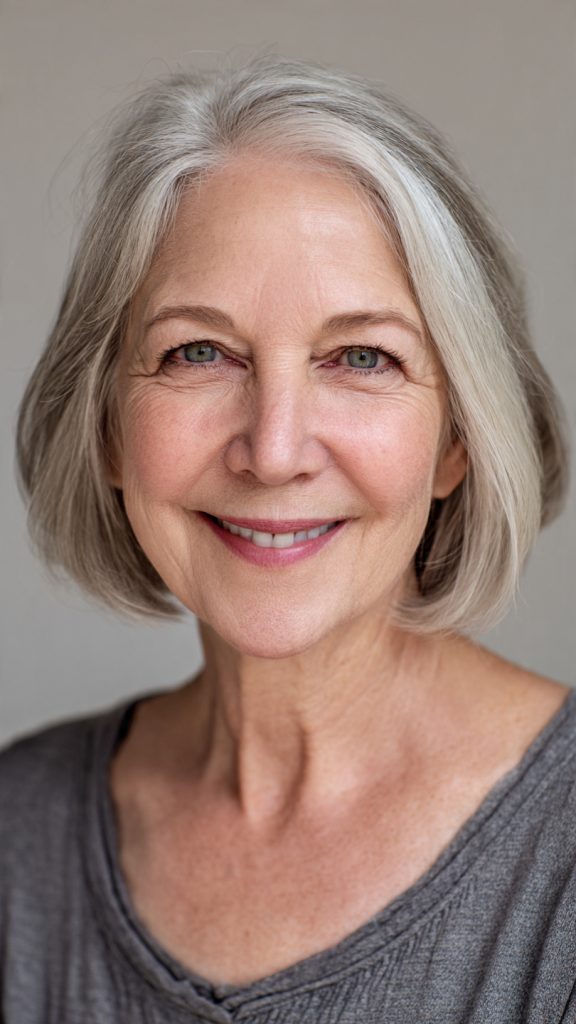
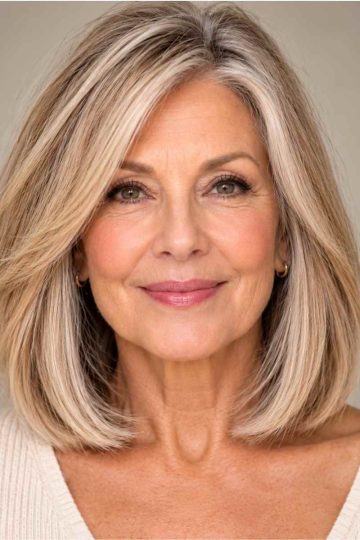
Skipping layers and asking for a straight-across, blunt hemline instantly adds visual weight and density to fine or thinning hair.
2. Use a lightweight, volumizing mousse on damp roots.
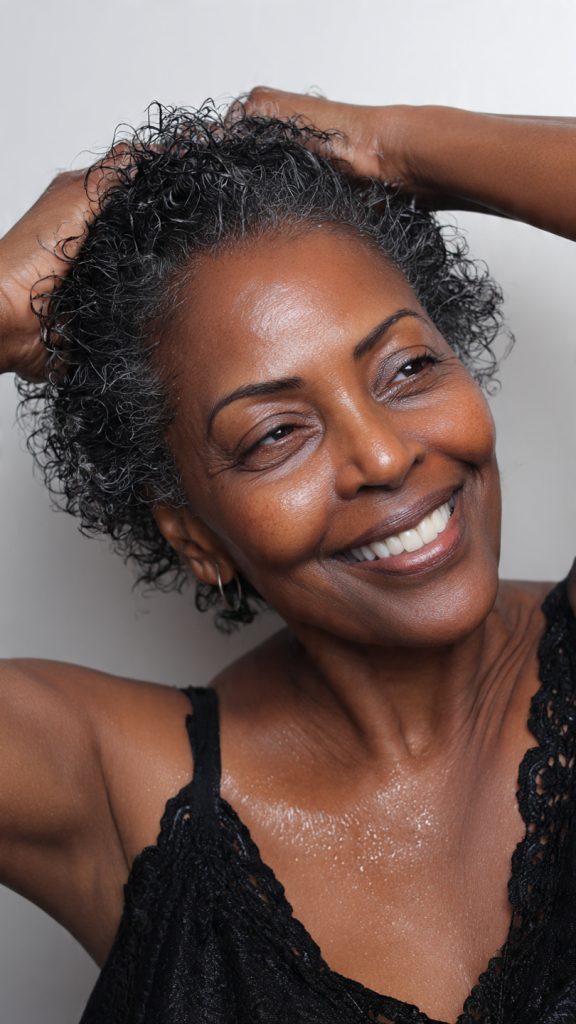
Apply a golf-ball-sized amount to towel-dried roots before blow-drying to build lift without heavy, greasy residues.
3. Dry your hair upside down.
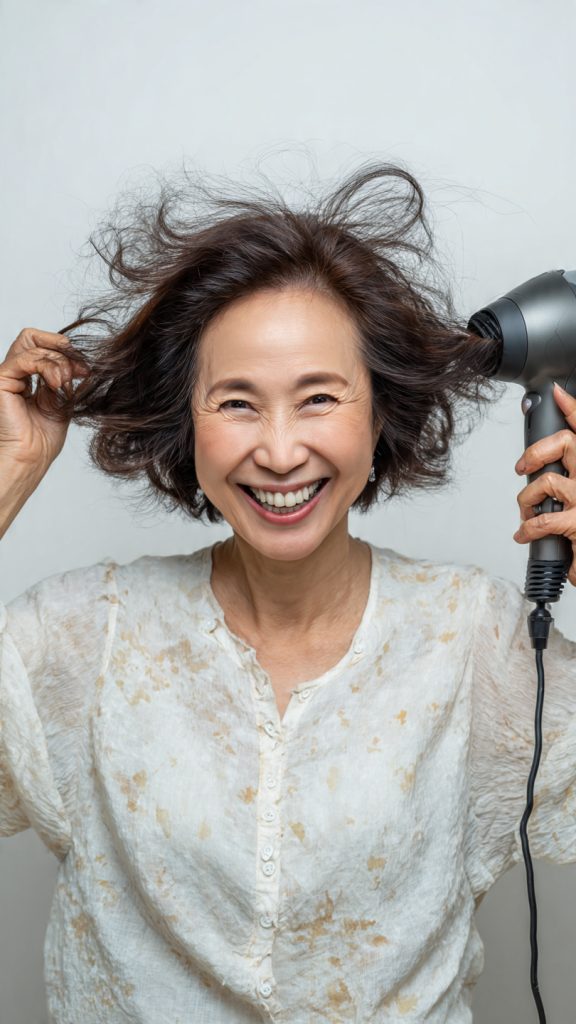
Bending forward while rough-drying directs hot air to the roots, creating natural lift and preventing flat, limp strands.
4. Try a root-lifting powder or spray.
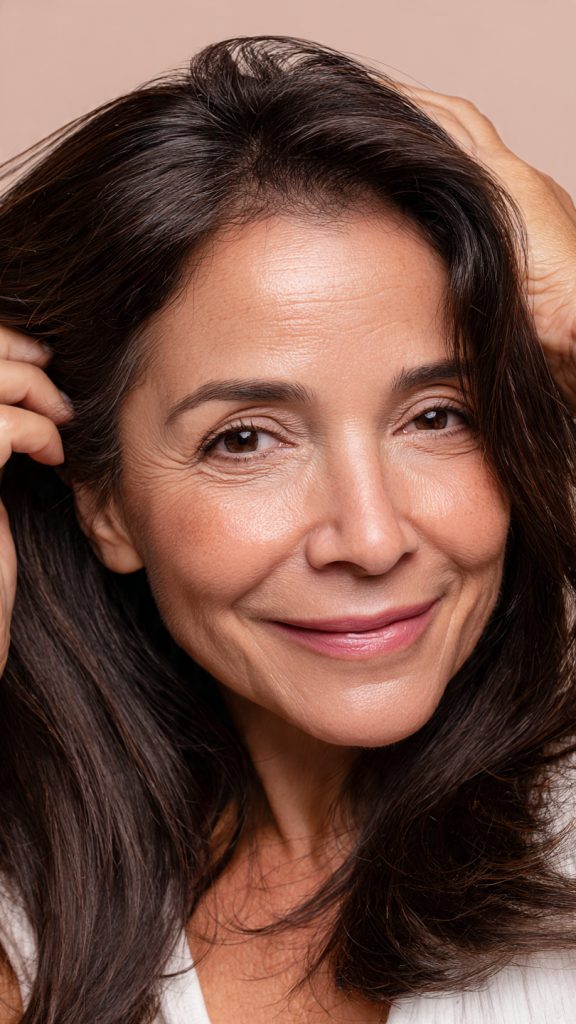
Sprinkle or spray these microscopic powders onto dry roots, then massage in to double your hair’s height and texture in seconds.
5. Swap heavy conditioners for a scalp-focused rinse.
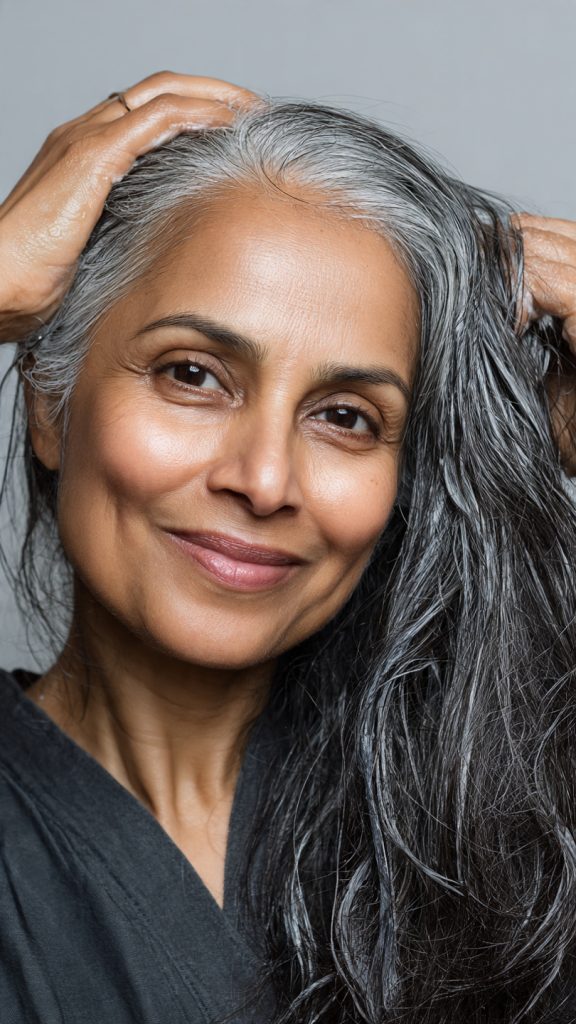
Condition only your mid-lengths and ends, or use a lightweight, “volumizing” conditioner to avoid weighing down the top.
6. Add soft, face-framing highlights.
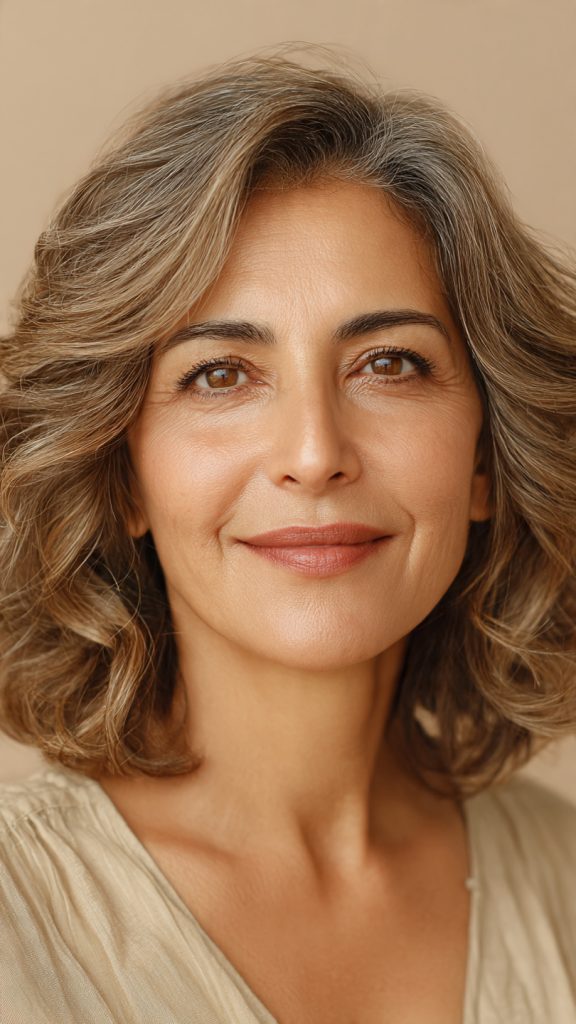
Subtle lighter pieces around your face and crown create contrast and the illusion of extra depth and fullness beneath the color.
7. Sleep on a silk or satin pillowcase.

Reduced friction means less breakage and tangling, so you wake up with smoother, thicker-looking hair instead of flattened, frizzy mess.
8. Use a small-barrel curling iron for texture.
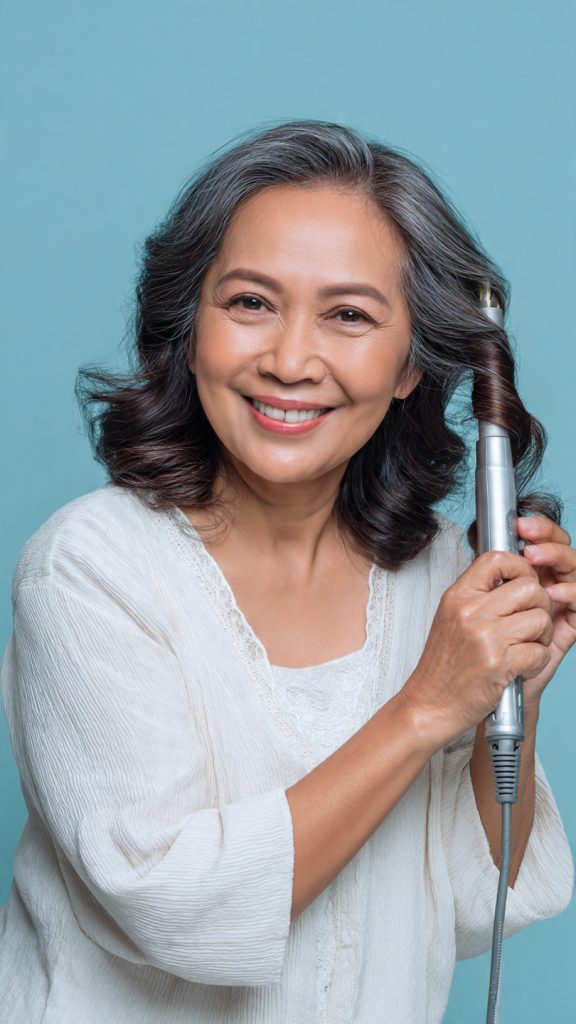
A one-inch or smaller barrel creates tight bends that expand into soft waves, giving limp hair instant body that lasts for days.
9. Part your hair differently (or zigzag it).
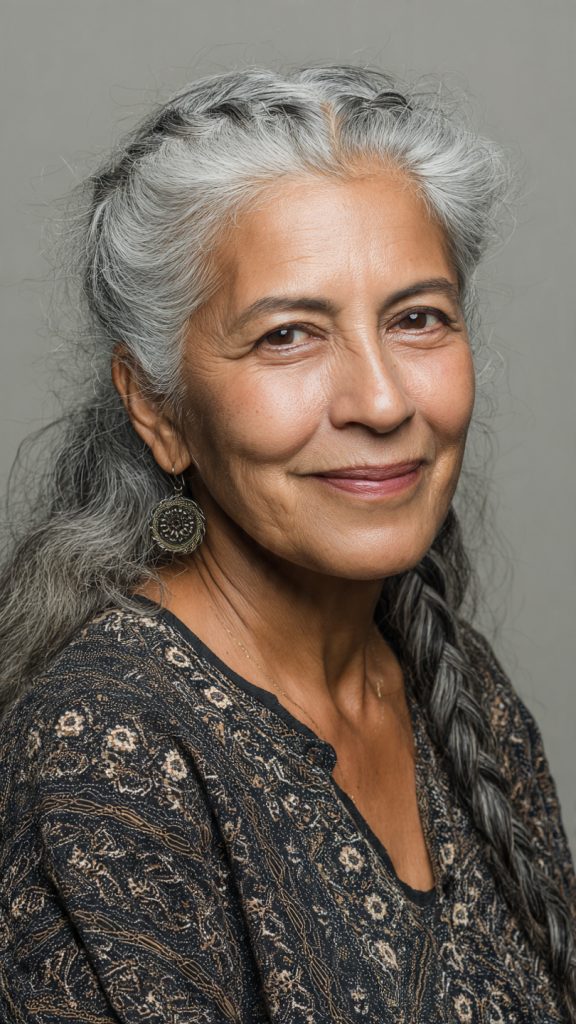
Changing a stark side or middle part every few weeks prevents permanent root flattening, while a zigzag part conceals scalp show-through.
10. Add gentle, clip-in volume extensions.
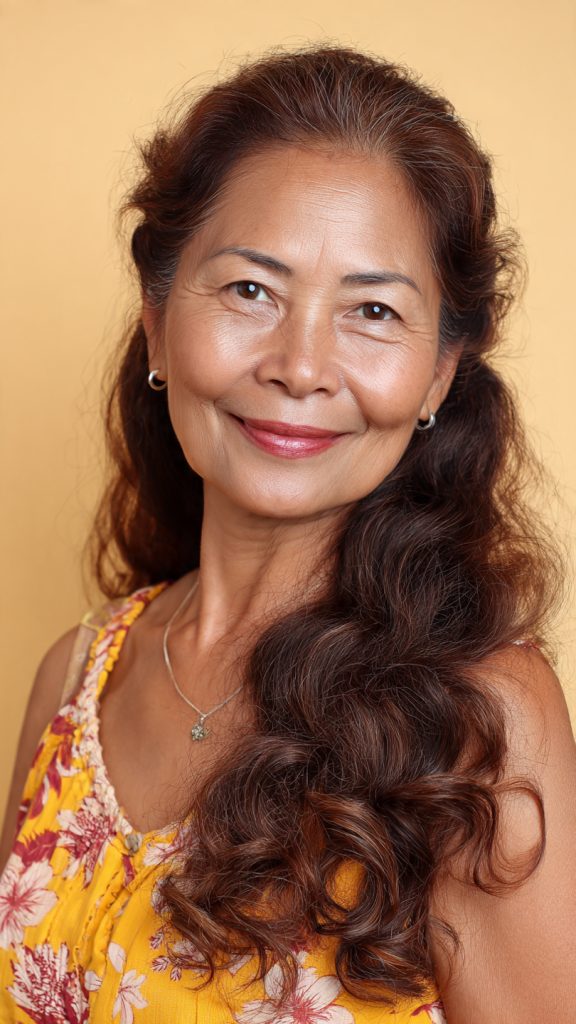
Modern clip-ins are lightweight and match your color perfectly—just two or three wefts underneath add dramatic thickness with zero damage.
What to Avoid If You Want Thicker-Looking Hair
- Heavy oils and butters (coconut, shea, castor oil applied near roots). They weigh fine hair down and make it look greasy and flat.
- Over-layering. Too many layers remove density from the ends, making hair look wispy instead of full.
- Washing every day. Daily shampoo strips natural oils, leading to dry, brittle, fragile strands.
- High-heat styling without protection. Heat damage causes breakage, which directly reduces visible thickness.
- Tight ponytails, buns, or braids. Traction over time thins the hairline and temples permanently.
Daily & Weekly Routine for Maximum Thickness
Daily (5 minutes or less):
- Brush gently with a boar-bristle or wide-tooth comb to distribute scalp oils.
- Apply a pea-sized root-lifting product to dry roots.
- Flip head upside down and shake with fingers for 10 seconds.
Weekly (30–60 minutes):
- Use a clarifying shampoo once a week to remove product buildup.
- Do a lightweight protein treatment to strengthen fine strands.
- Sleep with a silk or satin bonnet or pillowcase every night.
Monthly:
- Trim ¼ inch to keep blunt ends clean.
- Re-evaluate your part and switch if needed.
- Consider demi-permanent color or highlights (color coats the cuticle, adding temporary diameter to each strand).
When to See a Professional
If you notice sudden, patchy, or rapid thinning, or if you develop scalp itching, redness, or flaking, see a dermatologist or trichologist. These could be signs of alopecia areata, scarring alopecia, thyroid disorders, iron deficiency, or autoimmune conditions—all treatable when caught early.
Also consult a stylist who specializes in fine or aging hair for a custom cut or to discuss semi-permanent options like microbead extensions, toppers, or scalp micropigmentation.
Conclusion
Making your hair look thicker after 50 isn't about fighting age—it's about working smarter with the hair you have today. A blunt cut, lightweight volumizing products, small changes like sleeping on silk, and simple styling tricks (dry upside down, zigzag your part) can transform fine or thinning hair into full, bouncy, confident hair.
Remember: no single trick works alone. Combine a few of these 10 ideas that fit your lifestyle, protect your strands from damage, and embrace the texture you have. Thicker-looking hair at 50, 60, 70, and beyond isn't a fantasy—it's just a routine away.

Leave a Reply