
Let's be honest: noticing your hair get thinner isn't easy. By the time you're over 50, changes in density, a receding hairline, or a widening part are common. But here's the good news—thinning hair doesn't mean you have fewer options. In fact, the right haircut can make thinning hair look deliberately textured, modern, and thicker than it is.
The key is working with your hair's new pattern, not against it. That means shorter sides to create contrast, avoiding harsh lines that expose scalp, and using weight and texture to build volume on top.
Below are 15 expertly chosen haircuts for men over 50 that minimize the look of thinning hair while keeping you sharp and confident.
1. The Textured Crop
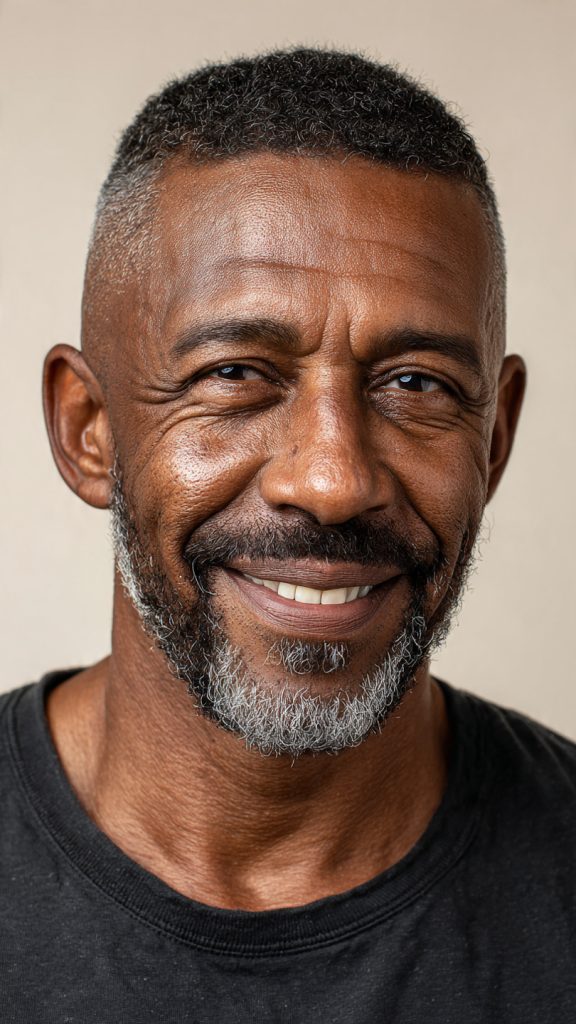
- The cut: Keep the top short (1–2 inches) and ask for point cutting or shears to create soft, choppy texture. Keep the sides tight but not shaved.
- Why it works: The irregular lengths reflect light differently across the top, breaking up the visibility of the scalp. Short sides create contrast that makes the top look intentionally fuller, not thin.
2. The French Crop
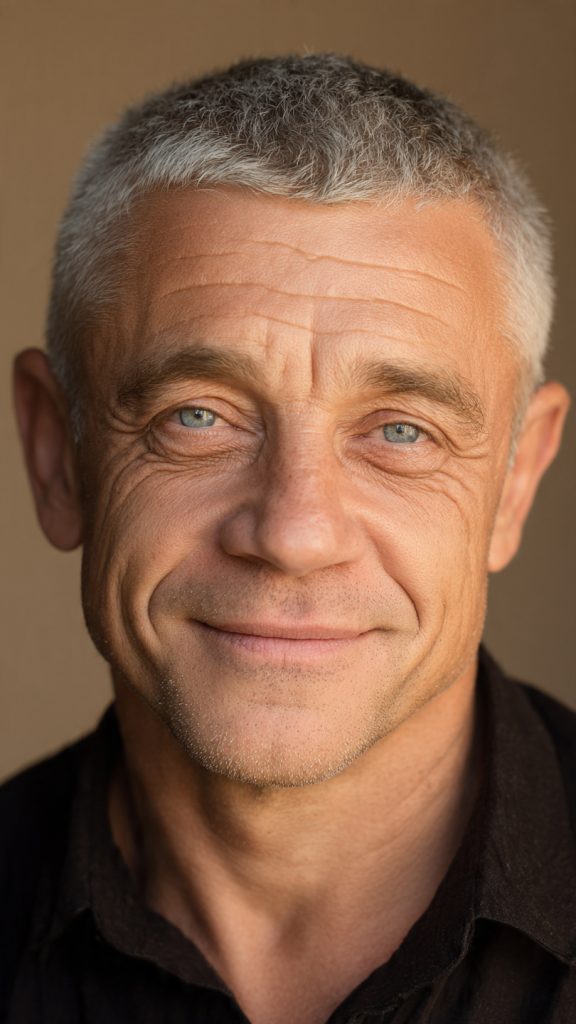
- The cut: Add a blunt fringe that lands just above the eyebrows. Keep the top uniform and short. Pair with faded or tapered sides.
- Why it works: The forward-falling fringe covers a receding hairline completely. The blunt, straight-across edge creates a dense visual line, tricking the eye into seeing thicker hair than exists.
3. The Modern Ivy League
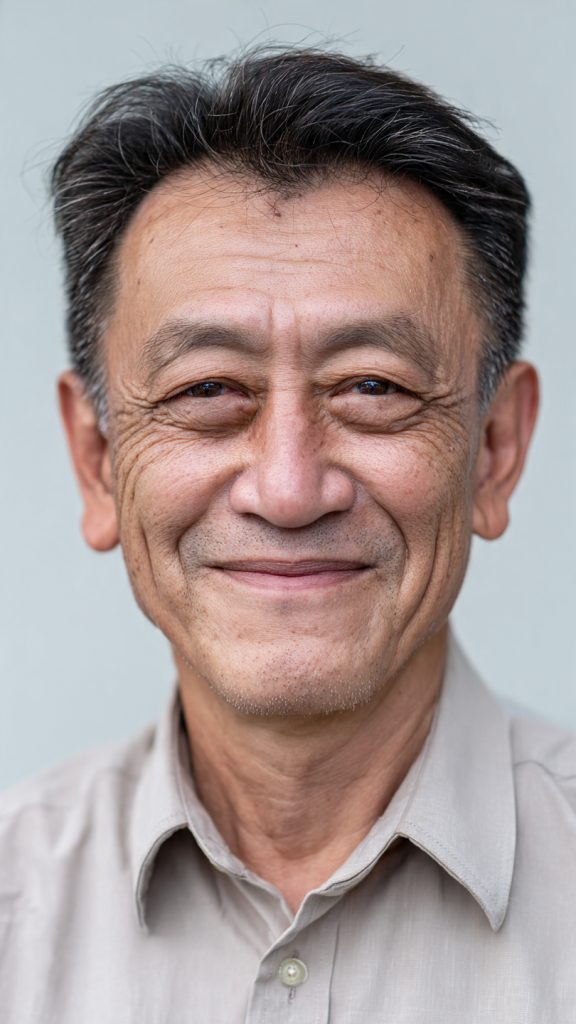
- The cut: Keep the top longer (1.5–2 inches) and sweep it slightly to one side. Maintain clean, tapered sides.
- Why it works: The slight volume at the front lifts hair off the scalp, reducing visible parting. The longer top allows you to style over a thinning crown, while the tidy sides keep the overall look intentional and groomed.
4. The Short Caesar Cut
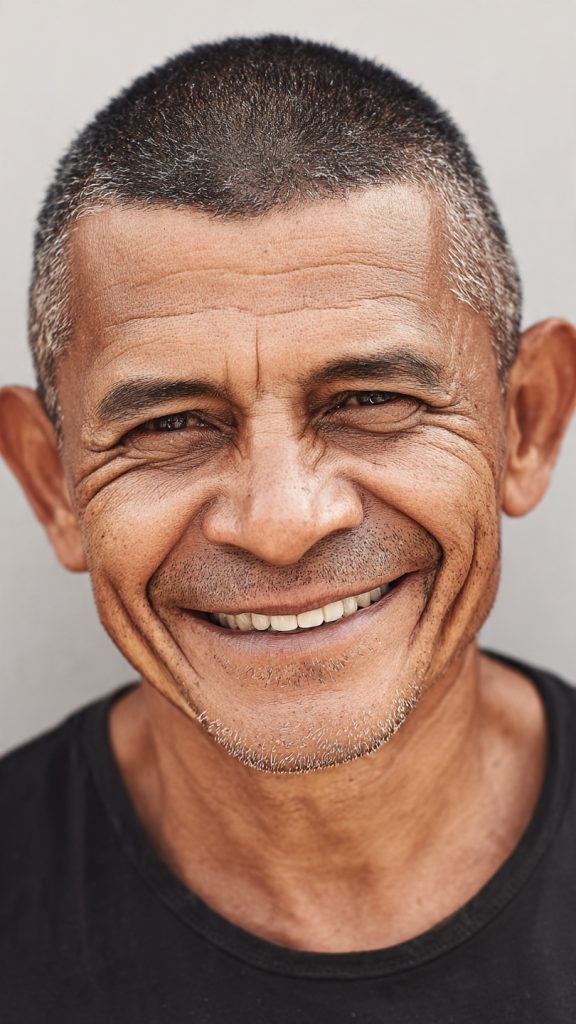
- The cut: Feature a short, horizontal fringe with all hair kept ½ to 1 inch long. The fringe sits forward.
- Why it works: By removing length and weight, the hair stands up rather than lying flat against the scalp. The blunt fringe adds a strong horizontal line that distracts attention from any thin spots or recession at the temples.
5. The Low-Fade With a Scissor-Cut Top
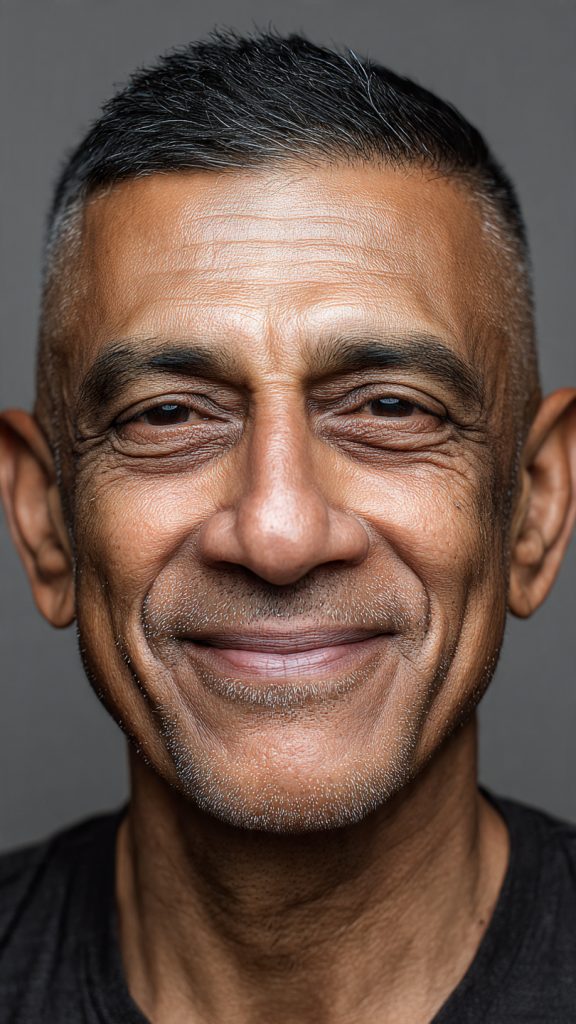
- The cut: Ask for a low fade (fading starts near the ear) and scissors only on top—no clippers above the fade line.
- Why it works: Scissors preserve weight and natural movement that clippers would strip away. The low fade keeps sides clean without exposing the temples harshly, which is ideal for men with receding hairlines who still want a crisp look.
6. The Side-Parted Sweep
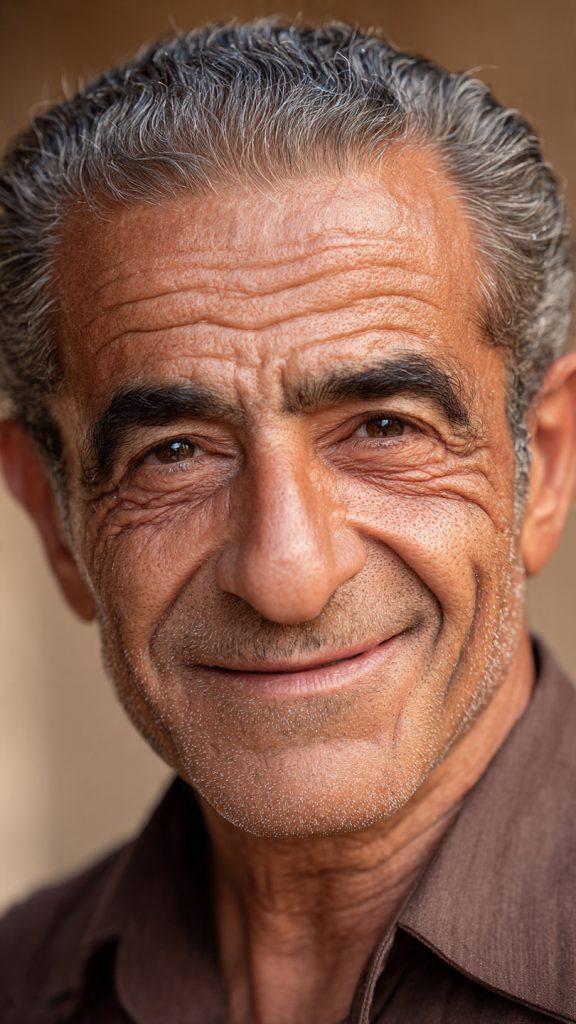
- The cut: Grow the top to 2–3 inches, create a deep side part, and sweep the longer hair diagonally across the forehead.
- Why it works: The diagonal sweep covers a thinning hairline and creates overlapping layers that add optical density. A deep side part also reduces the appearance of a wide center part, which often signals thinning.
7. The Buzz Cut (#3 or #4 Guard)
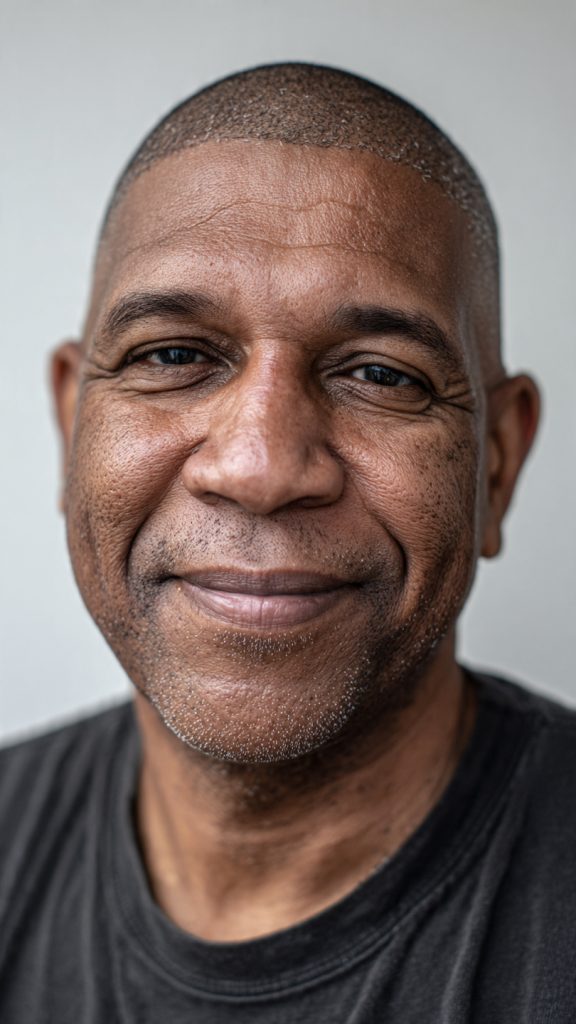
- The cut: Use a #3 (½ inch) or #4 (½ inch) guard all over. No fades, no blending—just uniform length.
- Why it works: Extremely short hair removes the contrast between thick and thin areas. At this length, thinning becomes uniform texture rather than a problem. It also draws attention to your face and bone structure, not your hair density.
8. The Clipper-Grad (Induction Cut)
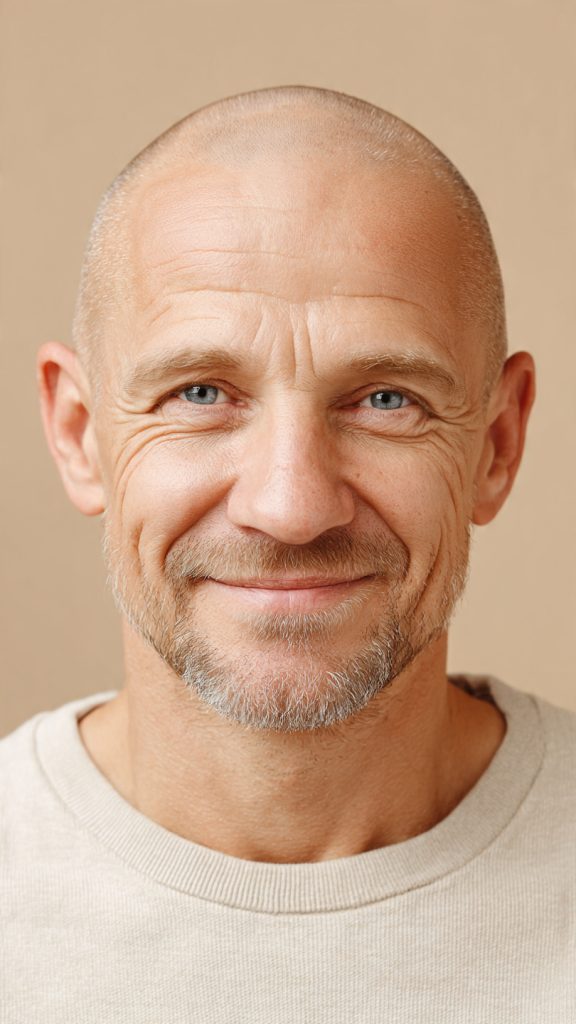
- The cut: A very short cut using a #1 or #2 guard on top, graduated down to skin at the nape and sides.
- Why it works: The graduation (subtle increase in length toward the top) creates the illusion of more hair without actual length. This is one of the best cuts for advanced thinning because there's nowhere for thin spots to hide—and nothing to hide.
9. The Messy French Crop
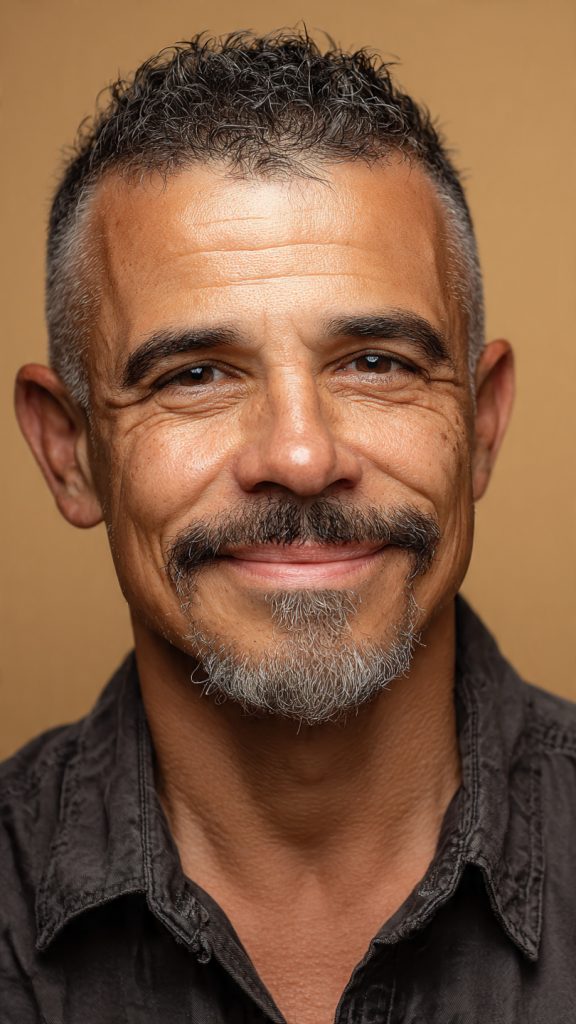
- The cut: A longer version of the French crop (1.5 inches on top) with choppy, piece-y texture and a relaxed fringe.
- Why it works: Deliberate messiness masks uneven density. When hair is styled to look intentionally undone, any gaps or thin patches read as "texture," not hair loss. Ideal for men with wavy or curly thinning hair.
10. The Short Pompadour (Low Volume)
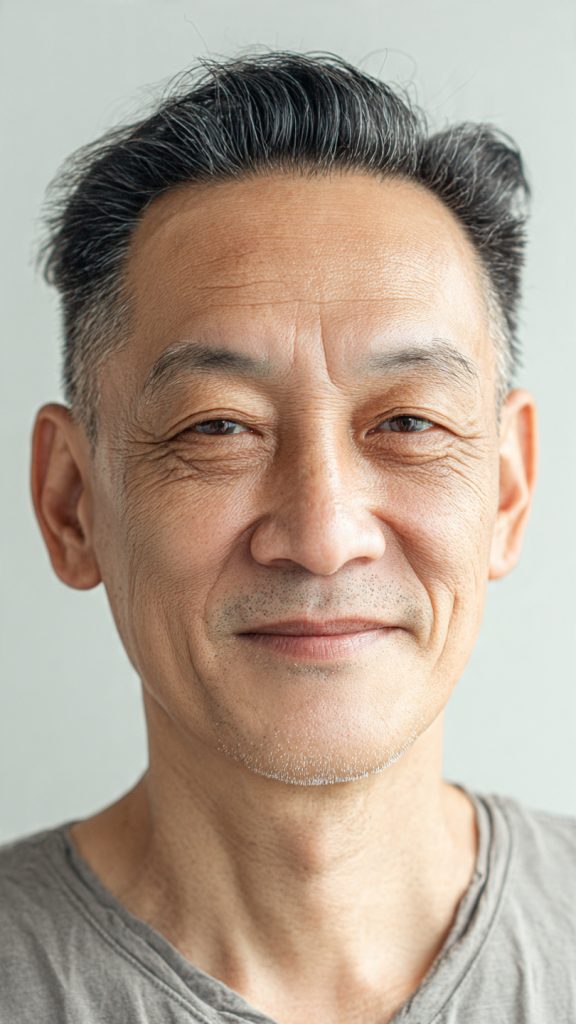
- The cut: Keep the top 1.5–2 inches, shorter at the crown, with tight sides. Style with a small amount of lift at the front only.
- Why it works: A low-volume pompadour lifts hair off the forehead and crown simultaneously. Unlike a traditional high pompadour, this version requires less density because you're only lifting the front inch of hair, not the whole top.
11. The Taper Fade With a Textured Top
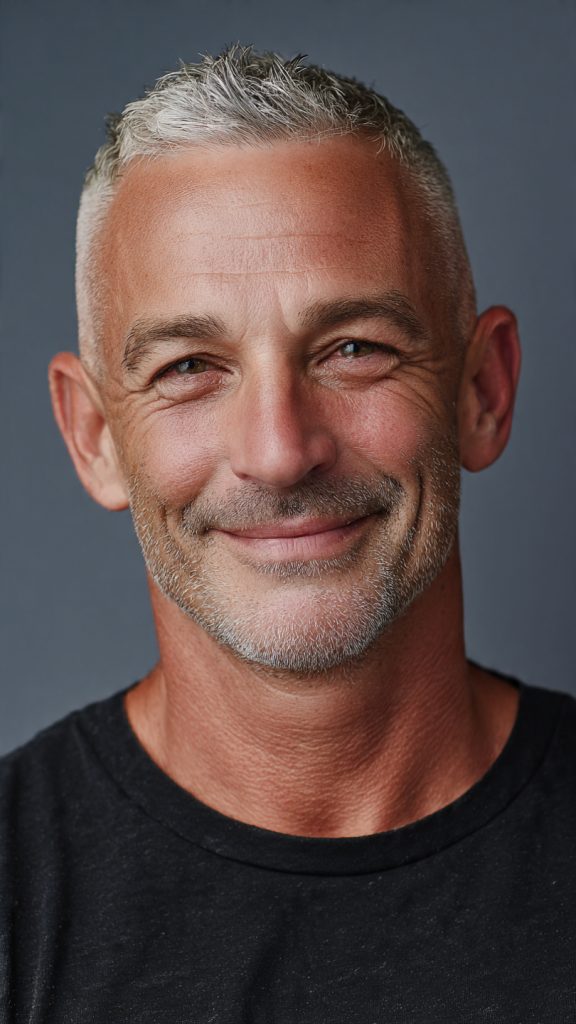
- The cut: A taper fade (short at the nape and ears, gradually longer up) paired with a top that's heavily textured with shears.
- Why it works: The gradual transition on the sides prevents a harsh "helmet" line that can make thin top hair look isolated. Texture on top scatters light, reducing scalp shine and visibility.
12. The Soft Quiff (Short Version)
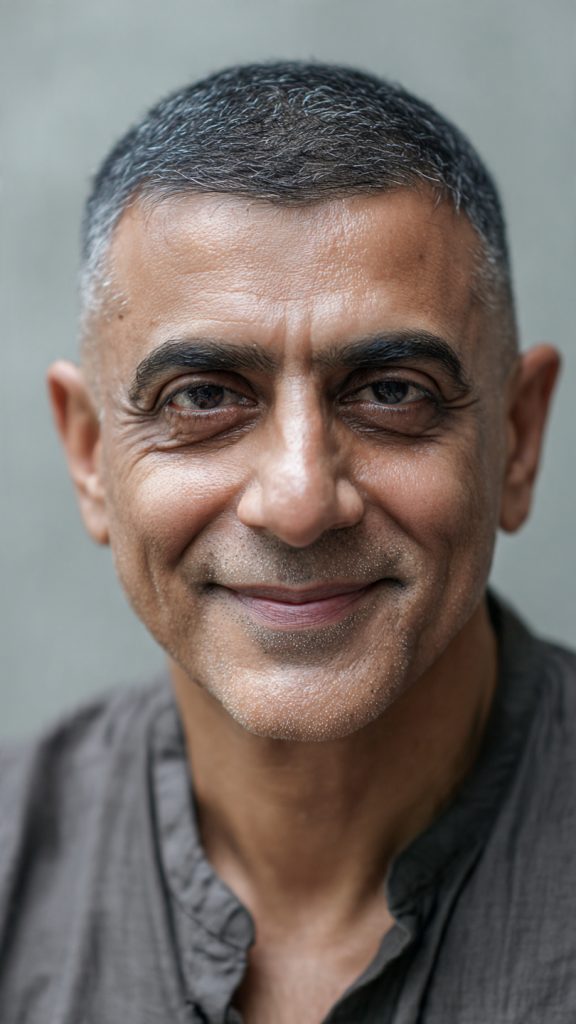
- The cut: Keep the front slightly longer (1.5 inches) graduating shorter toward the crown. Sides tight or faded. Style with a light product, lifting just the front inch.
- Why it works: The quiff directs all visual weight to the front hairline, drawing attention away from a thinning crown or mid-scalp. Keeping it short prevents the weight that would otherwise pull hair flat.
13. The Crew Cut (No Fade)
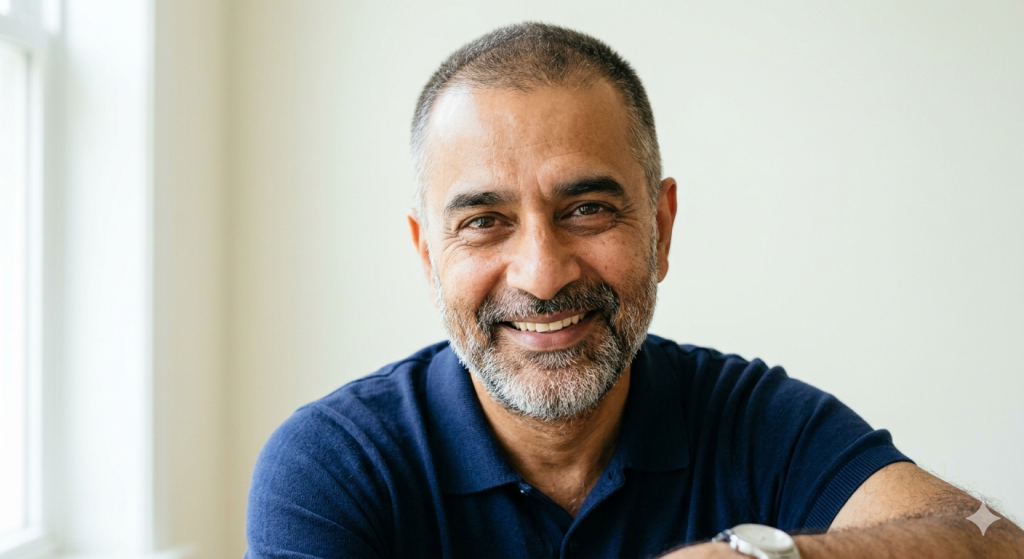
- The cut: Uniform length on top (¾ to 1 inch) with a natural, un-faded transition at the sides. No hard lines.
- Why it works: The classic crew cut is the gold standard for thinning hair because it requires zero parting, zero combing, and zero tension. Without a forced part, there's no obvious line where hair looks thinner. Everything blends.
14. The Layered Short Back and Sides
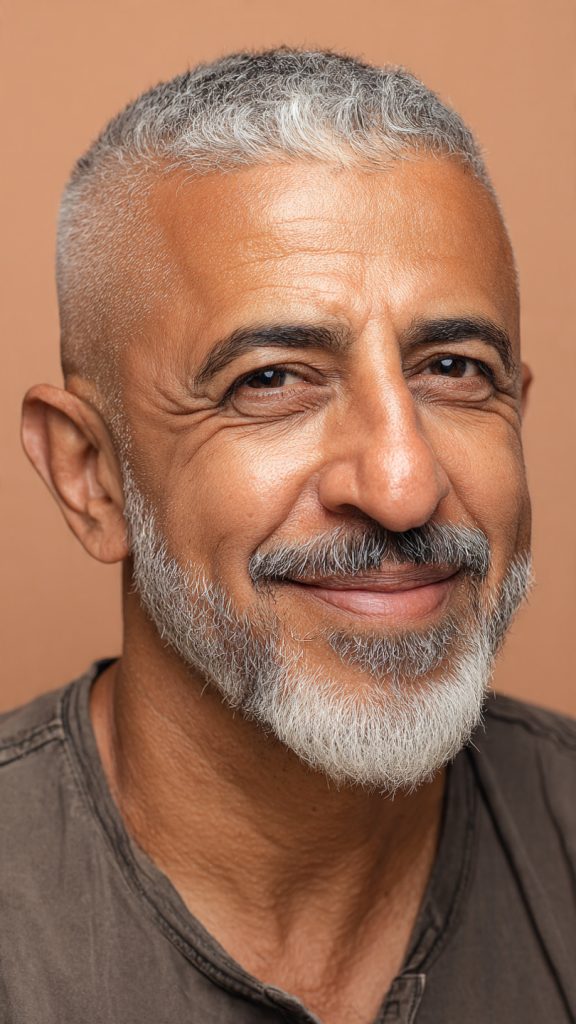
- The cut: Short on the back and sides (clipper length #2 or #3), with the top cut in multiple layers using scissors.
- Why it works: Layers create movement and air between hair strands, which actually makes fine or thinning hair look fuller. A single-length top on thin hair looks flat; layers give it life and body.
15. The Clean-Shaven Head (Deliberate Choice)
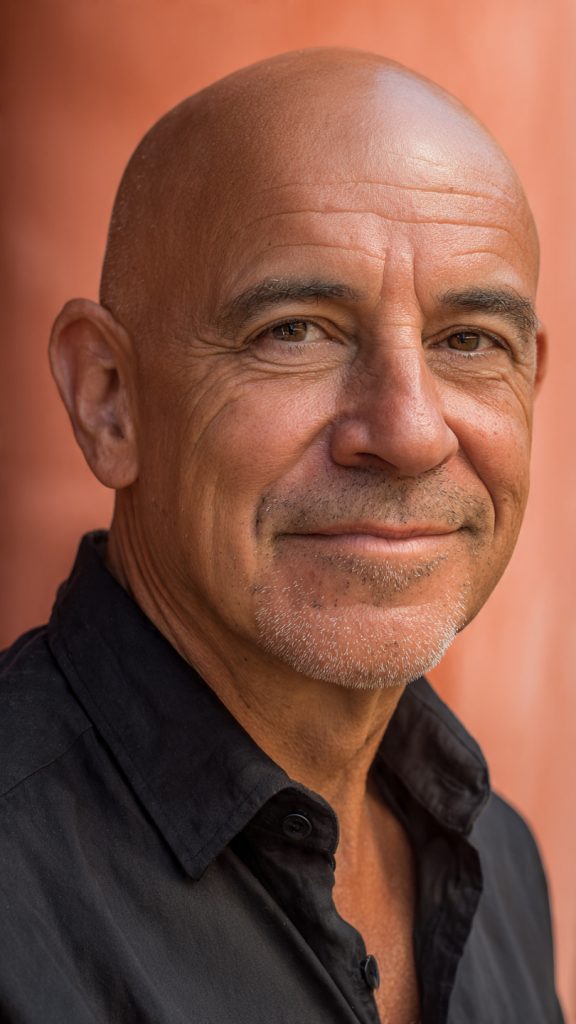
- The cut: Use a razor or electric shaver for a completely smooth scalp. No stubble, no shadow.
- Why it works: This isn't a haircut—it's a style statement. A fully shaved head removes all contrast between thick and thin areas, eliminates the need to "hide" anything, and projects confidence. For many men over 50, it's the most liberating and attractive option of all.
What to Tell Your Barber (Exact Phrases to Use)
Walking into a barbershop with thinning hair can be nerve-wracking if you don't know the right words. Use these exact phrases to get the cuts above:
- "Use scissors on top, not clippers." – Preserves weight and density.
- "Point cut or texture shears only." – Creates softness, not harsh lines.
- "No hard part or razor lines." – Avoids exposing scalp contrast.
- "Keep the fringe forward and blunt." – Best for receding hairlines.
- "Low fade, not high fade." – Keeps temples covered if needed.
- "Leave the crown slightly longer." – Hides thinning at the back.
- "Matte finish product only, no shine." – Reduces scalp visibility.
Pro tip: Bring a photo. Pick one of the 15 cuts above and show your barber. A good barber will adapt it to your specific thinning pattern.
The 5 Products That Make Thinning Hair Look Thicker
A great haircut is only half the battle. These products are specifically formulated for thinning hair:
| Product Type | What It Does | What to Look For |
|---|---|---|
| Matte clay or paste | Adds texture and grip without shine | Label says "matte," "low shine," or "texture" |
| Volumizing powder | Lifts hair at the roots instantly | Silica-based powders (e.g., Schwarzkopf Osis Dust) |
| Thickening spray | Coats each strand for optical density | Spray into damp hair before blow-drying |
| Sea salt spray | Creates gritty texture that scatters light | Avoid if hair is very dry or brittle |
| Dry shampoo | Absorbs scalp oils that make hair clump together | Tinted versions work best for dark hair |
What to avoid at all costs: Heavy pomades, gels, waxes, or anything with "high shine" on the label. These products flatten thinning hair and make the scalp more visible.
Daily Styling Routine for Thin Hair (5 Minutes or Less)
Follow this routine every morning for best results:
Step 1 – Wash smart. Shampoo every other day (daily strips natural oils). Use a thickening shampoo with biotin or keratin.
Step 2 – Towel dry gently. Do not rub vigorously. Pat or squeeze to avoid breakage.
Step 3 – Apply product to damp hair. Use a dime-sized amount of matte clay or a few sprays of thickening spray. Focus on roots, not ends.
Step 4 – Blow-dry on low heat. Use your fingers to lift hair upward and forward. Heat opens the cuticle for volume; cool air sets it.
Step 5 – Finish with dry shampoo or powder. A tiny sprinkle at the crown adds instant lift and matte texture.
Step 6 – Do not overcomb. Use fingers only. Combs create unnatural part lines that expose thin spots.
Total time: 4–5 minutes.
What to Avoid (Common Mistakes That Make Thinning Worse)
Many men unknowingly make thinning hair look thinner. Avoid these:
- Growing hair too long. Long, thin hair looks stringy and exposes the scalp. Shorter is always better.
- Combing over. The classic "combover" fools no one. Embrace texture or a short crop instead.
- Using shiny products. Gel and pomade reflect light directly off the scalp.
- Washing daily. Shampoo strips natural oils, leaving hair flat and lifeless.
- Skipping conditioner. Use a lightweight volumizing conditioner on ends only (never the roots).
- Hard side parts. A deep, rigid part creates a visible line of scalp. Go for a soft, finger-swept style.
- High fades. Fading too high on the head isolates thin top hair and makes it look thinner by contrast.
- Dark hair colors. High contrast between dark hair and light scalp makes thinning more obvious. Consider going one shade lighter.
When to Consider More Than a Haircut
A great haircut works wonders, but for some men, thinning progresses beyond what styling can manage. These options are worth exploring:
| Option | Best For | What to Know |
|---|---|---|
| Topical minoxidil (Rogaine) | Early to moderate thinning at the crown | Takes 4–6 months to see results; must use daily |
| Finasteride (Propecia) | Genetic hair loss (male pattern baldness) | Prescription only; consult a doctor first |
| Laser therapy caps | Maintaining existing hair | Expensive but no side effects |
| Microneedling | Stimulating blood flow to follicles | Best done by a professional |
| Scalp micropigmentation (SMP) | Creating the appearance of a shaved head with density | Tattooed dots that mimic hair follicles |
| Hair systems (modern toupees) | Full coverage for advanced thinning | Today's versions are undetectable and adhesive-based |
Important: Always speak to a dermatologist before starting any medical treatment. What works for one man may not work for another.
Embracing Confidence: The Most Important Style Choice
Here is the truth that no haircut can replace: thinning hair does not make you less attractive. Some of the most handsome, successful, and charismatic men over 50 have thinning hair or are fully bald. Think of Bruce Willis, Dwayne Johnson, Stanley Tucci, or Jason Statham. None of them hide it. None of them apologize for it.
A great haircut is a tool. It helps you feel put-together and confident. But confidence itself is what people notice first. When you stop worrying about your hair and start owning your look—whatever it is—you become exponentially more attractive.
If thinning hair is causing you stress, anxiety, or avoidance of social situations, consider speaking with a therapist or support group. Hair loss affects mental health for many men, and you do not have to go through it alone.
Conclusion
Thinning hair after 50 is not a problem to be solved. It is a reality to be managed with smart choices. The 15 haircuts in this article prove that you have excellent options—from the textured crop to the clean-shaven head. Each cut works with your hair's natural pattern, not against it.
Remember the core principles:
- Shorter is better than longer.
- Texture is your best friend.
- Matte products only.
- Scissors over clippers on top.
- Confidence is non-negotiable.
Take these ideas to your barber. Experiment with one of the styles above. And if none of them feel right, remember that a fully shaved head is always a handsome, powerful, and liberating choice.
Your best look is the one that lets you stop thinking about your hair entirely. Go find it.
Leave a Reply