
There is a common misconception that as women age, their hair options shrink. Many believe you must choose between a severe short crop or letting long, thinning locks drag down your features. Nothing could be further from the truth. The sweet spot—literally and figuratively—lies in the middle.
Medium length hairstyles are the ultimate workhorse for women over 50, 60, and beyond. Why? Because this length offers the best of both worlds. It is long enough to pull back into a sophisticated twist or low ponytail, yet short enough to hold volume, disguise thinning areas, and soften the jawline. It frames the face without overwhelming it.
Whether you have naturally curly, pin-straight, or fine, fragile hair, a shoulder-grazing cut can add movement, reduce weight, and shave years off your appearance.
Below are 9 stunning, low-maintenance ideas designed to celebrate texture, boost confidence, and make morning styling a breeze:
1. The Classic Layered Lob (Long Bob)
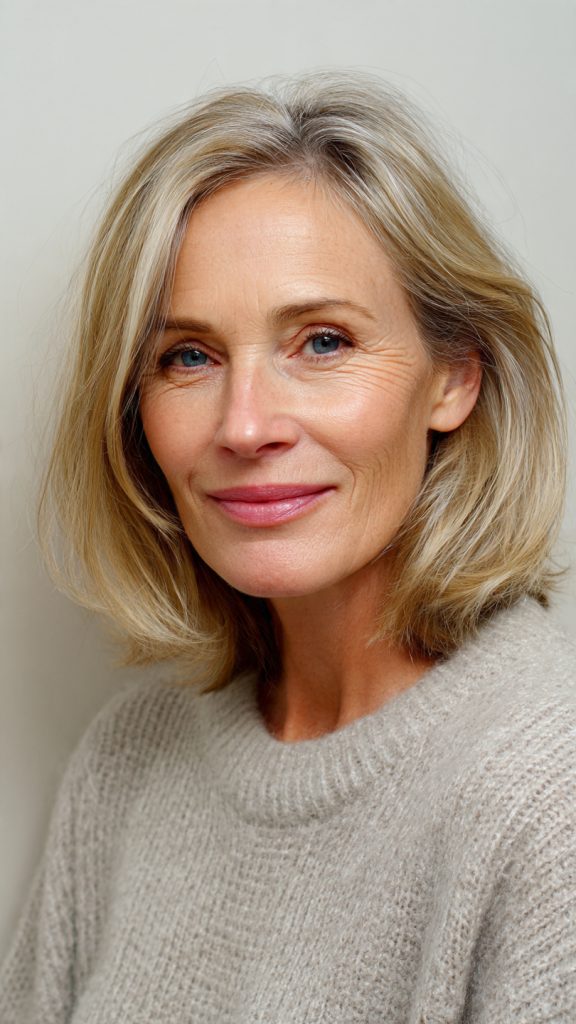
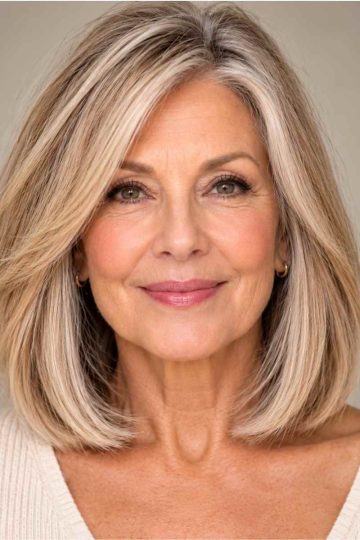
The lob remains the undisputed champion of mature hair. Hitting somewhere between the chin and the collarbone, this cut uses subtle, long layers to remove bulk while retaining shape.
- Why it works: The layers create natural lift at the crown, which prevents the dreaded "flat-top" look. For women with fine hair, internal layers make the hair look thicker. For those with thick hair, they remove weight so the style doesn't look triangular.
- Styling tip: Blow-dry with a large round brush, turning the ends under for a polished look, or use a flat iron to create a messy, textured bend for everyday ease.
2. The Textured Shag
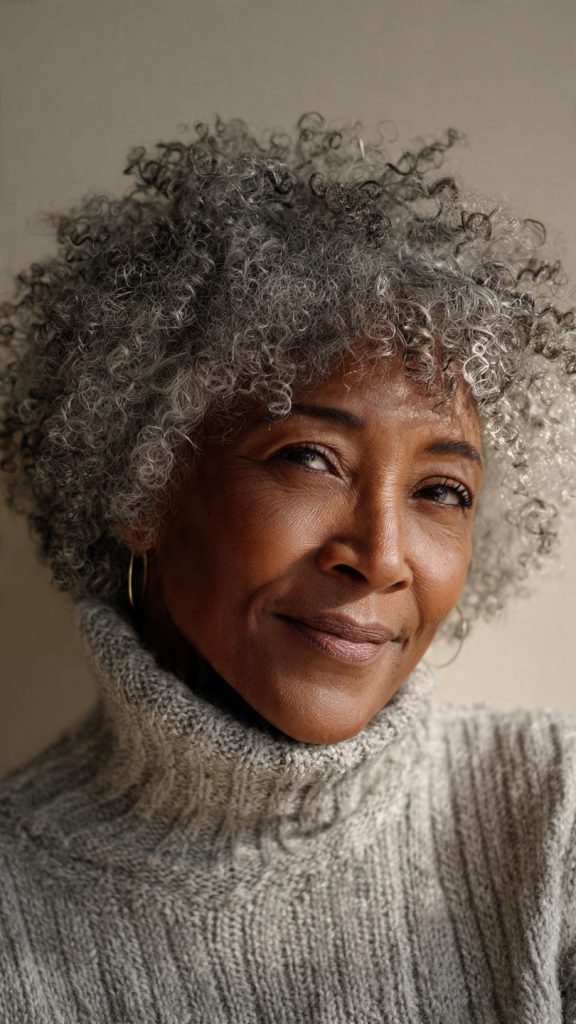
Don't let the name scare you—the modern shag is sophisticated, not messy. This style features choppy layers, wispy bangs, and plenty of movement.
- Why it works: As hair naturally loses density with age, blunt cuts can look severe and limp. The shag uses texture to create the illusion of density. The shorter layers on top boost volume, while the longer bottom keeps the length.
- Styling tip: This is the ultimate "wash and wear" cut. Apply a texturizing spray or sea salt spray to damp hair, scrunch, and let it air dry. The imperfect finish looks intentional and youthful.
3. The Curly Shoulder-Length Cut
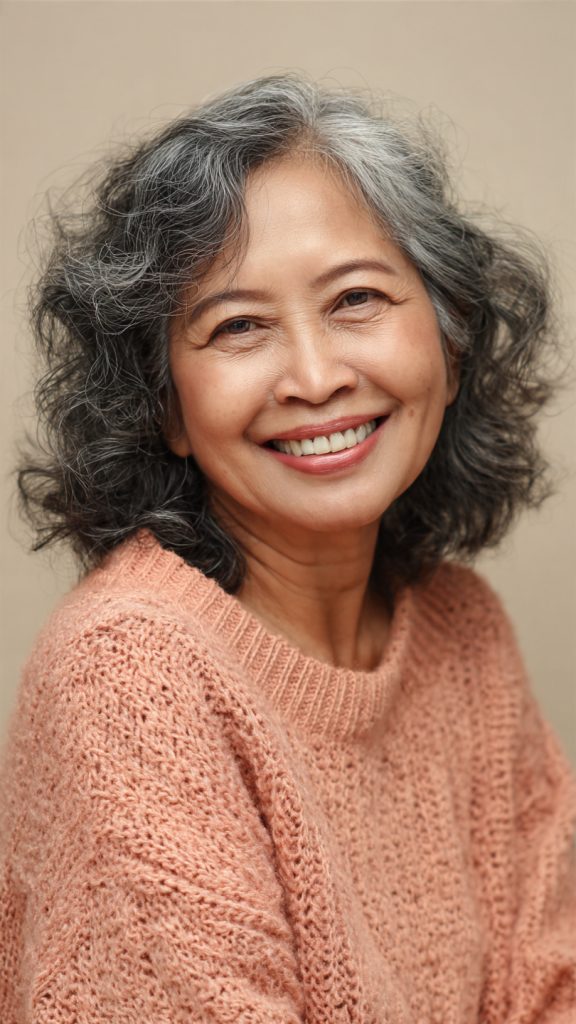
For women with natural curls or perms, cutting to a medium length relieves the "triangle head" effect (wide at the bottom, flat on top) that happens when curls grow too long.
- Why it works: Cutting to the shoulders allows curls to spring up and bounce. The weight of the hair pulls the roots slightly, which prevents the curls from getting too tight against the scalp, creating a beautiful oval silhouette.
- Styling tip: Use a microfiber towel to dry curls and a lightweight leave-in conditioner. Avoid brushing; use fingers to shape the curls. A side part often works better than a center part to frame the face.
4. The Angled A-Line Bob
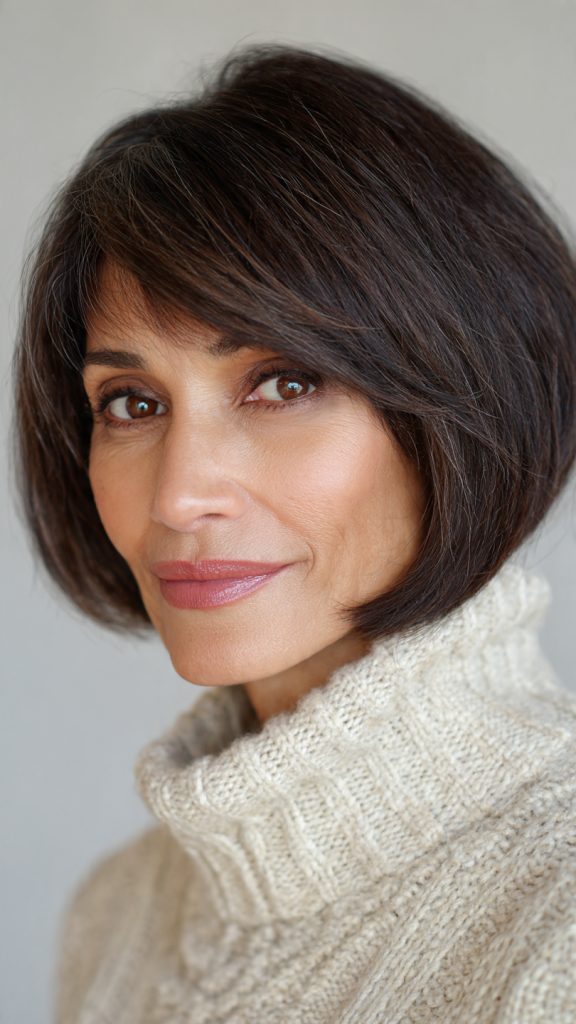
This is a sharper, more dramatic take on the lob. It is cut shorter in the back (at the nape of the neck) and gradually longer in the front (toward the collarbone).
- Why it works: The angle creates a "lift" effect. The shorter back removes bulk where hair tends to look thin or scraggly, while the longer front elongates the neck and draws the eye down, creating a slimming effect on the face.
- Styling tip: This cut requires precision. Have your stylist keep the back very tight and clean. Style it smooth with a shine serum to emphasize the architectural line.
5. The Soft Blowout with Curtain Bangs
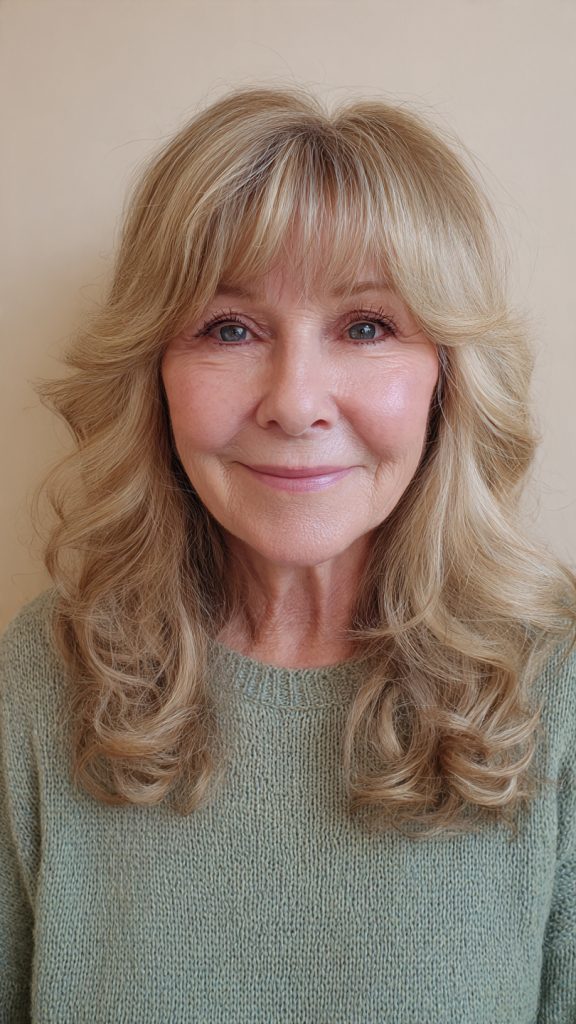
This style is all about glamour without the fuss. It involves a single-length or subtly layered cut with face-framing curtain bangs that part in the middle.
- Why it works: Curtain bangs are a miracle for aging features. They sweep across the forehead to hide fine lines and crow’s feet, but because they part in the middle, they don't look childish or heavy. The medium length allows the blowout to hold its shape all day.
- Styling tip: You don't need a salon blowout. Use Velcro rollers on the crown and bangs while you do your makeup. When you take them out, you'll have a soft, voluminous wave that looks expensive.
6. The Blunt Cut with Soft Ends
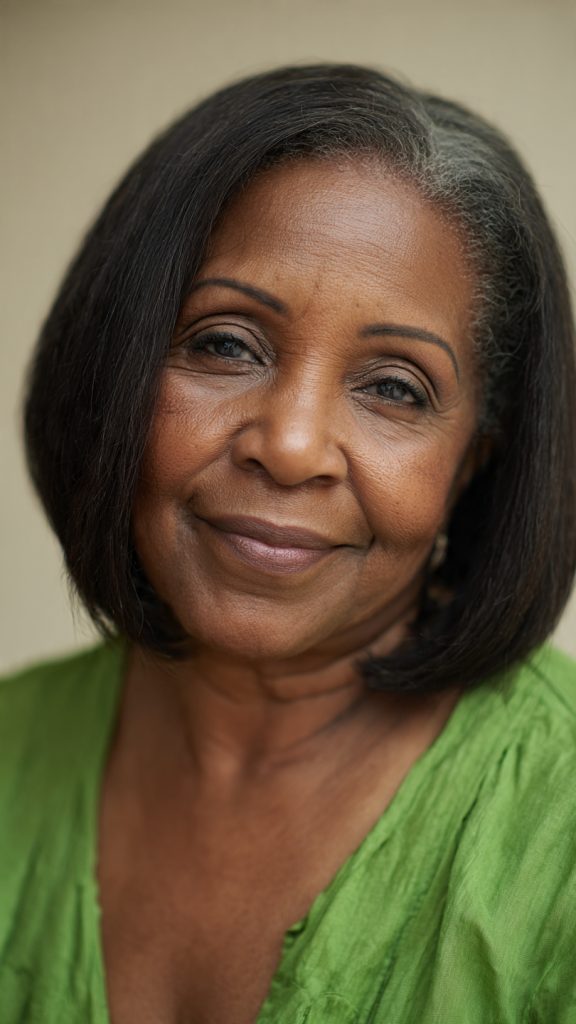
Contrary to popular belief, older women can wear a blunt cut—provided the ends are not razor-sharp. A blunt line with a slight "dusting" of texture removes weight without losing the solid perimeter.
- Why it works: A blunt perimeter makes the hair look incredibly healthy and dense. If you have good hair density but struggle with frizz, this cut keeps the ends from splitting and looking dry.
- Styling tip: Keep the length at the collarbone or just below. Use a flat iron to create a very slight bend (not a curl) at the ends. This prevents the "chopped off" look and adds modern softness.
7. The Sleek Low Ponytail (Using Length)
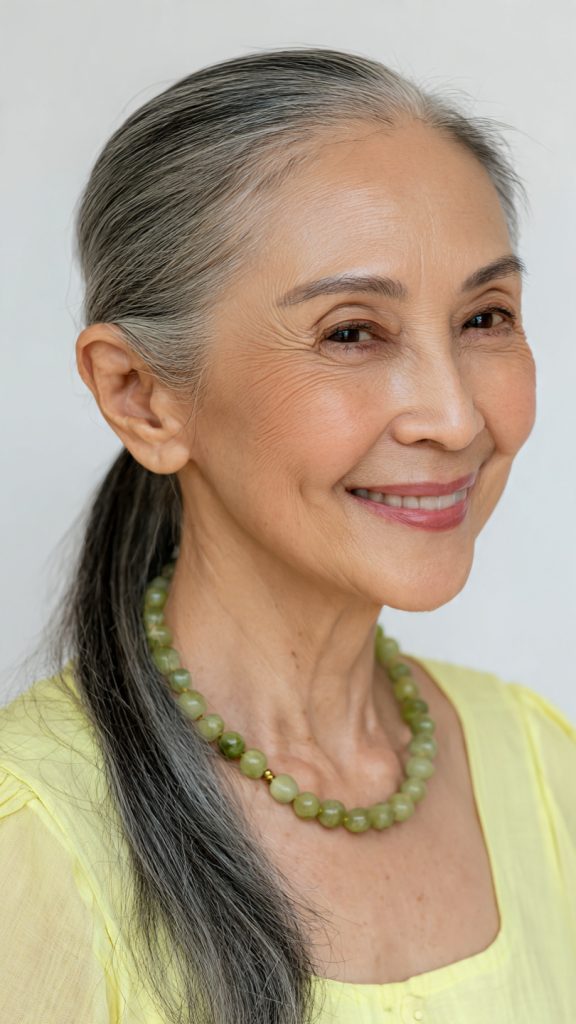
Just because you cut your hair to medium length doesn't mean you lose updo options. A sleek, low ponytail or chignon is incredibly elegant for women over 60.
- Why it works: Medium length is actually the ideal length for a low ponytail. Long hair creates a heavy, sagging tail; short hair can't reach. Medium hair sits perfectly at the nape of the neck. Pulling the hair back gives an instant face-lift effect.
- Styling tip: Use a boar bristle brush to smooth the hair back. To add volume at the crown, gently "pancake" (pull apart) the hair just behind the hairline before securing with a satin scrunchie.
8. The Side-Swept Deep Part
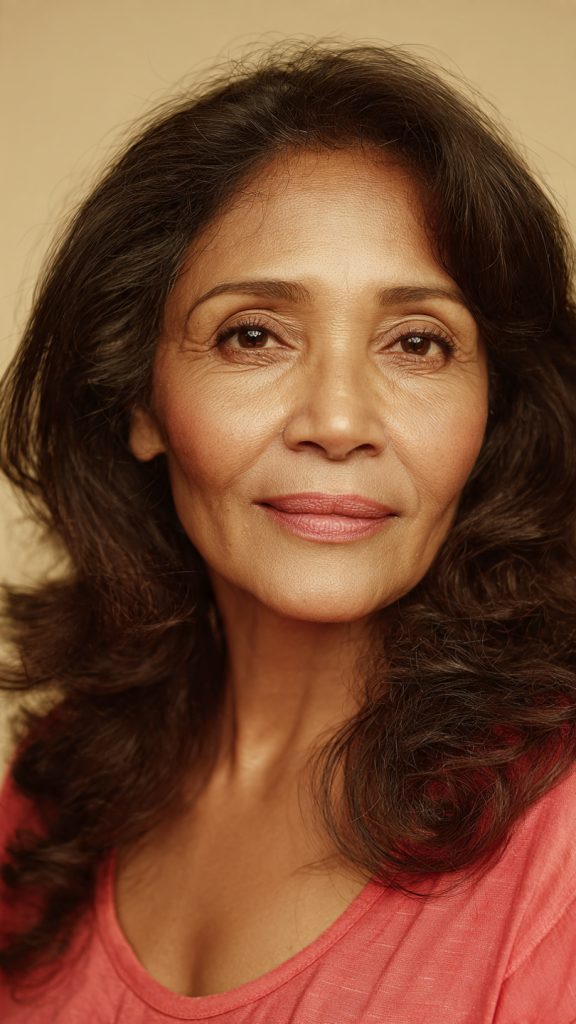
This is less of a "cut" and more of a styling technique, but it works best on medium-length hair. By shifting all the hair to one side and using a deep side part, you change the geometry of the face.
- Why it works: A severe center part can accentuate asymmetry in the face and draw attention to a widening hairline. A deep side part adds height to the crown, covers sparser areas at the temples, and casts a flattering shadow across one side of the face.
- Styling tip: Ask your stylist to cut the hair with a "weight line" on one side so it naturally falls that way. Use a light-hold hairspray to keep the side-swept volume in place during windy days.
9. The Gentle Wavy Bob (The "Roman Holiday")
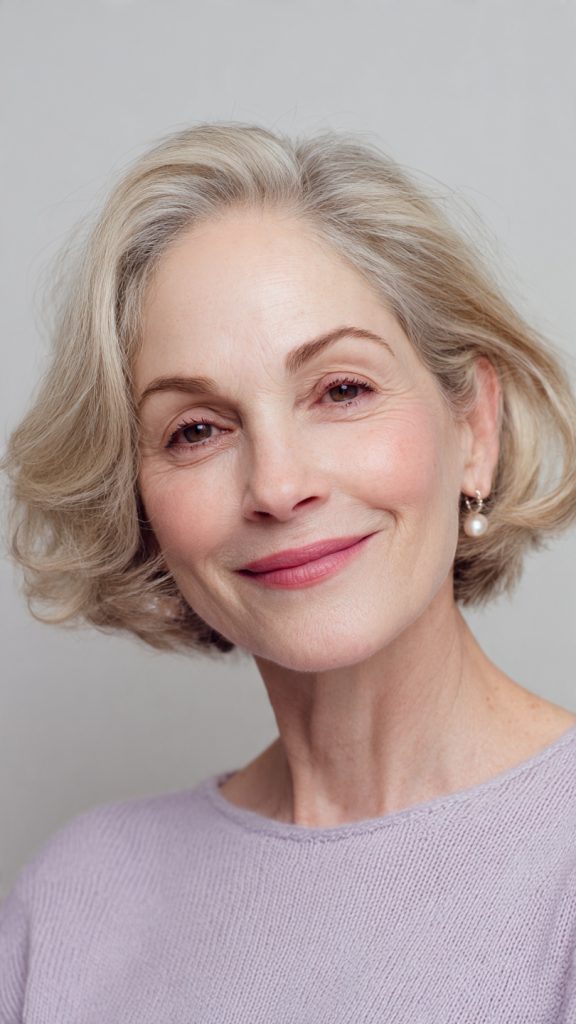
Inspired by classic Hollywood, this style uses a 1-inch curling iron to create soft, uniform waves that sit just off the shoulders.
- Why it works: Very tight curls can look aging, and very straight hair can look severe. The "in-between" wave—loose, soft, and S-shaped—adds texture and romance. It softens every hard line on the face, from the jaw to the brow.
- Styling tip: Curl one-inch sections away from the face. Let the curls cool completely, then run your fingers (not a brush) through them to break them into waves. Finish with a flexible hairspray so the hair moves naturally.
What to Consider Before Choosing Your Medium Length Cut
Before you book that salon appointment, take five minutes to evaluate these three factors. The right cut isn't just about trends—it's about your lifestyle and biology.
1. Your Hair Texture & Density
- Fine hair: Avoid too many layers, which can make hair look wispy. Opt for a blunt lob or soft blowout with curtain bangs.
- Thick hair: Embrace internal layers or a shag to remove weight. An A-line bob works beautifully.
- Curly hair: Shoulder-length is your best friend. Too short and curls shrink too much; too long and they pull flat.
2. Your Face Shape
- Round face: An angled A-line bob or deep side part elongates the face.
- Oval face: Almost anything works, but a classic layered lob is particularly harmonious.
- Square face: Soft waves and curtain bangs soften a strong jawline.
- Heart-shaped face: Volume at the chin (like a curly shoulder-length cut) balances a wider forehead.
3. Your Daily Commitment Level
- Low maintenance (5 minutes): Textured shag, curly shoulder-length cut, or side-swept deep part. Air-dry friendly.
- Medium maintenance (15 minutes): Classic layered lob, gentle wavy bob. Requires a quick blow-dry or curling iron.
- Higher maintenance (20+ minutes): Sleek low ponytail (needs smoothing), blunt cut with soft ends (needs precision styling).
How to Communicate With Your Stylist (A Script)
The biggest mistake older women make is saying "just give me something easy." Stylists need specifics. Use this script:
"I want a medium length cut that hits between my chin and collarbone. Please keep weight at the crown for volume, and soften the perimeter so it doesn't look blunt or severe. I do [not] want bangs. I style my hair [air-dry / blow-dry / curly method] most days."
Three key phrases to use:
- "Remove bulk but keep length" (for thick hair)
- "Add internal layers for movement" (for fine hair)
- "No harsh lines around my face" (for a softer look)
Bring a photo. Save one of the nine images you generate using the prompts above and show it directly to your stylist. A picture is worth a thousand confusing descriptions.
Product Recommendations for Medium Length Mature Hair
As hair changes with age (thinner strands, more dryness, less natural oil), your products should change too. Here is a simple three-step system.
| Product Type | What to Look For | Drugstore Option | Professional Option |
|---|---|---|---|
| Shampoo | Sulfate-free, volumizing | L'Oréal EverPure Volume | Aveda Pure Abundance |
| Conditioner | Lightweight, apply only to ends | Pantene Daily Moisture Renewal | Olaplex No. 5 Bond Maintenance |
| Leave-in Treatment | Heat protectant + hydration | Garnier Fructis Sleek & Shine | Moroccanoil Treatment Light |
| Styling Product | Flexible hold, not crunchy | Not Your Mother's All Eyes On Me | Oribe Dry Texturizing Spray |
One tool worth investing in: A medium-sized round boar bristle brush (2.5 inches wide). It grips fine hair better than plastic and distributes natural oils from root to tip.
Common Mistakes Older Women Make With Medium Hair (And How to Fix Them)
| Mistake | Why It Happens | The Fix |
|---|---|---|
| Letting the ends get see-through | Infrequent trims | Trim every 8-10 weeks, no exceptions |
| Using heavy oils or serums | Trying to tame frizz | Switch to a lightweight spray; heavy oils flatten medium hair |
| Sticking to the same part for decades | Habit | Try a deep side part once a week—it instantly changes your look |
| Blow-drying upward only | Chasing volume | Blow-dry roots upward, but ends downward to avoid a mushroom shape |
| Coloring too dark | Believing dark looks younger | Go one or two shades lighter than your natural color; softer shades are more forgiving on aging skin |
How Often to Maintain Your Medium Length Cut
Unlike very short hair (which needs trims every 4 weeks) or very long hair (which can go 12 weeks), medium length sits in the Goldilocks zone.
- Trim schedule: Every 8 to 10 weeks. Set a calendar reminder.
- Signs you're overdue: Ends look thin or "whispy," the style has lost its shape, or you're tying it back every day.
- Color touch-ups: Every 6 to 8 weeks if covering grey; every 10 to 12 weeks if blending with highlights.
Pro tip: Book your next appointment before you leave the salon. Medium cuts look amazing for 8 weeks, then degrade quickly. Don't let yourself slide.
Conclusion
Your hair is not a relic of your youth—it is a living accessory that should make you feel seen, confident, and beautiful right now. The nine styles above prove that medium length is not a compromise or a "transition" cut. It is a destination.
Whether you choose the effortless texture of a shag, the polished architecture of an A-line bob, or the romantic softness of gentle waves, the goal is the same: less time fighting your hair and more time living your life. You have earned the right to simplicity without sacrificing style.
So put down the fear of change. Show your stylist a photo. Buy the lightweight texturizing spray. And walk out of that salon with your head held high—because a great cut at the right length doesn't just frame your face. It frames your entire attitude.
Now go book that appointment. Your best hair decade is still ahead of you.

Leave a Reply