Author: Jessica Guevara

  • The Baby Mullet 2026: The Office-Appropriate Edge That Parties on Weekends

    The Baby Mullet 2026: The Office-Appropriate Edge That Parties on Weekends


    Gone are the days when mullets meant “all business in the front, party in the back” – the 2026 baby mullet is a refined, low-maintenance hybrid that’s subtle enough for your Monday morning Zoom call yet sharp enough for Saturday night drinks. This modern take keeps the length controlled, the transition soft, and the attitude dialed to “professional cool.” Below are ten smart variations that work just as hard as you do.


    10 Baby Mullet Cuts for 2026 (Office-to-Weekend Ready)

    1. The Tapered Baby Mullet


    A tight skin fade on the sides keeps it clean for the office, while a whisper of extra length at the nape adds weekend edge without flopping over your collar.

    2. The Textured Crop Mullet


    Short, choppy layers on top (easy to style with matte paste) blend into a barely-there back length – looks like a classic crop from the front, reveals a subtle party tail on Saturday.

    3. The Soft Disconnected Mullet


    Instead of a harsh line, the sides are clipper-faded into the back, so the longer nape reads as “textured finish” at work and “effortless rocker” after hours.

    4. The Curly Baby Mullet


    Natural curls are clipped short around the ears but left slightly elongated at the crown and nape – professional when dry, voluminous and playful for weekend gatherings.

    5. The French Crop Mullet


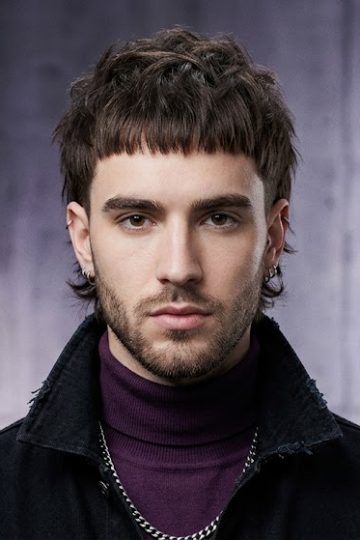
    A blunt, short fringe meets a low-fade side and a finger-length back – minimal styling Monday to Friday, then rough it up with sea salt spray for a lived-in weekend look.

    6. The Slick-Back Baby Mullet


    Longer on top (combed neatly for meetings) with a micro-mullet back that tucks under a collared shirt; weekends, finger-comb it forward for instant messy texture.

    7. The Low-Fade Lived-In Mullet


    A conservative low fade keeps the silhouette office-legal, but the back is left softly disconnected – like a grown-out taper that says “I have plans after 5 PM.”

    8. The Wavy Mid-Length Baby Mullet


    Waves are cropped close at the temples, left an inch longer at the crown, and feathered at the nape – polished with a side part for work, tousled with clay for bar-hopping.

    9. The Box-Cut Mini Mullet


    Square, weighty top (think ’90s flop) blends into a rounded back that never touches the shirt collar – a vintage shape that feels modern and works under headsets or beanies.

    10. The Undercut Baby Mullet


    Sides are shaved clean (hidden by hair when dry), but the top and back form one flowing piece – severe but neat for the office, daring and dramatic for the weekend.


    How to Ask Your Barber for a Baby Mullet (Without Getting the 1980s Version)

    • Be specific with length. Say: “Keep the top 2–3 inches, fade the sides to a zero or half guard, and leave the back just touching my collar – no longer.”
    • Bring a reference photo. Use one of the ten styles above and show the AI-generated image to your barber.
    • Specify the transition. Ask for a “soft disconnect” or “blended fade” rather than a hard line if you want office-appropriate subtlety.
    • Mention the nape. Say: “Square off the nape but keep the length in the middle” to avoid the traditional mullet’s dramatic tail.
    • Request a maintenance plan. Ask: “How many weeks until this loses its shape?” (Typically 3–4 weeks for a baby mullet.)

    Styling Products for Day-to-Night Switching

    LookProductHow to Apply
    Office (polished)Matte paste or lightweight clayWork through damp hair, comb into place, let air dry or low heat
    Office (neat)Water-based pomade (low shine)Comb through towel-dried hair, side-part or sweep back
    Weekend (messy)Sea salt spray + texture powderSpray on dry hair, scrunch with fingers, finish with a pinch of powder at the crown
    Weekend (voluminous)Volumizing mousse + blow-dryApply to damp roots, blow-dry upward, finger-comb loosely

    Maintenance Schedule: Keep It Office-Ready

    • Every 2–3 weeks: Clean up the fade on the sides and the neckline. The top and back can grow longer.
    • Every 4 weeks: Reshape the top layers to prevent the “mushroom effect.”
    • Daily (30 seconds): Rework with dry shampoo or texture spray to refresh the messy weekend look into a clean Monday style.

    Who Should Avoid the Baby Mullet?

    • Men with very fine, straight hair that won’t hold shape (the back will look stringy, not intentional).
    • Strict corporate dress codes that prohibit “non-classic” cuts (finance, law, certain executive roles).
    • Anyone unwilling to visit the barber every 2–3 weeks – this cut loses its silhouette fast.

    Conclusion

    The baby mullet of 2026 is proof that you don’t have to choose between climbing the corporate ladder and having a little weekend personality. With the right fade, controlled length, and smart styling, this cut works as hard as you do – keeping things clean from 9 to 5 and letting loose when the clock runs out. Show your barber the right reference, stock up on matte paste and sea salt spray, and you’ll have a look that turns heads in the boardroom and the bar. The party isn’t just in the back anymore – it’s on your terms, all week long.

  •  Men’s Haircut Trends That Will Dominate 2026

     Men’s Haircut Trends That Will Dominate 2026


    As we move further into the decade, men’s grooming is leaving behind the “one-style-fits-all” era. In 2026, expect a powerful clash of soft texture and sharp structure—where retro volume meets futuristic precision, and personal expression finally overrides rigid rules.


    8 Men’s Haircut Trends for 2026

    1. The Liquid Flow

    This is the evolved “bro flow”—shoulder-grazing, heavily layered, and styled with gloss serums to create a wet-but-moving finish that feels effortlessly expensive.

    2. The Chiseled Crop

    A square-shaped, finger-length crop with razor-straight fringe and clean, architectural lines around the temples, borrowed from high-fashion runways and built for strong jawlines.

    3. The Textured Burst Fade

    The classic fade gets an upgrade with uneven, choppy tips on top and a “burst” fade (curving around the ear) that creates explosive volume at the crown.

    4. The Low-Key Mullet

    Business in the front (neat, short fringe), but the party is softer—a gently elongated back that ends just at the collar, worn with natural waves instead of aggressive layering.

    5. The Polished Shag

    A medium-length shag with micro-bangs and piece-y layers throughout, finished with a low-shine paste for a look that balances ‘70s rockstar with 2026’s clean aesthetic.

    6. The Glass Haircut

    An ultra-sleek, mid-part cut where every strand is cut to the exact same length (usually chin-level), then flattened with gloss to reflect light like a mirror—pure minimalism.

    7. The Disconnected Undercut 2.0

    Now with a twist: the top is grown into long, curly or coily shapes, while the undercut is shaved into geometric patterns (lines, chevrons) visible only when the hair moves.

    8. The French Boy

    A rounded, finger-brushed bowl cut with deliberate unevenness at the edges, worn messy and dry—ironically refined and perfect for straight, fine hair types.

    How to Choose the Right Trend for Your Face Shape

    • Oval face: You can wear all eight. Try The Glass Haircut or The Chiseled Crop to accentuate your balance.
    • Round face: Go for height and length. The Liquid Flow and The Textured Burst Fade add vertical dimension.
    • Square jaw: Soften with The Polished Shag or The Low-Key Mullet to contrast sharp angles.
    • Long face: Avoid extra height. The French Boy and The Disconnected Undercut 2.0 add width and keep proportions right.
    • Heart-shaped face: Side-swept or mid-parted styles work best. The Glass Haircut (mid-part) or The Liquid Flow (side) are ideal.

    Styling & Maintenance Tips for 2026 Trends

    TrendStyling TimeKey ProductMaintenance Frequency
    Liquid Flow5 minGloss serum or hair oilEvery 6–8 weeks
    Chiseled Crop2 minMatte clay or puttyEvery 3–4 weeks
    Textured Burst Fade3 minTexturizing spray or sea salt sprayEvery 2–3 weeks
    Low-Key Mullet4 minLightweight cream or mousseEvery 6 weeks
    Polished Shag3 minLow-shine paste or waxEvery 5–6 weeks
    Glass Haircut1 min (just comb)High-gloss spray or silicone serumEvery 4–5 weeks
    Disconnected Undercut 2.06 min (curly top)Curl cream + edge controlEvery 2–3 weeks
    French Boy2 min (finger-brush)Dry shampoo or texturizing powderEvery 5–6 weeks

    What to Ask Your Barber (Exact Phrasing)

    “I want the [Trend Name]. Keep the [top length] on top, create a [fade/taper/natural neckline] around the back and sides, and leave the [specific detail, e.g., fringe straight / layers piece-y].”

    Examples:

    • For The Liquid Flow: “Keep shoulder length with heavy layers. No fade—just a natural neckline. I’ll style it wet and glossy.”
    • For The Chiseled Crop: “Finger-length on top with a razor-straight fringe. Clean, square lines around the temples. Zero texture.”
    • For The Disconnected Undercut 2.0: “Leave the top long and curly. Shave geometric patterns (lines or chevrons) into the undercut. Keep a sharp disconnect between top and sides.”

    Products to Buy Now for 2026

    • For wet-look styles (Liquid Flow, Glass Haircut): Color Wow Pop & Lock, Olaplex No. 7 Bonding Oil, or any high-gloss silicone serum.
    • For texture and movement (Polished Shag, Textured Burst Fade): Oribe Dry Texturizing Spray, Bumble and Bumble Surf Spray, or sea salt spray.
    • For hold and structure (Chiseled Crop, French Boy): Matte clay (Moroccan Oil, Hanz de Fuko) or texturizing powder (Schwarzkopf Got2b).
    • For curls and coils (Disconnected Undercut 2.0): SheaMoisture Coconut & Hibiscus Curl Cream, or Pattern Curl Gel.

    Conclusion

    Men’s haircuts in 2026 are no longer about hiding behind safe, generic styles. From the liquid shine of The Glass Haircut to the rebellious softness of The Low-Key Mullet, this year’s trends celebrate contrast: texture against precision, length against structure, and individuality against conformity. Whether you have straight, wavy, curly, or coily hair—and regardless of your face shape or race—there is a 2026 trend waiting to become your signature. Show these prompts to your AI image generator, take the reference to your barber, and step into a new era of men’s grooming. The only wrong choice is playing it safe.

  • The Wolf Cut for Men Over 50: 15 Modern, Low-Maintenance Ideas That Add Volume and Edge
    The Wolf Cut for Men Over 50: 15 Modern, Low-Maintenance Ideas That Add Volume and Edge

    The wolf cut—a shaggy, layered style that blends a mullet’s volume with a shag’s texture—isn’t just for Gen Z. For men over 50, it’s a smart way to embrace thinning hair, add movement, and project a confident, ageless attitude.

    Is the Wolf Cut Right for You?

    Before booking an appointment, ask yourself these three questions:

    • Do I want lower maintenance? Wolf cuts grow out gracefully and require fewer trims than precise styles.
    • Do I have thinning or fine hair? Layers create lift and density, making the wolf cut ideal for age-related hair changes.
    • Am I open to some texture? This cut thrives on imperfection—if you like neat, slicked-back styles, it may not suit you.

    If you answered yes to at least two, the wolf cut is worth trying.

    Below are 15 tailored wolf-cut ideas that respect mature hair needs while keeping things fresh and easy to style:

    1. Classic Tapered Wolf


    Keep the sides neatly tapered but leave length and choppy layers on top for a clean yet rebellious look that’s office-appropriate.

    2. Silver Fox Shag


    Let natural gray or white hair shine with soft, face-framing layers that reduce bulk and add an effortless, windswept texture.

    3. Textured Crop Wolf


    Pair a short, layered crop on top with slightly longer, wispy nape hair—ideal for receding hairlines or crowns.

    4. Low-Fade Wolf Cut


    A skin fade on the lower sides blends into longer, jagged top layers, giving structure without looking juvenile.

    5. Long & Loose Wolf


    If you have thicker gray hair, keep length all over with heavy internal layering to remove weight and create a rock-and-roll silhouette.

    6. Mini Wolf (Short Version)


    A shorter take with 2–3 inches on top and barely-there length at the nape—great for men new to shaggy styles.

    7. Side-Swept Wolf


    Sweep the layered fringe to one side to soften a prominent forehead while adding volume where hair is thinner.

    8. Messy Salt-and-Pepper Wolf


    Embrace natural texture with point-cut layers and a dab of matte paste for that “just rolled out of bed” cool.

    9. Curly Wolf Cut


    For curly or wavy mature hair, use long layers to prevent triangle-head and enhance natural spring and movement.

    10. Undercut Wolf


    Shave the sides very short (but not bald) and keep a dramatic, shaggy top that can be pushed back or left messy.

    11. Tousled Pompadour Wolf


    Combine a loose pompadour volume at the front with shaggy back layers—adds height without rigid styling.

    12. Thinning-Hair Wolf


    Soft, staggered layers throughout create the illusion of density by lifting hair off the scalp; avoid heavy products.

    13. Temple Fade Wolf


    Fade only the temples and sideburns, leaving the rest in a soft, layered shag for a polished but playful finish.

    14. Retro 70s Wolf


    Channel a young Paul McCartney with curtain bangs blended into longer, feathered layers—especially flattering on straight silver hair.

    15. Air-Dry Wolf Cut


    Request a cut that relies on natural texture (no blow-dry needed); just scrunch with sea salt spray for daily ease and natural volume.

    How to Ask Your Barber for a Wolf Cut at 50+

    Barbers don’t read minds. Use this script to get exactly what you want:

    “I want a wolf cut—shorter on the sides, longer on top and back, with lots of choppy layers. Keep it age-appropriate: no extreme undercuts, and leave enough weight on top to style easily. I want volume, not a mullet.”

    Optional add-ons:

    • “Taper the sideburns and neckline neatly.”
    • “Leave the fringe long enough to sweep to the side.”
    • “Use texturizing shears, not clippers, on the top layers.”

    Best Products for Styling a Wolf Cut (Over 50)

    Avoid heavy gels or pomades that flatten layers. Instead, choose:

    Product TypeRecommendedWhy It Works
    Texture powderSchwarzkopf OSIS+ Dust ItAdds instant grip and volume without grease
    Matte clayBaxter of California Clay PomadeDefines layers with a natural finish
    Sea salt sprayBumble and bumble Surf SprayEnhances waves and air-dry texture
    Volumizing mousseMoroccanoil Volumizing MousseLifts fine hair at the roots

    Pro tip: Apply products to damp hair, then scrunch or tousle as it air-dries.


    Maintenance Schedule for Men Over 50

    FrequencyAction
    Every 6–8 weeksTrim the nape and around ears to keep shape
    Every 3–4 monthsRefresh layers to prevent heaviness
    Daily (2 minutes)Tousle with fingers + a pea-sized amount of matte clay
    WeeklyUse a volumizing shampoo (avoid sulfates)

    The wolf cut’s biggest advantage? It looks better a little messy. You don’t need perfect styling.


    Common Concerns (And Why They’re Not Problems)

    “I’m too old for trendy cuts.”
    Style has no age limit. The wolf cut, when tapered properly, reads as confident, not costumed.

    “My hair is too thin.”
    Layers are exactly what thin hair needs. The cut removes weight, allowing remaining hair to lift and appear thicker.

    “I don’t want to look like a rock star.”
    Ask your barber for a “conservative wolf” with shorter back length and softer blending. The edge is subtle.

    “I have a bald spot.”
    The messy, textured top layers naturally drape over thinning crowns without looking like a comb-over.


    Real Talk: What to Expect the First Week

    • Day 1-2: You may think, “This is too shaggy.” Give it time.
    • Day 3-5: After one wash and air-dry, the layers settle into their natural rhythm.
    • Day 7: You’ll likely receive compliments. People notice confidence, not rules.

    The wolf cut has a one-week adjustment period. Don’t panic and don’t ask for a fix too soon.


    Conclusion

    The wolf cut for men over 50 isn’t a desperate grasp at youth—it’s a smart, tactical response to changing hair. It adds volume where hair has thinned, movement where hair has flattened, and personality where hair has become boring. With 15 variations tailored to different face shapes, hair types, and comfort levels, there’s a version for almost any man willing to try something new.

    The best time to change your look isn’t ten years ago. It’s today. Book the appointment, show your barber a reference photo, and spend the next six weeks enjoying a haircut that works with your hair—not against it.

    Your 50s are for ease, confidence, and a little edge. The wolf cut delivers all three.


  • Trending Curly Hairstyles for School in 2026

    Trending Curly Hairstyles for School in 2026

    Say goodbye to the flat-iron struggles of the past. For 2026, school hallways are becoming runways for natural texture, with an emphasis on effortless volume, protective styling, and tech-inspired accessories. Whether you have tight coils or loose waves, this year’s trends are all about celebrating your unique curl pattern while keeping your hair healthy, tangle-free, and ready for a full day of classes.

    From “Bubble Ponytails” to “Glass Curls,” here are the 15 hottest curly hairstyles you’ll be seeing at school this year.


    1. The High-Volume Pineapple

    Gather all your curls into a very high, loose ponytail right at the top of your head, letting the ends fan out like pineapple leaves for maximum height and all-night (or all-day) volume.

    2. Bubble Braids

    Section your ponytail into three to four parts using small, clear elastics, then gently puff out each section between the ties to create a “bubble” effect on your curly lengths.

    3. Chain-Link Headband Tuck

    Use a decorative, chain-style headband to sweep the front sections of your curls back and over the band, hiding the ends for a faux-bob look that keeps hair off your face during labs or tests.

    4. The Half-Up Space Bun

    Take the top half of your hair and twist it into two small, tight buns (mimicking a classic “space bun” style), while leaving the bottom half of your curls loose and cascading down your shoulders.

    5. Criss-Cross Flat Twists (Front)

    Create two flat twists starting from your hairline and working backward to the crown, criss-crossing them in the middle, then pinning them to hide the ends, leaving the back curls free.

    6. Opalescent Claw Clip Curls

    Scrunch your damp curls with a pearlescent or iridescent mousse, then twist the hair loosely and secure it with a large, opal-toned claw clip for a “messy-but-polished” look between classes.

    7. The Low-Slung Coil Chain

    After applying a high-shine serum, gather your curls into a low ponytail at the nape of your neck and drape a small, lightweight chain through the length of the ponytail for a subtle metallic shimmer.

    8. Side-Swept “Glass Curls”

    Define specific ringlets using a lightweight, high-gloss gel so each curl looks like a separate, shiny piece of glass, then sweep them all dramatically to one side for a wet-look effect.

    9. Knotted Crown Braid

    Take two thick sections of hair from above each ear, tie them into a simple overhand knot at the back of your head, tuck the ends under, and secure with pins to create an instant braided crown.

    10. Micro-French Puff

    French-braid only the very front inch of your hairline (from ear to ear), then gather the rest of your curls (including the braid tails) into a single, high puff on top of your head.

    11. The Raindrop Part

    Instead of a straight or zig-zag part, use the tip of a rat-tail comb to create small, scattered circular partings (like raindrops) across your scalp before styling your wash-and-go curls.

    12. Spiral Scarf Wrap

    Fold a silk scarf into a long strip, tie it around your head like a headband, then take small sections of your curls and wrap them around the scarf before releasing them to create spiral-shaped ringlets.

    13. Frosted Tips (Curly Version)

    Apply a small amount of shimmer powder or metallic hair wax only to the last inch of your curl ends, leaving the roots matte, for a dipped-in-frost effect that catches hallway light.

    14. The Reversed Taper

    Keep your curls longer and weighed down on top (falling onto your forehead) while shaving or tightly tapering the sides and back—a bold, edgy look that requires zero morning maintenance.

    15. Magnetic Coil Bangles

    Separate your dry curls into 5–7 large sections, slide a small, lightweight magnetic bangle over each section so it rests at mid-shaft, and let the bangles slide down to the ends as you walk for kinetic style.

    Essential Tools & Products for 2026

    Before trying any of these styles, keep your school locker or gym bag stocked with these curly-hair essentials:

    • Wide-tooth comb and denman brush – for detangling without breakage
    • Spray bottle with water and leave-in conditioner mix – for refreshing curls between classes
    • Silk or satin scrunchies – they prevent dents and frizz
    • Clear elastics and bobby pins – for bubble braids and pinning
    • Lightweight mousse or curl foam – adds hold without crunch
    • Edge control gel – for sleek hairlines on puffs and ponytails
    • Travel-size microfiber towel – to blot sweat without causing frizz after PE
    • Claw clips in various sizes – 2026’s most essential accessory

    Pro Tips for Making Curly Hairstyles Last All School Day

    1. Start with damp, not wet, hair – Styles hold longer when hair is 80% dry.
    2. Use a satin pillowcase at home – This reduces overnight frizz by 70%.
    3. Don’t skip the hold product – A light gel or mousse is your best friend.
    4. Sleep in a pineapple or bonnet – Wake up with second-day hair ready to go.
    5. Refresh with steam – Hold your head over a hot shower or use a facial steamer to revive flattened curls between classes.
    6. Carry a mini edge brush – Two seconds of smoothing can save a whole look.

    Maintenance & Nighttime Care

    To keep these styles healthy and reusable:

    • Wash day should happen 1–2 times per week depending on your scalp and activity level.
    • Deep condition weekly – Curly hair craves moisture, especially when styled frequently.
    • Protective styles (like flat twists or the pineapple) should be used at least 3 nights per week to prevent breakage.
    • Trim every 8–10 weeks – Split ends ruin curl definition and make styles look messy.
    • Rotate between tension styles and loose styles – Give your edges and crown a break from tight ponytails or braids.

    Conclusion

    Curly hair is not a challenge to be tamed—it is a statement to be styled. In 2026, school fashion has finally caught up to what curly-haired students have always known: volume, texture, and personality go hand in hand. Whether you choose the boldness of a reversed taper, the whimsy of magnetic coil bangles, or the classic ease of a high pineapple puff, the best curly hairstyle is the one that makes you feel confident walking into first period. Experiment with these 15 trends, mix and match accessories, and remember—your natural texture is always in style.

  • Low Taper Fade vs. Drop Fade: The Exact Difference Explained

    Low Taper Fade vs. Drop Fade: The Exact Difference Explained

    If you’ve ever sat in a barber’s chair and felt unsure whether to ask for a low taper fade or a drop fade, you’re not alone. While both are clean, modern styles, the key difference lies in where the fade begins and how the hairline shape changes around your ears and nape.


    12 Key Differences & Ideas
    1. Fade starting point

    A low taper fade starts just above the natural hairline around the ears, while a drop fade begins at the same level but intentionally arcs downward behind the ear.


    2. Hairline shape at the back

    The low taper fade follows your natural rounded hairline, whereas the drop fade creates a distinct “C” or curved shape that dips lower toward the nape.


    3. Visual weight distribution

    Low tapers keep more bulk on the sides for a natural, conservative look; drop fades remove more weight from the upper side and push visual weight higher.


    4. Best for face shapes

    Low taper fades suit oval and round faces by adding subtle structure, while drop fades elongate square or heart-shaped faces with their downward curve.


    5. Maintenance frequency

    A low taper fade requires a trim every 2–3 weeks to keep the渐变 clean. A drop fade needs weekly touch-ups because the curved line grows out unevenly.


    6. Versatility with hairstyles on top

    The low taper fade pairs well with almost anything (pompadour, quiff, crop). The drop fade works best with textured or voluminous styles like curls, twists, or a French crop.


    7. Edge-up sharpness

    Low tapers usually have a soft, blurred edge. Drop fades almost always include a crisp, razor-sharp lineup to emphasize the curved drop behind the ear.


    8. Ideal hair length on sides

    Low taper fades look great on hair as short as #1 or #2 clipper guards. Drop fades often go skin- or #0.5 to make the “drop” more dramatic.


    9. Professional vs. edgy vibe

    A low taper fade is office-friendly and timeless. A drop fade leans edgier, more modern, and is popular in streetwear and hip-hop culture.


    10. How they age between cuts

    A low taper fade grows out evenly, looking intentional for longer. A drop fade looks messy faster because the lowered back section becomes obvious as hair lengthens.


    11. Barber skill level required

    Most barbers can execute a low taper fade. A proper drop fade requires advanced blending and curve work, so you will want an experienced barber.


    12. Best occasions to wear each

    Choose a low taper fade for weddings, interviews, or formal events. Choose a drop fade for nights out, photoshoots, or when you want a bold, standout silhouette.

    How to Describe Each Fade to Your Barber

    Use these exact phrases to avoid confusion in the barber’s chair. For a low taper fade, say: “Keep the fade low, start just above my ears, and follow my natural hairline.” For a drop fade, say: “Take the fade down behind my ear in a curved C-shape and drop it lower toward my nape.” Showing a reference photo is always helpful, but these words will get you 90% of the way there.


    Which Fade Costs More?

    Generally, a low taper fade costs less because it is faster and requires less precision. Expect to pay $20–$40 for a quality low taper fade. A drop fade typically costs $35–$60 due to the extra blending time, curved line work, and sharper edge-up required. Some barbers charge a “design fade” fee for drop fades.


    Common Mistakes to Avoid

    The biggest mistake is asking for a drop fade but receiving a low taper fade because you did not specify the curved drop behind the ear. Another common error is getting a drop fade when you have very thin or receding hair on the sides, as the curved line will look patchy. Finally, do not ask for a drop fade right before a formal event where you need a clean look for more than five days — it grows out unevenly fast.


    Tools Barbers Use for Each Fade

    Low taper fades rely mainly on clipper guards (#2 down to #1) and blending shears for soft transitions. Drop fades require additional tools: a trimmer for the razor-sharp edge-up, a foil shaver for the skin fade portion, and often a straight razor to define the curved drop line behind the ear. If your barber does not own a foil shaver, they likely do not specialize in drop fades.


    How to Maintain Each Fade at Home

    For a low taper fade, use a soft boar bristle brush to keep the fade blended between cuts, and visit your barber every 2–3 weeks. For a drop fade, you will need a handheld mirror to check the curved back line daily, plus a precision trimmer for weekly touch-ups along the C-shape. Many men learn to maintain a drop fade at home for 1–2 weeks before seeing a barber again.


    Which Fade Is More Popular Right Now?

    Drop fades are currently trending in streetwear, hip-hop, and social media culture, especially among men under 30. Low taper fades remain more popular overall in professional settings and among men over 35. According to barber surveys from 2024–2025, the drop fade has grown 40% in demand, but the low taper fade remains the most requested fade worldwide.


    Can You Combine a Low Taper Fade and a Drop Fade?

    Yes, some barbers offer a “low drop fade” — this starts as a low taper fade but adds a subtle drop only at the very back of the nape. It is a compromise style that gives you the professional front and sides of a low taper with just a hint of curved drama in the back. Ask your barber for a “low drop fade, subtle curve at the nape only.”


    What Hair Types Work Best for Each

    Low taper fades work well on straight, wavy, curly, and coily hair types because the soft blend hides texture differences. Drop fades work best on coily, curly, or thick wavy hair — the curved line gets lost on very straight or fine hair because the lack of texture makes the drop look like a mistake. If you have thin straight hair, stick with a low taper fade.


    Celebrity Examples for Reference

    For a low taper fade, look at Zayn Malik, Timothée Chalamet, or Michael B. Jordan — all have worn clean low tapers on red carpets. For a drop fade, reference Drake, A$AP Rocky, or Bad Bunny — each has popularized the curved drop behind the ear in music videos and public appearances. Search these names with “low taper fade” or “drop fade” for reliable visual examples.


    Final Checklist Before Choosing

    Ask yourself these three questions. One: Do I want a professional or edgy look? Professional = low taper fade. Edgy = drop fade. Two: Am I willing to get weekly touch-ups? Yes = drop fade. No = low taper fade. Three: Does my barber specialize in curved fades? If unsure, default to a low taper fade to avoid a bad drop fade.


    Conclusion

    The difference between a low taper fade and a drop fade comes down to one simple curve behind the ear. The low taper fade follows your natural hairline, stays clean for longer, and suits professional settings. The drop fade intentionally dips downward, requires more maintenance, and delivers a bolder, more modern silhouette. Neither is better than the other — the right choice depends on your face shape, lifestyle, maintenance tolerance, and barber’s skill. Now that you know exactly how to describe each fade and what to expect, you can walk into any barbershop with confidence and walk out with the cut you actually wanted.

  • The Worst Men’s Haircuts of 2026: A Cautionary Style Guide

    The Worst Men’s Haircuts of 2026: A Cautionary Style Guide


    We’re barely into 2026, and while men’s grooming has reached new heights of creativity, some trends have already crashed and burned. From over-engineered fades to nostalgic disasters that should have stayed buried, this year’s worst haircuts prove that not every idea deserves a spot on your head.

    Why These Haircuts Failed (The Common Threads)

    After reviewing all 25 disasters, three clear patterns emerge. First, over-complication kills a haircut—when a style tries to do too many things at once (asymmetry plus fade plus metallic dye), it becomes unwearable. Second, nostalgia without restraint leads to revival fails; just because something existed in 2002 or 2020 doesn’t mean it belongs in 2026. Third, ignoring face shape and hair type is the fastest route to regret. A cut that works on a square-jawed model will not work on every man, yet many of these trends assumed otherwise.

    Below, we break down the 25 most regrettable men’s hairstyles of 2026—so you know exactly what to avoid on your next barber visit.


    1. The Asymmetrical Bowl Cut

    A literal bowl shape on one side and a skin fade on the other—it looks like a glitch, not a style.

    2. The Holographic Side-Sweep

    Dyed with color-shifting metallic pigments that reflect neon green and pink, this cut is a distraction in every meeting.

    3. The Over-Brocc’d Volume Explosion

    Curly top with zero side blending, creating a massive mushroom silhouette that screams 2020s influencer copycat.

    4. The Reverse Mullet (Business in the Back, Party in the Front)

    Short, severe bangs over the eyes, but long, straggly hair in the back—it’s confusing and deeply unflattering.

    5. The Ear-to-Ear Landing Strip Fade

    A bold, shaved path straight down the middle of the scalp, leaving two fuzzy islands on each side like a runway accident.

    6. The Soggy Mop With Intentional Grease

    Styled to look like unwashed, wet hair 24/7—complete with artificial shine spray that drips down the forehead.

    7. The Two-Tone Split-Dye Undercut

    One half bleached white, the other jet black, with a high bald fade—edgy in theory, but in reality, it ages like rotten milk.

    8. The Flat-Top Pyramid

    A perfectly geometric flat top that narrows to a point at the crown, making the head look like an ancient Egyptian monument.

    9. The Spider Legs Fringe

    Long, thin, gel-coated strands splayed across the forehead like insect legs—horrifying up close and from a distance.

    10. The Melted Candle Comb-Over

    A failed attempt at a slick back where the hair appears to droop and slide off the scalp like warm wax.

    11. The Neck Beard Integration Cut

    The sideburns and nape hair are grown out and braided into tiny ropes that dangle onto the collar—no thanks.

    12. The Virtual Meeting Buzzcut (But Shaved Unevenly)

    A rushed, patchy buzz done at home before a Zoom call, with visible clipper trails and a bald spot on the crown.

    13. The Kiss Curl Crashout

    One single, elongated curl glued to the middle of the forehead with maximum hold gel—like a misplaced exclamation point.

    14. The Invisible Hairline Fade

    The temples and front hairline are shaved two inches back into the scalp, creating a fivehead instead of a forehead.

    15. The Y2K Frosted Tips Revival (But Angrier)

    Blonde bleached ends on a dark base, except the tips are spiked into sharp daggers—less boy band, more weaponized hedgehog.

    16. The Crown Mohawk (Only the Back)

    All hair is removed except a thick strip running from the crown down the back of the head, looking like a forgotten tail.

    17. The Dreadlock Mullet

    Dreadlocks in the front, loose frizz in the back—combining two low-maintenance styles into one high-maintenance disaster.

    18. The Etched Barbed Wire Design

    Your barber shaves intricate barbed wire patterns into the fade, which looks tough until it grows out into a stubbly mess.

    19. The Zero Guard With Random Long Patches

    A full head shaved down to the skin, except for three randomly placed quarter-inch patches—”ironic” in the worst way.

    20. The Deep Side-Part From the Ear

    The part starts at the ear and arches over the entire crown, leaving a tiny island of hair on one side like a toupee.

    21. The Permed Caesar Cut

    A classic Caesar shape but aggressively permed into tight coils, creating a helmet of tiny springs that traps lint and stares.

    22. The Bleached Brows + Bleached Hair Combo

    White-blond hair with matching bleached eyebrows—men end up looking featureless, like a human egg.

    23. The Corkscrew Temples

    The hair just above both ears is twisted into tight corkscrews while the rest is shaved—quirky, but not in a good way.

    24. The Moth-Eaten Texture Cut

    Chunks of hair are randomly removed with thinning shears to create a “worn” look, but it just resembles an infestation.

    25. The Full Baby Fringe at 40

    A blunt, straight-across bang stopping one inch above the eyebrows, often paired with a bowl base—adorable on toddlers, tragic on adults.

    Why These Haircuts Failed (The Common Threads)

    After reviewing all 25 disasters, three clear patterns emerge. First, over-complication kills a haircut—when a style tries to do too many things at once (asymmetry plus fade plus metallic dye), it becomes unwearable. Second, nostalgia without restraint leads to revival fails; just because something existed in 2002 or 2020 doesn’t mean it belongs in 2026. Third, ignoring face shape and hair type is the fastest route to regret. A cut that works on a square-jawed model will not work on every man, yet many of these trends assumed otherwise.

    What to Ask Your Barber Instead

    If you’re feeling tempted by any of the above, stop. Here are three safe alternatives that actually look good in 2026:

    • The Textured Crop with Soft Fade – Short on the sides, slightly longer on top with natural movement. Low maintenance, high reward.
    • The Modern Pompadour (Reduced Volume) – A sleeker, less dramatic version of the classic. No grease required.
    • The Mid Fade with Side Part – Timeless, clean, and works on every face shape and hair type.

    When in doubt, ask your barber: “What’s a low-risk update to my current cut?” Not every trend needs to be tried.


    How to Recover From a Bad Haircut

    Already made a mistake? Don’t panic. First, wait two weeks—many bad cuts look significantly better after a little growth. Second, visit a different barber for a correction; explain what you hate and ask for a restyle, not a replica. Third, use product strategically—a matte clay or texture powder can disguise uneven patches or awkward lengths. And finally, hats and headbands are your honest friends during the awkward phase.

    Conclusion

    The worst men’s haircuts of 2026 share one thing in common: they prioritize shock value over wearability. From the AI-generated asymmetrical bowl cut to the tragic full baby fringe at 40, these styles may earn you a double-take—but not the kind you want. A great haircut should make you feel confident, not like a walking meme. So before you let your barber reach for the holographic dye or the thinning shears, ask yourself: Do I want to look interesting, or do I want to look good? In 2026, the two have never been further apart. Stick with the classics, embrace subtle updates, and for the love of good taste—leave the spider legs fringe where it belongs: in the reject pile.

  • Balayage vs. Highlights for Gray Hair: What’s Better for Women Over 50?

    Balayage vs. Highlights for Gray Hair: What’s Better for Women Over 50?


    As women over 50 embrace their natural gray or want to blend it seamlessly, choosing between balayage and traditional highlights can feel overwhelming. Both techniques offer unique benefits, but the right choice depends on your maintenance preferences, hair texture, and how naturally you want the gray to grow out. Below are 10 key ideas to help you decide which option serves you best.


    10 Ideas: Balayage vs. Highlights for Gray Hair Over 50

    1. Balayage creates a softer, more natural gray blend.

    Because balayage is hand-painted onto the surface of the hair, it avoids harsh regrowth lines, making it ideal for women who want to grow out gray gracefully.

    2. Traditional highlights offer more uniform gray coverage.

    Foil highlights can lighten sections from root to tip, providing consistent color even on stubborn gray strands—great if you prefer a polished, all-over look.

    3. Balayage requires fewer salon visits for maintenance.

    With no obvious roots, balayage can last 3–4 months or longer, saving time and money for busy women over 50.

    4. Highlights are better for fully covering significant gray.

    If more than 50% of your hair is gray, foil highlights can systematically lift and tone those strands for a more uniform result.

    5. Balayage adds dimension without damaging fragile, aging hair.

    The gentle, open-air painting technique avoids repeated overlapping of bleach, reducing breakage on finer, more delicate mature hair.

    6. Highlights can create a brighter, more dramatic transformation.

    For women who want to shift from dark or mousy shades to a radiant, lighter look, foil highlights deliver more intensity and contrast.

    7. Balayage allows the gray to act as a natural highlighter.

    When hand-painted around existing gray hairs, balayage turns the silver into an intentional shimmer, rather than something to hide.

    8. Highlights work best with a permanent gloss or toner for longevity.

    Adding a toner after foiling helps lock in warmth or coolness, preventing gray regrowth from looking ashy or yellowed between appointments.

    9. Balayage is more forgiving on curly or wavy gray hair.

    The painted effect moves with natural texture, while foil highlights can create overly uniform stripes that look stark on curls.

    10. Your lifestyle decides the winner: balayage for low-maintenance, highlights for structured color.

    If you love “wash-and-wear” ease, choose balayage; if you enjoy regular salon appointments and a crisp finish, traditional highlights are your match.

    Key Considerations Before Making Your Choice

    1. Your percentage of gray hair matters significantly.

    Women with less than 30% gray often prefer balayage for a sunkissed effect, while those with over 70% gray typically need foil highlights or a full color base for even results.

    2. Hair texture and porosity change after 50.

    Aging hair tends to be drier and more porous, so balayage’s gentle application causes less stress, whereas highlights require careful conditioning treatments to prevent brittleness.

    3. Budget and salon visit frequency vary between techniques.

    Balayage costs more upfront but requires fewer touch-ups (every 3–4 months), while highlights are often cheaper per session but need refreshing every 6–8 weeks.

    4. Skin tone changes with age, affecting color choice.

    As skin naturally loses some warmth, overly ashy gray highlights can wash you out; balayage allows for soft face-framing warmth, while foil highlights can be toned golden or caramel.

    5. At-home maintenance differs greatly between the two.

    Balayage grows out invisibly, requiring no root touch-up at home; highlights demand regular root concealer or in-salon appointments to avoid a harsh line of demarcation.


    Expert Tips for Your Salon Consultation

    1. Bring reference photos of women over 50 with your similar skin tone.

    This helps your colorist understand exactly how light or dark you want the contrast between your gray and the dyed pieces.

    2. Ask for a strand test before committing to any technique.

    Gray hair can react unpredictably to bleach or color, so a small test reveals how your hair will lift, tone, and feel afterward.

    3. Request a demi-permanent gloss every other appointment.

    Regardless of balayage or highlights, a gloss seals the cuticle, adds shine, and neutralizes any yellowing in natural gray strands.

    4. Discuss your ideal grow-out pattern with your stylist.

    If you plan to eventually go fully gray, balayage is the superior choice because it mimics natural salt-and-pepper progression without harsh lines.

    5. Invest in purple shampoo and deep conditioning masks.

    Both techniques benefit from weekly purple shampoo to keep gray bright and a moisturizing mask to combat age-related dryness.


    Potential Drawbacks to Consider

    Balayage downsides:
    It cannot lighten gray hair as dramatically as foils, and on very resistant gray strands, the painted color may fade faster than expected.

    Highlight downsides:
    Repeated foil processing over years can weaken hair shafts, and the defined regrowth line becomes very noticeable every 4–6 weeks.


    Conclusion

    For women over 50, there is no single right answer—both balayage and highlights can beautifully complement gray hair when chosen wisely. Balayage wins for low-maintenance women who want a soft, natural grow-out, less damage, and a sun-kissed dimension that lets gray shimmer rather than shout. Traditional highlights are ideal for those seeking full gray coverage, bright dramatic results, and a polished uniform look, provided you commit to regular salon visits. Consider your gray percentage, hair texture, budget, and lifestyle honestly. Then, book a consultation with a colorist who specializes in mature hair. The best technique is the one that makes you feel confident, radiant, and authentically yourself—gray and all.

  • Flattering Haircuts for Plus Size Women Over 50

    Flattering Haircuts for Plus Size Women Over 50

    Turning 50 is a milestone. Being plus size is beautiful. And short hair? It can be absolutely liberating. For decades, women over a certain size or age were told to “hide” behind long hair or soft layers. Let’s leave that outdated advice behind.

    The truth is that a well-chosen short haircut can do three powerful things for a plus size woman over 50: it frames the face beautifully, it creates lift and height to balance proportions, and it takes years off your morning routine. The key is choosing a cut that works with your face shape, your natural texture, and your lifestyle—not against it.

    In this guide, we present 12 short haircuts designed specifically for plus size women over 50. Each cut prioritizes volume at the crown, softness around the jawline, and easy maintenance. No extreme looks. No “mom cuts.” Just modern, confident, age-appropriate styles that celebrate you.

    Let’s find your next haircut.


    12 Short Haircut Ideas for Plus Size Women Over 50

    1. The Textured Pixie with Height

    • Best for: Fine to medium hair, oval or round faces.
    • The look: Short on the sides and back, with significantly longer layers on top that are styled upward and forward for lift.
    • Why it works for plus size over 50: The height at the crown elongates the face and creates a balanced silhouette. It draws the eye up.

    2. The Classic French Bob

    • Best for: Straight to wavy hair, heart or square faces.
    • The look: A blunt cut ending at the jawline or just below the ears, with soft ends (not razor-sharp). Can include a subtle side-swept bang.
    • Why it works for plus size over 50: The jaw-length line provides structure and definition, while the blunt ends create density. Very chic and low-maintenance.

    3. The Layered Pixie with Side-Swept Bangs

    • Best for: Thick or curly hair, round or diamond faces.
    • The look: A pixie with longer, piece-y layers throughout and a heavy side-swept fringe that brushes the eyebrow.
    • Why it works for plus size over 50: The diagonal line of the side bangs cuts across the face, creating a slimming illusion. Soft layers remove bulk from the sides.

    4. The Short Curly Crop

    • Best for: Naturally curly or coily hair (type 3A–4A).
    • The look: Curls cut short and close to the head (1–2 inches), shaped into a rounded, soft silhouette. No harsh lines.
    • Why it works for plus size over 50: Curls add automatic volume and softness. A rounded shape mirrors the face gently rather than fighting it. Extremely easy to wash and go.

    5. The Tapered Cut with Soft Edges

    • Best for: Fine to medium hair, any face shape.
    • The look: Hair is tapered short at the nape (almost shaved) but left slightly longer around the ears and top, with no hard lines—everything is blended.
    • Why it works for plus size over 50: The tapered nape keeps the neck cool and clean, while the soft edges prevent a harsh “helmet” look. Very polished for professional settings.

    6. The Voluminous Wedge

    • Best for: Thick or straight hair, long faces or square jaws.
    • The look: Stacked layers in the back that create a wedge shape, with the front gradually longer, ending around the chin. Lots of interior layering for movement.
    • Why it works for plus size over 50: The stacked back adds significant volume and lift, balancing wider hips or shoulders. The longer front softens the jawline.

    7. The Short Shag with Wispy Bangs

    • Best for: Wavy or slightly curly hair, round or heart faces.
    • The look: Lots of choppy, textured layers throughout, with wispy, see-through bangs that don’t sit heavy on the forehead.
    • Why it works for plus size over 50: The shag adds edge and youthfulness without trying too hard. Wispy bangs hide forehead lines gently. Great for thinning hair.

    8. The Asymmetrical Pixie

    • Best for: Straight or fine hair, round or square faces.
    • The look: One side of the pixie is noticeably longer (reaching the ear or cheekbone), while the other side is cropped short.
    • Why it works for plus size over 50: The asymmetry breaks up the roundness of a fuller face. It’s modern, artistic, and draws attention to your eyes and cheekbones.

    9. The Short Sleek Bob (No Layers)

    • Best for: Straight, smooth hair, oval or oblong faces.
    • The look: A one-length bob cut between the ear and the chin, with no layers. Blunt ends. Often worn with a deep side part.
    • Why it works for plus size over 50: The clean, geometric line provides structure and sophistication. It reads as expensive and intentional. Excellent for fine hair because it creates density.

    10. The Curly Pixie with Undercut

    • Best for: Tight curls or coils (type 3B–4C).
    • The look: The top is left with 2–3 inches of defined curls, while the underside (nape and behind ears) is shaved or closely clipped for hidden coolness.
    • Why it works for plus size over 50: The undercut removes bulk and weight, making curls bouncier and easier to manage. The hidden shave adds a fun secret element.

    11. The Finger Wave Crop

    • Best for: Short, straight or wavy hair, any face shape (especially round).
    • The look: Very short hair (1–2 inches) styled into soft, sculpted S-shaped waves across the forehead and crown, inspired by vintage 1920s styles.
    • Why it works for plus size over 50: The horizontal wave pattern adds width at the temples, balancing a fuller lower face. It’s elegant, unique, and requires minimal daily work once set.

    12. The Textured Crop with Face-Framing Pieces

    • Best for: Fine to medium hair, heart or diamond faces.
    • The look: A short, uniform crop (about 1.5 inches all over) but with slightly longer, softer pieces left around the ears and temples to frame the face.
    • Why it works for plus size over 50: The face-framing pieces soften the transition from hair to skin. It’s the shortest option that still feels feminine and approachable.

    How to Communicate with Your Stylist (Crucial for Success)

    Walking into a salon can be intimidating. Use this script to get exactly what you want:

    • Say “I want volume at the crown.” This lifts the face upward.
    • Say “Keep softness around my jawline.” This prevents harsh, boxy shapes.
    • Say “No harsh lines or blunt edges.” Soft layers are your friend.
    • Bring a photo. Point to the cut above that matches your texture.
    • Mention your daily routine. “I have 10 minutes” vs. “I love styling” changes the cut.

    Maintenance Tips for Short Hair Over 50

    TipWhy It Matters
    Trim every 4–6 weeksShort hair loses its shape faster than long hair.
    Use volumizing products at the rootsLifts the crown and balances proportions.
    Avoid heavy oils and buttersThey weigh down fine or thinning hair.
    Embrace dry shampooAdds texture and extends washes between shampoos.
    Ask for “texturizing shears”Removes bulk without losing length.

    Common Mistakes to Avoid

    • Mistake: Cutting hair too uniform (all one length).
      • Fix: Always ask for interior layers or texture.
    • Mistake: Choosing a cut that ends exactly at the chin on a round face.
      • Fix: End above the chin or below the jawline, not directly at it.
    • Mistake: Letting gray hair go yellow or dull.
      • Fix: Use a purple shampoo once a week if you have silver or white hair.
    • Mistake: Being afraid of short sides.
      • Fix: Tapered or faded sides actually make the top look fuller.

    Conclusion

    Short hair is not a compromise. It is not what you “settle for” when you turn 50 or wear a plus size. It is a confident, beautiful, practical choice that can make you look and feel more like yourself than you have in years.

    The 12 haircuts above prove that there is a short style for every woman—whether you have fine straight hair, tight coils, wavy gray hair, or anything in between. The key is choosing a cut that adds volume where you want it, softness where you need it, and ease every single morning.

    You deserve a haircut that makes you feel powerful, seen, and gorgeous. Book that appointment. Show your stylist the photo. And get ready to fall in love with your reflection again.

    Your best hair days are still ahead of you.

  • Beard & Haircut Combos: Sharp Looks for Every Man

    Beard & Haircut Combos: Sharp Looks for Every Man

    A great beard deserves an equally great haircut. But too many men treat them as separate decisions—trimming their beard one day and getting a random haircut the next. The truth is, the most striking looks happen when your beard and haircut work as a single, intentional system.

    Think of it this way: your beard frames your lower face, while your haircut frames the top. When they clash in length, shape, or attitude, the whole effect falls flat. When they complement each other? You look intentional, confident, and put-together without saying a word.

    In this guide, you’ll find 18 beard-first combinations, each tailored to a specific face shape, style personality, and maintenance level. Whether you’re a CEO or a creative, a minimalist or a maximalist, there’s a combo here for you.

    Before you choose a combo, know your face shape.

    A combo that looks incredible on an oval face can make a round face look wider. The same haircut and beard style that sharpens a square jaw can soften a heart-shaped face into something unrecognizable.

    Take two minutes to read our plain English face shape guide first. It applies to men exactly as written.What Haircut Suits Your Face Shape? A Plain-English Guide


    1. Short Sculpted Full Beard + Low Taper Fade

    • Beard: Clean, sharp edges, 3–6mm length, defined cheek and neck lines
    • Haircut: Low taper fade (hair shortens gradually just above the ears)
    • Best Face Shape: Oval, square
    • Styling Tip: Use a precision trimmer every 2 days to keep the beard outline razor-sharp. A matte pomade on top prevents shine clash.

    2. Long Thick Full Beard + Textured Undercut (Man Bun)

    • Beard: 2–4 inches, natural but shaped, brushed daily
    • Haircut: Undercut with long textured top, worn loose or in a bun
    • Best Face Shape: Rectangular, heart
    • Styling Tip: Beard oil is non-negotiable here—it keeps length soft and prevents the dreaded “dry straw” look. Sea salt spray in the hair adds volume.

    “If you have naturally thick hair, you need to remove weight without losing length. See exactly how in our guide for thick hair — the same techniques work for men.”The Best Haircuts for Thick Hair — How to Lose the Weight Without Losing the Length

    3. Medium Stubble (3–5 Days) + Side Part with Hard Line

    • Beard: Even, shadow-like stubble, no visible skin gaps
    • Haircut: Classic side part, scissor-cut on top, hard line shaved into the part
    • Best Face Shape: Round
    • Styling Tip: The sharp side part elongates the face. Keep stubble at exactly 3mm—too short reads as unshaven, too long loses the clean effect.

    The side part fell out of fashion for a few years. It is back now — and it looks sharper than ever. Read why the side part works and how to wear it correctly.”The Side Part — Why It’s Back and How to Wear It Now

    4. Heavy Stubble (1–2mm Shadow) + High Skin Fade

    • Beard: Dense, uniform shadow, natural cheek line
    • Haircut: High skin fade (bald on sides, short on top)
    • Best Face Shape: Oval, diamond
    • Styling Tip: Let your cheek line grow naturally—don’t carve it too high. The contrast between bald sides and dark stubble is the whole point.

    5. Boxed Full Beard + French Crop

    • Beard: Straight vertical sideburns, squared bottom corners, full coverage
    • Haircut: French crop (short textured fringe sitting just above eyebrows)
    • Best Face Shape: Long, rectangular
    • Styling Tip: The horizontal fringe visually shortens your face, while the boxed beard widens your jaw. Ask your barber for a blunt fringe line.

    6. The Balbo (Floating Mustache + Chin Patch) + Slick Back Undercut

    • Beard: Mustache disconnected from shaved cheeks, defined chin island
    • Haircut: Slick back undercut (long top combed back, shaved or faded sides)
    • Best Face Shape: Square, strong jaw
    • Styling Tip: Wax the mustache tips into subtle points. Use high-shine pomade on the hair to mirror the beard’s sharp geometry.

    7. Light Stubble (0.5–1mm) + Uniform Buzz Cut

    • Beard: Barely-there stubble, even across cheeks, chin, and mustache
    • Haircut: Even buzz cut (same guard length all over, usually #2 or #3)
    • Best Face Shape: Most shapes (especially round and oval)
    • Styling Tip: This is the lowest-maintenance combo. Exfoliate your face and scalp twice a week to prevent ingrown hairs and flakes.

    8. Rounded Medium Beard + Long Curly Fringe

    • Beard: Soft, rounded bottom edge (no sharp corners), 1–2 inches long
    • Haircut: Long curly top, tapered sides, fringe falling naturally
    • Best Face Shape: Diamond, triangular
    • Styling Tip: Use curl cream in your hair and beard balm in your beard. The same products won’t work for both—your beard needs more hold.

    9. Classic Goatee (Mustache + Chin) + Ivy League Haircut

    • Beard: Clean goatee, no cheek hair, mustache connected to chin
    • Haircut: Ivy League (longer crew cut with a side part and short comb-over)
    • Best Face Shape: Heart
    • Styling Tip: Shave your sideburns completely. The goatee should be the only facial hair—anything on the sides competes with the clean Ivy League look.

    10. The Garibaldi (Full, Rounded, 1–2 Inches) + Mid Fade with Messy Quiff

    • Beard: Full beard with a deliberately soft, rounded bottom (not pointy)
    • Haircut: Mid skin fade, messy quiff on top (volume without precision)
    • Best Face Shape: Oblong
    • Styling Tip: Blow-dry your beard with a round brush, curling it inward toward your neck. The soft round shape balances a long face.

    11. The Tailback (Short Cheeks, Long Chin) + Faux Hawk

    • Beard: Cheeks kept short (3–5mm), chin hair longer (1–2 inches), soul patch
    • Haircut: Faux hawk (shaved sides, textured strip of hair down the center)
    • Best Face Shape: Oval, angular
    • Styling Tip: High contrast is key. The edgier the hair, the more disciplined the beard lines must be. Trim cheeks every 2 days.

    12. Short Boxed Beard (3–8mm) + Comb Over Fade

    • Beard: Full coverage but very short, sharp cheek and neck lines
    • Haircut: Comb over fade (low or medium fade, hair combed across the head)
    • Best Face Shape: Round, full
    • Styling Tip: The fade should start below the temple. The beard’s sharp horizontal lines will create a jawline where nature didn’t provide one.

    13. Natural Unkempt Beard (2–3 Inches) + Man Bun with Shaved Sides

    • Beard: Minimal trimming, slightly wild texture, brushed but not sculpted
    • Haircut: Long top (6+ inches) tied in a bun, sides shaved or faded
    • Best Face Shape: Oval, rectangular
    • Styling Tip: Use a boar bristle brush to train your beard’s direction without over-styling. A drop of argan oil keeps flyaways controlled.

    14. Short Circle Beard (Mustache + Rounded Chin) + Caesar Cut

    • Beard: Connected mustache and chin beard, rounded bottom edge, short length
    • Haircut: Caesar cut (short, forward-brushed fringe with rounded edges)
    • Best Face Shape: Long
    • Styling Tip: Both the haircut and beard should have soft, rounded lines. Nothing sharp. This combo is designed to break up vertical length.

    15. The Hollywoodian (Full Beard, Shaved Cheeks) + Classic Pompadour

    • Beard: Full beard but with cheeks shaved or kept very short, strong mustache
    • Haircut: Classic pompadour (high volume, swept up and back)
    • Best Face Shape: Square, diamond
    • Styling Tip: The clean cheek line draws the eye upward to the voluminous hair. Use a heavy-hold gel for the pomp and a light beard oil for the Hollywoodian.

    16. The Verdi (Short Cheeks, Very Long Chin) + Drop Fade

    • Beard: Cheeks short (3mm), chin dramatically longer (1.5–2 inches), rounded tip
    • Haircut: Drop fade (fade curves down behind the ear, leaving more length on top)
    • Best Face Shape: Triangular (narrow forehead, wide jaw)
    • Styling Tip: The long chin beard adds length to a shorter face. The drop fade widens the upper head visually, balancing a narrow forehead.

    17. Thick Handlebar Mustache (No Chin Beard) + Flat Top

    • Beard: Mustache only, thick, waxed into handlebar curves, clean-shaven chin and cheeks
    • Haircut: Flat top (leveled top with sharp corners, faded sides)
    • Best Face Shape: Round, wide
    • Styling Tip: This is a bold, retro statement. Keep the mustache waxed daily and the flat top’s corners razor-sharp. Nothing soft about this look.

    18. The Chin Curtain (Jawline Beard, No Mustache) + Tapered Nape Textured Cut

    • Beard: Full beard that follows the jawline from ear to ear, mustache area shaved
    • Haircut: Medium-length textured cut, tapered nape (short at the neckline), longer around the ears
    • Best Face Shape: Very long, thin
    • Styling Tip: The chin curtain visually widens your jaw. Connect your sideburns to the hair taper for a seamless, unbroken line from head to beard.

    What to Consider Before Choosing Your Combo

    Before you screenshot a look and rush to the barber, ask yourself these four questions. The answers will narrow down your 18 options to just 2 or 3 real contenders.

    1. Your Face Shape (The Non-Negotiable)

    • Oval: You’re lucky. Almost any combo works. Avoid extremely long beards that over-elongate.
    • Round: Go for height on top (quiffs, pompadours) and angular beards (boxed, sculpted).
    • Square: Soften with rounded beards (Garibaldi) or lean into the angles (Balbo).
    • Long/Rectangular: Add width with fringes, flat tops, and full but shorter beards.
    • Heart: Balance a wider forehead with fuller chin beards or goatees. Keep sides short.
    • Diamond: Rounded beards and textured fringes work best. Avoid adding volume at the temples.

    2. Your Hair Type & Texture

    Curly and wavy hair needs a different approach. See how to work with your texture, not against it.”The Best Haircuts for Curly Hair — Work With It, Not Against It.

    • Straight hair: Works with nearly everything. Slick backs, side parts, and crops are easy.
    • Wavy/Curly hair: Embrace the volume. French crops, curly fringes, and messy quiffs look fantastic.
    • Coily/kinky hair: High fades, buzz cuts, and tapered shapes shine. Keep the top textured.
    • Thinning hair: Avoid long, heavy styles. Go for buzz cuts, crops, or short tapers. A beard adds excellent balance.

    Fine or thinning hair on top? A beard creates balance. These fine hair principles apply to men’s cuts too.”The Best Haircuts for Fine Hair — Volume Without the Drama

    3. Your Daily Maintenance Willingness (Be Honest)

    • Low maintenance (5 mins/day): Buzz cut + light stubble. Taper fade + heavy stubble.
    • Medium maintenance (10-15 mins/day): Side part + medium stubble. French crop + boxed beard.
    • High maintenance (20+ mins/day + weekly trims): Pompadour + Hollywoodian. Long beard + man bun.

    “Low maintenance means 5 minutes total — face included. Here is a morning routine that fits.”The 5-Minute Face: A Mom’s Morning Routine

    4. Your Professional Environment

    • Corporate/formal: Stick with taper fades, side parts, short sculpted beards, or heavy stubble.
    • Creative/tech: You have more freedom. Faux hawks, longer beards, and undercuts are welcome.
    • Trade/physical job: High fades, buzz cuts, and short boxed beards stay cool and clean.
    • Own boss: Anything goes. Just own it with confidence.

    “We have talked about length, shape, and beard density. Now let’s talk about shine — specifically, glass hair for men.” Glass Hair & Beyond: The Most Coveted Sleek and Straight Trends for 2026


    How to Communicate Your Combo to Your Barber

    A picture is worth a thousand words, but the right words save you from a bad cut. Use this script:

    Step 1: Bring a Visual

    Save one or two of the AI-generated images from this guide to your phone.

    Step 2: Say This Exactly

    “I want [beard name] with [haircut name]. For the beard, keep the cheek line natural but clean, and square off the neckline one finger above my Adam’s apple. For the hair, I want a [low/mid/high] fade with [length] left on top. No dark or aggressive lines—keep it friendly.”

    Step 3: Confirm Before They Cut

    Ask: “Before you start, can you show me where the fade will sit and where the beard neckline will be?”

    Step 4: Maintenance Check

    Ask: “How often should I come back for touch-ups, and what home products do I need?”


    Essential Products for Each Combo Type

    Combo TypeHair ProductBeard ProductTool
    Short beard + fadeMatte pomade or clayBeard oil (light)Precision trimmer
    Medium beard + textured topSea salt sprayBeard balmBoar bristle brush
    Long beard + undercutCurl cream or pasteBeard oil (heavy)Wide-tooth comb
    Stubble + buzz cutNone (or scalp moisturizer)Beard softenerElectric shaver
    Mustache only + pompHigh-hold gel or pomadeMustache waxSmall mustache scissors

    Common Mistakes to Avoid

    ❌ The Disconnected Neckline

    Cutting your beard neckline too high (right under the jaw) creates a double-chin illusion. Fix: It should be one finger width above your Adam’s apple.

    ❌ The Amish Beard

    Shaving the mustache but keeping a full beard below. Fix: Always keep the mustache unless you’re deliberately doing a chin curtain.

    ❌ The Over-Faded Beard

    Taking the skin fade too high into your beard, creating a bald gap between hair and facial hair. Fix: Ask your barber to blend the fade into your beard gradually.

    ❌ Matching Lengths Exactly

    A #2 buzz cut with a #2 beard stubble looks like a helmet. Fix: Vary the lengths. Shorter hair + longer beard (or vice versa) creates contrast.

    ❌ Ignoring Your Neck

    A great haircut with a wild, untamed neckline ruins everything. Fix: Clean your neckline every 3-4 days at home.


    Quick Reference: Which Combo for Which Vibe?

    You Want To Look…Choose This Combo #
    CEO / Executive#1 Executive Power Combo
    Rugged / Outdoorsy#2 Modern Viking
    Office but Cool#3 Corporate Contour
    Low effort, high result#7 Buzz Cut + Light Stubble
    Creative / Artistic#8 Curly Top + Rounded Beard
    Bold / Retro#17 Handlebar Mustache + Flat Top
    Modern / Trendy#12 Short Boxed Beard + Comb Over Fade
    Minimalist#4 Heavy Stubble + High Skin Fade

    Conclusion

    Your beard and your haircut are not separate projects. They are two halves of the same portrait. When they work together, you look intentional. When they clash, you look like you got dressed in the dark.

    The 18 combos in this guide give you a roadmap, but the real secret is this: choose the look that fits your face, your lifestyle, and your personality. Don’t chase a trend that requires an hour of daily maintenance if you’re a five-minute-in-the-morning guy. Don’t pick a corporate fade if your job is welding or painting murals.

    Start with your face shape. Be honest about your routine. Save the images that speak to you. Then take them to a barber who listens.

    Read our full guide if you are still unsure.”What Haircut Suits Your Face Shape? A Plain-English Guide

    A great beard + haircut combo won’t change your life overnight. But walking out of the barbershop feeling like the best version of yourself? That confidence pays dividends all week long.

    Now pick your combo, book your appointment, and wear it like you mean it.

    Want that expensive finish? Glass hair is the answer.”Glass Hair & Beyond: The Most Coveted Sleek and Straight Trends for 2026

  • Haircuts for Men Over 50 with Round Faces

    Haircuts for Men Over 50 with Round Faces

    Reaching your 50s is a milestone of confidence, experience, and style. Yet, when it comes to haircuts, many men settle for whatever is easiest, often overlooking the power of a good cut to enhance their best features. If you have a round face—characterized by soft angles, a width roughly equal to the length, and full cheeks—the right hairstyle can add definition, create the illusion of length, and sharpen your jawline.

    The goal is simple: avoid adding volume to the sides (which widens the face) and focus on height or texture on top (which elongates).

    Whether you’re dealing with a receding hairline, thinning hair, or a full head of silver, these 10 well-structured ideas will help you look distinguished, modern, and incredibly sharp.


    1. The Classic Pompadour

    • Why it works: The pompadour pushes hair up and back, creating vertical height that breaks the circle shape of a round face. It draws the eye upward, making your face appear longer and leaner.
    • The cut: Keep the sides tight (a #2 or #3 clipper guard) and leave 2–3 inches of length on top. Ask your barber for a “disconnected” look if you have straight hair, or a gradual taper for wavy hair.
    • Styling: Blow-dry the top forward and up using a round brush, then apply a medium-hold pomade or matte clay. Avoid high-shine products, as they add unwanted fullness to the cheeks.

    2. The Textured Crop with a High Fade

    • Why it works: A high fade removes bulk from the sides and temples, instantly slimming the face. The textured crop adds choppy, piece-y length on top that gives a modern, effortless edge—perfect for thinning hair.
    • The cut: The fade starts above the temples, blending down to skin at the sides. The top is cut to 1–1.5 inches with point-cutting or shears to create uneven, soft texture.
    • Styling: Rub a pea-sized amount of sea salt spray or light styling cream into damp hair, then scrunch and let air dry. For a tidier look, use a matte paste and tousle with fingers.

    3. The Side-Parted Ivy League

    • Why it works: A sophisticated cousin of the buzz cut, the Ivy League keeps length on top for a side part, while the sides are tapered close. The diagonal line of the part cuts across the roundness, adding structure.
    • The cut: Sides are tapered from a #1.5 at the hairline to a #3 at the ridge. The top is about 1.5 inches long, longer at the front so you can comb it slightly up and to the side.
    • Styling: Comb damp hair into a deep side part (opposite your natural cowlick). Apply a low-shine cream or grooming tonic. This is a low-maintenance, polished look for the office or dinner out.

    4. The Slicked-Back Undercut

    • Why it works: By keeping the sides extremely short (or shaved) and sweeping all the length back, you create strong horizontal lines that contrast with the face’s roundness. It’s bold, confident, and great for thick hair.
    • The cut: Sides are clippered to a #0 or #1. The top is left 3–4 inches long, graduated slightly shorter at the crown. No hard line between the two—ask for a “tapered undercut.”
    • Styling: Apply a strong-hold gel or water-based pomade to towel-dried hair. Comb straight back from the forehead. For a softer version, use a brush to sweep back while blow-drying.

    5. The French Crop with a Low Fade

    • Why it works: A French crop features a short, blunt fringe (bangs) that sits just above the eyebrows. This horizontal line visually shortens the forehead and balances a round face’s proportions, while the low fade keeps the sides neat.
    • The cut: Low fade starts around the ear, leaving slightly more bulk at the sideburns. The top is cut to 1–2 inches, with the fringe left a bit longer and textured so it doesn’t look heavy.
    • Styling: Run a small amount of clay or fiber through the top, pushing the fringe forward. Let it fall naturally—no need to spike it. This is an excellent choice for receding hairlines, as the fringe covers the temples.

    6. The Buzz Cut with a Skin Fade

    • Why it works: Counterintuitively, a very short buzz cut can de-emphasize a round face because it removes all distracting volume. The focus shifts to your eyes, beard (if you have one), and bone structure. It’s also the ultimate low-maintenance cut.
    • The cut: A skin fade on the sides (blending to zero at the hairline) with a #2 or #3 guard on top. Keep the top slightly longer than the sides to preserve a hint of shape.
    • Styling: None required. Just wash and go. To keep it sharp, get a touch-up every 2–3 weeks. Pair this with well-groomed eyebrows and a crisp shirt for a commanding look.

    7. The Modern Quiff (Shorter Version)

    • Why it works: The quiff is a pompadour’s more relaxed cousin. It lifts the front without requiring extreme length. The height at the forehead elongates the face, while tapered sides prevent widening.
    • The cut: Sides are faded from a #1 to a #2.5. The top is 2–2.5 inches long, with the front section left a half-inch longer to create the “lift.” The back is blended smoothly.
    • Styling: Blow-dry the front section upward using a round brush, then twist the brush to create a slight bend. Finish with a volumizing powder or a light hairspray. Avoid heavy wax, which will flatten the quiff.

    8. The Textured Caesar Cut

    • Why it works: Named after Julius Caesar, this cut features a short, forward-combed fringe with even length all over. When textured, it adds a rugged, masculine feel. The horizontal fringe breaks up the face’s circular line, and the even length prevents side bulk.
    • The cut: Uniform length of 1–1.5 inches all over, but heavily texturized with thinning shears or a razor. The fringe is cut straight across but not too blunt—soft, wispy edges are key.
    • Styling: Apply a dime-sized amount of matte putty to damp hair. Comb everything forward, then mess it up slightly with your fingers. This is ideal for men with cowlicks or wavy hair.

    9. The Short Comb-Over with a Hard Part

    • Why it works: A clean, deep side part (shaved into the scalp, called a “hard part”) creates a sharp, angular line that contrasts directly with soft, round facial features. It adds instant definition and a tailored feel.
    • The cut: Sides are tapered to a #2. The top is kept to about 1.5 inches—just long enough to comb over. The barber shaves a thin line to create the hard part, usually on the left side.
    • Styling: Use a comb to create the part, then apply a lightweight pomade. Comb the top smoothly to one side, keeping it flat rather than puffy. This cut works beautifully with gray or salt-and-pepper hair.

    10. The Tapered Afro (for curly or coily hair)

    • Why it works: For Black men or men with tight curls, a rounded afro can actually accentuate a round face. The solution is a tapered shape—shorter on the sides and longer on top—which turns the circle into an oval.
    • The cut: The barber uses clippers to fade the sides and back (from a #1 to a #3), while leaving 1–2 inches of defined curls on top. The overall silhouette should be boxy or triangular, not spherical.
    • Styling: Keep hair hydrated with a leave-in conditioner or curl cream. Pick out the top for volume, but keep the sides pressed down. A line-up (edged hairline) adds crispness that further sharpens the face.

    What to Avoid: 3 Haircuts That Worsen a Round Face Over 50

    Knowing what not to do is just as important as finding the right style. Avoid these common mistakes:

    1. Blunt, One-Length Bowl Cuts: Any cut that creates a straight horizontal line across the forehead with equal bulk on the sides will make your face look perfectly circular. It adds width and removes all definition.
    2. Long, Bushy Sideburns: Sideburns that extend past the middle of your ear or flare out widen the lower half of your face. Keep them trimmed to the top or middle of your ear canal.
    3. Excess Volume at the Temples: Styles like a “round brush blowout” that puff out at the sides (think 1970s feathered looks) add horizontal width. Always ask your barber to keep the parietal ridge (the curve above your ears) tight.

    How to Communicate With Your Barber (A Script for Men Over 50)

    Barbers aren’t mind readers. Use these exact phrases to get the cut you want:

    • “I have a round face. Please keep the sides tight and add height on top.”
    • “Fade my sideburns so they don’t widen my jaw.”
    • “Leave length for volume on the crown, but take bulk off the temples.”
    • “No round shapes. I want a square or tapered silhouette.”

    Pro tip: Bring one of the AI-generated images from this article on your phone. A visual is worth a thousand words.


    Maintenance & Styling Schedule by Hair Type

    Hair TypeProduct to UseFrequency of CutsDaily Styling Time
    Fine / ThinVolumizing powder, matte pasteEvery 3–4 weeks2–3 minutes
    Thick / CoarseClay, grooming creamEvery 4–5 weeks3–4 minutes
    Curly / CoilyLeave-in conditioner, curl creamEvery 3 weeks3 minutes
    Gray / SilverPurple shampoo (to prevent yellowing), lightweight pomadeEvery 4 weeks2 minutes

    Quick morning routine: Dampen hair → apply product → comb/scrunch → dry (or air dry) → go.


    How to Adapt These Cuts for Thinning Hair or Receding Hairlines

    Over 50, many men experience hair loss. Here’s how to adjust the 10 ideas:

    • For a receding hairline: Avoid slicked-back styles (#4) and severe pompadours (#1). Instead, choose the French Crop (#5) or Textured Caesar (#8) – both use a soft fringe to cover a high forehead.
    • For thinning crown: Add a volumizing powder before styling. Keep length on top to 1–1.5 inches (longer hair exposes scalp). The Textured Crop (#2) and Short Comb-Over (#9) are excellent choices.
    • For general thinning everywhere: Embrace the Buzz Cut (#6). It removes the contrast between thick and thin areas, looking intentional and confident.

    Conclusion

    Turning 50 isn’t an invitation to fade into the background—it’s an opportunity to wear your confidence on your sleeve (and on your head). A round face is not a flaw to hide; it’s a canvas that simply needs the right framing. The 10 haircuts in this guide all share one philosophy: tight on the sides, height or texture on top, and a shape that flatters rather than fights your natural features.

    Whether you choose the bold height of a pompadour, the effortless ease of a textured crop, or the clean precision of a buzz cut, the right hairstyle will sharpen your jawline, elongate your face, and take years off your appearance. More importantly, it will make you feel sharp, modern, and unmistakably yourself.

    So book that barber appointment. Bring your chosen AI prompt image. And step out looking not just your age, but your best age.

    You’ve earned the right to a great haircut. Now go get it.