
Hyperpigmentation can happen to anyone, but for Black women, it often needs a different level of care.
A breakout heals, but the mark stays. A tiny ingrown hair leaves a dark patch. A product burns for two nights, and suddenly there is a new spot that takes months to fade. Even when the skin is smooth, the uneven tone can make it look like the problem is still there.
That is what makes hyperpigmentation so frustrating on melanin-rich skin.
The issue is not that Black skin is “difficult.” The issue is that Black skin is more likely to respond to irritation, inflammation, and injury by producing extra pigment. That means the routine has to do two things at once:
Fade existing marks and prevent new ones from forming.
If you are still unclear on the difference between general hyperpigmentation and smaller dark marks, start with Dark Spots vs Hyperpigmentation: What’s the Difference? first. Once that makes sense, the routine becomes easier to build.
Why Hyperpigmentation Shows Up Differently on Black Skin
Black skin has more active melanin production.
Melanin is the pigment that gives skin its color. It is also part of why deeper skin tones are so rich, beautiful, and naturally protective in some ways. But when the skin becomes inflamed or irritated, that pigment system can become overactive in certain areas.
That extra pigment can leave behind:
- Brown marks
- Dark spots
- Gray-brown patches
- Post-acne marks
- Discoloration after ingrown hairs
- Dark patches after irritation
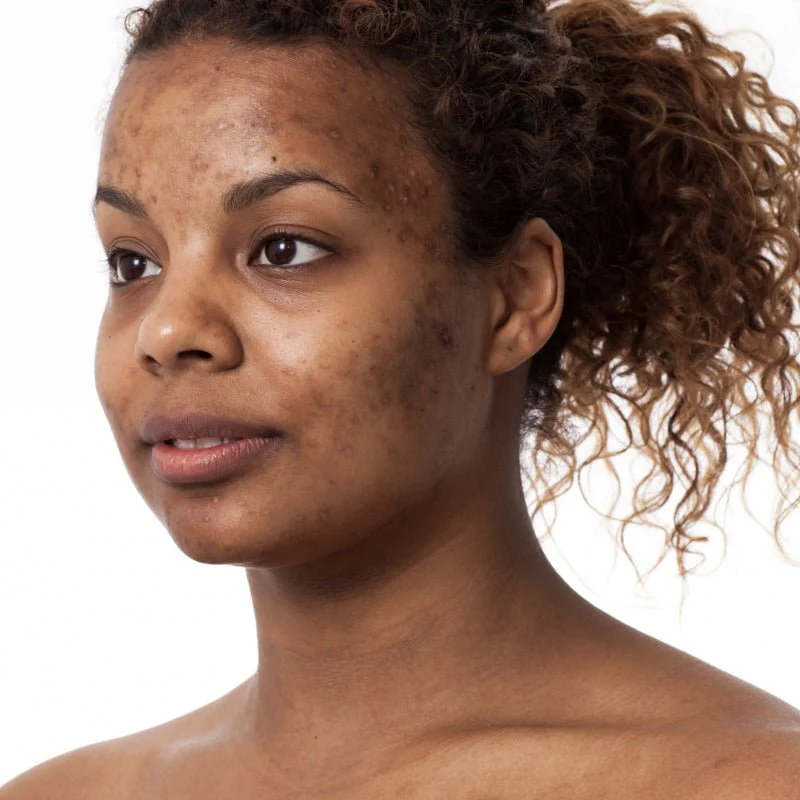
- Uneven tone around the mouth, cheeks, chin, or forehead
For many Black women, the original bump is not the biggest problem. The mark left behind is.
That is why a routine for Black skin cannot focus only on brightening. It also has to focus on keeping the skin calm.
The Real Problem Is Often Inflammation
Hyperpigmentation usually begins with inflammation.
Inflammation can come from acne, shaving bumps, picking, harsh products, burns, rashes, or over-exfoliation. Once the skin is irritated, melanin production may increase in that area. The result is a dark mark that stays after the irritation is gone.
Common triggers include:
- Acne breakouts
- Picking or squeezing pimples
- Ingrown hairs
- Rough scrubs
- Strong peels
- Fragrance-heavy products
- Products that burn or sting
- Overusing acids
- Sun exposure
- Dryness and barrier damage
This is why aggressive routines often backfire.
A strong product may promise fast brightening, but if it irritates your skin, it can create more discoloration instead of fading it.
For Black skin, calm skin is the foundation of even skin.
Why “Fast Brightening” Can Make Things Worse
It is tempting to reach for the strongest brightening serum, exfoliating toner, or peel when dark spots are bothering you.
But faster is not always better.
Many intense products work by increasing exfoliation or targeting pigment. That can be helpful when used correctly, but if the product is too strong, used too often, or layered with other actives, it can irritate the skin.
And irritation can lead to more hyperpigmentation.
Signs your routine is too aggressive:
- Burning after application
- Stinging that lasts
- Redness or soreness
- Peeling that feels raw
- Tight, shiny skin
- More breakouts
- New dark marks
- Skin that suddenly feels sensitive
If that happens, pause the brightening products and go back to basics: gentle cleanser, moisturizer, and sunscreen.
If your routine already feels overwhelming, read How to Build a Skincare Routine Without Using Too Many Products before adding another treatment.
Sunscreen Is Still Required on Black Skin
This is one of the biggest skincare myths: “Black women do not need sunscreen.”
You do.
Even though melanin offers some natural protection, it does not prevent hyperpigmentation from getting darker. If you are trying to fade dark spots, sunscreen is one of the most important steps in the routine.
Without sunscreen, dark marks can:
- Stay visible longer
- Become deeper
- Look more uneven
- Return after fading
- Get darker during sunny months
Sunscreen does not bleach dark spots. It protects your progress.
A simple morning routine can look like this:
- Gentle cleanse or water rinse
- Moisturizer
- Sunscreen
That is enough to start.
If you want a fuller morning structure, use The Perfect Morning Skincare Routine and make sunscreen the last skincare step before makeup.
The White Cast Problem Is Real
One reason many Black women skip sunscreen is because so many formulas leave a gray, purple, or chalky cast.
That is a real problem.
The solution is not to skip sunscreen completely. The solution is to find a formula that works with deeper skin tones.
Look for:
- Sheer sunscreen
- Gel sunscreen
- Invisible sunscreen
- Tinted sunscreen
- Brown-skin-friendly sunscreen
- Chemical sunscreen if your skin tolerates it
- Mineral sunscreen with a tint if you prefer mineral formulas
If a sunscreen makes you look ashy, it is not the right one for you. But there are better options now than there used to be.
The best sunscreen is the one you will actually wear every morning.
Black Skin Needs Barrier Care Before Brightening
If your skin barrier is irritated, your dark spot routine will be harder.
The skin barrier is what helps your face stay comfortable, hydrated, and protected. When it is damaged, your skin may sting, burn, flake, break out, or feel tight.
A weak barrier makes it easier for products to irritate your skin. And for Black skin, irritation can lead to more marks.
Before adding strong treatments, make sure your routine includes:
- A gentle cleanser
- A moisturizer that fits your skin type
- Sunscreen every morning
- No rough scrubs
- No daily exfoliating acids
- No products that burn every time
- No constant product switching
If your skin is dry and dull, start with The Simple Night Routine for Dry, Dull Skin before trying stronger dark spot treatments.
Healthy skin fades marks better than irritated skin.
Not All Hyperpigmentation Is the Same
Another reason Black women need a different approach is that not every dark area is caused by the same thing.
You may be dealing with:
Post-acne marks
These are dark spots left after pimples or breakouts.
Ingrown-hair marks
These often appear on the chin, jawline, neck, bikini area, underarms, or legs.
Melasma
These are larger brown or gray-brown patches, often linked to hormones and sun exposure.
Sun spots
These can appear after long-term sun exposure, especially on the face, chest, and hands.
Irritation marks
These happen after harsh products, burns, rashes, or allergic reactions.
Uneven tone around the mouth
This can be related to dryness, irritation, hormones, friction, or natural pigmentation patterns.
Because the causes are different, the treatment may need to be different too.
A single “dark spot cream” may not solve everything.
The Best Ingredients for Black Skin Hyperpigmentation
You do not need every brightening ingredient at once.
Pick one product, use it consistently, and watch how your skin responds.
Niacinamide
Niacinamide is a good beginner-friendly ingredient because it can support uneven tone, oil control, and the skin barrier. It works well in simple routines and is usually easier to tolerate than stronger actives.
Azelaic Acid
Azelaic acid is useful for uneven tone and blemish-prone skin. It is often a strong choice for post-acne marks because it can support both breakouts and discoloration.
Tranexamic Acid
Tranexamic acid is often used in formulas for stubborn discoloration and uneven tone. It can be helpful when dark marks feel slow to fade.
Licorice Extract
Licorice extract is a gentler brightening ingredient that can work well for sensitive skin types.
Vitamin C
Vitamin C can help brighten dull skin and support a more even look, but not all vitamin C products feel good on sensitive skin. Start slowly if your skin stings easily.
Mandelic Acid
Mandelic acid is a gentler exfoliating acid that may help with dullness and texture. It should still be used carefully, not every night as a beginner.
The key is not finding the strongest ingredient. The key is finding the strongest ingredient your skin can tolerate without irritation.
A Gentle Morning Routine for Black Skin With Hyperpigmentation
Morning is about protection.
Do not make it complicated.
Step 1: Cleanser or water rinse
If your skin is oily, use a gentle cleanser. If your skin is dry or sensitive, a water rinse may be enough.
Step 2: Brightening serum, optional
You can use niacinamide, vitamin C, or another gentle brightening serum here if your skin tolerates it.
Step 3: Moisturizer
Choose a moisturizer based on your skin type. Oily skin may like a gel cream. Dry skin may need something richer.
Step 4: Sunscreen
This is the most important step for hyperpigmentation.
If your skin also looks dull after cleansing, read Why Your Skin Still Looks Dull Even After Washing Your Face because dullness and hyperpigmentation often show up together.
A Gentle Night Routine for Black Skin With Hyperpigmentation
Night is where treatment fits best.
Step 1: Remove makeup and sunscreen
Use a cleansing balm, oil cleanser, micellar water, or gentle makeup remover if needed.
Step 2: Cleanse gently
Your cleanser should leave your face clean but not tight.
Step 3: Apply one treatment product
Choose one: azelaic acid, niacinamide, tranexamic acid, mandelic acid, or another brightening product.
Do not layer everything.
Step 4: Moisturize
A good moisturizer helps reduce irritation and keeps your skin barrier stronger.
Step 5: Seal dry patches, optional
If you have dry spots, apply a small amount of balm only where needed.
If you want a simpler night structure, use New to Skincare? This 5-Step Night Routine Fixes 90% of Skin Problems and make your treatment step the dark spot product.
What Black Women Should Avoid When Treating Hyperpigmentation
Some common “brightening” habits can make the problem worse.
Lemon juice
Lemon juice can irritate the skin and increase sensitivity. It is not a safe dark spot treatment.
Harsh scrubs
Dark spots cannot be scrubbed away. Scrubbing can trigger more inflammation.
At-home chemical peels without caution
Strong peels can burn or irritate the skin, which may leave deeper marks.
Multiple active ingredients at once
Layering too many actives increases the chance of irritation.
Skipping moisturizer
Dry, irritated skin is more likely to react badly to treatments.
Picking pimples
Picking makes inflammation worse and can create darker, longer-lasting marks.
Using products that burn every time
A little tingle is one thing. Burning is a warning.
If your routine hurts, your skin is asking you to stop.
What About Natural Remedies?
Many people try natural remedies for dark spots because they seem gentle.
But natural does not always mean safe.
Be careful with:
- Lemon juice
- Baking soda
- Toothpaste
- Harsh DIY scrubs
- Undiluted essential oils
- Apple cider vinegar
These can irritate the skin, especially on the face. And on Black skin, irritation can leave more hyperpigmentation.
Gentle, boring skincare is often safer and more effective than aggressive DIY treatments.
Hyperpigmentation Around the Mouth
Darkness around the mouth is a common concern for Black women.
It may be caused by:
- Natural pigmentation
- Dryness
- Lip licking
- Irritation from toothpaste
- Friction
- Hormonal factors
- Sun exposure
- Harsh skincare products
Do not scrub the area aggressively. The skin around the mouth can be sensitive, and irritation may make the darkness worse.
Try:
- Gentle cleanser
- Moisturizer around the mouth
- Sunscreen daily
- Avoiding harsh actives around the lips
- Switching products if something stings
- Using brightening products slowly
If the darkness is sudden, severe, or spreading, it is worth seeing a dermatologist.
Hyperpigmentation From Ingrown Hairs
For Black women, ingrown hairs can be a major source of dark spots.
This can happen on the chin, jawline, neck, underarms, bikini line, or legs. The bump heals, but the mark remains.
To prevent new marks, reduce the irritation first.
Helpful habits include:
- Do not pick ingrown hairs
- Avoid dry shaving
- Use a sharp, clean razor
- Shave in the direction of hair growth
- Moisturize after shaving
- Try trimming instead of close shaving if bumps are severe
- Use gentle exfoliation only if tolerated
Brightening products may help the marks, but prevention matters more.
If the bumps keep returning, a dermatologist can help with treatment options.
How Long Does It Take to See Results?
Hyperpigmentation on Black skin can take time.
Fresh marks may begin to soften in several weeks. Older marks can take months. Melasma and stubborn discoloration may take longer and may need professional support.
Your results depend on:
- How deep the pigment is
- How old the mark is
- Whether you wear sunscreen
- Whether new breakouts keep forming
- Whether you pick your skin
- How irritated your skin is
- How consistent your routine is
Take photos every few weeks instead of checking obsessively every day. Progress is often slow and gradual.
When to See a Dermatologist
A dermatologist can help if your dark spots are stubborn, spreading, or connected to ongoing acne or irritation.
Consider professional help if:
- You have painful acne that keeps leaving marks
- Dark patches keep spreading
- You suspect melasma
- A spot changes size, shape, or color
- Your routine keeps irritating your skin
- Over-the-counter products are not helping after several months
- You are unsure what type of pigmentation you have
Professional care can save you time, money, and unnecessary irritation.
The Bottom Line
Black women need a different approach to hyperpigmentation because melanin-rich skin can respond strongly to inflammation.
That means the best routine is not the harshest one.
The best routine is gentle, consistent, protective, and patient.
Focus on:
- Preventing new irritation
- Wearing sunscreen daily
- Using one brightening product at a time
- Moisturizing well
- Avoiding harsh scrubs and DIY treatments
- Not picking breakouts
- Giving your skin time
Hyperpigmentation may be stubborn, but it can improve.
Protect your skin first. Treat it second. Be consistent.
That is the approach that works.


Leave a Reply