
Dark spots and hyperpigmentation are often used like they mean the same thing.
You see a brown mark after a breakout and call it a dark spot. Someone else calls it hyperpigmentation. A skincare product promises to fade “dark marks,” another says it targets “uneven tone,” and suddenly it all sounds like one big confusing skin problem.
The simple answer is this:
Dark spots are a type of hyperpigmentation.
Hyperpigmentation is the bigger category. Dark spots are one way it shows up.
Once you understand the difference, it becomes much easier to choose the right products, avoid making the marks worse, and build a routine that actually helps your skin look clearer over time.
If you already know you struggle with marks that linger after breakouts, this guide pairs well with our full article on how to fade dark spots and hyperpigmentation.
What Is Hyperpigmentation?
Hyperpigmentation means some areas of the skin become darker than the surrounding skin.
This happens when the skin produces extra pigment, also called melanin. Melanin is what gives skin, hair, and eyes their color. When your skin makes more melanin in one area, that area can look brown, tan, gray-brown, reddish-brown, or almost black depending on your skin tone.
Hyperpigmentation can appear as:
- Small dark spots
- Patches of uneven tone
- Brown marks after acne
- Sun spots
- Melasma patches
- Discoloration after irritation
- Darkened areas after cuts, burns, or inflammation
So when people say “hyperpigmentation,” they are usually talking about uneven darkening of the skin.
It is not always dangerous, but it can be frustrating because it often fades slowly.
What Are Dark Spots?
Dark spots are smaller, more specific areas of discoloration.
They may appear after acne, sun exposure, irritation, bug bites, ingrown hairs, or picking at the skin. They usually look like flat marks rather than raised bumps.
Dark spots can show up on the:
- Cheeks
- Forehead
- Chin
- Jawline
- Upper lip
- Neck
- Chest
- Shoulders
- Back
- Hands
For many people, especially those with melanin-rich skin, the pimple may disappear quickly but the mark stays for weeks or months.
That mark is what most people call a dark spot.
The Main Difference Between Dark Spots and Hyperpigmentation
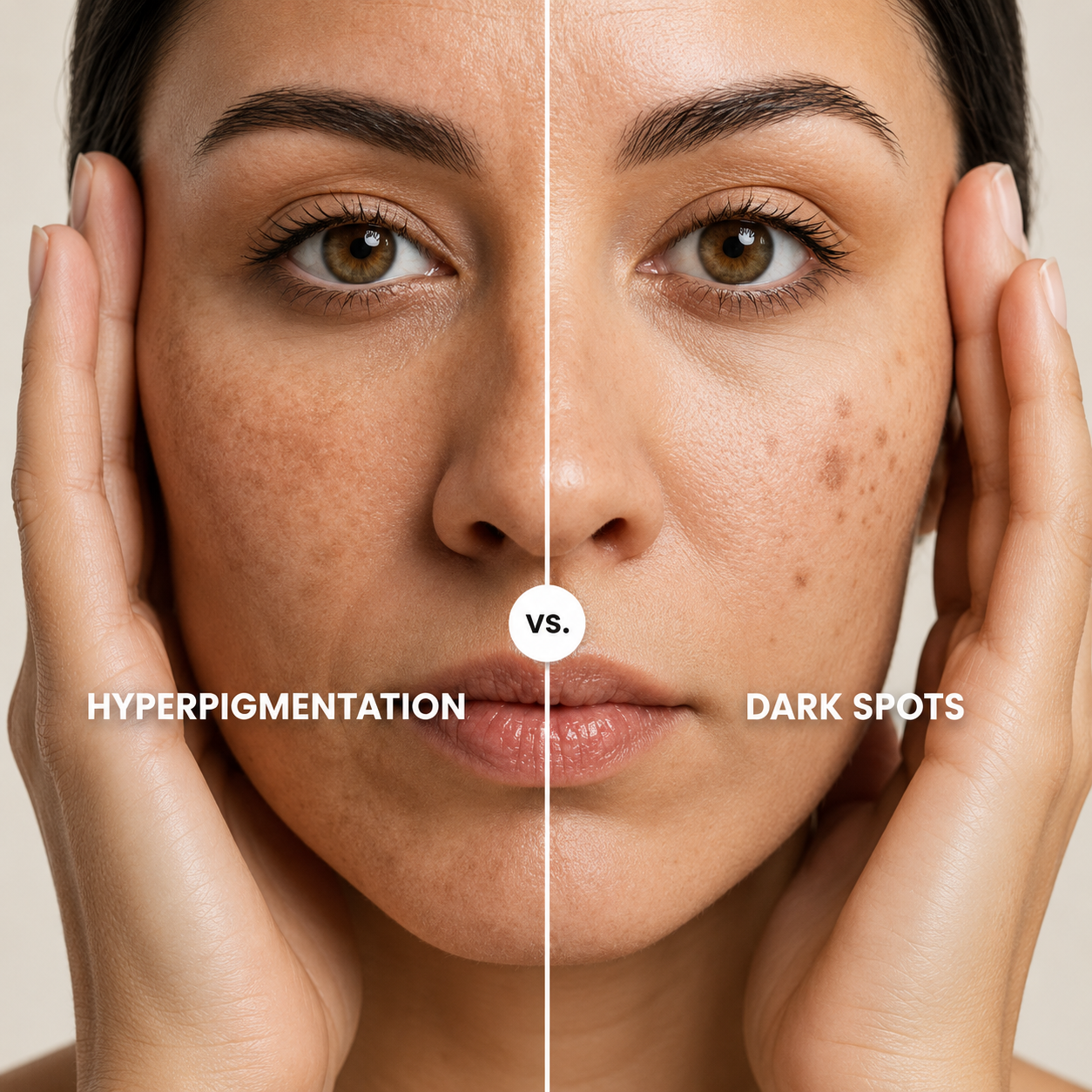
Here is the easiest way to remember it:
Hyperpigmentation is the condition. Dark spots are one form of it.
Think of hyperpigmentation as the umbrella term. Under that umbrella, you can have acne marks, sun spots, melasma, post-inflammatory marks, and other kinds of discoloration.
Dark spots are usually smaller and more targeted. Hyperpigmentation can be broader and patchier.
| Term | What It Means | What It Looks Like |
|---|---|---|
| Hyperpigmentation | General darkening of skin caused by extra pigment | Spots, patches, uneven tone |
| Dark spots | Specific small areas of discoloration | Flat brown or dark marks |
| Post-inflammatory hyperpigmentation | Marks left after acne, irritation, cuts, or inflammation | Brown, red-brown, gray-brown marks |
| Melasma | Patchy pigmentation often triggered by hormones and sun | Larger brown or gray-brown patches |
| Sun spots | Pigmentation caused by long-term sun exposure | Small brown spots, often on exposed areas |
The names matter because not every mark fades the same way.
A tiny acne mark is not always treated the same way as melasma. A sun spot may need different care than discoloration caused by irritation. That is why guessing can lead to wasted money.
Why Do Dark Spots Happen?
Dark spots usually happen after the skin has been irritated, inflamed, or exposed to sun.
The skin responds by producing extra pigment in that area. Once the original problem is gone, the pigment can remain behind.
Common causes include:
Acne
This is one of the most common causes. A pimple becomes inflamed, then leaves a brown or reddish-brown mark after it heals.
Picking or squeezing
Picking makes inflammation worse, which can make the mark darker and slower to fade.
Sun exposure
Sun can deepen existing marks and create new ones. This is why sunscreen matters so much if you are trying to even your skin tone.
Harsh skincare
Strong exfoliants, irritating products, fragrance, or overusing actives can trigger inflammation, especially if your skin is sensitive.
Ingrown hairs
Ingrown hairs around the chin, neck, bikini line, or legs can leave dark marks after the bump heals.
Burns or cuts
Any injury to the skin can leave a darker mark while healing.
If you are not sure whether your skin is dry, oily, combination, or sensitive, it is worth figuring that out before buying brightening products. The wrong routine can irritate your skin and make discoloration harder to manage.
Why Hyperpigmentation Is More Noticeable on Skin of Color
Hyperpigmentation can happen to anyone, but it is often more noticeable and more persistent on deeper skin tones.
That is because melanin-rich skin naturally produces more pigment. When inflammation happens, the skin may respond with a stronger pigment reaction. A breakout, scratch, rash, or harsh product can leave a mark that lasts much longer than the original irritation.
This does not mean darker skin is “bad” or more problematic. It just means the routine needs to be gentle, consistent, and protective.
If you have deeper skin and want a glow-focused routine, start with hydration and barrier care before strong treatments. Our glass skin routine for Black women is a good place to build from because it focuses on radiance without ignoring uneven tone.
The goal is not to attack the skin. The goal is to calm it, protect it, and slowly fade the marks.
Is Every Dark Mark Hyperpigmentation?
Not always.
Some marks may look dark but are not true pigment marks. This is why it helps to pay attention to the color and texture.
Brown or gray-brown marks
These are often pigmentation-related.
Red or purple marks
These may be post-acne redness or lingering inflammation rather than pigment, especially on lighter skin tones.
Raised marks
If the mark is raised, bumpy, itchy, painful, or growing, it may not be a simple dark spot.
Dark patches that spread
Larger patches may be melasma or another form of hyperpigmentation.
Moles that change
A changing mole should not be treated like a dark spot. If a spot changes shape, color, size, or starts bleeding, it needs medical attention.
Skincare can help with many flat dark marks, but it is not the answer for every spot.
Dark Spots vs Acne Scars
This is another common mix-up.
Dark spots and acne scars are not the same thing.
A dark spot is a color change. The surface of the skin is usually flat.
An acne scar is a texture change. The skin may have dents, pits, raised areas, or uneven texture.
You can have both at the same time. For example, a breakout may leave a brown mark and a small indentation. Brightening products may help the brown mark, but they usually will not fully fix deeper texture changes.
If your main issue is color, you are likely dealing with dark spots or hyperpigmentation.
If your main issue is texture, you may need a different approach.
Why Washing Your Face Does Not Remove Dark Spots
This is where many people get frustrated.
You wash your face every day. Your skin feels clean. But the dark spots are still there.
That is because hyperpigmentation is not dirt. It is pigment inside the skin. Cleansing can remove surface buildup, oil, makeup, and sunscreen, but it cannot simply wash pigment away.
If your skin looks dull even after cleansing, the issue may be dead skin buildup, dehydration, dryness, or uneven tone rather than poor washing. This article on why your skin still looks dull even after washing your face breaks down the most common reasons.
To fade dark spots, you need consistency, sunscreen, gentle exfoliation if tolerated, and ingredients that support a more even-looking tone.
Why Sunscreen Matters More Than People Think
If you are trying to fade dark spots but skipping sunscreen, your routine is working against itself.
Sun exposure can make dark spots darker and keep them around longer. Even if you use brightening serums at night, unprotected daytime exposure can slow your progress.
This is why sunscreen belongs in every morning skincare routine.
A simple morning routine can look like:
- Gentle cleanse or rinse
- Moisturizer
- Sunscreen
If your morning routine is inconsistent, start with this simple morning skincare routine and make sunscreen the non-negotiable final step.
You do not need a complicated routine to begin. You need a consistent one.
Ingredients That Can Help Dark Spots Look Better
Brightening products can help, but they work slowly. The best results usually come from combining the right ingredients with sunscreen and a gentle routine.
Common ingredients used for uneven tone include:
Niacinamide
A beginner-friendly option that can help with uneven tone, oiliness, and barrier support.
Vitamin C
Often used for dullness and brightening, though some sensitive skin types may need gentler forms.
Azelaic acid
Helpful for uneven tone and blemish-prone skin. It is often a good option for people dealing with post-acne marks.
Tranexamic acid
Used in many modern brightening formulas for discoloration and uneven tone.
Licorice extract
A gentle brightening ingredient often found in serums and moisturizers.
Mandelic acid
A gentle exfoliating acid that may be easier for some skin types to tolerate.
Lactic acid
Can help with dullness and texture, but dry or sensitive skin should use it carefully.
Do not use all of these at once.
Pick one product and give it time.
What Makes Hyperpigmentation Worse?
Sometimes the fastest way to improve dark spots is to stop doing the things that keep triggering them.
Common mistakes include:
Picking pimples
This can turn a small breakout into a long-lasting dark mark.
Over-exfoliating
Too much exfoliation can irritate the skin and create more discoloration.
Skipping sunscreen
This can make existing marks darker.
Using harsh brightening products
Strong products can backfire if they irritate your skin.
Changing products too often
Dark spots take time. Switching every week makes it hard to know what works.
Treating all skin tones the same
Skin of color often needs extra attention to irritation because inflammation can leave marks behind.
If your skin stings, burns, flakes heavily, or feels raw, pause strong treatments and focus on barrier repair.
A Simple Routine for Dark Spots and Hyperpigmentation
You do not need a 12-step routine.
Start with this.
Morning
- Gentle cleanser or rinse
- Hydrating serum, optional
- Moisturizer
- Sunscreen
Night
- Remove makeup or sunscreen
- Gentle cleanser
- Brightening serum or treatment
- Moisturizer
If your skin is sensitive, use the brightening treatment only a few nights a week at first.
If your skin is dry or dull, focus on moisture first before adding strong actives. A damaged-feeling skin barrier can make dark spots harder to manage because irritated skin is more likely to mark.
How Long Do Dark Spots Take to Fade?
Dark spots do not fade overnight.
Some marks may improve in a few weeks. Others can take months, especially if they are deeper, older, or repeatedly exposed to sun.
What affects fading time?
- Your skin tone
- How deep the pigment is
- Whether you wear sunscreen
- Whether you keep getting new breakouts
- Whether you pick or irritate the skin
- The products you use
- How consistent your routine is
The most frustrating part is that dark spots often fade gradually. You may not notice progress day to day, but photos every few weeks can help you see the difference.
When to See a Dermatologist
Most flat dark spots after acne or irritation are not urgent, but some spots should be checked.
See a dermatologist if:
- A spot changes size, shape, or color
- It bleeds, crusts, or hurts
- It grows quickly
- It looks very different from your other spots
- You have sudden widespread discoloration
- Over-the-counter products make your skin worse
- You suspect melasma and it keeps returning
- You are dealing with severe acne that keeps leaving marks
A dermatologist can help you understand whether you are dealing with simple post-inflammatory hyperpigmentation, melasma, acne scarring, or something else.
The Bottom Line
Dark spots and hyperpigmentation are connected, but they are not exactly the same thing.
Hyperpigmentation is the bigger category. Dark spots are one common type of hyperpigmentation.
Dark spots are usually small, flat marks left behind after acne, irritation, sun exposure, or injury. Hyperpigmentation can also include larger patches, melasma, sun spots, and uneven tone.
The best approach is gentle and consistent:
Do not pick.
Do not over-exfoliate.
Use sunscreen every morning.
Choose one brightening product at a time.
Moisturize well.
Give your skin time.
Dark spots may be stubborn, but they are not hopeless. With the right routine, they can gradually become less noticeable and your overall skin tone can look clearer, smoother, and more even.


Leave a Reply