
You already know that a consistent nighttime routine works wonders while you sleep. But what about the morning?
Your skin's needs change when the sun comes up. During the day, your focus shifts from repair to protection. The right morning routine sets you up for healthy, glowing skin that can handle whatever the day throws at it—pollution, blue light, stress, and yes, UV rays.
I spoke with Dr. Marin Lock, board-certified dermatologist and founder of The Budget Dermatologist, to get her exact morning routine. The best part? It is simple, affordable, and backed by science.
Here is her 4-step morning skincare routine for anti-aging and overall skin health.
Why Morning Matters
Before we dive into the steps, let's talk about why your morning routine deserves attention.
During the night, your skin is in repair mode—increasing cell turnover and absorbing treatments. But during the day, your skin switches to defense mode. It is constantly fighting environmental aggressors: UV rays, pollution, and free radicals that break down collagen and cause premature aging.
A strategic morning routine does two things:
- Prepares your skin to absorb protective ingredients
- Shields your skin from daily damage
If you are new to building a routine, start with our beginner-friendly 5-step night routine first. Once you have that down, layer in this morning protocol.
Now, let's get into it.
Step 1: Glycolic Acid Cleanser (The Prep)
Why: Most people reach for a basic cleanser in the morning. Dr. Lock recommends something smarter: a glycolic acid cleanser.
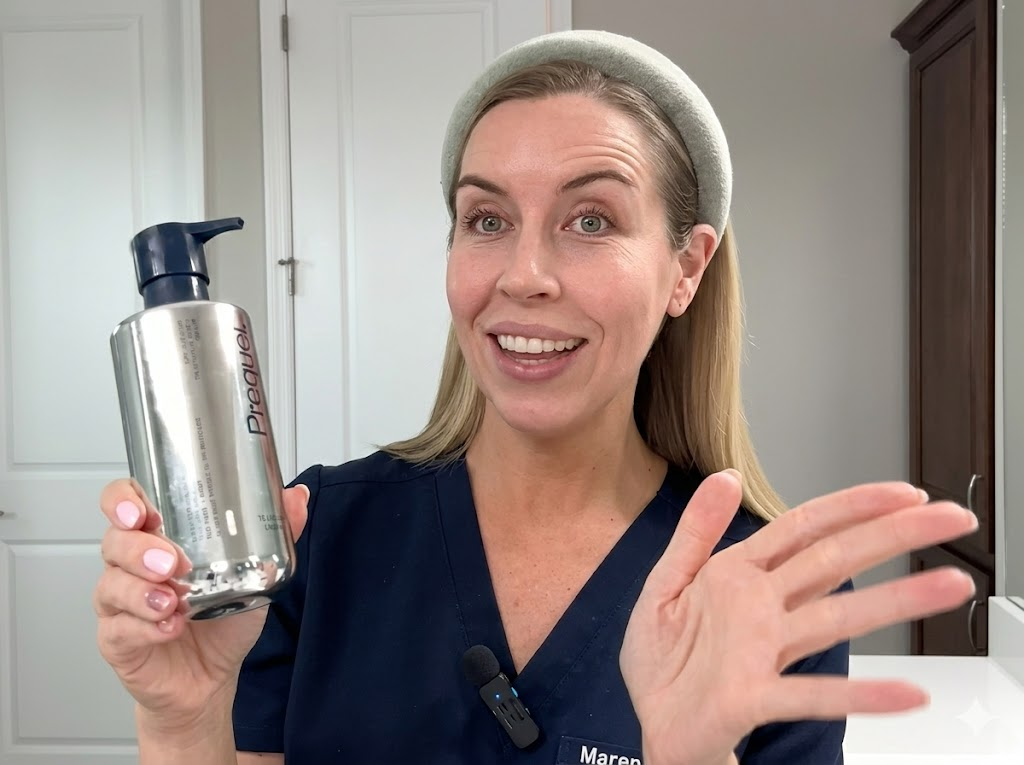
Glycolic acid is an alpha-hydroxy acid (AHA) that gently exfoliates the top layer of dead skin cells. But in the morning, it serves a specific purpose: lowering the pH of your skin to help the next step absorb better.
What it does:
- Removes dead skin cells that accumulated overnight
- Creates a smooth, even canvas
- Lowers skin pH so vitamin C can penetrate effectively
Dr. Lock's picks:
- Prequel Gleanser (5% glycolic acid)
- L'Oreal Revitalift Brightening Cleanser (3.5% glycolic acid, under $15)
Who can use it: This works for most skin types, including sensitive and rosacea-prone skin. If you are highly reactive, start with the lower concentration option.
How to use: Wet your face, massage gently for 30-60 seconds, and rinse with lukewarm water. Pat dry.
Step 2: Vitamin C Serum (The Protector + Brightener)
Why: If you only add one serum to your morning routine, make it vitamin C. Dr. Lock calls it a "crucial ingredient in a well-rounded anti-aging routine" for two powerful reasons.
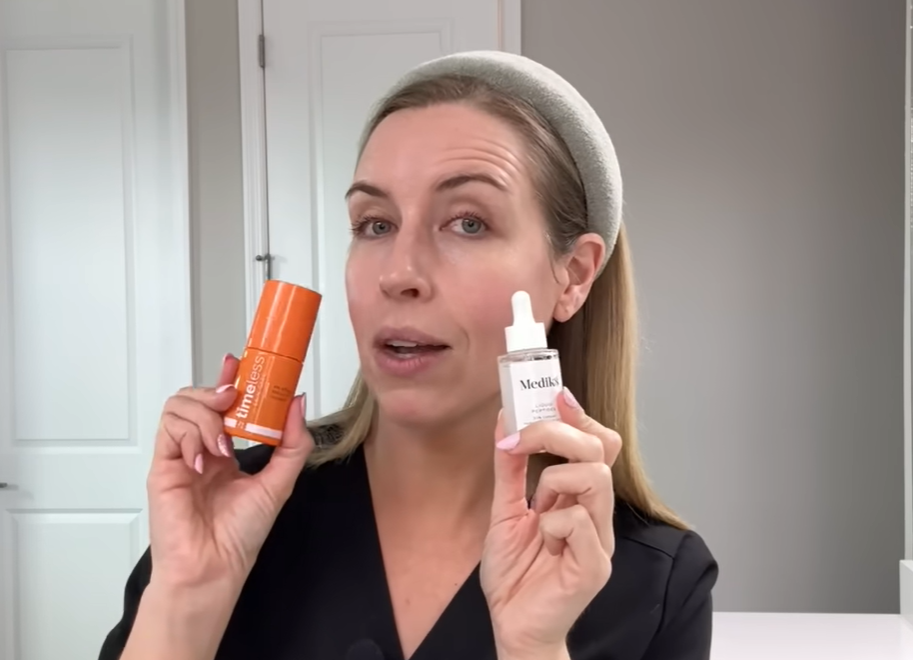
Reason 1: It supercharges your sunscreen
Vitamin C is a powerful antioxidant. When you apply it under sunscreen, it scavenges free radicals—those unstable molecules created by UV exposure that attack and break down collagen. Think of it as an extra layer of defense that keeps your collagen intact longer.
Reason 2: It fights dark spots and fine lines
Vitamin C inhibits melanin production, which helps fade hyperpigmentation over time. It also boosts collagen synthesis, smoothing fine lines and brightening your overall complexion.
Dr. Lock's pick:
- Timeless 10% Vitamin C + E + Ferulic Acid Serum — This contains the same "trifecta" of ingredients as a popular $160+ serum, but costs around $13-20 depending on sales.
How to use: Apply a few drops to clean, dry skin. Gently pat—don't rub—to avoid irritation.
Pro tip: Vitamin C absorbs best at a slightly lower pH, which is exactly why Dr. Lock pairs it with the glycolic acid cleanser. Smart, right?
Step 3: Moisturizer (The Hydrator)
Why: Hydrated skin is healthy skin. But Dr. Lock keeps this step simple.
"You guys keep this step simple," she says. "We don't have to overthink it. We don't have to overspend on this step. We just need moisture in our skin."
What to look for:
- Lightweight, non-greasy formulas
- Hydrating ingredients like hyaluronic acid
- Barrier-supporting ingredients like ceramides
Dr. Lock's pick:
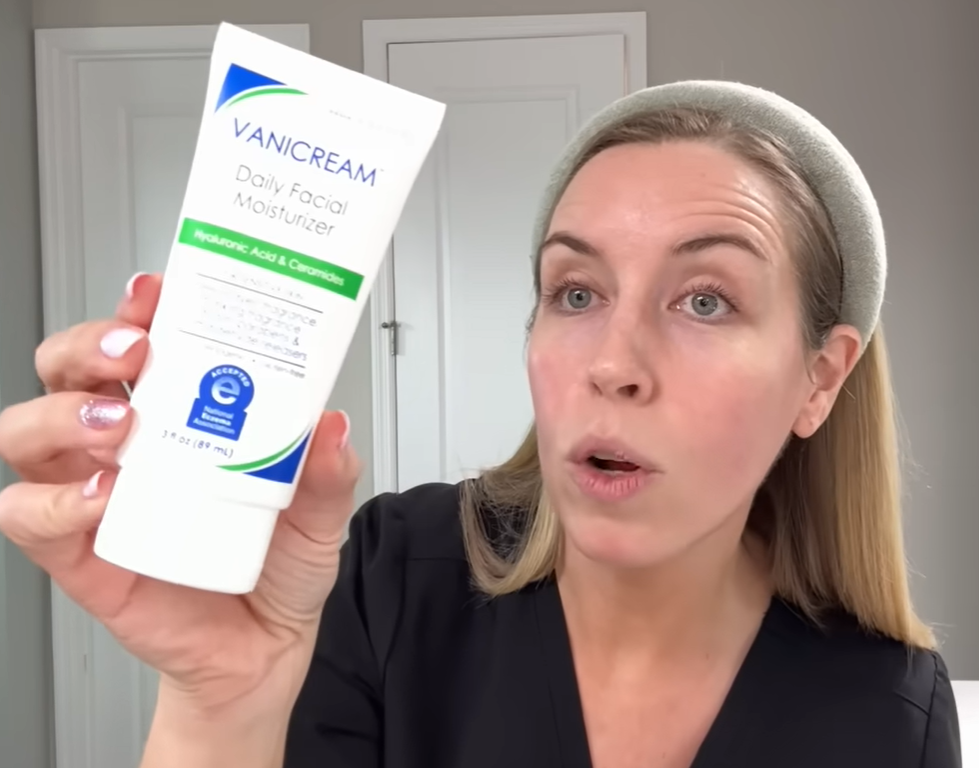
- Vanicream Daily Facial Moisturizer — Under $15, contains hyaluronic acid and ceramides, lightweight enough for makeup, and has the National Eczema Association seal of approval.
Who can use it: All skin types, including sensitive and eczema-prone.
How to use: Apply a pea-sized amount to damp skin and gently massage until absorbed.
Step 4: Sunscreen (The Non-Negotiable)
Why: If you take one thing away from this article, let it be this: sunscreen is the most important anti-aging product you will ever use.
Dr. Lock puts it plainly: "If you are not using your sunscreen every day, you are not going to be getting the results that you want from your anti-aging ingredients and your routine."
What it does:
- Prevents UV damage that causes wrinkles, dark spots, and skin cancer
- Protects all the work your other products are doing
- Keeps collagen intact longer
Dr. Lock's pick:
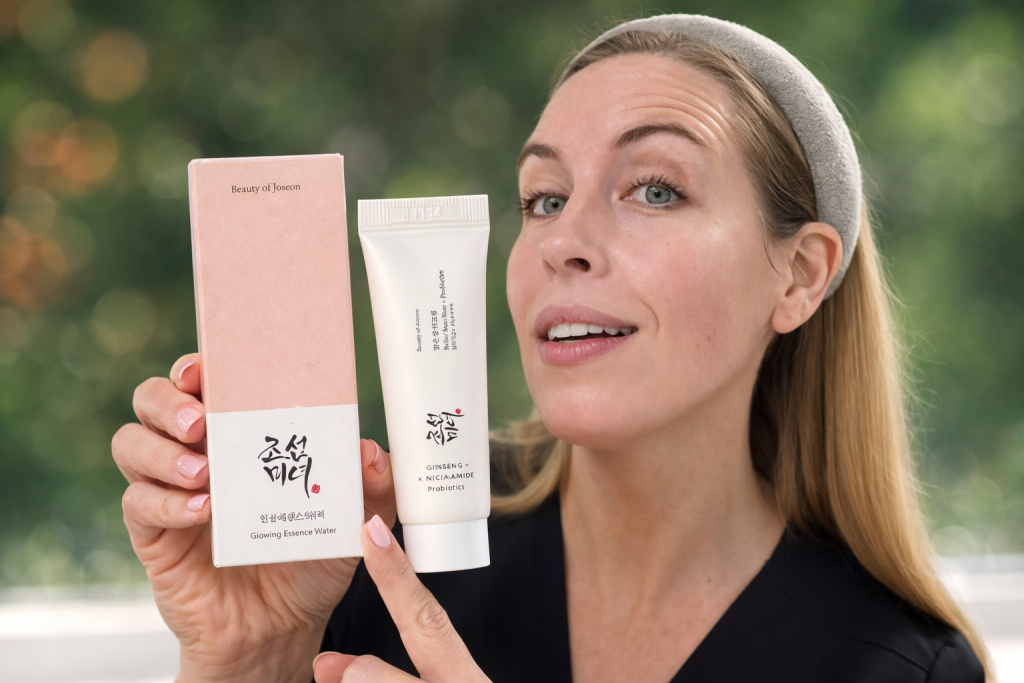
- Beauty of Joseon Relief Sun: Rice + Probiotic SPF 50+ — A tinted mineral sunscreen (zinc oxide based) that comes in multiple shades, feels lightweight like a serum, and costs around $10-12.
How to use: Apply as the final step of your morning routine. Use enough to cover your entire face and neck (about a nickel-sized amount). Reapply throughout the day if you are outdoors.
Step 5 (Optional): Eye Product
Dr. Lock adds an optional fifth step: an eye product. She personally uses a vitamin C eye balm to target dark circles, fine lines, and aging around the delicate under-eye area.
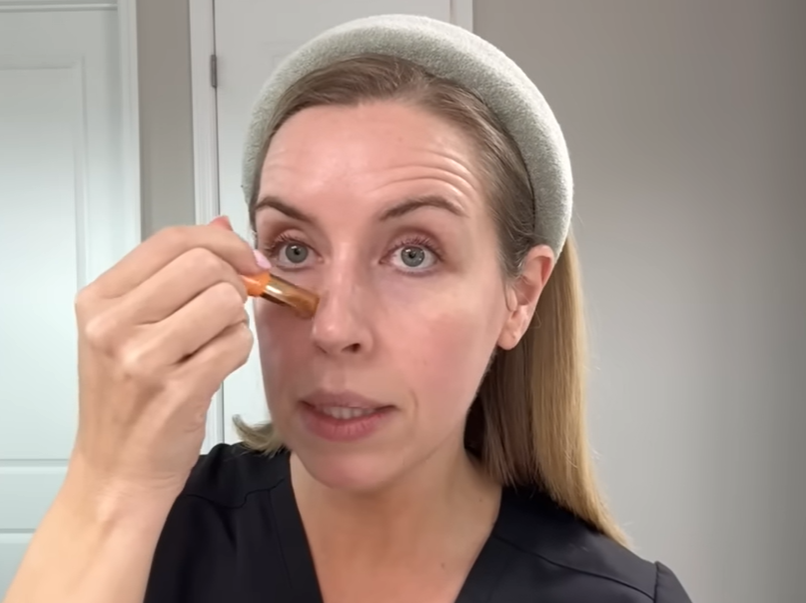
If you choose to add this: Apply after your vitamin C serum but before moisturizer. Gently pat—never rub—around the eye contour.
The Shortcut: When to Skip Moisturizer
Here is a pro tip from Dr. Lock: some days you might not need a separate moisturizer at all.
"Some people don't even need a moisturizer in the morning because so many sunscreens these days are super well-formulated and moisturizing in and of themselves."
If your sunscreen feels hydrating enough on its own, you can simplify your routine to three steps:
- Glycolic acid cleanser
- Vitamin C serum
- Sunscreen
That is it. Simple, effective, and affordable.
What About Nighttime?
This morning routine pairs perfectly with a nighttime routine focused on repair. Dr. Lock recommends:
- Retinoids (on nights your skin tolerates them)
- Peptide serums (on alternate nights or even layered, since peptides play well with most ingredients)
If you are not using a retinoid yet, start with our beginner night routine and work your way up.
The Takeaway
You do not need a 10-step routine or expensive products to have healthy, glowing skin. Dr. Lock's morning routine proves that:
- Step 1: Glycolic acid cleanser (preps for absorption)
- Step 2: Vitamin C serum (protects + brightens)
- Step 3: Moisturizer (hydrates)
- Step 4: Sunscreen (the most important step)
Keep it simple. Keep it consistent. And always wear your sunscreen.
Once your skin is prepped and glowing, learn exactly where to place your makeup with our bronzer, blush, and contour placement guide . A smooth canvas deserves beautiful makeup application.

Leave a Reply