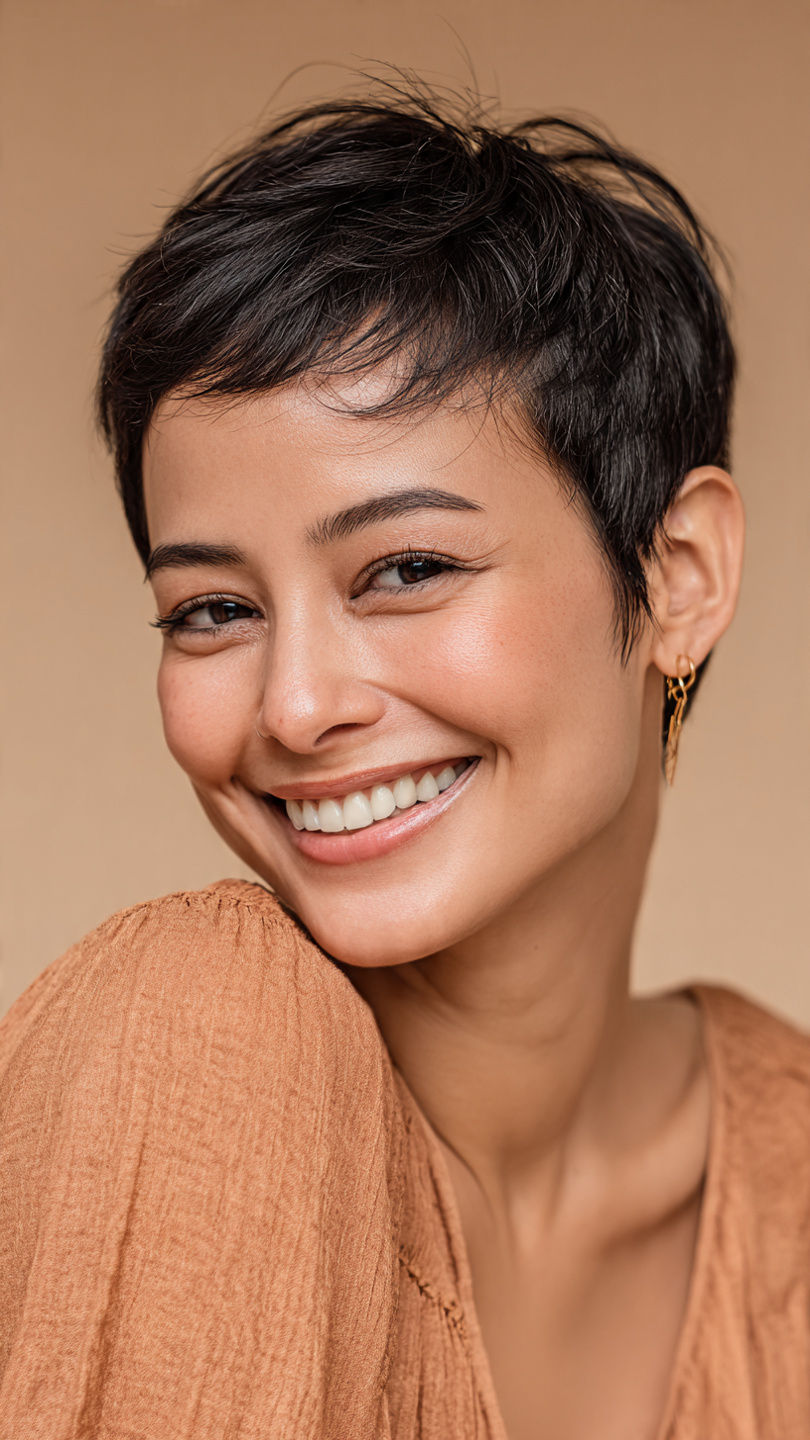
If you have fine, flat hair, you’ve likely heard the same myth over and over: “Cut it short, and you’ll have even less to work with.” The truth is exactly the opposite. A well-executed pixie cut removes excess weight that pulls hair down, allowing fine strands to spring up and appear fuller. The key lies in the cut—strategic layers, texture, and shape can create the illusion of thickness that long hair simply cannot achieve. In this article, we’ll explore 12 smart pixie variations designed specifically to add volume, movement, and attitude to fine, flat hair. Whether you want soft and romantic or edgy and modern, there’s a pixie here for you.
12 Well-Structured Cuts
1. The Textured Cropped Pixie
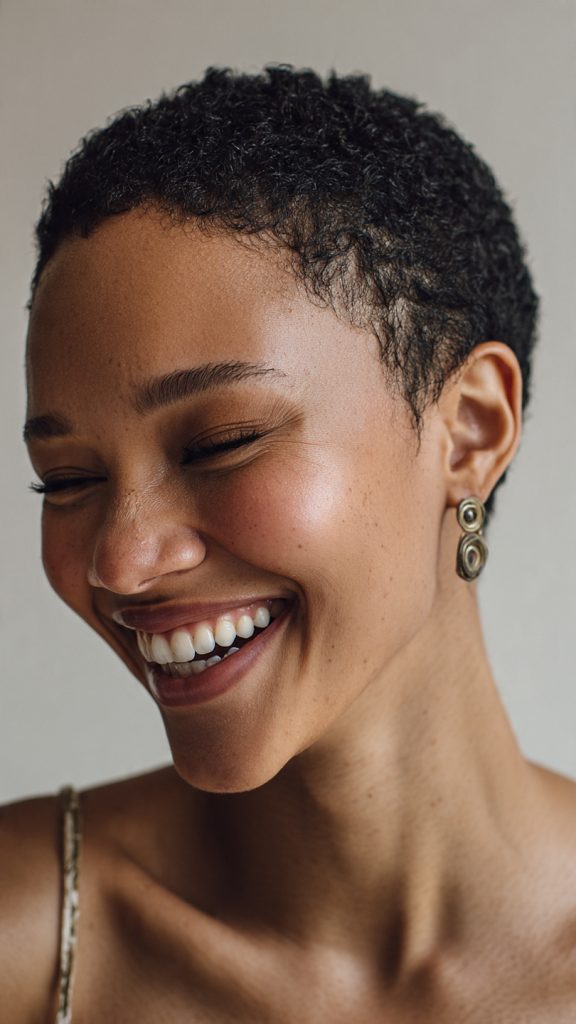
- Why it works: Ultra-short length removes maximum weight. Texturizing scissors create “grip” between strands, preventing clumping.
- Styling tip: Rub a pea-sized amount of matte paste between your fingers and scruff through dry hair for piece-y separation.
2. The Asymmetrical Pixie
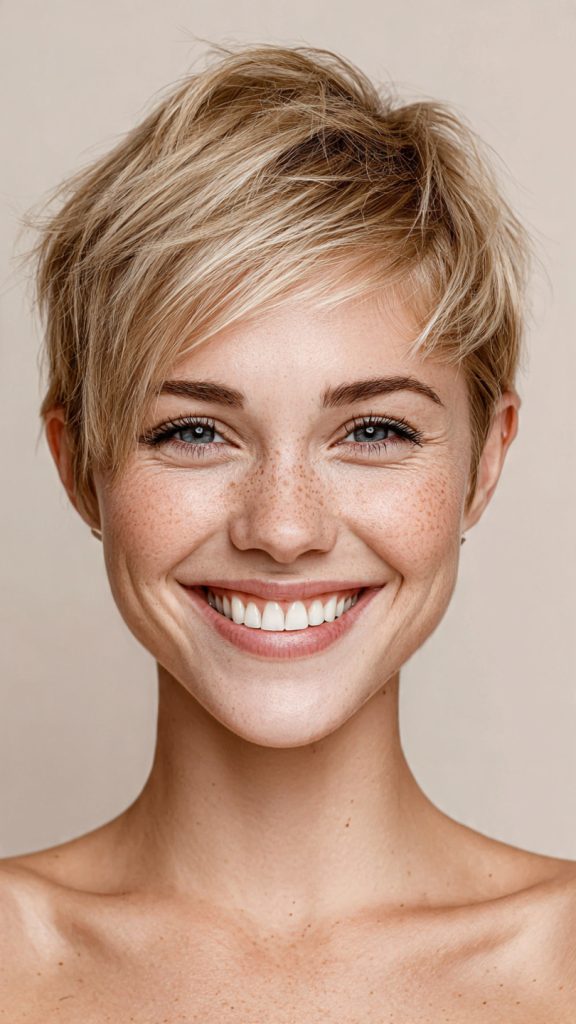
- Why it works: One side longer than the other tricks the eye into seeing depth and movement. The imbalance distracts from flatness.
- Styling tip: Keep the longer side slightly wispy, not blunt, to maintain softness.
3. The Tousled Pixie With Micro-Bangs
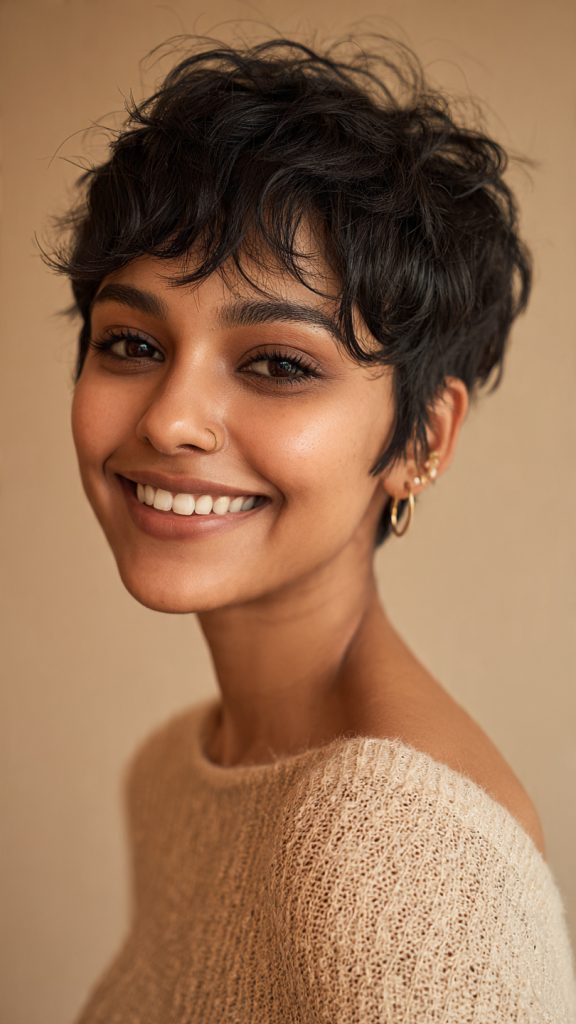
- Why it works: Micro-bangs (above the eyebrows) add a focal point, while a disheveled top layer creates lift at the crown without backcombing.
- Styling tip: Use a small round brush on the top section while blow-drying forward, not backward.
4. The Side-Swept Pixie With Undercut
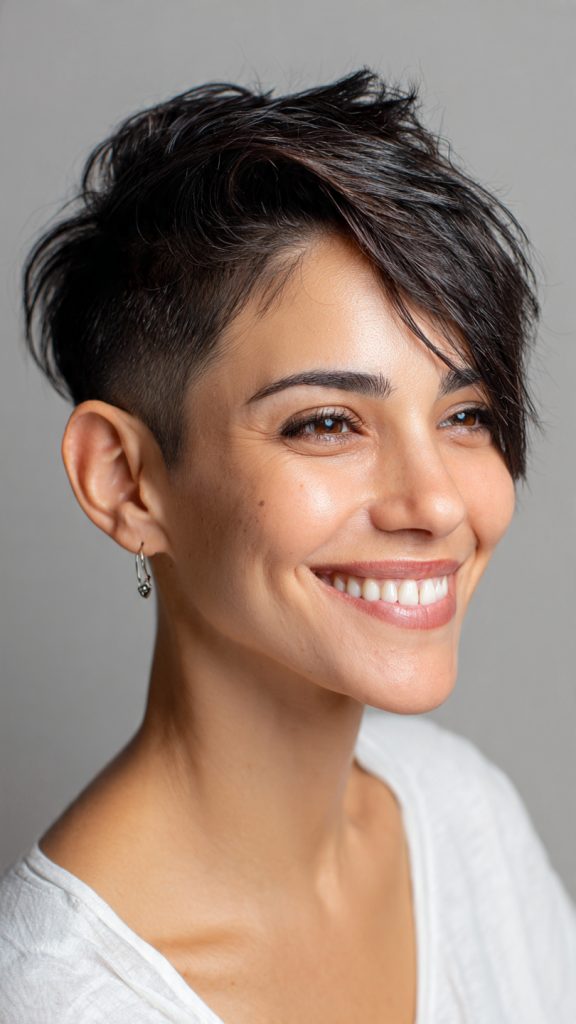
- Why it works: Shaving or closely clipping the nape and one side reduces density, allowing the top layer to float freely and look thicker.
- Styling tip: Sweep the long top piece across the forehead at a 45-degree angle to hide any thin spots.
5. The Finger-Waved Pixie
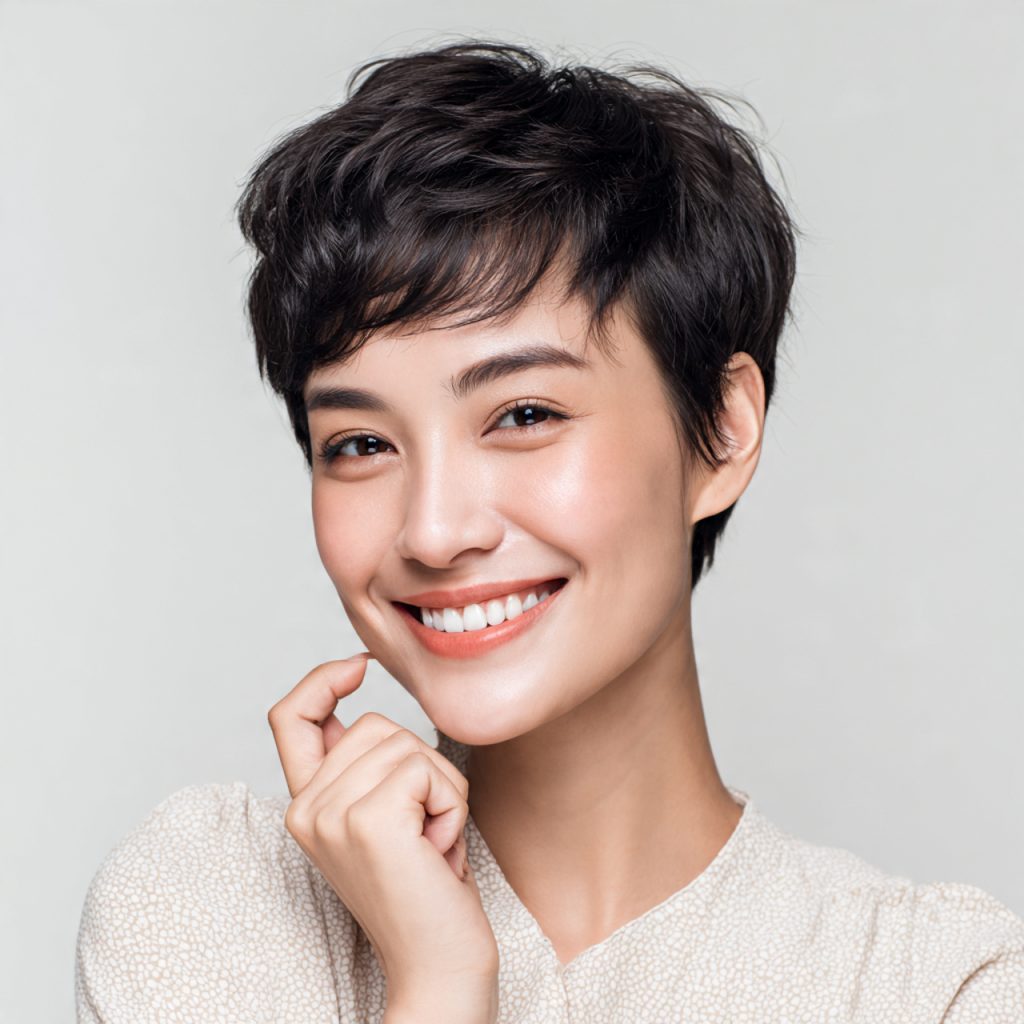
- Why it works: Vintage finger waves sculpt fine hair into structured “S” shapes that reflect light, creating the illusion of body.
- Styling tip: Apply a lightweight mousse to damp hair, then pinch waves into place and let air-dry or use a low-heat dryer.
6. The Spiky Pixie
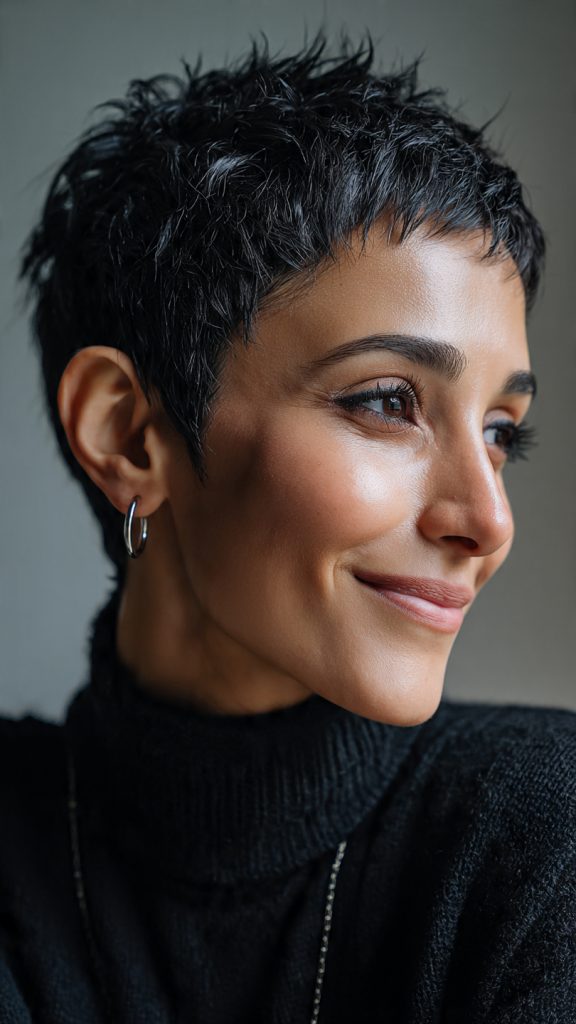
- Why it works: Short, upright spikes eliminate any chance of flatness. Each spike acts as a tiny column of volume.
- Styling tip: Use a strong-hold but lightweight spray wax—avoid gels that can weigh fine hair down.
7. The Pixie With Long, Wispy Crown Layers
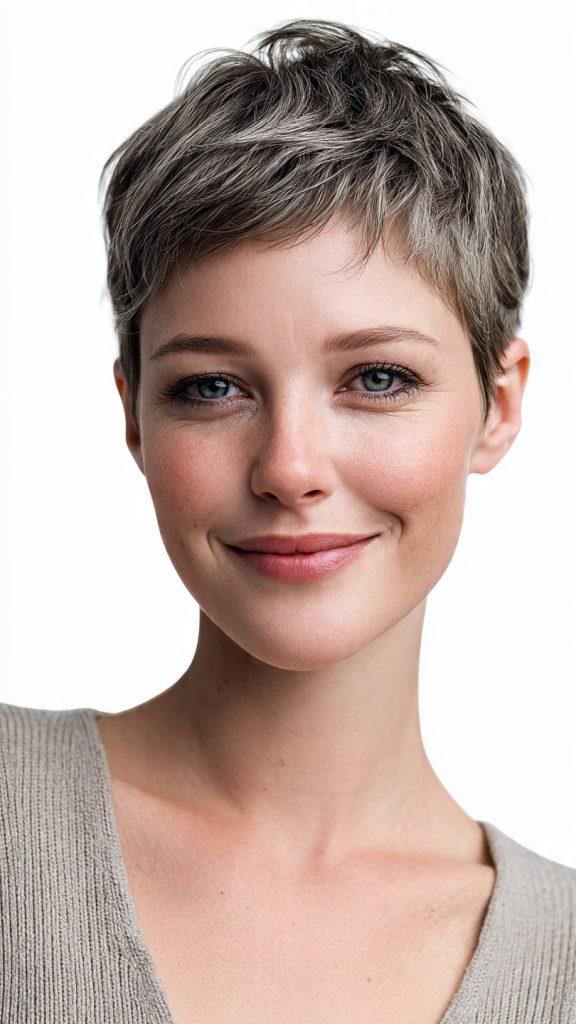
- Why it works: Keeping some length on top while taking the sides and back very short creates a height-to-density ratio that flatters fine textures.
- Styling tip: Blow-dry the crown section straight up using a concentrator nozzle, then let the ends fall naturally.
8. The Choppy Pixie With Razored Ends
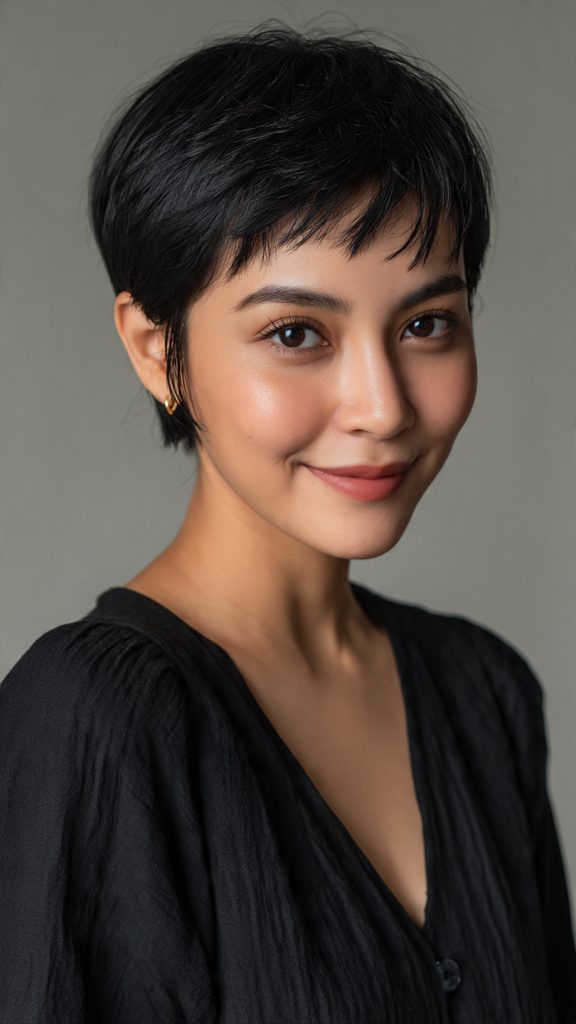
- Why it works: Razor-cutting (not scissors) frays the ends, making each strand look airier and less blunt. Chopped layers prevent flat spots.
- Styling tip: Avoid heavy serums; instead, use a volumizing powder at the roots for all-day lift.
9. The Curled-Under Pixie
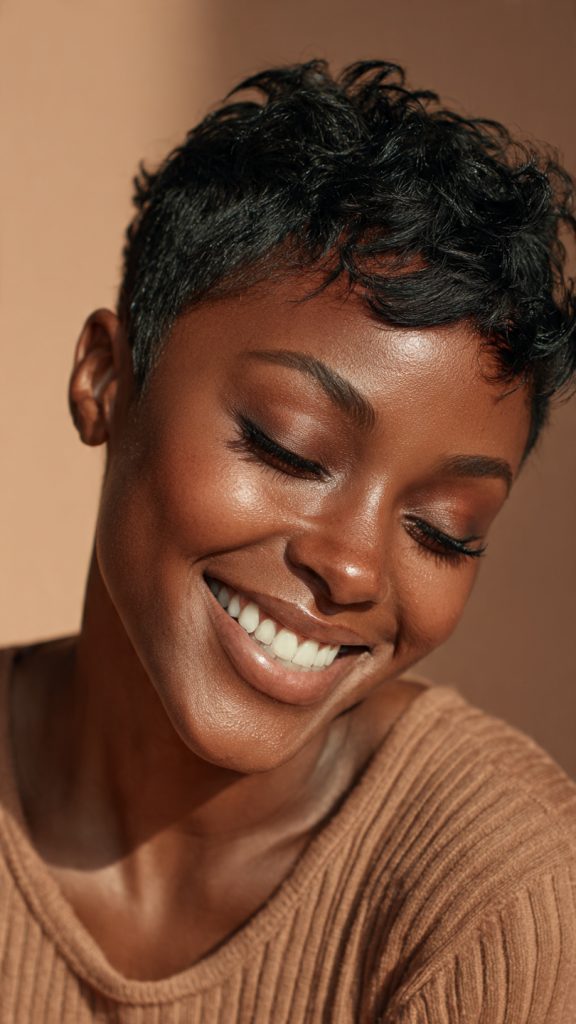
- Why it works: A subtle curl or bend at the ends creates a rounded silhouette that mimics thicker hair. Fine hair holds small curls well.
- Styling tip: Wrap ½-inch sections around a tapered curling iron for just 5 seconds, then finger-comb gently.
10. The French Girl Pixie (Cropped Sides, Fuller Top)
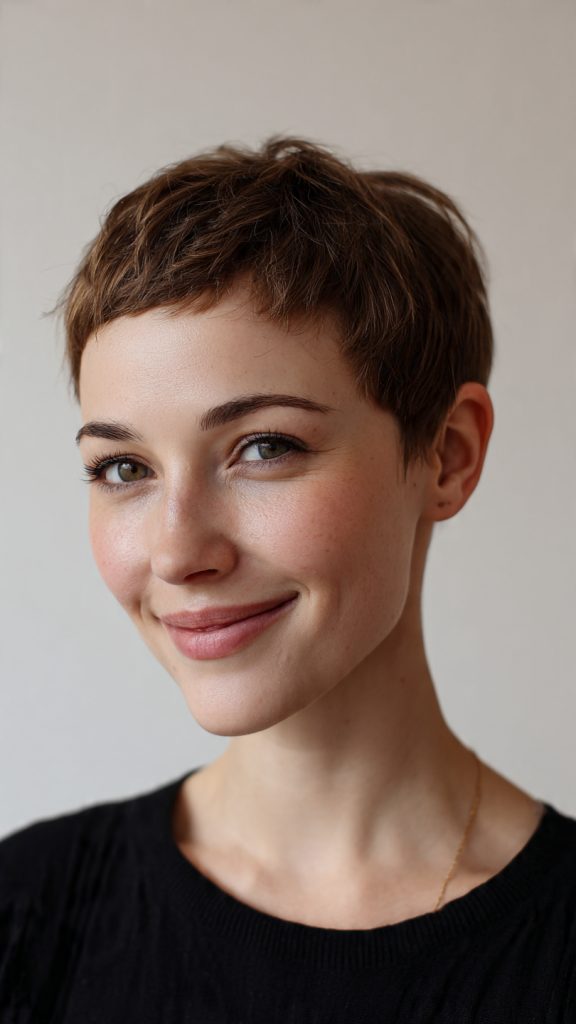
- Why it works: This classic shape keeps the perimeter close to the head while the top is cut in disconnected, soft layers. It’s low-maintenance but high-impact.
- Styling tip: Air-dry with a salt spray, then tuck one side behind an ear for effortless texture.
11. The Pixie Bob Hybrid (Pixie Length in Back, Bob Length in Front)
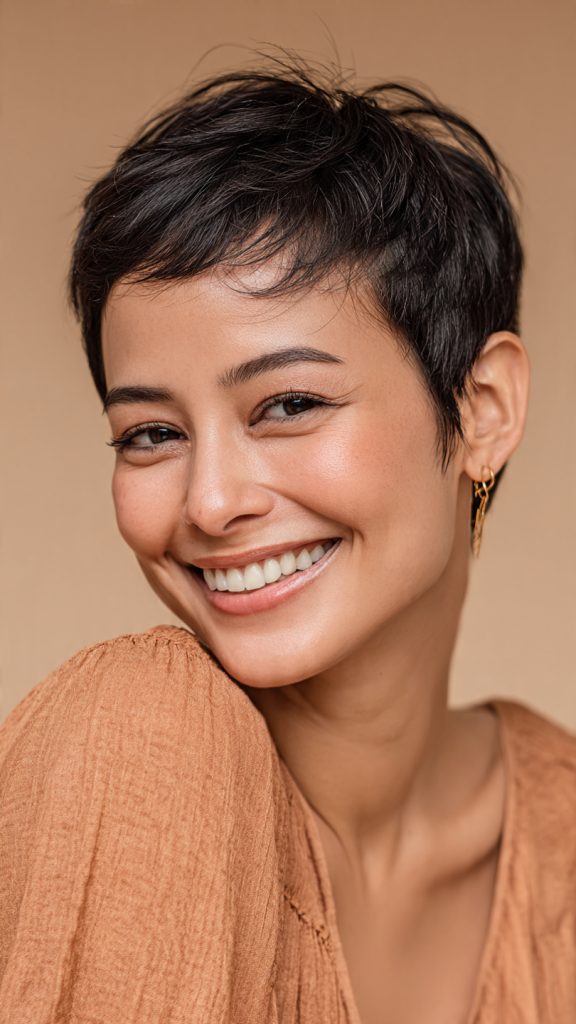
- Why it works: The gradual lengthening toward the face adds weight only where you want it (front), while the back stays light. Great for transitioning from longer hair.
- Styling tip: Blow-dry with a flat paddle brush to keep the front pieces smooth, then rough-dry the back.
12. The Disconnected Undercut Pixie
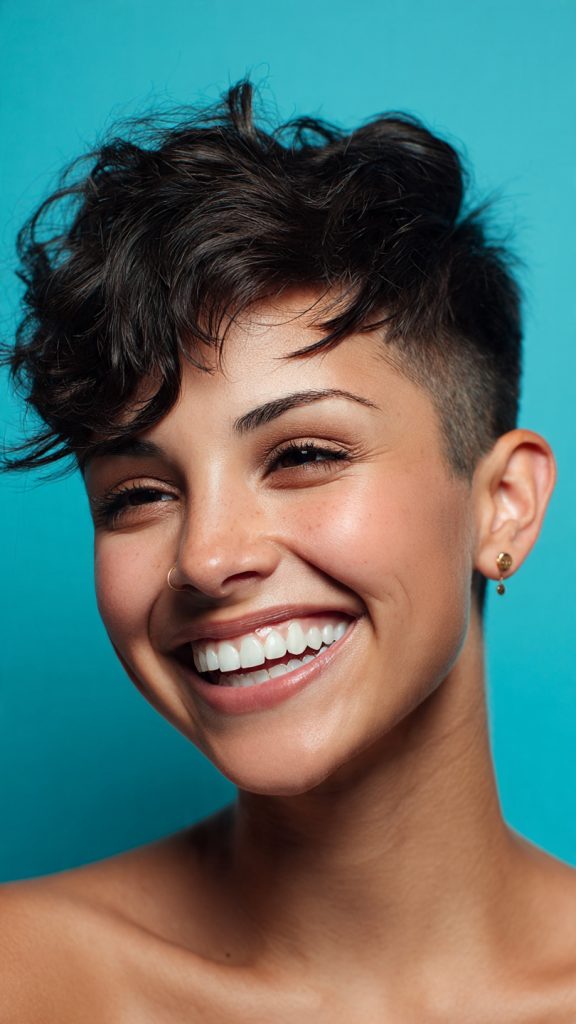
- Why it works: An undercut removes 50% of your hair’s bulk from underneath, so the top layer instantly lifts. The “disconnected” look means no blending—sharp lines add modern volume.
- Styling tip: Use a dry texture spray only on the top section; keep the undercut clean-shaven for contrast.
Before You Book: What to Tell Your Stylist
Walking into a salon with fine, flat hair can feel intimidating, but the right consultation makes all the difference. Use these exact phrases to ensure you leave with a pixie that works with your texture, not against it.
- “I want weight removed from the interior.” – This tells your stylist to use point-cutting or slicing techniques, not blunt scissors.
- “Keep the perimeter soft, not harsh.” – A blunt outline will make fine hair look thinner. Soft, broken edges create volume.
- “Elevate the crown more than the nape.” – This builds height where fine hair flattens most easily.
- “No heavy products after cutting.” – Ask for a lightweight mousse or spray finish, not creams or oils.
Also, bring 2–3 reference photos from this article. Visuals communicate better than words alone.
Daily Styling Routine for Fine, Flat Pixies
A great cut is only half the story. Follow this 5-minute routine to maintain volume from morning to night.
| Step | Product Type | Action |
|---|---|---|
| 1 | Volumizing mousse (golf-ball sized) | Apply to damp roots only, not ends |
| 2 | Heat protectant spray | Mist lightly over entire head |
| 3 | Blow-dry upside down | 30 seconds on warm, focusing on the crown |
| 4 | Small round brush | Lift sections at the root while drying forward |
| 5 | Dry texture spray or powder | Target only the roots; let sit 30 seconds, then finger-scruff |
| 6 | Flexible hairspray | Light mist from 12 inches away – no hard helmets |
Avoid: Conditioner on the roots, heavy oils, gels, or cream-based pomades. These collapse fine hair within an hour.
Product Picks That Won’t Weigh You Down
Not all volumizing products are created equal. For fine, flat hair in a pixie cut, look for these keywords on labels: weightless, root-lifting, powder, spray, mousse, dry texture. Avoid anything that says nourishing, repairing, smoothing, or oil-infused.
Here are proven product types that work:
- Best mousse: Lightweight, alcohol-free, with “volume” as the first claim.
- Best dry shampoo: Powder-based (not aerosol) for grip without residue.
- Best texture spray: Salt-free or low-salt options to avoid drying out fine strands.
- Best finishing touch: Matte paste or clay (use half a pea size, rubbed warm between fingers).
When in doubt, try travel sizes first. Fine hair reacts differently than thick hair, and what works for a friend may not work for you.
Common Mistakes to Avoid
Even with a perfect pixie, these errors will flatten your style fast.
| Mistake | Why It Hurts | Fix |
|---|---|---|
| Skipping trims | Ends become heavy and pull the cut down | Trim every 4–6 weeks |
| Over-washing | Strips natural grip, making hair too slippery | Wash every other day or less |
| Using a boar bristle brush | Smoothes hair flat against the scalp | Use a small plastic or mixed-bristle round brush instead |
| Sleeping without protection | Friction flattens the crown | Sleep on a silk pillowcase or wrap hair in a silk scarf |
| Touching hair constantly | Oils from fingers transfer and weigh strands down | Set with spray and leave it alone |
Who Should Avoid a Pixie? (Honest Advice)
A pixie cut is beautiful, but it’s not for everyone. Consider these factors before making the chop:
- If you have a cowlick that you hate: A pixie will expose it, not hide it. Work with a stylist who knows how to cut with your cowlick.
- If you cannot commit to frequent trims: Pixies need shaping every 4–6 weeks. Letting it grow out often looks messy, not effortless.
- If you have a very round or very long face shape: Some pixies can exaggerate these proportions. Look specifically for asymmetric or high-top styles to balance.
- If you rely on ponytails or buns for bad hair days: A pixie has nowhere to hide. Bad hair days become “hat days.”
That said, thousands of women with fine, flat hair thrive with pixies. The key is honesty about your lifestyle and face shape.
Conclusion
Fine, flat hair is not a limitation—it’s a starting point. The right short pixie cut removes the weight that suffocates your strands and replaces it with intentional shape, visible texture, and daily volume that lasts. From the spiky edge of a cropped cut to the soft romance of finger waves, each of the 12 styles we’ve explored offers a unique path away from flatness.
Remember: the magic happens in three places. First, in the consultation chair, where you ask for weight removal and soft perimeters. Second, in your product cabinet, where lightweight mousses and texture sprays replace heavy creams. And third, in your mirror each morning, where five minutes of the right routine transforms a good cut into a great one.
If you’ve been told that fine hair can’t hold a pixie, you’ve been told wrong. Fine hair is light, agile, and responsive—perfectly suited for short shapes that rely on lift, not length. Take these 12 ideas to your stylist, choose the one that makes you feel bold, and watch your flat hair stand up with a confidence you didn’t know it had.
Your fine hair isn’t fragile. It’s freedom.
Leave a Reply