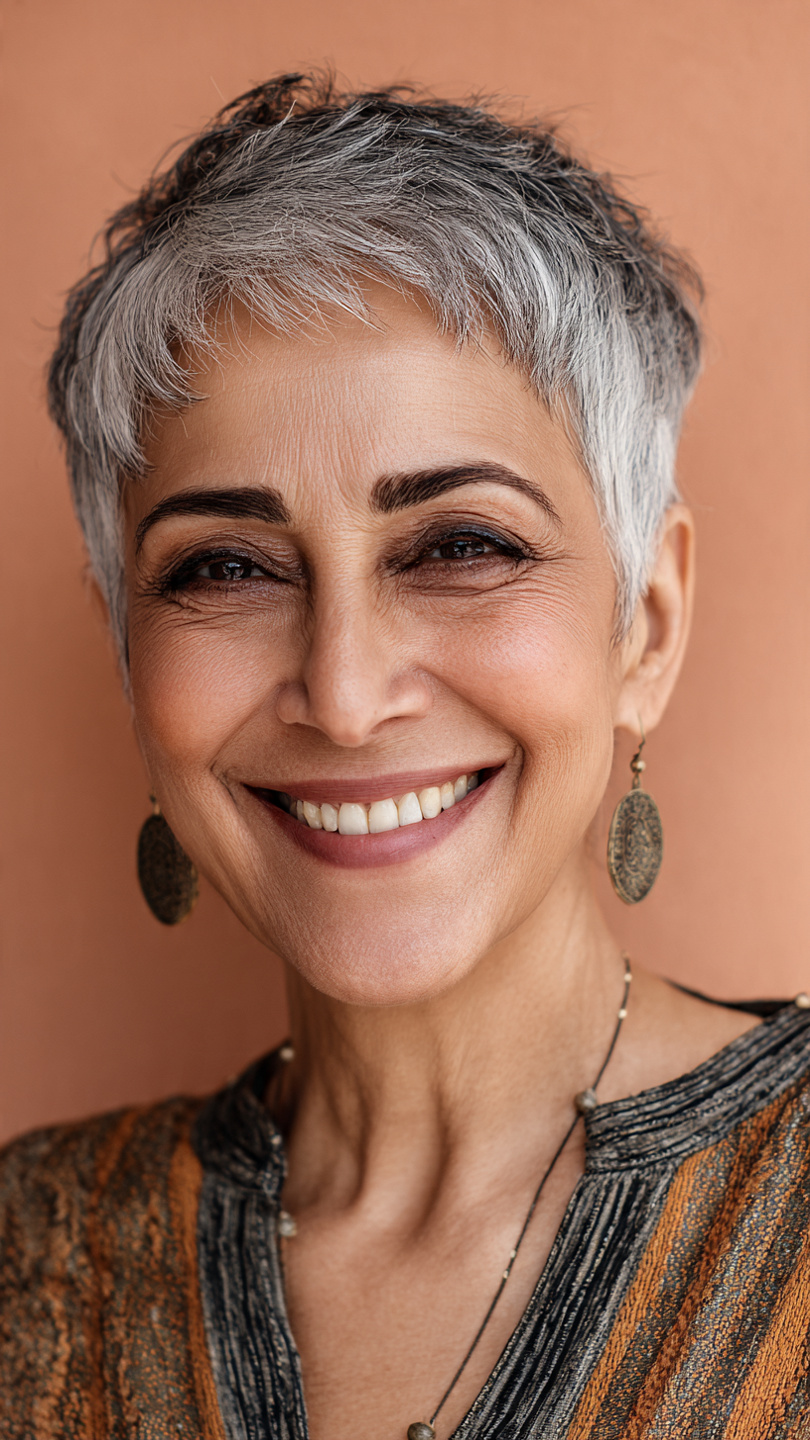
There’s a common misconception that getting older means having to settle for a single, “safe” haircut—often the short, tightly permed style of decades past. But today, age is no longer a rulebook for your hair. In fact, many women find that their 60s, 70s, and beyond are the perfect time to embrace a short hairstyle that is not only easier to manage but also more chic, confident, and liberating than anything they’ve tried before.
The right short cut can illuminate your features, add volume where texture has thinned, and frame your face in a way that softens fine lines. Whether you have naturally straight, wavy, or curly hair, the key is choosing a cut that works with your texture and lifestyle.
Below are 10 well-structured ideas to inspire your next trip to the salon—from wash-and-wear pixies to sophisticated bobs.
1. The Classic Pixie Cut
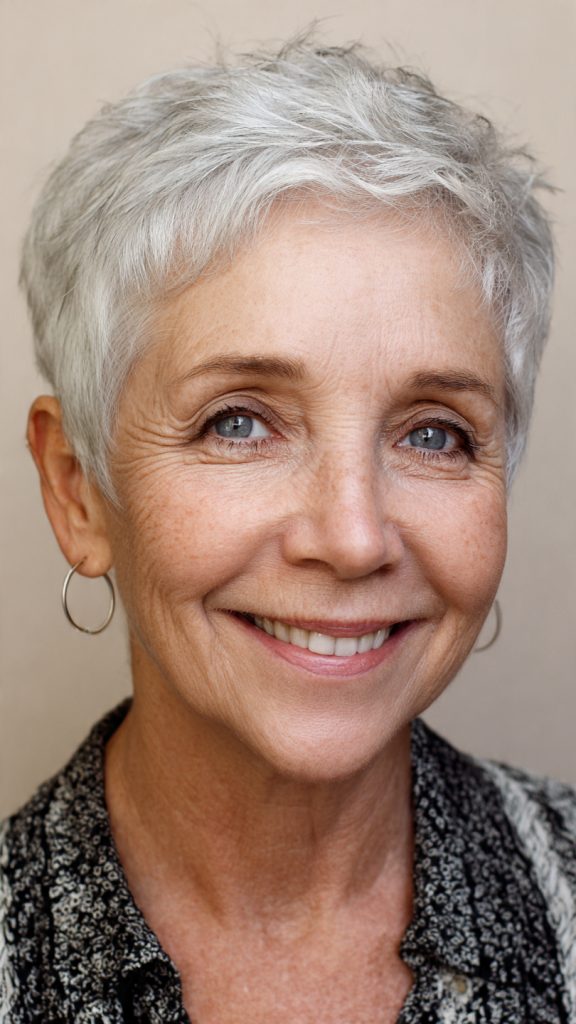
- Why it works: This timeless cut removes bulk and weight, making fine hair look thicker. By keeping the back and sides short while leaving a bit more length on top, it draws the eye upward, creating a lifted, youthful effect.
- Best for: Straight to slightly wavy hair; oval and heart-shaped faces.
- Styling tip: Use a dab of texture paste on fingertips to piece out the top layers for a modern, undone feel.
2. The Textured Crop
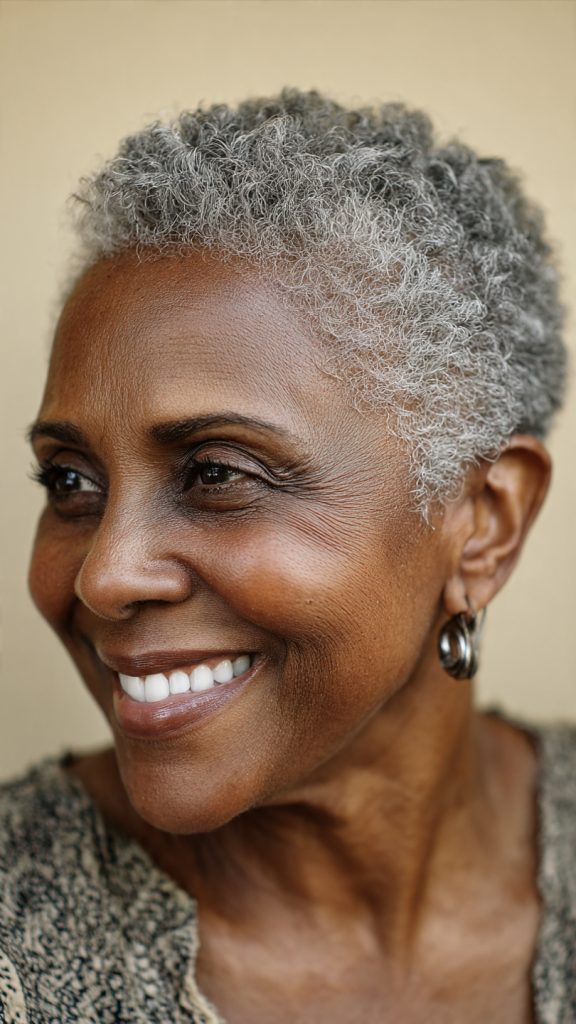
- Why it works: Unlike a uniform short cut, a textured crop uses point-cutting and layering to create movement and volume. The irregular lengths disguise thinning areas and give a soft, effortless silhouette.
- Best for: Fine or thinning hair; round and square faces (the height on top adds length).
- Styling tip: Blow-dry forward with your fingers for a messy-chic look, or smooth with a flat brush for a sleeker finish.
3. The Long Pixie with Side-Swept Bangs
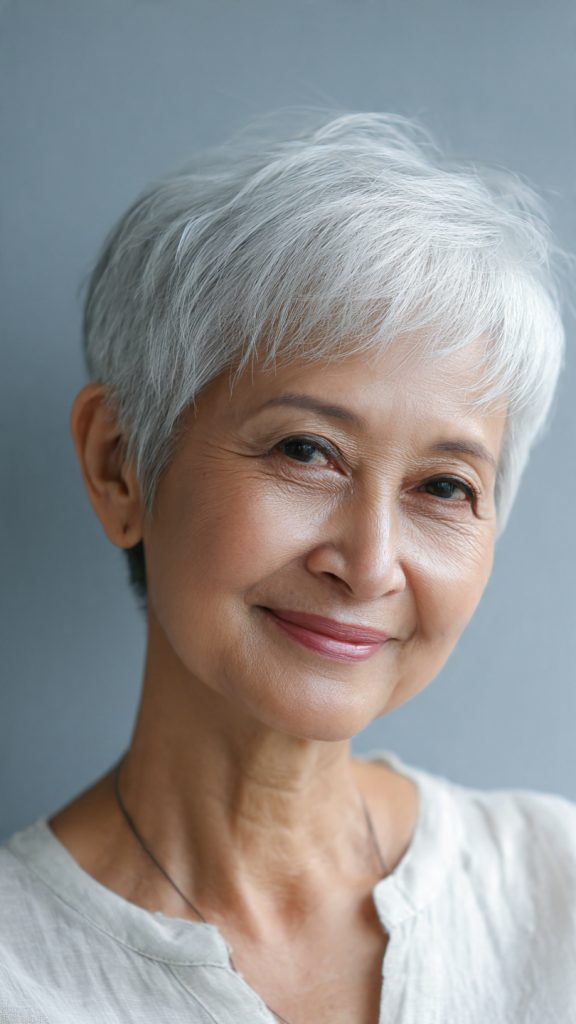
- Why it works: Keeping a little extra length at the front and sweeping it to the side is incredibly flattering. It covers a higher forehead, softens crow’s feet, and adds asymmetry that breaks up facial roundness.
- Best for: All face shapes, especially those with prominent foreheads or fine lines around the eyes.
- Styling tip: Ask your stylist for a “sweeping fringe” that hits just above the brow. A light-hold hairspray on a small round brush will lock the sweep in place.
4. The Chin-Length Bob with Undercut
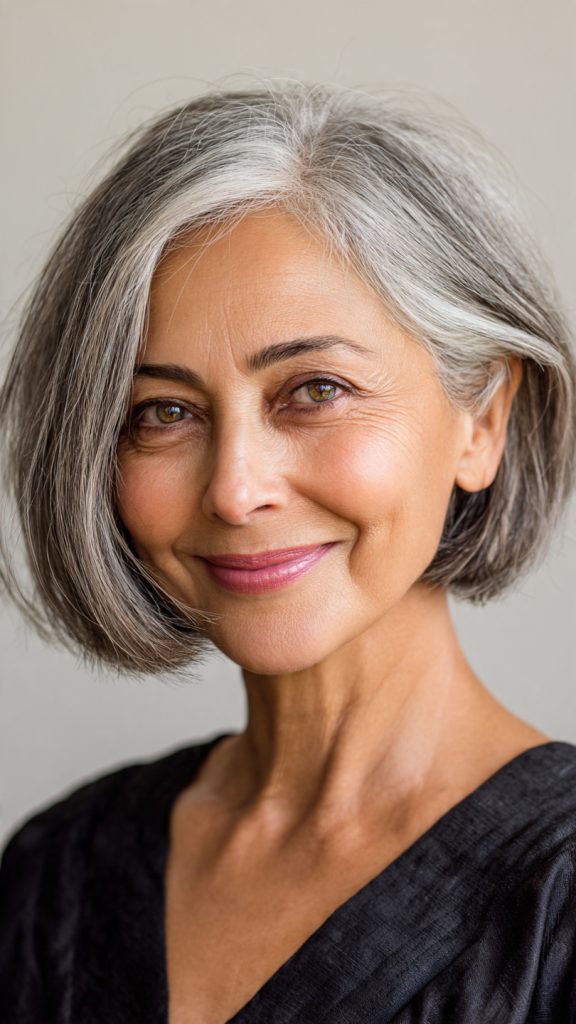
- Why it works: This modern twist on the bob keeps the exterior soft and classic while shaving or closely cropping the hair underneath. The result is less bulk (great for thick hair) and a cooler, lighter feel.
- Best for: Thick, heavy hair; long or square faces.
- Styling tip: Keep the top layer smooth and glossy. The undercut stays hidden unless you tuck your hair behind your ears—then it becomes a playful surprise.
5. The Curly TWA (Tiny Winona Afro)
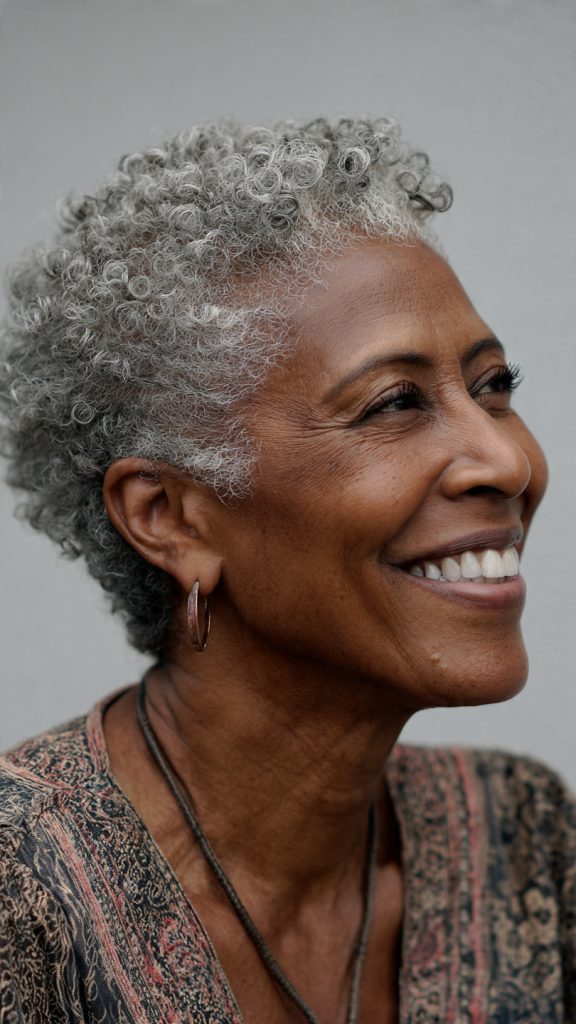
- Why it works: For women with naturally tight curls or coils, letting go of length and embracing a TWA (Teeny Weeny Afro) is liberating. It showcases the beauty of your natural texture, requires no heat, and frames the face like a soft halo.
- Best for: Type 3b to 4c curly hair; all face shapes, particularly round and diamond.
- Styling tip: Keep curls hydrated with a leave-in conditioner and a light gel. Use a pick to lift the roots for even more volume.
6. The Sleek Silver Bob (Blunt Cut)
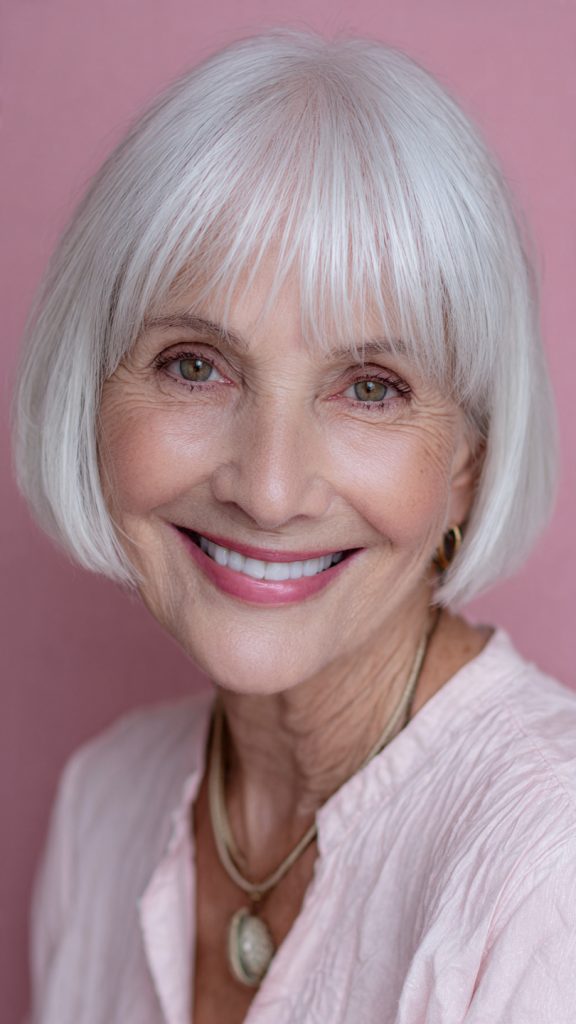
- Why it works: There is nothing more powerful than a clean, blunt bob on naturally gray or white hair. The sharp line of the cut contrasts beautifully with soft facial features, while the monochromatic color makes the hair look dense and healthy.
- Best for: Straight, fine to medium hair; square or strong-jawed faces (the soft ends of a blunt bob can actually balance a strong jaw).
- Styling tip: Use a flat iron on low heat and a shine serum to get a mirror-like finish. The cleaner the line, the more modern the look.
7. The Wavy Shag (Short Version)
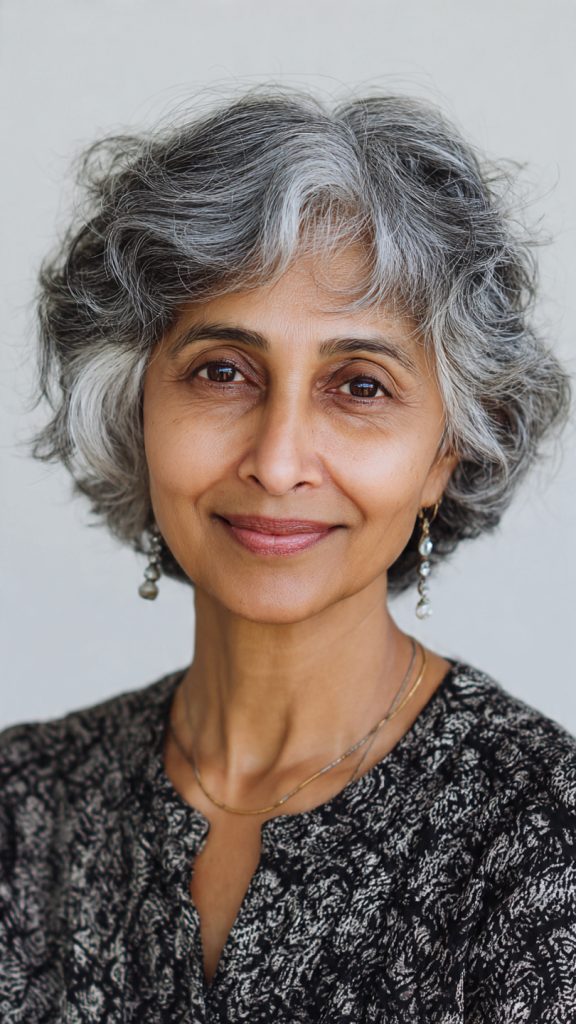
- Why it works: A short shag is built on layers, texture, and often a fringe. The choppy layers remove weight and add incredible movement, making limp waves look full of life. It’s a “rock and roll” cut that feels energetic at any age.
- Best for: Wavy or slightly curly hair; oblong or rectangular faces (the width at the sides balances length).
- Styling tip: Scrunch in a salt spray or mousse while damp and air-dry. The messier the shag, the better it looks.
8. The Asymmetric Cut
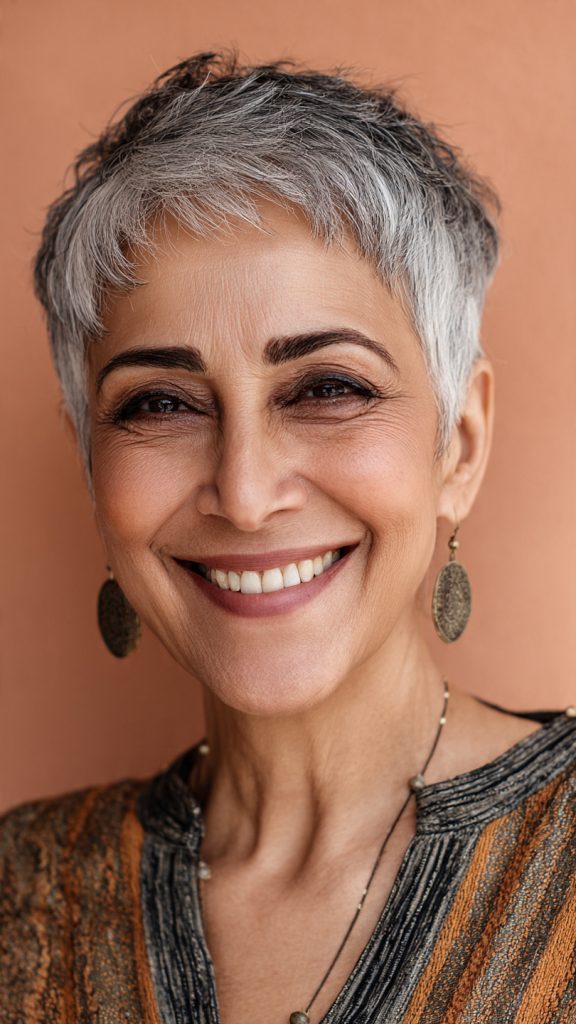
- Why it works: An asymmetric cut (shorter on one side, longer on the other) is visually dynamic. It draws the eye diagonally across the face, which can minimize the appearance of sagging jowls or a less defined jawline.
- Best for: Straight or blown-out hair; round and heart-shaped faces.
- Styling tip: The shorter side should sit above the ear, while the longer side grazes the chin. Use a round brush to tuck the longer side under slightly.
9. The Voluminous French Bob
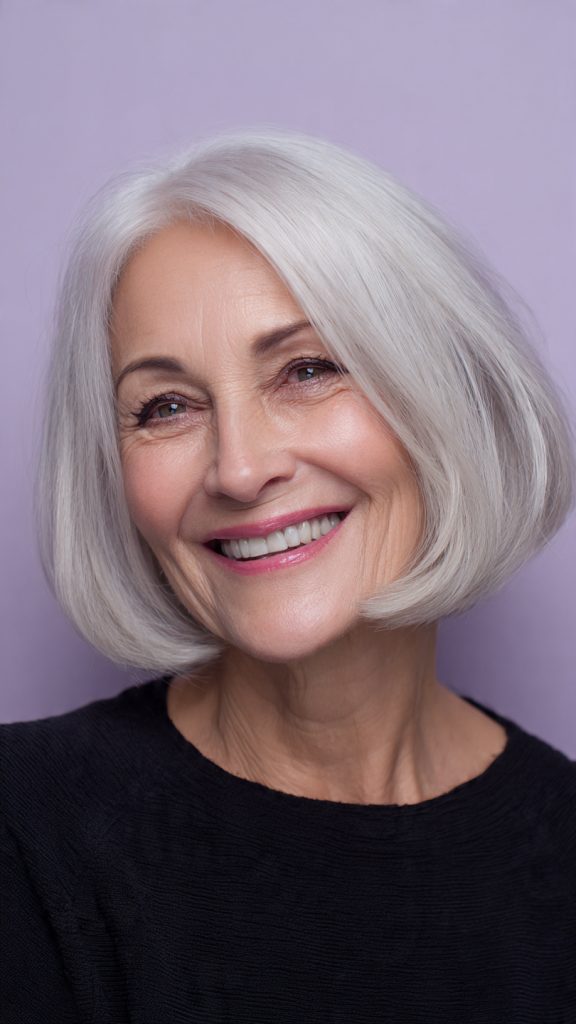
- Why it works: The French bob is a short bob that ends right at the jawline or earlobe, often with a deep side part. Its built-in volume at the roots (via a technique called “over-directing”) creates a lifted crown that counteracts age-related flatness.
- Best for: Fine to medium hair that lacks volume; oval and heart faces.
- Styling tip: Blow-dry the roots in the opposite direction of your part, then flip them back. Finish with a velcro roller on the crown for five minutes.
10. The Low-Maintenance Buzz Cut
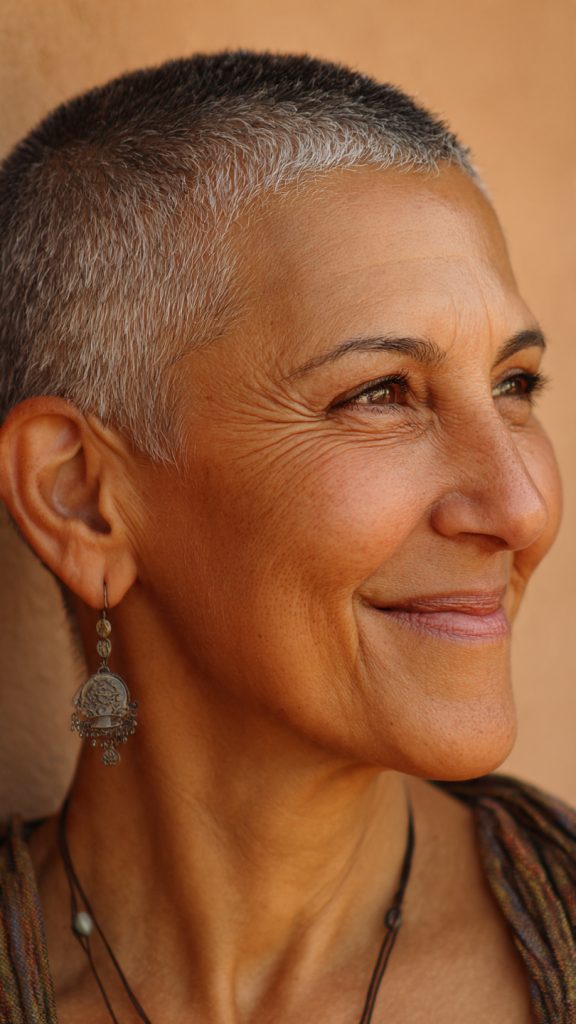
- Why it works: This is the ultimate statement of confidence. A uniform buzz cut (¼ to ½ inch long) removes all concern about styling, color, and thinning. It highlights your bone structure, eyes, and smile—the true markers of beauty. Many women say it feels like a complete reset.
- Best for: Any hair type or texture; women who value convenience or are undergoing medical treatment; strong bone structure.
- Styling tip: Keep your scalp moisturized with a non-greasy lotion or SPF. Emphasize earrings and bold lipstick to create beautiful contrast against the short length.
What to Consider Before Going Short
Making the leap to a short hairstyle is exciting, but a few practical considerations will ensure you love your new look.
1. Face Shape
- Oval: Almost any short cut works—pixies, bobs, crops.
- Round: Look for height on top (textured crop, French bob) to elongate the face.
- Square: Soft, layered cuts (wavy shag, long pixie) soften a strong jawline.
- Heart: Side-swept bangs and chin-length styles balance a narrower chin.
- Long/Oblong: Styles with volume at the sides (blunt bob, curly TWA) add width.
2. Hair Texture & Density
- Fine/thinning hair: Textured crops and classic pixies add volume. Avoid heavy blunt cuts that can look flat.
- Thick hair: Undercuts, shags, and layered bobs remove bulk while keeping shape.
- Curly/coily hair: TWAs, short shags, and French bobs work with your natural spring.
- Straight hair: Sleek bobs and asymmetric cuts show off clean lines beautifully.
3. Maintenance Level
- Low maintenance: Buzz cut, curly TWA, textured crop (wash and go).
- Medium maintenance: Classic pixie, French bob (needs trimming every 4–6 weeks).
- Higher maintenance: Sleek silver bob, asymmetric cut (requires styling and regular salon visits).
4. Your Lifestyle
- Active women who exercise often love wash-and-wear crops.
- Professional settings suit sleek bobs and classic pixies.
- Low-energy or health-related needs are perfectly met by a buzz cut or TWA.
5. The Importance of a Good Stylist
Not all stylists excel at short haircuts. Look for someone who:
- Specializes in short, modern styles (check their portfolio).
- Has experience with your hair type (fine, curly, thick, etc.).
- Listens to your daily routine and offers honest advice.
How to Transition from Long to Short Hair
Cutting off significant length can feel emotional. Here’s how to make the transition smooth and positive.
Step 1: Try a “Medium” First
If you’ve had long hair for decades, don’t go straight to a pixie. Try a shoulder-length lob, then a chin-length bob, then shorter. This gradual approach prevents shock.
Step 2: Bring Visuals
Use the 10 prompts above to generate images. Show 2–3 favorites to your stylist. Point out specific elements: “I like the volume on top here” or “I love how the bangs sweep here.”
Step 3: Discuss the “In-Between” Phase
Short cuts grow out quickly. Ask your stylist: “What will this look like at 4 weeks? 8 weeks?” A good cut has a graceful grow-out.
Step 4: Prepare for a Different Morning Routine
Short hair often takes less time, but it may be different. You might trade 20 minutes of blow-drying long hair for 3 minutes of texture paste. Ask your stylist to show you exactly how to style it before you leave the chair.
Step 5: Embrace the Emotional Shift
Many women report feeling lighter, freer, and more visible after going short. But if you feel initial regret, give it two weeks. Short hair grows on you—literally and figuratively.
Common Concerns (And Truths)
| Concern | The Truth |
|---|---|
| “Short hair will make me look older.” | The wrong short cut can. But a modern, textured, age-appropriate short cut often looks younger than long, thin, dragged-down hair. |
| “I don’t have the face for short hair.” | Almost every face shape has a flattering short cut. It’s about proportion, not perfection. |
| “I’ll miss being able to pull my hair back.” | You can still pin back a pixie or bob. And many women find they no longer want to hide behind a ponytail. |
| “My husband/kids/friends won’t like it.” | This is your hair. That said, most loved ones adapt quickly—and many end up loving the confident version of you that emerges. |
| “Short hair is harder to style.” | False for most textures. Short hair dries faster, uses less product, and can look intentional with minimal effort. |
| “I have scalp issues or thinning spots.” | A skilled stylist can work around these. Very short cuts can actually make thinning less noticeable by removing weight that exposes the scalp. |
Styling Products for Short Hair (By Look)
For Volume & Lift
- Powder volumizer (e.g., Schwarzkopf Dust It) – shake into roots.
- Small round brush + blow-dryer.
- Velcro rollers on the crown for 5 minutes.
For Texture & Piece-y Looks
- Texture paste or clay (matte finish).
- Sea salt spray on damp hair, then air-dry or scrunch.
- Finger-combing only—no brush.
For Sleek & Smooth
- Shine serum (one drop, rubbed between palms).
- Flat iron on low heat (use protectant).
- Boar bristle brush for polishing.
For Curls & Coils
- Leave-in conditioner.
- Light gel or curl cream (avoid heavy butters that weigh short curls down).
- Pick or wide-tooth comb for shaping.
For Hold Without Crunch
- Flexible hold hairspray (hold the can 12 inches away).
- Light mousse for fine hair.
How Often to Maintain Each Style
| Hairstyle | Trim Frequency | Notes |
|---|---|---|
| Classic Pixie | Every 4–5 weeks | Grows out fast; shape is key |
| Textured Crop | Every 5–6 weeks | Messy texture forgives a little growth |
| Long Pixie | Every 5–6 weeks | Front bangs may need more frequent trims |
| Chin Bob with Undercut | Every 6 weeks | Undercut needs touch-ups if visible |
| Curly TWA | Every 6–8 weeks | Curls hide some growth |
| Sleek Silver Bob | Every 6 weeks | Blunt line needs precision |
| Wavy Shag | Every 6–8 weeks | Layers grow out gracefully |
| Asymmetric Cut | Every 5 weeks | Uneven lines become obvious quickly |
| French Bob | Every 5–6 weeks | Jawline length is critical |
| Buzz Cut | Every 2–4 weeks | Very fast grow-out; home trims possible |
Conclusion
Short hair for older women is not a surrender—it is a statement. It says you value your time, you know your face, and you refuse to be weighed down by outdated rules. From the wash-and-go ease of a textured crop to the bold confidence of a silver buzz cut, there is a short style for every woman, every texture, and every lifestyle.
The ten ideas in this article are starting points, not prescriptions. The best cut is the one that makes you look in the mirror and smile—not because you look younger, but because you look like you. Bright-eyed, capable, and beautifully friendly.
Leave a Reply