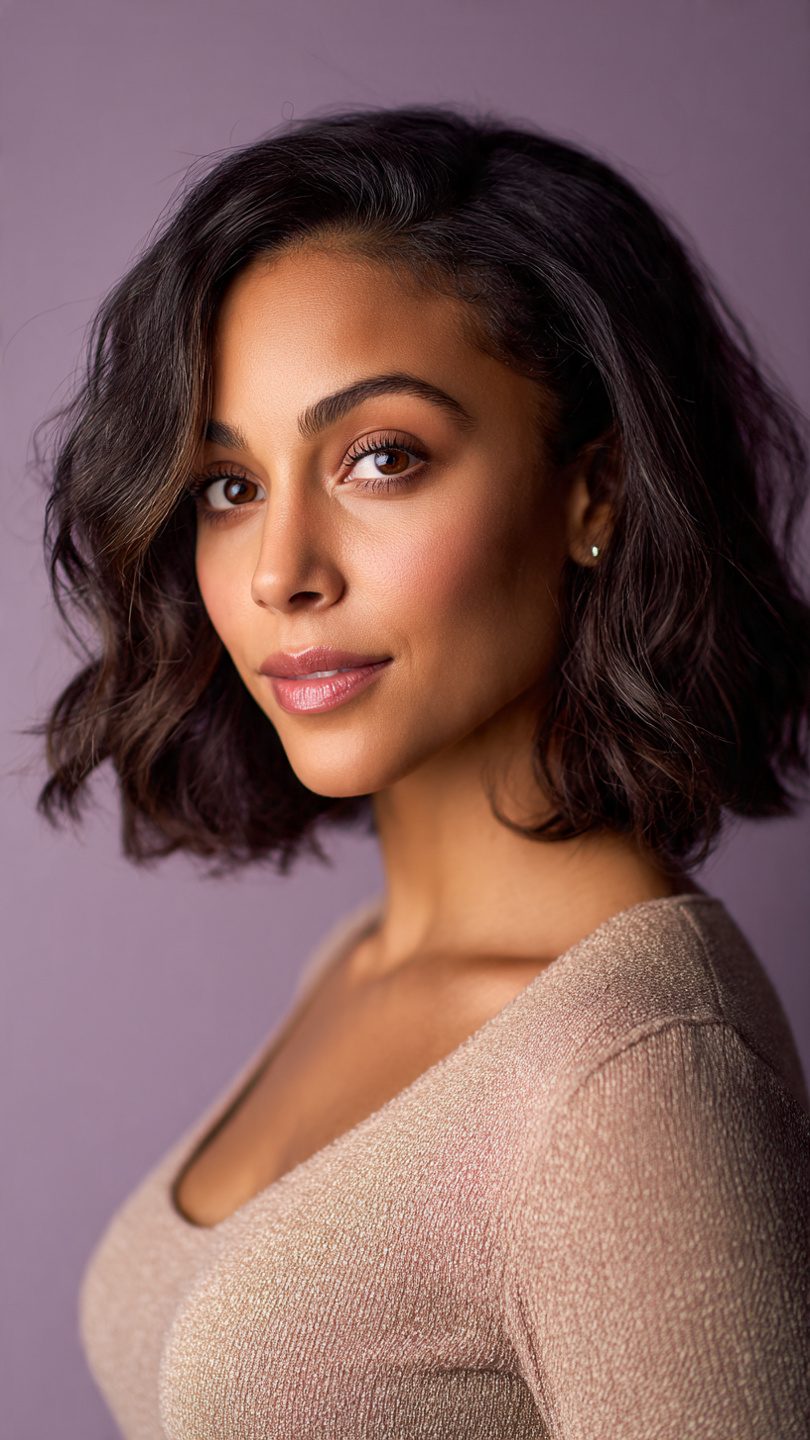
If you have fine or thin hair, you’ve likely heard the myth that cutting it short is the only way to create fullness. But the truth is, medium-length hairstyles—typically from the collarbone to just above the shoulders—offer the perfect sweet spot. This length is long enough to pull back into a ponytail or twist into an updo, yet short enough to prevent the weight from pulling hair flat against your scalp.
The right medium-length cut adds instant volume, texture, and the illusion of density. With strategic layering, blunt ends, and subtle styling tricks, thin hair can look remarkably thick, bouncy, and full of life.
Below are 17 carefully chosen styles designed to maximize body and movement for fine hair:
1. The Blunt Lob (Long Bob)
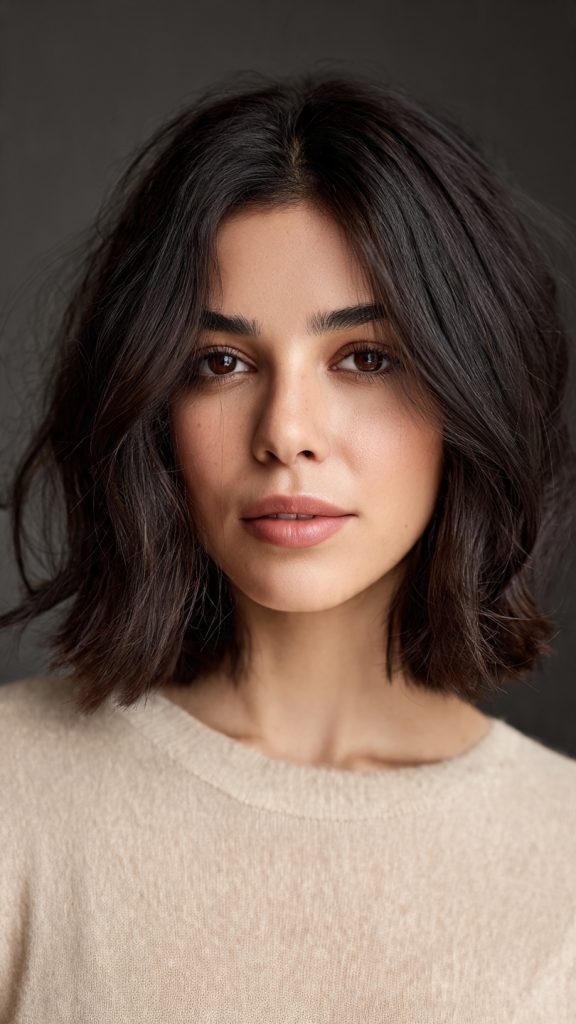
A blunt, one-length cut that ends between your chin and collarbone removes see-through ends and creates a solid, weighty line. Ask your stylist to avoid internal layers, which can make thin hair look sparser.
2. Textured Shoulder-Length Cut with Point Cutting
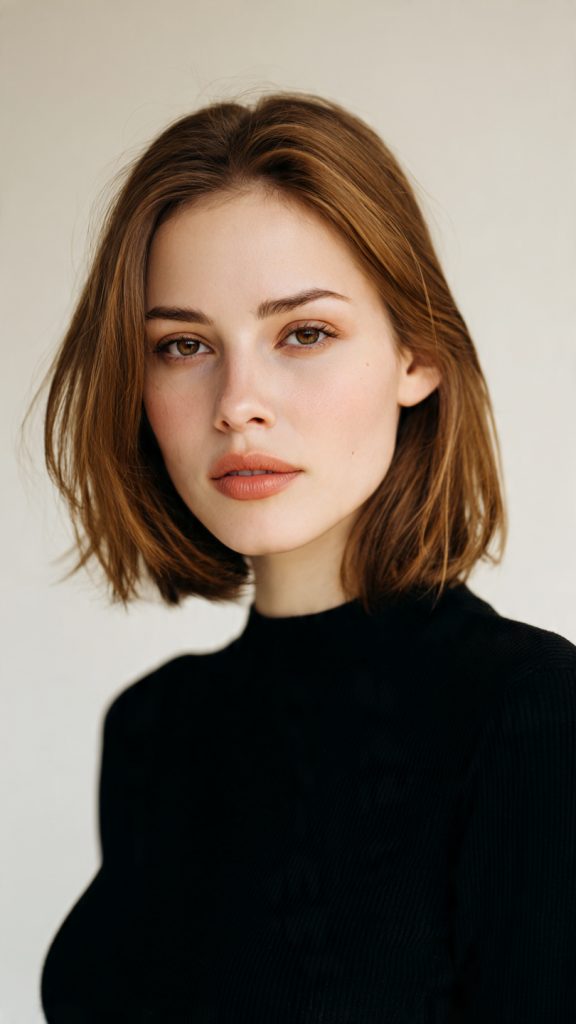
Instead of traditional layers, point-cutting adds soft, choppy texture that breaks up the ends without sacrificing density. This technique creates the appearance of ruching—fabric gathered to look fuller—especially when styled with a light texturizing spray.
3. The Inverted Bob
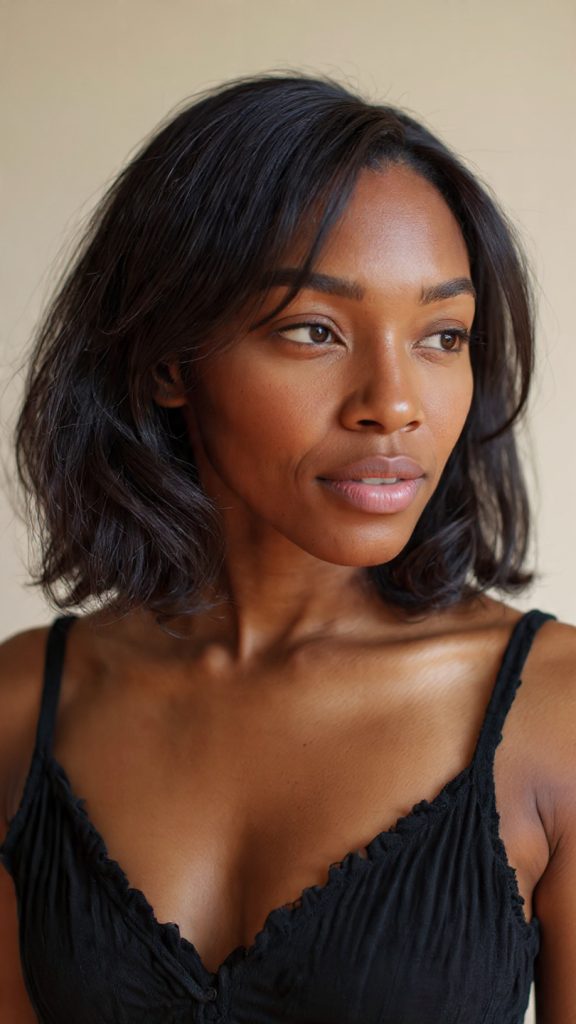
Shorter in the back and gradually longer toward the front, the inverted bob stacks weight at the nape, instantly lifting the crown. The angled front pieces also frame the face, drawing attention away from thinness at the roots.
4. Soft Beach Waves (No Heat Damage)
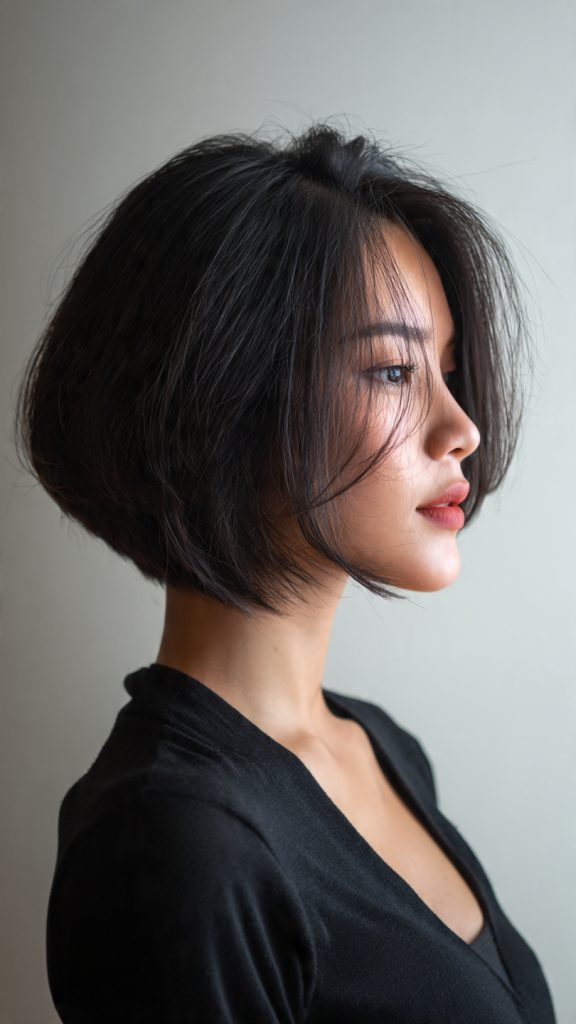
Loose, S-shaped waves create pockets of air between strands, making hair look twice as thick. Use a large-barrel curling wand or heatless methods (like braiding damp hair overnight). Avoid tight curls, which can expose gaps.
5. The Shag Cut (Modern Version)
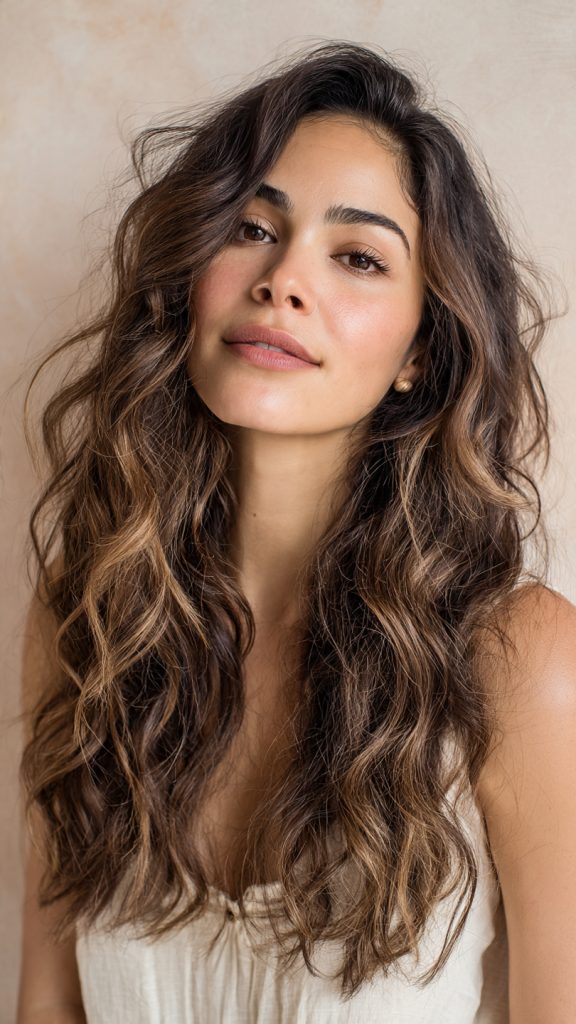
A modern shag with wispy, disconnected layers works beautifully on thin hair when kept above the shoulders. The key is keeping the ends “whisper-thin”—feathery tips that move together, creating the illusion of more hair.
6. Curtain Bangs with a Collarbone Cut
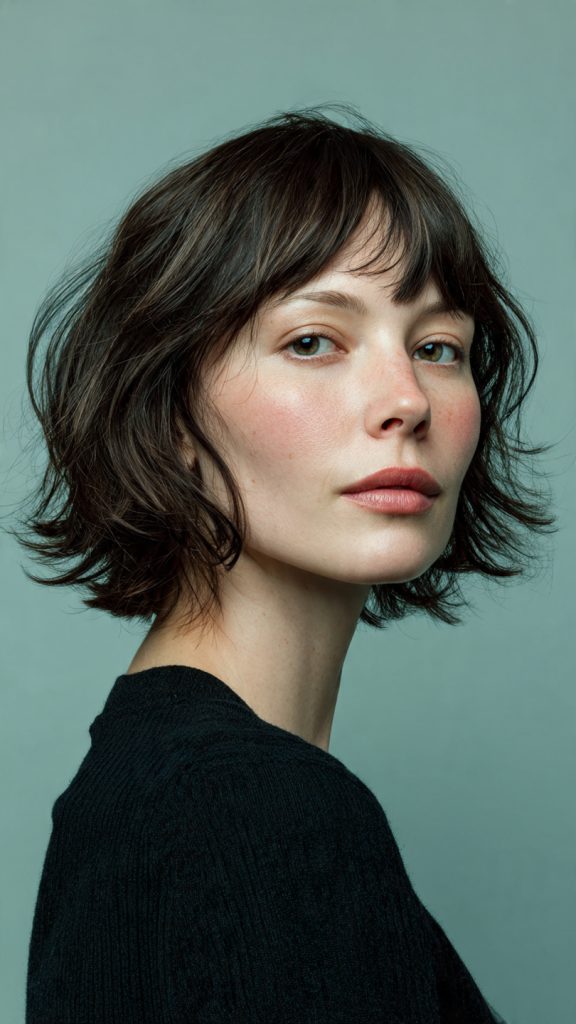
Curtain bangs that part in the middle and sweep to the sides add width at the temples. Paired with a blunt collarbone-length cut, they redirect volume away from a flat crown and toward the face.
7. Asymmetrical Lob
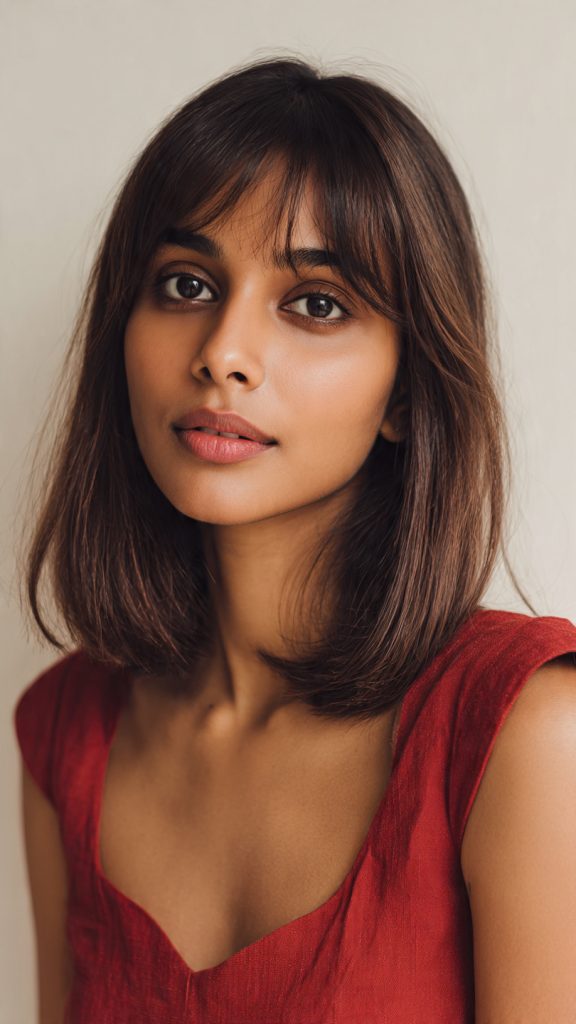
An uneven hemline—slightly longer on one side—creates visual interest that distracts from low density. The asymmetry tricks the eye into seeing movement and body where there might otherwise be limp strands.
8. The “Italian” Cut (Round Layers)
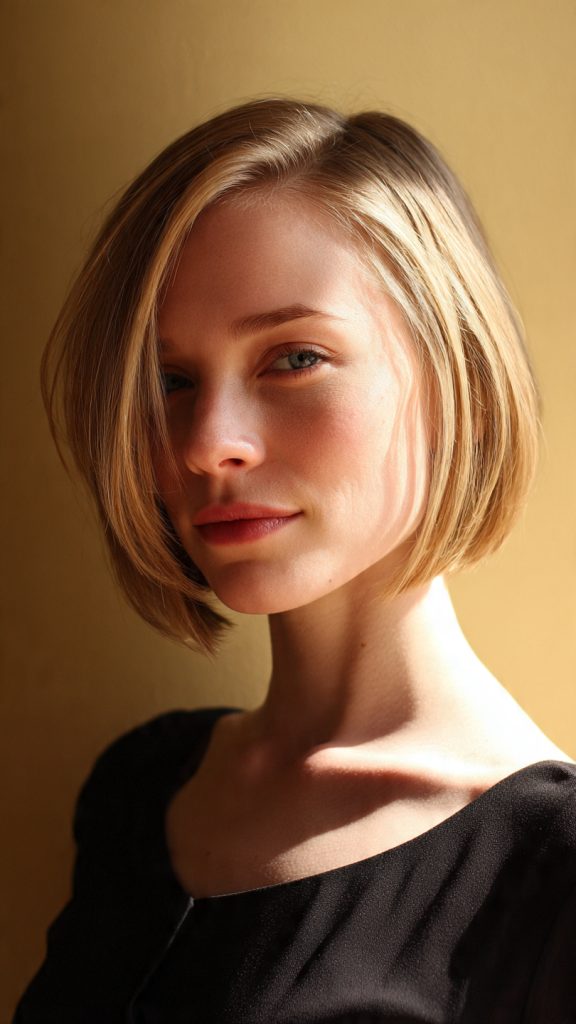
This technique uses rounded, internal layers that are barely visible from the outside. The layers are stacked to push hair upward from the roots. Ask your stylist for a “round layering” or “volume layering” cut.
9. Deep Side Part with Voluminous Roots
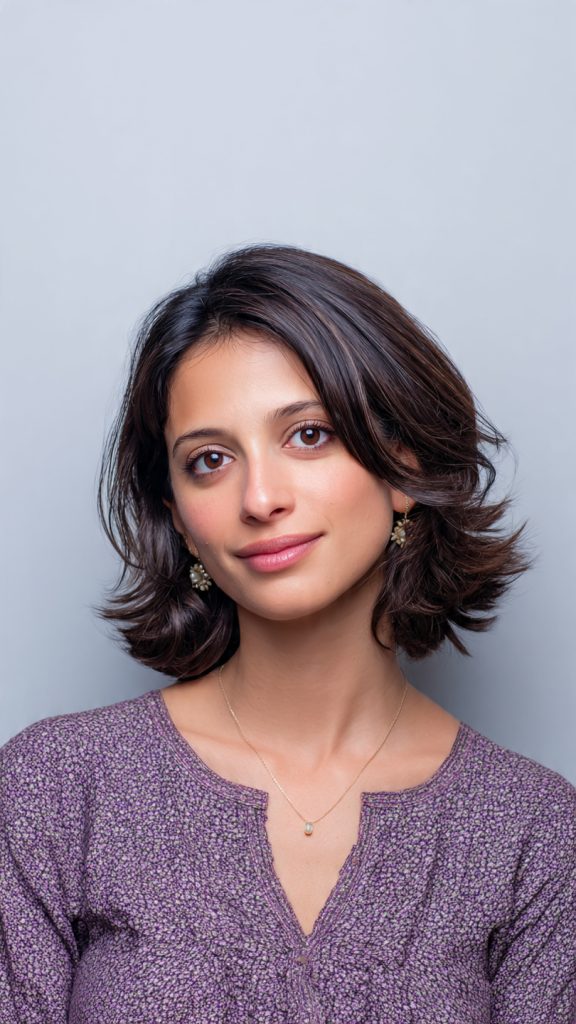
A severe side part (rather than a center part) instantly lifts the crown. Blow-dry the roots in the opposite direction of the part, then flip them over. This simple change can double perceived volume on fine hair.
10. French Twist Ponytail (Styled, Not Pulled Back)
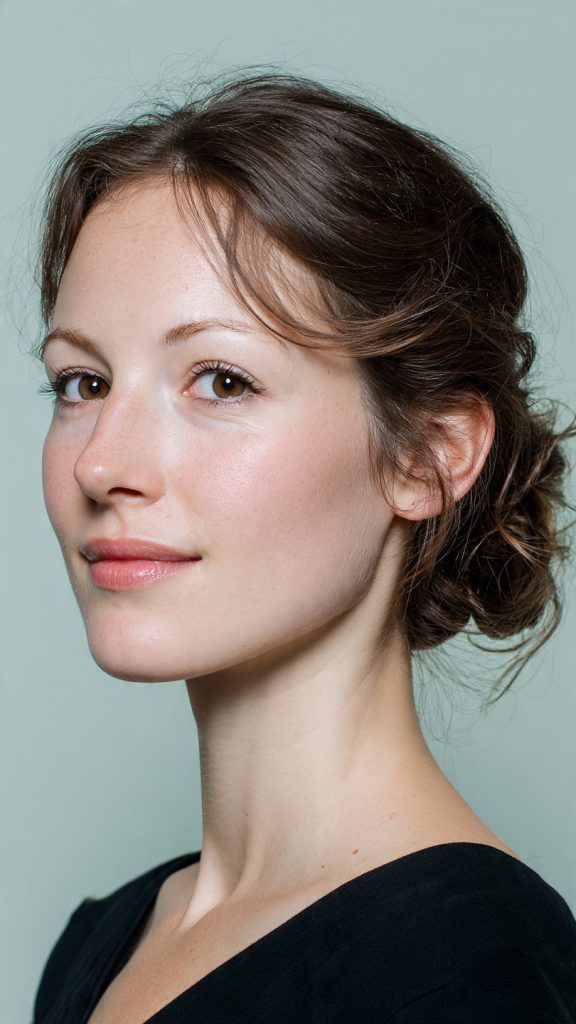
Gather your medium-length hair into a low, loose ponytail, then twist it upward and pin. This style creates a rolled effect that adds bulk. Leave a few face-framing pieces loose to soften the look.
11. The “Bixie” (Bob + Pixie Hybrid)
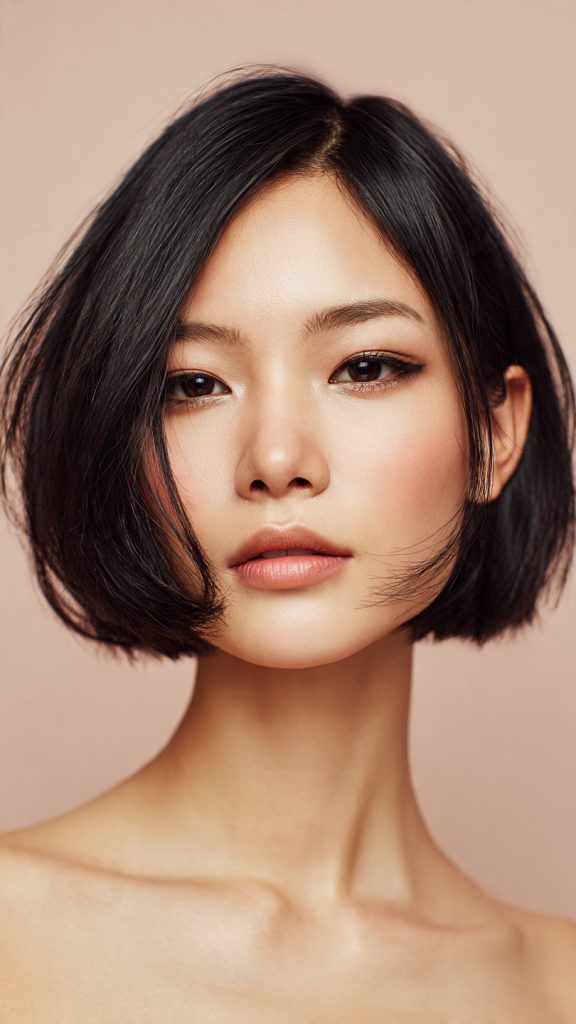
Longer than a pixie but shorter than a traditional bob, the bixie hits just below the ears. The cropped length removes weight entirely, allowing thin hair to stand up at the roots naturally. Ideal for very fine hair types.
12. Knotted Half-Up Style
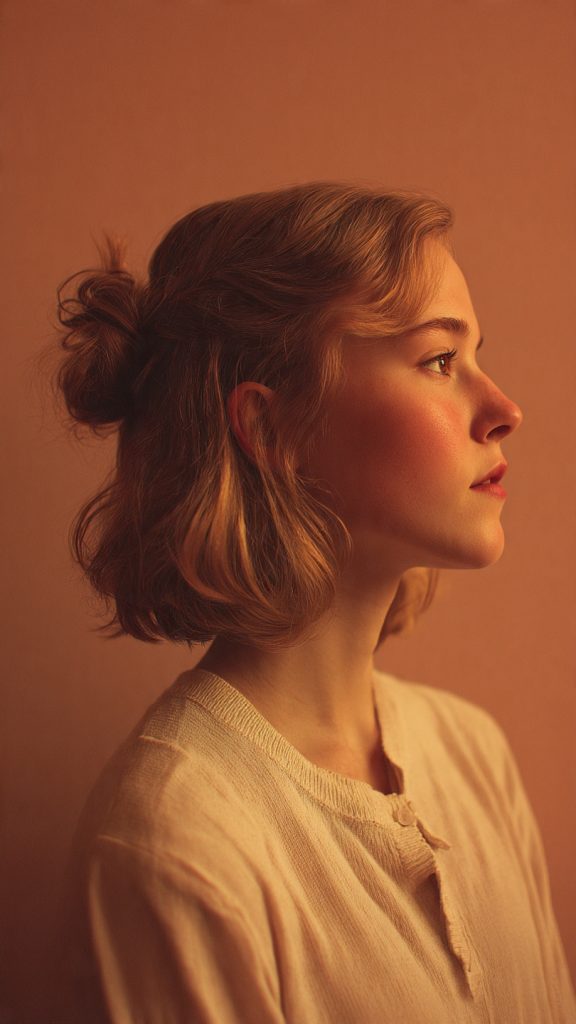
Take two small sections from the front, twist them back, and tie them into a loose knot at the crown. This pulls hair up and away from the scalp, creating immediate height. The rest of the hair stays down, preserving length.
13. Layered Lob with Face-Framing Highlights
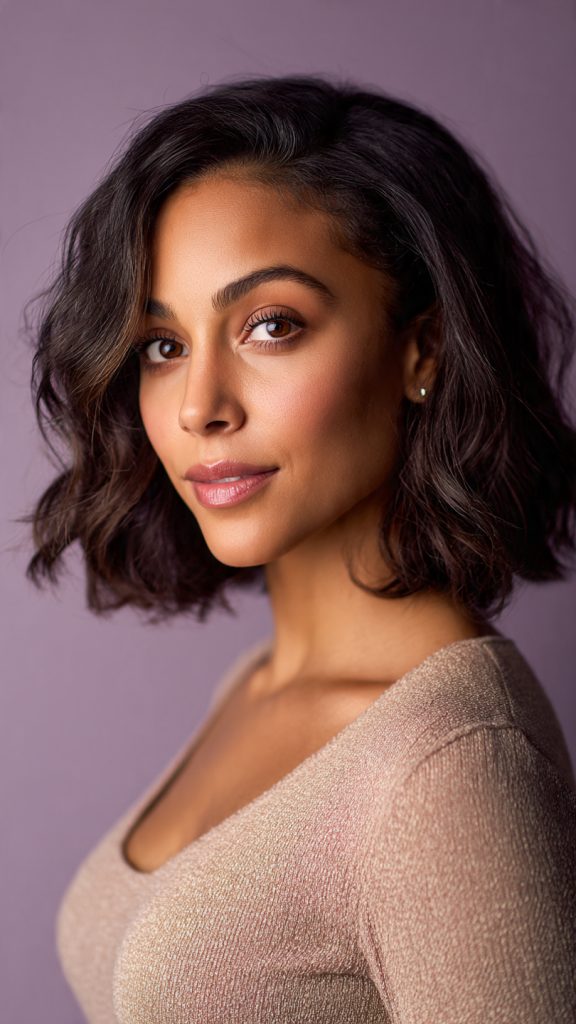
Strategic highlights—especially babylights around the face—add contrast and depth, making each strand appear thicker. When light catches the different layers, the hair looks multi-dimensional and fuller.
14. Voluminous Blowout with a Round Brush
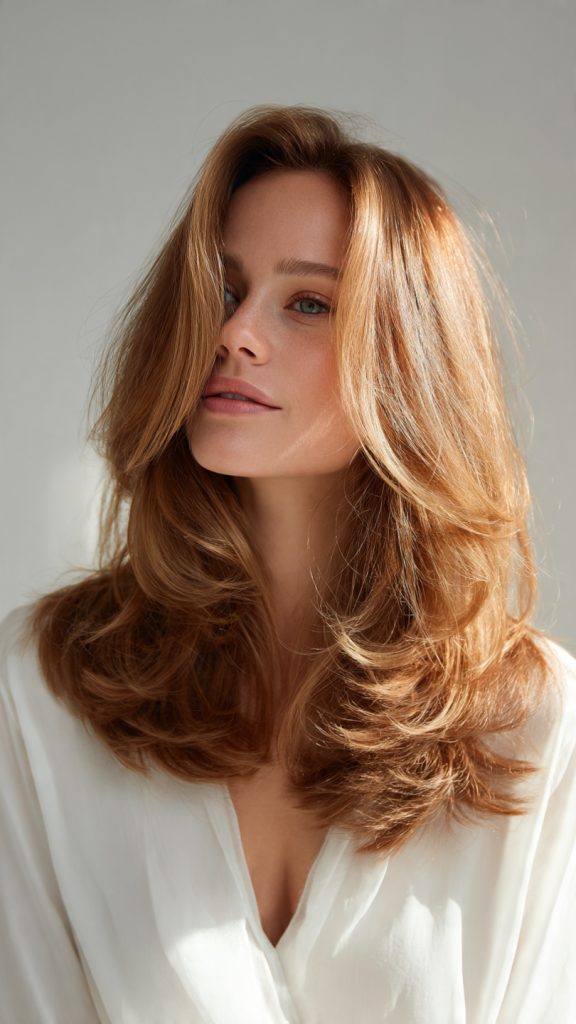
This is a styling technique as much as a cut. Using a medium round brush, lift sections at 90 degrees and dry from roots to ends. The result is a bouncy, salon-style blowout that can make thin hair look three times as dense.
15. Tucked-Behind-the-Ears Look (Sleek, Not Slicked)
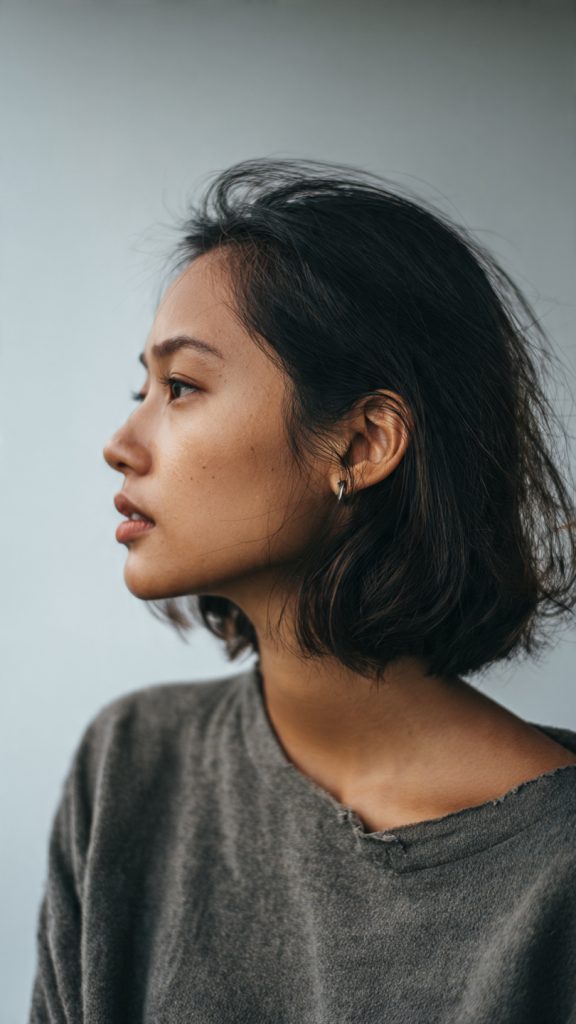
This no-cut “style” works because it creates clean lines. Lightly tuck one side behind your ear while leaving the other side loose. The asymmetry adds shape, and the ear exposure emphasizes the jawline, drawing attention from thin ends.
16. Cropped Mullet (Soft, Not Extreme)
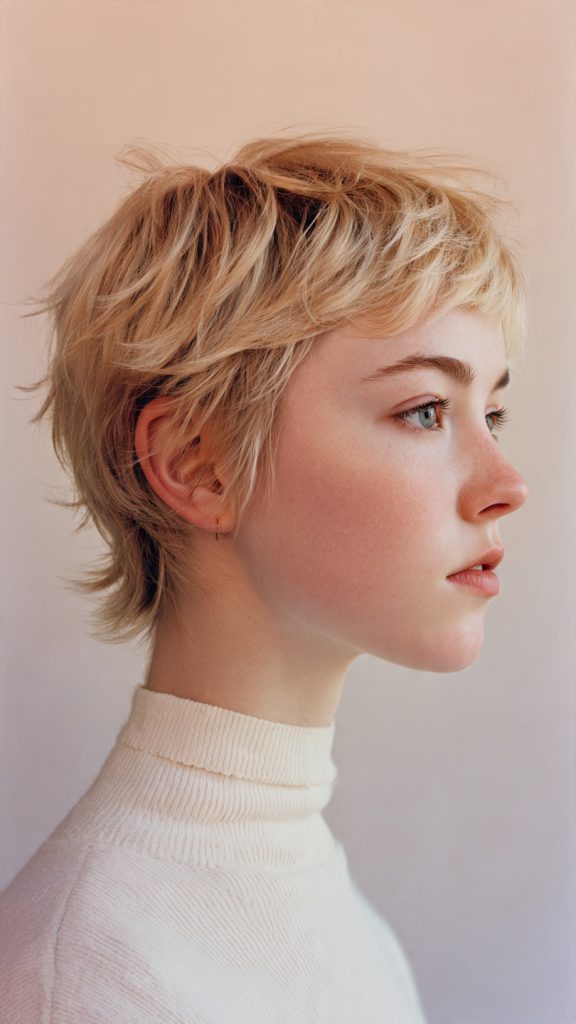
A soft, modern mullet with shorter layers on top and longer, wispy ends in the back adds unexpected volume at the crown. The key is keeping the transition gentle—not dramatic—so it adds body without looking severe.
17. Wispy Ends with Dry Texture Spray
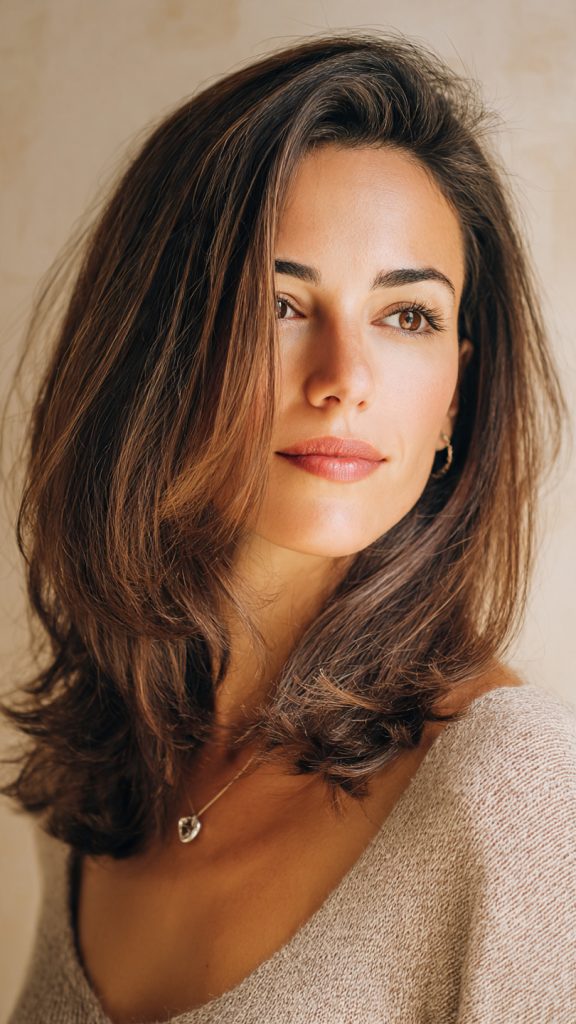
Any of the above cuts can be finished with a dry texture spray or volumizing powder at the roots. Then, flip your head upside down and lightly tease the ends. The wispy, separated finish creates the illusion of dozens of fine strands moving together—like a feather boa, not a frayed rope.
What to Avoid When Styling Thin Hair at Medium Length
Even with the perfect cut, certain habits and products can undo all your volume. Avoid these common mistakes:
- Heavy oils and butters – Coconut oil, shea butter, and argan oil weigh thin hair down, making it look flat and greasy within hours.
- Over-layering – Too many layers remove the weight needed to keep ends looking full. Stick to blunt or subtle point-cut ends.
- Center parts – A middle part exposes the scalp and accentuates thinness. A deep side part or zigzag part is always more flattering.
- Long hair past the collarbone – Once hair grows beyond medium length, gravity pulls it flat. Stick to shoulder-length or shorter for maximum volume.
- Skipping trims – Thin hair shows split ends and see-through tips faster than thick hair. Trim every 6–8 weeks without exception.
- Washing too often (or too little) – Daily washing strips natural oils, making hair limp. But waiting 5+ days allows oil to clump strands together, making thinness more visible. Every other day is ideal.
The Best Products for Medium-Length Thin Hair
Use lightweight, volume-building products specifically formulated for fine hair. Avoid anything labeled “smoothing,” “nourishing,” or “repairing” unless it specifies “for fine hair.”
| Product Type | What to Look For | Example Ingredient |
|---|---|---|
| Shampoo | Volumizing, clarifying | Rice protein, keratin |
| Conditioner | Apply only to ends | Hydrolyzed wheat protein |
| Mousse | Root-lifting, alcohol-free | VP/VA copolymer |
| Dry shampoo | Tinted or translucent | Rice starch, oat flour |
| Texture spray | Lightweight, no stickiness | Silica, magnesium carbonate |
| Heat protectant | Spray, not cream | Panthenol |
Application order for maximum volume:
Shampoo roots only → Condition ends only → Mousse on damp roots → Blow-dry upside down → Texture spray on dry ends → Optional: dry shampoo at roots for extra lift
How to Sleep on Thin Hair Without Ruining Volume
Overnight friction flattens thin hair and creates tangles. Use these techniques:
- Pineapple method – Gather hair into a very loose, high ponytail right at the top of your head using a silk scrunchie. This preserves lift.
- Silk or satin pillowcase – Reduces friction and prevents the “bed head” flattening that cotton causes.
- Dry texture spray before bed – Lightly mist ends before sleeping. It absorbs oil overnight and refreshes volume by morning.
- Avoid braids or tight buns – These create crease marks that make thin hair look kinked, not voluminous.
Quick Fixes for Second-Day Thin Hair
Day-old thin hair often looks flatter than day one. Try these 60-second fixes:
- Flip and shake – Bend forward, spray dry shampoo at the roots, massage with fingertips, then flip back and shake.
- Tease gently – Backcomb just the crown section with a fine-tooth comb. Smooth the top layer over it.
- Change your part – Switch from a left side part to a right side part (or vice versa). The roots instantly stand up.
- Dampen the ends – Lightly mist ends with water and scrunch. This reactivates texture spray without washing.
- Add a tiny ponytail – Gather the top crown section into a mini ponytail (hidden underneath top hair). This creates an internal “pillow” of volume.
When to See a Professional (And What to Ask For)
Not all stylists specialize in thin hair. Book a consultation first and ask these exact questions:
- “Do you have experience cutting fine or thin hair?”
- “Will you use blunt ends or point-cutting?”
- “Can you show me a photo of a past client with thin hair you’ve cut?”
- “Do you recommend a lob, bixie, or shag for my face shape?”
Red flags to walk away:
A stylist who immediately suggests “lots of layers,” reaches for thinning shears, or tells you to grow your hair longer to hide thinness.
Conclusion
Thin hair is not a limitation—it’s a different texture with its own strengths. It dries faster, holds a curl more easily than coarse hair, and can look effortlessly elegant when cut and styled correctly. The key is choosing a medium length that removes weight without sacrificing body, and using techniques that create lift at the roots rather than pulling hair down.
From the blunt lob and inverted bob to the modern shag and bixie, the 17 styles above prove that thin hair can look full, bouncy, and dynamic. Pair your chosen cut with lightweight volumizing products, a silk pillowcase, and a 6–8 week trim schedule, and you’ll never feel limited by your hair texture again.
Remember: volume isn’t about how much hair you have. It’s about how well you work with what you have. And with the right medium-length cut, thin hair doesn’t just look thicker—it looks intentional, stylish, and completely confident.
Leave a Reply