
For decades, the beauty industry has sold us the dogma of trimming every six weeks to prevent split ends. But for women over 50, this one-size-fits-all advice doesn’t just waste money—it actively works against your hair’s changing biology. As hormones shift and hair texture evolves, frequent trimming can strip volume, reduce styling flexibility, and even accelerate the appearance of thinning. Here is the truth about why you should ignore the 6-week rule.
The One Exception – When a Six-Week Trim Makes Sense
While this article argues against the six-week rule for most older women, there are a few specific situations where frequent trims remain necessary:
- You chemically treat your hair (bleach, relaxers, perms) – chemical damage travels up the shaft faster.
- You use high heat daily (flat irons, curling wands) – heat accelerates split ends regardless of age.
- You have specific medical hair conditions (trichorrhexis nodosa, severe breakage disorders) – your dermatologist may recommend more frequent dusting.
- You wear a very short, structured hairstyle (pixie, crop) – shape maintenance requires frequent trims, not split-end control.
For everyone else over 50, stretch that trim interval.
10 Reasons Why the 6-Week Trim Rule Is Bad Advice for Older Women
1. Slower growth rate makes frequent trims counterproductive.
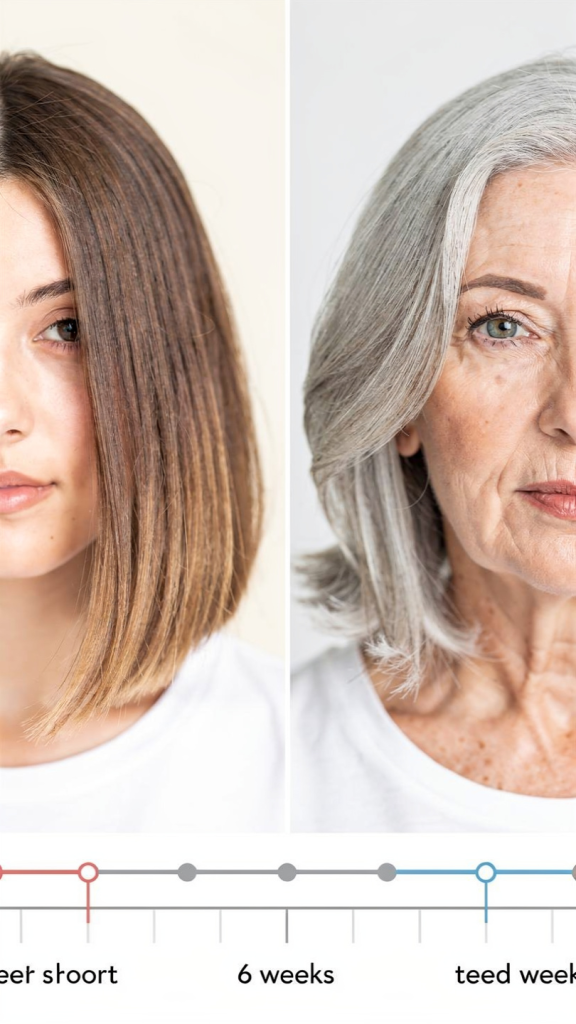
As estrogen declines, the anagen (growth) phase shortens, meaning your hair grows more slowly per month than it did in your 20s or 30s—trimming every six weeks removes progress you can barely afford to lose.
2. You lose precious, hard-won length.
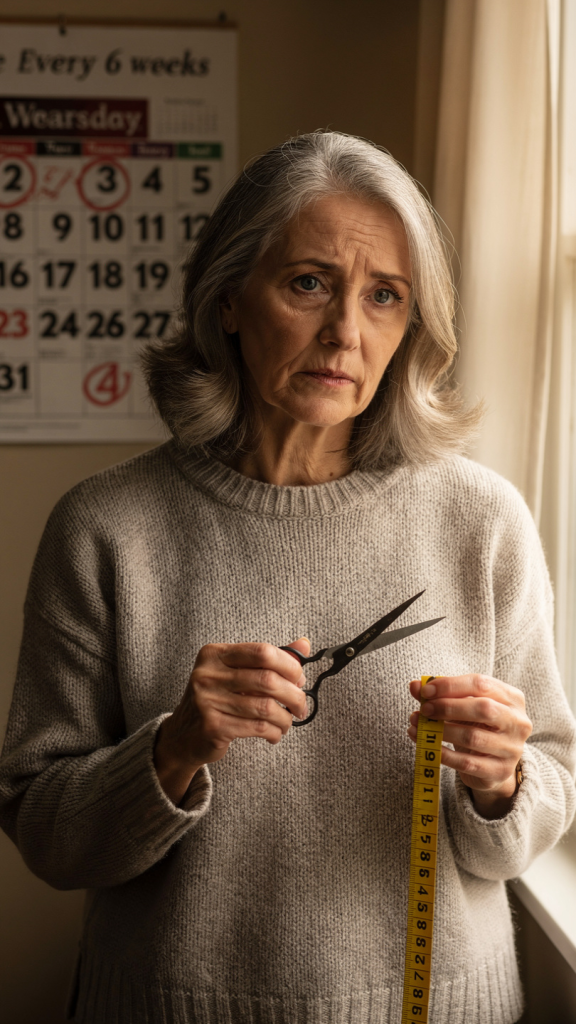
Many older women struggle to grow hair past their shoulders due to age-related shedding; a mandatory six-week schedule keeps you in a perpetual state of “maintenance” that never allows you to see real length gains.
3. It thins out already-fragile density.
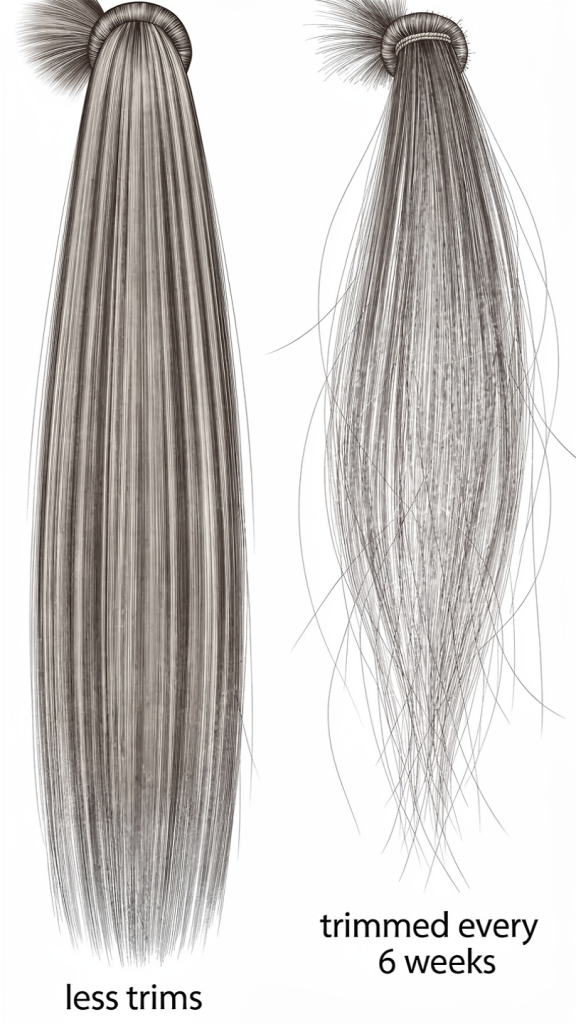
Post-menopausal hair often experiences reduced strand diameter; frequent dusting of the ends removes bulk from the hemline, making the ponytail look sparser rather than fuller.
4. The “split end prevention” logic doesn’t apply to aging hair.
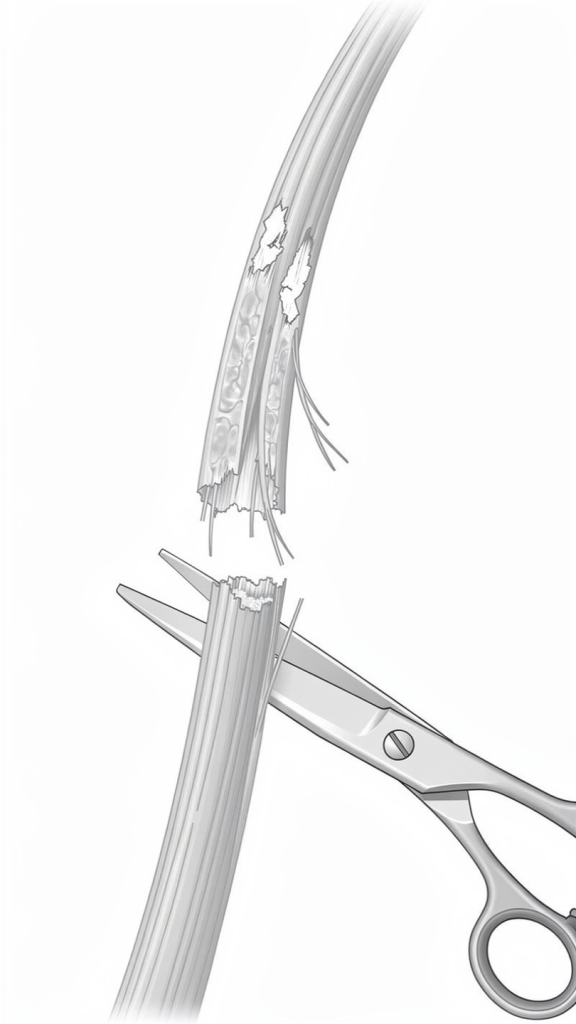
Older hair tends to snap and break mid-shaft due to dryness and brittleness, not just at the ends—so trimming the bottom every six weeks ignores where the real damage occurs.
5. Scarce natural oils mean you need length, not cuts.
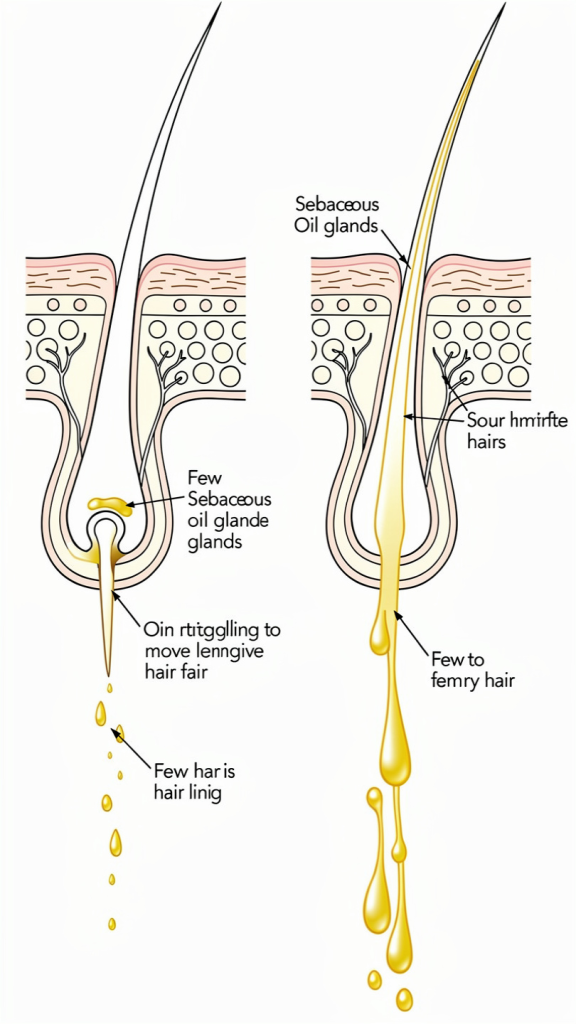
Scalp sebum production drops dramatically after 50, so longer hair allows your scalp’s limited oils to travel down the shaft better; short, frequently trimmed hair leaves the mid-lengths and ends perpetually dry.
6. Styling versatility takes a serious hit.
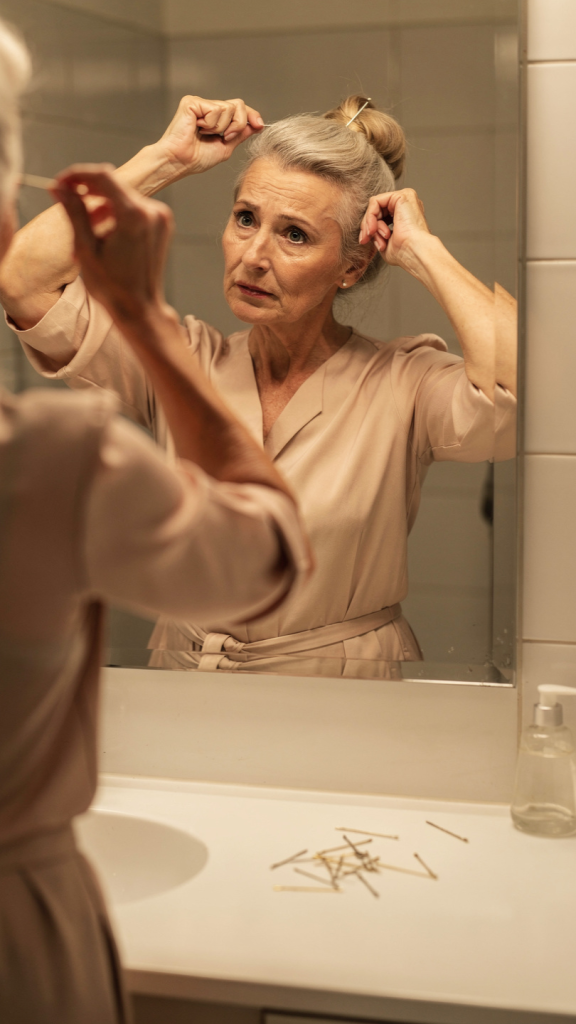
Many older women rely on updos, twists, or gentle braids to camouflage thinning areas—constant trims keep hair at an awkward, too-short length that prevents these protective styles.
7. It causes unnecessary mechanical stress to fragile roots.
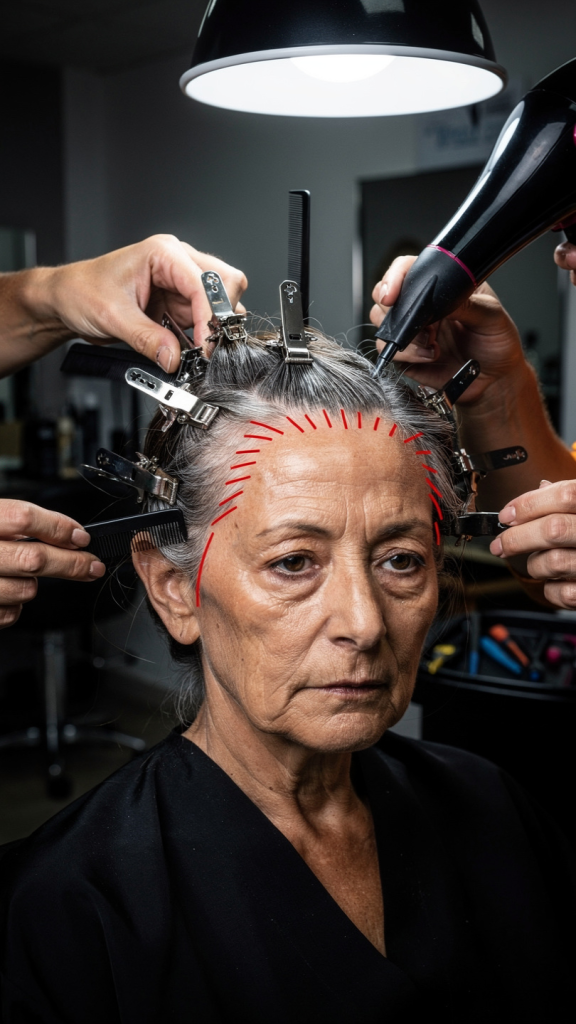
Sitting in a salon chair every six weeks means repeated washing, aggressive towel-drying, tension from clips, and blow-drying—all of which put wear on roots that are already more prone to traction alopecia.
8. You’re paying for a service that delivers zero visible benefit.
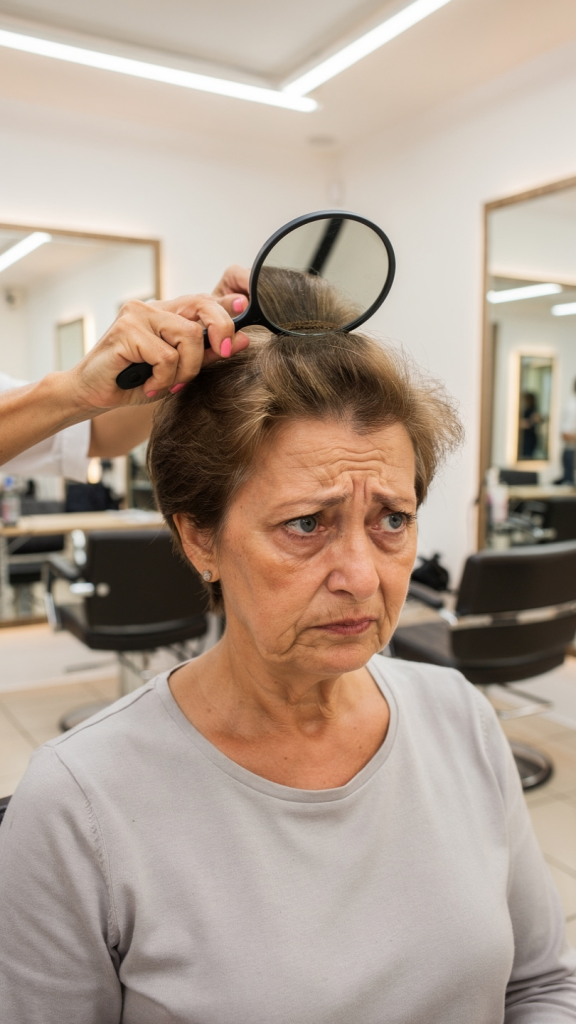
If your ends aren’t splitting due to proper moisturizing and protective care, a six-week trim offers no aesthetic improvement—it becomes a recurring expense with no return on investment.
9. The rule originated for young, oily, fast-growing hair types.
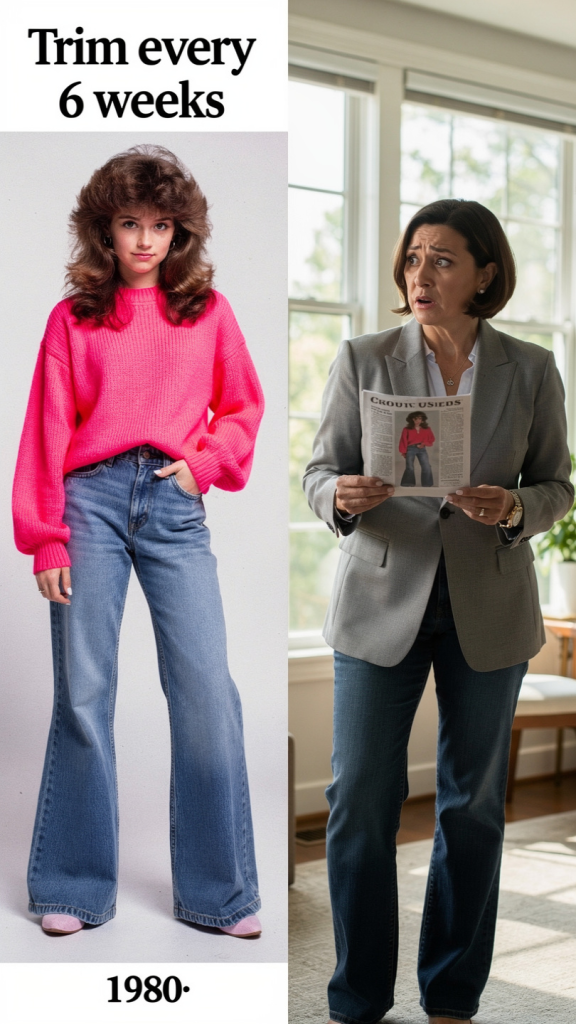
The 6-week myth came from the 1980s salon industry targeting teenagers and 20-somethings with high sebum and rapid growth; applying it to menopausal hair is like using a teen’s skincare routine on mature skin.
10. A better schedule exists: trim every 12–16 weeks for actual health.

Waiting three to four months allows you to assess true split-end accumulation while preserving enough length to style softly, meaning you trim for condition—not for an arbitrary calendar date.
Signs You Actually Need a Trim (Ignore the Calendar)
Instead of watching the calendar, watch your hair. Book a trim only when you notice one or more of these signs:
| Sign | What It Looks Like |
|---|---|
| Visible split ends | White dots or tiny forks at the ends |
| Tangling at the bottom | Hair knots instantly after brushing |
| Uneven hemline | One side looks visibly longer than the other |
| Dry, rough texture | Ends feel like straw while roots feel fine |
| Snagging on clothing | Ends catch on sweater cuffs or collars |
Once every 12–16 weeks is a healthy starting point, but your hair's behavior should be the real boss.
How to Protect Your Hair Between Trims (The 50+ Hair Care Protocol)
If you trim less often, you must care for your ends more deliberately. Here is a simple protocol for older women:
- Silk or satin pillowcase – reduces friction breakage by 80% overnight.
- Leave-in conditioner on ends daily – apply only from mid-lengths down.
- Wide-tooth comb only – never brush wet hair aggressively.
- Low or no heat styling – air-dry 80% of the way before using warm (not hot) settings.
- Regular oiling – argan, jojoba, or rosemary oil on ends every 2–3 days.
- Gentle hair ties – no elastic rubber bands; use spiral or fabric-covered ties.
What to Say to Your Stylist (Script Included)
Many older women feel pressured by their stylist to trim "on schedule." Here is exactly what to say to take back control:
"I am growing my hair longer because my growth rate has slowed with age. Please do not trim today unless you see actual split ends. I will come back in about three months unless I notice breakage sooner. Thank you for respecting my hair's changing needs."
If your stylist pushes back, consider finding a stylist who specializes in aging hair.
The Financial Reality Check
Let's do simple math. A standard trim costs 30–70 plus tip.
| Schedule | Trims per year | Annual cost (avg 50+10 tip) |
|---|---|---|
| Every 6 weeks | 8–9 trims | 480–540 |
| Every 12 weeks | 4 trims | $240 |
| Every 16 weeks | 3 trims | $180 |
If you switch from 6 weeks to 12 weeks, you save 240–300 per year. Over five years, that is 1,200–1,500 you keep in your pocket for no loss of hair health.
Conclusion: Your Hair, Your Calendar, Your Rules
The "trim every six weeks" rule was never based on science—it was based on salon retail strategy and a one-size-fits-all beauty standard. For older women, following that advice does more harm than good. It slows your length goals, thins your hemline, dries out your ends, stresses your fragile roots, and costs you hundreds of dollars annually for no real benefit.
Your hair at 50, 60, and beyond is not the same as your hair at 20. It grows slower, produces less natural oil, and breaks differently. That does not mean it is worse—it means it requires a different kind of care. Less frequent trims, more protective styling, and paying attention to actual signs of damage are the real secrets to healthy, beautiful aging hair.
So ignore the calendar. Ignore the outdated salon dogma. Listen to your own strands. Trim when they need it, not when a rulebook from the 1980s tells you to. Your length, your volume, your wallet, and your peace of mind will all thank you.


Leave a Reply