It looks effortless. It moves like nothing you’ve had before. But before you book, there are three things your stylist needs to know.
The wolf cut has over a billion views on TikTok and hasn’t slowed down. In salons, it’s one of the most-requested cuts of 2026 — and one of the most commonly misunderstood. Women sit down asking for ‘the wolf cut’ and walk out with something that doesn’t quite look right on their hair, because the version that went viral was cut for a specific texture and density that isn’t universal.
This is the guide that fixes that. What the wolf cut actually is, how it differs from the butterfly cut and the shag, what it does to different hair textures, which face shapes it works hardest for, and exactly what to say at the salon to make sure you get the version that flatters you — not just the one that trends.
→ What to bring to your appointment: two or three photos of the wolf cut on hair that looks similar to yours in texture and density. The wolf cut on fine straight hair looks entirely different from the wolf cut on thick wavy hair. Show your stylist your hair type, not just the shape.
what is the wolf cut, actually?
Let’s kill the confusion immediately. The wolf cut is not a wolf-howl aesthetic. It’s not punk costume hair. It’s a precise cutting technique that merges two iconic shapes: the ’70s shag (internal choppy layers) with the soft, face-framing curtain bang.
The two-zone structure:
- Crown layers — short,密集 internal texture that creates volume at the top
- Length layers — longer, blended ends that keep movement without losing shape
Unlike a classic shag (which often looks very piece-y and rock-and-roll), the wolf cut is softer. Unlike the butterfly cut (which keeps length in front like wings), the wolf cut keeps more weight in the back. And unlike a lob, it’s never blunt.
At-home styling note: If you plan to style this yourself daily, tools like the Shark FlexStyle or Revlon One-Step are genuinely helpful for lifting roots without fighting the layers.
10 Aesthetic Wolf Cut Hairstlyles To Try:
1. The Vivid Perimeter Wolf
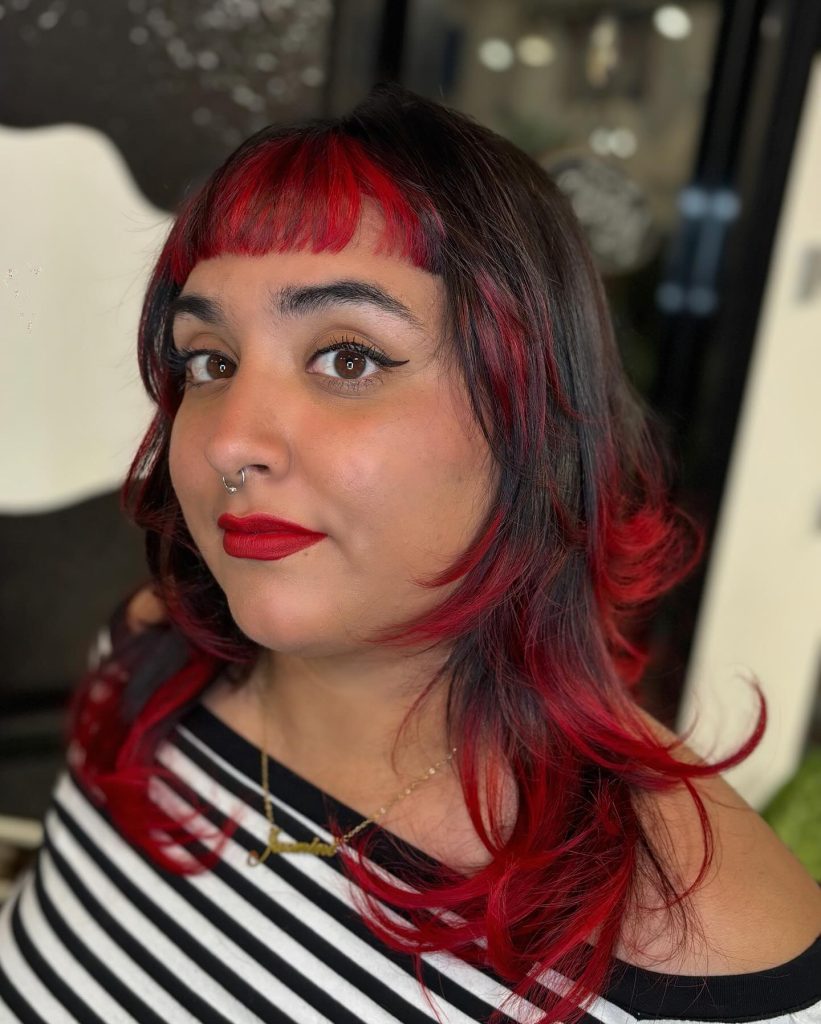
This look demonstrates how the wolf cut’s internal layers can be used as a canvas for high-contrast color. The shorter, face-framing layers are emphasized with a deep red shade that peeks out from beneath the dark base, highlighting the intentional “step” between the crown and the length. The addition of a blunt micro-fringe adds a sharp, modern edge to the otherwise shaggy silhouette. A person with a dark brunette and vivid red wolf cut, featuring a short, textured fringe and layered face-framing pieces that curl outward to showcase the red color.
2. The Braided Copper Wolf
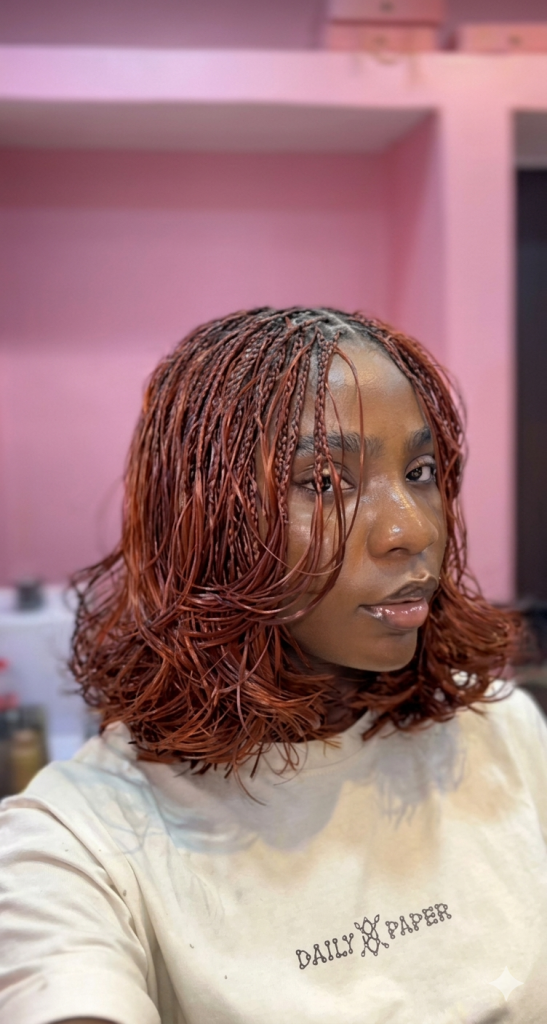
This interpretation proves that the wolf cut silhouette is incredibly versatile, even for protective styles. By using micro-braids that transition into soft, wet-look curls, the “two-zone” structure remains intact: shorter crown layers provide that essential lift and face-framing fringe, while the curled ends add volume and movement at the collarbone. It is a high-value, modern take for anyone wanting a textured, shaggy aesthetic with low-maintenance braids. A person with shoulder-length, coppery-auburn micro-braids styled into a wolf cut with voluminous curled ends and wispy, face-framing braided layers.
3. The Natural Curly Wolf

This image is the perfect reference for the “curly specialist” version of the cut. By utilizing a dry curl-by-curl cutting technique, the crown layers are given the freedom to spring up and create height without looking forced. The curly fringe is left slightly longer to account for shrinkage, blending effortlessly into the shaggy perimeter to maintain that signature wild but intentional shape. A front-facing photo of a person with dark, naturally curly hair in a wolf cut, featuring voluminous crown layers and a soft curly fringe that frames the forehead.
4. The Silk-Press Volume Wolf
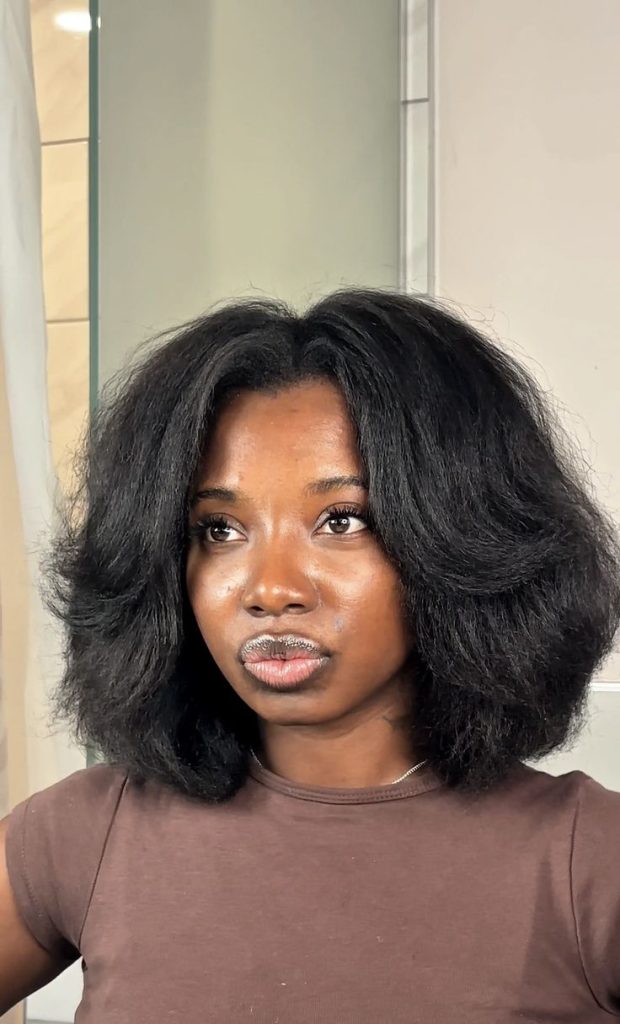
This look is the ultimate demonstration of how internal texture creates soft, rounded volume on dense hair. By using a blowout technique, the signature crown layers are transformed into a polished, face-framing “halo.” It perfectly illustrates the “softly wild” structure mentioned in our comparison, proving that the wolf cut doesn’t always have to be gritty—it can be incredibly sophisticated while still removing heavy bulk from the mid-lengths. A person with dense, jet-black hair styled in a voluminous, silk-press wolf cut featuring soft, tiered layers and a gentle middle part that flows into face-framing wings.
5. The Blonde Curtain Cascade
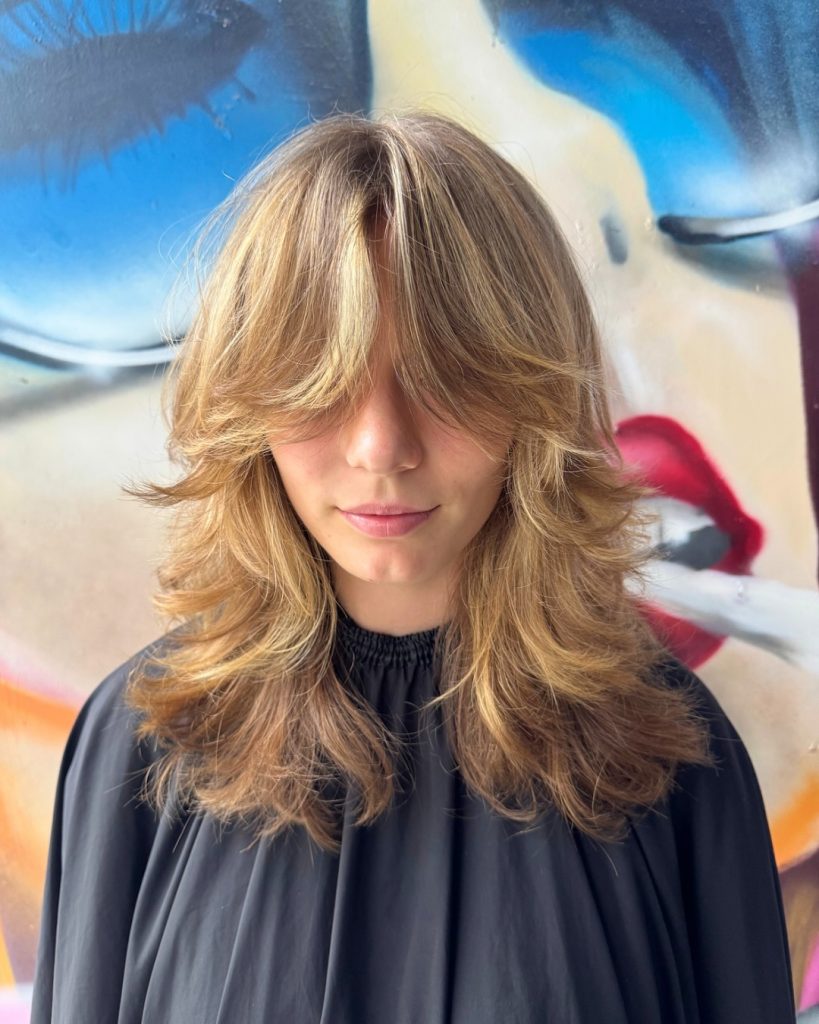
The curtain bang is the gateway to the wolf cut, and this image perfectly illustrates why. These long, center-parted bangs are the required face-frame, blending seamlessly into the internal shaggy layers for a soft, lived-in texture that defines the overall shape. A person with multi-toned blonde hair, featuring long, styled curtain bangs that flow around the face, transitioning into shaggy layers.
6. Soft-Focus Brunette Volume
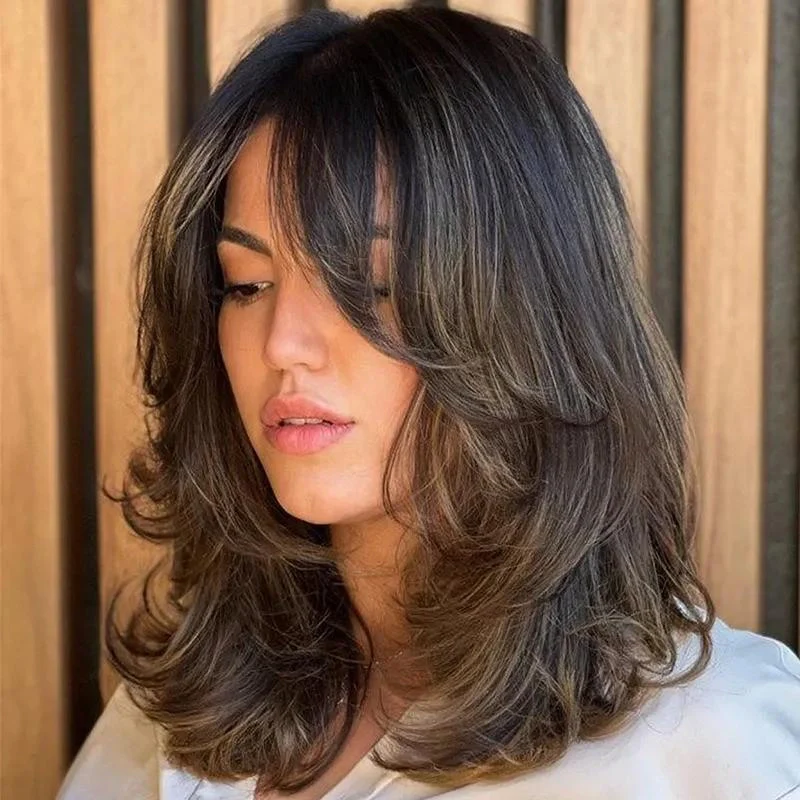
This is where the wolf cut deviates from a standard shag. While still incredibly textured and wild, this brunette version uses softer, more deliberate internal layering to build volume in front (similar to the Butterfly cut mentioned in the table), rather than the piece-y, grunge aesthetic of a true shag. A woman with long, dark brunette hair styled with voluminous curtain bangs and layered waves, casting a soft side-profile view.
7. Platinum Precision Silhouette
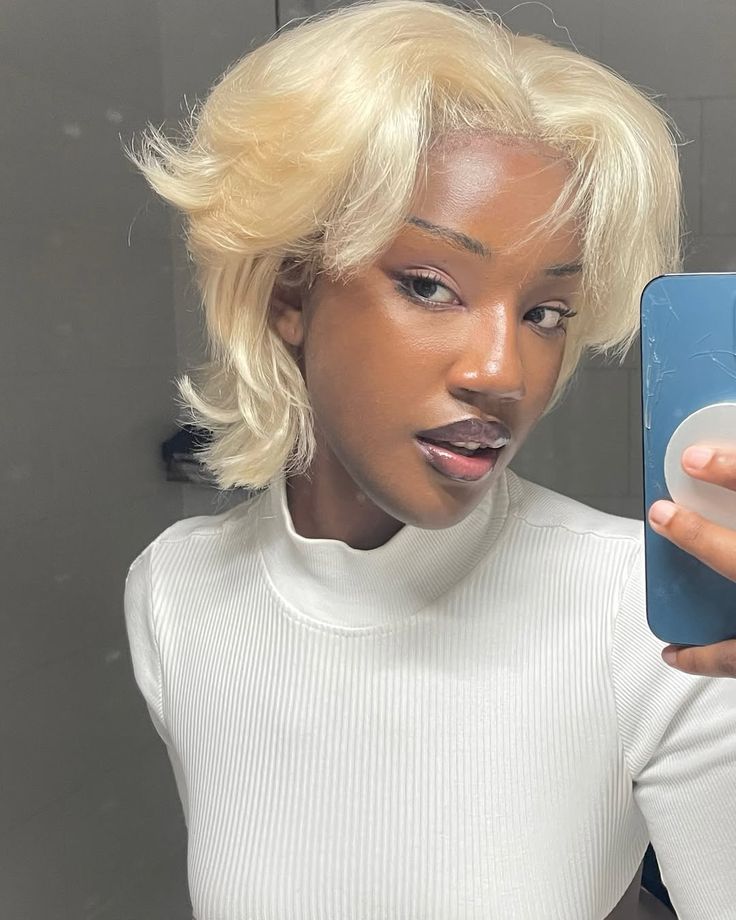
Texture is key to a successful wolf cut, and this platinum, wavy texture proves it. The intricate layers at the crown and sides remove bulk, allowing the natural waves to pop, while the curtain bangs seamlessly frame the face. This demonstrates that even in a polished, almost ‘wet-look’ style, the precise silhouette of the wolf cut endures. A woman with bright platinum blonde, wavy hair in a structured wolf cut with long curtain bangs, looking directly at the camera while taking a mirror selfie.
8. The Smooth-Blend Silhouette
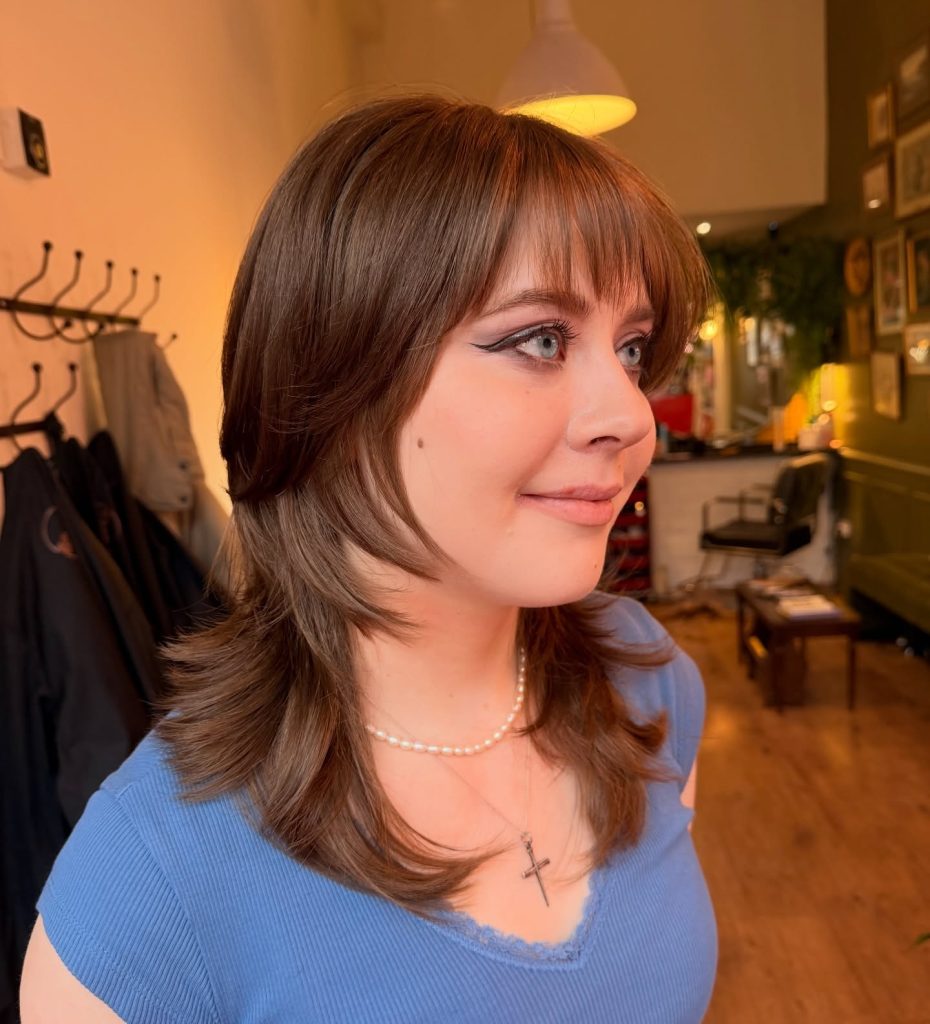
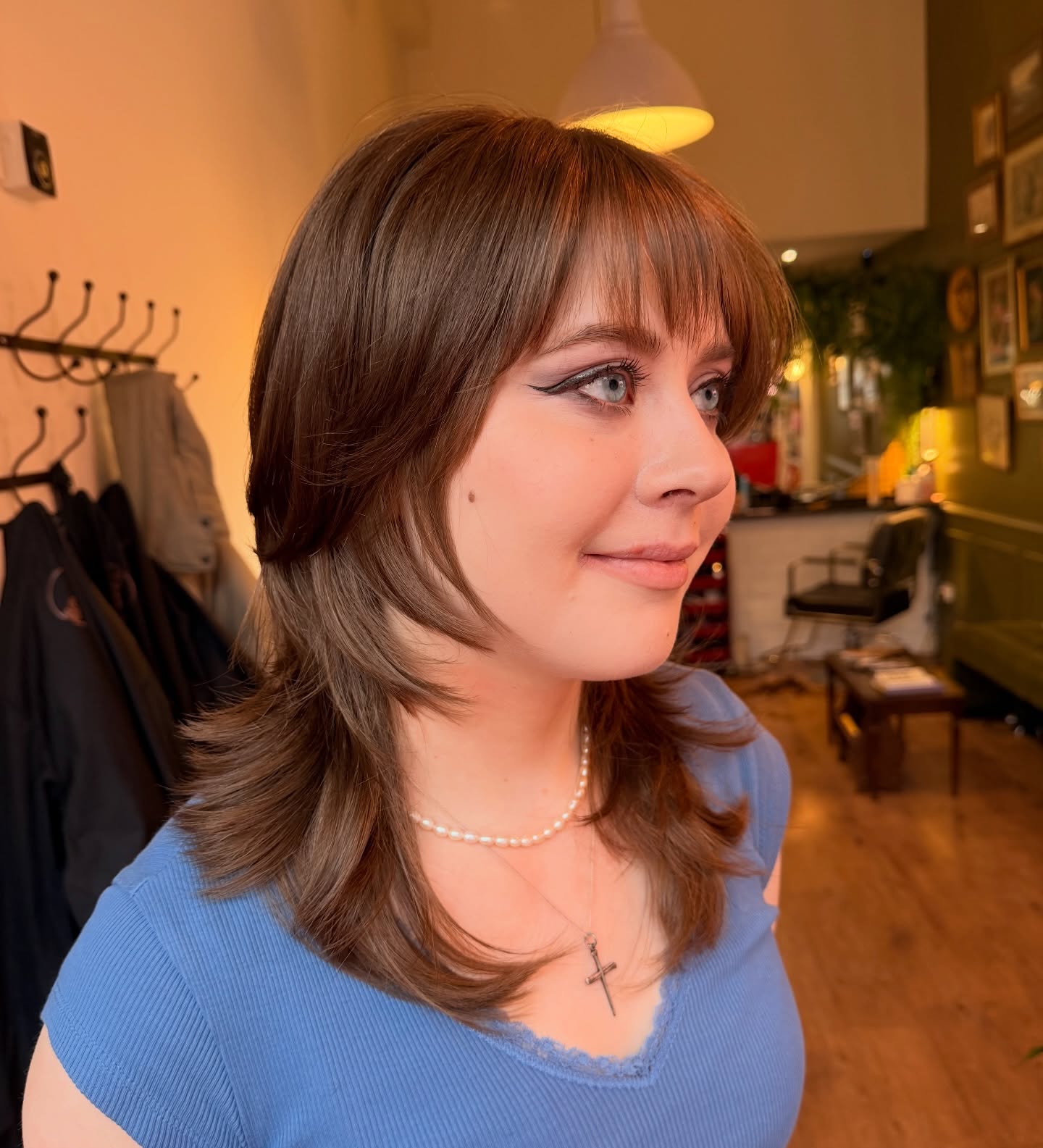
This image showcases a key variation: the curtain fringe required for the wolf cut can blend perfectly into the side layers for a smooth, face-hugging shape. The layers in the back remain long and preserve movement, showing that the cut can achieve a softer, less wild look that maintains a lovely grow-out phase, unlike a traditional lob. A young woman with shoulder-length, warm-toned brown hair featuring a styled fringe and layered texture, smiling as she looks to the side.
9. The High-Contrast Sculpted Wolf
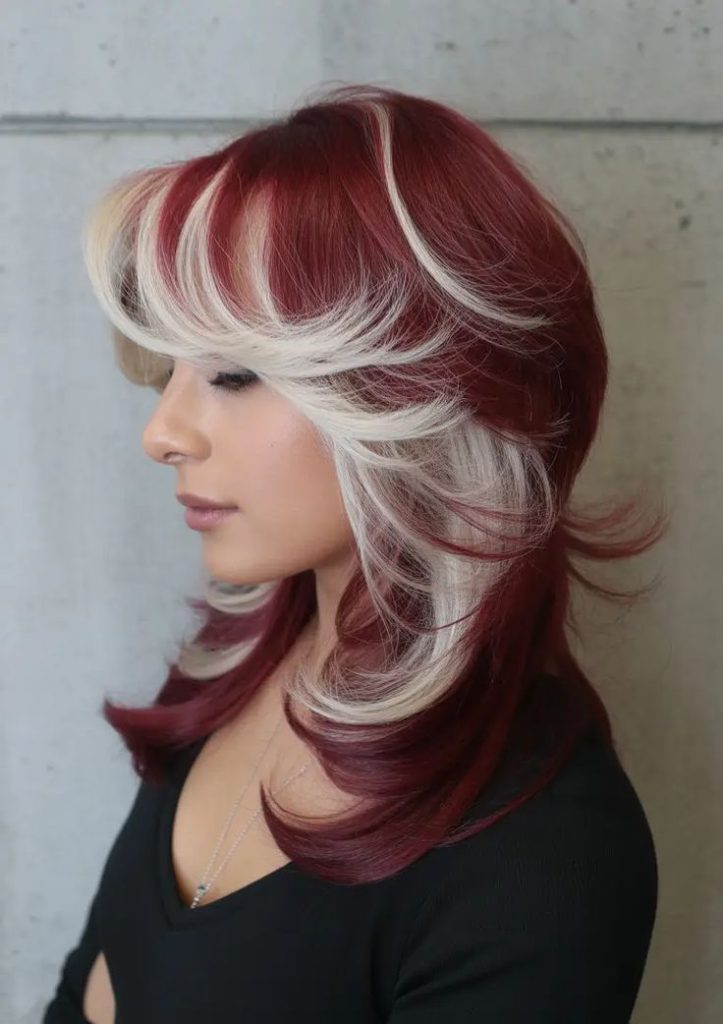
This profile view illustrates the “two-zone” structure with extreme clarity. The shorter crown layers are styled to flip outward, creating that signature volume at the top, while the length layers maintain a sleek, face-hugging flow. The use of platinum “skunk stripe” highlights against a deep burgundy base emphasizes the intentional choppiness that separates a wolf cut from a standard layered look. A side profile of a person with deep burgundy hair and bold platinum blonde streaks, featuring a highly layered wolf cut with voluminous crown texture and flicked-out ends.
10.The Bombshell Volume Wolf
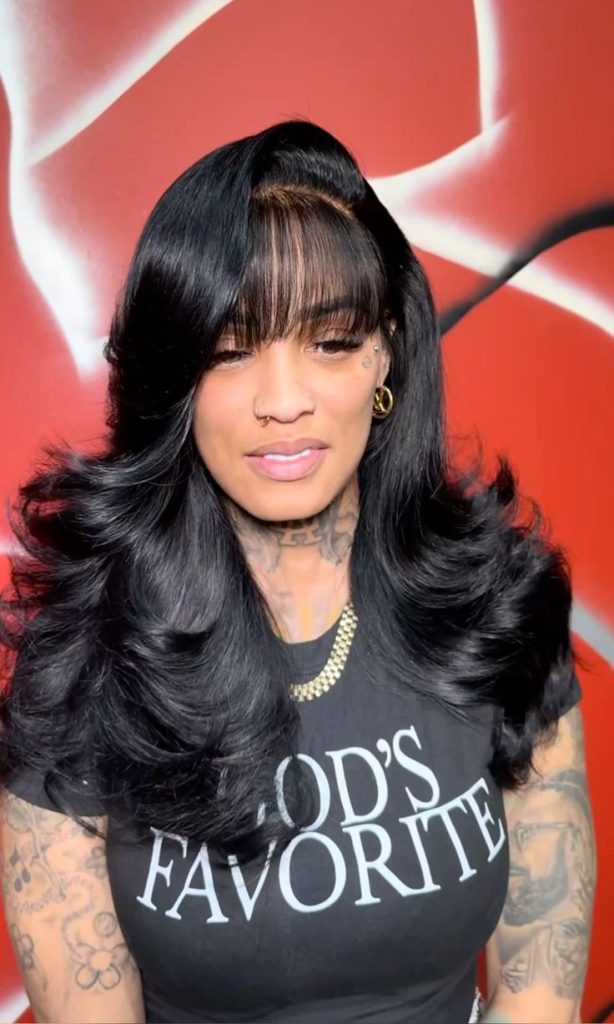
This version proves the wolf cut can lean into high-glamour territory. By using a blowout technique (likely with a tool like the Revlon One-Step), the internal choppy layers are transformed into soft, cascading waves. The wispy, brow-skimming fringe remains the focal point, blending into the heavy, tiered volume that defines this “shag-meets-glam” aesthetic. A person with dense, jet-black hair in a voluminous wolf cut, featuring soft, wispy bangs and large, bouncy layered curls that create a dramatic, flared shape.
Wolf cut vs butterfly cut vs shag — the plain‑English comparison
Screenshot this table. Bring it to your consultation. This is the section that gets saved.
| Feature | Wolf Cut | Butterfly Cut | Shag |
|---|---|---|---|
| Layer placement | Crown-heavy + length preserved | Face-framing wings + long back | Evenly choppy throughout |
| Structure | Softly wild | Deliberate volume in front | Piece-y, rock-and-roll |
| Best for texture | Wavy, thick, curly | Straight, fine-medium | Straight to wavy |
| Grow-out phase | Blends well | Grows into long layers | Can look mullet-y |
| Fringe | Curtain bangs required | Optional | Often no fringe |
Verdict: Want volume on top but keep length? Wolf cut. Want that TikTok “winged” blowout? Butterfly. Want true grunge energy? Shag.
Which hair textures the wolf cut works best on
This is where most Pinterest inspo fails you. That perfect wolf cut you saved? That model has thick, wavy hair. Yours might look completely different — not bad, just different.
Fine / straight hair — what to ask for to prevent limpness
Fine hair risks looking stringy, not textured. Ask your stylist for:
- Shorter crown layers (think chin-length when dry)
- Less internal thinning — you need weight to hold shape
- A dry cut after washing to see true movement
Expectation: Soft, lived-in shape, not dramatic volume.
Don’t expect: That massive shaggy mane. That requires density.
Thick / wavy hair — where the wolf cut genuinely shines
This is the sweet spot. Thick, wavy hair takes the wolf cut and makes it move. The layers remove bulk without losing shape. The fringe blends seamlessly. You’ll air-dry better than anyone else.
Ask for:
- Point-cutting, not razor cutting (razor can frizz waves)
- Length kept at collarbone or lower for best proportion
Curly hair — the DevaCut version
Curly wolf cuts exist, but they require a curly specialist. The principle is the same (crown layers + length), but the technique changes completely. Curls spring up — so your “long” layers might become shoulder-length.
What to ask for:
- Dry curl-by-curl cutting
- Longer fringe than you think (curls shrink)
- No razors, no thinning shears (curl disruption)
📌 Callout box: The wolf cut on fine straight hair looks entirely different from the wolf cut on thick wavy hair. Show your stylist your hair type, not just the shape. Bring a photo of someone with your texture.
Face shapes: which version flatters you most
The wolf cut isn’t one-size-fits-all. But it can be adjusted for almost any face.
Oval — You win. Any fringe length, any layer depth. Go dramatic if you want.
Round — Keep your fringe past the chin. Shorter face-framing layers at cheekbone level will widen rather than slim. Ask for fringe that hits below the jaw.
Square — Soften strong jawlines with wispy, longer fringe (brow to cheekbone). Avoid blunt, heavy bangs. Layers should start lower — not at the crown, but around the ears.
Heart — Narrow chin needs width at the jaw. Keep volume lower, not just at the crown. Your fringe should be longest at the outer edges (curtain style, not straight across).
Pro tip: The shorter your crown layers, the more height you get. The longer your fringe, the more it pulls the eye down. Adjust accordingly.
This article contains affiliate links. If you purchase through one of these links, we may earn a small commission at no extra cost to you.
How to style the wolf cut at home — the 5-minute version
This cut is not wash-and-go for most people. But it is fast once you know the sequence.
Step 1 — The rough-dry (don’t touch it yet)
Towel-dry gently. Apply a heat protectant. Blow-dry on medium heat, shaking your roots with fingers only — no brush, no comb. You want the layers to fall where they want.
Step 2 — Diffuse or blow-dry with fingers for root volume
Flip your head over. Diffuse on low heat, scrunching as you go. Or use a concentrator nozzle to lift roots section by section (the Revlon One-Step brush works well here for speed).
Pro move: Use Olaplex No.6 Bond Smoother on damp ends before drying — it smooths without weighing down layers.
Step 3 — Sea salt spray + scrunch for texture
Once 80% dry, spray sea salt spray into palms, then scrunch and twist sections. Let air-dry the rest of the way or finish with a cool shot from your dryer.
Final touch: Flip your head over, shake out roots, and adjust your fringe so it falls across, not straight down.
The salon brief — exactly what to say
Print this. Screenshot this. Do not walk into that salon without it.
Script:
“I want a wolf cut. That means: crown layers starting about two inches below my crown, curtain bangs that blend into the sides, and length kept at [your desired length]. Please point-cut the ends — no blunt lines. Do not use thinning shears near my crown. Can we do a dry check halfway through?”
What to avoid saying:
❌ “Just give me the TikTok cut” — too vague
❌ “I want it really choppy” — can turn into a mullet fast
❌ “Make it look effortless” — effortless requires precision first
Where to find good reference photos:
Search Pinterest for “wolf cut [your hair length] [your texture]” — e.g., “wolf cut fine hair shoulder length.” Save 2–3 photos of the same cut on similar hair.
Article closing structure
You now know more about the wolf cut than 90% of people who book it. You know your face shape, your texture, your fringe length, and exactly what to say in the chair.
Salon brief — word‑for‑word script (save this):
“Crown layers, curtain fringe, point-cut ends. No thinning shears. Dry check at halfway. Here are my photos.”
Say that. Show your photos. Then let them work.
🛍️ 5 products that make the wolf cut work
| Product | When to use |
|---|---|
| Shark FlexStyle | Daily styling — roots + ends without damage |
| Revlon One-Step | Fast rough-dry and root lift |
| L’Ange Le Volume | Finishing texture without crunch |
| Olaplex No.6 | Smooths ends, defines layers |
| Sea Salt Spray | The non-negotiable for that lived-in texture |
Leave a Reply