
Volume without a chop. Movement without the commitment. This is the layered cut that solves the problem women have been asking stylists to fix for years.
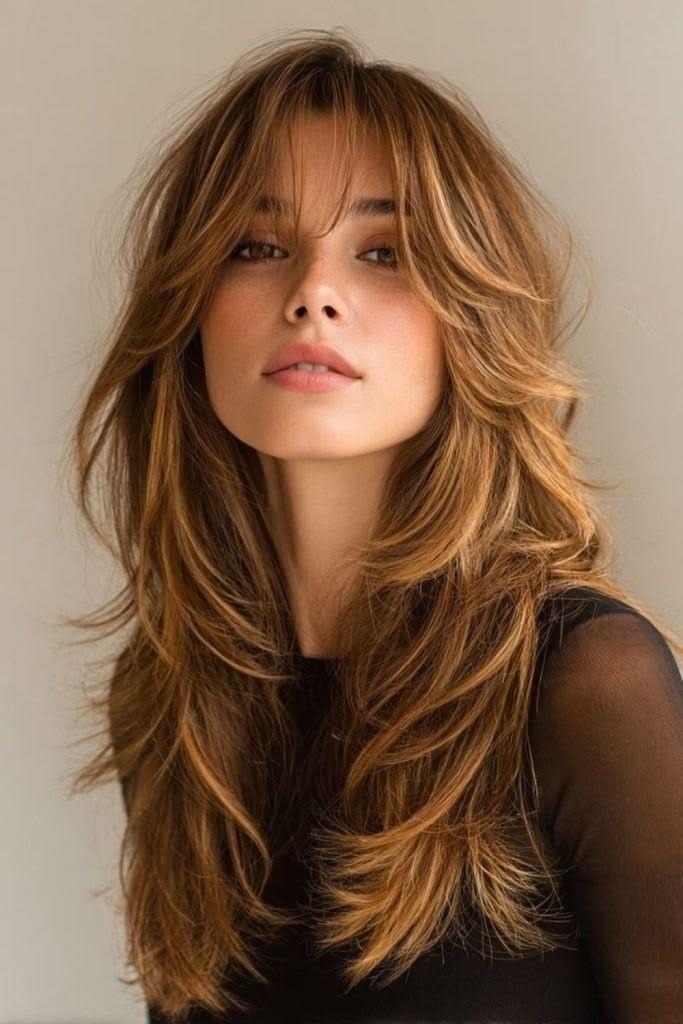
The butterfly cut in its most flattering form — long layers, face-framing curtain bangs, and effortless movement
If you've been scrolling hair content lately and noticing the same shape appearing again and again — lots of movement, shorter layers around the face, longer flowing length underneath, an irresistible bounce — that's the butterfly cut. It has over 580 million views on TikTok and is consistently the most-requested layered haircut in salons through 2026.
But here's what's worth knowing beyond the numbers: the butterfly cut isn't just a trend. It's a specific layering technique that solves one of the most common hair frustrations — hair that looks flat and heavy despite being long. If you've been growing your hair but not loving how it looks, this might be exactly the cut you've been circling around.
What Exactly Is the Butterfly Cut?
The butterfly cut is defined by a single structural principle: high contrast between two distinct layers. Shorter, face-framing layers cut at roughly chin or cheekbone height sit above longer layers that maintain the overall length beneath. When the hair is styled and those shorter layers flip outward, they create a wing-like shape on either side of the face — hence the name.
The key distinction: Unlike a standard layered cut where layers are blended evenly throughout for all-over texture, the butterfly cut relies on deliberate contrast. The short top layer and the long underneath layer are intentionally distinct — it's that separation that creates the lift and volume.
Celebrity hairstylist Cindy Duplantis, speaking to Fashion Magazine, describes the face-framing layers as essentially a contouring effect: they're placed to accentuate the cheekbones or jawline depending on what the individual face shape needs. It's the secret behind Sabrina Carpenter's signature blowout — and it's why the result photographs so well.
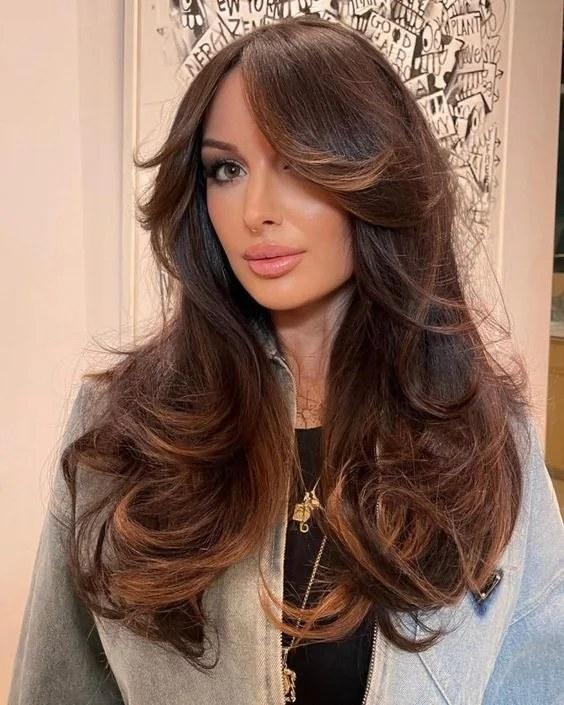
The full butterfly effect — voluminous, face-framing, dramatically layered while keeping every inch of length
The cut traces its roots to the 1970s shag, evolved through the feathered styles of the '90s, and has now been refined into something that works equally well air-dried or blow-dried, with or without bangs, on straight hair and wavy hair alike. That adaptability is precisely why it has stayed at the top of salon request lists.
How It's Different from Other Layered Cuts
vs. The Wolf Cut
The wolf cut has heavier, more dramatic short layers at the crown and a shaggier, more textured overall feel. The butterfly is softer and more refined — less rock band, more French Riviera. The layers are still pronounced but they land with more polish and less intentional dishevelment.
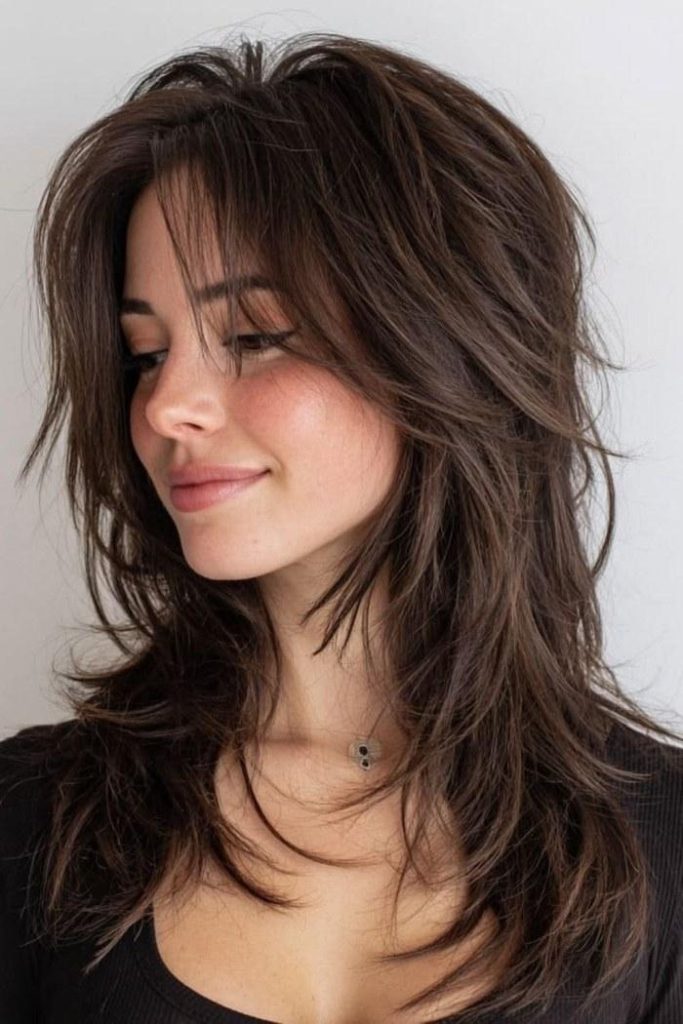
The butterfly at medium length — textured, airy, and effortlessly soft with natural movement
vs. Standard Layers
Standard layers are blended gradually throughout the hair, giving an even distribution of texture from root to tip. The butterfly creates a clear visual break between the shorter face-framing section and the longer body of the hair — that contrast is what gives it its distinctive winged shape and volume at the crown.
vs. The Shag
The shag is choppier and more textured throughout, often with visible razored ends. The butterfly is cleaner, with a more deliberate structure. It can share the shag's energy when styled casually, but it cleans up significantly more easily for polished occasions.
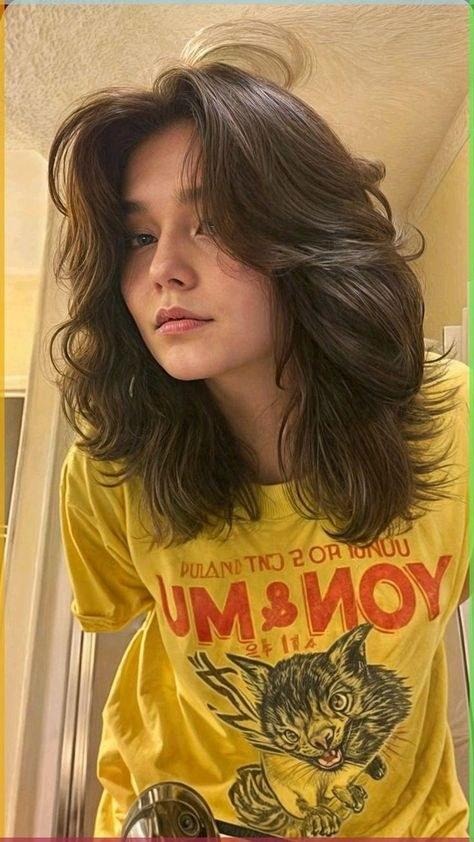
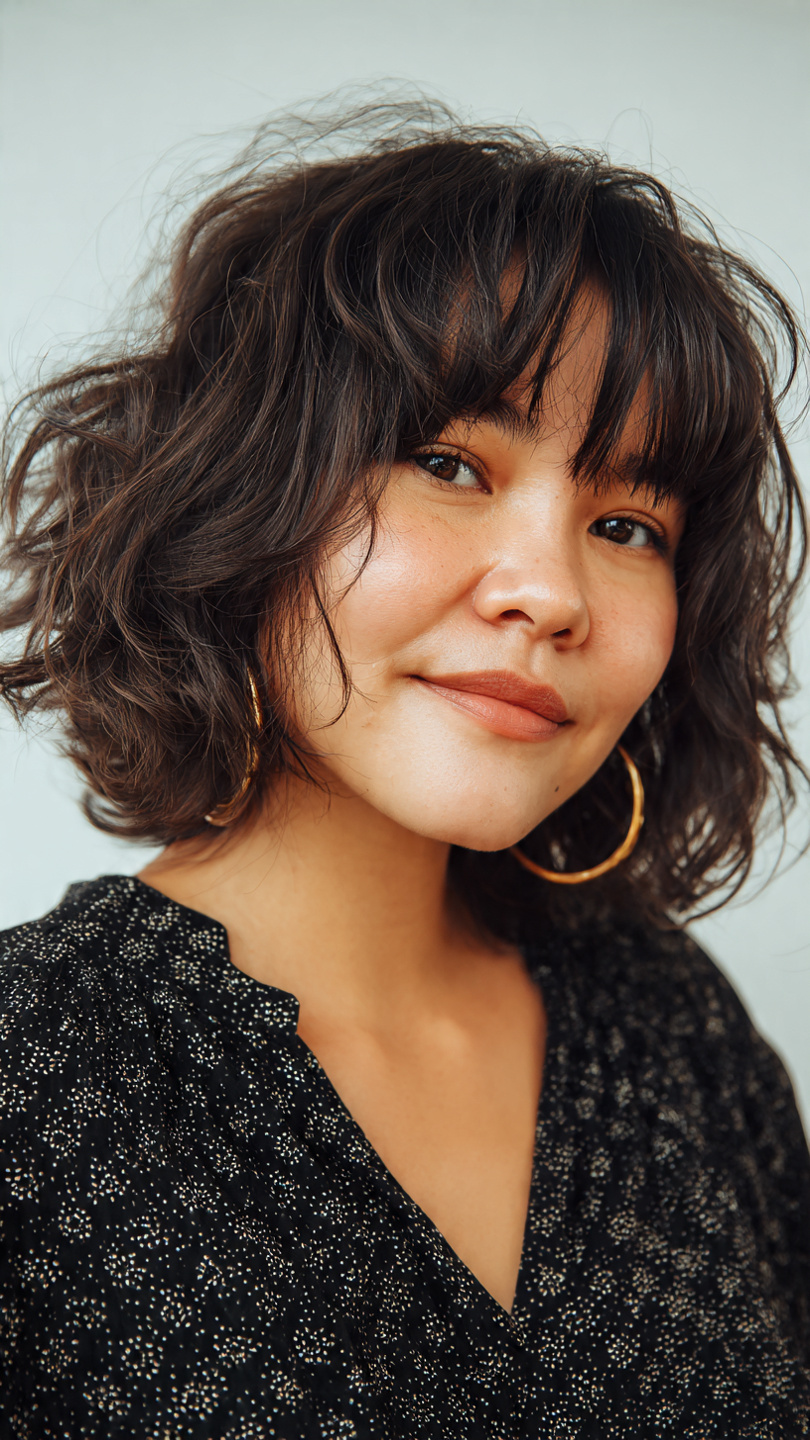
The butterfly at a shorter medium length — casual, wavy, and air-dry friendly
Why It Works — The Volume Problem Solved
The most common hair complaint among women with long hair is that it looks flat, heavy, and shapeless despite the length. Long hair carries significant weight, and that weight pulls layers down, removes volume from the crown, and creates a straight, uninspiring line.
The butterfly cut interrupts that weight. The short layers at the crown and face have no length below to pull them flat — they're free to spring up, flip outward, and move independently. The longer layers underneath maintain the length you've worked to grow. You get the volume of a shorter cut and the length of a long one simultaneously.
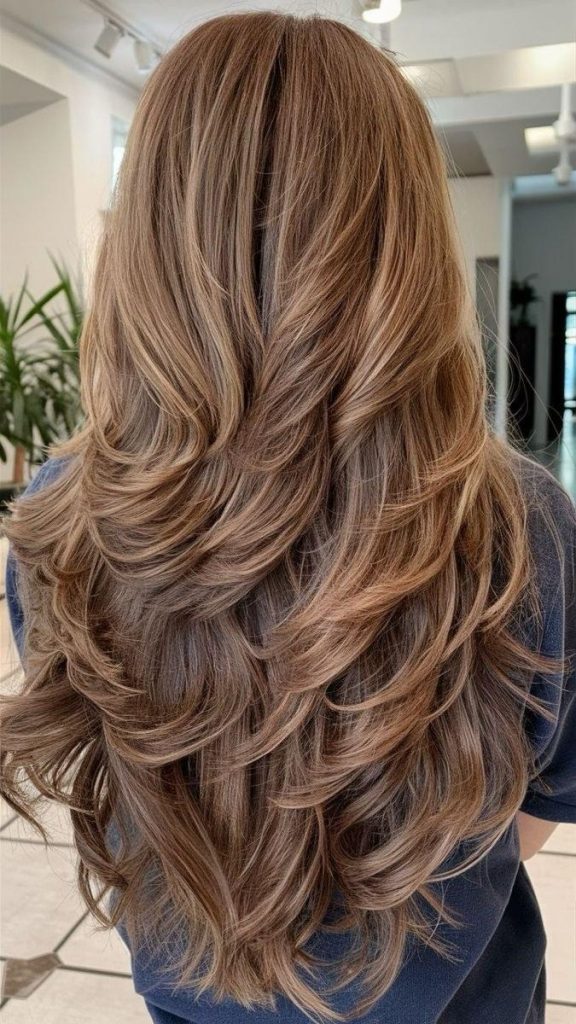
The waterfall effect from the back — the cascading layers are what make the butterfly so visually distinctive
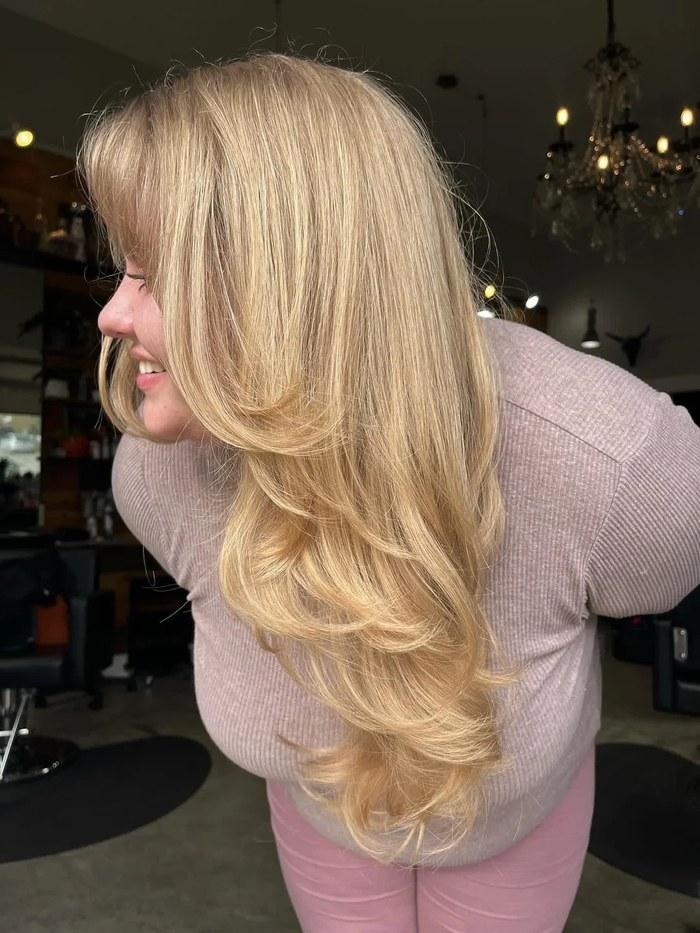
Volume and curl at the ends — the layers at different lengths catch and hold movement in a way one-length hair simply can't
The grow-out advantage: The butterfly cut grows out more gracefully than most layered cuts. Because the length differential is intentional rather than blended, the layers can gain length without losing their essential shape. Most clients need trims every 10–14 weeks rather than the 6–8 typically recommended for precision cuts.
The Variations — Which Version Suits You
Classic Butterfly — Long
The original version on long hair: shorter layers landing around the cheekbone or collarbone, longer layers flowing well past the shoulder. The most dramatic version of the cut, with the greatest contrast between sections. Styled with a blow-dry and round brush, the result is the full bombshell effect. Air-dried, it softens into something more relaxed and lived-in.
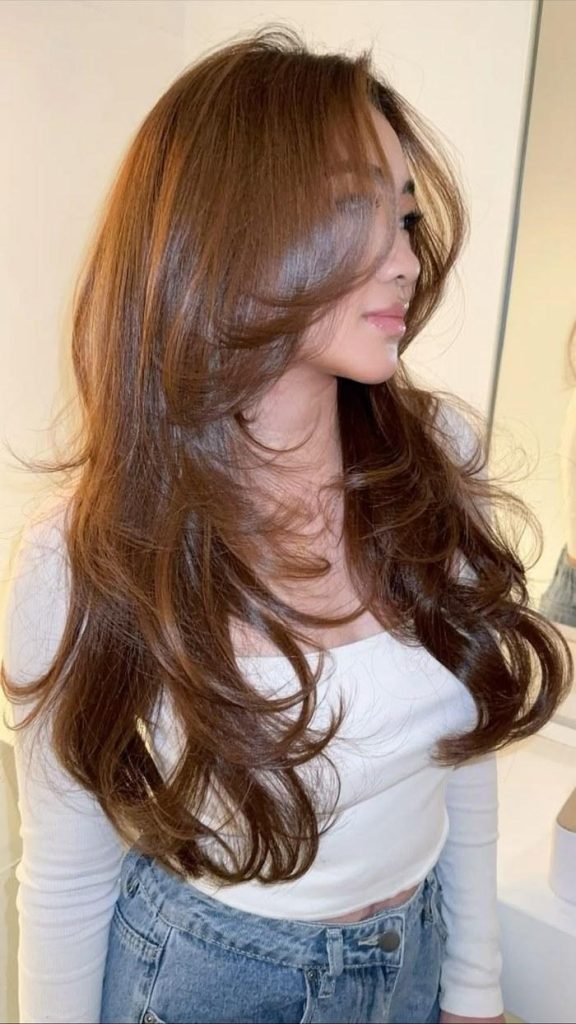
Long butterfly on auburn hair — the side profile shows the layering architecture beautifully
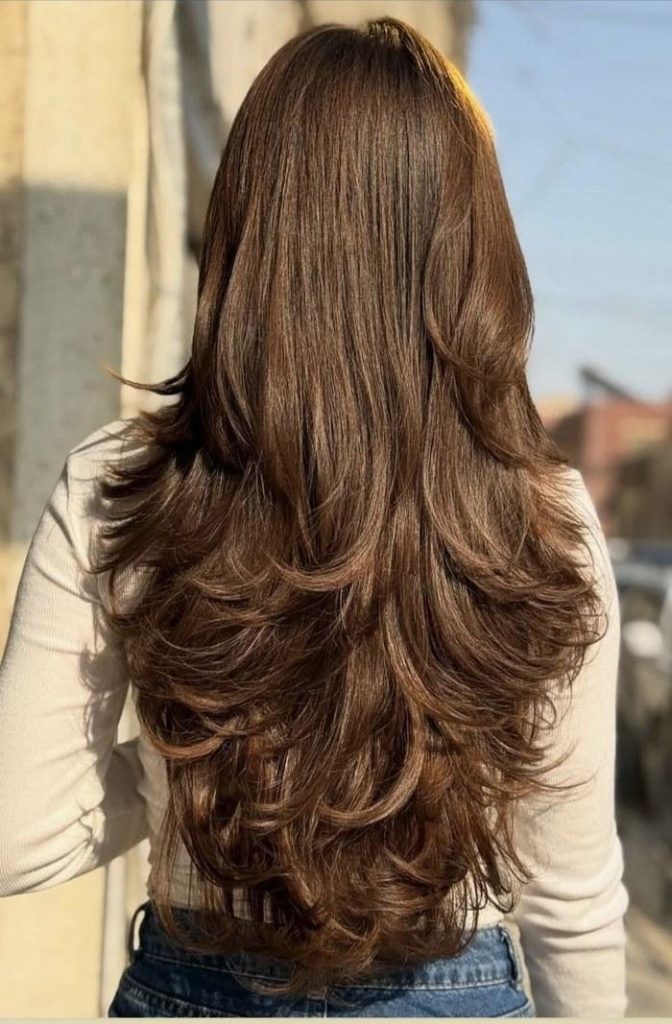
Long butterfly from the back — the distinct sections are clearly visible, especially at the ends
Butterfly with Curtain Bangs
The most-requested variation heading into 2026. Curtain bangs blend seamlessly into the shorter face-framing layers, extending the winged shape across the forehead and adding another frame around the face. The combination is particularly flattering on oval and heart-shaped faces. It softens a wide forehead and creates symmetry around the features.
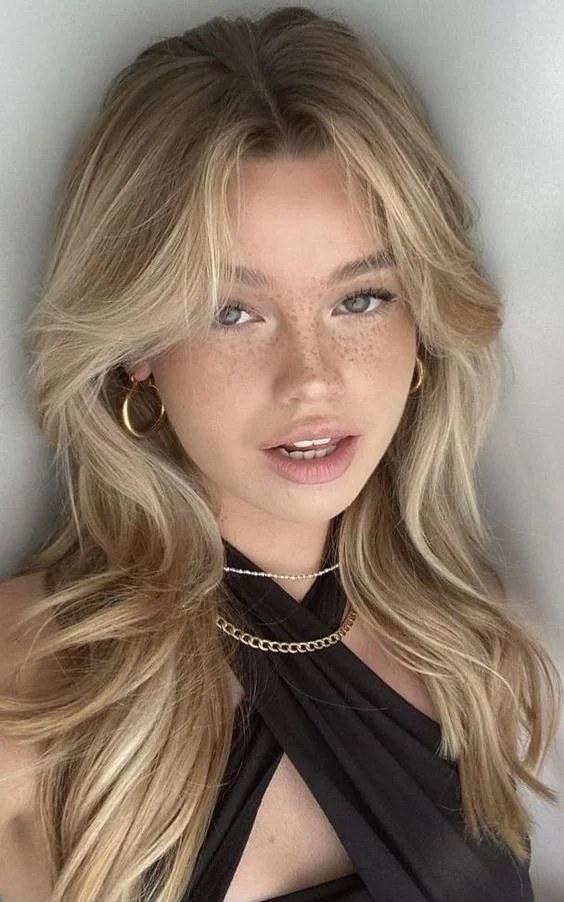
Butterfly with curtain bangs — the bangs flow naturally into the face-framing layers for a cohesive, balanced shape
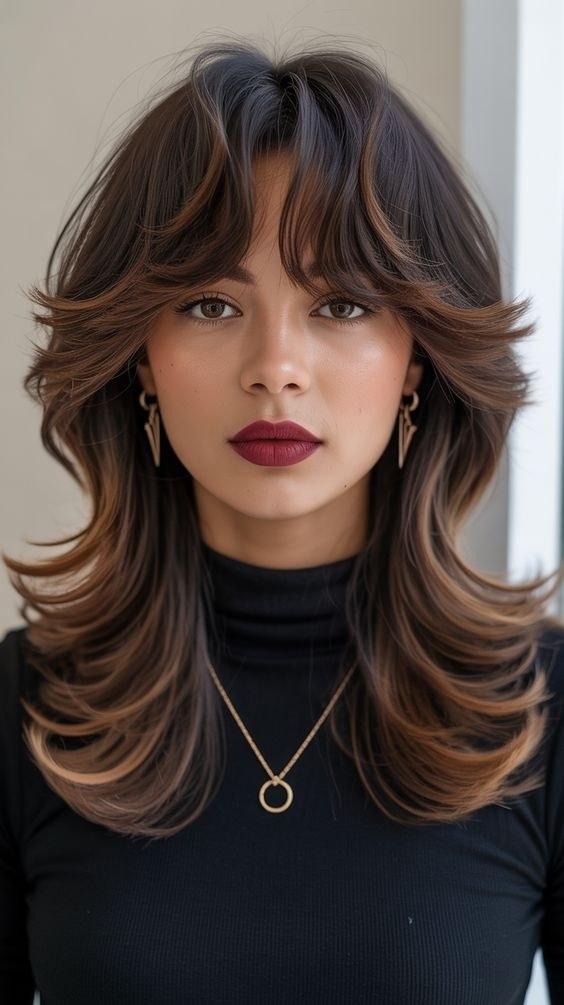
Structured butterfly with a full fringe — the more defined bang adds polish and a slightly retro edge
Butterfly with Full Fringe
A more committed version — a fringe that sits at brow level rather than parting to the sides. It's a stronger statement but pairs beautifully with the softer layers below, creating a contrast between the structured bang and the flowing body of the cut. Works particularly well with medium-length hair.
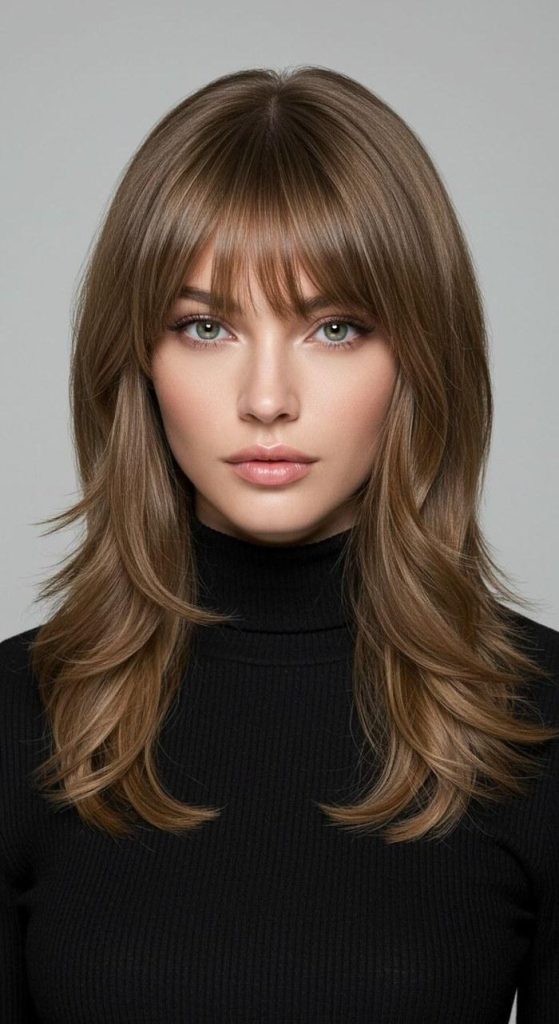
Classic butterfly with a full fringe — the straight-across bang anchors the look and emphasises the eyes
Medium Butterfly
The butterfly at shoulder to collarbone length. Here the contrast between sections is slightly less dramatic but still very visible — the shorter layers frame the face while the overall silhouette stays manageable and practical. This length is the most low-maintenance version of the cut and grows out the most gracefully.
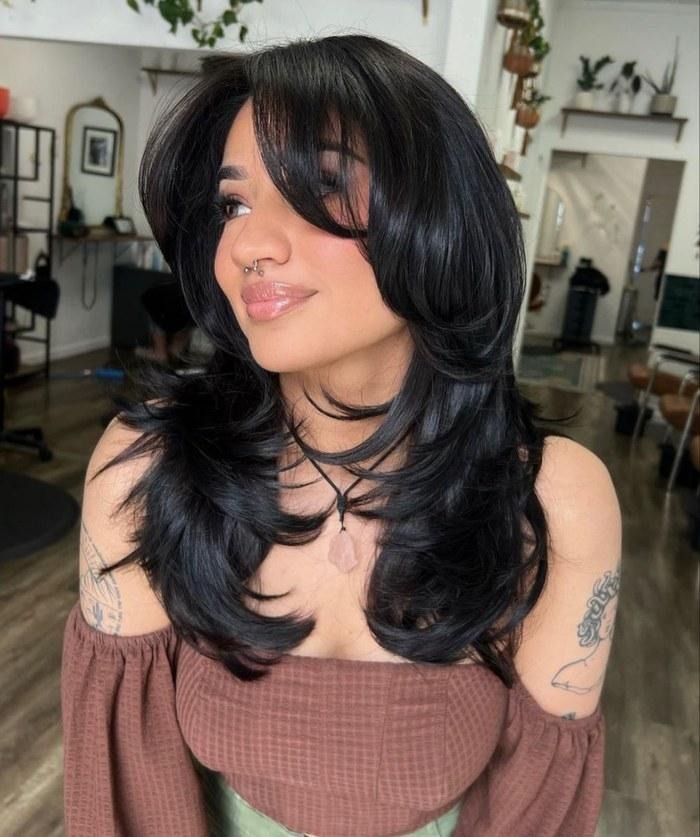
Black hair butterfly at medium length — the face-framing layers work dramatically on dark hair
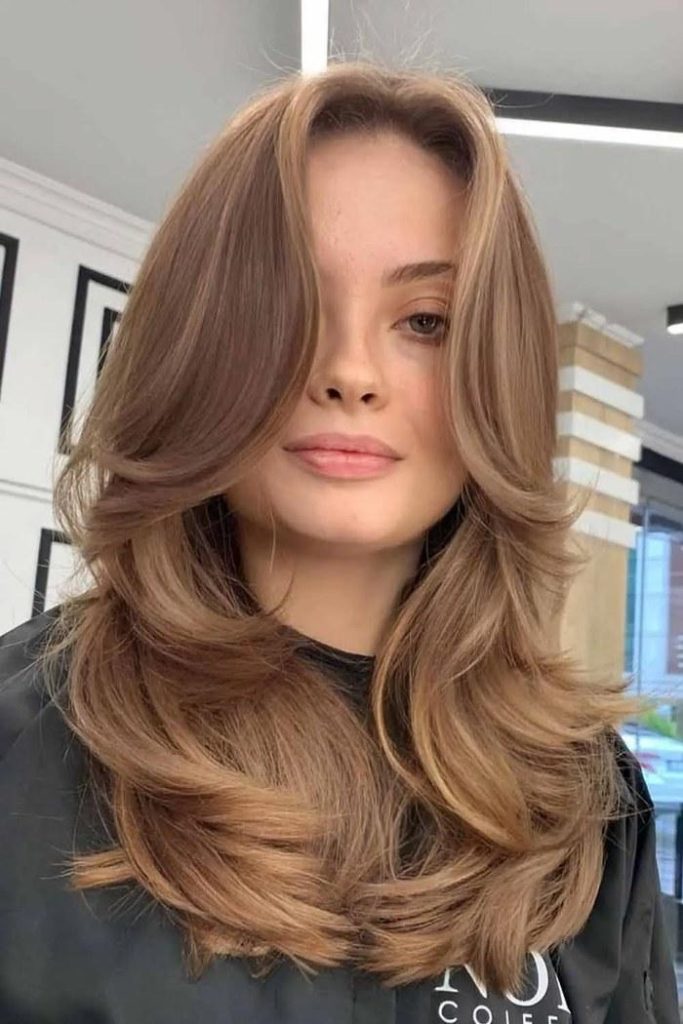
Honey-toned layers at medium-long — the partial face cover from the layers is a signature butterfly styling moment
Soft & Textured Butterfly
A looser, less structured interpretation with more blending between the layers. Less dramatic contrast, more movement and texture throughout. This variation air-dries beautifully on wavy or slightly textured hair and requires almost no styling beyond a diffuser or simply leaving it to dry naturally.
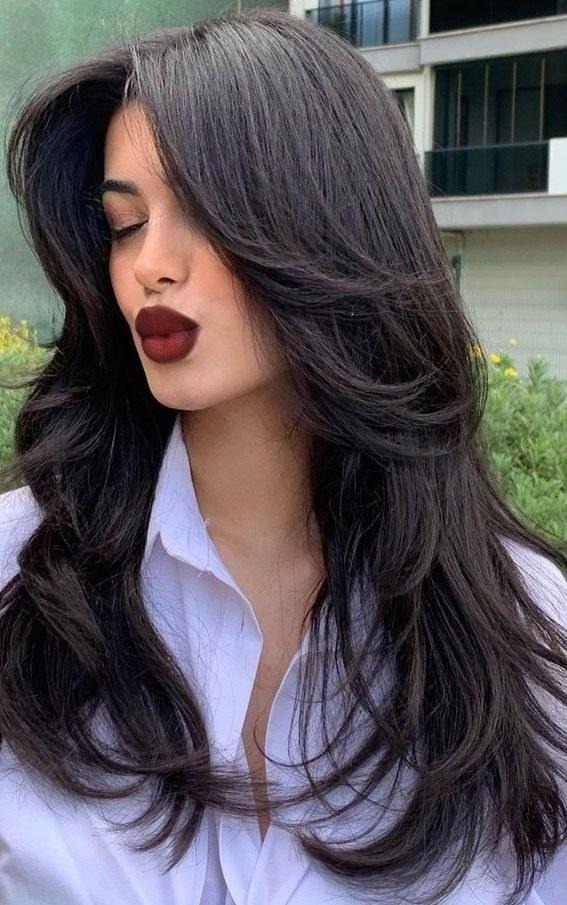
Dark hair, soft side-swept butterfly — the layers are less structured but the movement and volume are still unmistakably butterfly
Which Face Shapes Does It Suit?
The butterfly cut is genuinely one of the more universally flattering haircuts available because the face-framing layers can be positioned differently depending on face shape. Here's the honest breakdown:
Oval: Works with any variation. No adjustments needed — the natural symmetry of an oval face carries the butterfly shape effortlessly.
Round: Opt for layers that start higher (at the cheekbone rather than the chin) and add length to elongate the face visually. Curtain bangs help add the illusion of length. Avoid very short, chin-level layers that widen the face.
Square: Softer layers with a slight flick at the ends soften a strong jaw. Curtain bangs and layers that frame from the cheekbone are the most flattering. Avoid blunt or very structured layers.
Heart: The butterfly is particularly flattering — the volume at the lower section balances a wider forehead. Curtain bangs blend beautifully and soften the forehead without hiding it.
Long: Keep layers from getting too long, which can elongate the face further. Aim for layers that sit at shoulder length or slightly above for maximum width and balance.
Diamond: Curtain bangs work extremely well. Face-framing layers at the cheekbone level soften the widest point and draw attention to the eyes.
✂️ Stylist tip: Book a consultation before committing, not just the appointment. A five-minute conversation about face shape, hair texture, and styling routine will get you a better butterfly than the same cut applied without that context.
Hair Types & Textures
Straight Hair
The butterfly works on straight hair but requires more styling effort to maintain the lift and volume. A blow-dry with a round brush is the most effective approach. Without heat styling, straight butterfly layers can fall flat relatively quickly. If you have naturally straight, fine hair, discuss the layer depth with your stylist — very heavy layering can make fine hair look thinner rather than more voluminous.
Wavy & Textured Hair
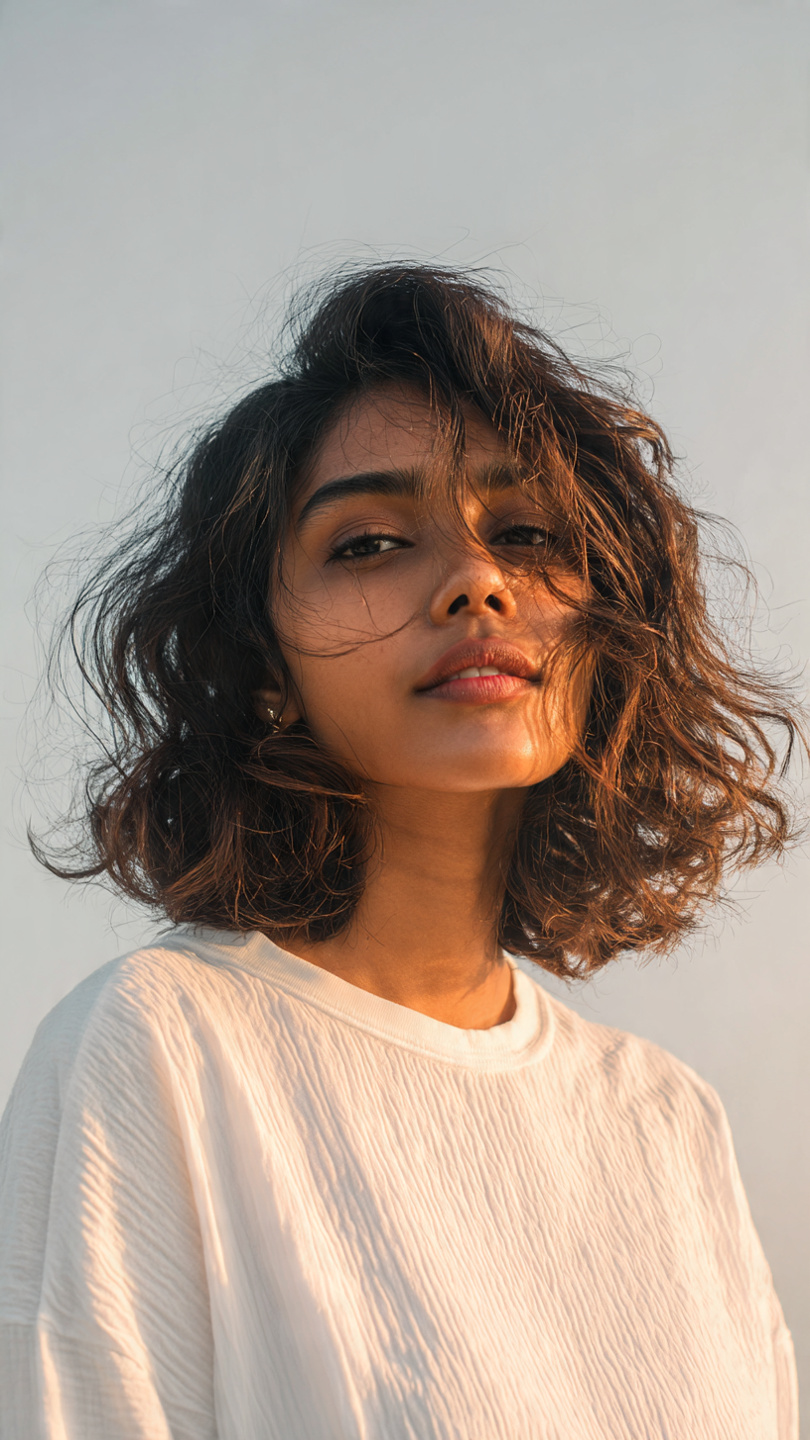
The butterfly's natural home. Wavy hair responds to the shorter layers by curling and springing upward at the crown, creating effortless volume with minimal effort. The textured ends flip and move in exactly the way the cut is designed for. Air-drying with a diffuser on low heat is all that's needed to bring out the full butterfly shape.
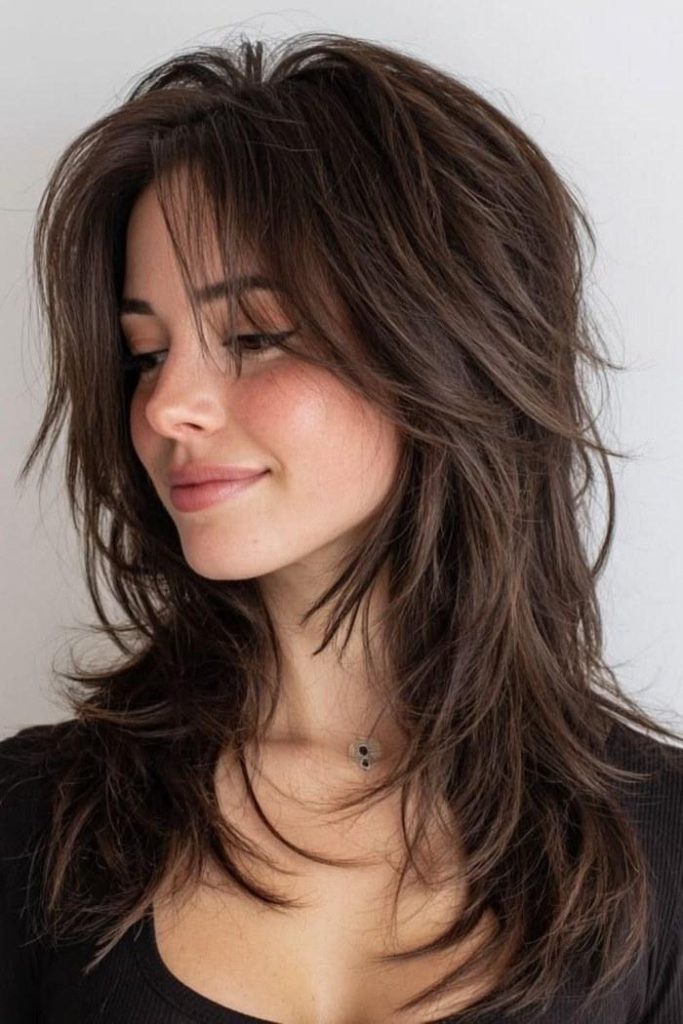
The butterfly on naturally textured brunette hair — the texture does all the work
Thick Hair
Thick hair benefits enormously from the butterfly cut — the weight removal through layering transforms heavy, dense hair into something that moves and lifts. Stylists often combine the butterfly layering with point-cutting at the ends to remove bulk without losing shape.
Fine Hair
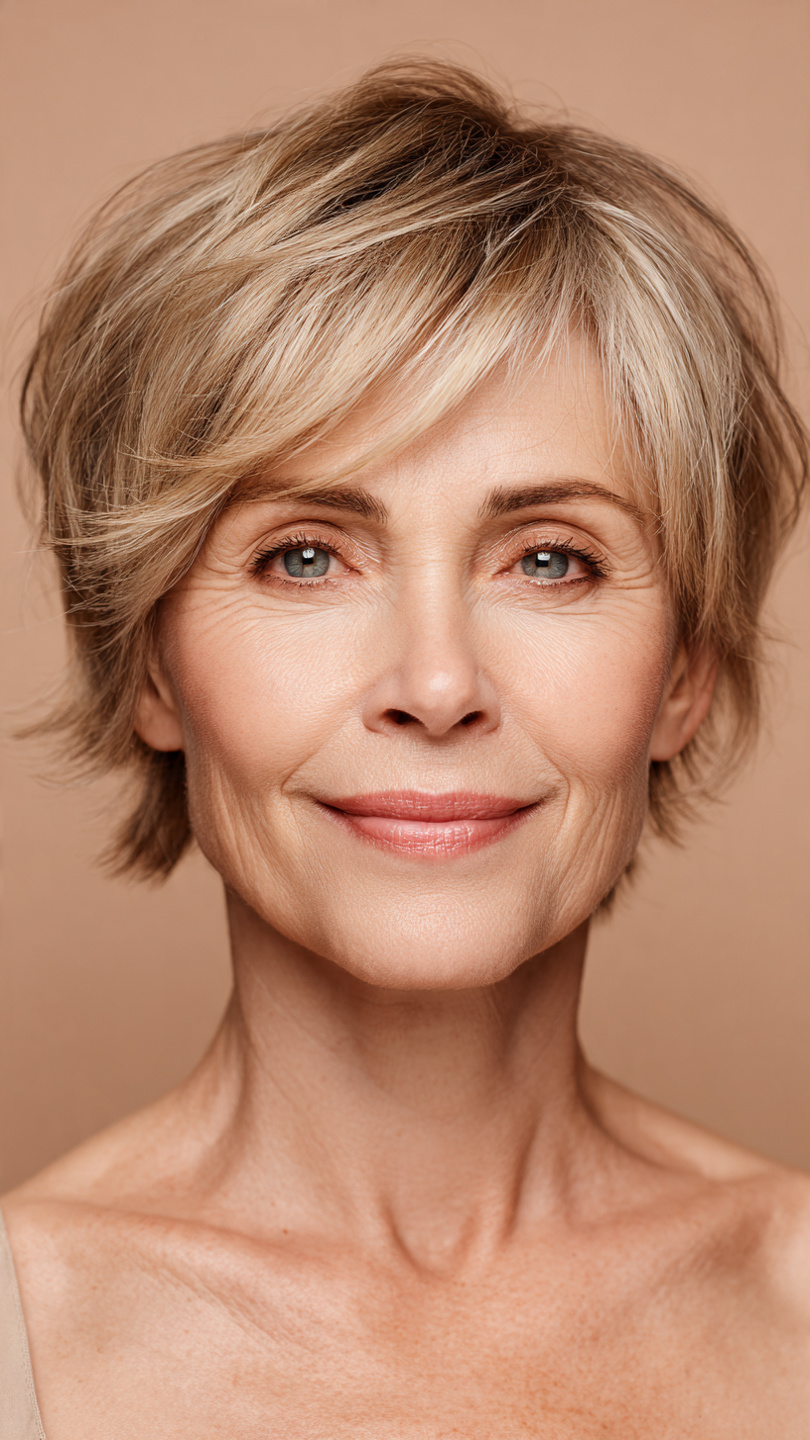
Possible, but approached differently. Layers on fine hair need to be less dramatic — very short face-framing layers on genuinely fine hair can make it look wispy at the ends. A more subtle version with softer contrast between sections works better. The medium-length butterfly is often the most flattering for fine hair.
Styling — How to Get the Shape at Home
The blow-dry method (for maximum volume)
Apply a volumising mousse or spray to damp hair. Flip the head upside down and rough-dry with a diffuser or low heat until about 70% dry. Flip upright and use a round brush to roll the shorter layers upward and outward at the crown, directing the ends away from the face. This is what creates the wing shape. Finish with a light-hold spray or a drop of serum on the ends for shine.
The air-dry method (for texture and ease)
Scrunch a small amount of curl cream or texturising foam through damp hair. Leave it alone. The butterfly cut is one of the most air-dry-friendly layered styles precisely because the contrast between sections creates natural movement and body without intervention. The ends flip on their own as the hair dries.
Products worth having
Volumising blow-dry spray for root lift. A round brush — medium to large barrel depending on hair thickness. Light-hold finishing spray that won't weigh the layers down. A small amount of serum or oil on the ends to define them and control flyaways. For wavy or textured hair, a diffuser attachment for your hairdryer.
✂️ Stylist tip: The one styling mistake that collapses a butterfly cut: heavy products applied at the root. Keep serums and oils to the mid-length and ends only — anything at the root will immediately flatten the layers you're trying to lift.
What to Say at the Salon
Screenshots are your best tool — bring two or three images from this article that show the variation, length, and texture closest to what you want. Beyond that, here's the brief that gives your stylist everything they need:
The brief: "I'd like a butterfly cut — shorter face-framing layers around the cheekbone and longer layers kept through the back. I want volume at the crown without losing length. My hair is [texture] and I [do / don't] blow-dry regularly — please adjust the layer depth for that."
That covers the technique, the length intent, the volume goal, and your maintenance reality — the four things that make the difference between a butterfly cut that works for your life and one that only looked good in the salon chair.
Is This Cut for You?
If you have long hair that's been feeling heavy and shapeless, a haircut that's growing out and losing its energy, or simply hair that you want to look more alive without dramatically changing the length — the answer is almost certainly yes. The butterfly cut is one of the rare styles where the concept is simple, the variations are genuinely wide, and the result is consistently flattering across hair types and face shapes.
Save the images from this article, take them to your next appointment, and tell your stylist you want the wings.
Save this — you'll want it at your salon appointment →
Leave a Reply