This is the question behind every other question you’ve ever asked about your hair.
Face shape is the foundational variable in every haircut conversation — and also the most misunderstood. Most guides tell you your face shape and then give you a list of cuts. This one tells you what you’re actually trying to achieve with your face shape, and then shows you how every major 2026 haircut either helps or doesn’t.
There are six face shapes that most stylists work with: oval, round, square, heart, diamond, and oblong. Each has a different structural consideration — where width needs to be added or reduced, where height helps or hurts, where softness makes a face look more balanced. Once you understand the principle behind your face shape rather than just the prescription, you can apply it to any haircut, any fringe, any colour placement. This is that guide.
→ The honest truth about face shape guides: most people fall between two categories, not neatly into one. If you’re not sure whether your face is round or square, it probably has elements of both — and the most flattering cuts will be ones that address both tendencies simultaneously.
What Haircut Suits Your Face Shape? The 2026 Guide to Geometric Balance:
1. Oval
The Side-Swept Hollywood Wave

For an oval face shape, the goal is to maintain the natural symmetry without over-elongating the silhouette, and these voluminous side-swept waves achieve exactly that. By parting the hair deeply on one side, it adds a touch of lateral width at the temple and cheekbone level, preventing the face from looking too narrow. The soft, structured curls provide movement that complements the balanced proportions of an oval frame, showing how a “classic” look can be used to highlight a lack of sharp angles.
The Architectural Blunt Fringe
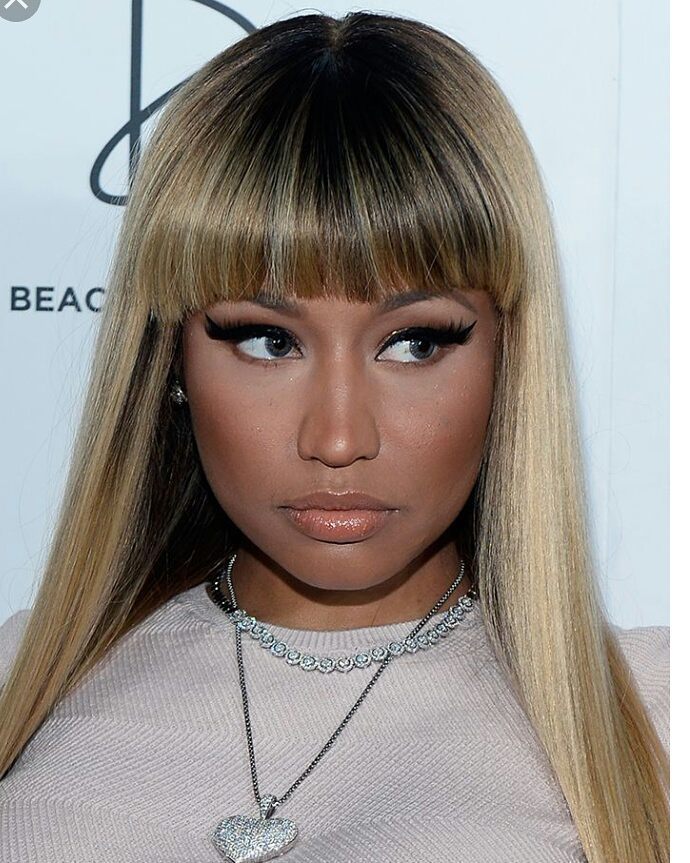
This style demonstrates how a heavy, straight-across fringe can intentionally alter the perceived proportions of an oval face by “capping” the vertical length. The sharp, horizontal line of the bangs draws immediate attention to the eyes and cheekbones, effectively shortening the face’s appearance for a more compact, high-fashion look. Because the oval shape is the baseline for balance, it can handle the stark geometry of pin-straight strands and a blunt fringe without looking “boxed in” or overwhelmed by the hair’s weight.
2. Round
The Textured Angled Lob
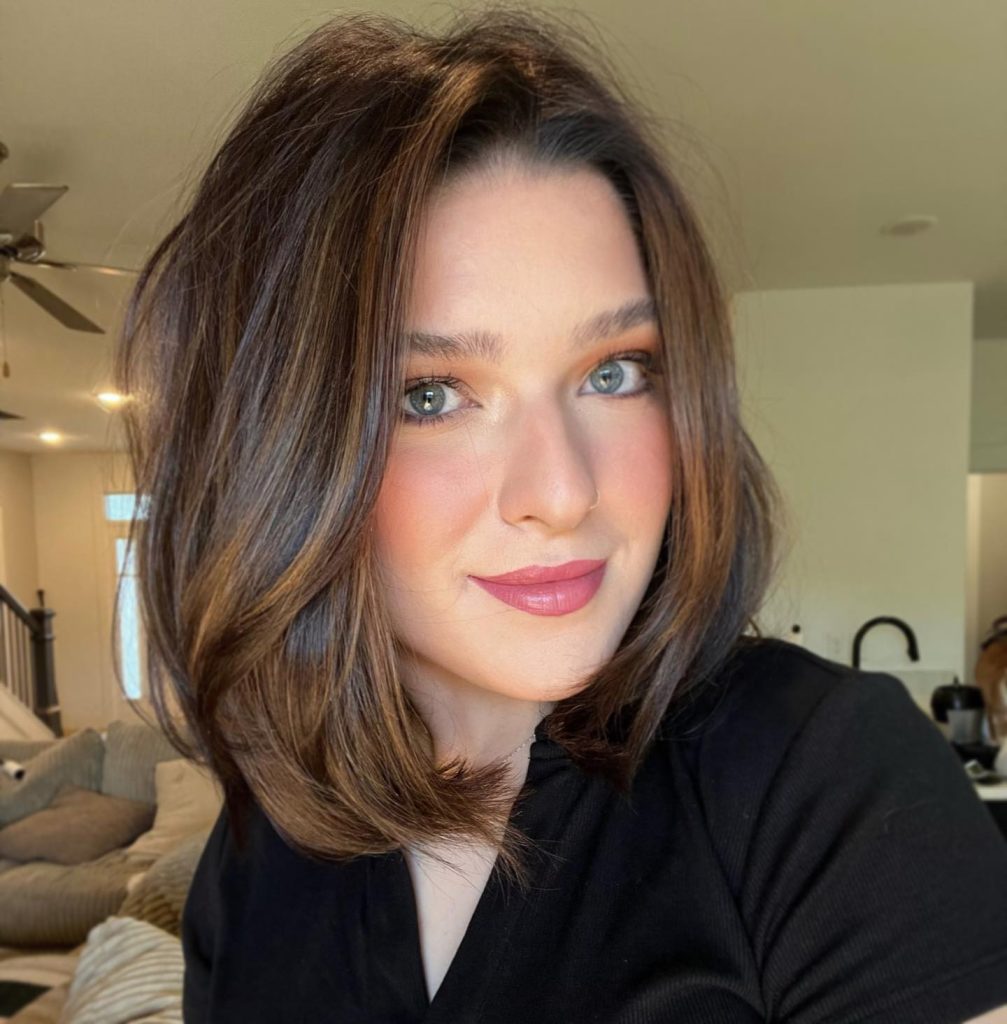
This voluminous long bob is an ideal solution for a round face shape because it prioritizes verticality over lateral width. The deep side part and height at the crown create an elongated silhouette that offsets the face’s natural 1:1 proportions, while the textured layers are designed to hit below the chin to avoid adding bulk to the cheek area. By using Piecey movement to break up the circular outline of the face, this cut successfully introduces a sense of structure and “visual angles” that harmonize a soft jawline.
The Face-Lengthening Wispy Fringe
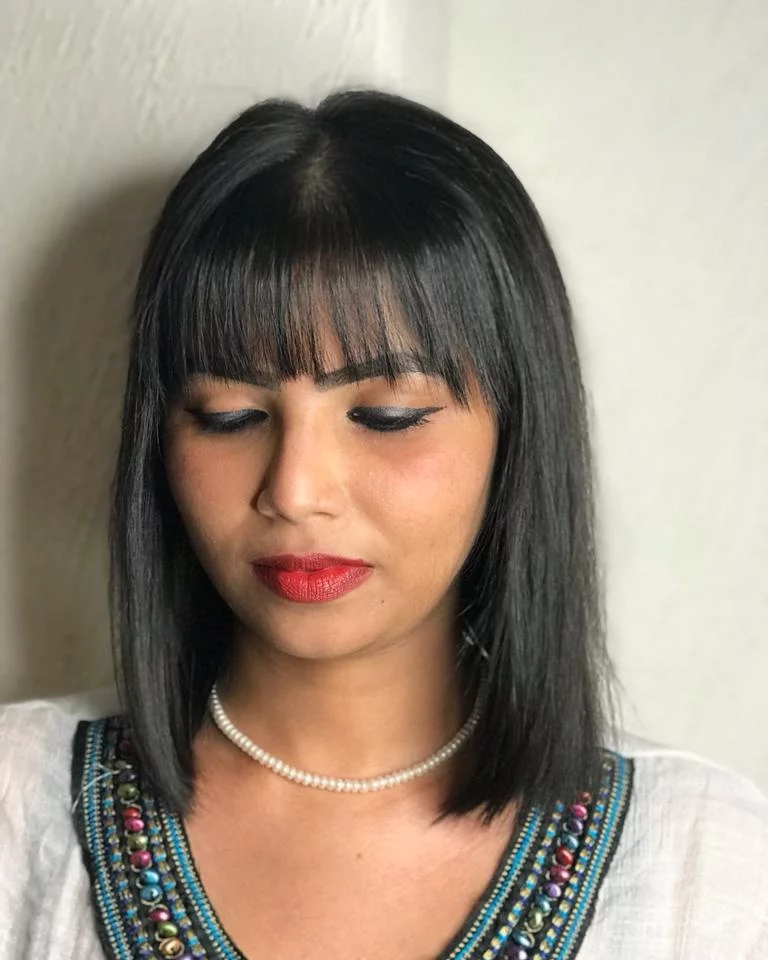
While heavy, blunt bangs can often “squash” a round face, this wispy, eyebrow-grazing fringe uses transparency to maintain a sense of height. The gaps in the bangs allow the forehead to remain partially visible, preventing the face from looking too short, while the straight, shoulder-skimming length provides a strong vertical frame that narrows the cheekbones. It’s a sophisticated example of how a horizontal element can be adapted to flatter a circular shape by keeping the texture light and the overall length sleek.
3. Square
The Brow-Skimming Arched Fringe

This look is specifically designed to soften the strong, angular forehead typical of a square face shape by introducing a curved horizontal line. The slight arch in the bangs prevents the hair from creating a “box” around the face, while the long, straight layers provide a vertical frame that draws the eye downward, away from the jawline. By keeping the texture smooth and the length extended, this cut achieves a balance that prioritizes movement and structural softness.
The Face-Framing Contour Layers
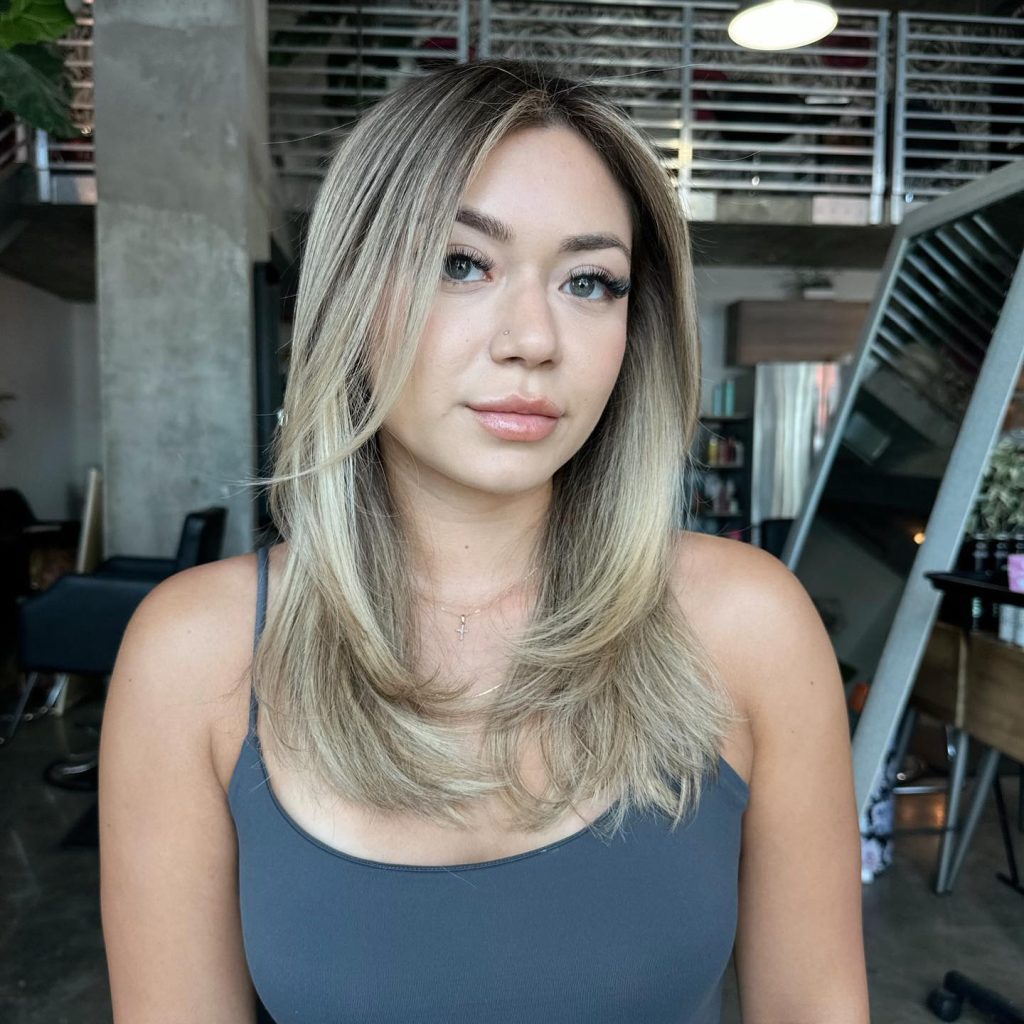
For a square or “squound” face, these long, interior layers are the ultimate tool for breaking up a prominent jawline and adding visual “roundness” to the frame. The layers are cut to curve inward toward the face, acting as a soft contour that hides the sharpest points of the bone structure while the length adds a slimming effect. The result is a highly intentional 2026 style that creates a more oval-like appearance through clever layering and light-reflective color placement.
4. Heart
The Bottleneck Fringe Shag
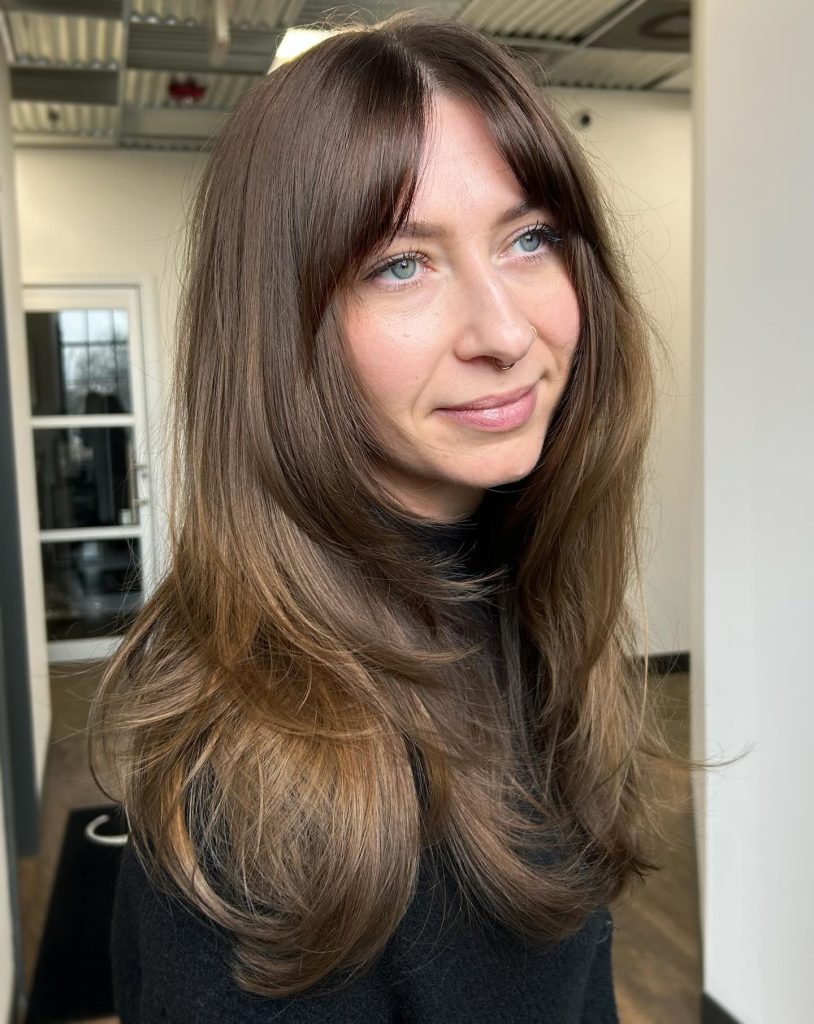
This style is an excellent structural solution for a Heart face shape because it uses a tapered “bottleneck” fringe to narrow the wide forehead while adding essential bulk around the jawline. The curtain-like bangs sweep outward, drawing the eye toward the cheekbones, while the heavy, textured layers below the chin fill in the visual “gap” created by a narrower lower face. By concentrating the movement and volume at the bottom of the cut, it effectively balances the top-heavy proportions of the heart archetype.
The Mid-Length Butterfly Cut
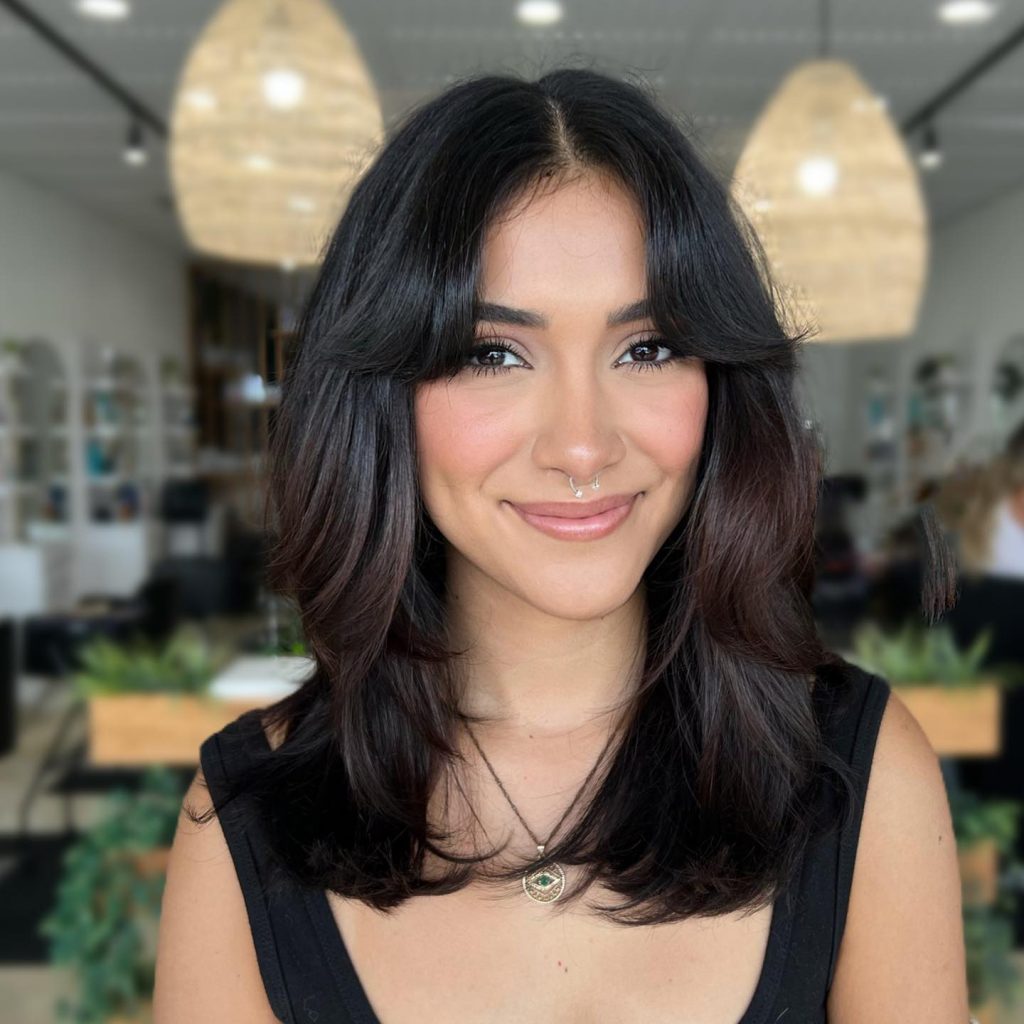
For a heart-shaped face, this mid-length butterfly cut provides a masterclass in adding lateral width right where the chin begins to taper. The voluminous layers are styled to flip outward at the jawline, creating a horizontal weight line that harmonizes with a wider forehead. The center part and soft, face-framing “wing” layers ensure that the temples remain streamlined, allowing the added volume at the bottom to create a more oval-like symmetry across the entire frame.
5. Diamond
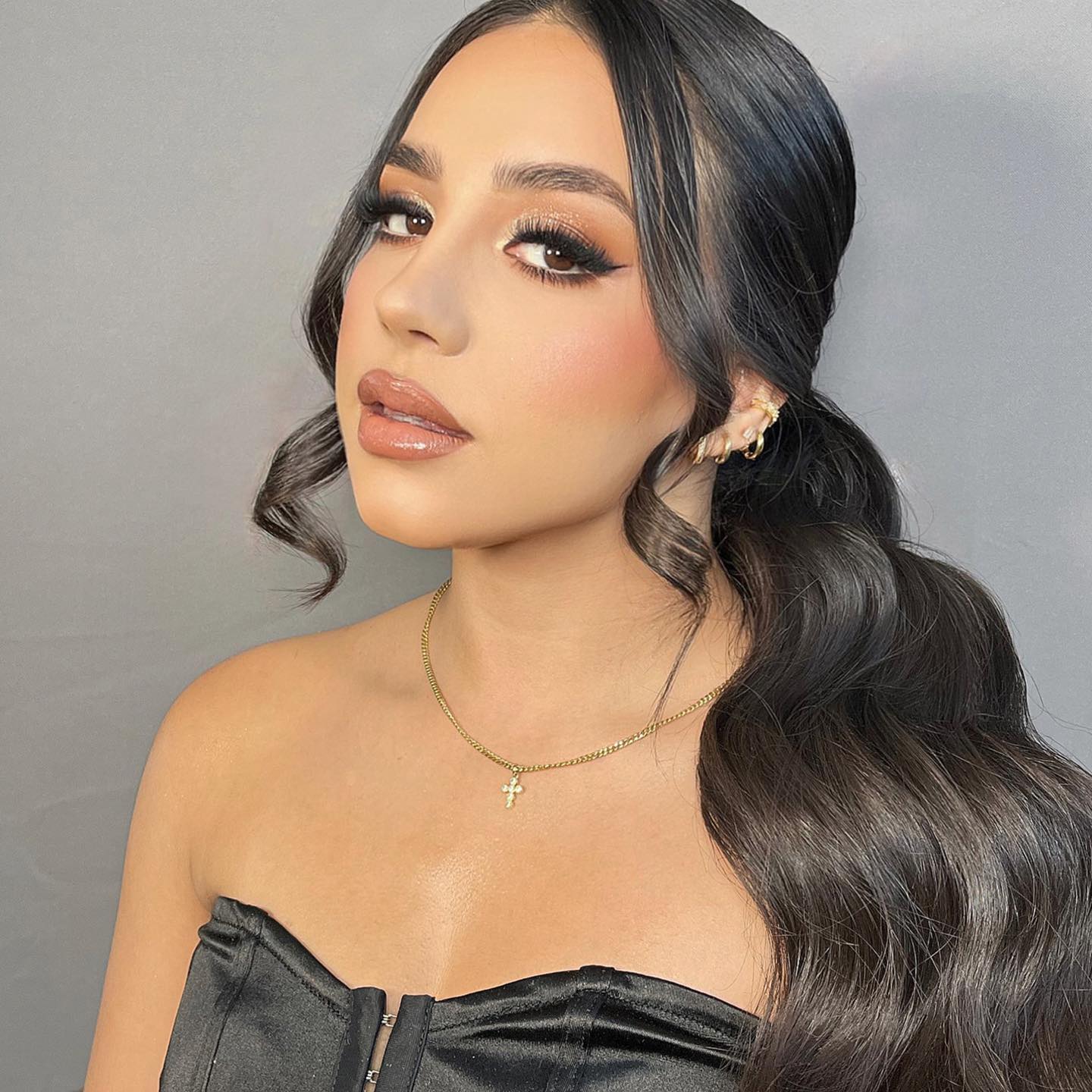
The Tendril-Framed Low Pony
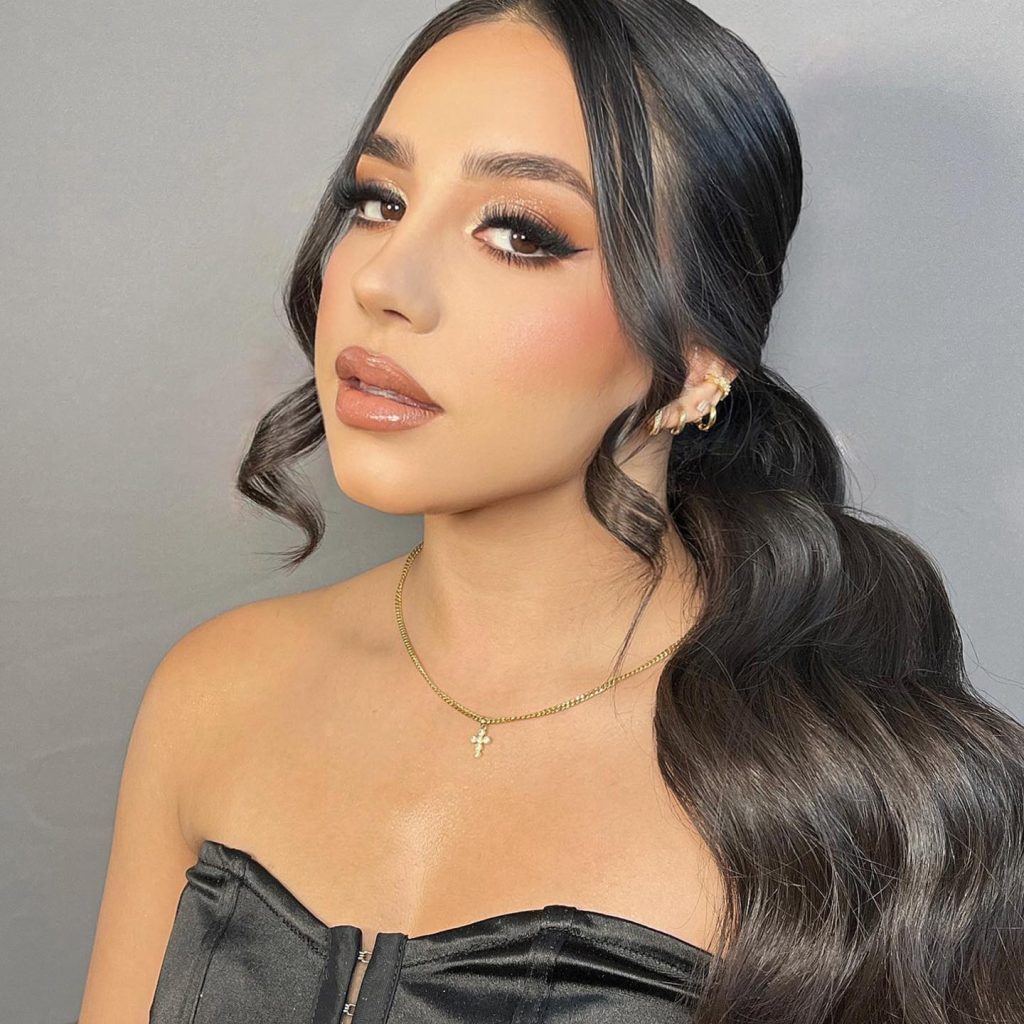
This look is a tactical choice for the Diamond face shape, which features wide cheekbones and a narrower forehead and jaw. The long, soft tendrils left out of the ponytail act as a visual “contour,” grazing the outer edges of the cheekbones to minimize their width and create a smoother transition from the temples to the chin. By adding volume and waves to the lower half of the ponytail, the style also introduces much-needed horizontal weight near the jawline, effectively balancing the diamond’s naturally “pinched” lower face.
The Sleek Mid-Part and Temple Fillers
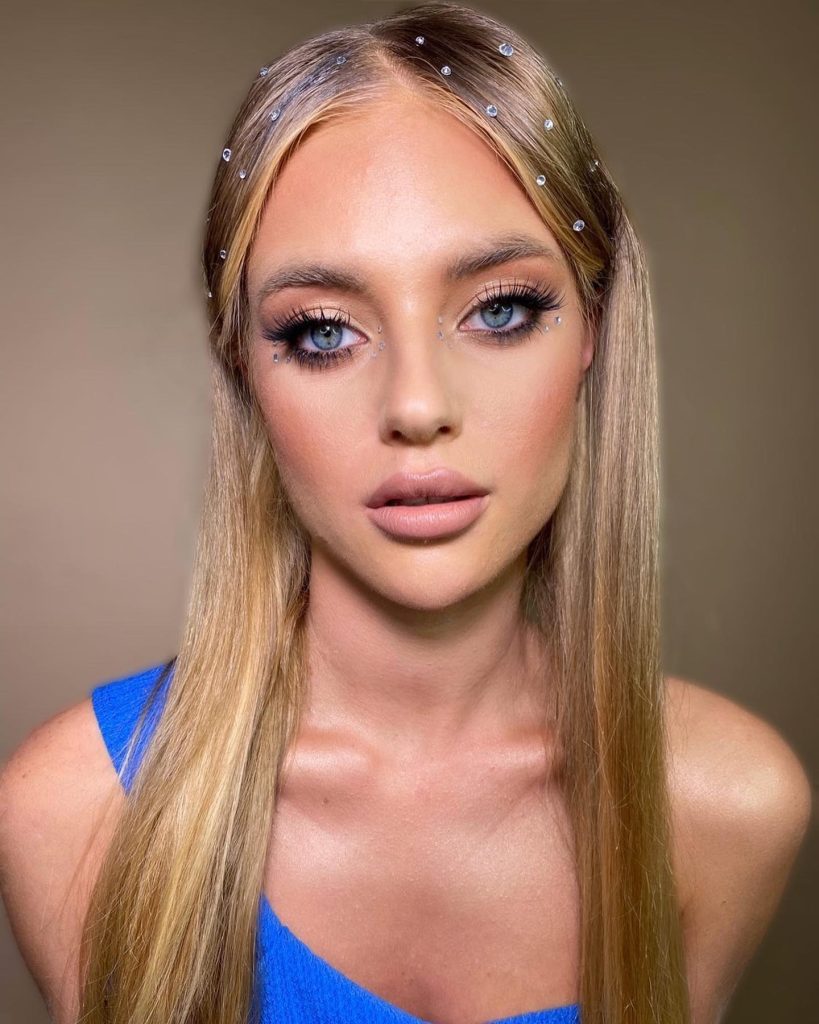
For a diamond face, the goal is often to add volume at the top and bottom to offset high, prominent cheekbones, and this sleek style uses a unique 2026 approach. The center part draws a vertical line that elongates the face, while the hair is kept flat against the widest part of the cheekbones to avoid any extra lateral bulk. The subtle placement of hair behind the ears allows the jawline to appear more substantial, while the long, straight strands provide a consistent frame that softens the dramatic angles of the mid-face.
6. Oblong (often called Rectangular)
The Voluminous Curtain Butterfly Cut
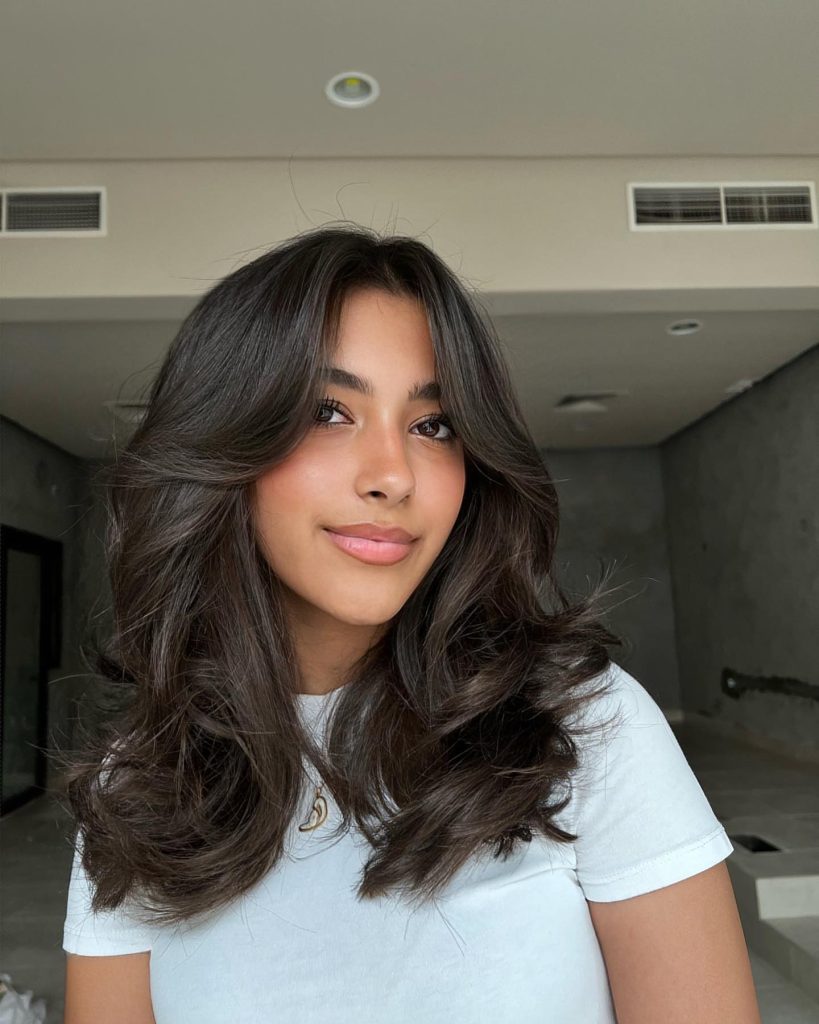
For an Oblong face shape, the primary structural goal is to break up the long vertical line by adding significant lateral width, and this voluminous butterfly cut does exactly that. The curtain bangs sweep outward at the cheekbones, creating a horizontal focal point that effectively “cuts” the length of the face in half. By concentrating the largest curls and layers at the sides rather than the top, the style adds necessary bulk to the mid-face, making a long, narrow frame appear more balanced and oval-like.
The Textured Mid-Length Shag
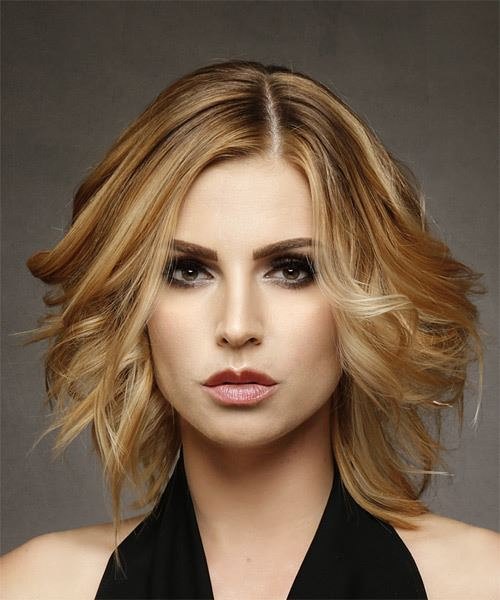
This style is a masterclass in using texture to harmonize an Oblong or Rectangular face by prioritizing width through “messy” volume. The choppy layers are designed to kick outward, creating a wider silhouette that counters the face’s natural length. By avoiding flat, pin-straight strands—which would only drag the face downward—this cut uses multi-tonal highlights and air-light movement to fill in the space around the jaw and neck, providing a more compact and proportional look.
The Hybrid Problem: What if You’re “In-Between”?
Most people don’t fit neatly into a single geometric category. This section solves the ambiguity of being stuck between two shapes.
- The “Squound” (Square-Round): For faces that have a strong jawline (square) but soft, full cheeks (round). The goal is to avoid adding bulk at the jaw (which widens a square) or softness at the cheeks (which widens a round). The solution is internal layering—removing weight from the interior of the hair while keeping the perimeter intact—to slim the silhouette without sacrificing structure.
- The Dominant Feature Rule: Sometimes a specific feature overrides your overall face shape. A prominent nose might benefit from side-swept fringe that draws the eye horizontally; a high forehead might require weight at the hairline; a weaker chin usually needs volume or texture at the nape to create the illusion of a stronger profile. When a feature is this dominant, you cut for the feature, not the outline.
- Focusing on the Goal: When you’re in-between, you have to choose your priority. Are you trying to soften a strong jawline? Or are you trying to narrow the width of your cheeks? Identifying the one thing you want to harmonize most helps your stylist decide which “half” of your hybrid shape to address.
Hair Texture: The Great Shape-Shifter
The same haircut behaves entirely differently depending on density and curl pattern. This section bridges the gap between geometry and reality.
- Density vs. Shape: A blunt lob is the go-to for adding width to a narrow face—but if you have fine hair, that blunt edge creates the illusion of density. If you have thick hair, that same blunt edge creates actual bulk, which can overwhelm a smaller frame and requires texturizing or under-cutting to maintain the intended shape.
- The Curl Factor: Curls don’t follow the same gravity as straight hair. Instead of thinking about face shape in two dimensions, curly cuts focus on the silhouette: a “triangle” shape (widest at the ends) drags the face down and adds width where you usually don’t want it. A “diamond” shape (widest at the ears/cheekbones, narrow at the ends) lifts the face and can be used to mimic the proportions of an oval shape regardless of your underlying bone structure.
- Real-World Constraints: Your cowlicks and growth patterns are the boss. A perfect middle part for a heart-shaped face doesn’t work if your hair grows straight forward. This section covers how to identify your “hair behavior” (where it wants to go) before committing to a geometric ideal.
The 2026 Toolkit: Digital & Chemical Enhancements
Modern tools allow us to manipulate geometry without committing to a drastic chop.
- AI Virtual Try-Ons: Gone are the days of holding a photo up to a mirror. Modern AR filters can map haircuts onto your specific face in real-time. This section advises how to use these tools to test the geometry of a cut—checking where the fringe lands on your brow or where the length hits your jaw—before you sit in the chair.
- Contouring with Color: Using “Hair Strobing” —the strategic placement of highlights and lowlights—to alter perceived face shape. Lightness brings features forward and widens; darkness pushes features back and slims. You can “shorten” a long face by placing a horizontal ribbon of lightness at the cheekbones, or “narrow” a round face by keeping the darkest color along the perimeter of the hair.
- Structural Perms: For those whose natural texture lacks the volume needed to balance their face shape, modern perms are about architecture, not tight curls. A “root volume” perm or a “body wave” can add the horizontal width a long face needs or provide the lift a heavy jawline requires to look balanced.
From Pinterest to Reality: The Stylist Conversation
Knowing the principle is useless if you can’t communicate it to the person holding the scissors.
- Translating Principles to English: Stylists are visual artists, not mind readers. This section provides a script: instead of saying “I want a lob,” you learn to say, “I want a blunt perimeter to add density to my fine hair, but I need it to hit above my jawline so it doesn’t accentuate the width of my round face.”
- The Three-Photo Rule: Why bringing just one photo sets you up for failure. You need a “Goal” photo (the vibe you want), a “No” photo (what you don’t like about the goal photo—e.g., “I like this but not the heavy fringe”), and a “Realistic” photo (a picture of your own hair texture at its best, or a photo of a cut on someone with similar density to yours).
- Maintenance Levels: Every shape requires upkeep. A blunt cut that balances a square face requires sharp lines; if you don’t get trims every 6-8 weeks, the shape collapses. A textured, layered cut grows out more gracefully but requires daily styling to look intentional. This section helps you identify the “work-to-reward” ratio you’re actually willing to commit to.
Conclusion: The Confidence Variable
Geometry is a guideline, but style is personal.
- The Rule-Breaking Exception: Sometimes the most memorable haircut is the one that defies your face shape. If you have a round face and want a severe, geometric bowl cut because it fits your punk aesthetic, the confidence you wear it with will override any “flattering” prescription. Style is about signaling who you are, not just hiding what you have.
- Final Encouragation: Hair grows back. Geometry is just a starting point for exploration. The goal of this guide isn’t to trap you in a category, but to give you the vocabulary and understanding to experiment with purpose—so whether you follow the rules or break them, you’re doing it intentionally.
Leave a Reply