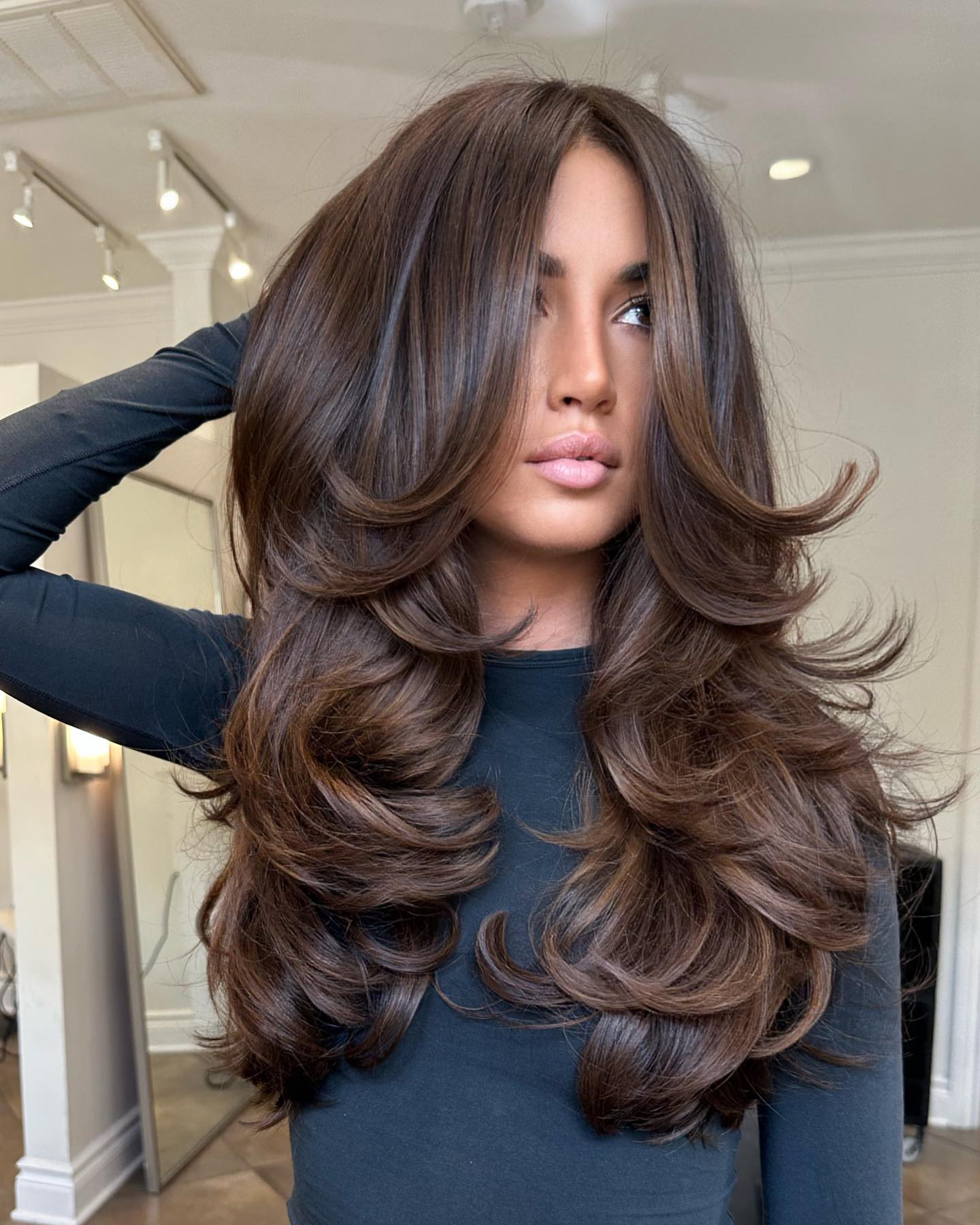
Long hair without layers is just weight. Long hair with the right layers is something else entirely. It’s the difference between a heavy velvet curtain and a silk slip dress—one just hangs there, while the other breathes, swings, and responds to every turn of your head.
In the world of “quiet luxury” and intentional styling, long layers are the ultimate hair investment. They provide the architectural foundation for volume without sacrificing the length you’ve spent years growing. Whether you’re looking to breathe life into fine strands or remove the “triangle” effect from thick hair, understanding the anatomy of a layer is the key to a high-value aesthetic.
Why Long Layers Are the Ultimate Hair Investment
If you have spent years growing your hair out, the idea of a “haircut” can feel like a step backward. However, long hair without layers is often a structural trap. Here is why the most intentional, aesthetic-focused women choose long layers over a blunt cut.
1. It Breaks the “Curtain” Effect
One-length hair acts like a heavy velvet curtain—it just hangs. Because the weight is distributed equally at the bottom, there is no air or light between the strands. Long layers act as a “release valve,” allowing the hair to separate, swing, and catch the light as you move.
2. Architectural Volume (Not Just “Poof”)
Volume isn’t just about hairspray; it’s about physics. When hair is all one length, the weight of the ends pulls the roots flat against the scalp. By adding long layers, you remove the “drag.” This allows your roots to lift naturally, providing that sought-after 90s supermodel height without the need for excessive product.
3. The “Non-Haircut” Transformation
The beauty of long layers is that they are a silhouette shift, not a length sacrifice. You can keep every single inch of your overall length while completely changing how your hair frames your face and body. It is the ultimate “quiet luxury” move: a high-impact change that looks effortless and expensive.
4. Custom Contouring for Your Features
A blunt cut is a box; long layers are a sculpture. By choosing where your layers start—whether it’s the cheekbone to highlight your eyes or the jawline to sharpen your profile—you are essentially contouring your face with hair. It turns your length into a personalized frame rather than just a background.
10 Long Layered Styles for Effortless Volume:
1. Long Layers on Blonde Hair — Face Framing
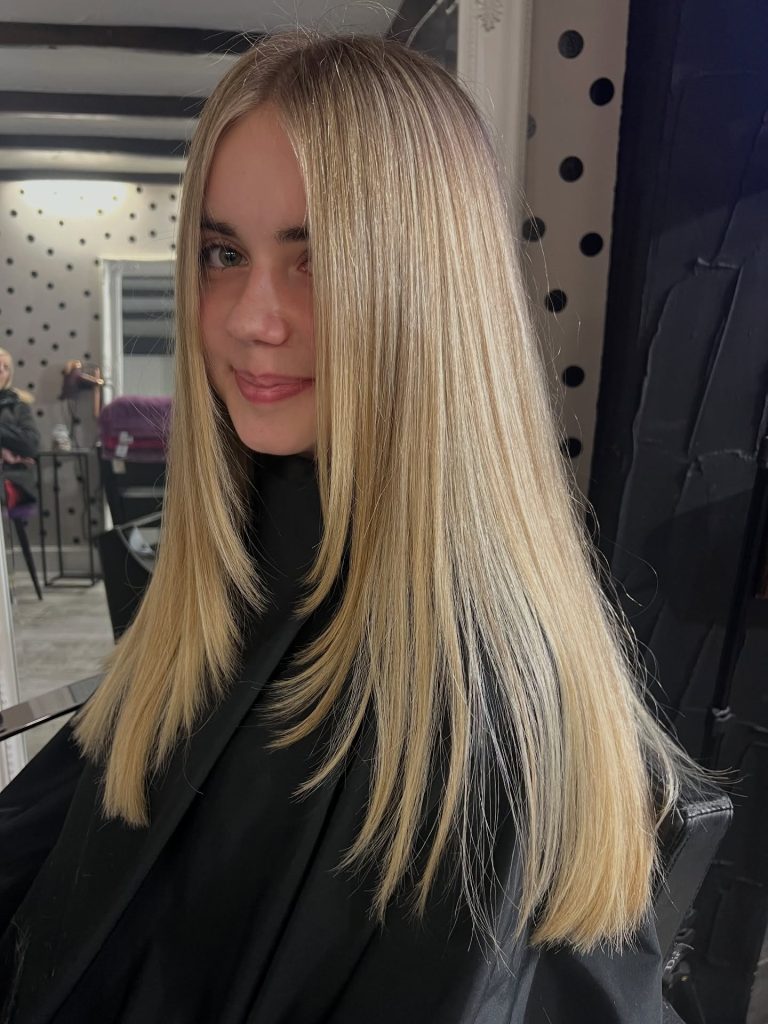
Smooth, long layers with face-framing pieces starting at the chin. This cut removes bulk from the front while maintaining length and a sleek finish.
2. Seamless Long Layers on Dark Hair — Movement and Swing
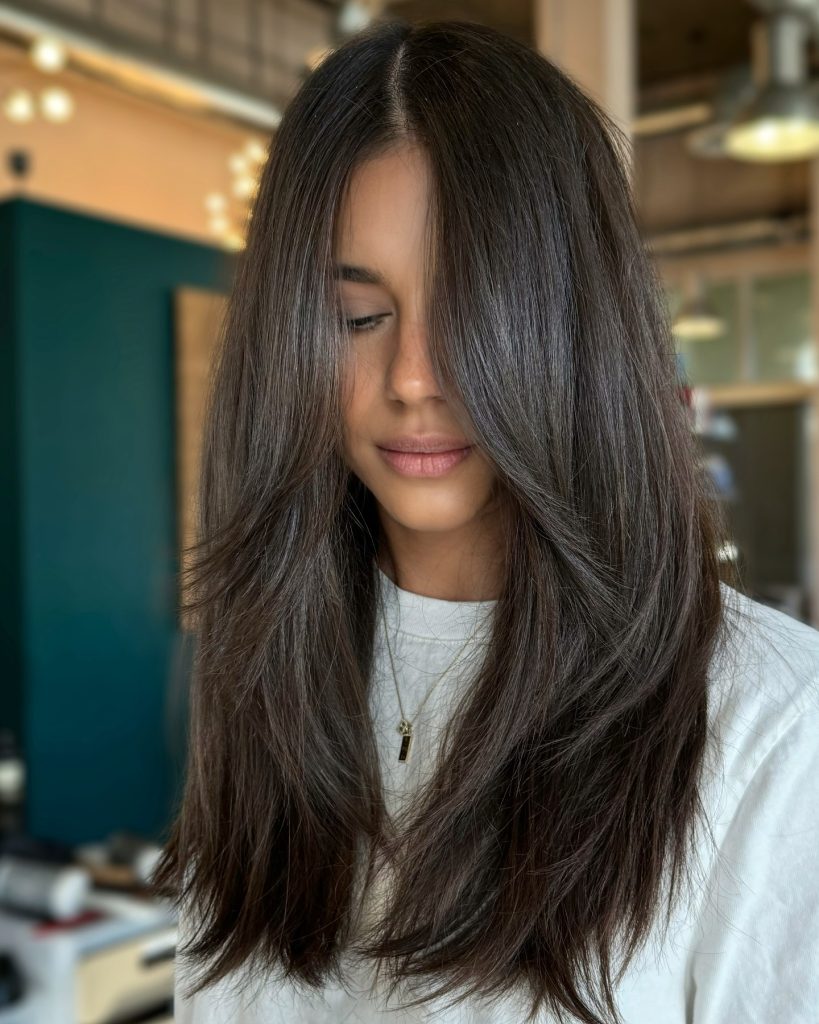
Deep brunette hair featuring connected layers that create effortless fluidity. The internal weight removal ensures a bouncy, high-shine aesthetic.
3. Volume Blowout on Long Layers — Maximum Height
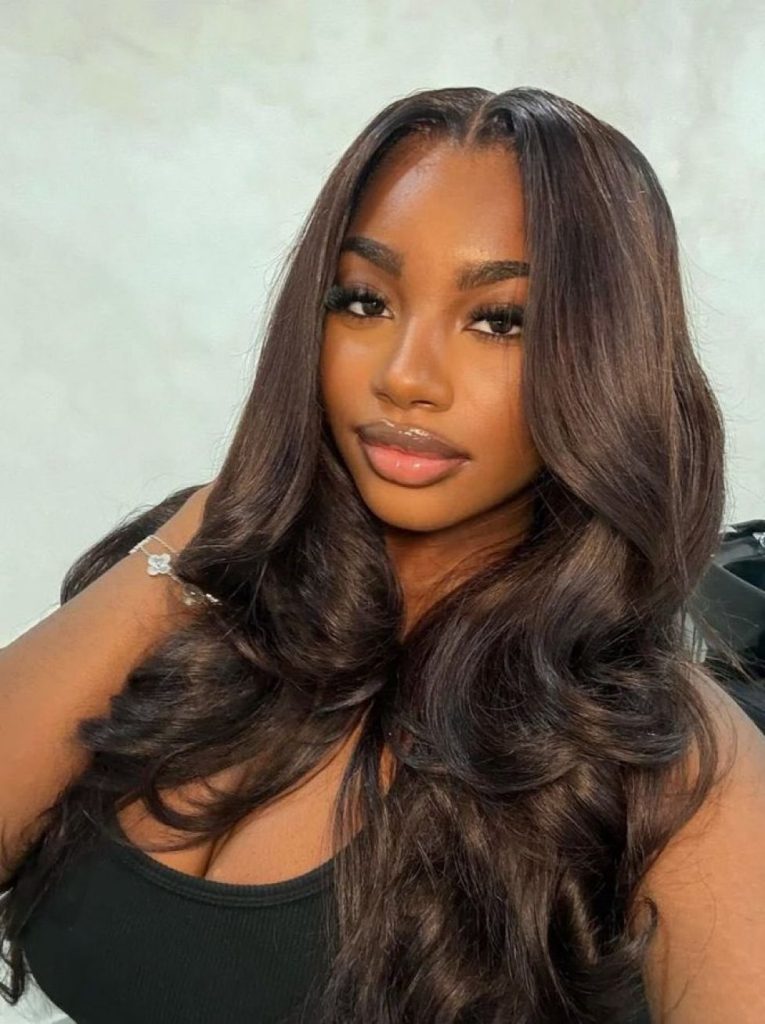
A glamorous, bouncy blowout demonstrating how long layers starting at the chin can create incredible volume and a luxurious, multi-dimensional look.
4. Long Layers with Curtain Bangs — Polished Movement
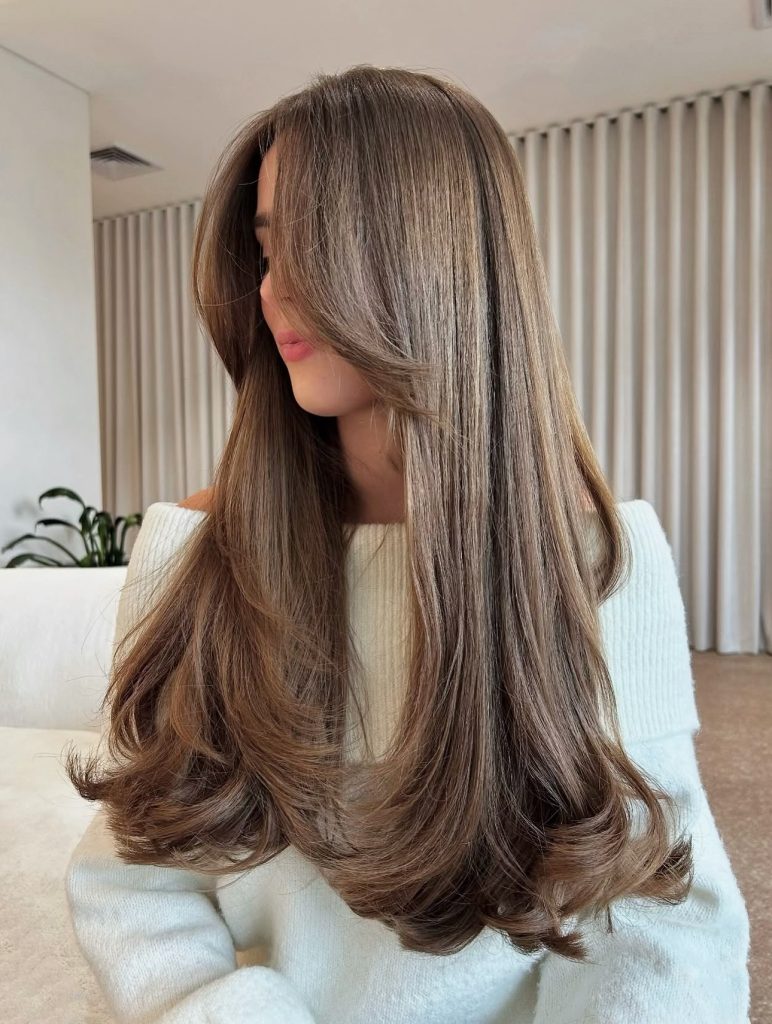
A sophisticated brunette style featuring curtain bangs blended into long layers. The internal shaping adds body and swing to the ends.
5. Maximalist Long Layers — Butterfly Style Volume
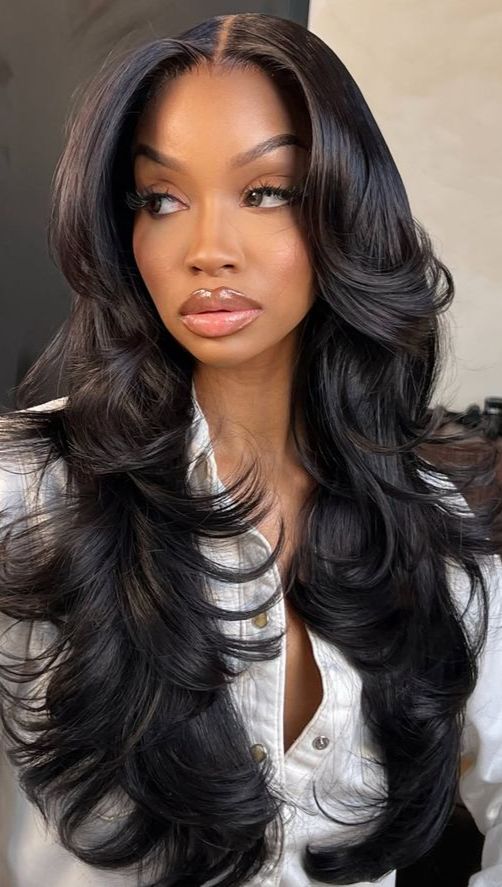
Dramatic, cascading layers on dark hair that create a high-volume, dimensional look. This style emphasizes structural movement and body.
6. Seamless Long Layers — Subtle Face Framing
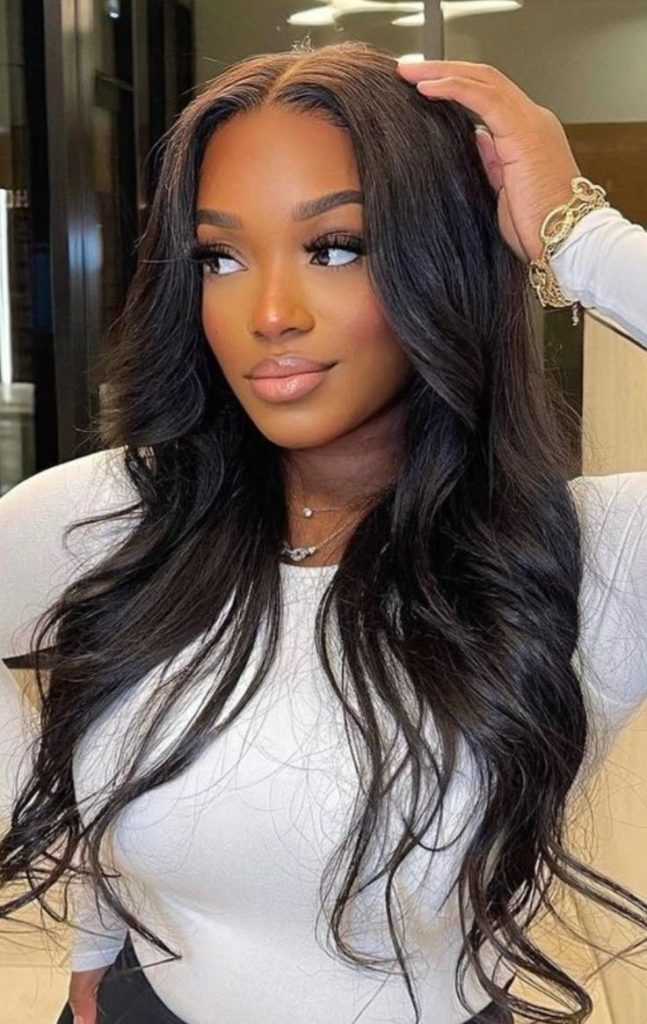
A minimalist approach to long layers with gentle face-framing. This cut provides a natural, fluid aesthetic while maintaining a high-value shine.
7. 90s Inspired Long Layers — The Ultimate Blowout
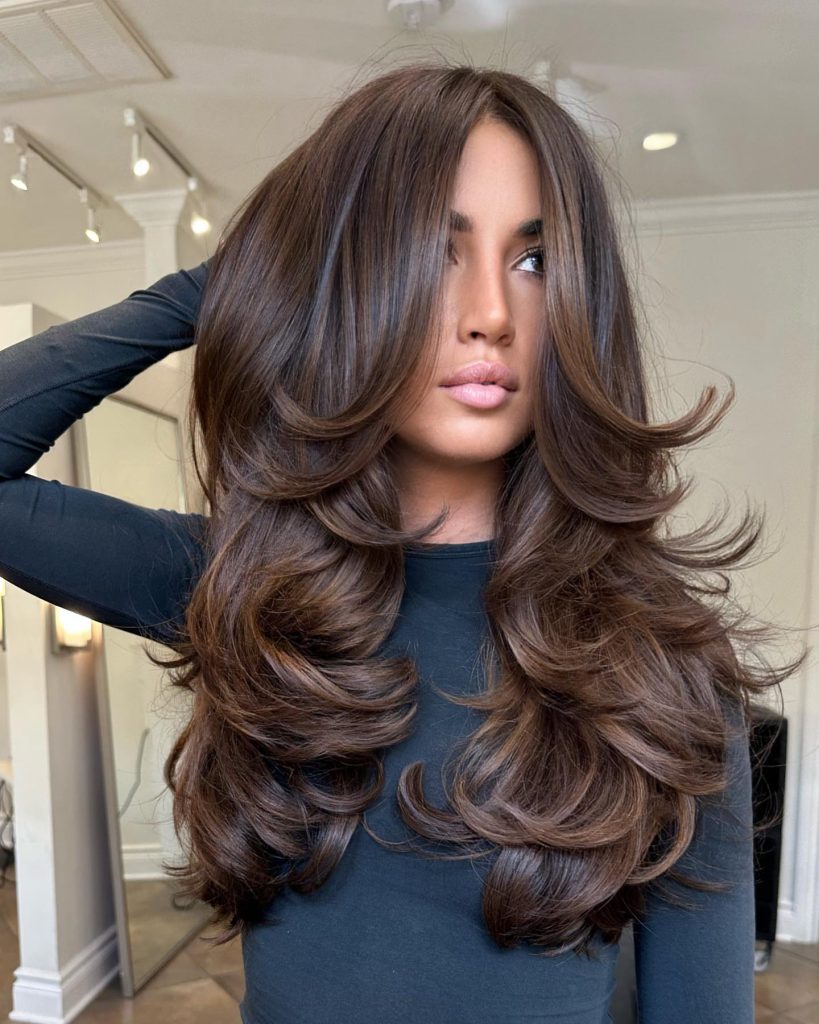
Layered brunette hair styled for maximum bounce. This look shows how shorter crown layers create the architecture for a high-impact, airy finish.
8. Long Layers with Side-Swept Volume — Jet Black Hair
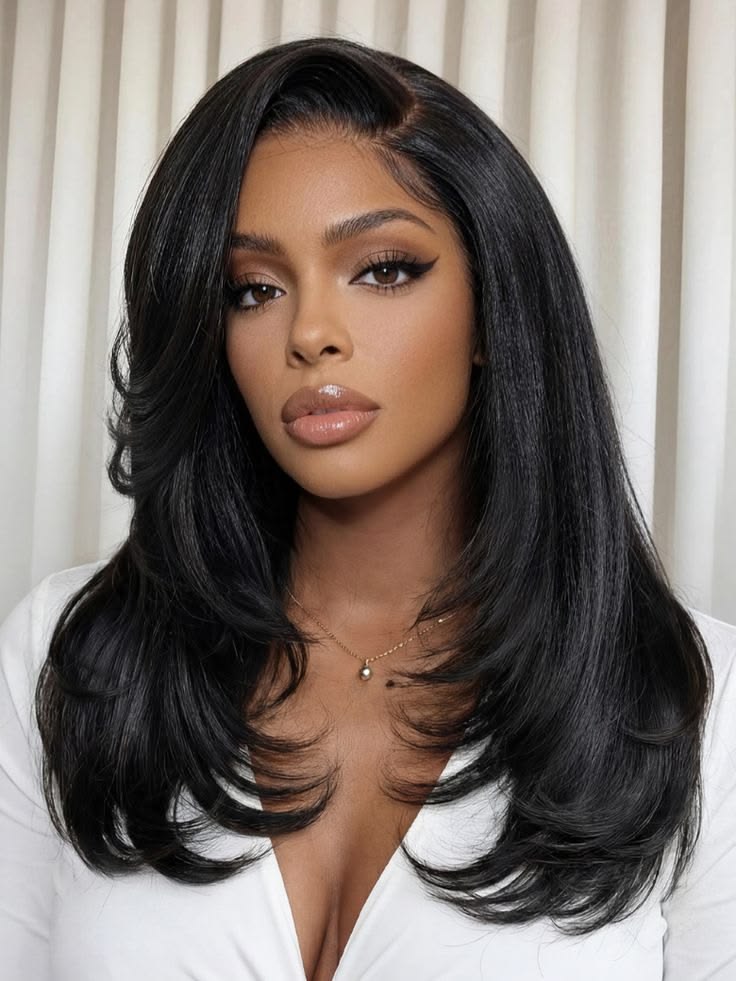
A stunning, high-shine jet black style with layers that sweep away from the face. This cut adds structural depth and a sophisticated, bouncy finish.
9. Long Layers with Full Bangs — Red Copper Tones
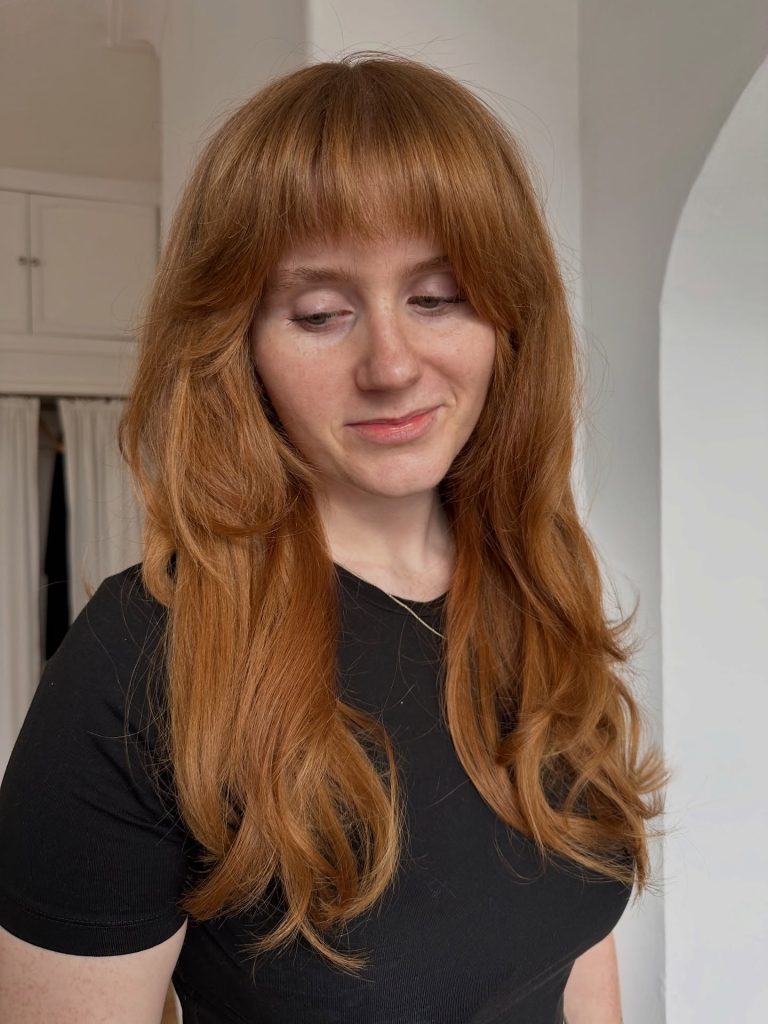
Vibrant copper hair featuring full fringe paired with textured long layers. The internal shaping adds soft movement and body to the mid-lengths.
10. Cascading Long Layers — Caramel Balayage
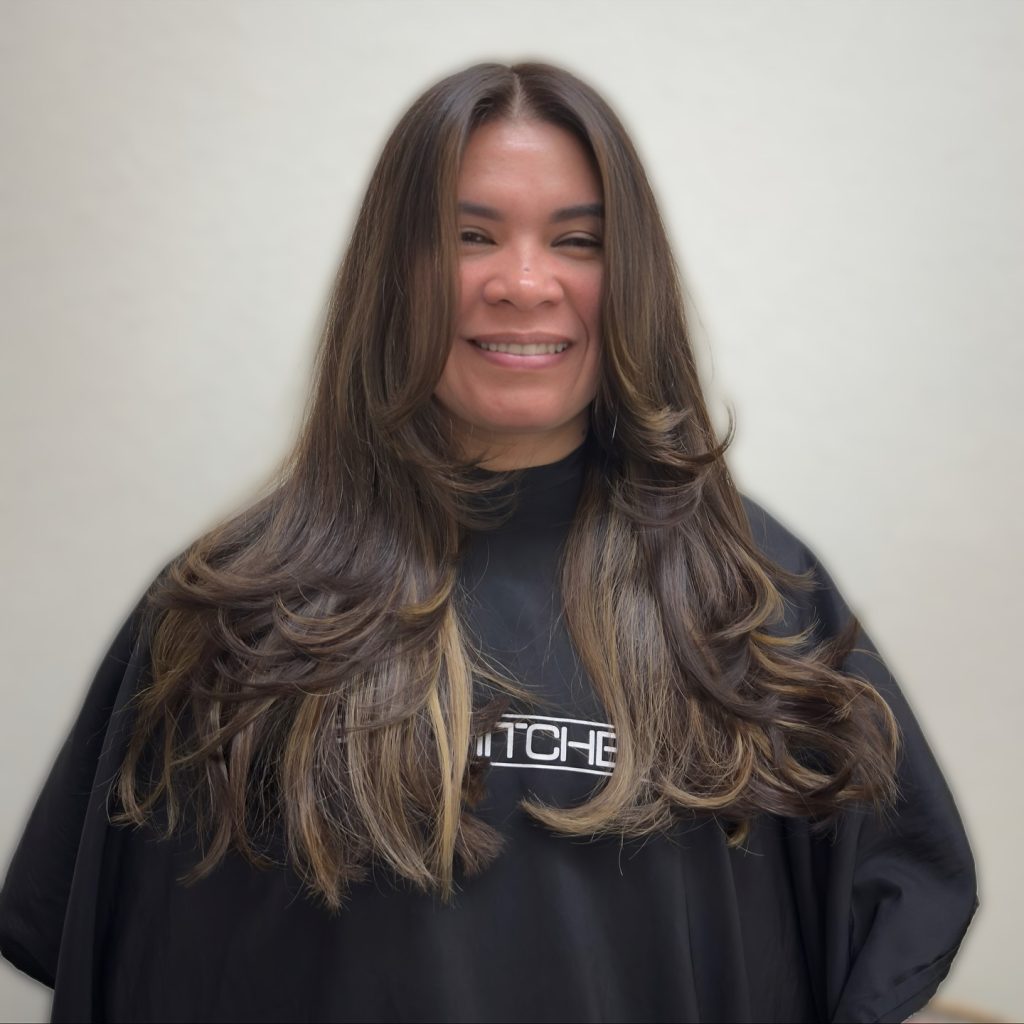
Beautifully blended caramel highlights on long hair with cascading layers. The cut focuses on movement at the ends, creating a fluid, expensive look.
1. The Anatomy of a Layer: What They Are (and What They Aren’t)
Before sitting in the stylist’s chair, it is essential to distinguish between “shaping” and “layering.” Layers are varying lengths of hair cut into the main body of the style to create movement.
The Three Starting Points
The “vibe” of your haircut is determined entirely by where the shortest layer begins:
- The Crown: Layers starting here create maximum volume and height. This is the foundation of the 90s supermodel blowout.
- The Chin: This is the “sweet spot” for face-framing. It bridges the gap between your features and your length, creating a sculpted, intentional look.
- The Shoulder: Layers beginning here focus purely on fluidity at the ends. This is the “cool girl” approach—minimalist, lived-in, and effortless.
Pro Tip: Specify your starting point. Layers at the crown create volume; layers at the chin create framing; layers at the shoulder create movement at the ends.
2. Solving the “Weight” Problem: Layers by Hair Type
H3: Fine Hair — Building the Illusion of Density
For fine hair, layers are a strategic tool to fight flatness. By removing a small amount of weight from the top sections, the hair becomes light enough to lift, creating a “fuller” silhouette that doesn’t look thin at the bottom.
H3: Thick Hair — Removing Bulk, Keeping Length
Thick hair often suffers from “shelfing” or a heavy, triangular shape. Long layers act as internal weight removal, allowing the hair to lay flat against the head while adding a swing that makes heavy hair feel weightless.
H3: Wavy & Curly — Enhancing the Natural Ribbon
Without layers, curls tend to stack on top of each other. Strategic layering allows each curl or wave to have its own “space” to bounce, amplifying your natural texture rather than suppressing it.
3. The Great Debate: Long Layers vs. The Butterfly Cut
While they are often confused, these two styles serve different aesthetic masters.
- Long Layers: The minimalist original. They are seamless, blended, and designed to look like your hair naturally grows in a beautiful, fluid gradient.
- The Butterfly Cut: The maximalist cousin. This involves short, bouncy layers on top (the “wings”) contrasted with long layers on the bottom. It is high-drama and requires more styling maintenance.
4. Styling for Maximum Fluidity
A great cut is only half the battle; the styling is what makes the layers “come alive.”
H3: The Volume Blowout
To achieve that salon-quality swing, the L’Ange Le Volume 75mm is a game-changer. Use directional brushing—pulling the hair up and away from the root—and always finish with a “cool shot” to lock the shape of the layer in place.
H3: The Effortless Air-Dry
For a natural finish, placement is everything. Apply a lightweight mousse to damp hair and “plop” the hair into a microfiber towel. This encourages the layers to air-dry with their own distinct personality.
H3: The Finishing Touch
To define the ends of each layer and add a high-gloss “expensive” finish, a drop of Olaplex No.7 Bonding Oil is the final step. It bonds the cuticle, ensuring the movement looks sleek rather than frizzy.
5. The Salon Brief: A Script for Your Stylist
Don’t just ask for “layers.” Use this specific script to ensure you get the movement you want:
The Script: “I want long, seamless layers that start at my [Crown/Chin/Shoulder]. I want to keep my current length but remove internal weight to encourage movement. Please ensure the layers are connected to the face-framing pieces so there are no harsh steps.”
The Essentials Gallery
- The Tool: L’Ange Le Volume 75mm (for the 90s blowout look)
- The Treatment: Olaplex No.7 Bonding Oil (for heat protection and shine)
- The Prep: Volumizing Mousse (for root lift)
- The Care: Microfiber Hair Towel (to prevent frizz during air-drying)
Ready to transform your length? Take this guide to your stylist and claim the movement your hair deserves.
Related Articles
- The Butterfly Cut: Is the Drama Worth It?
- Face-Framing Layers: A Guide to Every Face Shape
- The Best Haircuts for Fine Hair in 2026
Leave a Reply