Growing out a bob doesn’t have to feel like serving a sentence.
The awkward phase of growing out a bob is one of beauty’s most reliable frustrations. There’s the stage where it sits on the shoulder and does nothing. Then the stage where it’s long enough to be inconvenient but too short to tie back properly. Then the stage where it develops a strange interior layer that curls outward at the nape. Most people give up somewhere in the middle and cut it back to a bob.
But each of these stages is solvable with the right trim strategy — and the difference between a graceful grow-out and an agonising one is usually just a 20-minute appointment every eight weeks where you know what to ask for. This guide maps out the exact stages of growing a bob to shoulder-length or beyond: which shapes to cut at each stage, what to ask your stylist for at each appointment, and how to use accessories, styling, and the butterfly cut’s layering philosophy to make every stage feel intentional rather than in-between.
→ The most important grow-out rule: keep trimming. The instinct when growing hair is to avoid scissors entirely — but regular small trims during a grow-out remove the damaged, uneven sections that make the awkward phases look worst. Every eight weeks, a small trim maintains a shape rather than undermining the growth.
14 Seamless Grow-Out to Transitioning Your Bob Gracefully:
1. The Sophisticated Silver Micro-Trim

This classic jaw-length bob exemplifies the first phase of a graceful grow-out, where the focus is on maintaining a sharp, clean perimeter while allowing the natural silver tones to provide dimension. The cut features subtle internal weight removal to ensure the ends don’t become overly boxy as they transition toward the neck, keeping the silhouette light and mobile. By prioritizing a precise trim at this stage, the look remains intentional and polished, effectively bypassing the “triangle head” effect that often plagues early growth.
2. The Floral Half-Up Transition
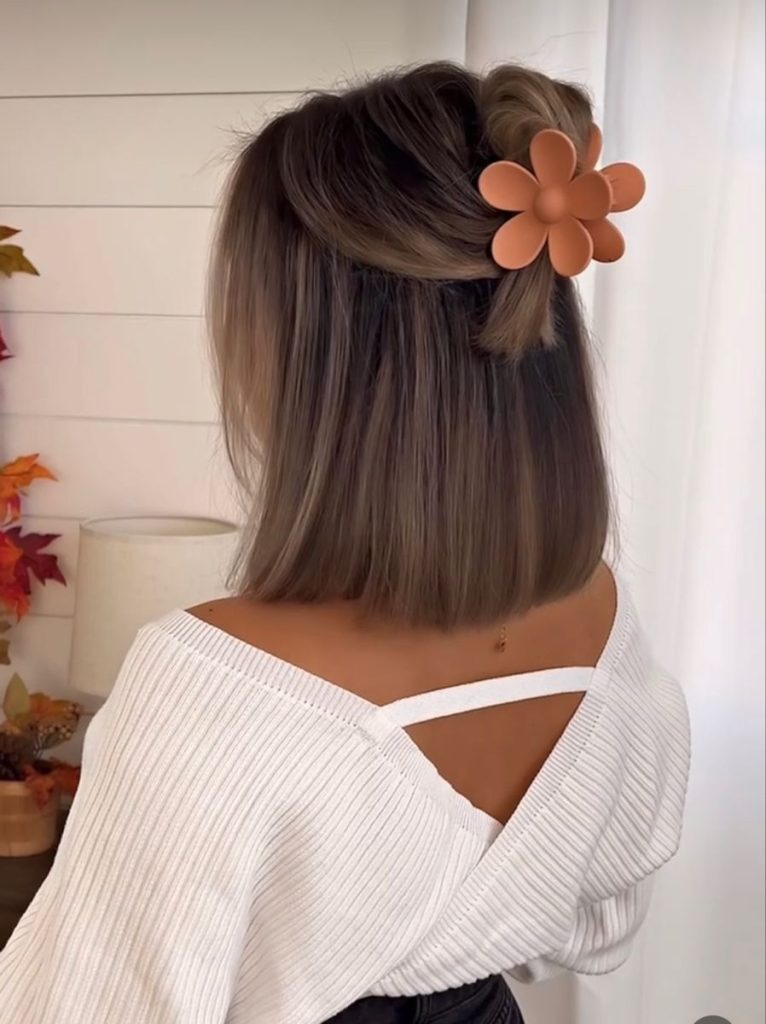
As the bob moves into the nape transition phase, utilizing intentional hardware like a matte floral claw clip becomes a strategic way to manage mid-length layers. This half-up style pulls back the top sections that are finally long enough to pin, effectively taming the “interior layer” while allowing the bottom length to graze the shoulders. It is a perfect example of using accessories to bridge the gap between a short bob and a lob, creating a curated aesthetic that feels like a deliberate style choice rather than a temporary in-between phase.
3. The Polished Butterfly Lob

Representing the “Butterfly Evolution” of the grow-out process, this long bob incorporates deep, sweeping face-framing layers that blend older lengths with new growth. The side-swept volume at the roots and the soft, inward-curling ends draw the eye upward, highlighting the face and distracting from the hair’s transition over the shoulders. This stage is all about “The Face-Frame Bridge,” where the silhouette is softened with disconnected layers to ensure the hair moves with a sense of “quiet luxury” and intentionality as it approaches chest-length.
4. The Voluminous Sculpted Shag
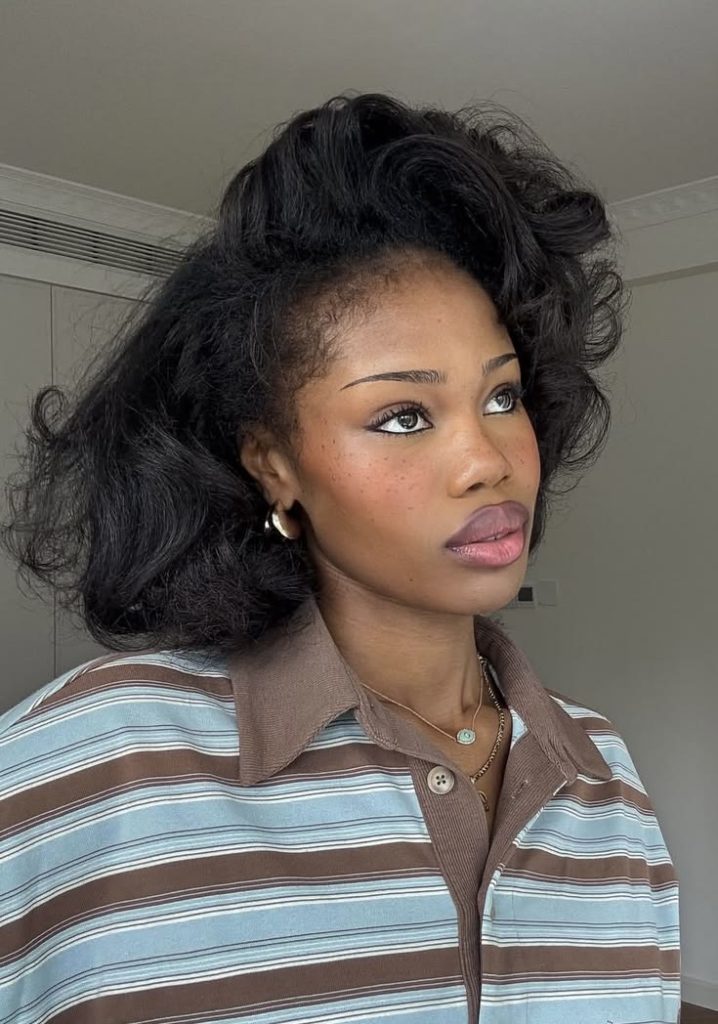
Embracing maximum texture and height, this look demonstrates how to use the “Internal Architecture” of thick, coily hair to create a high-fashion focal point during a grow-out. By leaning into dramatic volume at the crown and sculpted face-framing pieces, the awkwardness of the length is completely neutralized by the boldness of the shape. This style utilizes a “Butterfly Cut” philosophy by layering the hair to move outward rather than just downward, turning a transitional length into a powerful, editorial statement that celebrates movement and natural density.
5. The Face-Framing Flip

This look beautifully illustrates the power of the “Face-Frame Bridge” by incorporating sweeping layers that curve away from the eyes, creating an intentional silhouette even as the length hits the jawline. By styling the front sections with outward volume, the haircut avoids looking like a heavy, growing-out mass and instead adopts a sophisticated, retro-inspired shape. This technique effectively manages the “Micro-Trim” phase by focusing on movement and lift around the face, ensuring the grow-out feels curated and high-end rather than a waiting game for more length.
6. The Strategic Claw Clip Twist
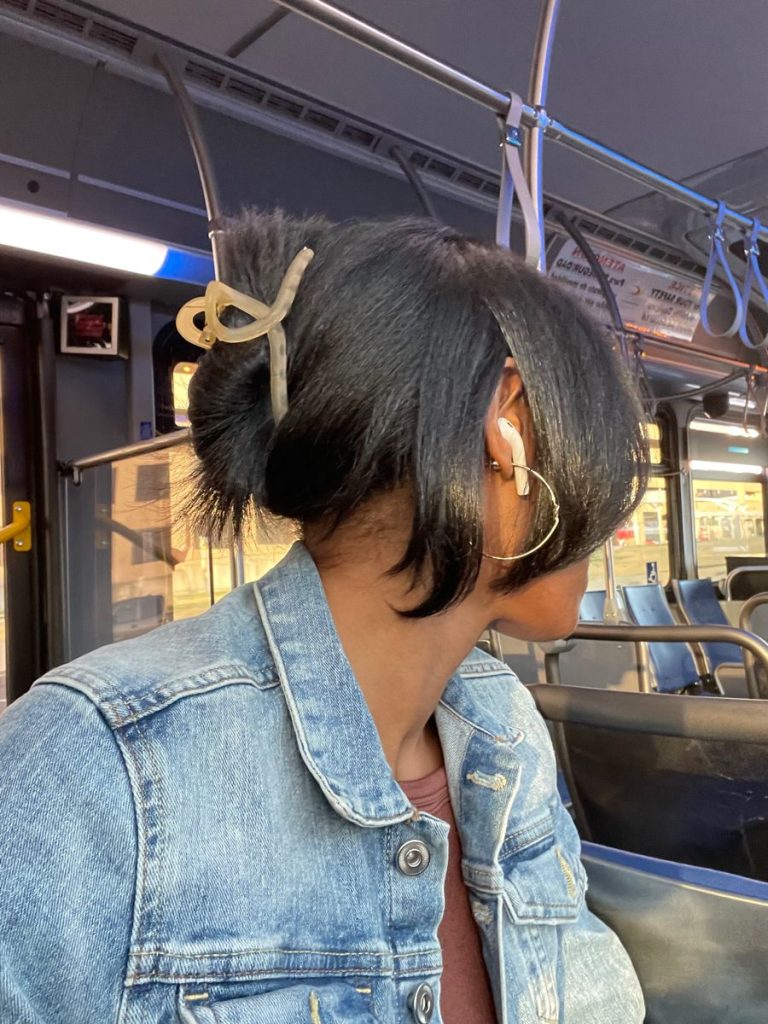
When the nape of the neck becomes a frustration during the middle months of growth, a large claw clip serves as the ultimate “Survival Toolkit” essential for a sleek, on-the-go aesthetic. This styling choice tucks away the awkward interior layers that tend to flip at the shoulder, while allowing the face-framing pieces to remain loose for a soft, intentional feel. It is a perfect example of how to handle the “Nape Transition” with a functional yet chic accessory that keeps the hair off the collar and maintains a polished, “quiet luxury” appearance.
7. The Textured Golden Wave

Transitioning a blonde bob becomes much more manageable when embracing heavy texture and “S-waves,” which act as a strategic camouflage for uneven lengths during a grow-out. The internal weight removal throughout the mid-lengths prevents the “triangle head” effect, allowing the curls to sit softly rather than stacking outward in a boxy shape. This style is ideal for those moving toward a “Butterfly Cut” evolution, as the multi-dimensional layers and tousled finish create a cohesive, intentional style that masks the exact stage of the hair’s growth journey.
8. The Side-Swept Root Lift

A dramatic side part is a highly effective way to shift the focal point of a bob during the early stages of growth, providing instant volume and a modern, asymmetrical edge. By lifting the hair at the root and sweeping it over, you can hide any “flatness” that often occurs when the hair starts to feel heavy and transition-weary. This approach works as a “Strategic Maintenance” hack, using a simple change in direction to refresh the haircut’s personality and give the illusion of a deliberate, edgy style while the back and sides gain the necessary length.
9. The Polished Espresso Lob

This voluminous long bob marks the successful transition through the “Nape Transition” phase, where the hair has finally cleared the shoulders with a smooth, inward-curving finish. By maintaining a deep side part and subtle face-framing layers, the style avoids a heavy or weighted look, instead embracing a sophisticated “quiet luxury” aesthetic that feels entirely intentional. This length is the perfect canvas for “The Face-Frame Bridge” philosophy, using a slight bend in the front sections to provide structure and elegance while the back layers catch up in length.
10. The Mid-Length Transition to Long-Layered Integration
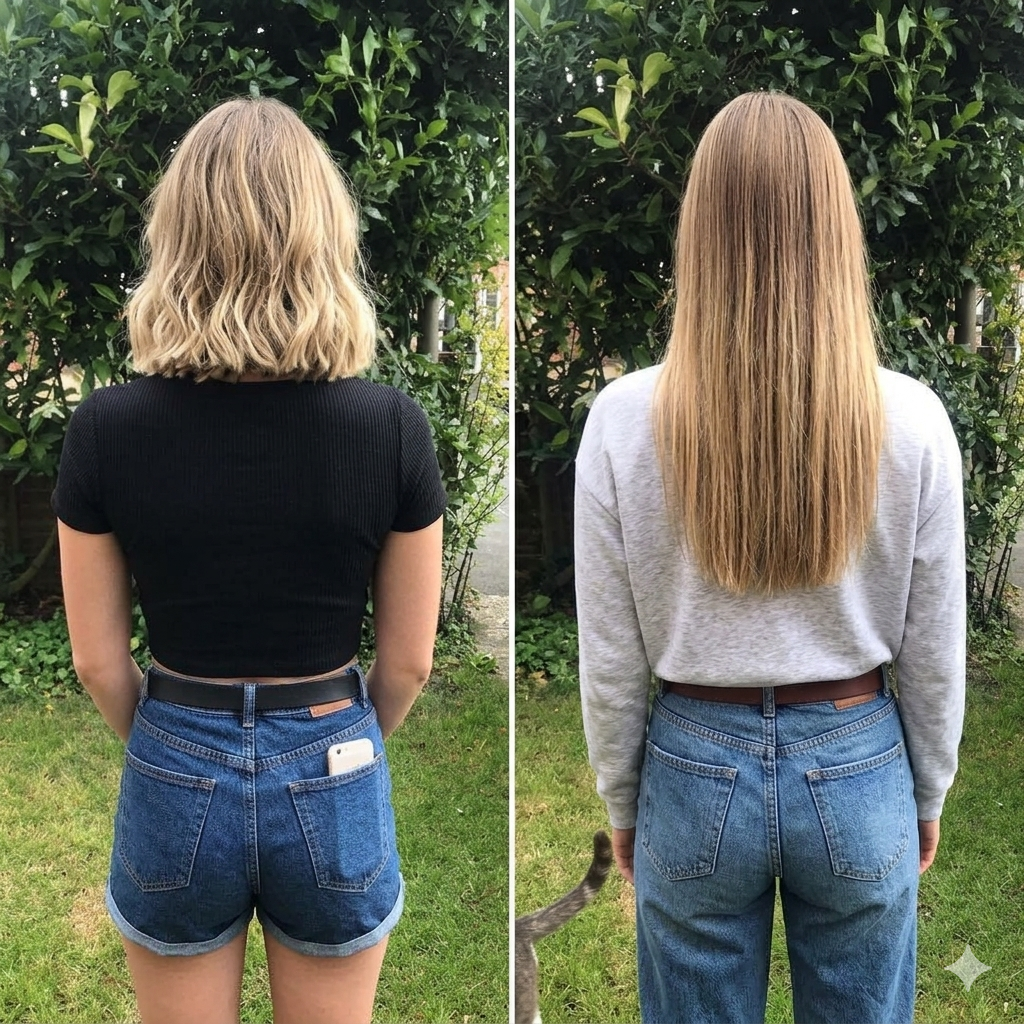
This side-by-side comparison perfectly captures the journey from a texturized “lob” to a fully integrated, long-layered silhouette, emphasizing the importance of “Strategic Maintenance” over time. In the first phase, beachy waves are used as a clever styling hack to camouflage the unevenness that often occurs as hair hits the shoulder, effectively neutralizing the “triangle head” effect with soft, internal weight removal. The subsequent transformation shows the result of consistent “dusting” and shape-shifting; the hair has successfully transitioned into a sleek, V-shaped perimeter that eliminates the memory of the bob. This final length demonstrates a “Butterfly Evolution” where the previous short layers have been blended seamlessly into a cohesive, flowing look that moves with intentionality and “quiet luxury.”
11. The Voluminous Butterfly Evolution
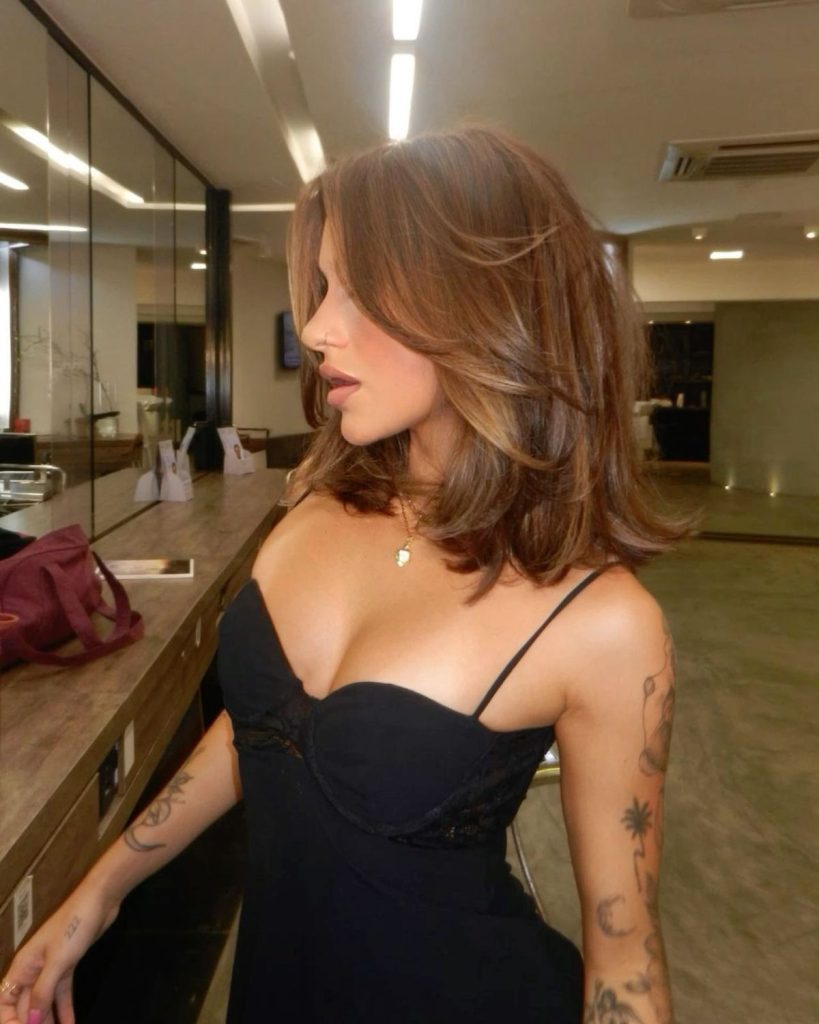
As a bob transitions into the “Butterfly” phase, long, disconnected layers become essential for maintaining lift and movement. This style focuses on heavy face-framing pieces that bridge the gap between the original shorter lengths and the new growth reaching toward the shoulders. By utilizing a voluminous blowout that flicks the ends outward, the “in-between” length is transformed into a glamorous, intentional silhouette that effectively disguises the transition. It’s a prime example of how strategic layering can turn the most difficult grow-out stage into a high-fashion focal point.
12. The Polished Headband Survival Strategy
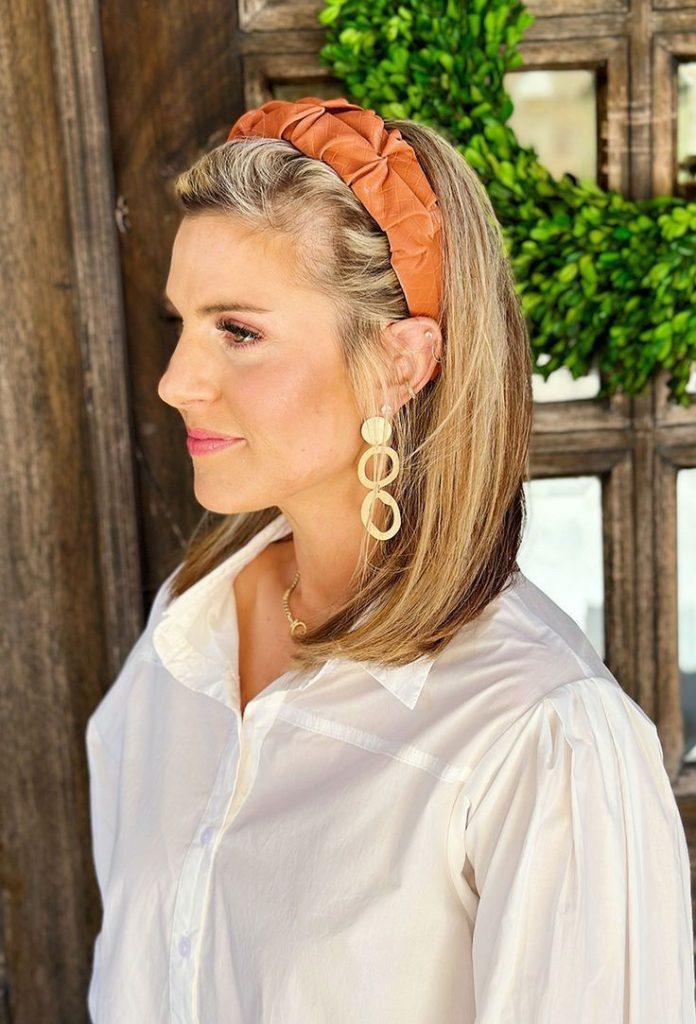
When a growing bob reaches the stage where it sits flat or develops an awkward interior layer at the nape, a structured headband becomes an indispensable tool for maintaining a curated aesthetic. By pulling the hair back and away from the face, this accessory instantly adds height and volume at the crown while neatly managing the length hitting the collarbone. This look demonstrates how to use “quiet luxury” hardware to bypass the frustration of daily styling, ensuring the grow-out feels like a sophisticated fashion choice rather than a temporary lapse in maintenance.
13. The Half-Up Space Bun Bridge

Embracing playful, high-positioned hardware like space buns is a genius way to manage top layers that have gained significant length but aren’t yet ready for a full ponytail. Combined with a soft, wispy fringe, this style utilizes “The Face-Frame Bridge” philosophy to keep the focus on the eyes and forehead rather than the shifting perimeter at the neck. The textured, pastel waves add a soft grit that masks any uneven ends, turning the mid-neck transition into a creative opportunity for bold, modern styling that feels entirely intentional.
14. The Embellished Side-Tucked Wave
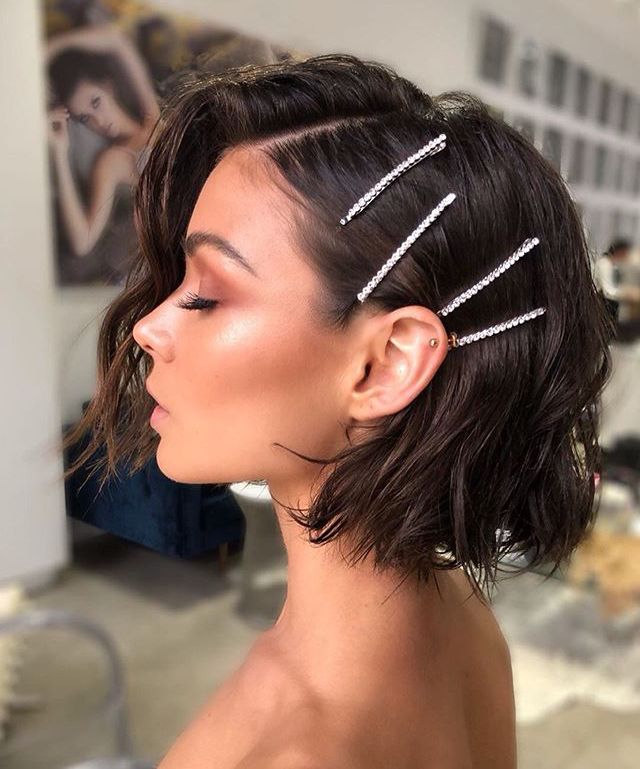
Utilizing strategic hardware is a masterclass in navigating the early stages of a bob grow-out, especially when layers start to feel heavy or uncooperative. By pulling one side back with a series of jeweled pins, you instantly create a sleek, asymmetrical focal point that bypasses the “triangle head” effect often seen at this length. This styling hack not only manages the bulk near the ear but also allows the natural texture of the hair to shine on the opposite side, proving that the transition toward a lob can be an opportunity for high-glamour, intentional accessorizing rather than a beauty frustration.
Strategic Maintenance: The “Internal Architecture”
- Managing Density: How to address the “middle layer” that thickens as the hair grows, causing the bob to look dated.
- The Science of the Split: Why a $1/8$-inch “dusting” every 8 weeks actually accelerates visible growth by preventing breakage.
- The Nape Undercut (Optional): A secret trick for those with thick hair to remove the “shelf” effect during the mid-neck phase.
The Face-Frame Bridge: Diverting the Eye
- The Power of the Perimeter: How bangs or face-framing “bits” make an awkward length look like a “Shag” or a “Wolf Cut.”
- Creating a Focal Point: Using bottleneck bangs to frame the eyes, drawing attention away from the length hitting the shoulders.
- The “Tuck & Pin” Method: How to use face-framing layers to create the illusion of a finished style while the back continues to grow.
The Survival Toolkit: Accessories & Products
- The Power of the Silk Scarf: Using headwraps to disguise “flat” roots during growth spurts.
- Product Swapping: Moving from heavy waxes to lightweight texturizing mists and serums for flow.
- Strategic Hardware: Using decorative bobby pins to “fake” a shorter, pinned-back look on days when the length feels unmanageable.
Conclusion: Consistency is King
- Summary of the 8-Week Rule.
- Final encouragement: The awkward phase is only awkward if it looks accidental; shape makes it style.
Technical Note for Content:
Remind readers that the average growth rate is 0.5 inches per month. By trimming only 0.25 inches every eight weeks, they are still netting a total of 0.75 inches of growth every two months, but with a silhouette that looks like a high-end haircut rather than a neglected one.
Does this addition of the “Face-Frame Bridge” help bridge the gap between the different growth phases for your readers?
Leave a Reply