
If you have fine, thin hair, you’ve probably heard the same bad advice: “Just grow it long to weigh it down.” In reality, long hair often makes fine strands look flatter, stringier, and more transparent. The real game-changer? A great short cut.
Short hairstyles remove excess weight, allowing your roots to lift and your natural texture to shine. But not every short cut works. The wrong bob can collapse into a triangle. The wrong pixie can highlight sparse areas. That’s why I’ve put together 15 specific, stylist-approved short hairstyles for fine thin hair—plus how to find the right stylist, the products that actually deliver, and the hard truths nobody mentions before you chop it all off.
Let’s dive in.
15 Short Hairstyles for Fine Thin Hair:
1. Textured Pixie Cut
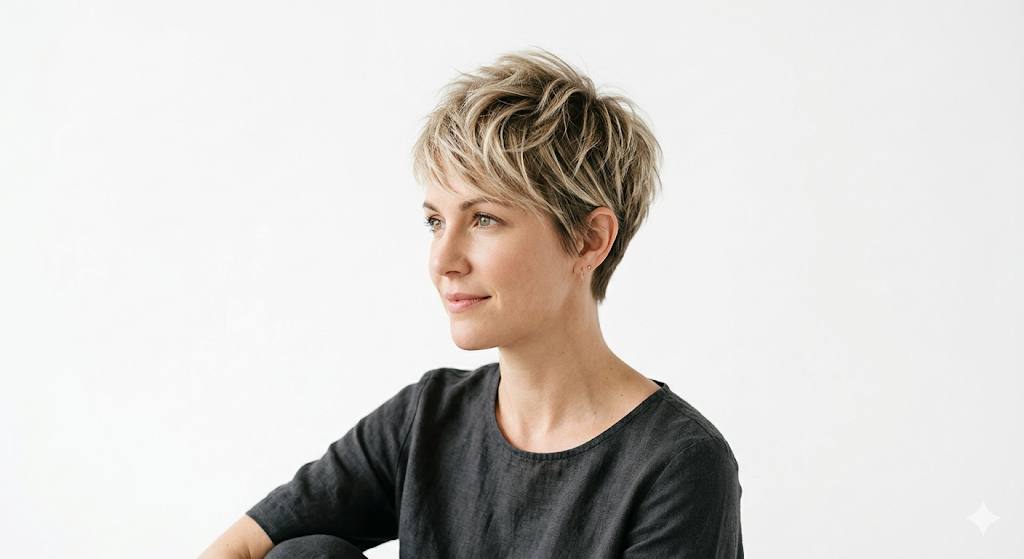
Short, choppy layers on top with a tapered nape. The texture creates natural root lift, and keeping the back close to the head prevents the dreaded “mullet” effect while making the crown appear fuller.
2. French Bob with Micro Bangs
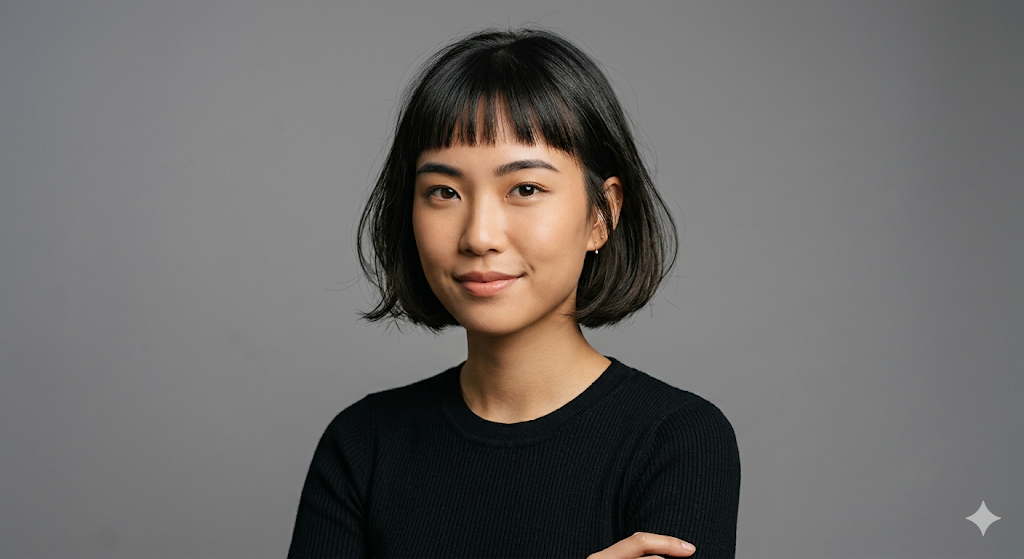
A jaw-length blunt bob with a slight undercurl and very short, straight-across micro bangs. The blunt ends create an illusion of density, while micro bangs draw visual attention upward and away from thinner areas at the crown.
3. Cropped Shag
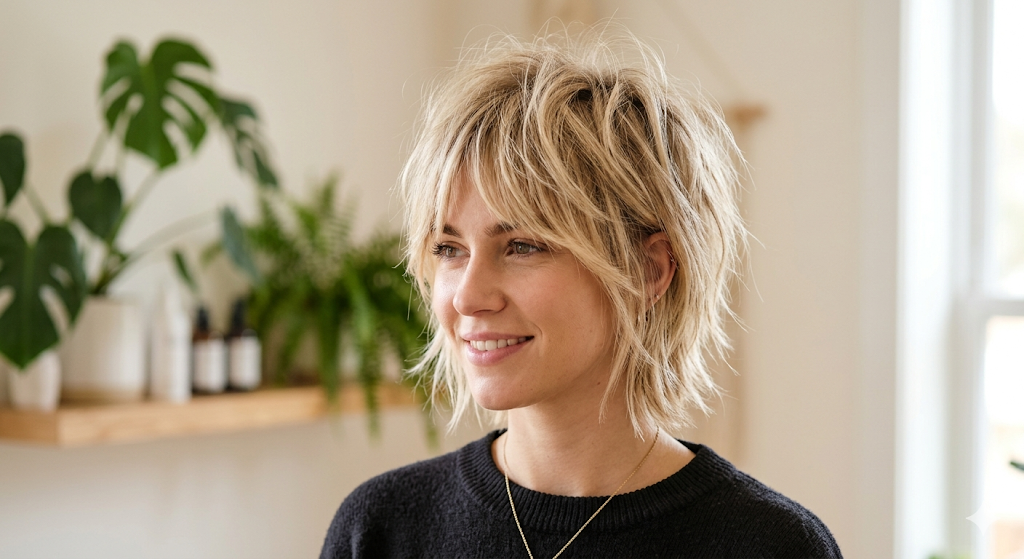
A short, heavily layered cut with piece-y fringe and lots of internal texture. The layers remove weight so the hair doesn’t collapse, and the messy, lived-in volume tricks the eye into seeing more thickness than actually exists.
4. Asymmetrical Pixie Bob
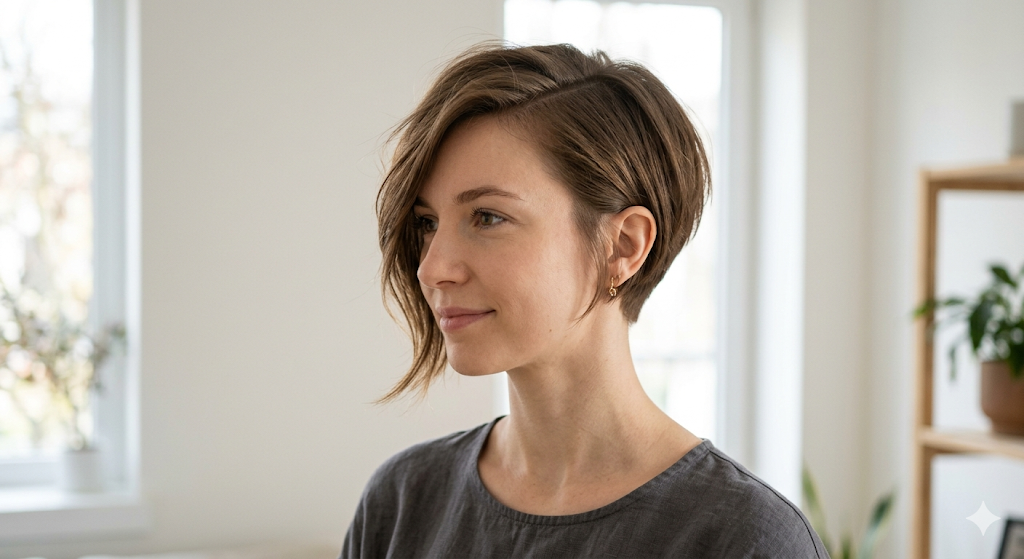
One side is slightly longer than the other, with a short nape and a side-swept top. Asymmetry confuses the eye and creates the perception of more fullness on the longer side.
5. Clipped Undercut Pixie
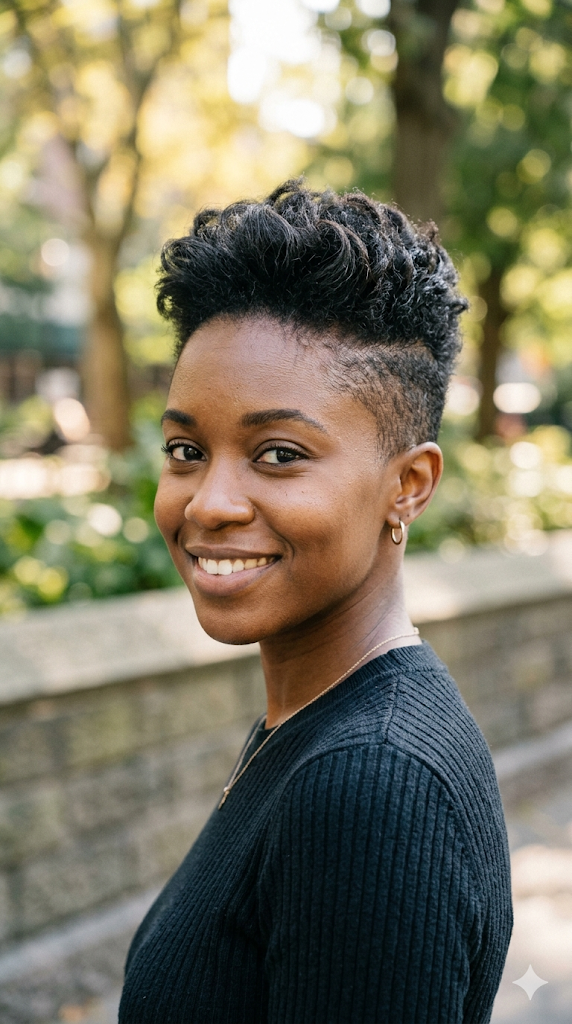
The sides and back are buzzed very short (often with clippers), while the top is left longer and textured. Removing bulk underneath makes the top appear dramatically fuller by comparison.
6. Wispy Layered Bob

A chin-length bob with soft, feathery ends instead of blunt or heavy ends. The wispy finish prevents the “flat helmet” look and allows for gentle movement that doesn’t expose gaps.
7. Modern Bowl Cut

A rounded, soft-edged shape with a micro fringe and a visible weight line at the perimeter. Unlike the childhood version, this modern take uses blunt lines to create a solid, dense-looking silhouette.
8. Tapered Pixie with Long Bangs
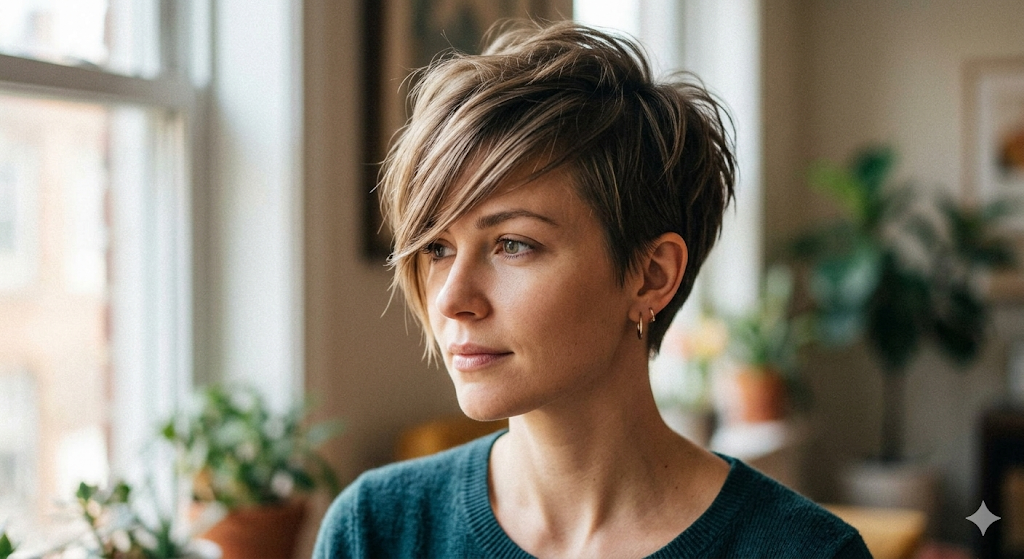
Close-cropped back and sides with longer hair on top and long, side-swept bangs. The long bangs add versatility and provide coverage if you have a thin or receding hairline.
9. Modern Mini Mullet
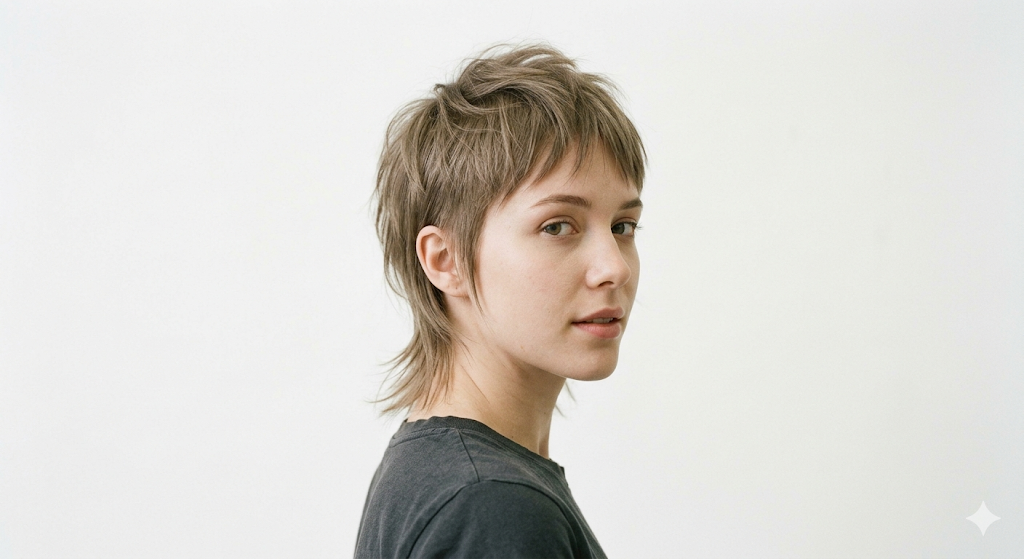
Short sides, a stacked crown, and a wispy, slightly longer nape. The volume at the crown is the star here, and the shorter sides eliminate the weight that normally pulls fine hair flat.
10. Chin-Length Graduated Bob
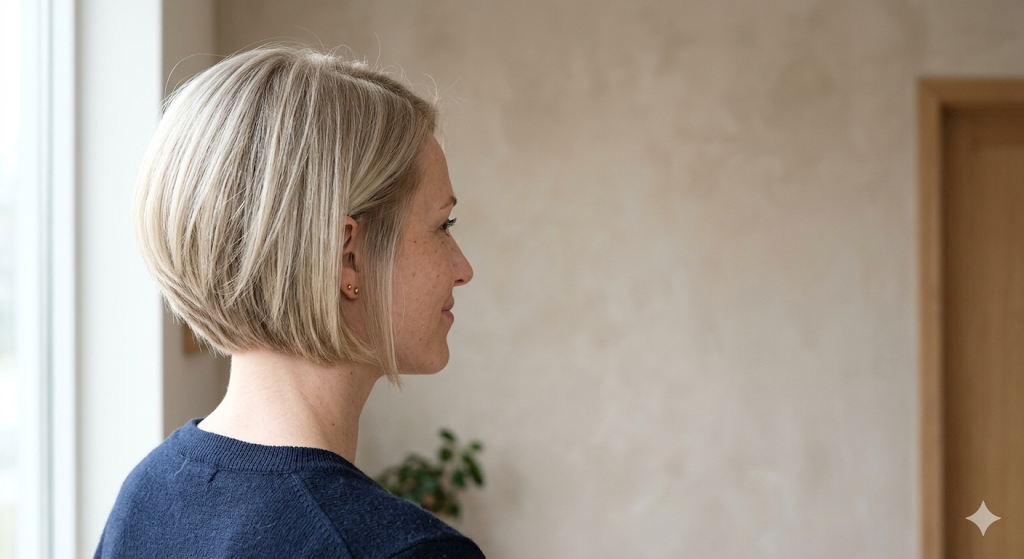
A stacked interior in the back that pushes hair forward into a rounded, chin-length shape. The graduation creates a thick-looking curve at the perimeter without needing dense hair.
11. Buzz Cut (Short Everywhere)
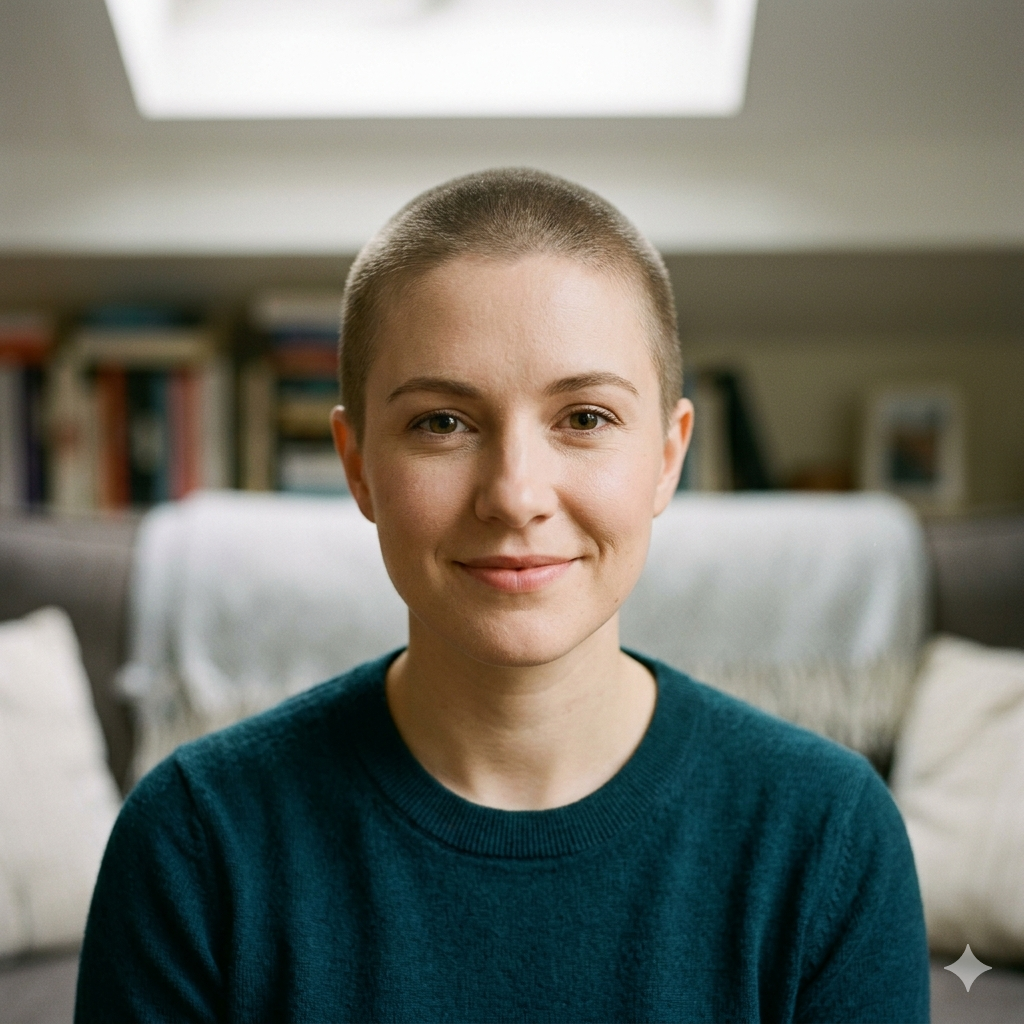
Evenly buzzed to about a #3 or #4 guard all over. Thin hair actually looks intentional and chic at this length, and the uniform shortness removes any expectation of “volume” entirely.
12. Side-Parted Pixie
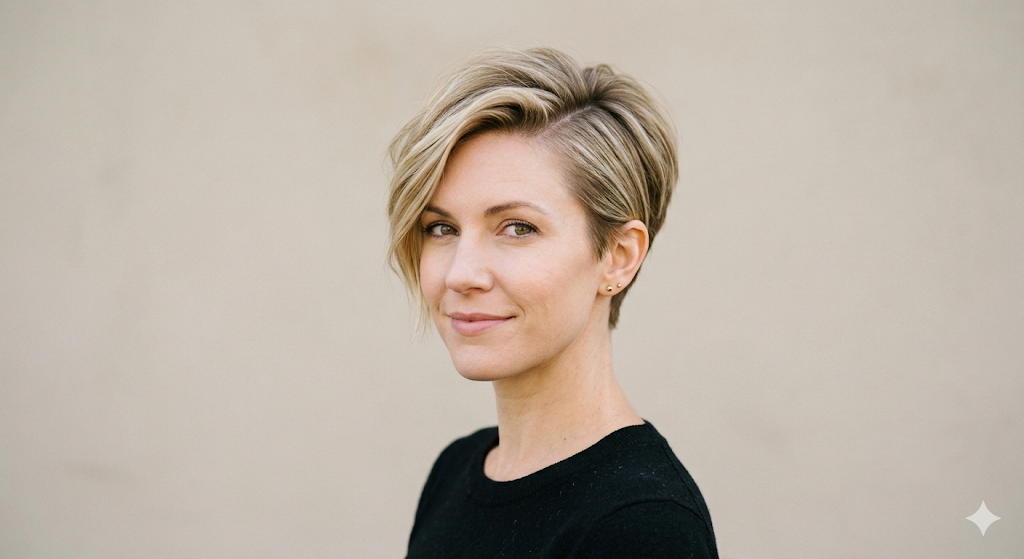
A deep side part with longer top hair swept dramatically to one side and a tapered back. The deep part creates instant height at the root on the heavier side.
13. Curly Pixie (For Fine Curly Hair)

Short sides and back with defined ringlets left longer on top. Removing weight lets fine curls spring up instead of stretching flat, resulting in surprising volume.
14. Sleek Blunt Mini Bob
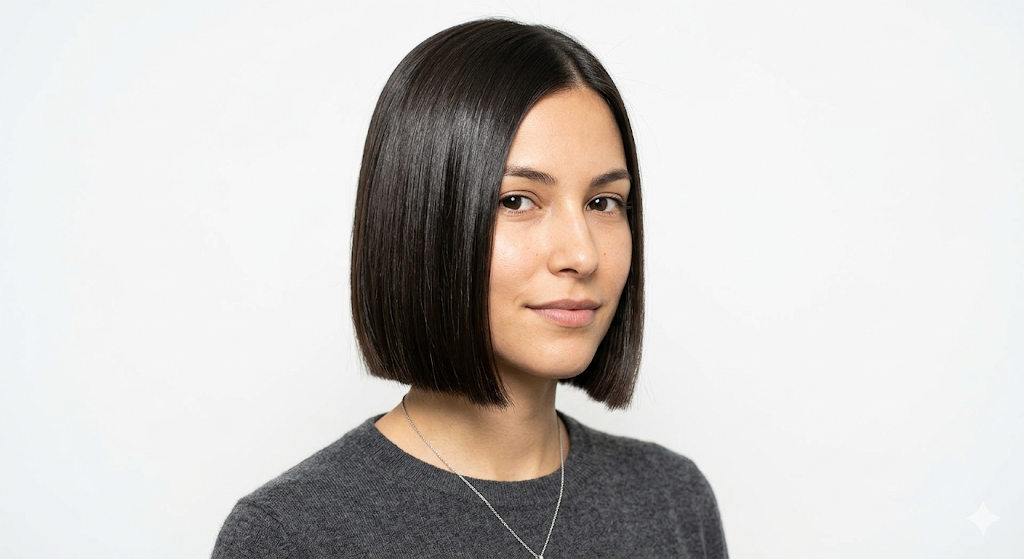
An ear-length bob cut with no layers whatsoever. The blunt, straight line makes fine hair look thicker at the ends, and the short length prevents the weight that would otherwise pull it flat.
15. Piece-Y Pixie with Highlights
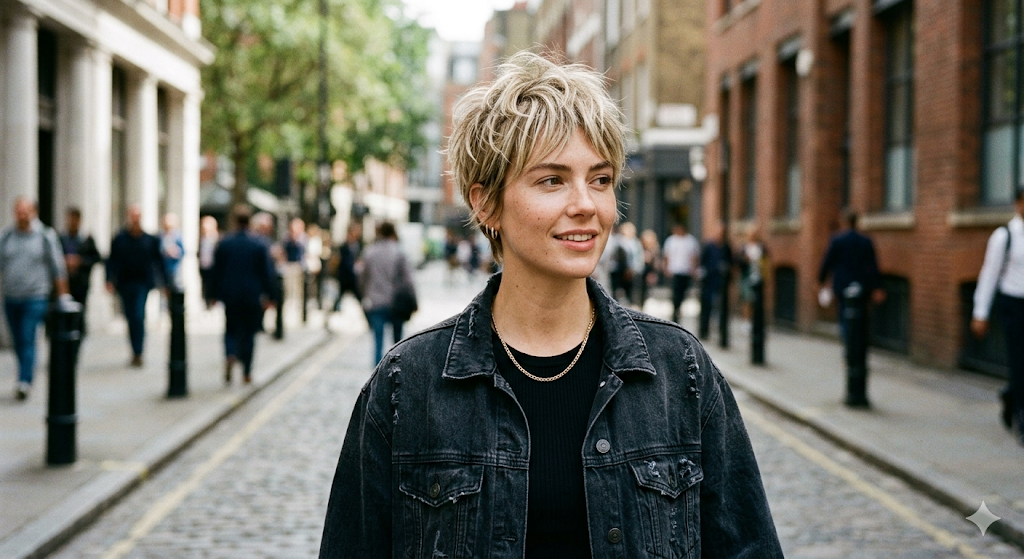
A textured pixie where individual pieces are visibly separated, paired with fine, strategic highlights. The color variation adds visual texture and depth where natural density is lowest.
How I Chose My Stylist
Fine, thin hair is unforgiving. A bad haircut will show every gap. Here’s exactly how I vetted my stylist:
- I looked for “fine hair” in their portfolio – not just “short hair.” Thin, fine hair needs a specialist.
- I asked two specific questions:
- “Do you cut fine hair dry or wet?” (Good answer: dry or mostly dry, so they see how it naturally falls.)
- “How do you avoid the ‘bald spot’ effect on a pixie?” (Good answer: point-cutting, not blunt shears all over.)
- I booked a consultation first – not a full cut. I watched how they handled another client’s fine hair.
- I avoided “trendy” salons that favor thick, coarse hair. Instead, I found an older stylist who specialized in thinning hair.
- I brought photos of bad cuts on fine hair too – so they knew what I didn’t want.
Products That Work
Forget heavy creams and oils. Fine, thin hair needs lightweight builders.
| Product Type | What to Use | Why |
|---|---|---|
| Shampoo | Volumizing (sulfate-free but not heavy) | Cleans without weighing down |
| Conditioner | Apply only to ends – or use a spray leave-in | Roots stay lifted |
| Root Lifter | Spray mousse or foam (not cream mousse) | Lifts at the crown without stickiness |
| Texturizing Spray | Sea salt or rice protein spray | Creates grip for movement |
| Dry Shampoo | Powder-based (not aerosol) | Absorbs oil + adds instant grit |
| Finishing Product | Light wax spray or dusting powder | Piece-y definition without grease |
My current routine:
- Wash with volumizing shampoo (no conditioner on roots).
- Towel dry, spray root lifter, blow-dry upside down.
- Sprinkle dry shampoo at roots even on clean hair – it’s a volume cheat.
- Finish with texturizing spray on fingers, pinch pieces.
What Nobody Tells You
- Your scalp will show more. Especially with a pixie or buzz cut. That’s normal. Embrace it, or use a tinted dry shampoo or scalp powder.
- You’ll need cuts every 3–4 weeks. Fine hair grows out fast, and a grown-out pixie looks messy, not “lived-in.”
- The first wash after a cut is scary. Stylists manipulate hair to look fuller. At home, it may seem flatter. Give it 3 washes to settle.
- Humidity is either your friend or enemy. Light texture sprays love humidity. Heavy serums hate it.
- You might miss “hiding behind” your hair. Short hair exposes your face completely. That’s emotionally different – and wonderful once you adjust.
- Pillowcases matter. Silk or satin prevents overnight flattening. Cotton crushes fine hair.
- You can still use a curling iron – but only on cool or low heat, and only on the top pieces.
FAQ
Q: Will short hair make my thin hair look even thinner?
A: Only if it’s cut badly. The right short cut (textured top, tapered nape) creates an illusion of density. The wrong short cut (all one length, too heavy) does the opposite.
Q: What’s the best short length for fine thin hair?
A: Between 1–4 inches on top, with the back and sides shorter. Too long (past chin) loses volume. Too short (buzzed uniformly) is fine if you like the look, but it won’t create illusion volume.
Q: Can I use hairspray?
A: Yes, but only flexible hold. Avoid aerosol hairsprays with PVP – they glue strands together, exposing gaps. Try a working spray or texture spray instead.
Q: Will thinning shears help?
A: No! Thinning shears on fine hair create frizz and expose the scalp. Ask for “point cutting” or “slide cutting” instead.
Q: How do I add volume overnight?
A: Sleep with a tiny velcro roller at your crown. In the morning, remove, shake, add dry shampoo.
Q: Are extensions an option?
A: Not for fine, thin hair – they’re too heavy and will cause traction alopecia. If you want length, try a temporary topper or halo extension worn above your hair.
Conclusion
Short hair isn’t a compromise for fine, thin hair – it’s an upgrade. The right pixie, bob, or shag can give you more volume, movement, and confidence than you ever had with long, limp strands. The key is choosing a cut that removes weight strategically, finding a stylist who understands fine hair texture, and using featherlight products that build instead of burden.
Yes, you’ll need more frequent trims. Yes, your scalp might show a bit more. But you’ll also run your fingers through your hair and feel lift – not flatness. You’ll catch your reflection and see shape, not sadness.
Take these 15 prompts to your next consultation. Be honest about your density. And get ready to love your hair short.

Leave a Reply